
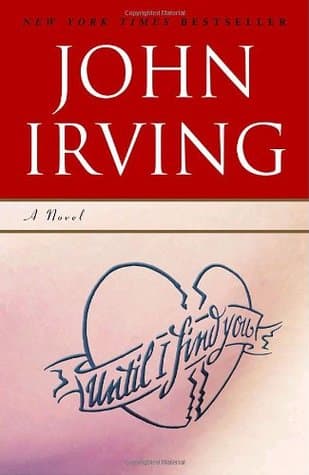
Synopsis
Covers the whole plot, including the ending.
- Difficulty
- Medium
- Pacing
- Slow
- Mood
- Introspective, Melancholy, Quirky, Profound
- Read it if
- You enjoy sprawling, character-driven literary sagas with a focus on psychological depth, unconventional family dynamics, and a touch of the bizarre.
- Skip it if
- You prefer fast-paced plots, straightforward narratives, or are uncomfortable with themes of sexual awakening and extensive exploration of childhood trauma.
Until I Find You Plot Summary
Covers the whole plot, including the ending.
Childhood in Tattoo Parlors
Jack Burns spends his early childhood in the unconventional world of tattoo parlors across Northern Europe, mainly in Denmark, Sweden, and Finland. His mother, Alice, a tattoo artist, constantly moves them from city to city, driven by an effort to find Jack's father, William Burns, a church organist who left them shortly after Jack's birth. During these years, Jack meets a community of tattoo artists, sailors, and counter-cultural figures. He is raised by Alice and the various female tattoo artists she works with, especially the strong and maternal Hanne. Jack's education involves watching the tattoo trade, listening to adult stories, and experiencing a unique, unsupervised freedom.
The Search for William Burns
Alice's search for William Burns drives Jack's early life. She carries a single photograph of William, a young man with a distinctive tattoo, and shows it to everyone in the tattoo community, hoping for clues. They follow whispers and rumors, often arriving at a location only to find William has just left, or that the information was wrong. These near-misses and constant disappointments affect Alice deeply, fueling her bitterness and feeling of abandonment. Jack, a quiet observer, internalizes his mother's pain and her dedication to a man he has never met, shaping his own understanding of love and pursuit.
Encounters with Older Women
As Jack grows, he becomes the object of affection and sexual attention from many of the older women in Alice's tattoo artist circle. These women, often lonely or seeking comfort, introduce Jack to sexual experiences at a very young age. His first significant relationship is with a Danish tattoo artist named Inger, who is much older than him. These encounters, while often consensual at the time, affect Jack's psychological development, blurring the lines of appropriate relationships and creating a deep attraction to older women. These early experiences become a pattern that repeats throughout his adult life, influencing his romantic choices and his understanding of intimacy.
Return to Toronto and Boarding School
Eventually, Alice, tired of the fruitless search, settles in Toronto, Canada, where she opens her own tattoo parlor. To give Jack a more stable upbringing, she enrolls him in a private boarding school, The Favorite, a contrast to his nomadic, bohemian childhood. This transition is difficult for Jack, who struggles to fit in with his privileged peers. The school environment, especially the headmaster's wife, Mrs. Wurtz, introduces him to a different kind of female authority figure. This period marks a shift, pulling Jack away from the immediate influence of the tattoo world but not erasing its lasting impact.
The Discovery of William's Tattoos
During his adolescence, Jack learns a detail about his father: William Burns is not just a church organist, but a man obsessed with being tattooed. He learns that William is a 'collector' of tattoos, especially those done by renowned artists. This discovery provides a new way to understand his father's disappearance and Alice's relentless pursuit. It also explains the specific tattoo Alice used as a clue. Jack begins to put together the fragmented stories, realizing that his father's body is a living canvas, a sign of his unique devotion and obsession, mirroring Alice's own artistic passion.
Jack's Acting Career Begins
At The Favorite, Jack discovers a talent for acting. The stage gives him an outlet to explore different identities and channel his complex emotions and experiences. His performances are often intense, drawing on the influences of his unconventional upbringing and his relationships with older women. Acting becomes not just a career, but a psychological refuge, allowing him to inhabit other characters and momentarily escape the weight of his own identity. His early theatrical successes lead to a future in film, where his unique screen presence later captivates audiences.
Hollywood and Marriages
As an adult, Jack Burns becomes a successful Hollywood actor. Following his childhood patterns, he repeatedly marries older, established actresses, including the well-known Elizabeth 'Liz' Arden. These marriages are often difficult, marked by his complex psychological needs and the public scrutiny of their lives. Despite his professional success, Jack deals with the lingering effects of his past, particularly his unresolved feelings about his father and his mother's sacrifices. His fame brings both opportunities and new pressures, forcing him to confront his public persona versus his private struggles.
The Revelation of William's Addiction
Through various encounters, Jack finally understands the true depth of his father's obsession. William Burns is not just a collector but an addict, driven by an insatiable need for tattoos, viewing his body as a sacred text. This addiction is what led him to abandon Alice and Jack; he prioritized new tattoos and renowned artists over his family. The tattoos on William's body are not random art, but a narrative, a secret language that only Alice, with her artistic eye, can truly decipher. This understanding gives Jack a painful insight into his father's motivations and the sacrifices made.
Jack's Own Tattoos
In a turn of events, Jack, despite his earlier hesitation, begins to get tattooed himself. His first tattoo is a symbolic representation of his past, a choice that connects him directly to both his mother's artistry and his father's obsession. This act is a form of reconciliation, a way for Jack to physically embody his heritage and understand the compulsion that drove his parents. The tattoos become a personal narrative, a visual diary of his own journey and his acceptance of the complex legacy he carries. This act of self-marking is a step in his personal growth and healing.
Confronting the Past and Forgiveness
As Jack ages, he continues to deal with the impact of his childhood. He revisits the places of his youth, reconnects with people from the tattoo world, and ultimately accepts his parents' complex personalities. The novel explores forgiveness, not necessarily in a traditional sense, but in Jack's ability to understand and accept his parents' flaws and obsessions. He learns to integrate his unconventional upbringing into his identity, recognizing how it shaped him into the man and actor he became. The ending suggests a measure of peace and self-acceptance for Jack, as he embraces his own unique story.
Until I Find You Characters
Jack Burns
Protagonist
A successful actor haunted by his childhood among tattoo artists and his absent father.
Jack is a complex and introspective character, shaped profoundly by his unique upbringing. He spent his early years traveling across Europe with his tattoo artist mother, Alice, searching for his absent father, William. This nomadic, bohemian existence, coupled with early sexual experiences with older women in the tattoo parlors, leaves him with a deep-seated attraction to older women and a keen, often melancholic, observational nature. As an adult, he becomes a celebrated actor, using his craft to explore and process his past. He is intelligent, sensitive, and constantly searching for meaning and connection.
Relationships: Alice (Son, raised solely by her, deeply affected by her quest for William.); William Burns (Son, constantly searching for his absent father, whose legacy and obsession profoundly impact him.); Inger (First sexual partner, an older Danish tattoo artist, formative experience.); Elizabeth 'Liz' Arden (Wife, an older, famous actress, a significant and often tumultuous relationship.)
Alice
Supporting
Jack's fiercely independent tattoo artist mother, driven by an obsessive search for his father.
Alice is a strong-willed, talented, and deeply wounded woman. A gifted tattoo artist, she dedicates her early adult life to relentlessly searching for William Burns, the father of her child, who abandoned them. Her quest is fueled by a mix of love, betrayal, and a desire for answers, making her both resilient and emotionally scarred. She is unconventional, fiercely protective of Jack in her own way, and provides him with a unique, if unstable, childhood. Her artistic passion for tattooing is paralleled by her profound, if unrequited, love for William.
Relationships: Jack Burns (Mother, raises him alone, her quest for William shapes his entire childhood.); William Burns (Former lover and husband, obsessed with finding him after he abandons her.); Hanne (Close friend and fellow tattoo artist, a surrogate mother figure for Jack.)
William Burns
Antagonist/Mentioned
Jack's absent father, a church organist whose body is a canvas for an extreme tattoo addiction.
William Burns is the enigmatic and largely absent figure at the heart of the novel's mystery. Initially presented as a church organist who abandoned his family, he is later revealed to be a man consumed by an extreme and all-encompassing addiction to being tattooed. His body is a living artwork, a collection of masterpieces by the world's most renowned tattoo artists. This obsession takes precedence over all else, explaining his abandonment of Alice and Jack. He is a symbol of artistic devotion taken to an extreme, a man who finds his identity and purpose in the permanent marking of his skin.
Relationships: Jack Burns (Absent father, his legacy and addiction profoundly impact Jack's life.); Alice (Former lover and wife, whom he abandons due to his tattoo obsession.)
Hanne
Supporting
A maternal Danish tattoo artist who often cares for young Jack.
Hanne is one of the many female tattoo artists who form a surrogate family for young Jack during his nomadic childhood. A kind, pragmatic, and maternal figure, she often takes on the role of primary caregiver when Alice is preoccupied with her search for William or her work. Hanne provides a sense of stability and warmth in Jack's otherwise transient existence. She embodies the strong, independent spirit of the women in the tattoo community and offers Jack a grounding presence amidst the chaos.
Relationships: Jack Burns (Surrogate mother figure, provides care and stability during his childhood.); Alice (Friend and colleague, often works with Alice in various parlors.)
Inger
Supporting
An older Danish tattoo artist and Jack's first sexual partner.
Inger is a Danish tattoo artist who becomes Jack's first sexual partner when he is a young boy. She is one of several older women in the tattoo community who initiate Jack into sexual experiences, setting a pattern for his future relationships. Inger is portrayed as both affectionate and somewhat predatory, embodying the blurred lines of appropriate adult-child relationships within Jack's unconventional upbringing. Her character highlights the loss of innocence and the complex psychological impact of these early encounters on Jack.
Relationships: Jack Burns (First sexual partner, a significant and formative relationship in his youth.)
Elizabeth 'Liz' Arden
Supporting
A renowned older actress and one of Jack's wives.
Elizabeth 'Liz' Arden is a celebrated and formidable actress, significantly older than Jack, whom he marries during his rise to Hollywood fame. She represents the culmination of Jack's pattern of being drawn to older, powerful women. Their marriage is a complex dynamic of love, professional rivalry, and the challenges of public life. Liz is intelligent, strong-willed, and experienced, offering Jack both mentorship and a continuation of his unique relational patterns. Their relationship, while often tumultuous, is central to Jack's adult life and his ongoing psychological development.
Relationships: Jack Burns (Wife, an older, famous actress, a tumultuous but significant marriage.)
Mrs. Wurtz
Supporting
The headmaster's wife at Jack's boarding school, a strict and influential figure.
Mrs. Wurtz is the wife of the headmaster at The Favorite, the elite boarding school Jack attends in Toronto. She is a strict, traditional, and somewhat imposing figure who represents a stark contrast to the bohemian women Jack grew up with. She exerts a strong, often intimidating, influence over the boys at the school, embodying a more conventional form of female authority. Her presence highlights Jack's struggle to adapt to a structured environment after his unconventional childhood and provides a different perspective on female power.
Relationships: Jack Burns (Authority figure at his boarding school, represents a contrasting female presence to his mother and the tattoo artists.)
Svend
Mentioned
A Danish tattoo artist and friend of Alice.
Svend is a Danish tattoo artist who is part of the extensive network of artists Alice and Jack encounter during their travels. He is one of the many colorful characters who populate Jack's early life, providing a glimpse into the camaraderie and shared culture of the European tattoo community. While not a central figure, he contributes to the rich tapestry of Jack's unconventional upbringing and highlights the supportive, if transient, nature of the tattoo world.
Relationships: Alice (Friend and fellow tattoo artist.)
Until I Find You Themes
Loss of Innocence
The novel explores the loss of innocence, mainly through Jack's early life. His childhood among transient tattoo artists, his mother's quest, and his early sexual experiences with older women, remove him from a conventional childhood. This theme appears in his early exposure to adult relationships, sexuality, and human obsession. The contrast between his bohemian upbringing and the structured world of boarding school highlights this loss, as Jack continually grapples with the permanent imprint of his unconventional youth. His acting career becomes a way to re-enact and process these lost years.
“What had been done to me as a boy, by those women, had indelibly marked me. It was like a tattoo. You could never get rid of it.”
Obsession and Addiction
Obsession drives several characters. Alice is obsessed with finding William, spending years of her life in the pursuit. William, in turn, is consumed by his addiction to being tattooed, prioritizing it above all else, including his family. This theme shows how extreme devotion, whether to a person or an activity, can lead to both artistic expression and personal destruction. Jack inherits a legacy of intense fixation, influencing his own relationships and his dedication to acting. The novel shows how obsession can be both a creative and a destructive force, shaping lives.
“He wasn't just collecting tattoos; he was collecting himself. He was the story he was telling on his own skin.”
The Nature of Family and Identity
The book challenges traditional ideas of family. Jack grows up in a non-traditional 'family' of tattoo artists, raised by his mother and various female mentors. His identity is tied to his parents' unconventional lives — his mother's artistry and quest, and his father's mysterious tattoo addiction. The novel explores how one's origins, even fragmented or unconventional, shape who a person becomes. Jack's journey is about piecing together his family story, understanding the 'tattoos' of his past, and integrating them into his adult identity as an actor and individual. His identity is a constant negotiation between his bohemian roots and the conventional world he later inhabits.
“You are who your parents are, and who they are is what they've done to you.”
Art as a Form of Expression and Escape
Art, especially tattooing and acting, is a central theme for expression and escape. Alice's tattooing is a form of artistic expression and her livelihood, while William's tattoos are an extreme, almost spiritual, form of self-expression and addiction. For Jack, acting becomes his main artistic outlet, allowing him to embody different characters and process his complex emotions. The stage provides a safe space for him to explore the 'tattoos' of his own past, transforming personal trauma into public performance. Art in the novel is both a means of self-discovery and a powerful, sometimes destructive, force that shapes identity and destiny.
“My father's tattoos were his autobiography, and my acting became mine.”
The Enduring Impact of Childhood
The novel details how Jack's childhood experiences, particularly his early sexual encounters and his mother's search, affect his adult life. His attraction to older women, his emotional complexities, and even his chosen profession as an actor are direct results of his formative years. Irving emphasizes that these early experiences are 'tattooed' onto a person, permanent and constantly influencing future choices and relationships. The narrative often returns to Jack's youth, showing how the past is never truly past, but an active, shaping force.
“A childhood isn't something you outgrow; it's something you carry with you, like a tattoo.”
Plot Devices & Literary Techniques
The Motif of Tattoos
Physical and metaphorical marks that represent identity, memory, and obsession.
Tattoos are the central symbolic motif of the novel. Literally, they are Alice's art and William's addiction, forming a narrative on his skin. Metaphorically, they represent the indelible marks left by childhood experiences, trauma, and relationships. Jack's own decision to get tattooed is a symbolic acceptance and integration of his past. The permanence of tattoos mirrors the lasting impact of early life events, serving as a visual and psychological anchor for the characters' identities and histories.
Non-Linear Narrative
The story frequently jumps between Jack's childhood and adulthood, revealing information gradually.
The novel employs a non-linear narrative, frequently shifting between Jack's early childhood in Europe and his adult life as a famous actor. This structure allows Irving to slowly unveil the mysteries surrounding William Burns and the full impact of Jack's upbringing. By juxtaposing past and present, the reader gradually understands how Jack's formative experiences directly shape his adult relationships and choices. This narrative device builds suspense and emphasizes the enduring influence of childhood on identity.
First-Person Retrospective Narration
Jack Burns narrates his life story from an adult perspective, looking back on his past.
The story is told entirely from Jack Burns' first-person perspective, as an adult reflecting on his life. This retrospective narration allows Jack to offer insights, interpretations, and emotional depth to events that occurred when he was too young to fully comprehend them. His adult voice provides a layer of analysis and understanding, guiding the reader through the complexities of his childhood, his relationships, and his ongoing quest for self-discovery and reconciliation with his past.
Foreshadowing
Hints and clues about future revelations, particularly concerning William's true nature.
Irving uses subtle and overt foreshadowing throughout the novel, particularly regarding the truth about William Burns. Alice's relentless, almost desperate, search and the vague, often contradictory, information about William create an underlying tension. The recurring mention of William's single tattoo in Alice's photograph, and the strange reactions of other tattoo artists, all hint at a larger, more unusual truth about his character and his relationship with tattoos, building anticipation for the eventual revelation of his extreme addiction.
Until I Find You Quotes
“Your father was a filmmaker. And filmmakers are like writers. They're like painters. They're like architects. They're like composers. They're like sculptors. They're like dancers. They're like actors. They're like musicians. They're like poets. They're like magicians. They're like shamans. They're like priests. They're like gods. They're like devils. They're like saints. They're like sinners. They're like everybody else. They're just more so.”
“You only have to forgive once. To resent, you have to do it all day, every day.”
“Memory is a tattle-tale. It tells on you.”
“The past is a place where you can only go in your mind. If you really go there, you're dead.”
“It is a terrible thing to be an actor. You live in a world of make-believe and you are never quite sure who you are.”
“Sometimes the best way to get to where you're going is to get lost.”
“To be a writer, you must have a room of your own. And a life of your own. And a mind of your own.”
“You don't get over things. You just get through them. And then you get through some more.”
“The truth is, there's no such thing as normal. There's just what you get used to.”
“Love is not a feeling. It's a decision. It's a commitment.”
“Every secret comes with a price, and the longer you keep it, the higher the price.”
“The world is full of ghosts, some of them still breathing.”
“Sometimes what you're looking for is right in front of you, but you're too busy looking for something else.”
“Childhood is not a race to see who can grow up the fastest. It's a time to be a child, to explore, to dream.”
Quiz
10 questions on the plot and the characters. Each answer comes with a short explanation.
Question 1
What is the primary profession of Jack Burns's mother, Alice, in Toronto?
- Church organist
- Tattoo artist
- Actress
- Writer
Show answer
B. Tattoo artist Alice, Jack's mother, is a prominent tattoo artist in Toronto, a profession that links her directly to the theme of being 'marked for life'.
Question 2
What is William Burns's addiction that physically 'marks' him?
- Alcohol
- Gambling
- Being tattooed
- Collecting rare books
Show answer
C. Being tattooed William Burns, Jack's father, is addicted to being tattooed, which is a central detail connecting him to the novel's overarching theme of permanent marks and identity.
Question 3
In what European city does young Jack spend a significant portion of his childhood, being raised by his mother and various female tattoo artists?
- Paris
- London
- Copenhagen
- Various cities, including Helsinki and Amsterdam, but not one single primary European city.
Show answer
D. Various cities, including Helsinki and Amsterdam, but not one single primary European city. Jack's early childhood is spent traveling across various European cities, including Helsinki, Amsterdam, and Stockholm, with his mother and her fellow female tattoo artists, not settling in one primary location.
Question 4
What is the specific nature of the trauma Alice, Jack's mother, experiences early in her life that permanently damages her?
- A severe accident that disfigures her face.
- The rejection of her by William Burns.
- The death of a sibling in childhood.
- Financial ruin due to a failed business.
Show answer
B. The rejection of her by William Burns. Alice's permanent damage is explicitly stated in the prompt as being caused by William Burns's rejection of her, setting the stage for much of her character's motivations and struggles.
Question 5
Jack Burns's career path as an adult is primarily in which field?
- Journalism
- Acting
- Tattoo artistry
- Music composition
Show answer
B. Acting Jack grows up to become an actor, a profession where he embodies different roles and identities, reflecting his own fragmented sense of self.
Question 6
What is the central theme that the novel explores through the experiences of its main characters?
- The pursuit of wealth and power.
- The loss of innocence.
- The glory of war.
- The triumph of scientific discovery.
Show answer
B. The loss of innocence. The prompt explicitly states that 'This is a novel about the loss of innocence, on many levels,' making this the central theme.
Question 7
What is the specific nature of Jack's childhood relationships that 'shapes' him, as mentioned in the description?
- His close bond with his absent father.
- His relationships with older women.
- His rivalry with his male siblings.
- His friendships with schoolmates.
Show answer
B. His relationships with older women. The prompt clearly states that Jack is 'shaped as a child by his relationships with older women,' which is a key aspect of his character development.
Question 8
When Jack returns to North America, he attends a prep school. What significant event happens there that further complicates his understanding of his past and his father?
- He discovers his father has secretly been a teacher at the school.
- He falls in love with one of his male teachers.
- He learns about his father's true identity from a former lover of William's who is now a teacher.
- He has a profound religious conversion.
Show answer
C. He learns about his father's true identity from a former lover of William's who is now a teacher. At the prep school, Jack encounters a woman, Em, who was a former lover of his father, William. She is a crucial figure in revealing more about William's past and challenging Jack's previous understanding of his origins.
Question 9
A recurring motif throughout the novel is the idea of 'looking for' someone. Which specific character is Jack primarily searching for throughout much of his life, often leading to mistaken identities?
- His mother, Alice.
- His half-sister, Emma.
- His father, William Burns.
- His childhood nanny.
Show answer
C. His father, William Burns. The title itself, 'Until I Find You,' refers to Jack's lifelong quest to find and understand his elusive father, William Burns, whose identity is often shrouded in mystery and misdirection.
Question 10
The novel frequently uses the setting of a tattoo parlor. What symbolic significance does this setting hold for the themes of the book?
- It represents a place of healing and purification.
- It symbolizes the permanent marks and indelible experiences that shape a person's identity and life.
- It is a metaphor for the superficiality of modern society.
- It serves as a gathering place for intellectual debate.
Show answer
B. It symbolizes the permanent marks and indelible experiences that shape a person's identity and life. The tattoo parlor, and tattoos themselves, are central metaphors for the 'marks' that characters acquire through trauma, love, and experience, reflecting the theme of being 'marked for life' and the permanence of identity.
Until I Find You FAQ
What is the central premise of 'Until I Find You'?
The novel primarily follows Jack Burns, an actor, through his childhood and adult life, exploring how his early experiences with older women, his absent father, and his mother's trauma shape his identity and relationships. It delves into themes of loss of innocence, memory, and the lasting impact of childhood on the adult psyche.
Who is William Burns, and what is his significance to Jack?
William Burns is Jack's father, a church organist and tattoo enthusiast who is largely absent from Jack's early life. His rejection of Alice and his mysterious, often fleeting appearances leave a profound void in Jack's understanding of himself and his own masculinity, fueling a lifelong quest for his father's presence and approval.
Describe Alice, Jack's mother, and her role in the story.
Alice is a Toronto tattoo artist who is deeply scarred by William's abandonment. Her bitterness and overprotective nature, coupled with her profession, create a unique and often stifling environment for Jack. She represents a constant, albeit complicated, maternal force and a living embodiment of the trauma William inflicted.
How do older women impact Jack's development in his childhood?
As a young boy, Jack is frequently left in the care of various older women – often waitresses, barmaids, or actresses – during his mother's tattooing trips or his father's brief appearances. These relationships, ranging from nurturing to subtly predatory, profoundly shape his understanding of women, intimacy, and his own sexuality, setting a pattern for his adult relationships.
What is the significance of tattooing as a recurring motif?
Tattooing serves as a powerful metaphor for permanent marks, both physical and psychological. William's addiction to tattoos, Alice's profession, and Jack's eventual connection to the art form symbolize the indelible scars left by trauma, memory, and the choices made by characters throughout their lives.
What is the 'secret' about Jack's parentage that is revealed later in the book?
It is revealed that William Burns is not Jack's biological father. His actual father is a Danish tattoo artist named Aksel, with whom Alice had a brief but significant relationship. This revelation recontextualizes Jack's entire search for his father and the identity he has constructed based on William's ghost.
How does the repeated motif of 'being lost' manifest differently for William and Jack?
William is literally lost, often disappearing without a trace due to his wanderlust and addiction, leaving Alice and Jack to search for him. Jack, in turn, is metaphorically lost, searching for his identity, his father, and a stable sense of self, often feeling adrift in his relationships and memories.
Are there any subtle connections between the various actresses Jack encounters and his mother, Alice?
Many of the actresses Jack encounters in his youth, such as Hannah and Elizabeth, share a certain independent, often vulnerable, and artistically inclined spirit with Alice. They are strong women who, like Alice, are often marked by their experiences and try to navigate a world dominated by men, sometimes echoing Alice's own struggles and resilience.
How does Jack's acting career reflect his personal life?
Jack's success as an actor, particularly in roles involving vulnerability and intense emotional portrayal, stems directly from his childhood experiences. He channels his unresolved trauma, his fragmented memories, and his deep understanding of human pain and longing into his performances, making his art an extension of his personal quest for meaning.
Discuss the psychological impact of William's abandonment on Jack.
William's abandonment creates a profound sense of insecurity, a desperate need for male validation, and an idealized image of a father figure in Jack's psyche. This leads to a pattern of seeking out and often idealizing older, unattainable women in his adult life, unconsciously trying to fill the void left by his absent father and protect himself from further abandonment.
How does Alice's trauma influence her parenting style and Jack's emotional development?
Alice's deep-seated trauma from William's rejection manifests as overprotectiveness and a tendency to project her own fears onto Jack. This often stifles his independence and contributes to his emotional immaturity and difficulty forming healthy attachments, as he is constantly aware of his mother's pain and her need for him.
What is the psychological significance of Jack's memory being unreliable or fragmented?
Jack's fragmented and sometimes unreliable memory reflects the traumatic nature of his childhood and his struggle to piece together a coherent narrative of his past. It highlights the subjective nature of memory, particularly when influenced by trauma, and how individuals reconstruct their personal histories to cope with painful truths.
To what extent is Jack a victim of circumstance versus an active participant in his own fate?
While Jack is undoubtedly shaped by the traumatic circumstances of his childhood, particularly his father's absence and his mother's pain, he also makes choices that perpetuate his patterns. His continued pursuit of unattainable women and his idealization of his past suggest a degree of agency in maintaining his emotional struggles, even as he seeks resolution.
How does the novel challenge traditional notions of family and fatherhood?
The novel profoundly challenges traditional notions by presenting a highly unconventional family structure, where the biological father is absent and the 'father figure' is largely a phantom. It suggests that fatherhood is not solely defined by biology but by presence, influence, and the lasting impact one has on a child, even in absence.
Is the ending of 'Until I Find You' ultimately hopeful or tragic for Jack?
The ending offers a complex mix. While Jack finally uncovers the truth about his parentage and gains a clearer understanding of his past, the resolution is not entirely 'happy.' He achieves a form of peace and self-acceptance, but the scars remain, suggesting a bittersweet triumph of understanding over complete healing, leaving room for both hope and lingering melancholy.
What is the author's primary message about the 'loss of innocence' in this novel?
John Irving suggests that the loss of innocence is not a singular event but a continuous process, often beginning in childhood due to the actions or inactions of adults. He emphasizes that this loss leaves permanent marks, shaping identity and relationships long into adulthood, and that true innocence, once lost, can never be fully regained, only understood.
How does the setting, particularly Toronto and various European cities, contribute to the novel's themes?
The contrasting settings emphasize Jack's constant displacement and search for belonging. Toronto represents his grounding, albeit complicated, origins with Alice, while the various European cities (especially Copenhagen) symbolize his quest for his father, a broader understanding of the world, and his own evolving identity as he literally and metaphorically travels to find himself.
Discuss the role of humor, often dark or ironic, in a novel with such heavy themes.
Irving employs dark humor and irony to provide moments of levity and to underscore the absurdity and inherent contradictions in life, even amidst profound pain. This stylistic choice prevents the narrative from becoming overwhelmingly bleak, allowing readers to process the heavy themes through a lens that acknowledges the strange and often humorous aspects of human suffering and resilience.
About the author

John Winslow Irving is an American-Canadian novelist, short story writer, and screenwriter.
Similar books
- The World According to Garp
John Irving
4.1 (205k) average on GoodreadsLiterary FictionShares Irving's signature style, thematic depth, and blend of humor and tragedy.
- A Prayer For Owen Meany
John Irving
4.2 (286k) average on GoodreadsLiterary FictionAnother expansive novel by Irving, exploring fate, faith, and unique characters.
- The Cider House Rules
John Irving
4.1 (161k) average on GoodreadsLiterary FictionFeatures complex characters, a strong sense of place, and a deep dive into moral dilemmas.
- Atonement
Ian McEwan
4.4 (70) average on GoodreadsWhile both novels deal with childhood trauma, memory, and the search for truth, Until I Find You is significantly more sprawling and digressive. McEwan's Atonement is celebrated for its tight narrative structure, precise prose, and devastating plot twists, offering a more contained and focused exploration of guilt and redemption. Irving's novel, in contrast, embraces a broader scope, allowing for more character exploration and thematic digressions, but at the cost of narrative conciseness.
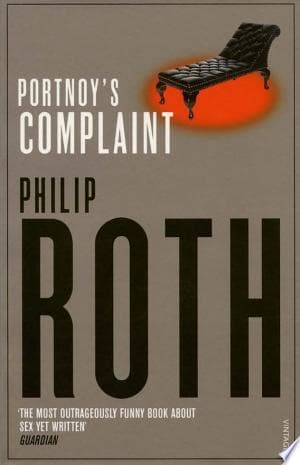
- Portnoy's Complaint
Philip Roth
3.7 (59k) average on GoodreadsLiterary FictionBoth novels delve deeply into the male psyche, particularly concerning sexual awakening and the complex relationships with mothers. Roth's Portnoy's Complaint is a seminal work on sexual neuroses and the overwhelming influence of a Jewish mother, told through a stream-of-consciousness monologue. Irving's Until I Find You similarly explores Jack's early sexual experiences and the profound impact of his unconventional mother, Alice, but does so through a more traditional third-person narrative, albeit with Irving's characteristic blend of dark humor and pathos. While Roth's work is intensely focused on one character's internal monologue, Irving's provides a wider cast and a broader historical sweep.
- The Old Man and the Sea
Ernest Hemingway
3.8 (831k) average on GoodreadsLiterary FictionA Cuban fisherman's long struggle with a giant marlin becomes a story of endurance and dignity, now retold for young adults with illustrations, phonetic guides, and writing prompts in Traditional Chinese.


Enjoyed the summary?
A summary gives you the shape of the book. The book itself has the detail, the examples and the voice.
Find Until I Find You on AmazonAs an Amazon Associate, BookBrief earns from qualifying purchases. How we're funded