
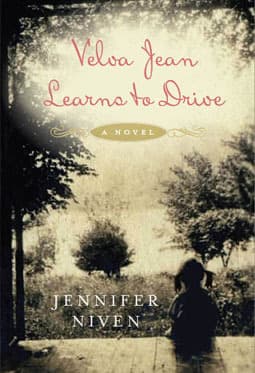
Synopsis
Covers the whole plot, including the ending.
- Difficulty
- Easy
- Pacing
- Moderate
- Mood
- Poignant, Hopeful, Romantic, Evocative
- Read it if
- You enjoy historical fiction set in Appalachia with a strong female protagonist, a blend of romance and coming-of-age, and themes of chasing dreams.
- Skip it if
- You prefer fast-paced thrillers or stories without significant romantic drama and the challenges of early 20th-century rural life.
Velva Jean Learns to Drive Plot Summary
Covers the whole plot, including the ending.
A Mother's Dying Wish and a Young Girl's Dream
Velva Jean Hart lives a simple life in the Blue Ridge Mountains of North Carolina with her strict, religious father, Robert, and her sick mother. Her mother, knowing she doesn't have much time, tells Velva Jean to "live out there in the great wide world" and not be stuck in their isolated community. Velva Jean, a good singer, dreams of performing on the Grand Ole Opry in Nashville. She often shares this dream with her best friend, Buddy. After her mother dies, Velva Jean feels she must follow her mother's words and seek a life beyond moonshining and mountain hardships, though her father resists her dreams.
Harley Bright Arrives in Lily Ridge
A revival meeting comes to Lily Ridge, bringing the handsome preacher, Harley Bright. Harley, a former delinquent now an evangelist, immediately gets Velva Jean's attention with his strong sermons and captivating presence. Despite warnings from her father and Buddy about Harley's past and intense personality, Velva Jean is drawn to him. Their connection is immediate and passionate. Harley seems to see a spark in Velva Jean that no one else does, encouraging her singing in the church, but only in a religious setting.
A Whirlwind Courtship and Secret Marriage
Velva Jean and Harley's relationship quickly grows, much to her father's disapproval. Harley proposes, and despite her father's objections and Buddy's pleas, Velva Jean elopes with Harley. They marry in secret, believing their love can overcome anything. This decision creates a big split between Velva Jean and her father, who sees Harley as a bad influence. This further isolates Velva Jean from her childhood home and support. Harley's charm, however, convinces Velva Jean that this is her path to happiness.
Life with Harley and the Burdens of the Past
Velva Jean moves into Harley's small cabin, beginning her new life as a preacher's wife. She soon learns that Harley's past is more complicated than he let on, with hints of violence and a quick temper appearing beneath his charming outside. Harley's work as a revival preacher often takes them on the road, where Velva Jean sings with him, gaining performance experience. However, the constant travel and Harley's unpredictable moods start to stress their relationship, and Velva Jean begins to feel trapped in her new role, questioning her choices.
The Moonshine Business and Growing Dangers
As their money problems grow, Harley gets more involved in his father-in-law's moonshine operation, a dangerous and illegal trade. Velva Jean, though she doesn't want to at first, finds herself pulled into the illegal activities. She often drives the liquor to various drop-off points, which is where her driving skill comes in. This involvement goes against her own sense of right and wrong and pulls her further into a life she never imagined. The risks increase as they face threats from rival moonshiners and the constant danger of the law, making Velva Jean fear for her safety and Harley's life.
A Tragic Accident and a Life-Altering Choice
During a risky moonshine delivery, Velva Jean and Harley are in a terrible accident. This event leads to a tragic loss and makes Velva Jean face the harsh reality of their dangerous life. Afterward, Velva Jean understands the true cost of Harley's choices and how much her own dreams have been pushed aside. This moment strengthens her decision to change her path, even if it means leaving Harley and the only life she has known since their marriage. It pushes her closer to fulfilling her mother's dying wish.
Escape to Nashville
Driven by the recent tragedy and her mother's words, Velva Jean decides to leave Harley and her mountain home. She packs her few belongings and heads for Nashville, determined to pursue her dream of singing on the Grand Ole Opry. This journey is a big turning point, as she sheds the identity of a moonshiner's wife and embraces the uncertainty of a new life as an aspiring musician. The move is filled with both fear and hope as she steps into the unknown, carrying her guitar and the weight of her past.
Struggles and Small Victories in Music City
In Nashville, Velva Jean quickly learns that becoming a music star is not easy. She faces poverty, loneliness, and rejection, often singing in small bars for little pay. However, her talent and unique voice start to get the attention of a few key people in the local music scene. She makes new friends and connections, learning about the industry and slowly building her confidence. These experiences, though hard, improve her as an artist and strengthen her desire to succeed, bringing her closer to her Opry dream.
Harley's Return and a Difficult Reunion
Just as Velva Jean starts to gain some ground in Nashville, Harley reappears, having found her. His return throws Velva Jean into emotional confusion. He tries to win her back, using their shared past and his charm, but Velva Jean has changed. She is torn between her past love for Harley and her growing independence and career goals. This reunion forces her to face the complex feelings she still has for him, while also strengthening her commitment to her own dreams and the life she is building for herself, apart from him.
The Grand Ole Opry Audition
Through hard work and the support of her new friends and mentors, Velva Jean finally gets an audition for the Grand Ole Opry. This is the goal of her lifelong dream and her mother's last wish. The audition is a high-stakes moment, filled with anxiety and hope. She performs with all her heart, putting all her experiences, pain, and dreams into her music. The result of this audition will decide if she truly makes it in country music, or if she must find another path.
A Choice Between Love and Dreams
After her Opry audition, Velva Jean faces a big decision. Harley, still in her life, asks her again to return to him and their past. At the same time, the chance for a successful music career calls to her. Velva Jean must weigh the comfort and familiarity of her complicated love for Harley against the exciting, but uncertain, future of her musical aspirations. This choice shows the ultimate fulfillment of her journey of self-discovery and independence, as she decides whether she will truly live 'out there in the great wide world' on her own terms.
Principal Figures
Velva Jean Hart
Protagonist
A spirited Appalachian girl with a dream of singing on the Grand Ole Opry.
Velva Jean is a determined and talented young woman from the Blue Ridge Mountains. Guided by her mother's dying wish to 'live out there in the great wide world,' she possesses a powerful singing voice and an unwavering ambition to perform on the Grand Ole Opry. Initially naive and easily swayed by love, she gradually grows into a resilient and independent woman, capable of making difficult choices for her own future. She is deeply loyal but also possesses a strong sense of self-preservation and an innate desire for a life beyond the confines of her upbringing.
Relationships: Harley Bright (Husband, tumultuous and passionate love, source of both joy and pain); Robert Hart (Strict, religious father; strained relationship due to Velva Jean's choices); Buddy (Lifelong best friend, unrequited love, constant support and moral compass); Mother (Deceased, but her dying wish serves as Velva Jean's primary motivation)
Harley Bright
Antagonist/Love Interest
A charismatic and troubled revival preacher who marries Velva Jean.
Harley Bright is a complex character, initially appearing as a charming and captivating preacher who offers Velva Jean an escape from her mundane life. He possesses a magnetic personality and a passionate nature that draws Velva Jean in. However, beneath his alluring exterior lies a troubled past, a volatile temper, and a tendency towards dangerous, illegal activities like moonshining. He is deeply in love with Velva Jean but struggles with his own demons, often making choices that jeopardize her safety and dreams. He represents the allure of passion and the dangers of a life unexamined.
Relationships: Velva Jean Hart (Wife, intense and complicated love affair); Robert Hart (Father-in-law, antagonistic relationship due to moonshining and Velva Jean's marriage)
Buddy
Supporting
Velva Jean's loyal best friend and confidant, secretly in love with her.
Buddy is Velva Jean's childhood best friend, a steady and reliable presence in her life. He is deeply, though often unspokenly, in love with Velva Jean and serves as her moral compass and a voice of reason. He is protective and wary of Harley Bright, always looking out for Velva Jean's best interests. Despite his heartbreak, he remains a supportive figure, representing the stability and comfort of home. His quiet devotion highlights Velva Jean's journey of self-discovery and the choices she makes in pursuit of her dreams.
Relationships: Velva Jean Hart (Best friend, unrequited love, unwavering support); Robert Hart (Neighbor, friend to the family)
Robert Hart
Supporting
Velva Jean's strict, religious, and traditional father.
Robert Hart is Velva Jean's stern and deeply religious father, a man rooted in the traditions of his Appalachian community. He is a moonshiner, a trade he views as necessary for survival, but also a devout man who struggles with his daughter's modern aspirations and her relationship with Harley. He represents the restrictive, yet sometimes protective, nature of Velva Jean's upbringing. His disapproval of Harley and Velva Jean's choices creates significant conflict, but his underlying love for his daughter is evident, even if expressed through harshness.
Relationships: Velva Jean Hart (Daughter, strained but loving relationship); Harley Bright (Son-in-law, antagonistic relationship due to Harley's character and moonshining)
Velva Jean's Mother
Mentioned
Deceased, but her dying wish drives Velva Jean's journey.
Velva Jean's mother, though she dies early in the story, is a pivotal character whose influence shapes the entire narrative. Her dying words, urging Velva Jean to 'live out there in the great wide world,' serve as the protagonist's primary motivation and guiding principle. She represents the yearning for a life beyond the mountains and instills in Velva Jean the courage to pursue her dreams. Her memory fuels Velva Jean's ambition and acts as a constant reminder of the promise she made.
Relationships: Velva Jean Hart (Daughter, spiritual guide and inspiration)
Mabel
Supporting
A kind-hearted woman who helps Velva Jean in Nashville.
Mabel is a compassionate and practical woman Velva Jean encounters in Nashville. She offers Velva Jean a place to stay and a job, providing much-needed stability and guidance during Velva Jean's initial struggles in the city. Mabel represents the kindness of strangers and the support system Velva Jean finds outside of her Appalachian home. She helps Velva Jean navigate the challenges of urban life and the music industry, becoming a maternal figure and a source of encouragement.
Relationships: Velva Jean Hart (Friend and employer, maternal figure)
Jimmie Rodgers (The Singing Brakeman)
Mentioned
A legendary country music artist Velva Jean admires.
Jimmie Rodgers, a real-life country music pioneer, is an idol for Velva Jean. His music and story represent the kind of success and recognition she aspires to achieve. He symbolizes the 'great wide world' of music that Velva Jean dreams of entering. References to his songs and career inspire Velva Jean and provide a tangible goal for her artistic ambitions, connecting her personal journey to the broader history of country music.
Themes & Insights
The Pursuit of Dreams vs. The Comfort of Love
This theme is key to Velva Jean's journey. She constantly struggles between her dream of singing on the Grand Ole Opry and her passionate, though difficult, love for Harley Bright. Her mother's dying wish to 'live out there in the great wide world' directly challenges the traditional path of marriage and family in Appalachia. Velva Jean's decision to leave Harley and Nashville, despite her lingering feelings, shows her commitment to her own goals, even if it means giving up a complex love. This struggle is clear in her internal conflicts and the outside pressures from both Harley and her father.
“Mama always said, 'Live out there in the great wide world, Velva Jean. Don't let these mountains hold you down.'”
Independence and Self-Discovery
Velva Jean's story is about a young woman finding her own voice and making her own way. At first, her identity is tied to her relationships – first as her father's daughter, then as Harley's wife. Her journey to Nashville, leaving her home and husband, is a powerful act of freedom. She learns to rely on herself, handle challenges alone, and make choices that fit her own desires rather than outside expectations. Her growth into a confident performer and a self-sufficient person highlights this theme, ending with her ability to choose her own future.
“I wasn't Velva Jean Hart, the moonshiner's daughter, or Velva Jean Bright, the preacher's wife. I was just Velva Jean, and the world was waiting.”
The Allure and Danger of Forbidden Love
The passionate relationship between Velva Jean and Harley Bright shows this theme. Harley, a former delinquent turned preacher, represents a dangerous yet exciting escape from Velva Jean's sheltered life. Their elopement, going against her father's wishes and Buddy's warnings, shows how strongly their love pulls them together. However, the 'forbidden' aspect also brings danger, as Harley's involvement in moonshining and his quick temper lead Velva Jean into risky situations and threaten her dreams and safety. Their love is both a source of thrilling freedom and great risk.
“He was trouble, I knew it in my bones. But he was my trouble, and I loved him all the same.”
Appalachian Culture and Its Constraints
The novel clearly shows the culture of the Blue Ridge Mountains before WWII. This includes strong religious beliefs, close communities, and the common presence of moonshining. This setting provides both a sense of belonging and big limits for Velva Jean. Her father's traditional views and the expectations of a preacher's wife clash with her modern goals. The moonshine trade, a source of money but also danger, directly affects her life with Harley. The story explores how Velva Jean must navigate and eventually go beyond these cultural boundaries to follow her own dreams.
“The mountains had a way of holding you tight, like a mama bear with her cub. But sometimes, a cub had to break free.”
Plot Devices & Literary Techniques
The Dying Wish
Velva Jean's mother's final words serve as her primary motivation.
The dying wish of Velva Jean's mother, urging her to 'live out there in the great wide world,' acts as a powerful inciting incident and a continuous driving force throughout the novel. This device establishes Velva Jean's core motivation from the outset, providing a clear goal for her journey. It justifies her choices, particularly her decision to leave Appalachia and pursue music, and serves as an emotional touchstone whenever she faces doubt or temptation to return to her old life. It effectively frames the entire narrative as a quest for self-fulfillment and honoring a promise.
The Grand Ole Opry Dream
A tangible, iconic goal representing Velva Jean's aspirations.
The Grand Ole Opry serves as a concrete and highly symbolic representation of Velva Jean's dreams of musical stardom and a life beyond her mountain home. It is a specific, iconic goal that provides direction and purpose for her character. This device allows the reader to track Velva Jean's progress and setbacks, adding a layer of suspense and emotional investment. It also grounds the story in a recognizable historical and cultural context, making her journey relatable and aspirational within the realm of country music.
Moonshine as a Catalyst
The illegal moonshine trade drives plot conflicts and character development.
Moonshining is not merely a backdrop but a crucial plot device. It is initially a part of Velva Jean's family history and later becomes central to Harley's illicit activities, directly impacting Velva Jean's life. The dangers associated with the trade (rivals, law enforcement, accidents) create significant external conflicts, leading to pivotal tragic events that force Velva Jean to make life-altering decisions. This device highlights the moral compromises and physical perils she endures, ultimately pushing her towards independence and away from Harley's destructive path.
The First Love vs. True Calling Dilemma
Velva Jean's choice between her passionate first love and her personal ambition.
This classic dilemma forms the core conflict of Velva Jean's character arc. Harley Bright represents the intense, transformative power of first love, offering both excitement and pain. However, this love often conflicts with Velva Jean's 'true calling' – her dream of singing and her desire for an independent life. The constant push and pull between these two powerful forces creates internal struggle and external drama, forcing Velva Jean to weigh what she truly values. Her eventual choice signifies her maturity and commitment to her self-worth and aspirations.
Velva Jean Learns to Drive Quotes
“It was the first time I realized that love was a choice, not a feeling.”
“The world was a big place, and I was just a little girl from a little town, but I had a big heart and a big dream.”
“Sometimes you had to leave home to find out where you truly belonged.”
“Fear was a funny thing. It could make you run, or it could make you fight.”
“Music was the only thing that made sense when nothing else did.”
“A girl could get lost in a book, and sometimes that was exactly what she needed.”
“There were some things you just had to do, even if you were scared, even if you didn't know how.”
“Grief was a heavy coat, and sometimes you just had to wear it until the sun came out again.”
“You couldn't change the past, but you could sure as hell try to make the future better.”
“Being brave didn't mean you weren't afraid. It meant you did it anyway.”
“Sometimes the biggest adventures started with the smallest steps.”
“Love wasn't always a soft landing. Sometimes it was a bumpy ride, but it was worth it.”
“The road ahead was long, but I had my voice, and I had my dreams, and that was enough.”
Quiz
10 questions on the plot and the characters. Each answer comes with a short explanation.
Question 1
What specific skill does Velva Jean's mother urge her to learn before she dies, besides living in the 'great wide world'?
- How to cook a perfect biscuit
- How to read sheet music
- How to drive a car
- How to sew a dress
Show answer
C. How to drive a car One of the central themes and plot points is Velva Jean learning to drive, a skill her mother specifically encourages her to acquire.
Question 2
Where does Velva Jean dream of becoming a 'big-time singer'?
- New York City
- Hollywood
- Nashville
- Atlanta
Show answer
C. Nashville Velva Jean's primary musical ambition is to sing in Nashville, specifically at the Grand Ole Opry.
Question 3
What is Harley Bright's initial background before he becomes a revival preacher?
- A traveling salesman
- A moonshiner
- A juvenile delinquent
- A coal miner
Show answer
C. A juvenile delinquent The description explicitly states Harley Bright is a 'handsome juvenile delinquent turned revival preacher'.
Question 4
In what region of the United States is the story primarily set?
- The Pacific Northwest
- The Midwest
- Appalachia
- The Deep South coast
Show answer
C. Appalachia The novel is explicitly set in 'Appalachia in the years before World War II', specifically the 'gold-mining and moonshining South'.
Question 5
What major historical event is mentioned as preceding the setting of the story?
- The Roaring Twenties
- The Great Depression
- World War II
- The Korean War
Show answer
C. World War II The story is set 'in the years before World War II', making it a key historical context.
Question 6
What is the primary conflict Velva Jean faces regarding her future?
- Choosing between two different suitors
- Deciding whether to stay in school or work
- Balancing her dream of singing with her relationship and home
- Overcoming her fear of driving
Show answer
C. Balancing her dream of singing with her relationship and home The core conflict is described as Velva Jean having to 'choose between keeping her hard-won home and pursuing her dream of singing in the Grand Ole Opry'.
Question 7
What specific venue does Velva Jean aspire to sing at in Nashville?
- The Ryman Auditorium
- The Station Inn
- The Grand Ole Opry
- Tootsie's Orchid Lounge
Show answer
C. The Grand Ole Opry Her dream is explicitly stated as 'singing in the Grand Ole Opry'.
Question 8
Which of the following best describes the genre blend of 'Velva Jean Learns to Drive'?
- Mystery, Thriller, Contemporary
- Science Fiction, Dystopian, Adventure
- Historical Fiction, Young Adult, Romance
- Fantasy, Epic, Literary Fiction
Show answer
C. Historical Fiction, Young Adult, Romance The provided book description explicitly lists the genres as 'Historical Fiction, Young Adult, Romance'.
Question 9
What is the significance of Velva Jean's mother's dying wish?
- It encourages Velva Jean to settle down and start a family.
- It prompts Velva Jean to pursue a life beyond her immediate surroundings.
- It forces Velva Jean to take over the family business.
- It makes Velva Jean afraid to leave her home.
Show answer
B. It prompts Velva Jean to pursue a life beyond her immediate surroundings. Her mother urges her to 'live out there in the great wide world', directly encouraging Velva Jean to seek experiences beyond her current life in Appalachia.
Question 10
The description mentions 'gold-mining and moonshining' as characteristics of the South where Velva Jean grows up. What does this suggest about the economic and social environment?
- A region known for its industrial wealth and modern amenities.
- An area with a strong focus on formal education and professional careers.
- A rural, potentially struggling area with informal or illicit economic activities.
- A bustling urban center with diverse cultural influences.
Show answer
C. A rural, potentially struggling area with informal or illicit economic activities. Gold-mining, especially in the context of Appalachia before WWII, often implies a challenging, resource-dependent economy, and moonshining indicates illicit, often rural, economic activity, suggesting a less formalized, possibly struggling environment.
Velva Jean Learns to Drive FAQ
What is the central conflict Velva Jean faces throughout the story?
Velva Jean's central conflict revolves around choosing between her love for Harley Bright and the stability of their home, and her deeply held dream of becoming a professional singer in Nashville, specifically performing at the Grand Ole Opry. This internal struggle is intensified by her mother's dying wish for her to experience the 'great wide world.'
Who is Harley Bright and what is his significance to Velva Jean?
Harley Bright is a charismatic juvenile delinquent who transforms into a revival preacher, capturing Velva Jean's heart. He represents stability, family, and a more conventional life path, becoming her husband and the father of her child, which directly challenges her aspirations for a musical career.
Where is the primary setting of the novel and how does it influence Velva Jean's life?
The novel is primarily set in Appalachia during the years leading up to World War II, a region characterized by gold-mining and moonshining. This environment shapes Velva Jean's upbringing, her initial limited worldview, and the traditional expectations placed upon young women, making her dreams of a singing career in Nashville seem even more ambitious.
What is the significance of Velva Jean's mother's dying wish?
Velva Jean's mother's dying wish, 'live out there in the great wide world,' serves as a powerful catalyst for Velva Jean's journey and her pursuit of her dreams. It provides a moral imperative and a sense of permission for Velva Jean to transcend the confines of her Appalachian home and seek a life beyond traditional expectations.
What role does music play in Velva Jean's life beyond just a dream?
Music is not just a dream for Velva Jean; it is an intrinsic part of her identity, a means of expression, and a connection to her deepest self. It provides solace, an outlet for her emotions, and a tangible link to a potential future that contrasts sharply with her present circumstances, often serving as a form of escape.
Are there any subtle hints about Velva Jean's father or his past?
While the novel focuses heavily on Velva Jean's mother's influence, there are subtle allusions to her father's past, particularly his involvement in the gold-mining and moonshining culture of Appalachia. These details subtly inform the environment Velva Jean grows up in and the practical skills she learns, even if his emotional presence is less overt.
How does the impending World War II subtly affect the atmosphere or characters' decisions?
The looming shadow of World War II subtly permeates the narrative, creating an underlying sense of urgency and uncertainty. It influences characters' decisions by highlighting the preciousness of time and opportunity, and the potential for life-altering events, pushing Velva Jean to pursue her dreams before it might be too late.
Are there any recurring symbols or motifs that foreshadow Velva Jean's journey?
The 'open road' or the act of 'driving' itself serves as a recurring motif, symbolizing freedom, independence, and the journey beyond her immediate world. Learning to drive is a literal and metaphorical act for Velva Jean, representing her growing agency and her desire to steer her own destiny.
What is the significance of the Grand Ole Opry specifically, rather than just 'singing in Nashville'?
The Grand Ole Opry represents the pinnacle of country music success and validation for Velva Jean, a tangible goal that signifies ultimate achievement and recognition within her chosen genre. It's not just about singing; it's about reaching the highest stage, proving her talent, and fulfilling a specific, iconic dream.
How does Velva Jean's relationship with Harley evolve and what does it reveal about her growth?
Velva Jean's relationship with Harley evolves from passionate young love to a complex bond tested by differing ambitions. Initially, she is swept away by his charisma, but as she matures, she recognizes the sacrifices her dreams entail. This evolution reveals her growing self-awareness and her increasing commitment to her own identity beyond her role as a wife.
What psychological impact does her mother's death have on Velva Jean's decisions?
Her mother's death profoundly impacts Velva Jean by imbuing her mother's final wish with immense emotional weight and urgency. It creates a psychological imperative to honor her mother's memory by living a full, adventurous life, pushing Velva Jean to overcome fear and pursue her aspirations more aggressively than she might have otherwise.
How does Velva Jean's 'spirited' nature manifest in her choices and challenges?
Velva Jean's 'spirited' nature manifests in her unwavering determination to pursue her dreams despite societal expectations, personal commitments, and significant obstacles. It drives her resilience when faced with setbacks and gives her the courage to defy traditional roles, making choices that prioritize her artistic ambition over immediate comfort or security.
What internal struggles does Velva Jean face regarding guilt or duty towards her family versus her personal ambition?
Velva Jean grapples with intense internal struggles regarding guilt and duty, particularly concerning Harley and their child. She feels the pull of traditional expectations to be a devoted wife and mother, which conflicts with her deep-seated artistic ambition, leading to periods of emotional turmoil and difficult choices about her priorities.
Is Velva Jean's pursuit of her dream selfish or an act of self-preservation?
This is debatable, but Velva Jean's pursuit of her dream can be interpreted as an act of self-preservation. While it requires significant sacrifices from her loved ones, denying her true calling would ultimately lead to a loss of her identity and spirit, making her unable to fully contribute or find happiness in any role.
Does the novel suggest that true love and personal ambition are mutually exclusive?
The novel explores the tension between true love and personal ambition without definitively stating they are mutually exclusive. Instead, it suggests that achieving both requires immense sacrifice, compromise, and a partner willing to understand and support individual aspirations, highlighting the difficult choices inherent in balancing a passionate relationship with a demanding dream.
How does the ending challenge or reinforce traditional notions of 'happily ever after'?
The ending likely challenges traditional notions of 'happily ever after' by prioritizing personal fulfillment and the pursuit of a dream over a conventional, unproblematic romantic resolution. It suggests that happiness can be found in self-actualization, even if it comes with complexities or unconventional relationship dynamics, rather than solely through a perfect domestic life.
What message does the book convey about women's roles and aspirations in the pre-WWII era?
The book conveys a powerful message about the limitations and burgeoning aspirations of women in the pre-WWII era. It highlights the societal pressures for women to prioritize domesticity and family, while simultaneously celebrating Velva Jean's courage to defy these norms and seek an independent path, embodying a nascent feminist spirit.
Could Harley be seen as an antagonist, or merely a conflicting force in Velva Jean's life?
Harley is more accurately seen as a conflicting force rather than a true antagonist. While his desires and lifestyle clash with Velva Jean's ambitions, he genuinely loves her and has his own journey of growth and redemption. His role is to present the powerful alternative path and the emotional stakes of Velva Jean's choices, not to maliciously hinder her.
About the author

Jennifer Niven is an American author known for her fiction, particularly young adult novels. Her notable works include "All the Bright Places," which explores themes of love and mental health, and "Velva Jean Learns to Drive," a coming-of-age story set in the 1940s. Niven's writing often delves into complex emotional landscapes and personal growth.
Similar books
- Christy
Catherine Marshall
4.2 (49k) average on GoodreadsHistorical FictionFeatures a young woman finding her way in rural Appalachia with themes of self-discovery and love.
- Where the Crawdads Sing
Delia Owens
4.5 (975k) average on GoodreadsHistorical FictionOffers a strong female protagonist in a natural, isolated setting facing societal challenges and a complex love story.
- The Giver of Stars
Jojo Moyes
4.3 (183k) average on GoodreadsHistorical FictionExplores the lives of women in rural Appalachia during the Depression era, focusing on independence and community.
- The Secret Life of Bees
Sue Monk Kidd
4.1 (1.1M) average on GoodreadsHistorical FictionWhile both novels feature young women coming-of-age in the mid-20th century American South, "The Secret Life of Bees" offers a more profound exploration of racial injustice, female community, and the complexities of alternative family structures, providing greater thematic depth and social commentary than "Velva Jean Learns to Drive".
- To Kill a Mockingbird
Harper Lee
4.3 (4.5M) average on GoodreadsHistorical FictionIn the 1930s Jim Crow South, Harper Lee writes about racial injustice, moral growth, and the quiet courage of a lawyer father, Atticus Finch, as seen through his young daughter's eyes.
- The Great Gatsby
F. Scott Fitzgerald
3.9 (3.8M) average on GoodreadsHistorical FictionIn the opulent Roaring Twenties, a mysterious millionaire's lavish parties hide his desperate, tragic pursuit of a lost love, exposing the emptiness within the American Dream.




Enjoyed the summary?
A summary gives you the shape of the book. The book itself has the detail, the examples and the voice.
Find Velva Jean Learns to Drive on AmazonAs an Amazon Associate, BookBrief earns from qualifying purchases. How we're funded