

Synopsis
Covers the whole plot, including the ending.
- Difficulty
- Medium
- Pacing
- Fast
- Mood
- Darkly Humorous, Cynical, Absurdist, Satirical, Suspenseful
- Read it if
- You enjoy dark satire, coming-of-age stories with an anti-hero protagonist, and a biting critique of media sensationalism and American culture. Fans of 'Huckleberry Finn' with a modern, cynical twist will appreciate this.
- Skip it if
- You are sensitive to themes of school violence, enjoy straightforward narratives without heavy satire, or prefer optimistic and heartwarming stories.
Vernon God Little Plot Summary
Covers the whole plot, including the ending.
The Aftermath of a Massacre in Martirio
Fifteen-year-old Vernon Gregory Little lives in the fictional town of Martirio, Texas. The town focuses on appearances and rumors. His best friend, Jesus Navarro, has just committed a school massacre, killing sixteen students and six teachers before taking his own life. Vernon, who was with Jesus just before the incident, is immediately seen by the community and media as a co-conspirator. The town's ambitious Sheriff Vain Gurie, pushed by public panic and a wish for fame, quickly focuses on Vernon, even without clear proof. Vernon's mother, Pam, cares more about how she looks and what the town thinks of her than about understanding her son's problem. This makes Vernon feel more alone and sad.
Interrogation and False Accusations
Sheriff Gurie and other authorities question Vernon intensely and forcefully. He is kept from sleeping, threatened, and tricked into signing a confession he does not fully understand and that the police mostly made up. The media, especially talk show host Lally, makes Vernon seem like a disturbed helper in the murders, turning him into a national outcast. Even though he is innocent, Vernon's awkward manner, his friendship with Jesus, and his inability to explain his situation well make the public believe he is guilty. His mother, caught up in the media attention, first believes the worst of him, pushing Vernon further away.
Escape to Mexico and a Chance Encounter
Overwhelmed by the accusations and the stifling atmosphere of Martirio, Vernon decides to run to Mexico. He crosses the border with help from his mother's friend, a truck driver named Eulalio. In Mexico, Vernon hopes to be unknown and escape the constant scrutiny. During his trip, he meets a man named Lazaro, who at first seems like a friend, but whose real intentions are unclear. Vernon runs away because he desperately wants freedom and naively believes he can outrun his problems. But he soon finds that his fame came before him.
The Return to Martirio and Trial
Vernon's attempt to disappear in Mexico does not last long. He is eventually caught and sent back to Texas for trial for his supposed part in the school massacre. The trial becomes a disturbing media show, with Martirio's residents wanting to see Vernon convicted. The prosecution, led by a tough District Attorney, presents a case based on indirect proof, Vernon's forced confession, and the town's shared wish for a scapegoat. Vernon's defense lawyer, an overwhelmed public defender, struggles against the strong public opinion and the media's biased coverage. Vernon feels more and more helpless and accepts his fate.
The Verdict and Death Row
Despite little strong evidence, the jury, swayed by public panic and the media's portrayal, finds Vernon guilty of being an accessory to the murders. He is sentenced to death, making him a sad national celebrity. Vernon goes to death row, where he sees the harsh realities of the American justice system. His situation gets attention from different people and groups, some truly concerned, others wanting to use his story. His mother, Pam, still focused on her own image, tries to handle having a son on death row, often putting outward appearances before Vernon's feelings.
The Reality TV Show
In a strange turn, Vernon's case becomes the topic of a new reality television show called 'The Last Chance.' In this show, prisoners facing execution compete for public sympathy and possible mercy. This show, led by the TV producer Lally, further blurs the lines between justice and entertainment. Vernon, against his better judgment and because of his lawyer and mother, takes part in the show. He has to tell his story, answer personal questions, and perform for a national audience, all while his life is at risk. The show reveals how tragedy is made into a product and the public's constant desire for sensational stories.
A Plea for Innocence and a Twist
As his execution date gets closer, Vernon asks for his innocence during an episode of 'The Last Chance.' He tries to explain what really happened and how he was forced into things. At the same time, a key piece of evidence appears: a videotape of Jesus Navarro explaining why he did the massacre, proving Vernon innocent. This tape, which had been hidden or missed, shows that Jesus acted alone and that Vernon knew nothing of his plans. The discovery causes confusion in the legal system and the media, forcing them to face their quick judgment.
The Appeal and Public Reaction
Jesus's videotape makes an appeal of Vernon's conviction necessary. The public, who had earlier condemned him, now changes its mind. Media outlets, including Lally, have to rethink their story, though many care more about fixing their image than showing real regret. The town of Martirio, which had enjoyed its role as victim and prosecutor, now faces the uncomfortable truth of its shared mistake. Vernon's mother, Pam, finally starts to show real concern for her son, understanding how much injustice he has suffered.
Freedom and the Aftermath
Vernon is eventually cleared and released from death row. While he gets his freedom back, the experience has changed him deeply. He is no longer the innocent, somewhat distant teenager he once was. The marks of his wrongful conviction, the media attention, and the betrayal by his community and the justice system stay with him. He struggles to come to terms with the world that so quickly condemned him. The novel ends with Vernon's uncertain future, showing the lasting effect of injustice and how hard it is to truly move on from such a bad experience, even when free.
Vernon God Little Characters
Vernon Gregory Little
Protagonist
A cynical, naive teenager wrongly accused of complicity in a school massacre.
Vernon is a fifteen-year-old boy from Martirio, Texas, whose life is irrevocably altered after his best friend, Jesus Navarro, commits a school shooting. He is a detached observer of his own life, often cynical and prone to crude humor, but underneath lies a deep vulnerability and a desire for acceptance. He struggles to articulate himself, often resorting to internal monologues and a unique, often profane, vernacular. Vernon is a passive protagonist, frequently swept along by events rather than actively shaping them, which contributes to his predicament. His journey from innocent bystander to death row inmate and back exposes his resilience and his profound disillusionment with society.
Relationships: Jesus Navarro (Best friend, the perpetrator of the massacre); Pam Little (His image-obsessed mother); Sheriff Vain Gurie (The manipulative law enforcement officer who frames him); Lally (The sensationalist TV producer who exploits his story)
Pam Little
Supporting
Vernon's shallow and image-conscious mother.
Pam is Vernon's mother, a woman deeply concerned with appearances and what the neighbors think. Initially, she is more worried about her social standing and the perceived disgrace Vernon brings upon the family than about his actual innocence or well-being. She is easily manipulated by the media and public opinion, often believing the worst of her son. Her character embodies the superficiality of Martirio. Over the course of the novel, she slowly begins to realize the gravity of Vernon's situation and shows some signs of genuine concern, but her transformation is limited and often overshadowed by her self-interest.
Relationships: Vernon Gregory Little (Her son); Eulalio (Her friend, who helps Vernon escape)
Jesus Navarro
Mentioned
Vernon's best friend and the perpetrator of the school massacre.
Jesus is Vernon's best friend and the catalyst for the entire plot, as he commits the school shooting and then takes his own life. Though largely absent from the narrative as an active character, his actions and his posthumous videotape are central to Vernon's ordeal and eventual exoneration. He is portrayed as an outcast, bullied by other students, and his actions are a desperate cry for attention and revenge against a society he felt rejected him. His videotape provides the crucial evidence that proves Vernon's innocence and reveals the true motives behind the tragedy.
Relationships: Vernon Gregory Little (Best friend)
Sheriff Vain Gurie
Antagonist
The ambitious and corrupt local sheriff who frames Vernon.
Sheriff Gurie is the primary antagonist, a small-town lawman driven by ambition, a thirst for fame, and a desire to be seen as a hero. He quickly targets Vernon as a convenient scapegoat for the Martirio massacre, coercing a false confession and manipulating evidence. He is a caricature of corrupt authority, exploiting public fear and the media's hunger for a quick resolution. Gurie embodies the incompetence and moral bankruptcy within the justice system that allows Vernon's wrongful conviction to occur. His actions directly lead to Vernon's suffering and imprisonment.
Relationships: Vernon Gregory Little (His victim and falsely accused suspect)
Lally
Antagonist
A sensationalist reality TV producer who exploits Vernon's story.
Lally is a ruthless and opportunistic reality television producer who turns Vernon's death row case into a grotesque entertainment spectacle called 'The Last Chance'. He represents the media's voyeuristic and commercial exploitation of tragedy and human suffering. Lally is concerned only with ratings and profit, manipulating narratives and individuals to create compelling television, regardless of the ethical implications. He embodies the superficiality and moral emptiness of a media landscape that prioritizes entertainment over truth and justice, initially contributing to Vernon's vilification and later attempting to profit from his exoneration.
Relationships: Vernon Gregory Little (His exploited subject for a reality TV show)
Eulalio
Supporting
A truck driver who aids Vernon's escape to Mexico.
Eulalio is a friend of Vernon's mother, Pam, who helps Vernon escape Martirio and cross the border into Mexico. He is a minor character but provides a momentary glimmer of kindness and assistance in Vernon's desperate flight. Eulalio represents a small act of defiance against the overwhelming forces arrayed against Vernon. His role is brief but crucial in allowing Vernon to temporarily escape the immediate clutches of the law and the media, though his escape proves to be short-lived.
Relationships: Vernon Gregory Little (Helps him escape); Pam Little (Friend)
Lazaro
Supporting
A mysterious figure Vernon encounters in Mexico.
Lazaro is a enigmatic character Vernon meets during his brief time in Mexico. He appears to offer Vernon assistance and guidance, but his true motives are ambiguous, adding to Vernon's sense of confusion and isolation. Lazaro represents the unpredictable nature of Vernon's journey and the potential for both help and danger in unfamiliar territory. He is a transient figure, reflecting Vernon's own transient state, and his interactions with Vernon are brief but memorable, highlighting Vernon's vulnerability in a foreign land.
Relationships: Vernon Gregory Little (A brief acquaintance in Mexico)
Mrs. Fainting
Supporting
A local Martirio resident who embodies the town's gossipy nature.
Mrs. Fainting is a minor character from Martirio who embodies the town's pervasive gossip, judgmental attitude, and superficiality. She is one of the many townspeople quick to condemn Vernon and participate in the media frenzy surrounding the massacre. Her character represents the collective consciousness of Martirio, which is easily swayed by sensationalism and quick to assign blame without seeking truth. She contributes to the suffocating atmosphere that Vernon experiences in his hometown.
Relationships: Vernon Gregory Little (A condemning town resident)
Vernon God Little Themes
Media Satire and the Exploitation of Tragedy
The novel strongly criticizes modern media's sensational and exploitative nature. Lally and his reality TV show 'The Last Chance' show how tragedy, like a school shooting, is turned into entertainment and profit. The media, instead of finding truth, actively shapes public opinion, makes Vernon look bad, and turns his life-or-death situation into a show. This theme shows how easily public perception can be controlled and how the search for ratings can override justice, turning human suffering into entertainment for many people.
“The TV’s always on, even if there’s nothing to see. Just the blue screen, and the sound of static. That’s America, man.”
The Corruptibility of Justice and Authority
Vernon's journey shows the deep flaws and corruption within the American justice system. Sheriff Gurie's ambition leads him to force a false confession from Vernon and manipulate evidence. This shows how personal goals can twist justice. The trial itself is shown as a joke, swayed by public panic rather than facts. This theme questions the honesty of institutions meant to protect innocent people. It shows how a system designed for justice can instead become a tool of oppression, especially against those who lack power or a strong voice.
“They wanted a killer, and they had one. Me.”
American Superficiality and Consumerism
Martirio, Texas, is a small example of American superficiality, where appearances, consumer goods, and rumors are most important. Vernon's mother, Pam, is a good example. She cares more about her new sofa or how her son's problem makes her look than about Vernon's innocence. The town's residents are quick to judge and condemn, driven by a need for entertainment and little real empathy. This theme highlights a society focused on possessions and outside approval, where human tragedy can quickly become just another story to consume.
“Martirio, Texas, was a town where people bought stuff to make other people jealous, and then gossiped about them when they did.”
Adolescent Alienation and Identity
Vernon's narration shows the deep isolation and confusion of being a teenager, especially when thrown into an unimaginable crisis. He feels misunderstood by his family, his community, and the legal system. His doubtful and often rude thoughts are a way to protect himself from a world that makes no sense to him. He struggles to define himself apart from the accusations against him. This shows how fragile identity is when faced with strong outside forces. His journey is one of forced self-discovery through extreme hardship. He deals with who he is versus who society thinks he is.
“I was just a kid. I didn’t know anything. I just wanted to play my PlayStation and eat Doritos.”
The Search for Truth in a Post-Truth World
The novel looks at how hard it is to find truth in a world full of media stories and personal views. Vernon's innocence is hidden by a made-up confession, dramatic news reports, and the public's wish for a simple villain. The actual truth, Jesus's videotaped confession, is found late, almost too late. This theme suggests that in a time of constant information and misinformation, real truth can easily be lost or ignored. This leads to bad results for people and society's ability to get real justice.
“Truth, man, it’s like a fart in a hurricane. You know it’s there, but you can’t catch it.”
Plot Devices & Literary Techniques
First-Person Narrative with Unreliable Narrator
The story is told entirely through Vernon's unique, cynical, and often profane voice.
The entire novel is narrated by Vernon Gregory Little, whose distinctive voice is characterized by a blend of teenage cynicism, profanity, and a detached, almost bewildered, observation of the absurd events unfolding around him. While Vernon is generally truthful about his experiences, his immaturity, naiveté, and limited understanding of adult motivations can make him an unreliable interpreter of events. This narrative choice immerses the reader directly into Vernon's perspective, allowing for a scathing critique of society through his unfiltered, often darkly humorous, observations. It also emphasizes his isolation and the difficulty he has in communicating his truth to others.
Satire and Black Humor
Uses exaggerated characters and situations to critique American culture and institutions.
D.B.C. Pierre employs biting satire and black humor to lampoon various aspects of American society, including the media, the justice system, small-town mentality, and consumerism. Characters like Sheriff Gurie and Lally are exaggerated to highlight their moral failings and the absurdity of their actions. The premise of a death row reality TV show ('The Last Chance') is itself a satirical jab at the commercialization of tragedy. This device allows the author to deliver a powerful social critique while maintaining an engaging, albeit often disturbing, comedic tone, making the serious themes more palatable and impactful.
The MacGuffin (Jesus's Videotape)
A crucial plot element that drives the narrative and ultimately provides resolution.
Jesus Navarro's videotaped confession serves as a MacGuffin, a plot device that is central to the narrative's progression and ultimate resolution. Initially, its existence is unknown, then it is missing or suppressed, creating suspense and driving Vernon's desperate situation. Its eventual discovery and revelation are the turning point that proves Vernon's innocence and unravels the false narrative surrounding the massacre. The tape is not fully explored for its content beyond its exonerating effect, serving primarily as a mechanism to advance the plot and bring about the climax of Vernon's legal battle.
The American Dream (Subverted)
The traditional aspiration for success and happiness is twisted into a nightmare.
The concept of the American Dream is heavily subverted throughout the novel. Instead of opportunities, Vernon finds injustice; instead of community support, he finds condemnation and exploitation. The small town of Martirio, far from being an idyllic setting, is a hotbed of gossip, superficiality, and moral decay. Even the pursuit of fame, a distorted version of the American Dream, leads to grotesque outcomes like Lally's reality show. This device highlights the disillusionment with traditional American values, presenting a bleak vision where the dream has been corrupted into a pursuit of sensationalism and material gain at any cost.
Vernon God Little Quotes
“They say you can't go home again. I never thought that was a problem. I thought that was the point.”
“You know how it is. You make a little life for yourself and then someone comes along and shits all over it.”
“The truth, like a good joke, is all in the timing.”
“America. The land of the free, and the home of the brave. Unless you're poor, or black, or Mexican, or gay, or just plain weird.”
“Sometimes I think the whole world is just a big game of Chinese whispers.”
“It’s not what you know, it’s who you know. Or, more accurately, it’s who knows you and has decided you’re worth a fuck.”
“You can run, but you can't hide. Especially when everyone's got a camera phone.”
“There are some things in life you just can't unsee, and some things you just can't unhear.”
“The problem with being innocent is that nobody believes you.”
“Life’s a bitch, and then you die. Or, in my case, life’s a bitch, and then you get framed for murder.”
“It's a strange kind of freedom, when the only thing you're free to do is run.”
“Everything is bigger in Texas. Especially the lies.”
“Hope is a dangerous thing. It can drive a man insane.”
Quiz
10 questions on the plot and the characters. Each answer comes with a short explanation.
Question 1
What is the primary reason Vernon Little becomes a suspect in the Martirio school shooting?
- He was seen purchasing the weapon used in the shooting.
- He was the best friend of the shooter, Jesus Navarro, who then committed suicide.
- He had a known history of violent behavior at school.
- He confessed to the crime under duress from the police.
Show answer
B. He was the best friend of the shooter, Jesus Navarro, who then committed suicide. Vernon's initial implication stems from his close friendship with Jesus Navarro, the actual shooter, who kills himself after the incident, leaving Vernon as the easiest target for blame.
Question 2
Where does Vernon attempt to flee to escape the accusations and media frenzy?
- New York City
- Mexico
- Canada
- California
Show answer
B. Mexico Vernon tries to escape the chaos in Martirio by crossing the border into Mexico, hoping to find refuge and anonymity.
Question 3
Which character is a manipulative TV personality who exploits Vernon's situation for ratings?
- Lally
- Vadeer
- Eulalio Ledesma
- Pam
Show answer
C. Eulalio Ledesma Eulalio Ledesma is the cynical and opportunistic TV host who orchestrates Vernon's appearance on a death-row reality show, epitomizing the novel's critique of media exploitation.
Question 4
What is a recurring thematic element in 'Vernon God Little' concerning American society?
- The triumph of justice over corruption.
- The pervasive influence of media sensationalism and materialism.
- The strength of community bonds in times of crisis.
- The resilience of the individual against governmental overreach.
Show answer
B. The pervasive influence of media sensationalism and materialism. The novel heavily critiques American society's obsession with media sensationalism, consumerism, and the superficiality of justice, as Vernon's life is turned into a public spectacle.
Question 5
What is the name of Vernon's hometown?
- Dallas
- Martirio
- San Antonio
- El Paso
Show answer
B. Martirio Vernon lives in the fictional town of Martirio, Texas, a name that hints at the 'martyrdom' Vernon experiences.
Question 6
How does Vernon's mother, Pam, initially react to his predicament?
- She immediately supports him and hires the best legal team.
- She is more concerned with her own public image and the potential for financial gain.
- She blames him entirely and disowns him.
- She goes into hiding with him to escape the media.
Show answer
B. She is more concerned with her own public image and the potential for financial gain. Pam is depicted as self-absorbed and materialistic, more focused on how Vernon's situation affects her reputation and potential for commercial exploitation than on his actual well-being.
Question 7
What is the ultimate fate of Vernon, regarding his legal situation?
- He is executed for the murders.
- He is acquitted and returns to a normal life.
- He is sentenced to death but escapes and disappears.
- He is found guilty and sentenced to death, but a last-minute confession saves him.
Show answer
D. He is found guilty and sentenced to death, but a last-minute confession saves him. Vernon is indeed found guilty and sentenced to death. However, in a darkly comedic twist reflecting the absurdity of the justice system, his life is saved at the last minute by the 'confession' of another character, Lally, which is itself a product of media spectacle.
Question 8
The novel's narrative style is characterized by Vernon's 'cynical twang and a four-letter barb'. This contributes to which literary quality?
- A formal, detached tone.
- A highly subjective, darkly humorous, and satirical voice.
- An objective, journalistic recounting of events.
- A poetic and introspective reflection.
Show answer
B. A highly subjective, darkly humorous, and satirical voice. Vernon's distinct voice, filled with cynicism and crude humor, is central to the novel's satirical nature, offering a biting critique of the world around him through his adolescent perspective.
Question 9
What role does the character of Lally play in Vernon's journey?
- He is Vernon's defense attorney.
- He is a fellow inmate who helps Vernon escape.
- He is an eccentric and ultimately self-serving character who provides a 'confession' that saves Vernon.
- He is a corrupt police officer trying to frame Vernon.
Show answer
C. He is an eccentric and ultimately self-serving character who provides a 'confession' that saves Vernon. Lally is a peculiar character who, in a desperate bid for fame and to save his own skin, fabricates a confession to the Martirio murders, which ironically leads to Vernon's death sentence being overturned. His actions highlight the novel's themes of media manipulation and the absurdity of seeking fame.
Question 10
How does the novel satirize the American legal system?
- By showing its unwavering commitment to truth and justice.
- By portraying it as easily swayed by public opinion, media spectacle, and superficial evidence.
- By focusing on the meticulous and fair investigations conducted by law enforcement.
- By depicting lawyers as universally ethical and dedicated to their clients.
Show answer
B. By portraying it as easily swayed by public opinion, media spectacle, and superficial evidence. The novel's depiction of Vernon's trial and subsequent death sentence, influenced heavily by media frenzy and lacking substantial evidence, serves as a sharp satire of how the legal system can be compromised by public perception and sensationalism.
Vernon God Little FAQ
What is Vernon God Little about?
Vernon God Little is a satirical novel about 15-year-old Vernon Little, who becomes the prime suspect in a school shooting in his small, fictional Texas town of Martirio. Framed for a massacre committed by his best friend Jesus Navarro, Vernon navigates a sensationalist media frenzy, a corrupt justice system, and a desperate flight to Mexico, all while trying to clear his name and escape the death penalty.
Why should I read Vernon God Little?
You should read Vernon God Little for its dark humor, biting satire of American media culture, materialism, and the justice system, and its unique, cynical teenage voice. It offers a scathing yet hilarious critique of society through Vernon's eyes, making it a thought-provoking and unforgettable read, especially if you appreciate sharp wit and social commentary.
What is the background/setting of Vernon God Little?
The story is primarily set in the fictional, desolate Texas town of Martirio, a place characterized by its oppressive heat, small-town mentality, and a pervasive sense of apathy and corruption. Later, Vernon flees to Mexico, providing a stark contrast to his American upbringing and further highlighting themes of escape and alienation.
What are the most memorable quotes?
One memorable quote is Vernon's cynical observation, "It's a world of shit, but it's our world of shit." Another is his reflection on media manipulation: "The truth is, there's no truth. There's just what people say." These quotes encapsulate Vernon's jaded worldview and the novel's core themes.
What writing style does the author use?
D.B.C. Pierre uses a first-person narrative, delivered in Vernon's distinctive, cynical, and profanity-laced voice. The prose is characterized by its sharp wit, dark humor, and a blend of colloquialisms and vivid imagery, creating a fast-paced and often outrageous reading experience that mirrors Vernon's chaotic internal and external world.
What minor details add significant meaning?
The constant mention of Vernon's mother's obsession with reality TV and consumer goods, even in the face of her son's impending execution, highlights the pervasive superficiality and escapism of society. Additionally, the recurring imagery of the oppressive heat in Martirio serves as a metaphor for the stifling and inescapable circumstances Vernon faces.
What are some subtle foreshadowing moments?
Early on, Vernon's casual remarks about Jesus Navarro's erratic behavior and fascination with guns subtly foreshadow the tragic school shooting. Also, the town's immediate rush to judgment and the media's hunger for a scapegoat hint at the corrupt and unfair trial Vernon will ultimately face.
What unexpected character connections exist?
The most unexpected connection is between Vernon and Lally, a seemingly innocent girl who ends up manipulating him and playing a significant role in his framing, revealing the darker, self-serving aspects of even seemingly benign characters in Martirio. Another is the brief, almost paternalistic interest shown by the 'Mexican man' who helps Vernon cross the border, a surprising moment of genuine human connection amidst the chaos.
What are unspoken character motivations?
Vernon's mother's unspoken motivation often seems to be maintaining appearances and securing financial gain, rather than purely protecting her son, as evidenced by her quick embrace of media attention. The townspeople's unspoken motivation is often a desperate need to assign blame and restore a sense of order, even if it means sacrificing an innocent person.
What psychological complexities do characters exhibit?
Vernon exhibits a complex blend of cynical detachment, adolescent angst, and a deep-seated desire for justice and innocence, despite his sarcastic exterior. His mother, Pamela, displays a psychological complexity rooted in denial and a reliance on superficiality to cope with overwhelming stress, prioritizing outward perception over genuine emotional engagement.
What are the major emotional turning points?
A major emotional turning point for Vernon is his realization on death row that he truly might die, shedding some of his adolescent invincibility. Another is his brief, intense connection with the Mexican family who shelters him, which offers a rare moment of genuine human warmth and vulnerability, contrasting sharply with the coldness he experienced in Martirio.
How do relationship dynamics evolve?
Vernon's relationship with his mother evolves from typical teenage exasperation to a deeper, more complicated dynamic where her self-interest becomes painfully clear. His relationships with his peers, initially defined by friendship and rivalry, devolve into betrayal and suspicion, reflecting the breakdown of trust in a crisis-stricken community.
Which parts remain ambiguous or open-ended?
The precise motivations behind some of the secondary characters' actions, particularly those who contribute to Vernon's framing, remain somewhat ambiguous, highlighting the arbitrary nature of mob mentality. Also, the long-term emotional impact of his ordeal on Vernon, beyond the immediate relief of his escape, is left open to interpretation.
What are controversial scenes or decisions?
The entire premise of Vernon being tried for a crime committed by his best friend, and the town's eager participation in his condemnation, is highly controversial, showcasing the novel's critique of justice. Vernon's final decision to accept his fate on death row, even momentarily, and then later his escape, can also be seen as controversial given the moral implications of evading legal consequences, however unjust.
Vernon God Little ending explained: how it ends & what it means
Vernon God Little ends with Vernon on death row, seemingly resigned to his fate, but then he is dramatically rescued by the intervention of a mysterious benefactor who reveals that Jesus Navarro's confession tape has finally surfaced. Vernon escapes to Mexico with his mother, where he finds a semblance of peace and anonymity. The ending signifies a satirical 'happy ever after' for Vernon, but it also means that justice was only achieved through an improbable, almost miraculous intervention, rather than through the system itself, underscoring the novel's cynical view of modern society.
About the author

D.B.C. Pierre is an Australian-born, Mexican-raised author best known for his debut novel, 'Vernon God Little.' This satirical coming-of-age story earned him the prestigious Booker Prize in 2003. His writing often explores themes of adolescence, morality, and societal critique with a darkly humorous and distinctive voice.
Similar books
- A Confederacy of Dunces
John Kennedy Toole
3.9 (231k) average on GoodreadsLiterary FictionFeatures an eccentric, anti-hero protagonist and sharp social commentary with a comedic edge.
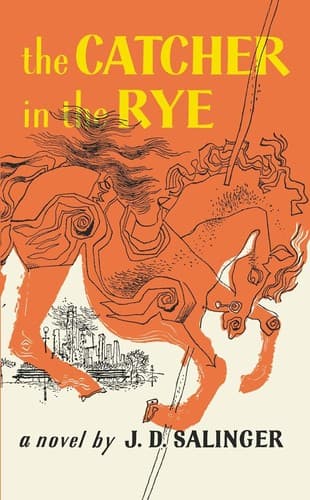
- The Catcher in the Rye
J.D. Salinger
3.8 (2.7M) average on GoodreadsYoung AdultExplores teenage angst and disillusionment with society through a distinctive first-person narrative.
- Catch-22
Joseph Heller
4.0 (723k) average on GoodreadsHistorical FictionOffers a satirical look at absurd systems and bureaucracy with dark humor.
- The Old Man and the Sea
Ernest Hemingway
3.8 (831k) average on GoodreadsLiterary FictionA Cuban fisherman's long struggle with a giant marlin becomes a story of endurance and dignity, now retold for young adults with illustrations, phonetic guides, and writing prompts in Traditional Chinese.
- One Hundred Years of Solitude
Gabriel García Márquez
4.1 (753k) average on GoodreadsLiterary FictionThrough the multi-generational story of the Buendía family, a mythical town deals with the repeating patterns of time, love, and solitude, as the extraordinary mixes with the ordinary.
- The Goldfinch
Donna Tartt
3.9 (720k) average on GoodreadsLiterary FictionHaunted by a tragic explosion and clutching a stolen Dutch masterpiece, a young orphan navigates the opulent drawing rooms of New York and the gritty underbelly of the art world, desperately seeking connection and redemption amidst a life spiraling into crime and obsession.




Enjoyed the summary?
A summary gives you the shape of the book. The book itself has the detail, the examples and the voice.
Find Vernon God Little on AmazonAs an Amazon Associate, BookBrief earns from qualifying purchases. How we're funded