
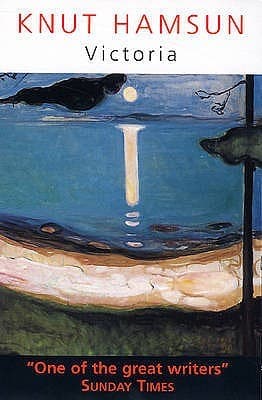
Synopsis
Covers the whole plot, including the ending.
- Difficulty
- Medium
- Pacing
- Slow
- Mood
- Melancholy, Poetic, Romantic, Tragic
- Read it if
- You appreciate classic tragic romances with a focus on unfulfilled love and societal constraints.
- Skip it if
- You prefer happy endings or fast-paced plots with clear resolutions.
Victoria Plot Summary
Covers the whole plot, including the ending.
Childhood Summers and Budding Affection
The story begins with Johannes, the miller's son, remembering his childhood summers near Victoria's family castle. Despite their different social positions, Johannes and Victoria form a deep, unspoken bond. They play in the woods and by the lake, and Johannes is taken with Victoria's beauty. These early times set the stage for their lifelong connection, though the large social gap between them is already clear. Johannes often brings Victoria flowers and writes her poems, signs of his growing love, which Victoria seems to return subtly, though she is always aware of her family's expectations.
The Proposal and the Social Divide
As they get older, Johannes focuses on poetry, finding his voice and some fame, while Victoria stays in her aristocratic world. Driven by his love, Johannes eventually proposes to Victoria. However, Victoria's father, the stern Lord, immediately rejects Johannes, citing his low status and lack of wealth as impossible problems. He makes it clear that Victoria must marry someone who can help her family financially and socially. This rejection deeply hurts Johannes and shows him the rigid social barriers that separate them.
Otto's Intervention and Financial Pressures
The Lord's estate is in serious financial trouble, close to bankruptcy. To save their fortune and reputation, Victoria's father arranges for her to marry Otto, a wealthy and influential lieutenant from a prominent family. Otto is in love with Victoria. Victoria, though still attached to Johannes, feels great pressure from her family to agree, understanding the severe consequences if she refuses. This situation puts Victoria in a terrible position, torn between her heart and her family duty.
A Misunderstanding and a Public Display
Victoria, wanting to tell Johannes her true feelings despite her engagement to Otto, sends him a coded message with a bouquet of flowers. Johannes, however, misunderstands her gesture as a final rejection. In despair, he publicly shows his pain, further pushing Victoria away and confirming that their love is impossible. This miscommunication, caused by their inability to speak openly and by social rules, becomes a key turning point, separating them further and deepening their tragedy. Johannes's emotional display only confirms the Lord's negative view of him.
The Engagements and the Growing Distance
Victoria, feeling trapped and believing Johannes has moved on, formally accepts Otto's proposal. The engagement is celebrated. Meanwhile, a heartbroken Johannes, seeking comfort or a way to forget Victoria, briefly gets engaged to Camilla, a kind girl from a simpler background. This engagement is short-lived, as Johannes cannot truly love Camilla, his heart still bound to Victoria. These parallel engagements show how both characters try to live without each other, yet highlight their lasting, unrequited love.
Otto's Death and a Glimmer of Hope
Tragedy strikes when Otto, Victoria's fiancé, dies in a hunting accident. His sudden death frees Victoria from the arranged marriage and, for a short time, creates a chance for her and Johannes. Johannes, hearing the news, feels a new hope, believing fate might finally bring them together. However, the emotional impact of Otto's death and the continuing social expectations still weigh heavily on Victoria. This event, while seeming positive, becomes another obstacle, as the characters struggle to balance their desires with their circumstances.
Victoria's Sacrifice and Henrik's Illness
Soon after Otto's death, Victoria's younger brother, Henrik, becomes very ill. The family's financial problems continue, and the cost of his medical care becomes a huge burden. To save her brother and her family's future, Victoria makes another sacrifice. She agrees to marry a wealthy, older man, a Baron, who can pay for Henrik's treatment and protect her family from ruin. This decision, made out of love for her family, again forces Victoria to give up her own happiness and any potential future with Johannes, solidifying her role as a self-sacrificing person.
Johannes's Success and Public Acclaim
While Victoria makes her sacrifices, Johannes's writing career thrives. He gains wide recognition and praise for his poetry, becoming a celebrated figure. His success brings him wealth and social standing, the very things that first kept him from Victoria. However, despite his public triumphs, Johannes remains deeply unhappy. His poetry, though beautiful, often has a deep sadness, reflecting his lasting love for Victoria and the pain of their separation. His external success sharply contrasts with his inner emotional emptiness.
Victoria's Confession and Final Letter
Years pass, and Victoria, now married to the Baron, becomes gravely ill. On her deathbed, she finally expresses her true feelings for Johannes. She writes a moving letter, confessing that she has loved him her entire life, despite all obstacles and separations. She explains her choices, especially her sacrifices for her family, and expresses regret for the life they could not share. This letter is her last attempt to tell Johannes the truth of her heart, a truth suppressed for so long.
The Revelation and Johannes's Despair
Johannes receives Victoria's letter after her death. Reading her words, he is overwhelmed with deep grief and painful understanding. The letter clears up all misunderstandings, reveals her sacrifices, and confirms the depth of her lasting love for him. He realizes that Victoria loved him as deeply as he loved her, and that their separation was not due to a lack of feeling on her part, but rather to cruel fate and social pressures. This revelation, while bringing clarity, also brings unbearable despair, as he finally understands what they lost, forever.
A Life of Unfulfilled Love
After Victoria's death and receiving her letter, Johannes feels a deep sense of loss. He continues his life as a celebrated poet, but his personal world remains sad. The knowledge of Victoria's unwavering love, revealed too late, only increases his sorrow. He dedicates his remaining years to his art, his poetry becoming a tribute to their lost love. The story ends with Johannes living a solitary life, forever tied to Victoria's memory and the 'what ifs' of a love that was never fully realized, showing the tragic power of circumstance and social rules.
Principal Figures
Johannes
Protagonist
The miller's son and a passionate poet, deeply in love with Victoria.
Johannes is a sensitive, artistic young man from a humble background. He possesses a deep, unwavering love for Victoria, which fuels his ambition to become a poet. He is often driven by intense emotions, prone to both soaring hope and profound despair. His artistic temperament makes him observant and reflective, but also vulnerable to misunderstandings and the pain of unrequited love. Despite achieving literary success, he remains emotionally unfulfilled due to his lifelong devotion to Victoria.
Relationships: Victoria (Lifelong, unrequited love, central to his existence.); Camilla (Brief, desperate engagement, a rebound that fails due to his love for Victoria.)
Victoria
Protagonist
The castle lord's daughter, bound by duty and societal expectations, secretly in love with Johannes.
Victoria is a beautiful and spirited young woman from an aristocratic family, burdened by societal expectations and familial duty. She possesses a deep, hidden love for Johannes but is constantly forced to make sacrifices for her family's financial well-being and social standing. She is portrayed as outwardly compliant but inwardly conflicted, her true feelings often suppressed. Her actions, though appearing to reject Johannes, are driven by a profound sense of responsibility and selflessness.
Relationships: Johannes (Lifelong, secretly reciprocated love, tragically unfulfilled.); Lord (her father) (Dominant, demanding, and financially dependent relationship.); Otto (Arranged fiancé, a means to save her family, ends in tragedy.); Baron (her husband) (Arranged marriage for family's survival, a duty fulfilled without love.); Henrik (Beloved younger brother, for whom she makes a significant sacrifice.)
Lord (Victoria's Father)
Antagonist/Supporting
The proud but financially struggling castle owner, a barrier to Johannes and Victoria's love.
Victoria's father is a proud and traditional aristocrat, obsessed with maintaining his family's social status and securing their financial future. He is stern, unyielding, and dismissive of Johannes due to his lower social standing. His financial desperation drives him to arrange marriages for Victoria, effectively sacrificing her happiness for the family's survival. He represents the rigid societal structures and class distinctions that separate Johannes and Victoria, acting as a primary antagonist to their love.
Relationships: Victoria (Dominant, controlling, and demanding.); Johannes (Dismissive and disapproving.); Otto (Sees him as a valuable financial and social asset.)
Otto
Supporting
A wealthy and influential lieutenant, Victoria's arranged fiancé.
Otto is a wealthy and well-regarded lieutenant from a prominent family. He is genuinely in love with Victoria and is eager to marry her, not fully understanding the depth of her feelings for Johannes. He represents the societal expectation of a suitable match for Victoria, embodying the kind of man her family deems appropriate. His death, though tragic, momentarily opens a path for Johannes and Victoria, highlighting the cruel twists of fate.
Relationships: Victoria (Engaged fiancé, genuinely loves her.); Lord (Victoria's father) (Respected and approved suitor.)
Camilla
Supporting
A kind and gentle girl briefly engaged to Johannes.
Camilla is a simple, kind-hearted girl who briefly captures Johannes's attention during a period of despair after Victoria's engagement. She represents a potential alternative life for Johannes, one of simpler affections and less societal pressure. However, her gentle nature is ultimately no match for Johannes's deep-seated love for Victoria, and their engagement is short-lived. She serves to underscore Johannes's unwavering devotion to Victoria.
Relationships: Johannes (Briefly engaged, but ultimately a failed romantic interest.)
Henrik
Mentioned/Supporting
Victoria's younger brother, whose illness prompts her ultimate sacrifice.
Henrik is Victoria's younger brother, whose grave illness becomes a pivotal plot point. His deteriorating health and the family's inability to afford his treatment force Victoria to make the ultimate sacrifice of marrying the wealthy Baron. Though he has little direct interaction, his existence and condition are crucial in shaping Victoria's tragic choices and demonstrating her profound sense of familial loyalty and selflessness.
Relationships: Victoria (Beloved younger brother, for whom she makes a profound sacrifice.)
The Baron
Mentioned/Supporting
The wealthy, older man Victoria marries to save her family.
The Baron is a wealthy, older man whom Victoria marries out of duty and necessity. He represents the ultimate sacrifice Victoria makes for her family, a marriage devoid of love or passion. He is not deeply characterized, serving primarily as a symbol of Victoria's selflessness and the grim reality of her circumstances. His presence highlights the unbridgeable gap between Victoria's personal desires and her societal obligations.
Relationships: Victoria (Husband in an arranged marriage of convenience.)
Themes & Insights
Unfulfilled Love and Sacrifice
The main theme is the tragic, unfulfilled love between Johannes and Victoria, constantly blocked by outside events and their inability to talk openly. Victoria sacrifices much, marrying Otto for her family's finances and the Baron for Henrik's medical care, all while secretly loving Johannes. Johannes, in turn, sacrifices his immediate happiness by staying devoted to Victoria. Their love, though deep, is continually given up for duty, social standing, and money, as Victoria's final letter shows with her suppressed feelings.
“Oh, had it been possible! But it was not possible. There were powers at work stronger than love.”
Social Class and Determinism
The novel clearly shows the rigid social classes of the time and how they shaped individual lives. Johannes, the miller's son, despite his talent and eventual fame, is initially considered unworthy of Victoria because of his birth. Victoria, a noblewoman, is bound by her family's need to keep up appearances and financial stability, forcing her into marriages of convenience rather than love. The Lord, Victoria's father, embodies this theme, putting family status and wealth above his daughter's happiness. The impossible gap between their social classes dictates their choices and ultimately prevents their union, showing how social structures can crush personal desires.
“A miller's son and a noble's daughter – it was not to be.”
Miscommunication and Missed Opportunities
A repeated element in the story is Johannes and Victoria's failure to openly communicate their true feelings. Victoria's attempts to signal her love, like the coded flower bouquet, are misunderstood by Johannes. His public displays of despair are, in turn, seen by Victoria as final rejections or signs of instability. This constant misreading of intentions, combined with their inability to overcome social barriers and speak plainly, leads to many missed chances for reconciliation. The truth only comes out in Victoria's deathbed letter, a moving and devastating revelation that arrives too late to change their fate, highlighting the destructive power of unspoken words.
“We did not understand each other, we poor, foolish children.”
Memory and Nostalgia
The novel is filled with memory and nostalgia, especially through Johannes's recollections of his childhood with Victoria. These cherished memories of ideal summers and innocent affection contrast sharply with the harsh realities of their adult lives. Johannes often revisits these moments, holding onto them as proof of their lasting bond, even as their current situations drive them apart. The past is idealized, representing a time when their love seemed possible and free from social constraints. This constant interplay between the beautiful past and the tragic present increases the sense of loss and the deep sadness that fills the story.
“Our childhood, Victoria, it was like a dream, a poem, a song.”
Plot Devices & Literary Techniques
Foil Characters
Characters who highlight the protagonists' traits by contrast.
Camilla and Otto serve as foil characters. Camilla, a simple and kind girl, highlights Johannes's profound and singular devotion to Victoria, as he cannot truly love anyone else. Otto, a wealthy and 'suitable' suitor, underscores Victoria's forced sacrifices and the societal pressures she faces, as she must choose duty over her heart's desire. These characters exist not as fully developed individuals but to illuminate the depths of the protagonists' true feelings and the external forces acting upon them.
Symbolism of Flowers
Flowers as a subtle means of communication and a symbol of their fragile love.
Flowers are used throughout the novel, particularly by Johannes, as a symbolic language to express his unspoken love for Victoria. The bouquet Victoria sends to Johannes, with its specific arrangement, is intended as a coded message of her enduring affection. However, Johannes misinterprets it, turning a symbol of hope into one of despair. This device highlights their miscommunication and the fragility of their love, which, like the flowers, is beautiful but easily crushed and misunderstood in the harsh light of reality. They represent the purity of their feelings, often tainted by external circumstances.
The Deathbed Letter
A posthumous revelation that clarifies all misunderstandings, but too late.
Victoria's deathbed letter is a crucial plot device, serving as the ultimate revelation of her true feelings and the reasons behind her actions. It retrospectively clarifies all the misunderstandings and perceived rejections, transforming Victoria from a seemingly aloof figure into a deeply loving and self-sacrificing one. This device creates a powerful sense of tragic irony, as the truth of their mutual love is only fully understood by Johannes after Victoria's death, ensuring their love remains eternally unfulfilled in life. It delivers catharsis but also profound, unchangeable sorrow.
Social Class as an Obstacle
The rigid class structure of society as the primary antagonist.
The overarching 'plot device' or structural element is the pervasive and unyielding social class system of the period. It acts as the primary antagonist, constantly thwarting the love between Johannes and Victoria. It dictates Victoria's arranged marriages, the Lord's rejection of Johannes, and the very perception of their suitability for one another. It's not a single character but an entire societal construct that separates them, demonstrating how external forces can dictate personal destinies and ensure tragic outcomes. This device emphasizes the novel's commentary on societal constraints versus individual desire.
Victoria Quotes
“Youth! Youth! When I was young, I believed that everything I desired would be mine, and now I have learned that the world is a different place.”
“The human heart is an ocean, full of secrets and storms.”
“Love is like a forest fire, consuming everything in its path, leaving only ashes and memories.”
“One must live and die for one's dream, even if the dream is a lie.”
“There are wounds that time can never heal, only cover with a thin skin of forgetfulness.”
“Happiness is a brief moment, a fleeting butterfly, that one must catch quickly before it flies away.”
“The greatest sorrow is to love without hope.”
“Life is a journey from illusion to disillusion.”
“A poet's heart is a garden where all flowers bloom, even the poisonous ones.”
“The world spins and spins, and we with it, until we become dizzy and fall.”
“Sometimes, silence speaks louder than any words.”
“We are all prisoners of our own desires.”
“To be young is to be full of dreams, to be old is to be full of memories.”
“There is a kind of beauty in sorrow, a deep, resonant chord that only the suffering can hear.”
Quiz
10 questions on the plot and the characters. Each answer comes with a short explanation.
Question 1
What is Johannes's initial social standing and profession at the beginning of the story?
- He is a wealthy landowner, managing his family estate.
- He is a miller's son, with aspirations to become a poet.
- He is a tutor for a noble family, secretly in love with his pupil.
- He is a fisherman, living a simple life by the sea.
Show answer
B. He is a miller's son, with aspirations to become a poet. Johannes is introduced as the miller's son, a humble background, but he dedicates himself to poetry, which eventually brings him recognition.
Question 2
Why is Victoria initially unable to marry Johannes, despite their mutual affection?
- Her father disapproves of Johannes's artistic ambitions.
- She is already secretly engaged to another man.
- Her family's financial difficulties require her to marry a wealthy suitor.
- Johannes moves away to pursue his literary career, leaving her behind.
Show answer
C. Her family's financial difficulties require her to marry a wealthy suitor. Victoria's family faces financial ruin, compelling her father to arrange a marriage with the wealthy Otto to save their estate.
Question 3
What significant event occurs with Victoria's brother, Ditlef, early in the novel?
- He marries a woman Johannes was once interested in.
- He falls ill and dies, causing great sorrow to Victoria.
- He leaves home to travel the world, never to return.
- He becomes a successful merchant, helping his family's finances.
Show answer
B. He falls ill and dies, causing great sorrow to Victoria. Ditlef falls ill and dies after an accident, a tragic event that deeply affects Victoria and is recalled by Johannes.
Question 4
What is the primary theme explored through the relationship between Johannes and Victoria?
- The triumph of true love over all obstacles.
- The destructive power of social class and unfulfilled desire.
- The importance of communication in a relationship.
- The beauty of nature as a backdrop for romance.
Show answer
B. The destructive power of social class and unfulfilled desire. The novel highlights how societal pressures, particularly those related to wealth and status, force the lovers apart and lead to their mutual suffering and unfulfilled lives.
Question 5
After Johannes achieves literary success, how does his relationship with Camilla, the miller's daughter, evolve?
- They marry and live a happy life together, forgetting Victoria.
- He proposes to her, but she rejects him, knowing his heart belongs to Victoria.
- They remain close friends, but never pursue a romantic relationship.
- Camilla leaves the village to pursue her own ambitions.
Show answer
B. He proposes to her, but she rejects him, knowing his heart belongs to Victoria. Despite his success, Johannes's heart remains with Victoria. He proposes to Camilla out of a sense of duty or convenience, but she, understanding his true feelings, rejects him.
Question 6
What is the ultimate fate of Otto, the man Victoria is compelled to marry?
- He becomes a powerful political figure.
- He dies young in a hunting accident.
- He divorces Victoria and moves abroad.
- He loses his fortune and becomes destitute.
Show answer
B. He dies young in a hunting accident. Otto, Victoria's fiancé, dies tragically in a hunting accident, leaving Victoria free, but too late for her and Johannes to truly reunite.
Question 7
How does Victoria's perception of Johannes change over time, particularly after his literary success?
- She becomes indifferent to him, having moved on with her life.
- She feels a renewed sense of longing and regret for what they lost.
- She resents his success, believing he abandoned her.
- She seeks to reconcile with him, but he rejects her.
Show answer
B. She feels a renewed sense of longing and regret for what they lost. Victoria's love for Johannes never truly fades, and his success only deepens her regret and longing for the life they could have had together, as revealed in her final letter.
Question 8
What is the significance of the recurring motif of the 'bird' in the novel, particularly in relation to Victoria?
- It symbolizes Johannes's freedom and ability to escape his circumstances.
- It represents Victoria's trapped spirit and her longing for freedom.
- It is a symbol of the fleeting nature of love and happiness.
- It foreshadows a tragic event involving one of the characters.
Show answer
B. It represents Victoria's trapped spirit and her longing for freedom. The image of a bird, particularly a caged or wounded one, often reflects Victoria's own sense of being confined by social expectations and her inability to fly free with Johannes.
Question 9
What specific act of 'perverse cruelty' does Victoria commit towards Johannes, driven by her circumstances?
- She publicly humiliates him at a social gathering.
- She deliberately ignores his letters and avoids his presence.
- She tells him that she never loved him, despite feeling the opposite.
- She marries his rival out of spite.
Show answer
C. She tells him that she never loved him, despite feeling the opposite. Driven by the necessity to marry Otto for her family's sake, Victoria tells Johannes that she never loved him, an act of self-sacrifice that causes immense pain to both of them.
Question 10
How does Johannes ultimately learn of Victoria's true, undying love for him?
- She confesses it to him in person during a final encounter.
- He overhears her speaking about him to a confidante.
- He finds a letter she wrote to him just before her death.
- A mutual friend reveals her feelings to him years later.
Show answer
C. He finds a letter she wrote to him just before her death. In the tragic climax, Johannes receives a letter from Victoria, written just before her death, which finally reveals the depth of her enduring love for him and the reasons for her past actions.
Victoria FAQ
What is the central conflict driving the plot of 'Victoria'?
The central conflict in 'Victoria' is the insurmountable class barrier between Johannes, the miller's son and aspiring poet, and Victoria, the daughter of the castle owner. This social divide dictates their interactions, forcing them into separate lives despite their profound mutual affection, leading to a series of misunderstandings and tragic choices.
Who are the primary romantic interests for Victoria besides Johannes?
Victoria has two primary romantic interests besides Johannes: Otto, a wealthy lieutenant from a prominent family, and Baron Hugo, a sophisticated but ultimately unsuitable suitor. Her engagement to Otto is a direct consequence of her family's financial distress and her father's insistence on a practical, advantageous marriage.
How does Johannes's profession as a poet influence his character and interactions?
Johannes's identity as a poet makes him sensitive, introspective, and highly attuned to beauty and emotion, but also somewhat impractical and prone to idealization. His artistic pursuits offer him an escape from his lower-class reality and a means of expressing his unspoken love for Victoria through his writing, which eventually brings him fame.
What significant event forces Victoria to consider marrying someone other than Johannes?
Victoria is pressured into an engagement with Otto due to her family's severe financial difficulties and her father's desperate need to secure their estate. This decision is a sacrifice made for her family's survival, directly overriding her personal desires and deepening the chasm between her and Johannes.
What ultimately happens to Victoria at the end of the novel?
Victoria tragically dies at the end of the novel, succumbing to a severe illness, possibly tuberculosis, exacerbated by her emotional distress and a broken heart. Her death is revealed through a letter to Johannes, where she confesses her enduring love for him and her inability to live without him.
What is the significance of the 'rose' motif in the story, particularly concerning Victoria?
The rose frequently symbolizes Victoria's beauty, purity, and the fleeting nature of their love. Johannes often associates Victoria with roses in his poetry and observations, and the image of a rose, sometimes wilting or lost, subtly foreshadows the tragic fate of their love and Victoria herself.
How does Johannes's encounter with the 'other' Victoria (the girl who falls for him) reflect on his feelings for the true Victoria?
Johannes's brief relationship with the other girl, Camilla, is a complex reflection of his unfulfilled desire for Victoria. He projects aspects of Victoria onto Camilla and seeks solace in her affection, but ultimately realizes that his heart belongs solely to the original Victoria, underscoring the depth of his devotion.
Are there any subtle indications of Victoria's deteriorating health earlier in the narrative?
Yes, there are subtle hints of Victoria's fragile health, such as her occasional paleness, delicate constitution, and descriptions of her being easily fatigued. These details, though not explicitly stating her illness, contribute to a sense of her vulnerability and foreshadow her eventual decline.
What role does nature, particularly the changing seasons, play in mirroring the characters' emotional states?
Nature often reflects the characters' inner turmoil and the progression of their love story. Spring and summer initially symbolize their blossoming affection, while autumn and winter often correspond with periods of separation, despair, and the eventual tragic ending, creating a poignant backdrop for their emotional journey.
How does Victoria's social position contribute to her psychological conflict?
Victoria's high social standing creates immense psychological pressure, forcing her to prioritize her family's reputation and financial stability over her personal happiness. This conflict leads to internal struggles, guilt, and a sense of entrapment, as she feels compelled to make choices that betray her heart but fulfill her societal duties.
Analyze Johannes's coping mechanisms for his unrequited or forbidden love.
Johannes copes with his forbidden love primarily through his poetry, channeling his intense emotions and longing into his art. He also seeks solace in nature and occasionally in the company of other women, though these are ultimately temporary distractions from his deep-seated devotion to Victoria.
What psychological impact does the constant push-and-pull have on both Johannes and Victoria?
The constant push-and-pull of their relationship, marked by proximity and then enforced separation, inflicts profound psychological pain on both. It fosters a sense of helplessness, despair, and a deepening melancholy, preventing them from fully moving on and trapping them in a cycle of longing and missed opportunities.
How does the novel explore the theme of sacrifice through Victoria's actions?
Victoria embodies the theme of sacrifice through her decision to marry Otto, not out of love, but to save her family from financial ruin and maintain their social standing. This act of self-denial highlights the societal pressures placed upon women of her era and class, ultimately costing her happiness and her life.
Is Victoria's death truly a result of illness, or is it symbolic of a broken heart?
While Victoria's death is attributed to a physical illness, it is heavily implied to be symbolic of a broken heart and the cumulative emotional toll of her unfulfilled love for Johannes. The novel suggests that her physical decline is inextricably linked to her profound psychological and emotional suffering.
To what extent is the tragedy of Johannes and Victoria a critique of class structure?
The tragedy is a profound critique of rigid class structures, demonstrating how societal divisions can crush individual happiness and dictate personal destinies. The class barrier between Johannes and Victoria is the primary impediment to their union, highlighting the destructive power of social hierarchy.
Could Johannes and Victoria have had a different outcome if they had been more assertive or rebellious?
A different outcome might have been possible if they had been more assertive, but it would have required significant rebellion against deeply entrenched societal norms and familial expectations. Given the historical context and their individual temperaments, such a radical departure from their circumstances was highly improbable, making their tragedy feel almost inevitable.
How does Hamsun use the narrative perspective to create sympathy for both characters?
Hamsun primarily uses a third-person narrative that delves deeply into the inner thoughts and feelings of both Johannes and Victoria. By revealing their individual struggles, noble intentions, and the external pressures they face, the narrative fosters profound sympathy for their predicament and their impossible love.
What is the overarching message about love and fate that the novel conveys?
The novel conveys a tragic message about love and fate, suggesting that some loves, no matter how profound, are ultimately doomed by external circumstances beyond the lovers' control. It explores the idea that societal forces and individual choices can conspire to create an inescapable destiny of separation and sorrow.
Was Victoria's confession of love in her final letter a form of redemption or further torment for Johannes?
Victoria's final confession is a complex blend of redemption and further torment for Johannes. It redeems their love by affirming its enduring truth, providing him with closure and the knowledge that his love was reciprocated. However, it also deepens his torment by confirming what he had lost and highlighting the tragic irony of their missed opportunities.
About the author
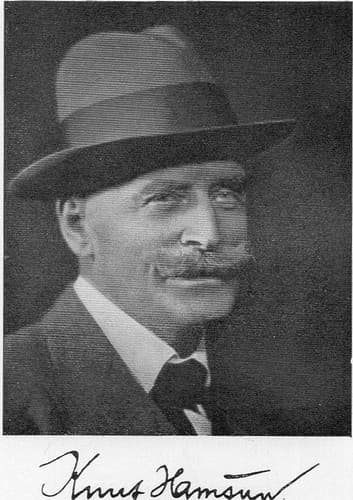
Knut Hamsun was a Norwegian writer who was awarded the Nobel Prize in Literature in 1920. Hamsun's work spans more than 70 years and shows variation with regard to consciousness, subject, perspective and environment. He published more than 20 novels, a collection of poetry, some short stories and plays, a travelogue, works of non-fiction and some essays.
Similar books
- Wuthering Heights
Emily Brontë
3.9 (1.3M) average on GoodreadsHistorical FictionExplores passionate, doomed love across social divides with a melancholic tone.
- A Room With a View
E.M. Forster
3.9 (152k) average on GoodreadsHistorical FictionDeals with societal expectations and class barriers affecting young love, though with a less tragic outcome.
- Tess of the D'Urbervilles
Thomas Hardy
3.8 (238k) average on GoodreadsHistorical FictionBoth Victoria and Tess of the d'Urbervilles (1891) explore the tragic consequences of social class and societal expectations on love and individual lives. Hardy's novel, like Hamsun's, features protagonists from different social strata whose affection is thwarted by external pressures and a cruel twist of fate. However, Hardy's work often delves more explicitly into philosophical determinism and the harsh realities of Victorian morality, whereas Hamsun's focus is more intensely on the internal emotional landscapes and the poetic melancholy of lost love, with less overt social critique.
- Pride and Prejudice
Jane Austen
4.3 (3M) average on GoodreadsHistorical FictionWhile both Victoria and Pride and Prejudice (1813) center on themes of love, social class, and the obstacles to marriage, their tones and outcomes differ significantly. Austen's novel is a comedic romance that ultimately celebrates the triumph of love and understanding over initial prejudices and social divides, culminating in a happy resolution. Hamsun's Victoria, by contrast, is a tragic romance where the social chasm remains unbridgeable, leading to profound sorrow and unfulfilled love. Austen uses wit and dialogue to explore societal norms; Hamsun employs poetic prose and internal monologue to convey a sense of melancholic longing and tragic inevitability.
- The Old Man and the Sea
Ernest Hemingway
3.8 (831k) average on GoodreadsLiterary FictionA Cuban fisherman's long struggle with a giant marlin becomes a story of endurance and dignity, now retold for young adults with illustrations, phonetic guides, and writing prompts in Traditional Chinese.
- One Hundred Years of Solitude
Gabriel García Márquez
4.1 (753k) average on GoodreadsLiterary FictionThrough the multi-generational story of the Buendía family, a mythical town deals with the repeating patterns of time, love, and solitude, as the extraordinary mixes with the ordinary.




Enjoyed the summary?
A summary gives you the shape of the book. The book itself has the detail, the examples and the voice.
Find Victoria on AmazonAs an Amazon Associate, BookBrief earns from qualifying purchases. How we're funded