
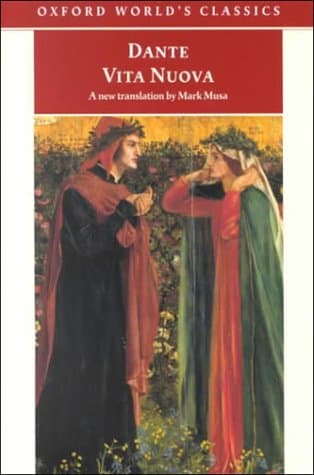
Synopsis
Covers the whole plot, including the ending.
- Difficulty
- Hard
- Pacing
- Slow
- Mood
- Reflective, Melancholy, Devotional, Philosophical
- Read it if
- You are interested in the origins of Western literary romance, medieval philosophy of love, or the foundational work of Dante Alighieri.
- Skip it if
- You prefer fast-paced plots, modern prose, or are not interested in allegorical and philosophical poetry.
Vita Nuova Plot Summary
Covers the whole plot, including the ending.
The First Meeting and Early Admiration
Dante Alighieri begins by recalling his first meeting with Beatrice Portinari when they were both nine years old. This encounter gives him a 'new life,' as the 'Lord of Love' (Amore) immediately takes over his soul. He describes how Beatrice's presence changes him, starting a period of intense admiration and secret devotion. For years, Dante holds this memory, developing a deep, unspoken love for her. His early poems come from this devotion, as he begins to record the emotions and spiritual stirrings inspired by her existence, even before any direct interaction.
The Salutation and Its Loss
After some years, Dante, now a young man, sees Beatrice at a church, and she greets him. This gesture fills him with such joy and spiritual bliss that he feels he has reached the peak of happiness. He sees her greeting as a divine blessing that sustains him. However, to hide his true feelings for Beatrice and protect her reputation, Dante pretends to be interested in other women, using them as 'screen-ladies.' This strategy backfires when Beatrice, misunderstanding his actions, stops greeting him, plunging Dante into deep despair, as he feels deprived of his spiritual support.
The Defense of Love and the Question of Purpose
Upset by Beatrice's withdrawn greeting, Dante finds comfort among compassionate ladies who ask why he continues to pursue a love that brings him suffering. Through this talk, Dante realizes that his purpose should not be to receive Beatrice's greeting, but rather to praise her without expecting anything back. This change in perspective marks a turning point, moving his love from a desire for personal gain to a more selfless, spiritual devotion focused solely on celebrating her virtues. He begins to write poems purely in her praise, independent of her direct interaction.
The Vision of Love's Lord
In a powerful dream, Dante sees the Lord of Love holding Beatrice, feeding her Dante's own burning heart. Love then goes to heaven with Beatrice. This vision is symbolic and unsettling, hinting at future sorrow and Beatrice's eventual loss. The dream leaves Dante deeply disturbed, as he intuitively grasps its somber meaning. He tries to interpret the dream through a sonnet, sharing it with other poets, but the full, tragic meaning remains unclear to him at this stage, though a sense of impending doom is clear.
The Death of Beatrice's Father
A period of mourning follows the death of Beatrice's father. Dante observes Beatrice among the other grieving women and is deeply moved by her sorrow and dignity. He sees her grief, which only increases his admiration and compassion for her. This shared experience of sorrow, though indirect, allows for a momentary, unspoken connection between them, as Dante feels his own heart resonate with her pain. He finds himself weeping alongside her, strengthening the spiritual bond he feels, even without direct interaction or a renewed greeting.
Beatrice's Illness and Dante's Premonition
Beatrice falls ill, and during this time, Dante experiences a premonition of her death. He sees visions of weeping women, the sun darkening, and birds falling from the sky, all ending in a vision of Beatrice's body being carried to her tomb. This vivid and distressing experience leaves him in a state of deep anxiety and grief, further cementing his intuitive understanding of her coming death. The premonition deeply impacts him, preparing him, in a way, for the inevitable sorrow that will soon befall him.
The Death of Beatrice
Beatrice Portinari dies, plunging Dante into inconsolable grief. He describes the world as darkening around him, his life losing all meaning and joy. Her death marks the central turning point of the 'Vita Nuova,' shifting the story from the celebration of earthly love to the contemplation of spiritual transcendence and the lasting power of her memory. His sorrow is so deep that it affects his physical well-being, and he withdraws from society, consumed by his loss. His poetry becomes an elegy, a sign of his overwhelming sorrow and her absence.
Consolation and the Pitying Lady
In his deep mourning, Dante is observed by a 'pitying lady' who watches him from a window. Her compassionate gaze offers him some comfort, and for a time, he considers finding solace in her presence. This moment represents a temptation to move on, to find a new object for his affections. However, Dante ultimately realizes that his heart remains devoted to Beatrice's memory. He cannot betray the deep love he holds for her, even in death, and resolves to remain steadfast in his spiritual devotion, rejecting any earthly comfort that would lessen her unique place in his soul.
The Vision of Beatrice in Glory
Dante experiences a powerful vision of Beatrice in heaven. She appears to him in celestial glory, radiating divine beauty and grace, far surpassing any earthly form. This vision gives him immense spiritual comfort and reaffirms his belief in her elevated status. It clarifies that his love for her is not merely physical but a path to the divine. This experience inspires him to write a work that will truly honor her, a work worthy of her heavenly perfection, signaling his intent to undertake a greater literary project.
The Resolution and Future Promise
The 'Vita Nuova' concludes with Dante's firm decision to write no more about Beatrice until he can compose something truly worthy of her, something that has 'never been written of any lady.' This promise hints at his great work, the 'Divine Comedy,' where Beatrice will play a central, guiding role as a divine messenger and symbol of theological truth. He dedicates himself to study and preparation, aiming to achieve the literary and spiritual maturity needed to fulfill this grand ambition, thereby cementing her eternal legacy and his own as a poet.
Vita Nuova Characters
Dante Alighieri
Protagonist
The poet and narrator, deeply devoted to Beatrice, whose love transforms his spiritual and poetic life.
Dante is the central figure, a sensitive and introspective poet whose entire spiritual and artistic journey is catalyzed by his love for Beatrice. He is initially consumed by the earthly aspects of love, seeking Beatrice's salutation for his own joy. However, through suffering and contemplation, his love matures into a profound, spiritual devotion that transcends physical presence and becomes a path to understanding divine beauty and truth. He is highly introspective, constantly analyzing his emotions and visions, and uses poetry as a means of expression and spiritual growth.
Relationships: Beatrice Portinari (Object of his obsessive, spiritual love and poetic inspiration.); Lord of Love (Amore) (Personified force that governs his heart and guides his understanding of love.); Pitying Lady (Temporary source of earthly comfort, ultimately rejected in favor of Beatrice's memory.)
Beatrice Portinari
Object of Affection/Divine Symbol
The angelic woman who inspires Dante's love, poetry, and spiritual awakening.
Beatrice is less of a fully developed character and more of a divine ideal, a symbol of beauty, virtue, and ultimately, divine grace. She appears in Dante's life as a radiant, angelic figure whose mere presence or greeting instills profound joy and spiritual transformation in him. Her actions are few – a salutation, its withdrawal, her death – but their impact on Dante is immense. After her death, she transcends her earthly form to become a guiding light, a conduit to the divine, inspiring Dante to seek higher truths and greater poetry.
Relationships: Dante Alighieri (The object of his profound, spiritual love and poetic inspiration.)
Lord of Love (Amore)
Allegorical Figure
A personification of love, serving as a guide and sometimes a tormentor to Dante.
Amore, or the Lord of Love, is an allegorical figure who frequently appears to Dante in visions and dreams. He is not merely an emotion but an active agent, dictating Dante's heart, offering counsel, and sometimes inflicting pain. Amore represents the powerful, transformative force of love itself, guiding Dante's understanding of his feelings for Beatrice. He embodies the complex and often contradictory nature of love, which can bring both immense joy and profound suffering, ultimately pushing Dante towards a more spiritual understanding.
Relationships: Dante Alighieri (The allegorical force that governs Dante's heart and emotions.)
The Pitying Lady
Supporting/Symbolic
A compassionate woman who offers Dante solace during his grief.
The Pitying Lady is an anonymous figure who observes Dante in his profound grief after Beatrice's death. Her compassionate gaze and silent sympathy offer him a brief moment of earthly comfort and represent a temptation to move on from his sorrow. She symbolizes the allure of worldly consolation and the possibility of finding love or companionship after loss. However, Dante ultimately rejects her as a potential romantic interest, reaffirming his unwavering devotion to Beatrice's memory and his commitment to a higher, spiritual love.
Relationships: Dante Alighieri (Offers him temporary, earthly comfort and represents a temptation away from his sole devotion to Beatrice.)
Screen-Ladies
Mentioned/Plot Device
Women Dante feigns interest in to conceal his true love for Beatrice.
The 'screen-ladies' are anonymous women Dante uses as a strategic diversion. To protect Beatrice's reputation and deflect gossip about his intense admiration, Dante pretends to be in love with these other women. This tactic, however, backfires significantly when Beatrice misinterprets his actions and withdraws her salutation, causing Dante immense pain. They serve as a plot device to illustrate Dante's youthful naivety and the social complexities of his devotion, ultimately leading to a crucial turning point in his emotional journey.
Relationships: Dante Alighieri (Used by Dante to conceal his true feelings for Beatrice.)
Beatrice's Father
Mentioned
His death brings a period of shared mourning.
Beatrice's father is only mentioned in the context of his death, which occasions a period of public mourning. His passing allows Dante to observe Beatrice in her grief, which deepens his compassion and connection to her, albeit indirectly. He serves as a catalyst for a scene that highlights Beatrice's dignity in sorrow and provides Dante with another opportunity to witness her profound virtue.
Relationships: Beatrice Portinari (Her father, whose death brings a period of mourning.)
Vita Nuova Themes
The Nature of Love (Courtly to Spiritual)
The 'Vita Nuova' shows Dante's change from conventional courtly love, initially focused on Beatrice's presence and the joy of her greeting, to a deep, spiritual devotion. Beatrice's withdrawal of her greeting and later her death force Dante to re-evaluate his love. He moves beyond personal gain, realizing his true purpose is to praise her virtues without expectation, changing his affection into a path to divine understanding. This journey ends with the realization that Beatrice's love is a link to God, transcending earthly desire and loss, as seen in his decision to write something truly worthy of her heavenly glory.
“My lady carries Love within her eyes; because of this, whatever she looks at becomes a gentle thing; where she passes, every man turns to gaze at her; and him she greets, his heart begins to tremble, so that, casting down his face, he sighs for all his sins.”
Poetry as a Vehicle for Spiritual Growth
Poetry in 'Vita Nuova' is not just art but a tool for Dante's self-discovery and spiritual growth. Each sonnet and canzoni tries to express his complex emotions, interpret his visions, and understand the divine purpose of his love for Beatrice. The prose narrative gives context and commentary, showing how writing helps him process grief, change his perspective (e.g., from seeking a greeting to offering praise), and ultimately decide to undertake a greater work. The book itself shows how art can turn personal experience into universal spiritual truth, with poetry guiding his 'new life.'
“I resolved to take as the subject matter of my speech only that which could not be spoken of her by any other woman.”
Death and Transcendence
Beatrice's death is the central event of the 'Vita Nuova,' acting as a trigger for Dante's spiritual awakening. Far from ending his love, her passing elevates it, changing Beatrice from an earthly beloved into a heavenly intercessor. Her death highlights the temporary nature of mortal life while also revealing the eternal quality of true love and divine grace. Dante's visions of her in glory confirm her transcendence, guiding him to understand that his love for her is a path to God. This theme shows that true love, even in loss, can lead to deep spiritual insight and a connection to the divine.
“For the Lord of Justice had called that most gentle lady to be glorified under the banner of that blessed Queen Mary, whose name was Beatrice.”
Divine Inspiration and Prophecy
Dante frames his entire relationship with Beatrice, from their first meeting, as divinely inspired. Her presence is a blessing, and the Lord of Love (Amore) acts as a supernatural guide, shaping his experiences and understanding. His visions, especially the one of Love carrying Beatrice to heaven, serve as prophetic insights into her eventual death and spiritual elevation. The conclusion, where Dante resolves to write a greater work about her, acts as a self-fulfilling prophecy, referring to the 'Divine Comedy.' This theme suggests that his personal love story is part of a larger, divinely planned course, leading him to deep spiritual and artistic creation.
“And from that time forward, Love ruled my soul, which was so quickly wedded to him, and he began to take great lordship over me and power through the virtue that my lady bore.”
Plot Devices & Literary Techniques
Allegory
Abstract concepts are personified to convey deeper meaning.
Allegory is central to 'Vita Nuova,' most notably with the personification of 'Amore' (Love). Amore appears as a distinct character, guiding Dante, speaking to him, and even performing actions like feeding Beatrice Dante's heart. This device allows Dante to explore the complex, often contradictory nature of love as an external, powerful force acting upon him, rather than merely an internal emotion. Beatrice herself becomes an allegorical figure, evolving from an earthly beloved into a symbol of divine grace and wisdom, a conduit to understanding God.
Dream Visions
Dante experiences symbolic dreams that foreshadow events and reveal spiritual truths.
Dante frequently experiences vivid dream visions that serve as premonitions and convey deeper spiritual insights. The most significant is the dream where Love carries Beatrice to heaven, foreshadowing her death and spiritual elevation. Another vision depicts her illness and death with symbolic imagery. These dreams are not merely fantastical elements but are treated as legitimate forms of divine communication, guiding Dante's understanding of his love, his sorrow, and Beatrice's ultimate destiny, bridging the earthly and the divine.
Prose Commentary and Poetic Interleaving
Dante intersperses his poems with narrative prose that explains their context and his emotional state.
The unique structure of 'Vita Nuova' involves a prose narrative that introduces, interprets, and contextualizes the interspersed poems (sonnets and canzoni). This device allows Dante to provide a running commentary on his emotional and spiritual journey, explaining the circumstances under which each poem was written and his evolving understanding of his love for Beatrice. The prose links the individual poetic expressions into a coherent, overarching narrative, transforming a collection of poems into a philosophical autobiography and a structured exploration of love's progression.
The Salutation
Beatrice's greeting acts as a powerful symbol of grace, spiritual sustenance, and divine favor.
Beatrice's 'salutation' (greeting) functions as a powerful symbolic device. Initially, it is a source of immense joy and spiritual sustenance for Dante, representing her acknowledgment and grace. Its withdrawal, due to his use of 'screen-ladies,' plunges him into despair, signifying the loss of divine favor and earthly comfort. The salutation's importance shifts from a desired interaction to a symbol of Beatrice's inherent virtue, which Dante learns to praise independently of receiving her direct greeting. It embodies the transition from a self-centered love to a selfless, spiritual devotion.
Vita Nuova Quotes
“Here begins the New Life, which is so called because a new life began for me.”
“Behold a god mightier than I, who coming, shall rule over me.”
“Love and the gentle heart are but one thing, as the sage in his verse affirms to me.”
“My lady carries Love in her eyes; whereby whatever she looks on becomes gentle.”
“Woe is me, for I am a pilgrim, and from my home I am far away.”
“From her eyes there issues forth a spirit of love, which strikes the eyes of him who gazes at her, and penetrates so that it finds the heart.”
“And when she is near any one, so much gentleness comes to his heart, that he dares not raise his eyes, nor answer her greeting.”
“My memory, when I think of that day, makes my soul so tremble, that it drives it from its body.”
“Whatsoever goes forth from her is full of sweetness, and full of Love.”
“I say that when she appeared, a spirit of love, which was so glorious, came to me from her eyes.”
“And it seems to me that from her countenance there issues forth a spirit of love, full of gentleness, which says to the soul: 'Sigh!'”
“Then my heart, which was full of love, began to tremble.”
“And I resolved to write no more of this blessed one until I could write of her more worthily.”
“Wherefore, if it shall please Him by whom all things live, that my life continue for a few years, I hope to write of her what has never been written of any woman.”
Quiz
10 questions on the plot and the characters. Each answer comes with a short explanation.
Question 1
Which significant event marks the beginning of Dante's 'new life' as described in 'Vita Nuova'?
- His first public poetry reading.
- His meeting with Beatrice.
- His pilgrimage to Rome.
- His vision of the 'Lord of Love'.
Show answer
B. His meeting with Beatrice. The 'Vita Nuova' explicitly states that Dante's 'new life' was inspired by his meeting with Beatrice, which is the central event of the narrative.
Question 2
How many poems are linked by the lyrical prose narrative in 'Vita Nuova'?
- Twenty-five
- Thirty-one
- Forty-two
- Fifty
Show answer
B. Thirty-one The introduction states that 'The thirty-one poems in the first of his major writings are linked by a lyrical prose narrative'.
Question 3
What is the primary subject that the poems and prose in 'Vita Nuova' celebrate and debate?
- Politics and civic duty.
- The nature of divine grace.
- The subject of love.
- Friendship and loyalty.
Show answer
C. The subject of love. The narrative explicitly states the poems are 'celebrating and debating the subject of love'.
Question 4
Besides Beatrice, what other significant figure is mentioned as being present at the composition of 'Vita Nuova'?
- The Virgin Mary.
- The 'Lord of Love'.
- His best friend, Guido Cavalcanti.
- A celestial angel.
Show answer
B. The 'Lord of Love'. The description mentions the work was 'Composed upon Dante's meeting with Beatrice and the 'Lord of Love''.
Question 5
What literary form does 'Vita Nuova' primarily take?
- A collection of sonnets without commentary.
- A lyrical prose narrative linking thirty-one poems.
- A dramatic play in verse.
- An epic poem divided into cantos.
Show answer
B. A lyrical prose narrative linking thirty-one poems. The book is described as 'thirty-one poems... linked by a lyrical prose narrative'.
Question 6
The 'Vita Nuova' has been read variously as biography, religious allegory, and a meditation on poetry itself. Which of these interpretations is MOST directly supported by the text's explicit claim of confirming the 'new life' inspired by Beatrice?
- Religious allegory.
- A meditation on poetry itself.
- Biography.
- Political treatise.
Show answer
C. Biography. The claim of confirming the 'new life' inspired by a specific meeting with Beatrice directly points to the biographical aspect of the work, recounting personal experience.
Question 7
What is the approximate time frame during which 'Vita Nuova' was composed?
- 1190-1192
- 1292-1294
- 1300-1302
- 1310-1312
Show answer
B. 1292-1294 The information provided states 'Vita Nuova (1292-94) is regarded as one of Dante's most profound creations'.
Question 8
How does the 'Vita Nuova' primarily function in relation to Dante's later, more famous works like the 'Divine Comedy'?
- It serves as a direct political critique of Florence, which is expanded upon in his later works.
- It lays the philosophical and emotional groundwork for the figure of Beatrice as a spiritual guide.
- It presents a completely separate poetic style and thematic focus from his later writings.
- It is a collection of childhood poems, largely disconnected from his mature thought.
Show answer
B. It lays the philosophical and emotional groundwork for the figure of Beatrice as a spiritual guide. While not explicitly stated in the provided text, the 'Vita Nuova' is widely recognized as foundational for understanding Beatrice's role and Dante's evolving concept of divine love, which culminates in her role in the 'Divine Comedy'. The text describes it as his 'first of his major writings' and a 'supreme work' on love, suggesting its importance beyond just a standalone piece.
Question 9
The narrative structure of 'Vita Nuova' involves prose sections that explain and contextualize the poems. What does this suggest about Dante's intent regarding the reader's understanding?
- He intended the poems to be read purely for their aesthetic beauty, without deeper meaning.
- He sought to guide the reader through the emotional and intellectual progression of his love experience and poetic creation.
- He believed the prose was merely a filler to increase the length of the book.
- He was experimenting with a new form of dramatic dialogue.
Show answer
B. He sought to guide the reader through the emotional and intellectual progression of his love experience and poetic creation. The linking of poems by a 'lyrical prose narrative celebrating and debating the subject of love' strongly implies Dante's intention to provide context and explanation, guiding the reader through his 'new life' and the meaning of his poetry.
Question 10
Given that 'Vita Nuova' is described as having been read variously as biography, religious allegory, and a meditation on poetry itself, which statement best captures its multifaceted nature?
- It is primarily a historical document, with any allegorical or poetic elements being secondary.
- It is a complex work that integrates personal experience, spiritual contemplation, and reflections on the art of verse.
- Its interpretations are mutually exclusive, meaning it can only be one of the three at a time.
- The different readings are a result of misinterpretations rather than inherent complexity.
Show answer
B. It is a complex work that integrates personal experience, spiritual contemplation, and reflections on the art of verse. The phrase 'read variously as biography, religious allegory, and a meditation on poetry itself' indicates that the work holds elements of all these interpretations simultaneously, making it a complex and multifaceted text.
Vita Nuova FAQ
What is the central premise of Dante Alighieri's 'Vita Nuova'?
The 'Vita Nuova' chronicles Dante's profound spiritual and emotional journey, sparked by his first encounter with Beatrice Portinari at age nine and subsequent encounters. It explores the transformative power of love, not merely as earthly affection, but as a divine force leading to spiritual renewal and a 'new life' (Vita Nuova).
How does the 'Vita Nuova' combine poetry and prose?
The book is a prosimetrum, meaning it interweaves thirty-one poems (canzoni, sonnets, and ballate) with a lyrical prose narrative that provides context, explains the circumstances of each poem's composition, and offers commentary on their meaning. This structure allows Dante to elaborate on his emotional and philosophical state, creating a cohesive narrative.
Who is Beatrice, and what is her significance in the 'Vita Nuova'?
Beatrice Portinari is the central figure and Dante's muse, presented as a figure of divine beauty and virtue. She is not merely an object of earthly affection but an angelic being who inspires Dante's spiritual purification and guides him towards a higher understanding of love and God, even after her death.
What is the 'Lord of Love' (Amore) in the context of the 'Vita Nuova'?
The 'Lord of Love' is a personified figure who appears to Dante in visions and dreams, acting as a guide and sometimes a tormentor. He represents the powerful, often overwhelming, force of love that possesses Dante's soul, dictating his poetic expression and shaping his spiritual development.
How does Dante use 'screen ladies' (donne schermo) in the narrative?
Dante uses 'screen ladies' as a literary device to conceal his true devotion to Beatrice. By feigning affection for other women, he attempts to divert attention and gossip away from his intense, unspoken love for Beatrice, which he fears might be misinterpreted or cause her discomfort.
What is the significance of the number nine in the 'Vita Nuova'?
The number nine holds profound symbolic significance, appearing at crucial junctures: Dante first meets Beatrice at age nine, and she dies in the ninth hour of the ninth day of the ninth month. Dante explicitly links this number to Beatrice, associating it with perfection and the Holy Trinity (3x3), suggesting her divine nature.
Are there any allusions to Dante's later work, the 'Divine Comedy,' within the 'Vita Nuova'?
Yes, the 'Vita Nuova' contains an explicit foreshadowing in its final prose chapter, where Dante vows to write 'what has never been written of any lady.' This promise is widely interpreted as a direct reference to his intention to compose the 'Divine Comedy,' where Beatrice indeed plays a pivotal role as his guide in Paradise.
How does Dante's grief over Beatrice's death transform his understanding of love?
Beatrice's death initially plunges Dante into profound sorrow, but this grief eventually elevates his love to a more spiritual plane. He moves beyond earthly desire to a love focused on Beatrice's soul in heaven, realizing that true love transcends physical presence and becomes a path to divine contemplation.
What psychological conflict does Dante experience regarding his public display of sorrow?
Dante grapples with the social implications of his intense grief, feeling both compelled to express his sorrow openly and embarrassed by its public display. He is aware of others' reactions to his suffering, leading to moments of withdrawal and self-consciousness, yet his love for Beatrice ultimately overrides these concerns.
How does the 'Vita Nuova' portray the psychological impact of unrequited or unspoken love?
The book vividly depicts the inner turmoil of unspoken love, showcasing Dante's intense longing, visions, and physical symptoms of love-sickness, such as trembling and paleness. His love for Beatrice, though largely unacknowledged by her, consumes his inner world and becomes the primary driver of his emotional and creative life.
What is the psychological journey of Dante's self-discovery through his poetry?
Through his poetic compositions, Dante undertakes a journey of self-discovery, using verse to process his emotions, understand the nature of love, and articulate his evolving spiritual insights. The act of writing becomes a therapeutic and revelatory process, allowing him to define his 'new life' and his role as a poet of love.
Is the 'Vita Nuova' primarily a biography or an allegorical work?
The 'Vita Nuova' can be read as both. While it recounts events from Dante's life and his relationship with Beatrice, many scholars argue that Beatrice also functions as an allegorical figure representing divine wisdom, theology, or even the Church. The narrative transcends mere autobiography to explore universal spiritual truths.
How does the 'Vita Nuova' contribute to the philosophical understanding of love in the medieval period?
It significantly contributes by elevating courtly love beyond mere earthly passion towards a more spiritual and intellectual pursuit. Dante presents love for Beatrice as a vehicle for moral and spiritual improvement, aligning it with scholastic philosophy and demonstrating how human affection can lead to contemplation of the divine.
What role does Christian theology play in the 'Vita Nuova'?
Christian theology is foundational to the 'Vita Nuova.' Beatrice is often presented as an angelic intercessor, guiding Dante towards God. Her death is not an ending but a transfiguration, allowing her to fulfill her role as a spiritual guide from heaven, aligning the narrative with Christian concepts of salvation and divine grace.
How can the 'Vita Nuova' be interpreted as a meditation on poetry itself?
The 'Vita Nuova' is deeply self-reflexive about the act of poetic creation. Dante not only presents his poems but also discusses their context, his intentions, and his poetic process. It explores the power of language to express profound emotion and spiritual insight, establishing a new poetic style and purpose for vernacular verse.
What is the 'new life' that Dante refers to in the title?
The 'new life' signifies a profound spiritual and intellectual transformation within Dante, initiated by his love for Beatrice. It's a rebirth from a state of ordinary existence into a heightened state of grace, poetic inspiration, and divine awareness, driven by his devotion and subsequent grief for her.
How does Dante reconcile his earthly love for Beatrice with his spiritual aspirations?
Dante reconciles them by elevating his earthly love. Initially a human affection, his love for Beatrice becomes a stepping stone towards divine love, especially after her death. She transforms into a celestial guide, showing that true earthly love can be a pathway to spiritual enlightenment and connection with God.
To what extent is Beatrice a real historical figure versus a symbolic construct?
Beatrice Portinari was a real historical woman whom Dante knew. However, within the 'Vita Nuova,' she transcends her historical reality to become a highly symbolic figure. Her portrayal is less about biographical accuracy and more about her function as a catalyst for Dante's spiritual and poetic development, embodying divine grace.
About the author
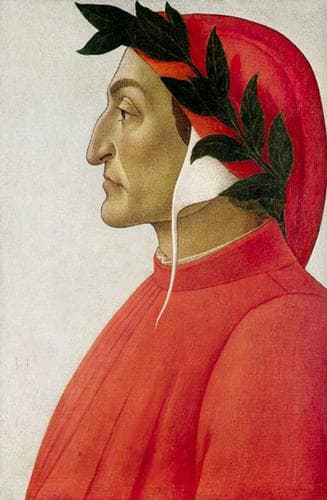
Dante Alighieri, most likely baptized Durante di Alighiero degli Alighieri and often referred to as Dante, was an Italian poet, writer and philosopher. His Divine Comedy, originally called Comedìa and later christened Divina by Giovanni Boccaccio, is widely considered one of the most important poems of the Middle Ages and the greatest literary work in the Italian language.
Similar books
- Confessions
Augustine of Hippo
4.1 (13k) average on GoodreadsThrillerExplores spiritual and personal transformation through a blend of autobiography and philosophical reflection.
- The Decameron
Giovanni Boccaccio
3.9 (33k) average on GoodreadsHistorical FictionFeatures courtly love themes and a similar medieval Italian literary context, though more focused on narrative tales.
- The Consolation of Philosophy
Boethius
4.0 (11k) average on GoodreadsHistoryA dialogue between the author and a personified Lady Philosophy, exploring profound questions of suffering, fate, and divine goodness.
- Brave New World
Aldous Huxley
4.0 (1.4M) average on GoodreadsFantasyIn a future where happiness comes from chemicals and individuality is gone, one man's desire for real experience threatens the calm, controlled society.
- Life of Pi
Yann Martel
3.9 (1.3M) average on GoodreadsFantasyStranded in the vast Pacific, a young Indian boy forms an unlikely bond with a Bengal tiger, questioning belief and survival.
- The Picture of Dorian Gray
Oscar Wilde
4.1 (966k) average on GoodreadsFantasyA beautiful young man's soul decays within a cursed portrait, mirroring the grotesque cost of his hedonistic pursuit of eternal youth and illicit pleasure.



Enjoyed the summary?
A summary gives you the shape of the book. The book itself has the detail, the examples and the voice.
Find Vita Nuova on AmazonAs an Amazon Associate, BookBrief earns from qualifying purchases. How we're funded