

Synopsis
Covers the whole plot, including the ending.
- Difficulty
- Medium
- Pacing
- Moderate
- Mood
- Atmospheric, Melancholy, Reflective, Philosophical, Dark
- Read it if
- You enjoy deep dives into family sagas, philosophical musings on history and time, and atmospheric settings.
- Skip it if
- You prefer fast-paced plots, clear-cut narratives, or are put off by themes of incest and profound melancholy.
Waterland Plot Summary
Covers the whole plot, including the ending.
The End of History
In 1980, Tom Crick, a history teacher in Greenwich, London, learns that history will be removed from the curriculum, and he will lose his job. Instead of following the syllabus, Tom begins to tell his personal and family history to his students, a story deeply rooted in the Fenland of East Anglia. He introduces his wife, Mary, who has recently kidnapped a baby, an event that makes Tom urgently need to understand his past. This narrative shift establishes Tom as a narrator who sometimes strays from strict facts, constantly mixing his personal story with philosophical thoughts on history itself, questioning its purpose and the nature of storytelling.
The Fenland and the Cricks
Tom takes his students and the reader to the Fenland, a reclaimed marshland in East Anglia, emphasizing its flat, watery, and often bleak character. He describes generations of Cricks, his ancestors, who lived and worked the land, often as lock-keepers or brewers. He explains how Dutch engineers drained the Fens, creating a landscape that is both artificial and prone to flooding. The Crick family history is connected with the history of the Fens, a place where time seems to move differently, and the past is always present. Tom's narration explores the specific and often unusual customs and ways of life of the Fen people, such as eel-catching.
Mary's Act and Tom's Guilt
Tom explains the upsetting event that prompted his story: his wife Mary's abduction of a baby from a supermarket. He explains that Mary, after many years of trying, could not have children, leading to deep sadness and psychological distress. This act, while seemingly random, is deeply connected to their shared past and Tom's unspoken guilt. He sees his storytelling as a way to understand Mary's actions and to face the secrets he has kept from her and himself. The kidnapping is a current crisis that forces Tom to uncover the hidden truths of their youth in the Fens, linking a present tragedy to past trauma.
Childhood in the Lock-Keeper's House
Tom recounts his childhood growing up in the lock-keeper's house with his older brother, Dick, who was born with a learning disability and a large head. Their father, Henry Crick, was the lock-keeper. Tom describes their isolated life and their close friendship with Mary Metcalf, the daughter of the local pub owner, and her brother Freddie Parr. These four children form a close group, exploring the Fens and playing childhood games. Tom highlights Dick's unique view of the world and his physical strength, contrasting it with his intellectual limitations, which often made him a target for local bullies.
The First Secret: The Pregnancy
The story moves to a summer when Tom and Mary, still teenagers, become lovers. Mary discovers she is pregnant. At a time when such a situation would bring great shame, they desperately look for a solution. They confide in Dick, who, despite his limitations, is very loyal to Tom and Mary. Their plan involves an illegal abortion, for which they get help from a local 'wise woman' or midwife, Sarah Atkinson. This event is kept secret and feared, and its tragic outcome will affect their lives for a long time, becoming the central, unspoken trauma that defines their relationship and Mary's future infertility.
The Death of Freddie Parr
After Mary's abortion, a series of tragic events unfolds. Freddie Parr, Mary's brother, is found dead in the lock. His death is officially called an accident, but Tom and Mary know otherwise. Freddie had discovered Mary's pregnancy and the abortion, threatening to expose them. Tom suggests that Freddie was silenced, though he does not directly say who was responsible. Freddie Parr's death adds more guilt and secrecy to Tom and Mary's lives, further intertwining their fates. The lock, always present in the Crick family's life, becomes a symbol of hidden depths and tragic endings.
Dick's Discovery and Demise
Dick, despite his intellectual limitations, figures out the truth about Freddie Parr's death and Mary's abortion. He confronts Tom, showing unexpected understanding and pain. Driven by a desire to protect Mary and perhaps to make up for something, Dick goes on a bicycle journey, seemingly to confess or seek justice. He is later found dead, having apparently fallen from a bridge into a sluice. Tom reveals that Dick was actually the child of an incestuous relationship between his father, Henry Crick, and his aunt, Helen Atkinson, the sister of the 'wise woman.' This revelation about Dick's true parents and his death adds another layer of tragic irony and predestination to the Crick family story, connecting his fate to the Fens' hidden secrets.
The Full Truth: Henry and Helen
Tom finally reveals the full, dark truth about his family: his father, Henry Crick, and his aunt, Helen Atkinson (Sarah Atkinson's sister), had an incestuous relationship. Dick was the result of this union. This explains Dick's distinct appearance and learning disability, which the family had always blamed on a 'blow to the head.' This revelation is a deep shock, not only to Tom's students but also to the reader, as it changes how much of the earlier story is understood. It highlights the recurring themes of hidden histories, the cyclical nature of sin, and the inescapable influence of the past on the present. This secret, kept for generations, finally surfaces, exposing the deep-seated problems within the Crick family line.
The Eel, the Bottle, and the Future
Tom explores the tradition of eel-fishing in the Fens, a practice passed down through generations. He describes the eel's life cycle, its mysterious origins, and its journey, comparing it to the flow of history and the human condition. He also tells a story about his grandfather, who, in despair, drowned himself in a vat of beer, which the townspeople then drank, showing the Fen people's dark humor and resilience. Tom uses these stories to illustrate his philosophy of history – that it is a continuous, sometimes murky, and often repetitive cycle. He emphasizes that the past is never truly gone but continues to influence the present, much like eels returning to their origins.
The Resolution of Mary and Tom
As Tom finishes his long story, he returns to the present day in Greenwich. Through his storytelling, he has tried to understand Mary's actions and their shared trauma. He admits that while he has uncovered the past, it does not necessarily offer a neat solution or forgiveness. He understands Mary's desire for a child as an attempt to fill the emptiness left by their lost baby and the events that followed. The history lesson ends with a sense of understanding, if not complete peace. Tom suggests that by facing their history, he and Mary might find a way forward, even if the scars remain. The act of telling the story becomes a form of release and an attempt to reconnect with Mary.
The Nature of History and Storytelling
Throughout his story, Tom Crick constantly reflects on the nature of history itself. He argues against a linear, factual account, suggesting that history is more like a story, a collection of narratives, sometimes embellished, sometimes incomplete, but always vital for understanding the present. He believes that 'History is a yarn' and 'History is a flood.' He challenges his students, and the reader, to consider how the past shapes identity and destiny. His final message is that while history might not offer definitive answers, telling and understanding stories is essential for human survival and finding meaning, especially in a world that often tries to dismiss the past. He concludes that stories, even painful ones, provide a form of immortality and connection.
Principal Figures
Tom Crick
Protagonist/Narrator
A history teacher whose personal history becomes his final lesson.
Tom Crick is a middle-aged history teacher facing redundancy. He is the novel's primary narrator, recounting his family's complex and often tragic history in the Fenland of East Anglia. Driven by his wife Mary's recent act of baby kidnapping and his own deep-seated guilt, Tom uses his classroom as a confessional, intertwining personal anecdotes with philosophical musings on the nature of history. He is introspective, articulate, and deeply affected by his past, constantly seeking to understand how it shaped his present. He often questions the reliability of memory and the subjective nature of truth.
Relationships: Mary Crick (Wife, childhood sweetheart, co-conspirator in past secrets, shared trauma.); Dick Crick (Brother, protective figure, victim of family secrets.); Henry Crick (Father, lock-keeper, perpetrator of incest.); Students (Audience and catalyst for his storytelling.)
Mary Crick
Supporting
Tom's infertile wife, whose desperate act triggers Tom's narrative.
Mary Crick is Tom's wife and childhood sweetheart. She is unable to have children, a source of profound grief and psychological distress that culminates in her kidnapping a baby. Her infertility is directly linked to a traumatic abortion in her youth, a secret she shares with Tom. Mary is portrayed as deeply affected by the past, her actions serving as a dramatic catalyst for Tom's storytelling. She remains largely off-stage during Tom's narrative, but her presence and suffering are central to the novel's emotional core. Her desperation highlights the lasting consequences of their shared history.
Relationships: Tom Crick (Husband, childhood sweetheart, co-conspirator in past secrets, shared trauma.); Freddie Parr (Brother, victim of circumstances surrounding her pregnancy.)
Dick Crick
Supporting
Tom's older brother, born with a learning disability and a key figure in the family's secrets.
Dick Crick is Tom's older brother, born with a large head and a learning disability, often referred to as a 'cabbage-head.' He is strong, loyal, and possesses a unique, almost primal, understanding of the world. Dick is later revealed to be the product of an incestuous relationship between Henry Crick and Helen Atkinson. He is fiercely protective of Tom and Mary and becomes inadvertently entangled in their secret abortion and Freddie Parr's death. His own mysterious death in the sluice is a pivotal moment, and his life embodies the tragic consequences of hidden family histories and the harsh realities of the Fenland.
Relationships: Tom Crick (Brother, loyal companion.); Mary Crick (Friend, object of his protective instincts.); Henry Crick (Father (unbeknownst to him), lock-keeper.); Helen Atkinson (Mother (unbeknownst to him), aunt.)
Henry Crick
Supporting
Tom and Dick's father, the lock-keeper, and the hidden source of family trauma.
Henry Crick is Tom and Dick's father, the stoic and taciturn lock-keeper of the Fenland. He represents the generation deeply rooted in the land, a man of few words but significant actions. He is later revealed to be the father of Dick through an incestuous relationship with his sister-in-law, Helen Atkinson. Henry embodies the secretive nature of the Fen community and the way generations bear the weight of unspoken transgressions. His role in the family's history is crucial, as his secret directly contributes to Dick's condition and the overall atmosphere of hidden truths.
Relationships: Tom Crick (Son.); Dick Crick (Son (secretly).); Helen Atkinson (Sister-in-law, lover, mother of Dick.)
Freddie Parr
Supporting
Mary's brother, whose accidental death is tied to Tom and Mary's secret.
Freddie Parr is Mary Metcalf's brother and a childhood friend of Tom and Dick. He is a local boy, known for his curiosity and perhaps a touch of recklessness. He discovers Mary's pregnancy and abortion, becoming a threat to their secret. His subsequent death by drowning in the lock is officially ruled an accident, but the narrative strongly implies it was connected to his knowledge of Tom and Mary's predicament. Freddie's death is a catalyst for much of the subsequent guilt and trauma that plagues Tom and Mary, cementing the tragic trajectory of their youth.
Relationships: Mary Crick (Sister.); Tom Crick (Childhood friend, co-conspirator in a secret that leads to his death.)
Sarah Atkinson
Supporting
The local 'wise woman' or midwife who performs Mary's abortion.
Sarah Atkinson is a local 'wise woman' or midwife in the Fens, known for her knowledge of herbal remedies and her willingness to perform illicit abortions. She is Helen Atkinson's sister and therefore related to the Cricks. She assists Tom and Mary with Mary's abortion, becoming privy to their secret. Her presence highlights the isolated and self-sufficient nature of the Fen community, where traditional practices often existed outside the law. She represents a certain kind of practical, unsentimental wisdom, but also the darker, more desperate aspects of life in the Fens.
Relationships: Helen Atkinson (Sister.); Tom Crick (Client.); Mary Crick (Client.)
Helen Atkinson
Mentioned
Henry Crick's sister-in-law and Dick's biological mother.
Helen Atkinson is Sarah Atkinson's sister and the secret lover of Henry Crick, with whom she had Dick. She is a figure from the past whose actions have profound, long-lasting consequences for the Crick family. Her existence and her relationship with Henry are kept a secret for decades, contributing to the layers of hidden history that Tom slowly uncovers. She represents the hidden transgressions and moral complexities lurking beneath the surface of the seemingly ordinary Fenland community, a silent force shaping the family's destiny.
Relationships: Henry Crick (Brother-in-law, lover, father of Dick.); Dick Crick (Son (secretly).); Sarah Atkinson (Sister.)
Mr. Lewis
Supporting
Tom's headmaster, representing the pragmatic, forward-looking perspective.
Mr. Lewis is the headmaster of the Greenwich school where Tom Crick teaches. He represents the modern, pragmatic, and somewhat utilitarian view of education and history. He is the one who informs Tom that history is being phased out of the curriculum, a decision driven by concerns about relevance and efficiency. Mr. Lewis serves as a foil to Tom's philosophical and deeply personal approach to history, highlighting the tension between the practical demands of the present and the profound lessons of the past. He is largely unsympathetic to Tom's plight, embodying the forces of change and obsolescence.
Relationships: Tom Crick (Employer, antagonist to Tom's philosophical views.)
Themes & Insights
The Nature of History and Storytelling
Tom Crick's main argument is that history is not a dry collection of facts but a living narrative, a 'yarn' or a 'flood.' He questions the idea of objective historical truth, suggesting that personal experience and interpretation are essential. The novel itself shows this theme, as Tom weaves his family's story with philosophical thoughts on history's purpose and limits. This is clear in his repeated phrase, 'Children, I am going to tell you a story,' and his belief that 'History is a means to an end. History is a means to a beginning.'
“Children, I am going to tell you a story. A story about the past. For the past, as you will discover, is not a land of long ago and far away, but a country of here and now.”
The Inescapable Past and Its Legacy
The novel shows how the past, especially hidden secrets and traumas, deeply shapes the present and future. The incestuous relationship between Henry Crick and Helen Atkinson, Mary's abortion, and Freddie Parr's death all affect Tom and Mary's adult lives for a long time. Mary's infertility and subsequent baby kidnapping are direct results of these past events. Tom's entire story is an attempt to uncover this inescapable legacy, showing how 'the past is a foreign country' that is also 'a country of here and now.'
“For the past, as you will discover, is not a land of long ago and far away, but a country of here and now.”
Fertility, Infertility, and the Cycle of Life
The theme of fertility and its absence is central to the novel. Mary's inability to have children, stemming from her teenage abortion, drives her psychological distress and the baby kidnapping. This personal tragedy contrasts with the natural cycles of life in the Fens, particularly the mysterious life cycle of the eel. The story explores the deep human desire for children and the devastating impact of not having them, linking it to the continuation of family lines and the very idea of a future. The eel's journey from the Sargasso Sea to the Fens and back symbolizes this lasting, cyclical force.
“And it came to me that the eel, the blind, wriggling, instinct-driven eel, was the true inhabitant of the Fens.”
Incest, Secrecy, and Betrayal
The novel explores the dark side of family secrets, especially the revelation of incest. The relationship between Henry Crick and Helen Atkinson, which results in Dick's birth, is a deep betrayal that affects generations. This secret, along with Mary's abortion and Freddie Parr's death, highlights the destructive power of hidden truths and how far people go to hide them. These secrets contribute to the widespread feeling of guilt and unspoken trauma that defines the Crick family and the Fenland community.
“And so, children, we have arrived at the secret. The secret that explains the secret.”
The Power and Influence of Landscape
The Fenland itself is almost a character in the novel; its unique, flat, watery, and often bleak landscape deeply influences the lives and minds of its inhabitants. The Fens, a man-made landscape constantly fighting the threat of flood, mirrors the human struggle against nature and history. The isolated, self-contained nature of the Fens creates a sense of detachment and allows secrets to fester. The locks, rivers, and eels are important to the story, symbolizing the flow of time, the hidden depths of human experience, and the cyclical nature of life and death. The landscape dictates the livelihoods and often the fates of the Crick family.
“The Fens. A land of water. A land of flatness. A land that wants to be water.”
Plot Devices & Literary Techniques
Unreliable Narrator
Tom Crick's personal biases and selective memory shape the historical account.
Tom Crick is a quintessential unreliable narrator. His storytelling is deeply personal, often embellished, and driven by his own psychological needs, particularly his guilt and desire to understand Mary's actions. He frequently interjects philosophical asides, questions the nature of truth, and admits to shaping his narrative for his audience. This device forces the reader to actively engage with the text, scrutinizing Tom's version of events and considering what might be omitted or distorted, thereby mirroring the novel's larger theme about the subjective nature of history.
Frame Narrative
Tom's classroom lectures frame the recounting of his family's history.
The novel employs a frame narrative, with Tom Crick's classroom in Greenwich serving as the outer frame for his expansive telling of his family's history in the Fens. This structure allows Tom to directly address his 'students' (and by extension, the reader), establishing a conversational and didactic tone. The present-day crisis of Mary's baby kidnapping provides the urgent impetus for his historical excavation, linking the immediate personal drama to the broader historical sweep. The frame highlights the tension between the 'here and now' of the classroom and the 'then and there' of the Fenland past.
Foreshadowing
Subtle hints and recurring motifs hint at future revelations and tragedies.
Graham Swift utilizes extensive foreshadowing throughout the novel, creating a sense of impending doom and deepening the mystery surrounding the Crick family. Early mentions of Dick's 'cabbage-head' and the family's vague explanations hint at his true parentage. The constant presence of the lock and water, and repeated references to drowning, foreshadow Freddie Parr's and Dick's deaths. These subtle clues and recurring motifs build suspense and reinforce the idea that the past is always lurking, ready to surface and impact the present, even before the full revelations are made explicit by Tom.
Symbolism of the Fenland and Water
The unique landscape and its watery elements symbolize history, memory, and the human condition.
The Fenland landscape, with its flatness, its constant battle against the encroaching water, and its network of locks and rivers, functions as a powerful symbol. The water itself represents the flow of history, memory, and the subconscious, often murky and prone to flooding. The locks symbolize control, containment, and the attempts to manage powerful forces, both natural and human. The eels, with their mysterious life cycle and journey, symbolize the cyclical nature of life, death, and the enduring, instinctual aspects of humanity. The Fenland embodies the idea of a place where the past is never truly buried.
Waterland Quotes
“Children are not children, they are the vessels into which we pour our most poisonous secrets.”
“The past is not a package to be wrapped up and put away. It is a living, breathing thing that informs every moment of our present.”
“Water, water everywhere, nor any drop to drink.”
“History is a story, but it is also a river, and sometimes the river changes its course.”
“We are all the products of our landscape, and the landscape of the Fens is one of flatness, of water, and of a relentless, unyielding past.”
“The greatest secret is not what is hidden, but what is revealed, and then ignored.”
“Every story has a beginning, a middle, and an end. But not every life does.”
“To understand the present, you must understand the past. And to understand the past, you must tell its story.”
“The Fens are a place where the land is always fighting the water, and the people are always fighting the land.”
“Perhaps all history is a digression, a rambling, circuitous route to an unknown destination.”
“We invent stories to make sense of the world, to give it shape and meaning.”
“There are things that happen which simply cannot be explained by reason, only by the heart.”
“The future is always uncertain, but the past is a certainty, even if we choose to forget it.”
“Love, like the Fens, can be a treacherous landscape, full of hidden depths and unexpected turns.”
Quiz
10 questions on the plot and the characters. Each answer comes with a short explanation.
Question 1
Which historical event does Tom Crick frequently reference and connect to the personal histories of his family in the Fens?
- The Norman Conquest
- The French Revolution
- The English Civil War
- The Industrial Revolution
Show answer
B. The French Revolution Tom Crick frequently draws parallels between the French Revolution and the upheavals and cyclical nature of history he observes in his own family's story and the Fens.
Question 2
What is the primary occupation of the Crick family for generations in the Fens?
- Farming
- Eel fishing and brewing
- Coal mining
- Weaving
Show answer
B. Eel fishing and brewing The Crick family's livelihood in the Fens is deeply tied to the land and water, particularly through eel fishing and brewing ale.
Question 3
What significant event leads to the mental breakdown of Tom's wife, Mary?
- The death of her parents
- The loss of her job as a teacher
- The kidnapping of a baby from a supermarket
- A severe financial crisis
Show answer
C. The kidnapping of a baby from a supermarket Mary's mental breakdown is triggered by her desperate act of kidnapping a baby from a supermarket, driven by her inability to have children.
Question 4
What is the relationship between Tom Crick and Dick, who drowns in the sluice?
- They are cousins.
- They are brothers.
- They are childhood friends.
- Dick is Tom's uncle.
Show answer
B. They are brothers. Dick is Tom's older brother, a key figure in the family's tragic history, whose drowning is a central mystery and trauma.
Question 5
What is the name of the girl who becomes pregnant by Tom and later has an abortion, leading to significant emotional repercussions?
- Sarah Atkinson
- Helen Atkinson
- Lucy Bell
- Elizabeth Swann
Show answer
B. Helen Atkinson Helen Atkinson is the girl with whom Tom has a sexual relationship, resulting in a pregnancy and subsequent abortion, a secret that profoundly impacts his life and marriage.
Question 6
Tom Crick's narrative style is characterized by its digressions and historical anecdotes. What is his profession in the present day of the novel?
- A historian
- A fisherman
- A school principal
- A journalist
Show answer
A. A historian Tom Crick is a history teacher in a secondary school, a profession that directly influences his narrative approach of telling stories and connecting personal lives to broader historical contexts.
Question 7
The novel explores the theme of 'story-telling' as a means of making sense of the world. What does Tom Crick ultimately conclude about the nature of history and stories?
- History is a linear progression of facts, always leading to truth.
- Stories are ultimately futile and cannot change the course of events.
- History is not a collection of facts but a collection of stories, constantly reinterpreted and passed down.
- Only scientific data can provide a true understanding of the past.
Show answer
C. History is not a collection of facts but a collection of stories, constantly reinterpreted and passed down. A central theme of 'Waterland' is the idea that history is not a static collection of facts but a fluid, subjective collection of stories, constantly being told and retold, shaping our understanding of the past and present.
Question 8
What is the symbolic significance of the Fens themselves in the novel?
- They represent unchanging tradition and stability.
- They symbolize the cyclical nature of life, history, and the constant struggle against decay and oblivion.
- They are a symbol of technological progress and human triumph over nature.
- They primarily represent a place of peace and tranquility.
Show answer
B. They symbolize the cyclical nature of life, history, and the constant struggle against decay and oblivion. The Fens, with their history of drainage, flooding, and constant human intervention, serve as a powerful metaphor for the cyclical nature of history, the fluidity of memory, and the struggle against the forces of nature and time.
Question 9
Who is Freddy Parr, and what is his fate?
- He is a local farmer who helps the Crick family; he emigrates to Australia.
- He is a boy Mary had a sexual encounter with; he is found dead in the sluice.
- He is Tom's friend from school; he becomes a successful businessman.
- He is a teacher at Tom's school; he retires due to illness.
Show answer
B. He is a boy Mary had a sexual encounter with; he is found dead in the sluice. Freddy Parr is the boy with whom Mary had a sexual encounter in the sluice, and his body is later found there, leading to the suspicion and eventual confession that Dick killed him out of jealousy.
Question 10
The novel suggests that 'nothing ever ends.' How does this theme manifest in the recurring motif of 'the brew'?
- The brew symbolizes stagnation, as the family's ale-making process never changes.
- The brew represents the continuous, cyclical nature of life, death, and transformation, with old ingredients giving rise to new creations.
- The brew is a symbol of fleeting pleasure, as its effects are temporary.
- The brew signifies the decay and decline of the family's fortunes over time.
Show answer
B. The brew represents the continuous, cyclical nature of life, death, and transformation, with old ingredients giving rise to new creations. The process of brewing ale, where old ingredients ferment and transform into something new, yet the cycle continues, serves as a powerful metaphor for the novel's theme that 'nothing ever ends,' but rather transforms and recurs in different forms throughout history and generations.
Waterland FAQ
What is the central premise of 'Waterland'?
The novel centers on Tom Crick, a history teacher in a declining school, who attempts to make sense of his life and the history of his family, the Cricks and Atkinsons, in the Fen Country of East Anglia. Faced with his wife Mary's breakdown and the impending closure of his department, Tom recounts a sprawling narrative of his ancestors, intertwining personal tragedy with the broader sweep of history and the unique landscape of the Fens.
Who are the main characters in Tom Crick's family history?
Key figures include Tom himself, his wife Mary, and his elder brother Dick. Ancestors like Thomas Atkinson, the original brewer; Sarah Atkinson, his daughter; and Ernest Crick, Tom's father and a lock-keeper, are central. The narrative also delves into the lives of Freddie Parr, the simple boy found dead, and Helen Atkinson, Sarah's sister, whose stories significantly impact the Crick family line.
What significant event triggers Tom Crick's narrative in the present day?
Tom's storytelling is primarily prompted by his wife Mary's impulsive act of kidnapping a baby from a supermarket, a desperate attempt to fill the void left by their own lost child and her inability to conceive again. This event, coupled with the announcement that his school's history department will be eliminated, forces Tom to confront his past and the nature of history itself.
How does the Fen Country landscape influence the novel's themes?
The Fens, with their flatness, artificial drainage, and constant struggle against water, serve as a powerful metaphor for history, memory, and the human condition. The landscape embodies the idea of things being 'made' and 'unmade,' reflecting the constructed nature of narratives and the endless cycle of change. Its unique isolation and harshness also contribute to the insular and often tragic nature of the family's story.
What is the mystery surrounding Freddie Parr's death?
Freddie Parr, a boy with learning difficulties, is found dead in the river, seemingly drowned, but an autopsy reveals he was decapitated post-mortem. The narrative slowly unravels that Freddie was involved in a sexual encounter with Mary and Dick, and his death was an accident caused by Mary hitting him with a bottle when he became aggressive. Dick, in a desperate attempt to cover up the incident and protect Mary, decapitated the body to prevent identification.
What is the true parentage of Dick Crick?
Dick Crick is not the biological son of Ernest and Helen Crick. He is the product of an incestuous relationship between Ernest Crick and his own daughter, Sarah Atkinson. This dark secret is a foundational trauma in the family, contributing to Dick's 'idiocy' and the pervasive sense of doom that hangs over the Cricks, a hidden detail that Tom slowly uncovers and reveals.
How is the brewing tradition of the Atkinsons significant?
The Atkinson brewery represents a lineage of creation, sustenance, and eventual decline, mirroring the family's own trajectory and the broader changes in society. The 'sweet' and 'bitter' elements of the beer metaphorically reflect the dualities of life, pleasure, and tragedy within the family. Its eventual sale and closure symbolize the erosion of tradition and the relentless march of progress, or lack thereof, in the Fens.
What is the symbolic significance of eels in the novel?
Eels, particularly the 'eel-king' myth, represent the primordial, the mysterious, and the cyclical nature of life and death, constantly moving and regenerating. They inhabit the murky depths of the Fens, much like the hidden secrets and dark currents within the Crick family history. Their elusive nature also mirrors the difficulty of fully grasping and pinning down historical truth.
How does Tom Crick's profession as a history teacher influence his narrative style?
Tom's professional habit of structuring and interpreting history directly shapes his personal narrative. He uses historical concepts, theories, and rhetorical devices to frame his family's story, often addressing his students directly. This approach allows him to explore the nature of storytelling, the construction of truth, and the inherent subjectivity in recounting past events, blurring the lines between personal memoir and historical discourse.
Analyze Mary Crick's psychological state throughout the novel.
Mary's psychological state is characterized by profound grief and a desperate longing for motherhood, exacerbated by her past abortion and subsequent infertility. Her breakdown, culminating in the baby kidnapping, is a manifestation of unaddressed trauma and an inability to reconcile with her past actions and present circumstances. She seeks to create a future, even if through delusion, to escape the crushing weight of history.
How does the concept of 'idiocy' function within the novel, particularly concerning Dick?
Dick's 'idiocy' is presented as both a literal intellectual disability and a metaphorical state of innocence or resistance to the complexities of history and language. It's a tragic consequence of incest, yet it also sets him apart from the burdens of memory and narrative that afflict Tom. Dick represents a purity or simplicity that is ultimately vulnerable to the harsh realities of the world, making his death even more poignant.
Discuss the psychological impact of secrets and concealment on the Crick family.
The Crick family is riddled with devastating secrets, such as Dick's true parentage and the circumstances of Freddie Parr's death, which create a pervasive atmosphere of guilt, shame, and unspoken trauma. These concealed truths warp individual identities and relationships, leading to breakdowns, violence, and a sense of inescapable fate. The act of revelation, for Tom, is a therapeutic but painful attempt to confront and perhaps heal these deep-seated wounds.
What is Tom Crick's ultimate conclusion about the meaning of history?
Tom ultimately concludes that history is not a linear, objective truth but a constructed narrative, a 'story' we tell ourselves to make sense of the world and our place in it. He emphasizes that while facts exist, their interpretation and arrangement are subjective, driven by human needs and desires. History, for Tom, is a means of coping, a way to 'explain things' and confront the 'nothingness' that lies beyond our narratives.
Is 'Waterland' optimistic or pessimistic about humanity's ability to escape its past?
The novel presents a complex, arguably pessimistic, view. While Tom's act of storytelling attempts to bring understanding and perhaps a form of liberation, the cyclical nature of the Fens, the repetition of family tragedies, and Mary's persistent delusion suggest that escaping the past is incredibly difficult, if not impossible. The ending offers a glimmer of resilience in the act of telling, but the weight of history remains profound and often inescapable.
How does the novel explore the tension between 'fact' and 'story'?
Swift constantly blurs the lines between verifiable facts and subjective stories. Tom, as a history teacher, grapples with this tension, acknowledging that while facts are the building blocks, it is the narrative, the 'story,' that gives them meaning and coherence. He demonstrates how stories can both illuminate and distort truth, serving as a necessary human tool to navigate a chaotic world, even when they are incomplete or biased.
What is the significance of the novel's non-linear narrative structure?
The non-linear structure, constantly shifting between Tom's present-day classroom and various points in his family's past, mirrors the fluid, non-sequential nature of memory and history itself. It allows Swift to build suspense, reveal secrets gradually, and emphasize the interconnectedness of events across generations. This fragmented approach reflects Tom's own struggle to piece together a coherent narrative from disparate fragments of time and experience.
Could Tom Crick be considered an unreliable narrator? Why or why not?
Tom Crick is arguably an unreliable narrator, not necessarily due to malicious intent, but because of his inherent subjectivity and his explicit philosophy that history is a story. He openly acknowledges his biases, his need to 'explain things,' and his selective focus, shaped by his personal trauma and emotional investment. While he strives for truth, his 'truth' is filtered through his own experiences and interpretations, making his narrative a constructed reality rather than a purely objective account.
What role does the theme of fertility and barrenness play in the novel?
The theme of fertility and barrenness is central, manifesting in the Fenland's drained but fertile soil, the Atkinson's brewing, and crucially, in the human characters. Mary's inability to conceive after an abortion, contrasted with the unintended and incestuous fertility that produced Dick, highlights the novel's exploration of life, death, and the often-unforeseen consequences of human actions. It underscores the desperation for legacy and continuation within the family.
About the author

Graham Swift is a British author known for his contributions to contemporary fiction. His notable works include "Mothering Sunday," a novel exploring themes of love and memory, and "Waterland," which delves into history and storytelling. Swift's writing often reflects on personal and collective narratives, earning him recognition in literary circles.
Similar books
- One Hundred Years of Solitude
Gabriel García Márquez
4.1 (753k) average on GoodreadsLiterary FictionEpic family saga spanning generations, with a rich, unique setting and a blend of history and myth.
- The Shipping News
Annie Proulx
3.9 (130k) average on GoodreadsLiterary FictionStrong sense of place (isolated, harsh environment) and quirky, complex characters dealing with their pasts.
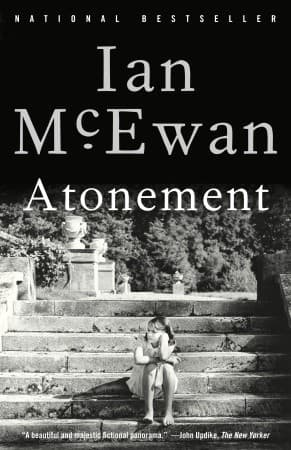
- Atonement
Ian McEwan
4.4 (70) average on GoodreadsExploration of guilt, memory, and the subjective nature of storytelling, with a significant historical backdrop.
- The French Lieutenant's Woman
John Fowles
3.9 (47k) average on GoodreadsLiterary FictionJohn Fowles' The French Lieutenant's Woman (1969) is another key postmodern historical novel that directly engages with the role of the author and the constructed nature of fiction. Like Waterland, it features a self-aware narrator who intervenes in the story, offering multiple endings and reflecting on the process of writing. However, Fowles' novel critiques Victorian literary conventions and historical determinism more explicitly through its period setting and overt authorial intrusions, while Swift's Waterland uses the specific microcosm of the Fenland and one family's history to explore broader, more existential questions about the human need for stories in the face of meaninglessness, as analyzed by scholars such as David Lodge.
- The Old Man and the Sea
Ernest Hemingway
3.8 (831k) average on GoodreadsLiterary FictionA Cuban fisherman's long struggle with a giant marlin becomes a story of endurance and dignity, now retold for young adults with illustrations, phonetic guides, and writing prompts in Traditional Chinese.
- The Goldfinch
Donna Tartt
3.9 (720k) average on GoodreadsLiterary FictionHaunted by a tragic explosion and clutching a stolen Dutch masterpiece, a young orphan navigates the opulent drawing rooms of New York and the gritty underbelly of the art world, desperately seeking connection and redemption amidst a life spiraling into crime and obsession.





Enjoyed the summary?
A summary gives you the shape of the book. The book itself has the detail, the examples and the voice.
Find Waterland on AmazonAs an Amazon Associate, BookBrief earns from qualifying purchases. How we're funded