
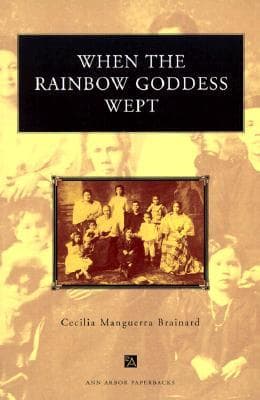
Synopsis
Covers the whole plot, including the ending.
- Difficulty
- Medium
- Pacing
- Moderate
- Mood
- Somber, Resilient, Mythic, Reflective
- Read it if
- You are interested in World War II from a non-European perspective, enjoy stories of resilience and cultural preservation, or appreciate a blend of historical fiction with myth and folklore.
- Skip it if
- You prefer fast-paced action over introspective narratives, or are sensitive to detailed depictions of wartime atrocities.
When the Rainbow Goddess Wept Plot Summary
Covers the whole plot, including the ending.
The War Begins: Flight to the Mountains
In December 1941, the peaceful life of nine-year-old Yvonne Macaraig in Ubec ends with the bombing of Pearl Harbor and the Japanese invasion of the Philippines. Her father, Captain Ricardo Macaraig, a Filipino army officer, decides to move his family — Yvonne, her mother, and her younger brother, Nestor — from their comfortable home to the mountains of Mindanao. They join other families seeking safety and begin life on the run, always aware of the enemy. Yvonne, an imaginative child, starts to understand the chaos through her grandmother's stories and legends. She begins to want to record her own experiences.
Life in the Guerrilla Camp
The Macaraig family settles into a guerrilla camp deep in the jungle. Captain Macaraig leads the resistance, while Yvonne's mother, once a city woman, adapts to the hard conditions, caring for the wounded and managing scarce supplies. Yvonne, though young, sees the daily struggles, fear, and strength of the people around her. She watches ordinary civilians become soldiers and nurses, all united by a common goal. This time is her first direct experience with the harsh realities of war, including hunger, sickness, and the constant threat of enemy patrols.
Encounters with Brutality and Loss
As the war continues, the guerrilla group faces more danger. Yvonne sees the Japanese soldiers' brutality, including their torture and execution of suspected collaborators and resistance fighters. She is deeply affected by the death of her Uncle Tony, who is captured and killed by the Japanese. These traumatic events make Yvonne face how fragile life is and how much suffering war causes. She finds comfort in the stories of the Woman Warrior, Bongkatolan, and the merciful Rainbow Goddess, using these myths to understand the tragedy and her people's fight to survive.
The Power of Storytelling and Resistance
Despite the constant danger, Yvonne's desire to write about her experiences grows. She starts a secret journal, writing down not only what she sees but also the ancient legends and myths that speak to her. She sees similarities between Bongkatolan's struggles and the current fight against the Japanese. Her storytelling becomes a form of resistance, a way to preserve her people's spirit and culture amid destruction. This act of writing gives her purpose and helps her process the overwhelming reality of war.
Separation and Survival
Because of more Japanese pressure and the need for strategic moves, Yvonne's family must separate at times. She is sometimes apart from her father, and sometimes her mother, relying on other resistance members for care. During these separations, Yvonne learns to be more self-reliant and strong. She continues to see her people's suffering — hunger, diseases, constant fear — but also their courage and kindness. These experiences deepen her understanding of humanity's capacity for both cruelty and compassion.
The Role of American Soldiers and Allied Hopes
As the war goes on, the resistance movement contacts American soldiers who were left behind or infiltrated the islands. These allies bring new hope and supplies to the Filipino guerrillas. Yvonne watches the American and Filipino soldiers interact, noting cultural differences and their shared goal. The presence of American forces signals a possible turning point in the war, but it also brings new problems for the resistance as they coordinate efforts and navigate different strategies against the Japanese.
The Brutality of War Intensifies
As the war turns against them, the Japanese forces become even more brutal toward the Filipino population. Yvonne sees massacres, bombings, and the deliberate destruction of villages. Civilian suffering reaches a terrible peak. She sees innocent people caught in the crossfire, their lives changed or ended. These intensified horrors strengthen her resolve to witness and record the truth, understanding that these stories must be remembered to honor the victims and prevent such atrocities from being forgotten.
The End of the War and Liberation
Finally, after years of struggle and suffering, the Japanese forces surrender. The news brings relief and cautious celebration to the surviving Filipinos. Yvonne and her family, having endured the entire war in the mountains, begin the long journey back to their destroyed hometown of Ubec. The land is scarred, homes are ruined, and communities are broken. Liberation is not an immediate return to normal life but the start of a new, challenging phase of rebuilding and healing, both physically and emotionally.
Returning to a Devastated Home
Returning to Ubec, Yvonne finds her city in ruins. Her childhood home is damaged, and many familiar places are gone. The once lively community now has survivors with visible and invisible wounds. She sees the war's effects everywhere — in the rubble, in people's haunted eyes, and in the silence where laughter once was. This time involves trying to regain a normal life amid widespread destruction. Yvonne continues to process her experiences through her writing, trying to understand the trauma.
The Legacy of War and the Power of Memory
Years later, Yvonne, now an adult, thinks about her war experiences. She understands the impact it had on her and her generation, shaping their identities and how they see the world. Her childhood journal has become a record of her people's suffering, strength, and the Philippines' enduring spirit. She recognizes how important it is to preserve these stories, both historical facts and mythical interpretations, to ensure sacrifices are remembered and lessons learned. Her narrative, with the legends of Bongkatolan and the Rainbow Goddess, connects past and present, trauma and healing.
When the Rainbow Goddess Wept Characters
Yvonne Macaraig
Protagonist
A sensitive and imaginative young girl who chronicles her wartime experiences.
Yvonne is the central character and narrator of the story, initially a nine-year-old girl from Ubec. She is highly observant, intelligent, and possesses a vivid imagination, often retreating into the world of myths and legends to cope with the horrors of war. Her sensitivity allows her to deeply feel the suffering around her, but also to find moments of beauty and resilience. As the war progresses, she transforms from an innocent child into a perceptive witness and chronicler, driven by a desire to preserve the stories of her people. Her development is marked by her growing understanding of human nature and the power of memory.
Relationships: Captain Ricardo Macaraig (Her loving and protective father); Yvonne's Mother (Her resilient and adaptable mother); Nestor (Her younger brother); Grandmother (Her grandmother, who told her many myths and legends)
Captain Ricardo Macaraig
Supporting
Yvonne's father, a Filipino army officer leading a guerrilla unit.
Captain Ricardo Macaraig is Yvonne's father and a key figure in the Filipino resistance against the Japanese. He is a brave, principled, and strategic leader who prioritizes the safety of his family and his people. Despite the immense pressures of war, he maintains a sense of duty and integrity. His decisions, such as moving his family to the mountains and leading guerrilla operations, directly impact Yvonne's experiences. He represents the many Filipino men who fought valiantly for their country's freedom, embodying courage and sacrifice.
Relationships: Yvonne (His daughter, whom he loves and protects); Yvonne's Mother (His wife, with whom he shares the burdens of war); Nestor (His son)
Yvonne's Mother
Supporting
Yvonne's resilient and adaptable mother who cares for her family amidst hardship.
Yvonne's mother, whose name is not explicitly given but is a strong presence, is initially a refined city woman who undergoes a remarkable transformation during the war. She adapts to the harsh conditions of jungle life, becoming resourceful in caring for her family, tending to the wounded, and managing scarce provisions. She embodies the quiet strength and resilience of Filipino women during wartime, providing emotional support and practical assistance to her family and community. Her unwavering spirit is a source of comfort and stability for Yvonne.
Relationships: Yvonne (Her daughter, whom she nurtures and protects); Captain Ricardo Macaraig (Her husband, with whom she shares a deep bond); Nestor (Her son)
Nestor
Supporting
Yvonne's younger brother.
Nestor is Yvonne's younger brother. As a child, he represents the innocence that is gradually lost during wartime. While less central to the narrative than Yvonne, his presence highlights the impact of the war on younger children and provides a contrast to Yvonne's more reflective and analytical nature. He experiences the same hardships as his family but through a younger, less articulate lens. His survival through the war symbolizes the hope for the next generation of Filipinos.
Relationships: Yvonne (His older sister); Captain Ricardo Macaraig (His father); Yvonne's Mother (His mother)
Uncle Tony
Supporting
Yvonne's uncle, a victim of Japanese brutality.
Uncle Tony is Yvonne's uncle, whose capture and execution by the Japanese forces serve as one of the most poignant and traumatic events in Yvonne's early wartime experience. His death vividly illustrates the brutal realities of the Japanese occupation and the personal cost of resistance. He represents the many innocent lives lost and the profound grief experienced by families during the war, leaving a lasting impact on Yvonne's understanding of human cruelty and sacrifice.
Relationships: Yvonne (Her beloved uncle); Captain Ricardo Macaraig (His brother-in-law)
Grandmother
Mentioned
Yvonne's grandmother, the source of her mythical stories.
Yvonne's grandmother, though not physically present during the wartime narrative, is a profoundly influential figure. She is the source of the Filipino myths and legends that Yvonne clings to throughout the war, including the stories of Bongkatolan, the Woman Warrior, and the Rainbow Goddess. Her storytelling provides Yvonne with a cultural anchor, a framework for understanding heroism, suffering, and hope, and a means of psychological escape and processing during traumatic times. She represents the oral tradition and cultural heritage passed down through generations.
Relationships: Yvonne (Her granddaughter, to whom she passed on stories)
Bongkatolan, the Woman Warrior
Mentioned
A legendary figure from Filipino myth, inspiring Yvonne's resilience.
Bongkatolan is a mythical figure, the Woman Warrior, whose legends are frequently recalled by Yvonne. She represents strength, courage, and resistance in the face of adversity. Yvonne draws parallels between Bongkatolan's struggles and the fight of the Filipino people against the Japanese, finding inspiration and meaning in her story. Bongkatolan serves as a powerful archetype for resilience and the enduring spirit of the Filipino people, demonstrating how ancient narratives can provide comfort and guidance in modern conflict.
Relationships: Yvonne (An inspirational figure for her)
The Rainbow Goddess
Mentioned
A merciful deity from Filipino myth, symbolizing hope and healing.
The Rainbow Goddess is another significant mythical figure in Yvonne's mental landscape. She symbolizes mercy, hope, and the promise of renewal after destruction, particularly after the metaphorical 'weeping' of the land during war. Yvonne often turns to the idea of the Rainbow Goddess for solace and to find meaning in suffering. The Goddess represents the spiritual dimension of the Filipino people's resilience and their belief in eventual peace and restoration, offering a counterpoint to the pervasive darkness of war.
Relationships: Yvonne (A source of spiritual comfort and hope for her)
When the Rainbow Goddess Wept Themes
The Trauma and Resilience of War
The novel clearly shows the Japanese occupation's terrible impact on the Filipino people, especially through Yvonne's young eyes. It details lost innocence, violence, hunger, disease, and constant fear. However, it also shows the Filipinos' great strength — their courage in resistance, their compassion, and their spirit to survive and rebuild. Yvonne's family's adaptability and the guerrillas' determination show this theme, proving how humanity endures even during great suffering.
“We were not just people, we were a nation, and we would fight for our land, our dignity, our right to be.”
The Power of Storytelling and Memory
Storytelling is key to the novel. It is both a way to cope and a form of resistance. Yvonne uses her journal to record her experiences and ancient myths, creating a personal and collective history. The legends of Bongkatolan and the Rainbow Goddess give a cultural way to understand the conflict and offer hope. This theme shows the importance of preserving cultural heritage and personal stories so the past is not forgotten, and future generations can learn from their ancestors' struggles and triumphs.
“I had to write it all down, the good and the bad, the beautiful and the ugly, because if I didn't, who would remember?”
Loss of Innocence and Coming of Age
The novel is a coming-of-age story set during wartime. Yvonne starts as an innocent nine-year-old, but the horrors she sees make her grow up quickly. She deals with death, violence, and human nature's complexities, losing her childhood innocence. Her journey reflects the universal experience of growing up during a crisis, where childhood and adulthood blur, and young people face the world's harsh realities early.
“The war took away my childhood, but it gave me a voice.”
Cultural Identity and Heritage
The book deeply explores Filipino cultural identity, especially by including indigenous myths and legends in Yvonne's story. These stories are not just distractions; they are vital parts of the Filipino spirit, providing historical context, moral guidance, and strength. The fight against the Japanese is not only a physical battle but also a fight to preserve a unique cultural heritage. Yvonne's role in documenting these stories highlights their importance in keeping a sense of self and community during foreign aggression.
“Our stories were our soul, our history, our very breath. They kept us alive when everything else tried to kill us.”
The Nature of Good and Evil
Through Yvonne's observations, the novel looks at extreme human behavior during wartime. It shows the cruelty of the Japanese invaders and the suffering they cause. However, it also shows great kindness, self-sacrifice, and courage among the Filipino people and their allies. Yvonne tries to understand how such evil can exist alongside such goodness. She finds comfort in the strength and compassion that appear even in the darkest times, suggesting that hope can last.
“I saw so much evil, but I also saw so much goodness, so much courage, that it made me believe in humanity, even when it was at its worst.”
Plot Devices & Literary Techniques
First-Person Child Narrator
Provides a unique, immediate, and emotionally resonant perspective on war.
The story is told entirely from the perspective of Yvonne, starting at age nine. This narrative choice allows for a raw, unfiltered, and deeply personal account of the war. Her limited understanding as a child contrasts with the horrific events she witnesses, making the atrocities even more poignant and emphasizing the loss of innocence. It also lends credibility to her observations and emotional responses, allowing the reader to experience the war's impact through a vulnerable yet increasingly perceptive lens. Her child's voice also makes the mythical elements feel more natural and integrated.
Integration of Filipino Mythology
Ancient legends provide a framework for understanding and coping with modern conflict.
Throughout the narrative, Yvonne interweaves the ancient Filipino myths and legends she learned from her grandmother, particularly those of Bongkatolan, the Woman Warrior, and the Rainbow Goddess. These myths serve multiple functions: they provide a cultural anchor, a psychological coping mechanism for Yvonne, and a symbolic parallel to the real-world struggles of the Filipino people. They elevate the personal story to an epic scale, suggesting that the current conflict is part of a longer, heroic narrative of resilience and survival, imbuing the suffering with deeper meaning and hope.
Journal/Memoir Structure
Yvonne's act of writing creates a meta-narrative about bearing witness and preserving history.
The novel is presented as Yvonne's personal account, a journal or memoir she keeps throughout and after the war. This device emphasizes the act of bearing witness and the importance of historical documentation. It allows for a reflective tone, as Yvonne processes events through writing, and underscores the theme of memory and the responsibility to remember. The 'creation' of the book within the book highlights storytelling itself as a powerful tool for survival, healing, and cultural preservation, giving voice to the voiceless.
Symbolism of the Rainbow Goddess
Represents hope, mercy, and the promise of healing after devastation.
The Rainbow Goddess, mentioned in the title, is a potent symbol throughout the book. In Filipino mythology, she often signifies mercy, peace, and the return of color and life after sorrow or destruction. For Yvonne, the Goddess represents the enduring hope for an end to suffering and the belief in eventual healing and restoration. Her presence, even as a mythical figure, offers a spiritual counterpoint to the brutal realities of war, suggesting that beauty and solace can eventually emerge from pain, and that life, like a rainbow, will return after the storm.
When the Rainbow Goddess Wept Quotes
“When the Japanese came, it was like a plague of locusts descending on our peaceful valley.”
“The war took everything, but it could not take our stories. We kept them alive, like embers in the dark.”
“A child of war grows up too fast, seeing too much, understanding too little.”
“Our gods wept with us, their tears falling as the rain that cleansed and nourished, but also washed away the blood.”
“To forget is to die twice. To remember is to live, even in the shadow of sorrow.”
“Love, like a seed, can grow even in the most barren soil, watered by tears and hope.”
“The whispers of the past are never truly silent; they echo in the present, shaping who we are.”
“Sometimes, the greatest bravery is simply to endure, to keep breathing when all else crumbles.”
“The forest was our sanctuary, our hiding place, a living, breathing witness to our pain and our survival.”
“We learned to find beauty in small things – a ripe mango, a clear sky, the laughter of a friend – because the big things were too terrible to bear.”
“Even in the darkest night, the stars still shine. You just have to look up.”
“The stories of our ancestors are not just tales; they are maps to navigate the storms of life.”
“War is a hungry beast; it devours the innocent and leaves behind only ghosts and ashes.”
“Our tears were not just of sorrow, but also of defiance, a refusal to let our spirits be broken.”
Quiz
10 questions on the plot and the characters. Each answer comes with a short explanation.
Question 1
At what age does Yvonne begin her journey with her family into the jungle to join the resistance effort?
- Seven
- Eight
- Nine
- Ten
Show answer
C. Nine The book description explicitly states that nine-year-old Yvonne flees with her family, establishing her age at the beginning of the resistance effort.
Question 2
Which historical event forms the backdrop for the novel 'When the Rainbow Goddess Wept'?
- The Philippine Revolution against Spain in the late 19th century
- The American colonial period in the Philippines
- The Japanese invasion of the Philippines in 1941
- The Hukbalahap Rebellion post-World War II
Show answer
C. The Japanese invasion of the Philippines in 1941 The novel is set against the backdrop of the Japanese invasion of the Philippines in 1941, a key historical event mentioned in the summary.
Question 3
What primary coping mechanism does Yvonne use to find comfort amidst the terror and despair of war?
- Writing a secret diary of her experiences
- Practicing traditional Filipino martial arts
- Listening to and preserving her people's ancient stories and legends
- Forming a close bond with a pet animal
Show answer
C. Listening to and preserving her people's ancient stories and legends Yvonne finds comfort and strength in the stories and legends passed down through generations, particularly those of Bongkatolan and the rainbow goddess.
Question 4
Which two specific legendary figures provide Yvonne with strength and hope during the war?
- Maria Makiling and Bernardo Carpio
- Bongkatolan, the Woman Warrior, and the merciful rainbow goddess
- Mamanwa, the sea god, and Lalahon, the fire goddess
- Apo Laki, the sun god, and Mayari, the moon goddess
Show answer
B. Bongkatolan, the Woman Warrior, and the merciful rainbow goddess The summary specifically mentions that Yvonne finds comfort and strength in the legends of Bongkatolan, the Woman Warrior, and the merciful rainbow goddess.
Question 5
What is Yvonne's ultimate determination regarding the ancient legends and her own experiences?
- To forget the painful past and focus on rebuilding her life
- To use the legends to inspire her to become a military leader
- To preserve these ancient legends and to give voice to the epic she herself is living
- To convert others to the traditional beliefs of her ancestors
Show answer
C. To preserve these ancient legends and to give voice to the epic she herself is living Yvonne's resolve is to preserve the ancient legends and to articulate her own epic experiences, showing the intersection of myth and reality in her life.
Question 6
The novel 'When the Rainbow Goddess Wept' is described as an exploration of what two key aspects of the Filipino people's experience?
- Their economic struggles and eventual prosperity
- Their collective wounding and heroic response
- Their political divisions and eventual unity
- Their cultural assimilation and loss of identity
Show answer
B. Their collective wounding and heroic response The summary states that the novel is 'an exploration of the collective wounding of the Filipino people and their heroic response,' highlighting the central themes.
Question 7
How does the novel aim to present the Philippines to American audiences, according to the description?
- Through a historical account focusing solely on military strategies
- Through an outsider's perspective, emphasizing cultural differences
- Through an insider's eyes, offering an unusual reading experience about a foreign world
- Through a comparative analysis with other Asian nations
Show answer
C. Through an insider's eyes, offering an unusual reading experience about a foreign world The description notes that the book 'shows us the Philippines through an insider's eyes and brings to American audiences an unusual reading experience about a world that is utterly foreign.'
Question 8
What genre does 'When the Rainbow Goddess Wept' primarily belong to?
- Magical Realism
- Memoir
- Historical Fiction
- Fantasy
Show answer
C. Historical Fiction The genre is explicitly stated as 'Historical Fiction' at the beginning of the book description.
Question 9
Cecilia Manguerra Brainard's background suggests a strong connection to Filipino culture through her birthplace and other works. Where was she born?
- Manila, Philippines
- Davao City, Philippines
- Cebu City, Philippines
- Iloilo City, Philippines
Show answer
C. Cebu City, Philippines The author's biography states, 'Cecilia Manguerra Brainard was born in Cebu City, Philippines,' reinforcing her 'insider' perspective.
Question 10
Beyond the specific historical events, what universal aspect of Yvonne's character does the novel aim to convey to readers?
- Her exceptional leadership skills in wartime
- Her unique ability to communicate with spirits
- Her touchingly universal childhood experience amidst adversity
- Her role as a symbol of political resistance
Show answer
C. Her touchingly universal childhood experience amidst adversity The description highlights that the book brings to American audiences 'a child who is touchingly universal,' suggesting that despite the foreign setting, Yvonne's human experience resonates broadly.
When the Rainbow Goddess Wept FAQ
What is 'When the Rainbow Goddess Wept' about?
'When the Rainbow Goddess Wept' is a historical fiction novel narrated by nine-year-old Yvonne during the Japanese invasion of the Philippines in 1941. It follows her and her family as they flee into the jungle to join the resistance, experiencing immense suffering and tragedy while finding solace and strength in ancient Filipino myths and legends.
Why should I read 'When the Rainbow Goddess Wept'?
You should read this book for its unique blend of historical account, cultural mythology, and a child's perspective on war. It offers an intimate look at the collective wounding and heroic resilience of the Filipino people during a brutal occupation, providing an 'insider's eyes' view of a world often unseen in Western literature.
What is the background/setting of 'When the Rainbow Goddess Wept'?
The book is set in the Philippines during the Japanese invasion of 1941, a period of immense conflict and suffering. Yvonne and her family are forced to abandon their home and live in the jungle, becoming part of the local resistance effort against the occupying forces.
What writing style does the author use?
Cecilia Manguerra Brainard employs a lyrical and evocative writing style, seamlessly weaving together the brutal realities of war with the rich tapestry of Filipino myth and legend. The narrative is presented through the innocent yet observant eyes of a child, Yvonne, which lends a unique blend of vulnerability and profound insight to the story.
What minor details add significant meaning?
The specific details of the Filipino myths, such as the legends of Bongkatolan, the Woman Warrior, and the merciful rainbow goddess, are not just decorative but deeply significant. They provide Yvonne with a framework to understand her traumatic experiences, offering her strength, hope, and a cultural lens through which to process the atrocities around her.
What are some subtle foreshadowing moments?
The initial stories Yvonne hears about heroes and goddesses battling evil subtly foreshadow the real-life battles and heroism she will witness and participate in. The resilience and cunning of the mythological figures hint at the survival strategies and moral fortitude that Yvonne and her community will need to demonstrate against the Japanese.
What unexpected character connections exist?
While not explicitly detailed in the summary, the structure suggests that the connection between Yvonne's personal suffering and the collective historical trauma of her people is a central unexpected link. Her individual journey of finding comfort in legends creates a profound connection to the ancestral wisdom and resilience of her entire culture.
What are unspoken character motivations?
Beyond survival, the unspoken motivation for Yvonne's family and the resistance is to preserve their culture and identity against an invading force that seeks to erase it. Yvonne's personal motivation to preserve the ancient legends is driven by an unspoken understanding that these stories are vital for the spiritual survival and future of her people.
What psychological complexities do characters exhibit?
Yvonne, despite her young age, exhibits complex psychological resilience, using storytelling and imagination as a coping mechanism against unimaginable trauma. Her internal world, rich with goddesses and warriors, provides a stark contrast to the brutal external reality, showcasing the mind's ability to create sanctuary amidst chaos.
What are the major emotional turning points?
A major emotional turning point for Yvonne is likely when she fully embraces the power of the legends, moving from merely hearing them to actively determining to preserve them and 'give voice to the epic she herself is living.' This signifies her transformation from a passive witness to an active participant in her cultural memory.
How do relationship dynamics evolve?
The relationship dynamics likely evolve from a typical family unit to one forged by shared hardship and resistance. The common enemy and the need for collective survival would strengthen bonds within the family and community, transforming them into a unified front against terror, with the elders passing down wisdom to Yvonne for cultural continuity.
Which parts remain ambiguous or open-ended?
The summary doesn't explicitly state the ultimate fate of Yvonne or her family after the war, leaving the long-term impact of her 'giving voice to the epic' somewhat open-ended. While she determines to preserve the legends, the full scope of her success or the immediate aftermath of the conflict could remain ambiguous.
What are controversial scenes or decisions?
The summary focuses on the broad suffering and heroism, not detailing specific controversial scenes or decisions within the narrative. However, in the context of war, decisions made by resistance fighters or the ethical dilemmas faced by civilians trying to survive could introduce morally ambiguous or controversial moments.
'When the Rainbow Goddess Wept' ending explained: how it ends & what it means
While the summary doesn't detail the explicit ending, it suggests Yvonne's ultimate purpose is to 'preserve these ancient legends and to give voice to the epic she herself is living.' This implies an ending where Yvonne, having survived the war, becomes a storyteller and guardian of her people's history and myths, ensuring their legacy lives on despite the destruction.
About the author
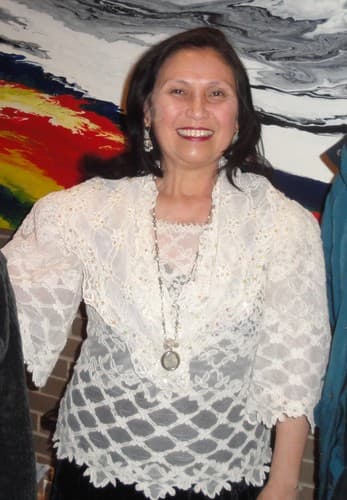
Cecilia Manguerra Brainard is a Filipino-American author celebrated for her vivid portrayals of Filipino culture and history. Her acclaimed novel, "When the Rainbow Goddess Wept," is a poignant coming-of-age story set during World War II. Brainard's work often explores themes of identity, resilience, and the female experience in the Philippines.
Similar books
- A Thousand Splendid Suns
Khaled Hosseini
4.4 (1.2M) average on GoodreadsHistorical FictionExplores the impact of war and oppression on the lives of women and children in a non-Western setting.
- Pachinko
Min Jin Lee
4.3 (208k) average on GoodreadsLiterary FictionIntergenerational saga depicting the struggles and resilience of a marginalized community during a tumultuous historical period.
- To Kill a Mockingbird
Harper Lee
4.3 (4.5M) average on GoodreadsHistorical FictionIn the 1930s Jim Crow South, Harper Lee writes about racial injustice, moral growth, and the quiet courage of a lawyer father, Atticus Finch, as seen through his young daughter's eyes.
- The Great Gatsby
F. Scott Fitzgerald
3.9 (3.8M) average on GoodreadsHistorical FictionIn the opulent Roaring Twenties, a mysterious millionaire's lavish parties hide his desperate, tragic pursuit of a lost love, exposing the emptiness within the American Dream.
- Pride and Prejudice
Jane Austen
4.3 (3M) average on GoodreadsHistorical FictionIn a society focused on status and money, Elizabeth Bennet navigates love and pride, challenging Mr. Darcy and social expectations to find true affection.
- Angels & Demons
Dan Brown
3.9 (2.7M) average on GoodreadsThrillerA Harvard symbologist races through Rome's ancient sites, deciphering cryptic clues to unmask the Illuminati and stop a vengeful plot to destroy the Vatican with a stolen antimatter weapon.






Enjoyed the summary?
A summary gives you the shape of the book. The book itself has the detail, the examples and the voice.
Find When the Rainbow Goddess Wept on AmazonAs an Amazon Associate, BookBrief earns from qualifying purchases. How we're funded