

Core Idea
- Difficulty
- Hard
- Read it if
- You are a serious student of quantum mechanics, philosophy of mind, or systems theory, seeking a profound, unified theory of reality that transcends traditional disciplinary boundaries, or if you are grappling with the philosophical implications of modern physics for consciousness and the nature of existence.
- Skip it if
- You are looking for a light introduction to quantum physics, practical self-help, or a quick read without substantial intellectual effort. This book is dense, highly conceptual, and requires a willingness to engage with abstract philosophical and scientific arguments.
Key Takeaways from Wholeness and the Implicate Order
The Implicate Order: Unseen Wholeness
Reality is fundamentally an undivided, flowing whole, not a collection of separate parts.
Bohm introduces the 'implicate order' as a new way to think about the universe, moving away from the old mechanical view. He says that what we see as separate objects and events (the 'explicate order') are just visible forms of a deeper reality where everything is connected. Imagine a hologram: each piece of the film holds information about the whole image. Similarly, in the implicate order, information about the entire universe is folded into every part of space and time. This challenges our everyday understanding and scientific models that usually divide reality into distinct parts. True understanding, Bohm suggests, means grasping the underlying unity and dynamic flow.
“The new form of insight can be summarized in the proposition that the general ordering of the universe is an implicate order, or an enfolded order, contained within the explicit, or explicate, order.”
In the book: Bohm uses the analogy of a hologram, where each part contains the information of the whole, and also the example of ink dropped into a viscous fluid and then stirred (enfolding) and unstirred (unfolding) to illustrate the dynamic interplay between the implicate and explicate orders.
Try this: Cultivate a 'holistic perception' by recognizing the interconnectedness in seemingly separate events or objects. Instead of isolating problems, consider the broader system they are part of. Practice mindfulness to observe the flow and interdependencies in your environment and thoughts.
Related ideas: implicate-order, explicate-order, wholeness, holographic-universe
Quantum Physics Demands Wholeness
Quantum phenomena like non-locality are not anomalies but evidence of the universe's fundamental interconnectedness.
Bohm states that quantum physics, especially non-locality (entanglement), cannot be fully explained by a mechanical, reductionist worldview. The instant connection between entangled particles, no matter the distance, suggests they are not truly separate. Instead, they are expressions of an underlying, undivided whole. This 'quantum wholeness' means reality is not made of independent particles interacting locally, but from a deeper, non-local field of information and energy where everything is linked. The old idea of distinct, interacting objects breaks down at this basic level, pointing to the implicate order as the true nature of existence.
“The quantum theory indicates that the analysis of the world into separately existing parts, with at most external relationships between them, is not valid.”
In the book: The phenomenon of quantum entanglement, where two particles remain connected and influence each other instantaneously even when separated by vast distances, is cited as a primary example challenging classical notions of locality and separability.
Try this: Approach complex problems by looking for hidden connections and systemic influences rather than isolated causes. Recognize that your actions, however small, are part of a larger interconnected web and can have far-reaching, non-local effects.
Related ideas: quantum-mechanics, non-locality, entanglement, quantum-wholeness
Thought as a Fragmenting Force
Our prevailing modes of thought, based on fragmentation, prevent us from perceiving the universe's true wholeness.
Bohm argues that human thought, especially scientific thought, has historically focused on analysis, division, and categorization. While useful, this 'fragmentary' way of thinking keeps us from seeing the universe's underlying unity. We create artificial boundaries and distinctions, not just in how we understand the physical world, but also in our social and psychological lives. This fragmented thinking, Bohm believes, is not just a mistake; it is a deep habit that causes real-world problems like conflict, alienation, and environmental damage. To see wholeness, we must recognize and move beyond these ingrained thought patterns.
“The general fragmentation of thought is then projected into the world, thereby contributing to the actual fragmentation of the world.”
In the book: Bohm points to the historical development of scientific disciplines, each focusing on a narrow slice of reality, and the resulting inability to integrate these separate understandings into a coherent whole. He also highlights societal divisions and conflicts as manifestations of fragmented thought.
Try this: Become aware of how your own thinking tends to categorize, label, and separate. Practice 'unconditional perception' by observing without immediately applying conceptual frameworks. Challenge assumptions that promote division or isolation in your personal and professional life.
Related ideas: fragmentation-of-thought, perception, holistic-thinking, mind-body-problem
The Rheomode: A Language of Flow
To grasp wholeness, we need a language that emphasizes process, relationship, and flux, not static 'things'.
Recognizing that traditional language, which focuses on nouns (static objects) and verbs (actions by objects), has limits, Bohm proposes a 'rheomode' of language. This new way of speaking would prioritize verbs and participles, emphasizing processes and relationships rather than fixed things. For example, instead of 'the river is flowing,' one might say 'the water is 'rivering'.' This change in language structure would help us see and describe reality as a continuous, undivided flow, where everything is constantly 'flowing' and 'unfolding.' It aims to reshape our thinking to match the dynamic nature of the implicate order.
“The content of the rheomode is thus the general movement of the universe, which is the ground of all existence.”
In the book: Bohm offers specific examples of how words could be modified in the rheomode, such as replacing 'it is raining' with 'raining' or 'the table is hard' with 'the table is 'harding'.' He connects this to ancient languages that had more process-oriented structures.
Try this: Experiment with describing situations and observations using more verbs and fewer nouns. Focus on the dynamic interplay and relationships between things rather than just their static attributes. For instance, instead of 'I have a problem,' try 'probleming is occurring.'
Related ideas: rheomode, language-of-flow, process-philosophy, dynamic-perception
Consciousness as an Implicate Process
Consciousness is not separate from matter but an enfolded aspect of the universe's fundamental wholeness.
Bohm rejects the traditional separation of mind and matter. Instead, he suggests that consciousness is not just a product of complex brains or a separate spiritual entity. It is a subtler, more folded aspect of the implicate order itself. Just as the explicate order unfolds from the implicate, so does our conscious experience. This means consciousness is fundamentally connected to the entire universe, not limited to individual brains. Our thoughts, feelings, and perceptions are part of the same dynamic flow that makes up physical reality. This view helps us understand how individual consciousness might connect to a universal, undivided field of information.
“Consciousness is then seen to be a particular manifestation of the implicate order, which is ultimately the ground of all reality.”
In the book: Bohm connects the 'meaning' and 'information' inherent in thought to the 'information' enfolded in the implicate order. He suggests that the brain is a specialized organ for 'unfolding' and 'refolding' this implicate information, much like a radio receiver processes signals from a broader field.
Try this: Recognize that your consciousness is not isolated but deeply connected to the world around you. Practice introspection to observe the flow of your thoughts and feelings, seeing them as processes rather than fixed entities. Explore practices that aim to expand awareness beyond the individual self.
Related ideas: consciousness, mind-matter-unity, universal-mind, implicate-consciousness
The Undivided Universe: No Parts, Only Aspects
The universe is not composed of 'parts' but is an undivided whole where everything is an 'aspect' of the larger reality.
Bohm challenges the deep-seated habit of seeing the world as a collection of separate 'parts' that interact. He argues that this 'particulate' view is an illusion, a result of our fragmented thinking. Instead, he proposes that the universe is an 'undivided whole.' What we see as 'parts' are simply different 'aspects' or views of the same underlying reality. Think of a ripple in a pond: it's not a separate thing but an aspect of the pond's overall movement. This distinction is important because it fundamentally changes how we approach understanding and problem-solving, moving from adding parts to understanding the dynamic interplay within a unified field.
“The notion of a 'part' is shown to be inadequate, and is replaced by the notion of 'aspect', which is always an aspect of the whole.”
In the book: Bohm uses the analogy of a current in a river. We might identify a 'part' of the current, but it's fundamentally inseparable from the entire river's flow. Similarly, a 'thought' is not a separate entity but an aspect of the overall stream of consciousness.
Try this: When faced with a complex situation, resist the urge to immediately break it down into isolated parts. Instead, try to see how each component is an 'aspect' of the larger system. Consider the impact of changes to one 'aspect' on the entire 'whole'.
Related ideas: undivided-wholeness, aspects-of-reality, systemic-thinking, holistic-paradigm
Dialogue as a Path to Wholeness
True dialogue, where assumptions are suspended, can reveal shared meaning and overcome fragmented thinking.
Bohm believed that the fragmentation in our thought patterns extends to our communication, leading to misunderstanding and conflict. He proposed 'dialogue' not as a debate or discussion to reach agreement, but as a specific process where participants collectively set aside their assumptions and observe the flow of thought itself. The goal is to create a shared pool of meaning, where individual biases and fragmented views disappear, allowing a more holistic understanding to emerge. This process aims to access a collective intelligence that goes beyond individual limits, reflecting the interconnectedness of the implicate order.
“The purpose of a dialogue is to enable the participants to observe the process of thought itself, and to see how this process is continually creating and recreating the world.”
In the book: Bohm co-led numerous dialogue sessions, often with J. Krishnamurti, where participants were encouraged to listen deeply, suspend judgment, and observe the collective thought process without trying to 'win' an argument or even agree.
Try this: Practice genuine dialogue by actively listening without forming a rebuttal, suspending your own assumptions, and observing the collective flow of ideas in group settings. Focus on understanding the underlying meanings rather than just the surface words.
Related ideas: dialogue, collective-intelligence, suspension-of-assumptions, shared-meaning
Order and Disorder: Relative Perspectives
Order and disorder are not absolute states but relative descriptions dependent on our chosen frame of reference.
Bohm argues that how we see order and disorder depends greatly on our ideas and the scale at which we observe things. What looks like 'disorder' at one level (e.g., the chaotic movement of individual molecules in a gas) can be seen as 'order' at a higher level (e.g., the statistical rules governing gas pressure and temperature). This applies to the implicate order, where what seems like random changes in the explicate order might be highly ordered patterns folded within the deeper reality. This idea encourages us to question our fixed definitions and to look for broader perspectives when evaluating apparent chaos or structure.
“What is order from one point of view may be disorder from another.”
In the book: Bohm uses the example of a crumpled piece of paper. From one perspective, it's disordered. If we understand the process of crumpling, the folds themselves follow a certain order. He also references the seemingly random motion of Brownian particles, which is ordered by statistical laws.
Try this: When encountering what seems chaotic or disordered, try to shift your perspective or zoom out to a larger context. Look for underlying patterns or principles that might reveal a different kind of order. Reframe 'failure' not as disorder but as a necessary part of a learning process.
Related ideas: order-disorder, relativity-of-perception, frames-of-reference, emergent-order
The Flow of Meaning: Beyond Causality
Meaning is not imposed but arises from the dynamic flow of the implicate order, challenging linear causality.
Traditional science often seeks direct cause-and-effect relationships. Bohm, however, suggests that in the implicate order, meaning and information are not just passed from one point to another; they are part of the overall dynamic flow. It's more like a symphony, where the meaning comes from the entire piece unfolding, not just individual notes. This 'flow of meaning' implies a more subtle, non-local form of causality, where the 'whole' influences the 'parts' as much as the parts influence the whole. Understanding this requires moving beyond simple explanations to appreciate how significance is generated holistically.
“Meaning is not 'in' things, but is rather a movement of the whole.”
In the book: Bohm discusses how the meaning of a word or phrase is not contained in individual letters or sounds but arises from their context and the dynamic process of communication. He extends this to the universe, where the 'meaning' of physical phenomena is part of the larger implicate flow.
Try this: Instead of always searching for a single cause for an effect, explore the broader context and interconnected factors that contribute to a situation. Consider how meaning is co-created in interactions rather than being a fixed property of objects or statements.
Related ideas: flow-of-meaning, non-linear-causality, holistic-meaning, information-field
Wholeness and the Implicate Order Quotes
“The new form of insight can be summarized in the sentence: 'The one is in the many, and the many are in the one.'”
“The notion that the world is made of a set of separately existing things is an illusion.”
“Thought is a system, and if you don't know you are in it, you are its prisoner.”
“The implicate order is a new order of reality which is essentially undivided, flowing movement.”
“What is primary is the undivided flowing movement of the whole, and the 'things' that appear to us are only relatively independent sub-totalities within this whole, and their relative independence is a product of our way of looking.”
“Our ordinary ways of thinking, imagining, perceiving, and acting are for the most part fragmented.”
“Meaning is not something that is given to us, but something that we create.”
“The attempt to live in fragments leads to a kind of general confusion, which is now to be seen in every phase of our lives.”
“The 'holomovement' is the ground of all existence.”
“The manifest world is a projection from the implicate order.”
“Truth is a pathless land, and you cannot approach it by any path whatsoever, by any religion, by any sect.”
“To be able to perceive the whole, we must be able to suspend our habitual modes of thought.”
“Communication is a process of creating common meaning.”
“We are faced with the fact that we have to understand a world that is not made of parts, but is an indivisible whole.”
Quiz
10 questions on the main ideas. Each answer comes with a short explanation.
Question 1
Which concept does David Bohm introduce to describe the underlying, undivided reality from which all manifest phenomena arise?
- The Superposition Principle
- The Explicate Order
- The Implicate Order
- The Quantum Foam
Show answer
C. The Implicate Order Bohm's central concept is the 'Implicate Order,' which refers to a hidden, enfolded order of reality, in contrast to the 'Explicate Order' of our perceived, unfolded reality.
Question 2
Bohm uses the analogy of a hologram to illustrate the nature of the implicate and explicate orders. What characteristic of a hologram is most relevant to this analogy?
- Its ability to project 3D images
- Each part contains information about the whole
- It requires a laser to be viewed
- Its two-dimensional nature
Show answer
B. Each part contains information about the whole Bohm emphasizes that in a hologram, information about the entire image is enfolded within each part. This mirrors how the whole of reality is enfolded within each 'part' of the implicate order.
Question 3
According to Bohm, what is the primary limitation of classical physics in understanding the nature of reality?
- It fails to account for gravity
- It treats reality as fundamentally fragmented and separable
- It relies too heavily on mathematics
- It ignores the role of consciousness
Show answer
B. It treats reality as fundamentally fragmented and separable Bohm argues that classical physics, with its emphasis on discrete particles and local interactions, fundamentally misrepresents reality by ignoring its underlying wholeness and interconnectedness.
Question 4
Bohm suggests that the 'stream of consciousness' is analogous to a river. How does this analogy relate to his concept of mind and matter?
- It implies consciousness flows randomly
- It illustrates how mind and matter are distinct but parallel entities
- It highlights the constant flux and interconnectedness, suggesting they are two aspects of a deeper whole
- It shows that consciousness is a mere epiphenomenon of brain activity
Show answer
C. It highlights the constant flux and interconnectedness, suggesting they are two aspects of a deeper whole The river analogy emphasizes the dynamic, flowing, and undivided nature of consciousness, which Bohm sees as deeply integrated with the 'material' world, both emerging from the implicate order.
Question 5
Which term does Bohm use to describe the continuous, undivided movement of the implicate order unfolding into the explicate order and re-enfolding?
- Quantum Fluctuation
- Holomovement
- Cosmic Oscillation
- Entanglement Cascade
Show answer
B. Holomovement Bohm coined the term 'holomovement' to denote the fundamental, undivided, and flowing nature of reality, encompassing both the implicate and explicate orders as a continuous process of unfolding and enfolding.
Question 6
Bohm critiques the common scientific method for its tendency to:
- Overemphasize empirical observation
- Isolate phenomena from their broader context, leading to fragmentation
- Ignore the mathematical precision required for theories
- Reject the use of theoretical models
Show answer
B. Isolate phenomena from their broader context, leading to fragmentation Bohm argues that the prevailing scientific approach often breaks reality down into separate parts for analysis, thereby missing the essential interconnectedness and wholeness that define the implicate order.
Question 7
How does Bohm's view of 'thought' differ from a purely mechanistic perspective?
- He sees thought as purely a product of individual brain chemistry
- He considers thought to be an active, formative process that shapes our perception of reality, rather than just a passive reflection
- He believes thought is irrelevant to the physical world
- He argues thought is always logical and rational
Show answer
B. He considers thought to be an active, formative process that shapes our perception of reality, rather than just a passive reflection For Bohm, thought is not merely a passive recorder but an active participant in shaping the explicate order. Our thought processes, when fragmented, contribute to our fragmented perception of reality.
Question 8
Bohm's discussions with J. Krishnamurti and the Dalai Lama primarily influenced his work by reinforcing the importance of:
- Mathematical rigor in quantum physics
- Understanding the nature of consciousness and the dangers of fragmented thought
- Developing new experimental techniques
- Proving the existence of God
Show answer
B. Understanding the nature of consciousness and the dangers of fragmented thought His interactions with these spiritual figures deepened his understanding of consciousness, the limitations of thought, and the necessity of perceiving reality as an undivided whole, which aligned with his scientific inquiries.
Question 9
What is the practical implication of understanding the 'implicate order' for human society, according to Bohm?
- It encourages individualistic competition to optimize personal unfolding
- It suggests that societal problems arise from our fragmented perception and require a shift towards perceiving interconnectedness and wholeness
- It implies that technology alone can solve global issues
- It leads to a deterministic view where individual actions have no real impact
Show answer
B. It suggests that societal problems arise from our fragmented perception and require a shift towards perceiving interconnectedness and wholeness Bohm believed that many of humanity's problems stem from our fragmented way of thinking and perceiving the world. Recognizing the underlying wholeness of the implicate order could lead to more coherent and harmonious societal structures.
Question 10
When Bohm refers to 'reality in general and consciousness in particular,' how does he primarily relate these two concepts within his framework?
- Consciousness is an emergent property of complex physical systems, entirely separate from the fundamental reality
- Consciousness is the sole creator of reality, independent of any physical substrate
- Consciousness and matter are both aspects or manifestations of the same deeper, undivided implicate order
- Reality is a fixed, objective backdrop against which consciousness merely observes
Show answer
C. Consciousness and matter are both aspects or manifestations of the same deeper, undivided implicate order Bohm's theory posits a fundamental unity where mind and matter, consciousness and objective reality, are not separate entities but different aspects or 'projections' of the underlying, undivided holomovement of the implicate order.
Wholeness and the Implicate Order FAQ
What is the central idea of David Bohm's 'Wholeness and the Implicate Order'?
The book proposes a revolutionary view of reality where the universe is an 'unbroken whole,' challenging the idea of separate, independent parts. Bohm introduces the concepts of the 'implicate order' (a hidden, underlying order) and the 'explicate order' (the manifest reality we perceive).
Does Bohm's theory of the implicate order reconcile science and spirituality?
Yes, Bohm's work attempts to bridge the gap between scientific understanding (particularly quantum physics) and spiritual insights, suggesting that a deeper, interconnected reality underpins both. His theory resonates with mystical traditions that emphasize the unity of existence.
What is the 'implicate order' as described by David Bohm?
The implicate order is a hidden, enfolded reality from which our observable, 'explicate' world unfolds. It's a realm of undivided wholeness where everything is interconnected and interwoven, much like a hologram contains the entire image in each of its parts.
How does Bohm's concept of wholeness differ from standard scientific reductionism?
Bohm's concept of wholeness directly opposes scientific reductionism, which seeks to understand reality by breaking it down into smaller, independent components. Instead, Bohm argues that the universe must be understood as an interconnected, indivisible whole, where the parts derive their meaning from the whole.
Does 'Wholeness and the Implicate Order' require a background in quantum physics to understand?
No, David Bohm intentionally wrote 'Wholeness and the Implicate Order' in clear, accessible language, avoiding technical jargon. While it discusses complex ideas related to quantum physics, the book is designed for a general audience interested in the nature of reality and consciousness.
How does consciousness fit into Bohm's theory of the implicate and explicate orders?
Bohm suggests that consciousness itself is not separate from the implicate order, but rather an integral part of this deeper reality. He views consciousness as a subtle form of matter, interconnected with the physical world through the continuous unfoldment and enfoldment between the implicate and explicate orders.
What influence did J. Krishnamurti and the Dalai Lama have on David Bohm's work?
Bohm's interactions with J. Krishnamurti and the Dalai Lama deepened his exploration of consciousness and the nature of reality, reinforcing his insights into the interconnectedness of existence. These spiritual dialogues helped shape his philosophical framework, particularly regarding the role of thought and perception.
How does Bohm's theory compare to the unified field theory?
While both aim for a unified understanding of reality, Bohm's theory of the implicate order offers a more radical philosophical framework than traditional unified field theories. Unified field theories typically seek to combine the fundamental forces of nature, whereas Bohm's work proposes a fundamental, undivided 'wholeness' from which all phenomena, including forces and particles, emerge.
Does Bohm's 'Wholeness and the Implicate Order' offer practical implications for daily life?
Yes, by shifting our perception from a fragmented world to one of interconnected wholeness, Bohm's ideas can foster a deeper sense of unity, empathy, and responsibility. Understanding the implicate order can change how we approach problems, relationships, and our place in the universe.
About the author
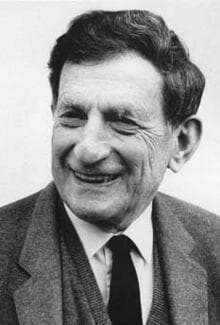
David Bohm was a renowned theoretical physicist and philosopher, best known for his groundbreaking work on quantum mechanics and his concept of the 'implicate order.' His influential books, including 'Wholeness and the Implicate Order' and 'Unfolding Meaning,' explore the interconnectedness of consciousness and the universe, making significant contributions to both physics and philosophy.
Similar books
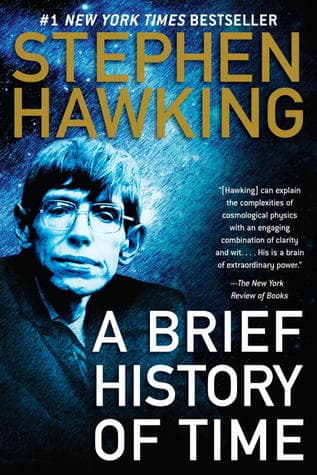
- A Brief History of Time
Stephen Hawking
4.2 (303k) average on GoodreadsHistoryExplores fundamental questions of physics and the universe, though with a more conventional scientific narrative.
- The Perks of Being a Wallflower
Stephen Chbosky
4.2 (1.3M) average on GoodreadsPsychologyThrough letters, a shy high school freshman learns to navigate first love, trauma, and self-discovery, stepping off the sidelines and into life.
- Eleanor Oliphant Is Completely Fine
Gail Honeyman
4.3 (708k) average on GoodreadsLiterary FictionA lonely woman's structured life changes when an IT guy and an elderly man help her learn to open her heart.
- One Flew Over the Cuckoo's Nest
Ken Kesey
4.2 (631k) average on GoodreadsPsychologyIn a mind-bending asylum, the boisterous Randle McMurphy wages a defiant war against the tyrannical Nurse Ratched, inspiring his fellow inmates, including the seemingly catatonic Chief Bromden, to reclaim their lost humanity.
- The Bell Jar
Sylvia Plath
4.0 (591k) average on GoodreadsPsychologyIn the suffocating grip of 1950s expectations, a brilliant young woman's descent into mental illness is painted with such vivid, internal clarity that her 'insanity' feels terrifyingly rational and inevitable.
- The Subtle Art of Not Giving a F*ck: A Counterintuitive Approach to Living a Good Life
Mark Manson
3.9 (530k) average on GoodreadsBusinessEmbrace your flaws and stomach life's lemons, because true happiness isn't about relentless positivity, but about choosing what truly matters to give a f*ck about.





Enjoyed the summary?
A summary gives you the shape of the book. The book itself has the detail, the examples and the voice.
Find Wholeness and the Implicate Order on AmazonAs an Amazon Associate, BookBrief earns from qualifying purchases. How we're funded