

Synopsis
Covers the whole plot, including the ending.
- Difficulty
- Medium
- Pacing
- Variable
- Mood
- Epic, Dramatic, Historical, Intense, Character-driven
- Read it if
- You love sprawling historical sagas with multiple interconnected character arcs set against major world events, especially WWII.
- Skip it if
- You prefer tightly focused narratives or are not interested in detailed historical fiction covering war and politics.
Winter of the World Plot Summary
Covers the whole plot, including the ending.
The Rise of Nazism in Germany
In Berlin, 1933, Carla von Ulrich, daughter of German aristocrat Otto von Ulrich and Englishwoman Ethel Leckwith, sees the fast growth of Nazi power. Her brother Erik, a strong Nazi, argues with their father, who secretly opposes Hitler. Carla's Jewish friend, Werner Franck, and his family face increasing threats, leading to Werner's forced move. Carla herself is horrified by the book burnings and the SA's violence. Her boyfriend, Peter von der Helldorf, a journalist, uses his job to subtly resist the regime, while Carla joins a secret group helping Jews escape, risking her life.
Spanish Civil War: Ideals and Betrayal
Lloyd Williams, a Welsh socialist, goes to Spain to fight for the Republican cause against Franco's Fascists. He quickly becomes disappointed by the fighting among Republican groups, especially the Communists' harsh treatment of anarchists and Trotskyists. He meets Volodya Peshkov, a clever and cruel Soviet intelligence officer, who is in Spain to remove perceived enemies of Stalin within the Republican ranks. Lloyd sees the horrors of war and the moral compromises made by both sides, deeply changing his political beliefs and making him question any ideology.
American Politics and the Approaching Storm
In Washington D.C., Woody Dewar, son of Senator Gus Dewar, works as a legislative aide, seeing the political dealings around President Roosevelt's administration. He gets involved with Daisy Peshkov, Volodya's American cousin, a socialite more interested in status than politics. Meanwhile, Woody's brother, Chuck Dewar, a talented musician, struggles with alcoholism and secret homosexuality, which is a major social taboo at the time. As Europe goes to war, the brothers' paths split, with Woody drawn into political efforts to prepare America for conflict and Chuck facing his own personal struggles.
The Blitz and the Battle of Britain
As World War II begins, London becomes a target for the Luftwaffe's bombing, the Blitz. Ethel Leckwith, now a Member of Parliament, works hard to support the war and help her constituents. Lloyd Williams, back from Spain, becomes an air raid warden, seeing the terror and strength of the British people. Daisy Peshkov, at first uninterested in the war, volunteers as an ambulance driver during the Blitz, seeing terrible injuries and finding a new sense of purpose and care, changing her shallow view.
Barbarossa and the Eastern Front
Operation Barbarossa, the German invasion of the Soviet Union, devastates the Red Army. Volodya Peshkov, using his intelligence skills and ruthlessness, moves up in the NKVD, taking part in counter-espionage and political purges. He sees the huge amount of suffering and destruction on the Eastern Front, where millions die. Despite the Soviet regime's brutality, Volodya remains committed to its survival, believing it is the only way to defeat the Nazi threat, even if it means sacrificing many lives and personal morals.
Carla's Resistance and Personal Sacrifice
Carla von Ulrich continues her dangerous work helping Jews and anti-Nazis. She falls in love with Peter von der Helldorf, who is also secretly involved in the German resistance. They marry, but their happiness is short-lived. Peter is involved in the July 20 plot to kill Hitler and is executed. Carla, pregnant with his child, is arrested and tortured by the Gestapo but refuses to betray her comrades. She endures great hardship in a concentration camp, showing courage and strength in the face of evil.
The Pacific Theater and Chuck's War
Chuck Dewar, looking for an escape and purpose, joins the U.S. Marines and is sent to the Pacific Theater. He experiences the brutal conditions of island hopping campaigns against the Japanese, seeing terrible violence and loss. In the Pacific, Chuck forms a strong bond with another marine, finding parts of his identity he had hidden. The war forces him to face his fears, his sexuality, and the real cost of conflict, changing his view on life and his place in the world.
Political Intrigue and Global Diplomacy
Woody Dewar, now a key aide to President Roosevelt and later Truman, attends important wartime conferences like Yalta and Potsdam. He sees the complex and often tense talks between the Allied powers, especially the growing distrust between the Western democracies and the Soviet Union. Lloyd Williams, now a rising Labour politician in Britain, also attends these conferences, arguing for a post-war world based on social justice and international cooperation. Both men get a direct look at the power struggles that will shape the coming Cold War.
The Atomic Bomb and New World Order
The development and use of the atomic bombs on Hiroshima and Nagasaki mark a terrifying shift in human history. Woody Dewar, aware of the discussions and decisions, struggles with the huge moral impact of this new weapon. Volodya Peshkov, tasked with getting atomic technology secrets for the Soviet Union, increases his spy efforts, seeing the strategic need to match American power. The bombings solidify the start of the Cold War, creating a world with two superpowers and the threat of nuclear war.
Post-War Realities and Shifting Alliances
As the war ends, the characters deal with its lasting impact. Carla von Ulrich, having survived the concentration camp, works to expose Nazi crimes and rebuild Germany. Lloyd Williams works to create the National Health Service in Britain, driven by his socialist beliefs. Volodya Peshkov continues to rise in Soviet intelligence, becoming a key player in the Cold War. Woody Dewar, now a prominent American politician, faces the rise of McCarthyism and the challenges of a divided world, while Daisy Peshkov finds new purpose in journalism, covering the changing global situation.
Winter of the World Characters
Carla von Ulrich
Protagonist
A courageous German woman who resists Nazism and endures immense suffering.
Carla is the intelligent and principled daughter of Otto von Ulrich and Ethel Leckwith. Initially a student, she quickly becomes a fierce opponent of the Nazi regime, risking her life to help Jews and participate in the resistance. She possesses deep empathy and an unyielding moral compass, even when faced with torture and the loss of loved ones. Her experiences in a concentration camp forge her into a symbol of resilience and the human spirit's capacity to endure. She is driven by a profound sense of justice and a desire to protect the innocent.
Relationships: Otto von Ulrich (Father, shared anti-Nazi sentiments); Ethel Leckwith (Mother, strong bond); Erik von Ulrich (Brother, ideologically opposed); Peter von der Helldorf (Husband, fellow resistance fighter, deep love); Werner Franck (Jewish friend, whose persecution galvanizes her)
Lloyd Williams
Protagonist
A Welsh socialist who fights for justice and becomes a prominent British politician.
Lloyd is the son of Billy Williams and Maud Fitzherbert. He is a passionate and intelligent socialist, deeply committed to fighting fascism and social injustice. His experiences in the Spanish Civil War, particularly witnessing the Communist purges, challenge his ideological purity, forcing him to confront the complexities and moral compromises of political movements. He is driven by a desire to create a more equitable society and becomes a key figure in the post-war Labour government, working to establish the welfare state in Britain.
Relationships: Daisy Peshkov (Romantic interest, initially tumultuous, later a deep connection); Billy Williams (Father, working-class background); Maud Fitzherbert (Mother, aristocratic background, often conflicted)
Volodya Peshkov
Protagonist/Antagonist
A brilliant but ruthless Soviet intelligence officer driven by loyalty to the Party.
Volodya is the ambitious and cunning son of Lev Peshkov and Katerina. He is utterly dedicated to the Soviet Union and Stalin, believing that any means justify the end of securing the communist state. His intelligence and ruthlessness allow him to rise rapidly within the NKVD. He is a master of espionage and manipulation, devoid of sentimentality when it comes to state interests. While his actions are often morally reprehensible, he genuinely believes he is serving a greater cause, making him a complex and formidable character.
Relationships: Daisy Peshkov (American cousin, initially distant, later a complex, wary connection); Lev Peshkov (Father, high-ranking Soviet official); Katerina (Mother)
Woody Dewar
Protagonist
An ambitious American political aide who becomes a key figure in the U.S. government.
Woody is the intelligent and driven son of Senator Gus Dewar. He is deeply involved in American politics, serving as an aide to President Roosevelt and later Truman. Woody is pragmatic and dedicated to public service, committed to navigating the complexities of domestic policy and international relations. He grapples with the moral implications of power, particularly concerning the atomic bomb, and strives to act with integrity despite the pressures of Washington. He is a keen observer of human nature and political strategy.
Relationships: Daisy Peshkov (Romantic interest, later marries her); Chuck Dewar (Brother, close but often strained relationship); Gus Dewar (Father, influential Senator)
Daisy Peshkov
Protagonist
An American socialite whose life is transformed by the war.
Daisy is the beautiful and initially superficial American cousin of Volodya Peshkov. She starts the novel focused on social climbing, parties, and marrying well. The war, particularly her experiences during the London Blitz as an ambulance driver, profoundly changes her, instilling in her a sense of purpose and compassion she previously lacked. She evolves into a more mature and thoughtful woman, eventually pursuing a career in journalism. She is resilient and adaptable, capable of growth and self-reinvention.
Relationships: Woody Dewar (Romantic interest, later marries him); Lloyd Williams (Romantic interest, complex and passionate relationship); Volodya Peshkov (Russian cousin, wary but occasionally connected)
Chuck Dewar
Supporting
A talented musician who faces personal struggles and the horrors of war in the Pacific.
Chuck is Woody Dewar's younger brother, a gifted musician who struggles with alcoholism and his closeted homosexuality in a socially conservative era. He enlists in the Marines to escape his personal demons and finds himself thrust into the brutal Pacific Theater. The war forces him to confront his identity and the limits of his endurance. He is sensitive and artistic, often feeling misunderstood, but finds moments of connection and self-acceptance amidst the chaos of battle.
Relationships: Woody Dewar (Brother, close but often strained relationship); Gabby (Friend and fellow soldier, deep bond)
Ethel Leckwith
Supporting
A dedicated English Member of Parliament and mother to Carla.
Ethel, now Ethel von Ulrich, is a strong-willed and compassionate Englishwoman, married to Otto von Ulrich and mother to Carla and Erik. She is a Member of Parliament, actively involved in political life and deeply committed to social justice. During the war, she works tirelessly to support her constituents and the war effort, embodying the resilience of the British people. She is a moral anchor for her family and a symbol of principled leadership.
Relationships: Otto von Ulrich (Husband, loving and supportive); Carla von Ulrich (Daughter, strong and supportive bond); Erik von Ulrich (Son, often clashes over his Nazi beliefs)
Otto von Ulrich
Supporting
A German aristocrat who secretly opposes the Nazi regime.
Otto is Carla's father, a German aristocrat and diplomat who, despite his position, secretly despises Hitler and the Nazi party. He uses his influence to subtly resist the regime and protect those he can. He is a man of integrity and quiet courage, navigating a treacherous political landscape while trying to maintain his family's safety. He represents the 'other Germany' that opposed Nazism from within, often at great personal risk.
Relationships: Ethel Leckwith (Wife, loving and supportive); Carla von Ulrich (Daughter, shares similar anti-Nazi sentiments); Erik von Ulrich (Son, ideologically opposed, a source of conflict)
Peter von der Helldorf
Supporting
A German journalist and resistance fighter who marries Carla.
Peter is a brave and idealistic German journalist who uses his position to subtly undermine the Nazi regime. He falls deeply in love with Carla von Ulrich and becomes her husband, sharing her commitment to resistance. He is a member of the German anti-Hitler conspiracy and ultimately sacrifices his life for the cause. Peter embodies the courage of those who dared to defy the regime from within, demonstrating profound moral conviction.
Relationships: Carla von Ulrich (Wife, deep love and shared commitment to resistance)
Winter of the World Themes
The Corrupting Power of Ideology
The novel shows how extreme ideas, both Fascism and Communism, can corrupt people and societies, causing great suffering and moral compromises. The rise of Nazism in Germany, seen through Carla von Ulrich's eyes, shows the systematic mistreatment of Jews and political opponents. Lloyd Williams's disappointment in the Spanish Civil War, seeing Communist purges, highlights how even movements fighting for freedom can become oppressive. Volodya Peshkov shows the ultimate corruption, giving up all morals for the Soviet state. The theme points out the danger of blindly following any single belief system, showing how it can justify terrible acts and suppress individual conscience.
“History is a merciless judge. It will judge us all.”
Resilience and Resistance in the Face of Tyranny
Despite the great power of totalitarian regimes, the novel celebrates the lasting human spirit of resistance. Carla von Ulrich's secret work helping Jews, her courage during Gestapo questioning, and her survival in a concentration camp are central to this theme. Peter von der Helldorf's part in the German resistance and his final sacrifice further show this. Ethel Leckwith's strong commitment to her constituents during the Blitz, and the everyday bravery of ordinary citizens, also highlight resilience. This theme emphasizes that even in the darkest times, people can choose to fight for their values, often at great personal cost, showing the strong will for freedom and justice.
“To give in to evil is to become evil yourself.”
The Personal Cost of War and Political Upheaval
The novel shows the devastating personal cost of World War II and the earlier political conflicts on its characters. Families are broken apart by differing ideas, like the von Ulrichs with Erik's Nazi beliefs. Love is lost, as seen in Carla's grief over Peter's execution. Characters suffer physical and mental trauma, from Chuck Dewar's experiences in the brutal Pacific Theater to Carla's torture and imprisonment. The constant threat of death, the loss of loved ones, and the destruction of homes and communities are always present. This theme stresses that behind the large historical stories are countless individual tales of suffering, sacrifice, and lasting change, leaving a deep mark on an entire generation.
“War takes everything, and gives nothing back.”
The Interconnectedness of Global Events
Winter of the World shows how personal stories and national events are connected globally. The families from different nations—Germany, Britain, America, Russia—find their lives crossing paths and directly affected by major historical moments. The rise of Nazism in Germany leads to global war, affecting soldiers in the Pacific and politicians in Washington. The Spanish Civil War serves as a testing ground for ideas that will clash in WWII. The atomic bomb's development by America immediately triggers a race for similar technology in the Soviet Union. This theme emphasizes that in the modern world, no nation or person exists alone; actions in one part of the world have effects across continents, shaping everyone's future.
“The world is a smaller place than we ever imagined. What happens in one corner affects us all.”
Transformation and Self-Discovery
Many characters change personally because of the war and political unrest. Daisy Peshkov, at first a shallow socialite, is awakened by the horrors of the Blitz and finds purpose through her wartime service and later journalism. Chuck Dewar faces his hidden identity and finds strength amid the brutal realities of the Pacific Theater. Lloyd Williams's idealism is softened by the harsh realities of the Spanish Civil War, leading him to a more complex understanding of politics. These changes show how extreme situations can remove old ideas and force people to face their true selves, leading to unexpected growth and a new look at their values and priorities.
“Sometimes, you have to lose everything to find out who you really are.”
Plot Devices & Literary Techniques
Multi-Perspective Narrative
The story is told through the eyes of several interconnected families across different nations.
This device allows Ken Follett to provide a panoramic view of World War II and the Cold War's nascent years. By shifting perspectives between characters like Carla in Germany, Lloyd in Britain, Woody in America, and Volodya in Russia, the reader gains a comprehensive understanding of how the same historical events were experienced and interpreted differently across various cultural and political landscapes. It highlights the global reach of the conflict and the diverse human responses to it, fostering empathy for characters on all sides (except the truly villainous). This structure also effectively demonstrates the interconnectedness of their lives.
Historical Interweaving
Fictional characters are deeply embedded in real historical events and interact with historical figures.
Follett seamlessly integrates his fictional narratives with meticulously researched historical events, such as the rise of Nazism, the Spanish Civil War, the London Blitz, the Eastern Front, the Pacific War, and the Yalta Conference. Characters like Woody Dewar interact directly with figures like President Roosevelt and Truman, while others like Carla and Lloyd are caught in the direct path of major historical currents. This device grounds the fiction in reality, making the historical context more accessible and engaging, and demonstrating how grand historical movements impact individual lives. It adds a layer of authenticity and educational value to the narrative.
Intergenerational Saga
The narrative follows the children of the previous generation from 'Fall of Giants'.
Building upon the first book in the century trilogy, 'Winter of the World' continues the stories of the families introduced previously, focusing on the next generation. This creates a sense of continuity and allows for the exploration of evolving political and social ideas across decades. The children inherit their parents' legacies, both positive and negative, and grapple with new challenges. This device enriches the character development by showing how historical events shape not just individuals but entire family lines and their collective destinies, creating a deeper, more resonant emotional impact over time.
Moral Dilemmas and Compromises
Characters are frequently forced to make difficult ethical choices in extreme circumstances.
Throughout the novel, characters face profound moral dilemmas, often with no easy answers. Carla must choose between personal safety and resistance; Lloyd grapples with the ideological compromises of the Republican cause in Spain; Volodya makes ruthless decisions for the Soviet state; and Woody confronts the ethical implications of the atomic bomb. This device explores the complexities of human morality during wartime, showing how individuals are pushed to their limits and forced to redefine their ethical boundaries. It adds depth to the characters and provokes readers to consider what they would do in similar situations.
Winter of the World Quotes
“History is not a story for the faint of heart. It is a chronicle of brutality, stupidity, and courage.”
“The greatest enemy of truth is very often not the lie—deliberate, contrived, and dishonest—but the myth—persistent, persuasive, and unrealistic.”
“Peace is not merely the absence of war, but the presence of justice.”
“Fear is a powerful weapon, and it can turn ordinary people into monsters.”
“Love does not conquer all; it merely tries to survive all.”
“To be silent in the face of injustice is to side with the oppressor.”
“The past is never dead. It's not even past.”
“Courage is not the absence of fear, but rather the judgment that something else is more important than fear.”
“A man's greatest possession is his freedom. No government should ever take it away.”
“The world was a chessboard, and the pieces were people, moved by forces beyond their control.”
“There are no easy answers in a world gone mad.”
“Even in the darkest times, humanity finds a way to endure, to hope, to fight for a better future.”
“Every generation thinks it's the last to face such a terrible struggle, but the struggle for decency is eternal.”
“The truth is a stubborn thing. It can be buried, but it always finds a way to surface.”
Quiz
10 questions on the plot and the characters. Each answer comes with a short explanation.
Question 1
Which major historical event marks the beginning of the "Winter of the World" narrative, following the first book?
- The end of World War I
- The rise of the Third Reich
- The Great Depression
- The Russian Revolution
Show answer
B. The rise of the Third Reich The book description explicitly states the narrative begins with 'the rise of the Third Reich'.
Question 2
Carla von Ulrich, a character of German and English heritage, finds her life significantly impacted by which political movement?
- Communism
- Socialism
- The Nazi tide
- Anarchism
Show answer
C. The Nazi tide The summary states Carla von Ulrich finds her life 'engulfed by the Nazi tide'.
Question 3
Which of the following locations is NOT mentioned as a primary setting or area of conflict for the characters in the book's summary?
- Washington D.C.
- The bloody jungles of the Pacific
- The Spanish Civil War
- The Korean Peninsula
Show answer
D. The Korean Peninsula The summary mentions Washington, the Pacific, and the Spanish Civil War, but not the Korean Peninsula.
Question 4
What is the primary motivation for Daisy Peshkov at the beginning of her arc, before the war transforms her life?
- Fighting for social justice
- Achieving popularity and a fast-paced social life
- Pursuing an academic career
- Joining the military effort
Show answer
B. Achieving popularity and a fast-paced social life The description states Daisy Peshkov 'cares only for popularity and the fast set' initially.
Question 5
Lloyd Williams, an English student, discovers in the Spanish Civil War that he must fight against which two ideologies?
- Capitalism and Imperialism
- Communism and Fascism
- Democracy and Monarchy
- Anarchism and Socialism
Show answer
B. Communism and Fascism The summary states Lloyd Williams discovers he 'must fight Communism just as hard as Fascism'.
Question 6
What is the significant role that Daisy Peshkov's cousin, Volodya, carves out for himself, which will impact both the current war and a future conflict?
- A leader in the Soviet Red Army
- A prominent Soviet politician
- A position in Soviet intelligence
- A key Soviet scientist in atomic research
Show answer
C. A position in Soviet intelligence The text specifies Volodya 'carves out a position in Soviet intelligence that will affect not only this war—but the war to come'.
Question 7
The book spans from the rise of the Third Reich up to which pivotal scientific and military development?
- The invention of radar technology
- The development of jet propulsion
- The explosions of the American and Soviet atomic bombs
- The first successful intercontinental ballistic missile test
Show answer
C. The explosions of the American and Soviet atomic bombs The summary indicates the story runs 'up to the explosions of the American and Soviet atomic bombs'.
Question 8
What is the overarching theme highlighted by the intertwining lives of the five interrelated families in "Winter of the World"?
- The enduring power of family loyalty above all else.
- The individual's powerlessness in the face of history.
- How personal experiences illuminate the cataclysms of the century.
- The triumph of technological progress over human conflict.
Show answer
C. How personal experiences illuminate the cataclysms of the century. The summary states their experiences 'illuminate the cataclysms that marked the century'.
Question 9
The American brothers Woody and Chuck Dewar each have 'a secret'. While the specific nature isn't revealed, what does this detail suggest about the character development and narrative complexity?
- It implies a simpler, more straightforward character arc for them.
- It foreshadows their eventual betrayal of their respective nations.
- It introduces an element of personal intrigue and hidden motivations amidst grand historical events.
- It indicates their secrets are directly related to the atomic bomb development.
Show answer
C. It introduces an element of personal intrigue and hidden motivations amidst grand historical events. The mention of 'a secret' for each brother, combined with their separate paths to momentous events, suggests personal intrigue and complex motivations woven into the historical narrative, enriching the character development.
Question 10
The description states that Daisy Peshkov's life is transformed 'not just once but twice' by the war. What does this detail imply about the impact of World War II on individuals within the narrative?
- That the war only brings superficial changes to people's lives.
- That the war's influence on personal identity and values can be profound and multi-faceted.
- That she primarily changes her social status and nothing deeper.
- That she experiences two distinct periods of wartime hardship.
Show answer
B. That the war's influence on personal identity and values can be profound and multi-faceted. Being transformed 'not just once but twice' implies a deep and evolving impact of the war on her character, suggesting profound, multi-faceted changes to her identity and values beyond mere external circumstances.
Winter of the World FAQ
What is the primary historical period covered in 'Winter of the World'?
'Winter of the World' spans a tumultuous period in the 20th century, beginning with the rise of the Third Reich in the early 1930s. It meticulously covers the Spanish Civil War, the entirety of World War II, and concludes with the dawn of the atomic age and the early stages of the Cold War, marked by the American and Soviet atomic bombs.
How do the five interrelated families contribute to the narrative?
The American, German, Russian, English, and Welsh families provide diverse perspectives on the global conflicts. Their individual stories, like Carla von Ulrich navigating Nazi Germany or Volodya Peshkov rising in Soviet intelligence, intertwine to offer a panoramic view of the era's social, political, and economic upheavals, connecting personal dramas to world-changing events.
What significant personal sacrifice does Carla von Ulrich make?
Carla von Ulrich, caught in the grip of Nazi Germany, makes a profound personal sacrifice when she helps her Jewish friend, Werner, escape the regime. This act of courage involves great personal risk and ultimately leads to heartbreak as she faces the brutal realities and consequences of defying the Nazi state.
How do Woody and Chuck Dewar's paths diverge during the war?
American brothers Woody and Chuck Dewar take very different paths. Woody finds himself involved in political events in Washington D.C., likely dealing with the diplomatic or strategic aspects of the war. Chuck, on the other hand, experiences the brutal realities of combat in the bloody jungles of the Pacific, fighting against Japanese forces.
What revelation does Lloyd Williams experience in the Spanish Civil War?
English student Lloyd Williams's experiences in the Spanish Civil War are a crucible for his political awakening. He discovers that he must fight not only Fascism, as he initially might have expected, but also Communism, realizing the complexities and dangers of both totalitarian ideologies.
How does Daisy Peshkov's character evolve throughout the war?
Daisy Peshkov, initially a driven American social climber focused on popularity, undergoes significant transformation. The war forces her to confront deeper realities, changing her perspective not once but twice, moving her away from superficial concerns towards more meaningful engagements and responsibilities.
What is the significance of Volodya Peshkov's role in Soviet intelligence?
Volodya Peshkov's ascent in Soviet intelligence is crucial, as his actions not only influence the course of World War II but also lay groundwork for future conflicts. His involvement in espionage and strategic operations during the war positions him as a key player in the emerging Cold War, affecting the global balance of power.
Are there any hidden connections between the families beyond direct marriage or lineage?
Yes, beyond direct familial ties, the characters' lives often intersect through shared historical events, political movements, or even chance encounters that have lasting impacts. For instance, characters from different nations may find themselves fighting on the same side in a battle or working towards similar political goals, creating unexpected alliances and rivalries.
How does the novel subtly foreshadow the Cold War?
The novel subtly foreshadows the Cold War through the rise of figures like Volodya Peshkov in Soviet intelligence and Lloyd Williams's realization about the dangers of Communism. The concluding focus on the American and Soviet atomic bombs explicitly sets the stage for the ideological and nuclear standoff that defines the post-WWII era.
What is the psychological impact of war on Carla von Ulrich?
Carla von Ulrich endures immense psychological trauma as she navigates Nazi Germany, witnessing atrocities and making harrowing choices. Her acts of defiance and the subsequent heartbreak profoundly shape her worldview, forcing her to confront the moral complexities and personal costs of resistance in an oppressive regime.
How does the experience of combat affect Chuck Dewar's psyche?
Chuck Dewar's experiences in the brutal Pacific jungles undoubtedly leave deep psychological scars. The constant threat of death, the witnessing of violence, and the loss of comrades would lead to profound changes in his mental state, potentially manifesting as PTSD or a permanent shift in his perception of humanity and war.
What motivates Daisy Peshkov's initial pursuit of popularity and how does this change?
Daisy Peshkov's initial pursuit of popularity and the 'fast set' likely stems from a desire for acceptance, status, or perhaps a superficial sense of control in an uncertain world. The profound impact of the war, however, forces her to re-evaluate these values, shifting her focus towards more meaningful contributions and genuine human connection.
How does the novel portray the moral ambiguity of wartime decisions?
The novel consistently portrays the moral ambiguity of wartime decisions through characters like Carla, who commits illegal acts for humanitarian reasons, and Volodya, whose intelligence work involves morally grey areas for national security. It highlights how individuals are forced to make impossible choices with far-reaching consequences, blurring the lines between right and wrong.
Is 'Winter of the World' primarily a story of individual heroism or the collective human experience?
While individual acts of heroism, like Carla's defiance, are prominent, 'Winter of the World' ultimately functions as a powerful portrayal of the collective human experience. The interwoven narratives of the five families emphasize how global events impact ordinary lives, showcasing a shared struggle for survival, justice, and meaning amidst cataclysmic change.
What is the author's stance on the nature of political ideologies like Fascism and Communism, as depicted through Lloyd Williams?
Through Lloyd Williams's evolving perspective in the Spanish Civil War, the author appears to suggest a critical view of both Fascism and Communism as equally dangerous totalitarian ideologies. Lloyd's realization that he must fight both indicates a rejection of extremism and a warning against the seductive power of systems that suppress individual liberty.
How does the novel balance historical accuracy with fictional narrative?
Ken Follett meticulously researches historical events, settings, and figures, providing a rich, accurate backdrop for his fictional narratives. The personal stories of the five families are intricately woven into these historical realities, allowing readers to experience major events like the Spanish Civil War or D-Day through the eyes of relatable characters, blending education with entertainment.
What is the overarching message about humanity's capacity for both destruction and resilience?
The novel powerfully conveys humanity's dual capacity for immense destruction, evident in the brutality of war and totalitarian regimes, and remarkable resilience. Characters continually face unimaginable hardship, loss, and moral challenges, yet many demonstrate an enduring spirit, courage, and a capacity for love and hope, even in the darkest times.
How do the personal secrets held by characters like Woody and Chuck Dewar impact their journeys?
The personal secrets held by Woody and Chuck Dewar add layers of complexity and internal conflict to their individual journeys. These secrets, while not explicitly detailed, likely influence their decisions, relationships, and how they cope with the external pressures of war, potentially driving them towards their divergent paths and shaping their character development.
About the author

Kenneth Martin Follett, is a British author of thrillers and historical novels who has sold more than 160 million copies of his works.
Similar books
- Fall of Giants
Ken Follett
4.3 (268k) average on GoodreadsHistorical FictionFirst book in the same series, similar epic scope and character interconnections.
- The Winds of War
Herman Wouk
4.4 (51k) average on GoodreadsHistorical FictionClassic WWII epic following multiple families and their involvement in the conflict.
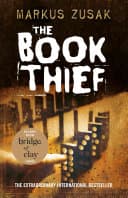
- The Book Thief
Markus Zusak
4.4 (1.8M) average on GoodreadsHistorical FictionThe Book Thief offers a much more intimate and focused perspective on World War II, specifically the Holocaust and life in Nazi Germany, told from the unique viewpoint of a young girl and narrated by Death. While Follett's novel covers similar ground with the rise of Nazism and the war's impact, it does so on a grand, multi-continental scale. Zusak's strength lies in its profound emotional depth, poetic language, and intense character focus, allowing for a deeply personal and often heartbreaking exploration of humanity amidst atrocity. Follett's approach is more expansive and plot-driven, prioritizing the sweep of history over the intense psychological interiority found in Zusak's work.
- To Kill a Mockingbird
Harper Lee
4.3 (4.5M) average on GoodreadsHistorical FictionIn the 1930s Jim Crow South, Harper Lee writes about racial injustice, moral growth, and the quiet courage of a lawyer father, Atticus Finch, as seen through his young daughter's eyes.
- The Great Gatsby
F. Scott Fitzgerald
3.9 (3.8M) average on GoodreadsHistorical FictionIn the opulent Roaring Twenties, a mysterious millionaire's lavish parties hide his desperate, tragic pursuit of a lost love, exposing the emptiness within the American Dream.
- Pride and Prejudice
Jane Austen
4.3 (3M) average on GoodreadsHistorical FictionIn a society focused on status and money, Elizabeth Bennet navigates love and pride, challenging Mr. Darcy and social expectations to find true affection.





Enjoyed the summary?
A summary gives you the shape of the book. The book itself has the detail, the examples and the voice.
Find Winter of the World on AmazonAs an Amazon Associate, BookBrief earns from qualifying purchases. How we're funded