
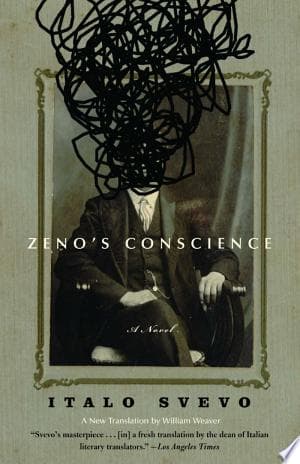
Synopsis
Covers the whole plot, including the ending.
- Difficulty
- Medium
- Pacing
- Slow
- Mood
- Introspective, Humorous, Melancholy, Absurdist, Cynical
- Read it if
- You enjoy introspective, unreliable narrators, psychological realism, and a darkly humorous exploration of human self-deception and the absurdity of life.
- Skip it if
- You prefer fast-paced plots, clear-cut resolutions, or characters who are consistently heroic or likable.
Zeno's Conscience Plot Summary
Covers the whole plot, including the ending.
Dr. S.'s Preface and Zeno's Introduction
The novel begins with a preface from Dr. S., Zeno Cosini's psychoanalyst, who says he is publishing Zeno's memoirs out of spite because Zeno suddenly stopped therapy. Dr. S. warns the reader not to trust Zeno's story. Zeno then takes over, explaining his reason for writing: to understand himself and his 'illness.' He immediately talks about his chronic attempts to quit smoking, a habit he has tried to abandon many times since adolescence. He describes his 'last cigarette' vows, which are always broken, often with elaborate justifications or physical ailments he blames on his attempts to quit. This section establishes Zeno's self-deceptive and procrastinating nature, a main part of his character throughout the book.
My Father's Death
Zeno thinks about his difficult relationship with his father, marked by a lack of real understanding and frequent disagreements. His father, a practical and somewhat stern man, often disapproved of Zeno's perceived idleness and indecisiveness. As his father falls ill and nears death, Zeno struggles with guilt and inadequacy, believing he has not lived up to his father's expectations. In a dramatic and traumatic scene, Zeno's dying father, in a moment of delirium or anger, raises his hand and slaps Zeno. Zeno is forever unsure whether this was an intentional act of condemnation or an involuntary spasm, a doubt that deeply affects him and fuels his sense of inadequacy and unresolved Oedipal conflict.
The Story of My Marriage: The Malfenti Sisters
After his father's death, Zeno looks for a wife, focusing on the four daughters of Giovanni Malfenti, a wealthy businessman he admires. Zeno is attracted to the beautiful and intelligent Ada, the eldest sister. He often visits the Malfenti household, trying to impress Ada with his intellectual discussions and artistic pretensions. However, his awkwardness and self-consciousness often lead to mistakes. During a series of confusing and poorly executed proposals, Zeno proposes to Anna, then to Alberta, both of whom reject him. In a moment of desperation and social blundering, he finally proposes to Augusta, the plainest and most unassuming sister, whom he initially found unattractive, almost as an act of resignation after his repeated failures with her sisters.
The Story of My Marriage: Augusta and the Wedding
To his own surprise and the surprise of others, Zeno's marriage to Augusta is remarkably stable and even happy. Despite his initial lack of romantic love for her, Zeno finds Augusta's deep affection, practical wisdom, and unwavering devotion. She gives him security, routine, and a tranquil home environment he had lacked. Augusta accepts Zeno's eccentricities and supports him without judgment, creating a refuge from his own anxieties. Zeno, though still prone to self-analysis and neuroses, finds a surprising degree of peace and contentment in this unexpected union, recognizing Augusta's goodness and her ability to anchor him in reality, even as he continues his internal struggles.
Wife and Mistress: Carla
Despite his comfortable marriage to Augusta, Zeno has an affair with Carla, a young, poor aspiring singer. He justifies his infidelity by convincing himself that he is helping Carla financially and morally, seeing himself as a benevolent protector rather than a philanderer. Zeno's relationship with Carla is marked by his characteristic indecisiveness and self-deception. He constantly plans to end the affair, often making elaborate 'last visit' promises to himself, only to find himself drawn back to her. His attraction to Carla seems less about passionate love and more about a need for external validation, a distraction from his domestic routine, and a testing of his own perceived virility and freedom.
Wife and Mistress: The Guilt and the Resolution
The affair with Carla becomes increasingly burdensome for Zeno. His guilt towards Augusta, though often suppressed, periodically surfaces, causing him distress. Carla, initially submissive, gradually becomes more demanding and emotionally invested, complicating Zeno's carefully constructed narrative of a casual, benevolent arrangement. He finds himself caught in a web of lies and excuses. The affair eventually ends, partly due to Zeno's own wavering commitment and partly due to Carla's decision to leave him for another man, a violin teacher. Zeno, in his typical fashion, manages to reframe the ending as a noble act on his part, or as a natural conclusion, avoiding full responsibility for the emotional turmoil he caused, and returning to the supposed stability of his marriage.
The Story of a Business Partnership: Guido Speier
Zeno gets involved in a business venture with Guido Speier, Ada's husband, a man Zeno initially envies for winning Ada. The partnership is full of difficulties. Zeno, despite his wealth, lacks business skill and often makes impulsive, ill-advised decisions or simply procrastinates. Guido, though superficially charming and confident, is equally, if not more, incompetent and reckless, prone to grand schemes and risky investments. Zeno's underlying resentment towards Guido, stemming from Ada's preference for him, subtly influences his actions, sometimes leading him to sabotage the business or at least not fully commit to its success. The enterprise slowly but surely fails, made worse by both partners' flaws.
The Story of a Business Partnership: Guido's Decline and Death
Guido's business ventures continue to fail catastrophically, leading him into severe debt and despair. Zeno, seeing Guido's decline, experiences a complex mix of schadenfreude and genuine pity. Guido tries to fake suicide to get sympathy and financial aid, but tragically, his second, or perhaps first, attempt is fatal. Zeno is left to deal with the aftermath, including managing the failing business and comforting Ada, who is devastated by her husband's death. Zeno's internal monologue shows his struggle to reconcile his past envy and subtle antagonism towards Guido with the reality of his tragic end, further complicating his understanding of life, death, and his own moral compass.
Psychoanalysis and War
Zeno details his experience with psychoanalysis under Dr. S., which he views as largely ineffective and ultimately abandons. He finds the process frustrating, believing Dr. S. misinterprets his dreams and motivations, and resents the doctor's insistence on identifying an Oedipus complex. Zeno's departure from therapy is a central point, as it leads to Dr. S.'s decision to publish Zeno's memoirs. As World War I breaks out, Zeno views the global conflict as a metaphor for the inherent sickness of humanity, a grander scale of the neuroses he perceives in himself. He connects the chaos of war to his own internal chaos, suggesting that 'health' is an illusion and that life itself is a disease.
The End of Therapy and Zeno's 'Health'
In the concluding sections, Zeno dramatically declares himself cured, not by psychoanalysis, but by the circumstances of life and the unfolding war. He states that the world's 'sickness' (the war, industrialization, modern life) has paradoxically made his own individual neuroses seem normal, even healthy, by comparison. He claims that his business dealings during the war, specifically profiting from wartime shortages, have given him a sense of purpose and success, which he equates with health. Zeno's final pronouncements are a triumphant, though highly self-deceptive, rejection of traditional notions of illness and cure, culminating in his famous theory that life itself is an incurable disease.
Zeno's Final Revelation: Life as Disease
Zeno's final philosophical thoughts summarize his worldview, shaped by years of self-analysis and failed attempts at self-improvement. He concludes that humanity is inherently 'sick' and that the concept of perfect health is a myth. He posits that the modern world, with its relentless progress and artificiality, is the ultimate disease, constantly creating new forms of suffering and neuroses. Zeno imagines a future where a colossal explosion will cleanse the earth, returning it to its primordial state, free from the 'disease' of human civilization. This nihilistic yet strangely liberating conclusion allows Zeno to accept his own imperfections, not as personal flaws, but as an inherent part of the human condition, finally finding a perverse form of peace.
Zeno's Conscience Characters
Zeno Cosini
Protagonist
A neurotic, wealthy Triestine businessman who constantly analyzes himself and his 'illnesses.'
Zeno is a wealthy, middle-aged Italian businessman from Trieste, chronicling his life story at the behest of his psychoanalyst. He is a quintessential unreliable narrator, prone to self-deception, procrastination, and elaborate rationalizations for his failures and infidelities. Despite his intelligence, he struggles with indecision, a lifelong smoking habit he can't break, and a pervasive sense of inadequacy. He views life through a lens of 'sickness,' constantly analyzing his own perceived ailments and the 'disease' of modern existence. His charm lies in his candid, often humorous, self-awareness, even when it's filtered through layers of denial.
Relationships: Dr. S. (His psychoanalyst, whom he eventually abandons.); Augusta Cosini (His wife, whom he initially didn't love but found stable happiness with.); Ada Malfenti Speier (His initial love interest, whom he failed to marry.); Carla Gerco (His mistress, a young aspiring singer.); Guido Speier (Ada's husband and his business partner, whom Zeno secretly resented.); Zeno's Father (His deceased father, with whom he had a complex, unresolved relationship.)
Augusta Cosini
Supporting
Zeno's plain but loving and practical wife.
Augusta is the third of the Malfenti sisters, initially considered by Zeno to be plain and uninteresting. However, she proves to be the most steadfast and emotionally stable character in Zeno's life. She loves Zeno unconditionally, accepting his eccentricities and providing him with a secure and harmonious home. Augusta represents domesticity, common sense, and unwavering devotion. Her presence grounds Zeno, offering him a refuge from his internal turmoil, even though he often takes her for granted and betrays her. She is portrayed as a source of genuine, unpretentious goodness.
Relationships: Zeno Cosini (Her husband, whom she deeply loves and supports.); Ada Malfenti Speier (Her sister, whom Zeno initially pursued.)
Ada Malfenti Speier
Supporting
The beautiful and intelligent Malfenti sister whom Zeno initially desires.
Ada is the eldest and most beautiful of the Malfenti sisters, possessing intelligence and grace that captivate Zeno. She is the object of Zeno's initial romantic obsession, representing an ideal of beauty and sophistication he feels he can never attain. Ada ultimately marries Guido Speier, a more outwardly charming and confident man, which fuels Zeno's resentment and envy towards Guido. Throughout the novel, Ada remains somewhat distant and unknowable to Zeno, a symbol of his perceived failures and unfulfilled desires, even after she experiences tragedy with Guido's death.
Relationships: Zeno Cosini (The object of his unrequited love.); Guido Speier (Her husband.); Augusta Cosini (Her sister.)
Guido Speier
Supporting
Ada's charming but reckless husband and Zeno's ill-fated business partner.
Guido is initially presented as Zeno's rival, a charismatic and confident man who successfully woos Ada. Zeno both envies and resents Guido's apparent ease and success. Later, Guido becomes Zeno's business partner, revealing himself to be reckless, incompetent, and prone to grandiose but ultimately disastrous schemes. His financial ruin and tragic accidental suicide become a major plot point, allowing Zeno to reflect on the complexities of their relationship, encompassing envy, pity, and a strange sense of vindication. Guido represents the superficial charm that masks deep-seated flaws, a foil to Zeno's more introspective, if neurotic, nature.
Relationships: Ada Malfenti Speier (His wife.); Zeno Cosini (His business partner and rival for Ada's affection.)
Carla Gerco
Supporting
Zeno's young, impoverished mistress.
Carla is a young, aspiring singer from a poor background with whom Zeno has an affair. Zeno initially rationalizes their relationship as an act of charity, seeing himself as her protector and benefactor. However, Carla gradually develops genuine feelings for Zeno and becomes more demanding, complicating his carefully maintained facade of benevolent infidelity. She represents Zeno's desire for novelty, escape, and validation outside his marriage. Her character highlights Zeno's self-deception and his inability to fully commit or disengage from relationships, as he constantly postpones ending the affair.
Relationships: Zeno Cosini (Her lover, whom she eventually leaves.)
Dr. S.
Mentioned
Zeno's psychoanalyst, who publishes Zeno's memoirs.
Dr. S. is Zeno's psychoanalyst, whose presence is primarily felt through his prefatory note and Zeno's discussions of their therapy sessions. He is the catalyst for Zeno's writing, having instructed him to keep a diary. Zeno finds Dr. S.'s interpretations of his dreams and neuroses unhelpful and eventually abandons treatment. Dr. S. represents the formal medical establishment and the burgeoning field of psychoanalysis, which Zeno ultimately rejects in favor of his own idiosyncratic self-diagnosis. His decision to publish Zeno's memoirs out of 'spite' underscores the contentious nature of their professional relationship.
Relationships: Zeno Cosini (His patient, whom he had a contentious relationship with.)
Zeno's Father
Supporting
Zeno's deceased father, whose final slap deeply affects Zeno.
Zeno's father is a practical, somewhat stern man who struggles to understand his son's intellectual pretensions and indecisiveness. Their relationship is characterized by a lack of emotional closeness and mutual misunderstanding. His death, particularly the ambiguous final slap, leaves a profound and lasting impact on Zeno, fueling his guilt, his sense of inadequacy, and his unresolved Oedipal complex. The father figure represents the traditional authority and expectations that Zeno constantly feels he fails to meet, shaping much of his self-perception and neuroses.
Relationships: Zeno Cosini (His son, with whom he had a complex and often strained relationship.)
Giovanni Malfenti
Supporting
A wealthy businessman and Zeno's admired father-in-law.
Giovanni Malfenti is a successful and respected Triestine businessman, admired by Zeno for his practical competence and solid family life. He is the father of the four Malfenti sisters, including Ada and Augusta. Zeno initially seeks to impress Malfenti in his quest for a wife, viewing him as a kind of surrogate father figure whose approval he craves. Malfenti represents the stability and traditional success that Zeno often feels he lacks, providing a contrast to Zeno's own neurotic and indecisive nature. His household is the setting for Zeno's awkward courtship attempts.
Relationships: Zeno Cosini (His son-in-law, whom he observes with a mixture of amusement and concern.); Augusta Cosini (His daughter.); Ada Malfenti Speier (His daughter.)
Zeno's Conscience Themes
Self-Deception and Unreliability
Zeno's narrative is a masterclass in self-deception. He constantly reinterprets events, rationalizes his failures, and convinces himself of noble intentions for selfish acts. His 'last cigarettes' are a prime example, where each attempt to quit is accompanied by an elaborate justification for its failure. This theme appears in his affair with Carla, where he believes he's helping her, and in his business dealings with Guido, where he downplays his own incompetence. The act of writing his memoirs is an attempt to understand himself, but it's filtered through his subjective, often misleading, consciousness, making him an unreliable narrator.
“I thought that the disease was an advantage because it enabled me to understand myself better than those who are healthy.”
The Nature of Illness and Health
A main theme is Zeno's preoccupation with his own 'illness' and the elusive concept of 'health.' He sees his neuroses, indecision, and smoking addiction as symptoms of a deeper ailment. However, by the novel's end, he reverses this perspective, arguing that life itself is an incurable disease, and that 'health' is merely an illusion or a temporary state of unawareness. The war becomes a larger version of humanity's collective 'sickness,' making his individual neuroses seem normal. This philosophical shift allows Zeno to find a perverse kind of peace and acceptance of his own imperfections, redefining what it means to be 'well.'
“Life is a disease from which we all try to recover.”
Procrastination and Indecision
Zeno's inability to make firm decisions or stick to resolutions is a recurring idea. His 'last cigarette' vows are the most prominent example, symbolizing his perpetual delay and his struggle against his own will. This indecision extends to his romantic life, where he bumbles through proposals, and his business ventures, where he often avoids responsibility. Zeno's procrastination is not just a character flaw but a fundamental aspect of his being, a way of resisting the finality and commitment that life demands. It reflects a deeper anxiety about choice and consequence, and a preference for the potentiality of the future over the concrete reality of the present.
“I always lived in the hope of a last cigarette, and I always postponed it to the next day.”
The Absurdity of Modern Life
Svevo critiques the artificiality and inherent absurdity of modern existence through Zeno's eyes. Zeno sees the relentless drive for progress, industrialization, and societal expectations as contributing to humanity's collective 'sickness.' World War I is a powerful symbol of this absurdity, a large-scale manifestation of the irrationality and destructive tendencies Zeno observes in individuals. His final vision of a purifying explosion reflects a deep disillusionment with the direction of human civilization, suggesting that true 'health' might only be found in a return to a primal, uncorrupted state, free from the complexities and neuroses of modernity.
“Perhaps the whole world is a disease, and the only cure is to cease to exist.”
Unreliable Memory and Self-Justification
Zeno's narration is deeply colored by his subjective memory and his overwhelming need to justify his actions and portray himself in a favorable light. He constantly revisits past events, reinterpreting them to fit his current understanding or to absolve himself of blame. The ambiguity surrounding his father's final slap is a prime example, where Zeno endlessly debates its meaning to cope with his guilt. This theme is important to understanding Zeno's character; his 'memoirs' are less an objective account and more a therapeutic exercise in constructing a palatable self-narrative, highlighting the subjective and often self-serving nature of memory itself.
“Memory is a strange thing. It doesn't have a very clear conscience.”
Plot Devices & Literary Techniques
Unreliable Narrator
Zeno Cosini's subjective and often self-deceptive narration shapes the entire story.
Zeno is the quintessential unreliable narrator. His memoir is a first-person account, but it's explicitly framed by Dr. S.'s preface, warning the reader not to trust Zeno. Zeno constantly rationalizes his actions, reinterprets past events to suit his current psychological state, and often contradicts himself. This device is crucial because it forces the reader to actively engage with the text, questioning Zeno's motives and the veracity of his recollections. It highlights the subjective nature of truth and memory, and allows Svevo to explore the depths of human self-deception and the complexities of the subconscious mind without direct authorial judgment.
Framing Device
Dr. S.'s preface and the premise of Zeno's psychoanalysis frame the entire narrative.
The novel is framed by Dr. S.'s preface, explaining that he is publishing Zeno's memoirs out of spite after Zeno abandoned therapy. This framing device immediately establishes the context of Zeno's writing as a therapeutic exercise gone awry. It also casts a shadow of doubt over Zeno's reliability from the outset, aligning the reader with Dr. S.'s skepticism. The idea that Zeno is writing for a psychoanalyst, even if he rejects the analysis, informs the introspective and self-analytical nature of the narrative, giving purpose to Zeno's extensive self-examination and his constant quest to understand his 'illness.'
The 'Last Cigarette' Motif
Zeno's perpetual, failed attempts to quit smoking symbolize his broader procrastination and self-deception.
The 'last cigarette' is a recurring motif that symbolizes Zeno's chronic procrastination, his inability to commit, and his pervasive self-deception. Each 'last cigarette' is a broken vow, accompanied by elaborate justifications, physical ailments he attributes to the attempt, or promises to quit 'tomorrow.' This seemingly trivial habit becomes a microcosm of Zeno's larger life struggles: his indecision in love, his incompetence in business, and his general failure to achieve self-mastery. It perfectly encapsulates his neurotic cycle of resolution, failure, and rationalization, making it a powerful and humorous representation of his character.
Oedipal Complex
Zeno's unresolved feelings towards his father and his romantic choices suggest an Oedipal struggle.
The Oedipal complex is a significant, though subtly handled, plot device, particularly through Zeno's relationship with his deceased father. The ambiguous final slap from his dying father deeply traumatizes Zeno, fueling his guilt and sense of inadequacy. His subsequent pursuit of the Malfenti sisters, particularly Ada, who is unattainable, and his eventual marriage to Augusta, a more 'motherly' and nurturing figure, can be interpreted through an Oedipal lens. Zeno's attempts to impress Giovanni Malfenti, his admiration for him, and his rivalry with Guido (who marries Ada) also reflect unconscious desires and conflicts related to the father figure and romantic competition.
Zeno's Conscience Quotes
“Life is a disease from which we die daily.”
“Every cigarette was a tombstone to my good intentions.”
“The only way to be happy is to not think about happiness.”
“Health is a state that does not exist.”
“Perhaps I am truly cured, but I should not like to feel that I am.”
“To tell the truth is to make a fool of oneself.”
“We are not cured by doctors but by nature, and only when we are no longer afraid of her.”
“Man's only real illness is his need to explain everything.”
“One does not choose one's illness; one chooses one's health.”
“My father's death was a great tragedy, but it was also a great opportunity.”
“The present, unlike the past, has no shape.”
“The world is not made for the healthy, but for the sick.”
“It is not I who am sick, but the world around me.”
“A good memory is a great support for one's conscience.”
Quiz
10 questions on the plot and the characters. Each answer comes with a short explanation.
Question 1
At the beginning of his 'confessions,' what is Zeno Cosini's primary reason for writing his memoirs?
- To document his business successes for posterity.
- At the behest of his psychoanalyst, Dr. S., as part of his therapy.
- To write an autobiography for publication.
- To justify his past actions to his family.
Show answer
B. At the behest of his psychoanalyst, Dr. S., as part of his therapy. Zeno's 'confessions' are explicitly stated to be written at the behest of his psychiatrist, Dr. S., as a therapeutic exercise.
Question 2
Which of Zeno's 'interminable attempts' is a recurring motif and source of self-delusion throughout the novel?
- His efforts to learn a new language.
- His attempts to quit smoking.
- His ambition to become a successful writer.
- His desire to invent a new machine.
Show answer
B. His attempts to quit smoking. Zeno's struggle to quit smoking, often marked by his 'last cigarette' declarations, is one of the most prominent and humorous recurring themes.
Question 3
Which of the following best describes Zeno's initial feelings towards Augusta, his eventual wife?
- He was immediately smitten by her beauty.
- He found her homely and initially pursued her sister, Ada.
- He saw her as a strategic business partner.
- He was indifferent to all the Malfenti sisters.
Show answer
B. He found her homely and initially pursued her sister, Ada. Zeno initially pursued Ada, describing Augusta as homely, and only married her after being rejected by Ada and Alberta.
Question 4
What is the primary psychological state that Zeno frequently attributes to himself, which informs much of his self-analysis?
- Melancholy
- Neuroticism
- Paranoia
- Psychopathy
Show answer
B. Neuroticism The novel's description and Zeno's own self-diagnosis consistently portray him as a 'neurotic Italian businessman,' grappling with various psychological quirks.
Question 5
How does Zeno's relationship with Guido Speier, Ada's husband, evolve throughout the novel?
- They become close business partners and friends.
- Zeno feels a complex mix of envy, rivalry, and a strange sense of responsibility.
- They maintain a distant, polite acquaintance.
- Zeno actively tries to sabotage Guido's business ventures.
Show answer
B. Zeno feels a complex mix of envy, rivalry, and a strange sense of responsibility. Zeno is deeply entangled with Guido, feeling competitive for Ada's affection, yet also becoming involved in his business and even feeling a sense of guilt after Guido's death.
Question 6
What is Zeno's philosophical conclusion about health and illness by the end of the novel?
- He believes that true health can only be achieved through strict adherence to medical advice.
- He concludes that illness is the normal state of humanity, and 'health' is an illusion or a temporary delusion.
- He asserts that mental illness is a modern invention, not a real condition.
- He discovers a miraculous cure for all his ailments.
Show answer
B. He concludes that illness is the normal state of humanity, and 'health' is an illusion or a temporary delusion. Towards the end, Zeno famously posits that life itself is a disease, and that 'health' is merely a fleeting, artificial state, often fueled by delusions.
Question 7
What event ultimately leads Zeno to declare himself cured and abandon his psychoanalysis?
- His psychiatrist, Dr. S., admits his own methods are flawed.
- He finds success in his business dealings during wartime, which makes him feel 'healthy'.
- He reconciles with Ada and they finally become a couple.
- He successfully quits smoking permanently.
Show answer
B. He finds success in his business dealings during wartime, which makes him feel 'healthy'. Zeno declares himself cured not through traditional therapy, but through the perceived success and vitality he experiences during the wartime economic boom, which gives him a sense of purpose and 'health'.
Question 8
How does Zeno's affair with Carla, the aspiring singer, reflect his neurotic tendencies and self-deception?
- He genuinely falls in love with her and plans to leave Augusta.
- He constantly rationalizes his actions, feels guilt, and uses it as another means of self-analysis, often seeing himself as a victim.
- He uses the affair to intentionally hurt Augusta.
- The affair is a brief, consequence-free diversion that he quickly forgets.
Show answer
B. He constantly rationalizes his actions, feels guilt, and uses it as another means of self-analysis, often seeing himself as a victim. Zeno's affair with Carla is a prime example of his self-deception; he constantly makes excuses, feels guilt, and analyzes his own motives in a way that often absolves him of real responsibility, fitting his neurotic personality.
Question 9
Dr. S., Zeno's psychoanalyst, ultimately publishes Zeno's memoirs. What is Dr. S.'s stated motivation for doing so, according to the novel's preface?
- To showcase Zeno's literary talent.
- As an act of revenge, because Zeno stopped paying for his sessions and mocked the therapy.
- To provide a case study for future psychological research.
- To inspire other patients to write their own confessions.
Show answer
B. As an act of revenge, because Zeno stopped paying for his sessions and mocked the therapy. The prefatory note by Dr. S. explicitly states that he is publishing Zeno's memoirs out of 'revenge' because Zeno stopped his therapy and ridiculed the process, making it a highly unconventional and unethical act.
Question 10
The novel concludes with Zeno's apocalyptic vision of a 'universal explosion.' What does this vision symbolize in the context of his philosophical outlook?
- A literal prediction of a future global war.
- The ultimate end of a world corrupted by human 'health' and the artificial constructs of civilization, leading to a cleansing.
- His personal desire for self-destruction.
- A metaphor for the sudden collapse of his business empire.
Show answer
B. The ultimate end of a world corrupted by human 'health' and the artificial constructs of civilization, leading to a cleansing. Zeno's 'universal explosion' is a culmination of his philosophy that life is a disease and civilization merely exacerbates it. The explosion represents a final, purifying destruction of this diseased world, allowing for a return to a more primitive, perhaps 'healthy' state.
Zeno's Conscience FAQ
What is the central premise of 'Zeno's Conscience'?
'Zeno's Conscience' is presented as the memoir of Zeno Cosini, an aging Italian businessman, written at the behest of his psychoanalyst, Dr. S. Zeno details his life, focusing on his various neuroses, particularly his lifelong struggle to quit smoking, his unconventional marriage, and his attempts to understand his own psyche.
Who is Zeno Cosini, and what defines his personality?
Zeno Cosini is the protagonist and unreliable narrator, a wealthy, hypochondriac, and deeply neurotic businessman from Trieste. He is characterized by his endless self-analysis, his pervasive indecisiveness, his rationalizations for every failure, and a peculiar blend of self-awareness and self-delusion regarding his actions and motivations.
What role does Dr. S play in the novel?
Dr. S is Zeno's psychoanalyst, who initially instructs Zeno to write his autobiography as part of his therapy. Though he never directly appears in the narrative, his presence is felt through Zeno's attempts to impress or deceive him, and his introductory and concluding notes frame Zeno's 'confessions,' adding a layer of meta-commentary on the therapeutic process.
Describe Zeno's relationship with smoking.
Zeno's relationship with smoking is a central metaphor for his procrastination and neurosis. He constantly makes 'last cigarettes' or 'ultima sigaretta' vows, only to break them immediately, finding endless excuses and rationalizations. This cycle of intention and failure reflects his broader inability to commit to change or overcome his perceived weaknesses.
How do Zeno's romantic relationships unfold?
Zeno initially pursues Ada, the most beautiful of Giovanni Malfenti's daughters, but is rejected. He then proposes to Alberta, the second sister, and when rejected again, unexpectedly marries Augusta, the third and 'homely' sister, with whom he finds surprising happiness and stability. Despite this, he later embarks on an affair with Carla, an aspiring singer.
What is the significance of the novel's title, 'Zeno's Conscience'?
The title refers to Zeno's highly active, often overactive, and perpetually self-questioning inner life, which he considers his 'conscience.' However, this conscience is not always a moral guide but rather a source of endless rationalization, anxiety, and self-deception, constantly justifying his failures and eccentricities.
How does Zeno's perception of time and memory influence the narrative?
Zeno's narrative is non-linear and highly subjective, constantly revisiting past events through the lens of his present understanding and biases. His memories are fluid, often contradictory, and serve to construct a self-serving version of his life, highlighting the unreliability of memory and autobiography itself.
What is the role of Giovanni Malfenti and his family in Zeno's life?
Giovanni Malfenti, a wealthy and respected businessman, serves as a surrogate father figure whom Zeno both admires and resents. His four daughters become central to Zeno's romantic pursuits, leading to his unexpected marriage to Augusta and his entanglements with the family, which significantly shapes his social and emotional life.
How does Zeno's hypochondria manifest, and what might it symbolize?
Zeno constantly believes he is suffering from various ailments, often psychosomatic, which he uses as excuses for his inaction or to gain sympathy. His hypochondria can be interpreted as a way to externalize his inner anxieties and avoid responsibility, projecting his psychological discomfort onto his physical body.
Discuss Zeno's 'health' at the end of the novel, particularly his declaration of being cured.
At the novel's end, Zeno declares himself cured, not through psychoanalysis, but by embracing the chaos and 'illness' of the world, specifically by profiting from World War I. This 'cure' is ironic, suggesting that he has merely found a new, socially sanctioned way to rationalize his existence and anxieties, rather than achieving genuine psychological resolution.
How does Svevo use Zeno's narrative to explore the unreliability of memory and autobiography?
Svevo masterfully uses Zeno's subjective, self-serving, and often contradictory narration to demonstrate that autobiography is not a faithful recounting of facts but a constructed narrative. Zeno constantly reinterprets his past, revealing how memory is shaped by present desires and the need to maintain a particular self-image.
What is the psychological significance of Zeno's marriage to Augusta?
Zeno's marriage to Augusta, initially a compromise after being rejected by her sisters, proves to be surprisingly stable and fulfilling. Augusta's unwavering love and domesticity provide Zeno with a sense of security and a grounding presence, allowing him to channel his neuroses elsewhere while finding an unexpected form of happiness.
How does the novel critique or satirize psychoanalysis?
The novel subtly satirizes psychoanalysis through Zeno's resistance and manipulation of the therapeutic process. He uses his writing not to gain insight but to justify himself, ultimately declaring himself 'cured' by abandoning therapy and embracing a chaotic world. Dr. S's frustration, evident in his introductory note, underscores this critique.
Is Zeno a sympathetic character, despite his flaws and self-delusions?
This is a point of debate. While Zeno is undeniably flawed, self-deluding, and often irritating, his candid self-analysis, his pervasive humanity, and the humor in his struggles often make him surprisingly sympathetic. Readers can recognize aspects of their own neuroses in his universal human experience.
What is the novel's stance on the nature of 'health' and 'illness'?
The novel suggests that the lines between 'health' and 'illness' are blurred and subjective. Zeno views his neuroses as part of his identity, and his eventual 'cure' is not a return to conventional health but an embrace of a world he deems inherently 'sick.' This challenges traditional notions of mental well-being and normalcy.
How does 'Zeno's Conscience' reflect modernist literary themes?
The novel embodies modernist themes through its focus on subjective experience, the unreliable narrator, fragmented consciousness, and a deep psychological exploration of the individual. It challenges traditional narrative structures and explores the complexities of identity in a rapidly changing world, aligning with works by Joyce and Kafka.
Discuss the significance of Zeno's affair with Carla.
Zeno's affair with Carla, while seemingly an act of infidelity, is also an exploration of his need for external validation and his inability to fully commit. It highlights his tendency to seek out new 'problems' or distractions when his life becomes too stable, reflecting his restless and neurotic nature.
What role does humor play in the novel?
Humor is pervasive in 'Zeno's Conscience,' stemming from Zeno's wry observations, his elaborate rationalizations, and the ironic distance between his intentions and his actions. This dark, often self-deprecating humor makes his neuroses relatable and prevents the narrative from becoming overly bleak, inviting the reader to laugh with (and at) Zeno.
About the author
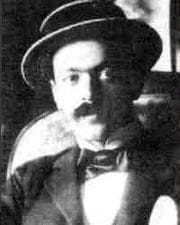
Aron Hector Schmitz, better known by the pseudonym Italo Svevo, was an Italian and Austro-Hungarian writer, businessman, novelist, playwright, and short story writer.
Similar books
- The Stranger
Albert Camus
4.1 (3k) average on GoodreadsFantasyExplores alienation and an anti-hero's unique perspective on life and morality.
- Ulysses
James Joyce
3.7 (111k) average on GoodreadsLiterary FictionFeatures a stream-of-consciousness narrative and deep psychological exploration of an ordinary man's day.
- Notes from Underground
Fyodor Dostoevsky
4.2 (84k) average on GoodreadsPsychologyPresents a deeply neurotic and self-contradictory narrator reflecting on his own existence and perceived failings.
- The Old Man and the Sea
Ernest Hemingway
3.8 (831k) average on GoodreadsLiterary FictionA Cuban fisherman's long struggle with a giant marlin becomes a story of endurance and dignity, now retold for young adults with illustrations, phonetic guides, and writing prompts in Traditional Chinese.
- One Hundred Years of Solitude
Gabriel García Márquez
4.1 (753k) average on GoodreadsLiterary FictionThrough the multi-generational story of the Buendía family, a mythical town deals with the repeating patterns of time, love, and solitude, as the extraordinary mixes with the ordinary.
- The Goldfinch
Donna Tartt
3.9 (720k) average on GoodreadsLiterary FictionHaunted by a tragic explosion and clutching a stolen Dutch masterpiece, a young orphan navigates the opulent drawing rooms of New York and the gritty underbelly of the art world, desperately seeking connection and redemption amidst a life spiraling into crime and obsession.






Enjoyed the summary?
A summary gives you the shape of the book. The book itself has the detail, the examples and the voice.
Find Zeno's Conscience on AmazonAs an Amazon Associate, BookBrief earns from qualifying purchases. How we're funded