

Synopsis
Covers the whole plot, including the ending.
- Difficulty
- Medium
- Pacing
- Moderate
- Mood
- Anxious, Reflective, Satirical, Urban, Disquieting
- Read it if
- You enjoy literary fiction exploring the burdens of fame, authorial identity, and the blurring lines between art and life, particularly with a strong sense of place in 1960s New York.
- Skip it if
- You prefer fast-paced plots with clear resolutions, or are not interested in character-driven narratives focused on internal conflict and the anxieties of a writer.
Zuckerman Unbound Plot Summary
Covers the whole plot, including the ending.
The Carnovsky Phenomenon
Nathan Zuckerman, a writer from Newark, New Jersey, finds his life changed by the success of his novel, 'Carnovsky'. The book, a sexually explicit and satirical story about Jewish-American life, makes him an uncomfortable celebrity. He is no longer just Nathan Zuckerman; he is the creator of 'Carnovsky', a public figure. This sudden fame brings unwanted attention: letters from strangers, public confrontations, and constant pressure to defend or explain his work. His parents, especially his father, are deeply ashamed and upset by what they see as a betrayal of their community and family secrets, causing an immediate rift that Zuckerman struggles to fix.
The Burden of Identification
The public's strong belief that Nathan Zuckerman is his character, Carnovsky, becomes a main source of his pain. Strangers approach him on the street, thinking they know him well through his character's experiences. They praise him, criticize him, offer advice, or demand explanations for fictional events as if they were real. This constant blurring of lines between author and creation erodes Zuckerman's sense of self and privacy. He feels like a spectacle, a character in a play he did not write, and the constant scrutiny makes even simple activities, like buying groceries, a public performance. This time in his life is marked by an overwhelming feeling of being watched and judged.
The Affair with Laura
Amidst the chaos of his new fame, Nathan Zuckerman starts an affair with Laura, a beautiful and sophisticated married woman. Their relationship is passionate but complicated by Laura's marriage and Nathan's public profile. The affair adds another layer of scandal to his already scrutinized life, making him feel both excited and trapped. Laura offers a temporary escape from the pressures of 'Carnovsky', providing a different kind of intensity, but it ultimately contributes to the breakdown of his family life and further separates him from his past, especially his parents' disapproval of his choices.
Family Disintegration
The success of 'Carnovsky' shatters Nathan's relationship with his parents. His father is particularly upset by what he sees as public humiliation and a betrayal of their Jewish heritage. He becomes ill, a physical sign of his emotional distress, and refuses to acknowledge Nathan's success. His mother, caught between her husband and son, tries to help but ultimately supports her husband's pain. Nathan's brother, Henry, a successful dentist and a respected member of their community, contrasts sharply with Nathan's artistic path. Henry represents the conventional life Nathan has rejected, and their different values create a deep divide between them, leaving Nathan increasingly cut off from his family.
The Threat of Alvin Pepler
Nathan Zuckerman's most disturbing encounter is with Alvin Pepler, a former quiz show contestant and an obsessed fan who believes he *is* Carnovsky. Pepler stalks Zuckerman, sending him increasingly strange letters and showing up uninvited at his apartment. He claims a deep, almost spiritual connection to the novel, insisting that Zuckerman has stolen his life story. Pepler's delusions grow from simple annoyance to a real threat, showing the most extreme and dangerous aspects of public identification with a fictional character. This relentless pursuit forces Zuckerman to face the dark side of his celebrity, as Pepler's obsession reflects, in a distorted way, the public's broader inability to tell fiction from reality.
The Sixties Backdrop
The late 1960s, a time of major social and political change in America, is a constant background to Zuckerman's personal struggles. The assassinations of Robert Kennedy and Martin Luther King, Jr., race riots, and the Vietnam War are always in the news, creating an atmosphere of anxiety and uncertainty. These historical events increase Zuckerman's sense of unease and vulnerability, making his personal fame feel both unimportant and intensely exposed. He feels disconnected from the larger political currents, yet also affected by the era's widespread unrest and paranoia, which adds to his feeling of being watched and judged by an unseen, critical force.
Seeking Solace and Escape
Desperate for a break from the constant public eye, Zuckerman tries various ways to escape. He considers going to a secluded cabin or even leaving the country. However, his fame is inescapable. Even when he tries to be anonymous, he is recognized, approached, and reminded of his public image. This inability to shed his celebrity identity increases his feelings of entrapment and alienation. He longs for the simpler life of a writer before 'Carnovsky', a time when his words belonged only to him and his private life was truly private. The novel explores the deep loss of self that comes with such intense public exposure.
The Dream of the Double
Zuckerman is haunted by a recurring dream where he meets a mysterious double, a man who looks exactly like him but is not him. This dream clearly shows his fragmented identity and the deep disconnect between his private self and his public persona. The double represents the 'Carnovsky' author, the celebrity figure who has taken over his original self. This dream sequence highlights his struggle to regain his authenticity and distinguish himself from the character and reputation that now define him to the world. It shows his deep internal conflict and the psychological cost of his fame.
The Call from His Father
Late at night, Nathan receives a phone call from his dying father, who is in the hospital. This call is a moving and deeply unsettling moment of attempted reconciliation. His father, weak and dying, expresses his deep disappointment and shame over 'Carnovsky' one last time, yet there is also an unspoken desire for connection. Nathan struggles to express his feelings, caught between guilt, anger, and love. The call highlights the irreparable damage the novel caused to their relationship, showing the tragic results of his artistic choices on his closest family ties, leaving him with lasting grief and regret.
Reflection and Unbinding
As the novel ends, Nathan Zuckerman reflects on the journey that has 'unbound' him from his former life. He recognizes that while 'Carnovsky' brought him fame, it also cut off his ties to his family, his community, and his sense of privacy. He is left in deep solitude, dealing with the results of his artistic ambition. There is no neat solution; instead, Zuckerman faces the ongoing challenge of creating a new identity after his transformation. He is a man forever changed, unbound from the expectations and connections that once defined him, forced to navigate a world that knows him well, yet understands him not at all.
Principal Figures
Nathan Zuckerman
Protagonist
A Jewish-American author grappling with the overwhelming fame and public misinterpretation of his controversial novel, 'Carnovsky'.
Nathan Zuckerman is an intelligent, sensitive, and ambitious writer from Newark. He is initially driven by a desire for artistic expression and recognition but finds himself ill-equipped to handle the intense celebrity that 'Carnovsky' brings. He is introspective and often overwhelmed, struggling to reconcile his private self with the public persona forced upon him. He feels a deep loyalty to his craft but is tormented by the pain his work causes his family. Zuckerman is prone to self-analysis and often feels alienated, a perpetual outsider even in his own life.
Relationships: His Father (Strained and ultimately broken by 'Carnovsky', characterized by disappointment and shame.); His Mother (Torn between Nathan and his father, trying to mediate but ultimately siding with her husband's pain.); Henry Zuckerman (Brother, representing conventional success and a stark contrast to Nathan's artistic path.); Laura (Mistress, providing a passionate but complicated escape from his celebrity.); Alvin Pepler (Obsessed fan and stalker, representing the most extreme and dangerous aspects of public identification.)
Nathan's Father
Supporting
A traditional, working-class Jewish man deeply shamed and heartbroken by his son's novel.
Nathan's father is a man of strong moral convictions and deep family pride. He embodies the values of his generation and community, where discretion and respectability are paramount. 'Carnovsky' is perceived by him as a profound betrayal, a public airing of dirty laundry that brings disgrace upon the family name. His distress is not merely emotional but manifests physically, symbolizing the devastating impact of Nathan's work on his sense of self and community standing. He struggles to understand Nathan's artistic motivations and ultimately cannot forgive him.
Relationships: Nathan Zuckerman (Estranged son, source of deep shame and heartbreak.); Nathan's Mother (Wife, with whom he shares traditional values and mutual distress over Nathan's actions.)
Nathan's Mother
Supporting
A sympathetic but ultimately ineffectual mediator between Nathan and his father.
Nathan's mother is a more emotionally nuanced character than his father, caught in the painful middle of the family conflict. She loves Nathan and tries to understand him, but her primary loyalty lies with her husband and the stability of their family unit. She is distressed by the novel's content but more so by the pain it causes her husband. Her attempts at diplomacy are often futile, as she cannot bridge the chasm between her husband's traditional values and Nathan's artistic rebellion. She represents the quiet suffering of those caught in the crossfire of artistic ambition and familial expectation.
Relationships: Nathan Zuckerman (Son, whom she loves but struggles to defend against her husband's wrath.); Nathan's Father (Husband, whose pain and traditional values she ultimately supports.)
Henry Zuckerman
Supporting
Nathan's older brother, a successful and conventional dentist who represents the life Nathan rejected.
Henry Zuckerman is Nathan's older brother, a successful and respected dentist who embodies the traditional values and expectations of their Jewish-American community. He is stable, responsible, and outwardly content, providing a stark contrast to Nathan's tumultuous artistic life. Henry views Nathan's celebrity with a mixture of bewilderment and disapproval, particularly regarding the pain it inflicts on their parents. He represents the path Nathan could have taken, highlighting the sacrifices and alienations inherent in Nathan's chosen artistic life. Their relationship is marked by distance and a fundamental misunderstanding of each other's worlds.
Relationships: Nathan Zuckerman (Brother, representing a contrasting life path and source of family tension.); Nathan's Parents (Dutiful son, upholding their values and expectations.)
Laura
Supporting
Nathan's married mistress, a sophisticated woman who offers a temporary escape from his public life.
Laura is a beautiful, intelligent, and sexually confident woman with whom Nathan has a passionate affair. She is married, adding a layer of illicit excitement and complication to their relationship. For Nathan, Laura represents a temporary refuge from the suffocating pressures of his fame, offering a different kind of intensity and distraction. She is drawn to his celebrity and artistic nature, but their relationship is ultimately unsustainable due to her existing commitments and Nathan's own emotional turmoil. She embodies the allure and perils of a high-profile, extramarital affair.
Relationships: Nathan Zuckerman (Lover, providing passion and temporary distraction.)
Alvin Pepler
Antagonist
An obsessed and delusional fan who believes he is the real-life 'Carnovsky'.
Alvin Pepler is a former quiz show contestant whose life took a downward turn, leading him to latch onto Nathan Zuckerman's novel, 'Carnovsky', with an unsettling intensity. Pepler genuinely believes that Zuckerman has stolen his life story and that he *is* Carnovsky. He is relentless in his pursuit of Zuckerman, sending bizarre letters, making unsolicited visits, and generally embodying the most extreme and dangerous form of public identification with a fictional character. Pepler serves as a terrifying manifestation of the author's loss of control over his creation and the potential for celebrity to attract unstable individuals.
Relationships: Nathan Zuckerman (Obsessed fan and stalker, believing Nathan stole his life story.)
Themes & Insights
The Burden of Fame and Public Identity
The novel explores the stifling weight of celebrity, especially when an author's public image becomes tied to their fictional work. Nathan Zuckerman is often approached by strangers who think they know him well through 'Carnovsky', blurring the lines between artist and art. This idea is shown in his street encounters, where he is praised, criticized, or even stalked by fans like Alvin Pepler, who believes he *is* Carnovsky. Zuckerman's loss of privacy and inability to escape his public image underscore the deep psychological cost of unexpected literary success.
“What had happened was that he had become Carnovsky, or Carnovsky had become him, and he was no longer Nathan Zuckerman.”
The Betrayal of Family and Community
A main theme is the damaging effect of artistic expression on family and community bonds. Nathan's novel, 'Carnovsky', is seen by his traditional Jewish parents as a deep betrayal, a public humiliation that shames their family and community. His father's illness and death, directly linked to his distress over the book, highlight the deep and often permanent divisions that form when an artist's truth conflicts with the expectations of their background. The novel questions an artist's responsibility to their origins versus their artistic freedom.
“He had committed the unforgivable sin: he had put his family in a book.”
The Artist's Relationship to His Creation
Roth examines the complex and often difficult relationship between an author and their work. Zuckerman constantly defends and explains 'Carnovsky', battling public misunderstandings and readers' tendency to confuse him with his fictional main character. This theme explores an author's loss of control once a book is published, as it takes on a life of its own in the public imagination. The novel questions how much an author is responsible for how their work is received and whether they can truly separate themselves from their art, especially when it becomes very successful and controversial.
“It was no longer his book. It was theirs.”
Identity and Self-Discovery
Zuckerman's journey is one of deep identity crisis, as he tries to redefine himself after 'Carnovsky'. The novel explores how outside forces—fame, public perception, family disapproval—can shatter one's sense of self. Nathan is 'unbound' from his former identity, forced to confront who he is without the support of family approval or personal privacy. His recurring dream of a double clearly shows this fragmented self. The novel suggests that true self-discovery for an artist might involve painfully shedding old identities and facing solitude.
“He was a man without a country, without a family, without a self.”
Plot Devices & Literary Techniques
The Doppelganger Motif
A recurring dream or hallucination of a double, symbolizing Zuckerman's fractured identity.
The doppelganger motif is employed through Nathan Zuckerman's recurring dream of encountering a man who looks exactly like him but is not him. This device serves as a powerful psychological symbol for Zuckerman's divided self: the private Nathan versus the public 'Carnovsky' author. It externalizes his internal conflict, highlighting his sense of alienation and the profound loss of his original identity. The doppelganger represents the entity that has usurped his life, making him feel like a spectator to his own fame and creating a constant sense of being watched and judged, even by himself.
Epistolary Elements
Letters from fans and critics that reveal public perception and fuel Zuckerman's torment.
The inclusion of letters, particularly from obsessed fans like Alvin Pepler, serves as a crucial plot device. These letters provide direct insight into the public's reaction to 'Carnovsky' and Zuckerman's celebrity. They are not merely background noise; they are active forces that drive Zuckerman's anxiety, fuel his sense of being scrutinized, and escalate his feelings of dread, especially in Pepler's case. The letters vividly demonstrate the blurring of lines between author and character in the public imagination, making the abstract concept of fame tangible and menacing.
The 'Carnovsky' Novel Itself
A fictional novel whose content and reception drive the entire plot.
While 'Carnovsky' is not a real book, its existence and the controversy it generates are the primary plot device that propels Zuckerman Unbound. The specific (though never fully detailed) content of 'Carnovsky'—its explicit nature and perceived ethnic betrayal—is the catalyst for all of Nathan's subsequent struggles. The novel's success and the public's reaction to it dictate his experiences, from his family's estrangement to his encounters with fans and critics. 'Carnovsky' functions as a powerful, unseen character, shaping Nathan's reality and forcing him to confront the profound consequences of his artistic choices.
Zuckerman Unbound Quotes
“The fact remains, however, that he was a writer, and writers, Zuckerman knew, were always at the mercy of their imaginations, which were not always at the mercy of them.”
“He was like a man who, having climbed to the top of a mountain, finds himself wondering what to do next.”
“To be known, to be recognized, to be famous — it was not a shield, it was a target.”
“One writes out of one’s own life, but one does not write about one’s own life.”
“He was a public figure now, and the public, he discovered, was a many-headed monster with an insatiable appetite for the personal.”
“The past, he thought, was not dead, it was not even past; it was simply waiting to ambush you.”
“What was the point of achieving everything you ever wanted if it only made you miserable?”
“He felt as though he were living inside one of his own novels, but a particularly bad one, with a plot that defied all logic and a cast of characters he couldn't control.”
“The only thing worse than not being famous, he sometimes thought, was being famous.”
“He had wanted to be a writer, and he was. But being a writer had turned out to be less about writing and more about being written about.”
“Every book is a kind of suicide, a throwing of oneself into the unknown.”
“He was trapped by his own creation, a prisoner of his own success.”
“The world was full of people who thought they knew him, because they knew his books.”
“He knew he was supposed to be happy, but happiness, he discovered, was a slippery fish, hard to catch and even harder to hold.”
Quiz
10 questions on the plot and the characters. Each answer comes with a short explanation.
Question 1
Which of Nathan Zuckerman's novels catapulted him into the literary limelight?
- The Ghost Writer
- American Pastoral
- Carnovsky
- Portnoy's Complaint
Show answer
C. Carnovsky The synopsis explicitly states that 'Carnovsky' was the novel responsible for Zuckerman's sudden fame.
Question 2
What is Nathan Zuckerman's primary struggle in the wake of his novel's success?
- Writer's block and inability to produce new work.
- Financial difficulties despite his fame.
- Coping with unwanted attention and the demands of celebrity.
- A desire to leave New York for a quieter life.
Show answer
C. Coping with unwanted attention and the demands of celebrity. The text describes Zuckerman as 'accosted on all sides,' 'an incompetent celebrity, ill at ease with his newfound fame,' and struggling with fans and critics.
Question 3
Which decade is drawing to a close around Nathan Zuckerman as he navigates his fame?
- The fifties
- The sixties
- The seventies
- The eighties
Show answer
B. The sixties The summary states, 'as the turbulent decade of the sixties draws to a close around him.'
Question 4
What specific type of individuals does Zuckerman encounter on the streets of Manhattan due to his fame?
- Only adoring fans and autograph seekers.
- Admonishers, advisers, would-be literary critics, and fans.
- Journalists seeking interviews and fellow authors.
- Film producers and agents offering movie deals.
Show answer
B. Admonishers, advisers, would-be literary critics, and fans. The description details him being 'accosted on all sides, the target of admonishers, advisers, would-be literary critics, and – worst of all – fans.'
Question 5
Beyond his personal struggles, what broader societal events cast a shadow over Zuckerman's experiences?
- The Vietnam War and student protests.
- The Cold War and the threat of nuclear conflict.
- The assassinations of Robert Kennedy and Martin Luther King, Jr.
- The Watergate scandal and political corruption.
Show answer
C. The assassinations of Robert Kennedy and Martin Luther King, Jr. The text explicitly mentions, 'But beneath the uneasy glamour are the spectres of the recently murdered Robert Kennedy and Martin Luther King, Jr.'
Question 6
How does Zuckerman generally feel about his persona as a celebrity?
- He embraces it and uses it to his advantage.
- He is indifferent, viewing it as a necessary evil.
- He is 'ill at ease' and 'incompetent,' struggling to live up to it.
- He finds it creatively inspiring for new works.
Show answer
C. He is 'ill at ease' and 'incompetent,' struggling to live up to it. The synopsis states he is 'an incompetent celebrity, ill at ease with his newfound fame, and unsure of how to live up to his fictional creation’s notoriety.'
Question 7
What happens to Zuckerman's family life amidst his newfound fame?
- It strengthens as his family shares in his success.
- It remains stable, unaffected by his public life.
- It disintegrates, adding to his personal turmoil.
- He gains a new, supportive family through his literary connections.
Show answer
C. It disintegrates, adding to his personal turmoil. The description notes he 'flounders his way through... the disintegration of his family life.'
Question 8
What does Zuckerman 'feel himself watched' by, beyond the immediate public attention?
- His literary rivals and critics.
- The ghost of his fictional creation, Carnovsky.
- The spectres of recently murdered public figures, indicating a broader sense of unease.
- His estranged family members.
Show answer
C. The spectres of recently murdered public figures, indicating a broader sense of unease. The text concludes with 'an unsettled Zuckerman feels himself watched…' immediately after mentioning 'the spectres of the recently murdered Robert Kennedy and Martin Luther King, Jr.,' linking his personal unease to these larger societal tragedies.
Question 9
In what specific way does Zuckerman struggle with the success of 'Carnovsky' regarding his own identity?
- He struggles to write a sequel that lives up to the original.
- He is 'unsure of how to live up to his fictional creation’s notoriety.'
- He worries that his fictional character has become more famous than he is.
- He fears being typecast as a writer of only one kind of novel.
Show answer
B. He is 'unsure of how to live up to his fictional creation’s notoriety.' The synopsis states he is 'unsure of how to live up to his fictional creation’s notoriety,' highlighting the blurred lines between author and creation, and the pressure to embody the fame of his work.
Question 10
What is the nature of the 'high-profile affair' Zuckerman is involved in?
- It is a secret affair that he successfully keeps hidden.
- It is a casual fling that has no significant impact on his life.
- It is mentioned as part of the chaotic events he 'flounders his way through,' suggesting public knowledge and personal difficulty.
- It is a source of comfort and stability for him during his struggles.
Show answer
C. It is mentioned as part of the chaotic events he 'flounders his way through,' suggesting public knowledge and personal difficulty. The text mentions he 'flounders his way through a high-profile affair,' implying it is publicly known and adds to his difficulties rather than providing solace.
Zuckerman Unbound FAQ
What is the central conflict Nathan Zuckerman faces in 'Zuckerman Unbound'?
Nathan Zuckerman's central conflict stems from his inability to reconcile his private self with the public persona created by the scandalous success of his novel, 'Carnovsky.' He feels constantly scrutinized and misidentified by strangers who conflate him with his fictional characters, leading to a profound sense of alienation and a loss of personal autonomy.
How does the novel explore the theme of identity in the context of literary fame?
'Zuckerman Unbound' delves into how literary fame can fragment identity, as Nathan struggles to maintain a sense of self distinct from the public's perception of him as 'Carnovsky's author.' His internal world becomes increasingly influenced by external projections, forcing him to question the authenticity of his own experiences and relationships.
Who is Laura and what role does she play in Nathan's life?
Laura is a woman with whom Nathan Zuckerman has a high-profile affair, further complicating his already tumultuous personal life. Their relationship is often performative, scrutinized by the public, and serves to highlight Nathan's struggle with genuine intimacy amidst his celebrity status and the disintegration of his marriage.
How does the setting of late 1960s Manhattan influence the novel's atmosphere?
Late 1960s Manhattan provides a backdrop of social and political upheaval, characterized by the assassinations of Robert Kennedy and Martin Luther King, Jr. This turbulent atmosphere mirrors Nathan's internal chaos, adding to his sense of unease and paranoia, and suggesting a broader societal instability that reflects his personal disarray.
What is the significance of the recurring motif of being 'watched'?
The motif of being 'watched' signifies Nathan's pervasive paranoia and the constant public scrutiny he experiences. It blurs the lines between actual observation and his internal anxieties, suggesting that his fame has stripped him of privacy and made him a perpetual object of judgment, influencing his every move and thought.
Who is the 'most tenacious fan' mentioned in the synopsis, and what is their impact?
The 'most tenacious fan' is a persistent admirer who believes Nathan Zuckerman is actually a long-lost relative, an impoverished cousin. This fan's relentless pursuit and bizarre claims add to Nathan's torment, embodying the intrusive and often delusional nature of public adoration, further eroding his peace of mind and personal boundaries.
How does Nathan's relationship with his family deteriorate throughout the novel?
Nathan's family life disintegrates under the pressure of his fame and affair. His wife grows increasingly alienated, and his relationships with his parents are strained by their disapproval of his scandalous novel and his public behavior. This breakdown underscores the personal cost of his literary success.
Are there any subtle allusions to other Roth works or literary figures within 'Zuckerman Unbound'?
While 'Zuckerman Unbound' is part of the larger Zuckerman saga, it also contains subtle allusions to the broader literary world, including the anxieties of authors like J.D. Salinger who struggled with fame. The meta-fictional aspects inherently invite comparisons to Roth's own experiences, blurring the lines between author and character.
How does the novel use humor, despite its underlying themes of anxiety and despair?
The novel employs a dark, often satirical humor derived from the absurdity of Nathan's predicaments and the eccentricities of the people he encounters. This humor provides a coping mechanism for Nathan and the reader, highlighting the ironic and often farcical nature of celebrity, even amidst his profound discomfort.
What is the significance of the 'spectres of the recently murdered Robert Kennedy and Martin Luther King, Jr.'?
These spectres represent the profound loss and disillusionment of the era, mirroring Nathan's personal sense of being unmoored and under threat. They imbue the narrative with a sense of underlying dread and instability, suggesting that even in his personal struggles, Nathan is part of a larger, fracturing society.
How does Nathan Zuckerman attempt to 'live up to his fictional creation’s notoriety'?
Nathan inadvertently attempts to live up to 'Carnovsky's notoriety' by engaging in behaviors that fuel his public image, such as his high-profile affair. He finds himself trapped in a cycle where his real life increasingly mimics the scandalous nature of his fiction, making it difficult to escape the persona he created.
Is Nathan Zuckerman a sympathetic character? Why or why not?
Nathan Zuckerman is arguably a sympathetic character because his struggles are rooted in a relatable human desire for privacy and authenticity, even as he often acts in self-sabotaging ways. His profound discomfort with fame and the relentless intrusion into his life evoke empathy, despite his occasional arrogance or moral failings.
How does the novel critique the nature of celebrity and public consumption of art?
'Zuckerman Unbound' critiques celebrity by showcasing how it distorts personal identity and reduces artists to public commodities. It highlights the often shallow and misinformed public consumption of art, where the sensational aspects of an author's life overshadow the work itself, leading to a superficial understanding and engagement.
What does the title 'Zuckerman Unbound' imply about Nathan's journey?
The title 'Zuckerman Unbound' is ironic, implying liberation while Nathan is actually increasingly bound by his fame and public image. It suggests a stripping away of his former life and identity, leaving him adrift and disconnected, rather than truly free from his past or his creation.
How does the novel explore the concept of artistic responsibility?
The novel implicitly explores artistic responsibility by showing the unforeseen consequences of writing a controversial work. Nathan grapples with the impact of 'Carnovsky' on his own life and on others, raising questions about an author's ethical obligations and the extent to which they are responsible for their audience's reactions.
What is the role of Nathan's internal monologue in conveying his psychological state?
Nathan's extensive internal monologue is crucial for conveying his escalating paranoia, anxiety, and self-doubt. It provides direct access to his fragmented thoughts and feelings, showing the internal chaos that his public life has wrought and revealing the deep chasm between his outward composure and inner turmoil.
Are there any moments where Nathan finds genuine connection or solace?
Genuine connection or solace for Nathan is rare and fleeting. His affair with Laura is ultimately superficial, and his family relationships are fractured. Any moments of peace are quickly shattered by renewed public intrusion or his own internal anxieties, underscoring his profound isolation.
How does the novel portray the media's role in amplifying Nathan's struggles?
The media plays a significant role in amplifying Nathan's struggles by constantly reporting on his life, sensationalizing his affair, and conflating him with his fictional characters. This relentless coverage fuels public obsession and denies Nathan any privacy, transforming his personal life into a public spectacle.
About the author

Philip Milton Roth was an American novelist and short story writer. Roth's fiction—often set in his birthplace of Newark, New Jersey—is known for its intensely autobiographical character, for philosophically and formally blurring the distinction between reality and fiction, for its "sensual, ingenious style" and for its provocative explorations of American identity. He first gained attention with the 1959 short story collection Goodbye, Columbus, which won the U.S. National Book Award for Fiction. Ten years later, he published the bestseller Portnoy's Complaint. Nathan Zuckerman, Roth's literary alter ego, narrates several of his books. A fictionalized Philip Roth narrates some of his others, such as the alternate history The Plot Against America.
Similar books
- Portnoy's Complaint
Philip Roth
3.7 (59k) average on GoodreadsLiterary FictionExplores similar themes of Jewish-American identity, sexual frankness, and psychological turmoil, by the same author.
- Herzog
Saul Bellow
3.8 (19k) average on GoodreadsLiterary FictionFeatures an intellectual protagonist grappling with personal and professional crises, written in a reflective, stream-of-consciousness style.
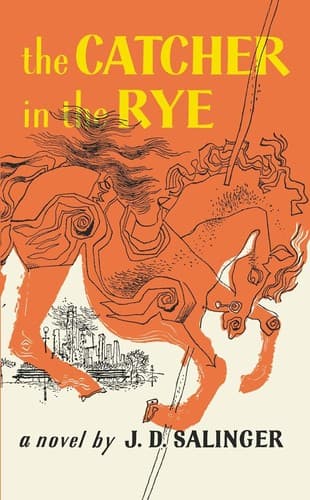
- The Catcher in the Rye
J.D. Salinger
3.8 (2.7M) average on GoodreadsYoung AdultDeals with an alienated protagonist struggling with societal expectations and the discomfort of public life, though in a younger voice.
- The Old Man and the Sea
Ernest Hemingway
3.8 (831k) average on GoodreadsLiterary FictionA Cuban fisherman's long struggle with a giant marlin becomes a story of endurance and dignity, now retold for young adults with illustrations, phonetic guides, and writing prompts in Traditional Chinese.
- One Hundred Years of Solitude
Gabriel García Márquez
4.1 (753k) average on GoodreadsLiterary FictionThrough the multi-generational story of the Buendía family, a mythical town deals with the repeating patterns of time, love, and solitude, as the extraordinary mixes with the ordinary.
- The Goldfinch
Donna Tartt
3.9 (720k) average on GoodreadsLiterary FictionHaunted by a tragic explosion and clutching a stolen Dutch masterpiece, a young orphan navigates the opulent drawing rooms of New York and the gritty underbelly of the art world, desperately seeking connection and redemption amidst a life spiraling into crime and obsession.





Enjoyed the summary?
A summary gives you the shape of the book. The book itself has the detail, the examples and the voice.
Find Zuckerman Unbound on AmazonAs an Amazon Associate, BookBrief earns from qualifying purchases. How we're funded