

Synopsis
Covers the whole plot, including the ending.
- Difficulty
- Medium
- Pacing
- Moderate
- Mood
- Introspective, Tender, Melancholy, Poignant, Thought-provoking
- Read it if
- You enjoy character-driven literary fiction that explores unconventional relationships, the fluidity of love, and the complexities of chosen family over several decades.
- Skip it if
- You prefer fast-paced plots, clear-cut romantic resolutions, or stories with traditional family structures.
A Home at the End of the World Plot Summary
Covers the whole plot, including the ending.
Childhood in Cleveland
The story begins in the late 1960s with Jonathan Glover, a sensitive boy living in Cleveland with his free-spirited mother. Jonathan experiences early losses, including his older brother's accidental death and his mother's emotional withdrawal. At thirteen, Jonathan meets Bobby Morrow, a street-smart boy from a working-class family. Bobby's life also has loss and neglect, as his parents are distant and his older brother dies from an overdose. The two boys form an immediate, deep connection, finding comfort in each other's company, often at Jonathan's house where they feel freedom and acceptance. Their bond becomes central to their young lives, a refuge from their family problems.
Bobby's Arrival in New York
Years later, Jonathan moves to New York City for college and lives with his independent roommate, Clare. Bobby decides to join him. Bobby, having dropped out of college and drifting, arrives in New York looking for connection. Jonathan, openly gay and with a deep love for Bobby, had hoped to build a life with him, perhaps even having a child with Clare as a surrogate. Bobby's arrival immediately changes the balance of Jonathan and Clare's friendship. Bobby, at first overwhelmed by the city and Clare's assertive personality, gradually settles in, and the three begin to navigate their shared living space and complex emotions.
Clare and Bobby's Unexpected Romance
Despite Jonathan's unspoken desires and his vision for a future with Clare and Bobby, Clare and Bobby are drawn to each other. Their connection, fueled by proximity and shared vulnerability, quickly becomes a passionate romance. Clare, who has a history of difficult relationships and a cynical view of love, unexpectedly falls for Bobby's quiet intensity and genuine affection. Bobby, in turn, is captivated by Clare's intelligence, humor, and strength. This growing relationship surprises Jonathan, who feels like an outsider in his own home and heart. His long-held dreams for a shared future with Bobby are broken, and he struggles to balance his love for both of them with the pain of their intimacy.
The Pregnancy and Its Aftermath
Clare and Bobby's relationship deepens, and Clare becomes pregnant. This unexpected event creates more complications. Jonathan, still recovering from being excluded from their romantic bond, at first struggles with the news, as it goes against his own hopes of fathering Clare's child. However, his deep love for both Bobby and Clare, and his desire for family, lead him to accept the idea. The three begin to discuss how they might raise the child together, creating a truly unconventional family. They decide to move out of the city, looking for a more peaceful environment to welcome the baby, marking a major shift in their lives and relationships.
Life Upstate with Alice
Clare, Bobby, and Jonathan move to a small house upstate, near Woodstock, to raise their daughter, Serena. Their new life is a deliberate effort to create a unique family, away from conventional society's expectations. They share responsibilities, finances, and the joys and challenges of parenthood. Alice, an older, eccentric friend of Jonathan's mother, joins this unusual household. Alice, a free spirit with a history of alternative living, becomes a member of their family, offering wisdom, humor, and another layer to their dynamic. Her presence strengthens their commitment to creating a 'home at the end of the world,' a sanctuary built on love, mutual support, and unconventional bonds.
Serena's Childhood
Serena grows up in this unique household, surrounded by the devoted love of Jonathan, Bobby, and Clare, and Alice's quirky presence. Her childhood is rich in affection but also subtly aware of her family's unusual nature. The adults try to give her stability and a sense of normalcy, despite their own complex emotions. Jonathan often takes on a primary caregiver role, finding deep satisfaction in fatherhood. Bobby, while loving, remains somewhat distant and restless, occasionally leaving for periods. Clare, always practical, ensures the household runs smoothly and offers a strong, independent maternal presence. Serena's upbringing shows the successes and challenges of their chosen family model, proving that love can appear in many forms.
Bobby's Restlessness and Departures
Despite his love for Clare and Serena, Bobby feels increasingly restless and unable to fully commit to their upstate life. His past, marked by transience and a lack of roots, resurfaces, and he begins to periodically leave the house for extended periods, seeking work or simply a change of scenery. These departures are painful for Clare and Jonathan, and confusing for young Serena. Bobby's inability to settle creates ongoing tension within the family, challenging the stability they have worked hard to build. His actions show his internal conflict between his desire for connection and his need for freedom, forcing the others to face the fragility of their unconventional arrangement.
Jonathan's Enduring Love and Sacrifice
Throughout the years, Jonathan's deep and lasting love for Bobby remains a central, though often unrequited, force in his life. Despite Bobby's romantic relationship with Clare and his occasional absences, Jonathan's devotion never wavers. He dedicates himself to raising Serena, providing a stable and loving father figure. He finds purpose and fulfillment in his role within this unconventional family, even as he quietly carries the weight of his unfulfilled romantic desires for Bobby. Jonathan's character shows unconditional love, self-sacrifice, and the redefinition of family. He finds deep joy and meaning in creating a home for those he loves, regardless of the personal cost.
Clare's Resilience and Practicality
Clare, the practical and independent woman, adapts to motherhood and the complexities of her unique family with resilience. She is the anchor of the household, managing its practicalities and providing a strong, loving presence for Serena. While she deeply loves Bobby, she also understands his limitations and struggles, and she learns to cope with his periodic departures. Clare's journey shows growth, as she moves from a cynical view of relationships to embracing a deep, though unconventional, form of love and family. She shows that family can be built on chosen bonds and mutual support, even when those bonds are tested by individual desires and societal norms. Her strength allows the 'home at the end of the world' to last.
The Shifting Dynamics and Future
As Serena grows older and years pass, the dynamics of their unique family continue to shift and change. Bobby's restlessness never fully disappears, but his connection to Serena and the others remains. Jonathan, Clare, and Alice maintain their commitment to each other and to Serena, creating a resilient and unconventional support system. The novel ends without a traditional 'ending,' but rather with an ongoing sense of their lives unfolding. It emphasizes that family is not solely defined by blood or conventional structures, but by love, shared experience, and the conscious choice to create a home together, however 'at the end of the world' it may seem. Their story shows the lasting power of chosen family.
Principal Figures
Jonathan Glover
Protagonist
A sensitive, introspective gay man who yearns for deep connection and family.
Jonathan is the emotional core of the novel, a sensitive and introspective man who navigates his life with a deep capacity for love and a yearning for a stable, unconventional family. Growing up with a bohemian mother and experiencing early loss, he develops a profound bond with Bobby, which shapes much of his adult life. Jonathan is openly gay but finds his deepest fulfillment in creating a home and raising Serena, regardless of the romantic complexities involved. He is often the quiet observer, processing the emotional currents around him, and acts as a steadfast anchor for his chosen family.
Relationships: Bobby Morrow (Lifelong best friend, unrequited romantic love, co-parent); Clare (Close friend, co-parent, confidante); Serena (Devoted father figure); Alice (Friend, fellow household member)
Bobby Morrow
Protagonist/Supporting
Jonathan's childhood best friend, a restless and somewhat troubled man seeking connection.
Bobby is Jonathan's childhood best friend, a handsome and somewhat enigmatic figure with a troubled past. Marked by early loss and a transient upbringing, Bobby possesses an inherent restlessness that makes it difficult for him to fully commit to conventional life. He is capable of intense love and connection, particularly with Clare and Serena, but also prone to periods of withdrawal and departure. Bobby represents a more instinctual, less introspective approach to life compared to Jonathan, often acting on impulse. His struggle between his desire for belonging and his need for freedom is a central tension in the narrative.
Relationships: Jonathan Glover (Lifelong best friend, object of Jonathan's unrequited love, co-parent); Clare (Lover, romantic partner, mother of his child); Serena (Biological father); Richie Morrow (Deceased older brother)
Clare
Protagonist/Supporting
Jonathan's fiercely independent, pragmatic, and sexually adventurous roommate who becomes Bobby's lover and Serena's mother.
Clare is a strong-willed, intelligent, and fiercely independent woman who initially lives with Jonathan in New York. She has a history of difficult relationships and a cynical, yet ultimately hopeful, view of love. Clare is pragmatic and grounded, often providing the practical backbone for the unconventional household. Her unexpected romance with Bobby leads to her becoming a mother, and she embraces this role with a blend of resilience and a touch of her characteristic wit. Clare represents adaptability and the capacity for love to surprise even the most guarded hearts, becoming a steadfast figure in their chosen family.
Relationships: Jonathan Glover (Close friend, co-parent, roommate); Bobby Morrow (Lover, romantic partner, father of her child); Serena (Biological mother); Alice (Friend, fellow household member)
Serena
Supporting
The daughter of Clare and Bobby, raised by Jonathan, Clare, and Bobby in their upstate home.
Serena is the child born to Clare and Bobby, and raised by the trio of Jonathan, Clare, and Bobby, with Alice also a significant presence. She represents the tangible outcome of their unconventional family experiment. Serena is depicted as a loved and well-adjusted child, growing up amidst the complexities and unwavering affection of her three parents. Her existence solidifies the 'home at the end of the world' as a viable, loving environment, demonstrating that family bonds can transcend traditional definitions. Her perspective, though not explicitly detailed from her own voice, provides a lens through which the success of their unique arrangement can be observed.
Relationships: Clare (Mother); Bobby Morrow (Biological father); Jonathan Glover (Father figure); Alice (Adopted grandmother figure)
Alice
Supporting
An eccentric older friend of Jonathan's mother who joins the upstate household.
Alice is an older, eccentric woman who is a friend of Jonathan's mother and later becomes an integral part of the upstate household. She embodies a free-spirited, bohemian sensibility, having lived a life outside of conventional norms. Alice brings a unique perspective, a sense of humor, and a calm, accepting presence to the already unusual family dynamic. She acts as a wise elder, a quirky aunt, and another loving adult presence for Serena. Her inclusion further reinforces the novel's theme of chosen family and the idea that a 'home' can be built from diverse individuals united by affection and shared purpose.
Relationships: Jonathan Glover (Friend of his mother, later friend and fellow household member); Clare (Friend, fellow household member); Bobby Morrow (Friend, fellow household member); Serena (Adopted grandmother figure)
Jonathan's Mother
Mentioned/Supporting
A bohemian, free-spirited woman who provides an unconventional upbringing for Jonathan.
Jonathan's mother is a free-spirited, often absent, bohemian woman who gives Jonathan a childhood marked by both freedom and a lack of consistent parental presence. Her unconventional lifestyle, while sometimes neglectful, also instills in Jonathan a certain open-mindedness and a capacity for forming unusual bonds. She is a background influence, her choices shaping Jonathan's early experiences and his later yearning for a stable, loving home. She introduces Alice to Jonathan, indirectly contributing to the formation of their chosen family.
Relationships: Jonathan Glover (Mother); Alice (Friend)
Steven Glover
Mentioned
Jonathan's older brother who dies tragically in childhood.
Steven is Jonathan's older brother whose accidental death in childhood is a pivotal, traumatic event for Jonathan and his mother. His death contributes to Jonathan's early sense of loss and isolation, and his mother's subsequent emotional withdrawal. Steven's absence creates a void that Jonathan later tries to fill through his intense bond with Bobby and his desire for a close-knit family.
Relationships: Jonathan Glover (Older brother)
Richie Morrow
Mentioned
Bobby's older brother who dies of a drug overdose.
Richie is Bobby's older brother, who dies of a drug overdose. Similar to Steven's death for Jonathan, Richie's death is a significant early trauma for Bobby, contributing to his sense of rootlessness and his often-unspoken pain. His loss highlights the difficult background from which Bobby comes and helps explain some of his guardedness and his struggle with attachment.
Relationships: Bobby Morrow (Older brother)
Themes & Insights
The Redefinition of Family
The novel explores what makes a family, moving beyond traditional structures to embrace chosen, unconventional bonds. Jonathan, Bobby, and Clare, along with Alice, create a household based on love, mutual support, and shared parenthood, despite their complex romantic and platonic relationships. Their upstate home becomes a sanctuary where these non-traditional arrangements thrive, showing that family is defined by affection and commitment rather than bloodline or societal expectations. Raising Serena with three parents, one of whom is gay and not biologically related, is the strongest example of this theme, challenging traditional ideas of parenthood and home life.
“What they were doing, he realized, was inventing family. Not recreating it, but inventing it. A new kind of family, made of whatever was available.”
Unconditional Love and Devotion
A central theme is the lasting power of unconditional love, especially Jonathan's steady devotion to Bobby and to the idea of their shared family. Despite Bobby and Clare's romantic relationship and Bobby's occasional absences, Jonathan's love for both of them, and for Serena, never changes. This love goes beyond romantic desire, becoming a deep commitment to the well-being and happiness of his chosen family. Clare's love for Bobby, which accepts his restlessness, and Alice's gentle, consistent affection also show this theme, demonstrating how love can last and adapt through various challenges and unconventional forms.
“He loved Bobby with a love that felt like gravity, ancient and undeniable.”
Loss and Healing
The characters' lives are shaped by early experiences of loss – Jonathan's brother Steven, Bobby's brother Richie, and both boys' distant parents. These traumas drive their search for connection and belonging. The novel suggests that their unconventional family is, in part, an effort to heal from these past wounds and create a safe place where they can experience the stability and unconditional love they lacked in their original families. Their shared home becomes a space for processing grief and building resilience, showing how new bonds can help mend old hurts.
“They were all, in their various ways, trying to mend something that had been broken a long time ago.”
Identity and Belonging
Each character deals with questions of identity – Jonathan's sexuality, Bobby's restlessness, Clare's independence. Their journey is about finding where they belong, both individually and together. For Jonathan, belonging means creating a family that fully accepts him, regardless of his sexual orientation. For Bobby, it's a constant tension between wanting roots and wanting freedom. Clare, at first guarded, finds belonging in motherhood and shared responsibility. The 'home at the end of the world' itself represents a place where they can truly be themselves, free from societal judgment, and where their unique identities contribute to a larger, cohesive whole.
“The house was a kind of experiment, a place where the rules of the world had been suspended.”
The Nature of Happiness
The novel explores the many sides of happiness, suggesting it is not found in conventional romantic pairings or societal success, but in genuine connection and creating meaning. For Jonathan, happiness is in fatherhood and the quiet joy of daily life with his chosen family, even if his romantic desires for Bobby are not met. Clare finds happiness in the challenges of motherhood and the stability of their unique arrangement. The characters learn to embrace a form of happiness that is complex, sometimes painful, but deeply authentic and fulfilling, coming from shared purpose and love rather than idealized outcomes.
“Happiness, Jonathan was discovering, was not a place you arrived at, but a way of traveling.”
Plot Devices & Literary Techniques
First-Person Narration (Alternating)
The story is told primarily through the intimate perspectives of Jonathan, Bobby, and Clare.
The novel employs alternating first-person narration, giving readers direct access to the thoughts, feelings, and memories of Jonathan, Bobby, and Clare. This device allows for a deep understanding of each character's inner world, revealing their motivations, vulnerabilities, and the often-conflicting desires that drive their actions. By shifting perspectives, the narrative builds a comprehensive, multi-faceted view of their complex relationships and the emotional landscape of their shared lives. It highlights the subjective nature of love and family, showing how each character perceives and experiences the same events differently, enriching the emotional depth of the story.
Flashbacks and Memories
Characters frequently recall past events, particularly from childhood, to inform present actions and emotions.
Throughout the narrative, characters, especially Jonathan and Bobby, frequently recount or reflect on past events, particularly their childhood experiences in Cleveland. These flashbacks are not always linear but emerge as memories triggered by current situations, providing crucial context for their present behaviors and emotional states. This device effectively illustrates how early traumas, bonds, and unmet needs continue to shape their adult lives and relationships, underscoring the enduring impact of the past on the present. It deepens the psychological realism of the characters and explains the profound nature of their connections.
The 'Home at the End of the World' as a Symbol
The upstate house represents a sanctuary for unconventional family and identity.
The upstate house, where Jonathan, Bobby, Clare, and Alice live and raise Serena, functions as a powerful symbol throughout the novel. It represents a deliberate choice to create a sanctuary, a 'home at the end of the world,' outside the norms of conventional society. This physical space embodies their collective defiance of traditional family structures and their commitment to forging a new kind of belonging based on love and shared purpose. It symbolizes refuge, unconventionality, and the possibility of finding happiness in non-traditional arrangements, becoming a character in itself that houses their evolving experiment in family.
Thematic Juxtaposition (Restlessness vs. Stability)
The contrasting desires for freedom and rootedness drive much of the plot and character development.
The novel frequently employs thematic juxtaposition, particularly between Bobby's inherent restlessness and desire for freedom and Jonathan and Clare's longing for stability and rootedness. This contrast creates much of the narrative tension and drives character development. Bobby's periodic departures challenge the stability of their upstate home, while Jonathan's steadfastness acts as an anchor. This device highlights the universal human struggle between individual desires and the demands of commitment, illustrating how these opposing forces are navigated within the context of an unconventional family and how love can accommodate such differences.
A Home at the End of the World Quotes
“I was born in 1960. My mother was twenty-two, my father twenty-four. They were both beautiful.”
“This is a story about a boy who loved a girl, and a boy who loved a boy, and a boy who loved a boy and a girl.”
“There are no accidents. There is only what we want, and what we don't want.”
“He understood that he was beautiful, and that beauty was a kind of power, though he didn't know yet how to wield it.”
“We were a family, not in the usual way, but a family nonetheless.”
“Love, he thought, was a series of choices, an endless succession of decisions, rather than a single, overwhelming event.”
“She was like a house in which too many people had lived, leaving behind too many ghosts.”
“Maybe that’s what love was, after all: not the thing itself, but the memory of the thing.”
“He felt a sudden, almost physical pang of regret for all the lives he hadn't lived.”
“The world was a place of endless possibility, if you only knew how to look.”
“Sometimes it seemed to him that he was living someone else's life, that he'd somehow stumbled into a story not meant for him.”
“They were all, in their own ways, trying to build a home, even if that home was only an idea.”
“The past, he thought, was not a place you could visit, but a ghost that followed you everywhere.”
Quiz
10 questions on the plot and the characters. Each answer comes with a short explanation.
Question 1
What is the initial relationship between Jonathan and Bobby established in their childhood?
- They are distant cousins who meet at family gatherings.
- They are boyhood friends.
- They are classmates who become rivals.
- They meet as adults in New York City.
Show answer
B. They are boyhood friends. The book description explicitly states that Jonathan and Bobby are 'two boyhood friends.'
Question 2
What is Jonathan's sexual orientation?
- Heterosexual
- Bisexual
- Gay
- Asexual
Show answer
C. Gay The description mentions Jonathan's plan to father Clare's child was 'scuttling the plans of Jonathan, who is gay.'
Question 3
Where do Bobby, Jonathan, and Clare move after Clare and Bobby have a baby?
- A larger apartment in New York City
- A small house upstate
- Clare's parents' house
- A different city entirely
Show answer
B. A small house upstate The synopsis states, 'Then, when Clare and Bobby have a baby, the three move to a small house upstate to raise 'their' child together.'
Question 4
What is Clare's primary characteristic described in her introduction?
- A shy academic
- A veteran of the city's erotic wars
- A successful corporate lawyer
- An aspiring musician
Show answer
B. A veteran of the city's erotic wars Clare is introduced as Jonathan's roommate and 'a veteran of the city's erotic wars,' indicating her experience with relationships and urban life.
Question 5
What was Jonathan's original plan involving Clare that was 'scuttled'?
- To open a business with her
- To travel the world with her
- To father her child
- To move to a different city together
Show answer
C. To father her child The text states that Bobby and Clare falling in love 'scuttling the plans of Jonathan, who is gay, to father Clare's child.'
Question 6
How does the novel generally depict the relationships of its characters?
- As straightforward and conventional
- As charged and fragile
- As purely platonic and unchanging
- As primarily antagonistic and conflict-ridden
Show answer
B. As charged and fragile The final sentence of the description notes that the novel 'masterfully depicts the charged, fragile relationships of urban life today.'
Question 7
What role does Alice play in the 'new kind of family' formed upstate?
- She is Clare's estranged sister who reconciles with the group.
- She is an odd friend who joins the household.
- She is Bobby's biological mother.
- She is a social worker assigned to the family.
Show answer
B. She is an odd friend who joins the household. The description states that the three 'create a new kind of family... with an odd friend, Alice.'
Question 8
What is the primary thematic focus of the novel concerning family structures?
- The reinforcement of traditional nuclear family values.
- The exploration of unconventional and evolving family units.
- The breakdown of all family bonds in modern society.
- The superiority of biological parenthood over adoption.
Show answer
B. The exploration of unconventional and evolving family units. The formation of a household including Jonathan, Bobby, Clare, their child, and Alice to 'create a new kind of family' directly addresses the theme of unconventional family structures.
Question 9
How do Jonathan and Bobby's personalities contrast according to the description?
- Jonathan is outgoing and articulate, while Bobby is reserved and scholarly.
- Jonathan is lonely, introspective, and unsure; Bobby is hip, dark, and inarticulate.
- Jonathan is adventurous and carefree, while Bobby is cautious and anxious.
- Jonathan is pragmatic and grounded, while Bobby is idealistic and dreamy.
Show answer
B. Jonathan is lonely, introspective, and unsure; Bobby is hip, dark, and inarticulate. The description details their contrasting personalities: 'Jonathan, lonely, introspective, and unsure of himself; and Bobby, hip, dark, and inarticulate.'
Question 10
What significant event occurs in New York after college that alters the dynamic between Jonathan, Bobby, and Clare?
- Jonathan moves away from the city.
- Bobby moves in with Jonathan and Clare, and then Bobby and Clare fall in love.
- Clare decides to move out and live alone.
- Jonathan and Bobby have a major falling out.
Show answer
B. Bobby moves in with Jonathan and Clare, and then Bobby and Clare fall in love. The plot summary states: 'In New York after college, Bobby moves in with Jonathan and his roommate, Clare. Bobby and Clare fall in love, scuttling the plans of Jonathan...'
A Home at the End of the World FAQ
What is the central premise of 'A Home at the End of the World'?
The novel explores the evolving, unconventional family formed by two childhood friends, Jonathan and Bobby, and their shared roommate, Clare. It delves into their complex romantic and platonic relationships as they navigate love, sexuality, and the desire to create a unique living arrangement to raise a child together.
Who are the primary characters, and what are their initial relationships?
The main characters are Jonathan, a gay and introspective man; Bobby, his more street-smart and reserved childhood friend; and Clare, Jonathan's eccentric, sexually adventurous roommate. Initially, Jonathan and Bobby share a deep platonic bond from their youth, while Clare is Jonathan's close friend and confidante in New York.
How does Bobby and Clare's relationship complicate Jonathan's plans?
Jonathan had a long-standing desire to father a child with Clare, envisioning a platonic co-parenting arrangement. Bobby and Clare unexpectedly fall in love and begin a sexual relationship, which directly overrides Jonathan's carefully laid plans and forces him to re-evaluate his place in their lives and his own aspirations for fatherhood.
What prompts the three main characters to move upstate together?
After Bobby and Clare have a baby, Jonathan, still deeply connected to both of them and the child, joins them in a collective decision to move to a small house upstate. This move is an attempt to create a communal, non-traditional family unit where they can all co-parent the baby, integrating Jonathan into their new life.
Who is Alice, and what role does she play in the upstate family dynamic?
Alice is a friend who joins the unconventional upstate household. She adds another layer to their already unique family structure, contributing to the domestic life and offering a different perspective, further blurring traditional family lines and expanding their communal living experiment.
What is the significance of the recurring theme of Bobby's past in Cleveland?
Bobby's troubled past in Cleveland, particularly the death of his brother and the impact on his mother, deeply shapes his reserved and sometimes detached personality. These early experiences explain his quiet intensity and his struggle with intimacy, influencing his decisions and relationships throughout the novel.
How does the author use the shifting narrative perspectives to reveal character depth?
Cunningham employs a third-person limited perspective that often shifts between Jonathan, Bobby, and Clare. This technique allows readers access to each character's internal thoughts, desires, and frustrations, providing a more nuanced understanding of their individual motivations and the complexities of their intertwined relationships.
Are there any subtle indications of Jonathan's enduring longing for Bobby beyond friendship?
Yes, even after Bobby and Clare become a couple, Jonathan's internal monologues and observations about Bobby often carry an undertone of unrequited romantic or sexual longing. His desire to co-parent with Clare was partly an attempt to secure a permanent, intimate connection to Bobby through a shared family.
How does Clare's past 'erotic wars' in the city influence her approach to love and family?
Clare's past experiences, marked by casual relationships and a certain world-weariness, make her initially cynical about traditional romance but also open to unconventional arrangements. Her history allows her to embrace the fluid, non-traditional family structure with Bobby and Jonathan, seeing it as a viable path to connection and motherhood.
Analyze Jonathan's psychological journey from loneliness to finding a sense of belonging.
Jonathan begins as a lonely, introspective character who yearns for deep connection and family. Despite the initial heartbreak of Bobby and Clare's relationship, his persistent presence and active role in raising the child demonstrate his capacity for unconventional love and his eventual success in constructing a unique, albeit complex, sense of belonging.
What psychological needs does Bobby fulfill by entering into the unconventional family with Clare and Jonathan?
Bobby, often quiet and guarded, seems to find a sense of stability and unconditional acceptance within this unconventional family. It provides him with a structure and a loving environment, something perhaps lacking in his own turbulent upbringing, allowing him to be a father and a partner without conforming to strict societal norms.
How does the upstate environment contribute to or reflect the characters' psychological states?
The move upstate to a more rural, isolated setting reflects the characters' desire to escape the confines of urban life and societal expectations, creating a space where their non-traditional family can flourish without judgment. It provides a quiet backdrop for introspection and the forging of new identities.
Is the novel ultimately optimistic or pessimistic about the possibility of creating unconventional families?
The novel offers a nuanced perspective, leaning towards cautious optimism. While it acknowledges the inherent difficulties, sacrifices, and emotional complexities of their arrangement, it ultimately portrays the characters finding a genuine, if imperfect, form of love and family, suggesting that unconventional structures can indeed provide fulfillment.
How does 'A Home at the End of the World' challenge traditional definitions of family, love, and sexuality?
The novel radically challenges traditional norms by depicting a family unit formed outside of conventional heterosexual marriage, involving a gay man, a straight couple, and a shared child. It explores the fluidity of love, demonstrating that deep bonds and parental roles can transcend sexual orientation and established societal expectations.
What is the significance of the title 'A Home at the End of the World'?
The title suggests both a physical and metaphorical refuge. 'A Home' signifies the characters' yearning for belonging and stability, while 'at the End of the World' implies a place removed from conventional society, a self-contained sanctuary where they can define their own rules and create their unique family.
Could Jonathan and Bobby's relationship be interpreted as a form of unrequited love for Jonathan?
Yes, for Jonathan, his connection to Bobby carries strong elements of unrequited love, both platonic and perhaps romantic. He deeply cherishes their bond, and his desire to co-parent with Clare can be seen as an attempt to permanently intertwine his life with Bobby's, even if sexually unfulfilled.
How does the novel explore the concept of sacrifice within love and family?
Each character makes significant sacrifices: Jonathan gives up his direct romantic hopes for Clare, Bobby sacrifices a conventional life with Clare to include Jonathan, and Clare navigates a complex co-parenting dynamic. These sacrifices highlight the deep commitment and unconventional love that binds them together.
What is the author's message about the nature of love in contemporary society?
Cunningham suggests that love in contemporary society is fluid, multifaceted, and often defies easy categorization. He portrays love as a powerful force that can manifest in platonic, romantic, and familial forms, capable of creating profound connections and unconventional structures that meet individual needs.
About the author

Michael Cunningham is an American author known for his literary fiction. His notable works include "The Hours," which won the Pulitzer Prize for Fiction, as well as "A Home at the End of the World," "By Nightfall," "Specimen Days," and "Flesh and Blood." His writing often explores themes of identity, time, and the complexities of human relationships.
Similar books
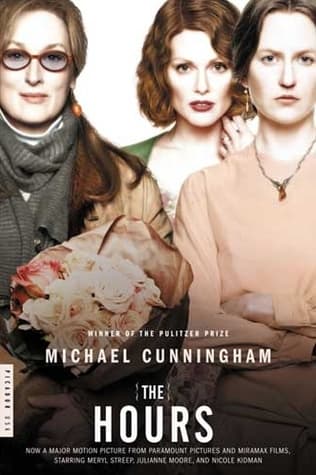
- The Hours
Michael Cunningham
3.9 (125k) average on GoodreadsLiterary FictionExplores complex inner lives and interconnected narratives of love, loss, and identity across different time periods.
- Less Than Zero
Bret Easton Ellis
3.6 (73k) average on GoodreadsLiterary FictionFeatures a similar exploration of disaffected youth and complex relationships, though with a darker, more nihilistic tone.
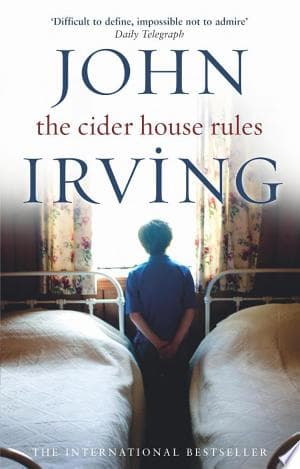
- The Cider House Rules
John Irving
4.1 (161k) average on GoodreadsLiterary FictionBoth Irving's and Cunningham's novels explore unconventional families and the idea of 'home' outside traditional structures. 'The Cider House Rules' similarly features a protagonist (Homer Wells) who grows up in an unusual environment (an orphanage/abortion clinic) and struggles with his place in the world, eventually forming his own chosen family. Irving's novel, however, is characterized by its sprawling, Dickensian scope, larger-than-life characters, and often tragicomic tone, with a strong focus on social issues like abortion. Cunningham's novel is more intimate and psychologically focused, with a quieter, more lyrical prose style. While both challenge societal norms, Irving's approach is often grander and more overtly moralistic, whereas Cunningham's is more subtly observational of emotional landscapes.
- The Old Man and the Sea
Ernest Hemingway
3.8 (831k) average on GoodreadsLiterary FictionA Cuban fisherman's long struggle with a giant marlin becomes a story of endurance and dignity, now retold for young adults with illustrations, phonetic guides, and writing prompts in Traditional Chinese.
- One Hundred Years of Solitude
Gabriel García Márquez
4.1 (753k) average on GoodreadsLiterary FictionThrough the multi-generational story of the Buendía family, a mythical town deals with the repeating patterns of time, love, and solitude, as the extraordinary mixes with the ordinary.
- The Goldfinch
Donna Tartt
3.9 (720k) average on GoodreadsLiterary FictionHaunted by a tragic explosion and clutching a stolen Dutch masterpiece, a young orphan navigates the opulent drawing rooms of New York and the gritty underbelly of the art world, desperately seeking connection and redemption amidst a life spiraling into crime and obsession.




Enjoyed the summary?
A summary gives you the shape of the book. The book itself has the detail, the examples and the voice.
Find A Home at the End of the World on AmazonAs an Amazon Associate, BookBrief earns from qualifying purchases. How we're funded