

Synopsis
Covers the whole plot, including the ending.
- Difficulty
- Medium
- Pacing
- Slow
- Mood
- Melancholy, Reflective, Poignant, Bittersweet
- Read it if
- You appreciate stoic prose, introspective character studies, and meditations on war, love, and mortality in a post-WWII European setting.
- Skip it if
- You prefer fast-paced plots, strong dialogue-driven narratives, or find extensive internal monologues and a melancholic tone unengaging.
Across the River and into the Trees Plot Summary
Covers the whole plot, including the ending.
The Duck Shoot Begins
Colonel Richard Cantwell, a fifty-year-old American Army officer with a heart condition, drives from Trieste to the Venetian lagoon for a weekend duck shoot. His driver is Sergeant Jackson. Cantwell is a veteran of both World Wars and carries the physical and emotional scars of his military career. As they drive, Cantwell thinks about his past, especially his time in Italy during World War I and his more recent command in World War II. He is a man of habit, and the duck shoot is a ritual he values, partly for the quiet it offers and partly for its connection to nature. He arrives at the hunting lodge, greeted by the gamekeeper, and prepares for the next morning's hunt.
Reflections on War and Loss
During the drive and later at the lodge, Cantwell's thoughts are filled with war memories. He remembers specific battles, the men he led, and the deep losses he saw and was responsible for. He mentally revisits campaigns like the Hürtgen Forest and the Battle of the Bulge, carrying the weight of his choices and the lives lost under his command. These memories are not just facts; they are personal wounds that still affect him. He struggles with duty, honor, and the dehumanizing parts of long conflict, often speaking in a detached but deeply felt way about the horrors he has faced and caused.
Arrival in Venice and Reunion
After the first day of hunting, Cantwell goes to Venice, where he has a room at the Gritti Palace Hotel. A gondolier he knows well meets him, strengthening his bond with the city. His main reason for coming to Venice, besides the hunt, is to meet Countess Renata, a nineteen-year-old Italian noblewoman with whom he is in love. He looks forward to their reunion with both excitement and worry, aware of their age difference and their relationship's fragility. He finds comfort in the familiar beauty of Venice, a city he has known and loved since his youth.
The First Evening with Renata
Cantwell and Renata meet for dinner in Venice. Their conversation mixes affection, shared memories, and Cantwell's war stories. Renata, despite her youth, listens with mature understanding and offers him peace and acceptance. She represents beauty, youth, and a connection to life that Cantwell feels slipping away. He gives her gifts, including emeralds he bought for her, showing his devotion. Their interactions have a deep emotional closeness, going beyond the physical, and showing the strong bond they share despite their different backgrounds and ages.
Renata's Understanding and Affection
Renata shows a remarkable understanding of Cantwell. She encourages him to talk about his past, even the most painful war memories, giving him a safe place to unburden himself. She sees his scars, both visible and invisible, not with pity but with deep, loving acceptance. Her youth and energy contrast sharply with Cantwell's tiredness, yet she is drawn to his wisdom and experience. She is not naive to the world's harshness but chooses to embrace life and love, offering Cantwell a break from his internal struggles and a reason to find beauty in the present.
A Night at the Gritti Palace
After dinner, Cantwell and Renata return to his room at the Gritti Palace. Their time together involves both physical closeness and deep emotional connection. Cantwell continues to share his war stories, often in a fragmented way, and Renata listens patiently, offering comfort. He thinks about his past wives and relationships, naming Renata as the most important love of his later life. Their conversations touch on love, loss, death, and the short nature of happiness, creating a mood of bittersweet tenderness as they acknowledge the limits of time and Cantwell's failing health.
The Second Day of Hunting
The next morning, Cantwell returns to the lagoon for the second day of the duck shoot, leaving Renata in Venice. The hunt is a form of meditation for him, a way to process his thoughts and feelings. He thinks about his time with Renata, enjoying the memories and emotions she brings out. Hunting, with its precision and link to nature, offers a temporary escape from his inner turmoil, yet his thoughts often return to her. He has moments of clarity and peace amidst the physical effort and the harsh beauty of the winter landscape, confirming his appreciation for life's simple pleasures.
A Final Dinner and Farewell
Cantwell and Renata have one last dinner together in Venice. The mood is sad as they both know this might be their final meeting. They speak of their love, their future, and the challenges they face. Cantwell, always a soldier, tries to stay calm, but his deep affection for Renata is clear. Renata, though sad, handles the farewell with grace and maturity, reinforcing her deep bond with him. They say heartfelt goodbyes, a poignant moment reflecting their intense, unusual love's temporary nature.
The Journey Back
After saying goodbye to Renata, Cantwell begins his trip back to Trieste with Sergeant Jackson. His health is clearly worse, and he feels more discomfort and pain from his heart condition. He continues to think about his life, his loves, and the wars he fought. The landscape they drive through brings up more memories, and he often speaks to Jackson, who listens respectfully, though he doesn't fully understand the depth of Cantwell's historical and emotional burdens. The journey becomes a symbol for Cantwell's own winding path toward his inevitable end, marked by growing fatigue and a quiet acceptance of his fate.
The Final Hunt and End
On the way back, Cantwell decides to stop for one last, unplanned duck shoot in a remote area. Despite his worsening health, he insists on hunting. He positions himself in the marsh, waiting for the ducks. As he waits, his heart gives out. He dies quietly and alone, holding his shotgun, in the environment he loved. Sergeant Jackson eventually finds him. Cantwell's death is a peaceful, dignified end for a man who lived and fought intensely, finding his final peace in nature, a place of quiet solitude he had always sought.
Principal Figures
Colonel Richard Cantwell
Protagonist
A war-weary American colonel grappling with love, loss, and mortality.
Colonel Richard Cantwell is a fifty-year-old American Army officer, a veteran of both World Wars, deeply scarred by combat and suffering from a debilitating heart condition. He is a complex figure, cynical yet romantic, a man of profound honor and deep internal pain. He carries the weight of command and the memories of countless lives lost under his watch. Despite his physical ailments and emotional burdens, he possesses a sharp wit, a deep appreciation for beauty, and a fierce loyalty to those he loves. He finds solace in tradition, nature (especially hunting), and his unconventional love for Renata.
Relationships: Renata (Deep, romantic, and emotionally intimate love interest.); Sergeant Jackson (Loyal and respectful subordinate/driver.); Past wives/lovers (Recalled, often with regret or detachment, contrasting with his love for Renata.)
Renata
Supporting
A young Italian countess and Cantwell's last great love.
Renata is a beautiful, intelligent, and perceptive nineteen-year-old Italian countess. Despite her youth, she possesses a remarkable maturity and empathy, offering Cantwell understanding, comfort, and a sense of renewed purpose. She is deeply in love with Cantwell, seeing past his age and physical infirmities to the profound man beneath. She represents youth, beauty, hope, and a connection to life that Cantwell desperately craves. Her presence provides a stark contrast to Cantwell's war-hardened cynicism, yet she fully embraces and accepts his past.
Relationships: Colonel Richard Cantwell (Deep, romantic, and emotionally intimate love interest.)
Sergeant Jackson
Supporting
Cantwell's loyal and observant driver.
Sergeant Jackson is Colonel Cantwell's young, loyal, and somewhat naive driver. He is respectful of Cantwell and carries out his duties efficiently. While he doesn't fully comprehend the depth of Cantwell's war experiences or his philosophical musings, he listens patiently and offers practical support. He represents the younger generation, untainted by the direct horrors of the wars Cantwell fought, serving as a foil to Cantwell's world-weariness and a silent witness to his final days. He is a steady, reliable presence throughout Cantwell's journey.
Relationships: Colonel Richard Cantwell (Subordinate and driver, with a respectful, almost familial bond.)
The Gondolier
Mentioned
A familiar figure in Venice who aids Cantwell.
The gondolier is a familiar face to Cantwell in Venice, representing his long-standing connection to the city. He is a minor character but provides a sense of continuity and comfort for Cantwell, embodying the traditional, unchanging aspects of Venice that Cantwell appreciates. He is part of the small, familiar world Cantwell constructs for himself in the city, offering reliable service and a quiet presence.
Relationships: Colonel Richard Cantwell (Familiar service provider and connection to Venice.)
The Gamekeeper
Mentioned
The local expert for the duck hunt.
The gamekeeper is a local Italian man who organizes and guides the duck hunt for Cantwell. He is knowledgeable about the lagoon and the wildlife, representing Cantwell's connection to the natural world and the ritual of hunting. He is a practical, no-nonsense figure who facilitates Cantwell's escape into nature, a temporary respite from his internal battles. His presence underscores Cantwell's desire for traditional, masculine pursuits.
Relationships: Colonel Richard Cantwell (Professional guide for the hunt.)
Themes & Insights
The Toll of War and Trauma
The novel explores the lasting psychological and physical scars of war. Colonel Cantwell shows this theme, with his heart condition, his constant retelling of battles, and his struggle with memories of men lost under his command. He carries the weight of his decisions and the horrors he saw, finding it hard to escape the past. His talks with Renata often cover his war experiences, showing how deeply they are part of his identity. This theme appears in his cynicism, his moments of quiet sadness, and his search for meaning in the face of destruction, especially his experiences in the Hürtgen Forest and the Battle of the Bulge.
“He knew it was bad for his heart to fight, but he had to do it. He had to be a soldier, and he had to fight, and he had to win.”
Love and Mortality
The love between the aging, sick Cantwell and the young Renata is central to the novel. Their relationship highlights the contrast between life and coming death, youth and experience. Renata offers Cantwell a final, deep connection to beauty, hope, and the present, giving him a temporary break from his war-torn past and his awareness of his own death. Their love is an act of defiance against death, a way to experience intense life even as it fades. Cantwell's gifts to Renata, especially the emeralds, show his desire to leave a lasting mark of his affection and his appreciation for the beauty she represents.
“I love you. I love you, and I love you, and I love you. What else is there to say?”
The Search for Peace and Solace in Nature
Nature, especially the Venetian lagoon and duck hunting, is a source of comfort and meaning for Cantwell. The quiet and ritual of the hunt allow him to reflect, to connect with a basic, unchanging world, and to find a temporary escape from his inner struggles. The beauty of the landscape and the demands of the sport offer a form of meditation and a sense of order. His wish for a final hunt, even with his declining health, shows his deep connection to nature as a place of peace and dignity, where he ultimately finds his final rest.
“He loved the feel of the boat moving, and the wind, and the cold, and the smell of the marsh.”
Memory and the Past
Memory is a strong force in Cantwell's life, always breaking into his present. He lives largely in his past, replaying conversations, battles, and losses. The novel is built around his internal thoughts and stories, blurring the lines between past and present. His memories are not just nostalgic; they are active, painful forces that shape how he sees the world and interacts. Renata's willingness to listen to these memories gives him a rare chance to process his past, even if he can never fully escape it. The past is not dead for Cantwell; it is a living thing that defines him.
“The memory of all the dead was in his head like a great weight.”
The Resilience of the Human Spirit
Despite Cantwell's suffering, both physical and emotional, he shows great resilience. He continues to live, to love, and to engage with the world, even as he faces his coming death. His defiance against despair, his ability to love Renata, and his determination to hunt despite his heart condition, all speak to an enduring human spirit. This theme is not about overcoming, but about enduring with dignity and finding moments of beauty and meaning amidst deep loss and weariness. His continued appreciation for good food, drink, and conversation also reflects this resilience.
“A man could be destroyed but not defeated.”
Plot Devices & Literary Techniques
Stream of Consciousness
A narrative technique that mirrors the character's thoughts.
Hemingway employs a stream of consciousness technique, particularly through Colonel Cantwell's internal monologues and fragmented recollections. This allows the reader direct access to Cantwell's thoughts, memories, and emotions, often jumping between present events and past war experiences without clear transitions. This device effectively conveys the fractured nature of his mind, the constant intrusion of trauma, and the way his past deeply informs his present. It creates an intimate, subjective perspective, immersing the reader in Cantwell's unique mental landscape and his struggle with his own history.
Symbolism of Venice and the Lagoon
The setting acts as a reflection of Cantwell's internal state and a source of solace.
Venice, with its timeless beauty, history, and decaying grandeur, symbolizes Cantwell's own state – a magnificent, storied past now facing inevitable decline. The canals and ancient buildings reflect his deep connection to tradition and the weight of history. The Venetian lagoon, a wilder, more primal setting for the duck hunt, symbolizes nature's indifference and purity, offering Cantwell a place of escape, ritual, and eventual peace. It represents a return to fundamental elements, a stark contrast to the complexities of war and human relationships, ultimately becoming the site of his final moments.
The 'Code Hero' Archetype
Cantwell embodies Hemingway's ideal of a stoic, honorable man facing adversity.
Colonel Cantwell is a classic example of Hemingway's 'code hero.' He is a man who faces a difficult, often tragic, reality (war, old age, illness) with grace under pressure, stoicism, and adherence to a personal code of honor and discipline. He values courage, competence, and a certain fatalistic acceptance of his destiny. Despite his internal suffering, he maintains his dignity, enjoys simple pleasures, and confronts his end with a quiet strength, embodying the ideal of a man who lives authentically and faces death without complaint. His adherence to the hunting ritual is part of this code.
Repetition and Ritual
Recurring phrases, actions, and events emphasize themes and character traits.
Hemingway frequently uses repetition of phrases, questions, and actions throughout the novel. This device serves to highlight Cantwell's obsessive thoughts, the cyclical nature of memory, and his reliance on ritual (like the duck hunt, drinking, and specific conversational patterns) to bring order to his chaotic internal world. The repeated recounting of war stories, for instance, underscores the inescapable nature of his trauma. It also lends a poetic, almost incantatory quality to the prose, drawing attention to key ideas and reinforcing Cantwell's deeply ingrained habits and perspectives.
Across the River and into the Trees Quotes
“He had always known that words were a commodity that could be bought and sold, and that the best words were not always the most expensive.”
“The great thing is to last and get your work done and see it is good and then die.”
“You could not be a good soldier until you had learned how to enjoy being miserable.”
“He looked at her and he knew that he loved her, and that he would love her until he died, and that he would love her after he died.”
“It was impossible to be in love and wise at the same time.”
“The only thing that could spoil a good day was people.”
“You did not have to be in love to be happy. You just had to be lucky.”
“He knew that he would never be lonely as long as he had the river and the trees.”
“The world breaks everyone, and afterward, some are strong at the broken places.”
“You could always tell a good man by how he treated his dog.”
“He was a man who had seen too much and felt too much and was tired of both.”
“A man could be destroyed but not defeated.”
“The only difference between a good soldier and a bad soldier was whether he was still alive.”
“He had never known anyone who could be so happy with so little.”
“The best way to find out if you can trust somebody is to trust them.”
Quiz
10 questions on the plot and the characters. Each answer comes with a short explanation.
Question 1
What is Colonel Cantwell's primary military rank at the time the novel is set?
- General
- Major
- Colonel
- Captain
Show answer
C. Colonel Richard Cantwell is explicitly referred to as a Colonel throughout the novel, reflecting his war-ravaged status at the close of WWII.
Question 2
In which city does the majority of the novel's action and Colonel Cantwell's reflections take place?
- Rome
- Florence
- Venice
- Milan
Show answer
C. Venice The inspiration for the novel came from Hemingway's reacquaintance with Venice, and the city serves as the primary setting for Cantwell's story.
Question 3
What is the name of the young Italian countess with whom Colonel Cantwell is in love?
- Isabella
- Renata
- Sofia
- Elena
Show answer
B. Renata Colonel Cantwell's love interest is the young Italian countess named Renata, a central figure in his emotional landscape.
Question 4
What physical ailment is Colonel Cantwell suffering from that contributes to his reflective and melancholic state?
- A severe leg wound from the war
- Advanced heart disease
- Tuberculosis
- Blindness in one eye
Show answer
B. Advanced heart disease Cantwell is aware of his failing heart, which underscores the poignant and bittersweet nature of his final days and his relationship with Renata.
Question 5
During which historical period is the novel primarily set?
- The Korean War
- The immediate aftermath of World War I
- The close of the Second World War
- The Cold War
Show answer
C. The close of the Second World War The novel is set in Italy 'at the close of the Second World War,' reflecting the war-ravaged state of Colonel Cantwell and the historical context.
Question 6
What specific type of bird hunting does Colonel Cantwell engage in at the beginning of the novel?
- Pheasant hunting
- Duck hunting
- Quail hunting
- Goose hunting
Show answer
B. Duck hunting The novel opens with Colonel Cantwell on a duck hunting trip in the Venetian lagoons, a detail that sets the reflective and naturalistic tone.
Question 7
What symbolic significance does the title 'Across the River and into the Trees' hold for Colonel Cantwell?
- It refers to a specific military strategy he once employed.
- It is a metaphor for his journey into death and the afterlife.
- It describes the path to a secret rendezvous point with Renata.
- It represents his desire to escape urban life for nature.
Show answer
B. It is a metaphor for his journey into death and the afterlife. The phrase is an allusion to Stonewall Jackson's dying words, 'Let us cross over the river and rest under the shade of the trees,' symbolizing Cantwell's impending death and longing for peace.
Question 8
What is the primary role of the Granian boatman who accompanies Cantwell on his hunting trip?
- He is a former soldier under Cantwell's command.
- He represents the simple, enduring Italian working class.
- He serves as a romantic rival for Renata's affection.
- He is a smuggler who helps Cantwell acquire illegal goods.
Show answer
B. He represents the simple, enduring Italian working class. The Granian boatman, along with other local characters, provides a contrast to Cantwell's complex internal world, representing a grounded, unpretentious way of life and the resilience of the local people.
Question 9
Which of the following literary devices is most prominent in Hemingway's portrayal of Colonel Cantwell's inner thoughts and memories?
- Frequent use of unreliable narration
- Extensive use of stream of consciousness and internal monologue
- Detailed allegorical dream sequences
- Epistolary format through letters to his family
Show answer
B. Extensive use of stream of consciousness and internal monologue Hemingway extensively uses stream of consciousness to delve into Cantwell's mind, revealing his war memories, philosophical reflections, and deep feelings for Renata.
Question 10
What does the 'Big Two-Hearted River' often referenced by Hemingway in other works, and implicitly in this novel's themes, symbolize for Cantwell?
- A specific battle he fought during WWII
- A place of healing, escape, and spiritual renewal, often through nature and ritual.
- The division between his military and civilian life.
- His conflicted feelings about Renata.
Show answer
B. A place of healing, escape, and spiritual renewal, often through nature and ritual. While 'Big Two-Hearted River' is from another Hemingway story, the theme of finding solace and renewal in nature, away from the trauma of war and societal pressures, is a recurring motif in his work and is echoed in Cantwell's hunting trip and reflections.
Across the River and into the Trees FAQ
What is the central premise of 'Across the River and into the Trees'?
The novel follows Colonel Richard Cantwell, a fifty-year-old American officer suffering from a heart condition, on a duck hunting trip in Italy shortly after World War II. It primarily details his poignant, bittersweet final romance with a much younger Italian countess, Renata, and his reflections on war, love, and mortality.
Who is Colonel Richard Cantwell and what are his defining characteristics?
Colonel Richard Cantwell is a career soldier, deeply scarred by his experiences in both World Wars. He is world-weary, cynical, and often gruff, but also possesses a profound capacity for love and loyalty, particularly towards Renata and his memories of past comrades. His declining health, specifically his heart condition, casts a shadow over his final days.
Who is Renata and what is her significance to Cantwell?
Renata is a nineteen-year-old Italian countess, beautiful and intelligent, who falls in love with Cantwell. She represents youth, beauty, and a connection to life that Cantwell is losing, offering him a final, profound solace and a sense of hope, even as he faces his impending death. Their relationship is a central emotional anchor of the story.
Where does the majority of the story take place?
The narrative unfolds primarily in Venice and the surrounding Veneto region, specifically during Cantwell's duck hunting expedition. Venice itself acts as a significant backdrop, with its canals, history, and beauty reflecting Cantwell's own complex inner world and his appreciation for enduring beauty amidst decay.
What is the significance of the title 'Across the River and into the Trees'?
The title is a reference to a quote attributed to Confederate General Stonewall Jackson's last words, 'Let us cross over the river and rest under the shade of the trees.' For Cantwell, it symbolizes his journey towards death, a crossing into a peaceful, final resting place after a life of conflict and struggle, particularly his last hunting trip.
Are there any subtle allusions to Hemingway's own life or experiences within the novel?
Yes, the novel is highly autobiographical, with Cantwell's character mirroring Hemingway's own war experiences, particularly his injuries and his love for Italy. The relationship with Renata also draws parallels to Hemingway's own late-life romance with Adriana Ivancich, a much younger Italian woman he met in Venice.
What is the implied significance of Cantwell's 'secret' about the battle in the Hurtgen Forest?
Cantwell alludes to a 'secret' about the Hurtgen Forest battle, suggesting a profound trauma or a moral compromise that weighs heavily on him. While not explicitly detailed, it highlights the psychological scars of war and the untold burdens carried by soldiers, contributing to his world-weary demeanor and his fatalism.
How does the recurring motif of 'the true, good light' connect to Cantwell's state of mind?
The 'true, good light' often appears when Cantwell is reflecting on moments of beauty, love, or clarity, particularly with Renata or in nature. It represents fleeting moments of grace and truth amidst the pain and confusion of his life, offering him a spiritual or emotional solace that contrasts with the darkness of his war memories and impending death.
What psychological impact does Cantwell's heart condition have on his interactions and perceptions?
Cantwell's heart condition intensifies his sense of urgency and fatalism, making him acutely aware of his limited time. It shapes his interactions, leading him to cherish his moments with Renata more deeply and to reflect on his past with a sense of finality, influencing his often melancholic yet resolute perspective.
How does Cantwell's military background influence his approach to relationships and life?
Cantwell's military background instills in him a disciplined, stoic approach to life, but also a deep understanding of loyalty, camaraderie, and the inevitability of loss. He applies a soldier's perspective to love and death, facing both with a mixture of resignation and a desire for honor, often using military metaphors in his reflections.
What role does memory play in Cantwell's psychological landscape?
Memory is central to Cantwell's psychological landscape, constantly intertwining with his present experiences. He frequently revisits past battles, lost loves, and fallen comrades, using these memories to process his trauma, understand his current state, and find meaning in his life. His mind is a repository of both glory and grief.
How does the novel explore themes of mortality and aging?
The novel profoundly explores mortality through Cantwell's impending death and his reflections on his aging body and war-worn spirit. It contrasts the vitality of youth (Renata) with the decline of age, portraying death not as a sudden event but as a gradual process of physical and emotional erosion, faced with a measure of grace and defiance.
Is the relationship between Cantwell and Renata genuinely romantic, or is it more symbolic?
The relationship is presented as genuinely romantic, deeply felt by both characters, but it also carries strong symbolic weight. For Cantwell, Renata symbolizes youth, beauty, and a final chance at love and connection, while for Renata, Cantwell represents a profound, experienced love and a connection to a world of heroism and pain she has not fully known. It's both real and symbolic.
How does the novel serve as Hemingway's 'statement of defiance' against the atrocities of WWII?
Through Cantwell's enduring spirit, his appreciation for beauty (Renata, Venice, nature), and his refusal to succumb entirely to despair despite his wounds and impending death, the novel defies the dehumanizing aspects of war. It asserts the resilience of the human spirit, the power of love, and the value of individual experience even in the face of overwhelming destruction.
What is the critical reception of 'Across the River and into the Trees' and why is it often debated?
The novel received a mixed critical reception upon its release, with some praising its emotional depth and lyrical prose (like John O'Hara), while others criticized its perceived self-pity, repetition, and the age gap in the romance. It is debated for its autobiographical elements, its sometimes didactic tone, and whether it represents a decline or a mature, reflective phase in Hemingway's career.
What is the significance of the duck hunting scenes within the narrative?
The duck hunting scenes serve multiple purposes: they provide a structured activity that grounds Cantwell in the present, allow him to reconnect with nature, and offer a metaphor for life and death. The precision and skill required for hunting reflect Cantwell's military discipline, while the act of hunting itself is a ritualistic engagement with mortality and the natural cycle.
How does Venice itself act as a character or a reflection of Cantwell's inner state?
Venice, with its decaying beauty, rich history, and labyrinthine canals, mirrors Cantwell's own condition: a man of great past glory, now showing signs of physical and emotional wear, yet still possessing profound beauty and depth. The city's timeless quality contrasts with Cantwell's limited time, emphasizing themes of endurance and transience.
What is the role of the Italian driver, Jackson, in the story?
Jackson, Cantwell's driver, serves as a loyal companion and a quiet observer. He represents the respect and affection Cantwell commands from his subordinates and provides a foil for Cantwell's more verbose reflections. His presence highlights Cantwell's final journey and the practicalities of his last days.
How does Cantwell's code of conduct or 'grace under pressure' manifest in the novel?
Cantwell embodies 'grace under pressure' by facing his physical ailments, past traumas, and impending death with stoicism and dignity. Despite his internal suffering, he maintains a certain decorum, treats others with respect, and engages in his final hunting trip and romance with a quiet determination, refusing to succumb to self-pity.
About the author
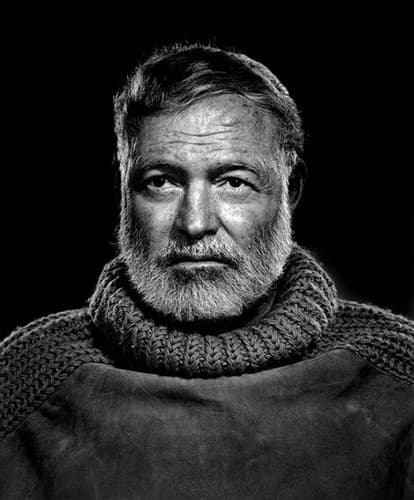
Ernest Miller Hemingway was an American novelist, short-story writer, and journalist. His economical and understated style—which included his iceberg theory—had a strong influence on 20th-century fiction, while his adventurous lifestyle and public image brought him admiration from later generations. Hemingway produced most of his work between the mid-1920s and the mid-1950s, and he was awarded the 1954 Nobel Prize in Literature. He published seven novels, six short-story collections, and two nonfiction works. Three of his novels, four short-story collections, and three nonfiction works were published posthumously. Many of his works are considered classics of American literature.
Similar books
- The Old Man and the Sea
Ernest Hemingway
3.8 (831k) average on GoodreadsLiterary FictionFeatures a solitary protagonist facing a profound challenge, with themes of resilience and man's struggle against nature, told in Hemingway's characteristic minimalist style.
- A Farewell to Arms
Ernest Hemingway
3.8 (263k) average on GoodreadsHistorical FictionExplores love amidst the backdrop of war and loss, with a similar focus on the emotional toll of conflict and a doomed romance.
- All Quiet on the Western Front
Erich Maria Remarque
4.0 (355k) average on GoodreadsHistorical FictionOffers a powerful and somber reflection on the dehumanizing aspects of war and its lasting psychological impact on soldiers.
- Tender is the Night
F. Scott Fitzgerald
3.8 (114k) average on GoodreadsLiterary FictionFitzgerald's novel explores disillusionment and decay among the American expatriate elite in Europe through a lens of social critique, dissecting the destructive nature of wealth and personal failings within a specific social milieu. Hemingway's work, while also set in Europe, offers a more internal and intimate, almost solipsistic journey into one man's final reckoning with his life and impending death, using the setting for personal reflection rather than broader societal commentary.
- One Hundred Years of Solitude
Gabriel García Márquez
4.1 (753k) average on GoodreadsLiterary FictionThrough the multi-generational story of the Buendía family, a mythical town deals with the repeating patterns of time, love, and solitude, as the extraordinary mixes with the ordinary.
- The Goldfinch
Donna Tartt
3.9 (720k) average on GoodreadsLiterary FictionHaunted by a tragic explosion and clutching a stolen Dutch masterpiece, a young orphan navigates the opulent drawing rooms of New York and the gritty underbelly of the art world, desperately seeking connection and redemption amidst a life spiraling into crime and obsession.






Enjoyed the summary?
A summary gives you the shape of the book. The book itself has the detail, the examples and the voice.
Find Across the River and into the Trees on AmazonAs an Amazon Associate, BookBrief earns from qualifying purchases. How we're funded