

Synopsis
Covers the whole plot, including the ending.
- Difficulty
- Medium
- Pacing
- Slow
- Mood
- Atmospheric, Suspenseful, Melancholy, Dark, Intimate
- Read it if
- You enjoy atmospheric Victorian settings, psychological depth, slow-burn mystery, and intense, complex female relationships with a dark twist.
- Skip it if
- You prefer fast-paced thrillers or stories with clear-cut heroes and villains, or if you dislike ambiguous endings and themes of manipulation and confinement.
Affinity Plot Summary
Covers the whole plot, including the ending.
A New Beginning at Millbank
Margaret Prior, an unmarried woman from a respectable upper-class family, is recovering from a suicide attempt. This was brought on by her father's death and a restrictive home life. As a form of therapy and charity, she starts visiting the female inmates of Millbank Prison, a harsh penitentiary in Victorian London. Her first visits are uncomfortable, and she feels distant from the prisoners. However, she is determined to continue, hoping this new purpose will help her escape the sadness that has consumed her. Margaret observes the various inmates, many of whom are rough and quiet, and struggles to find any real connection or usefulness in her new role.
Encountering Selina Dawes
During one visit, Margaret meets Selina Dawes, a young, striking woman imprisoned for fraud and manslaughter after a séance led to a death. Unlike the other inmates, Selina has a quiet intensity and a mysterious air that immediately captivates Margaret. Selina is known throughout the prison for her supposed spiritualist abilities, a reputation that both interests and disturbs Margaret, who is naturally rational. Their first conversations are careful, with Margaret asking Selina about her crime and her 'gift,' while Selina remains guarded, speaking in riddles that only deepen Margaret's interest. Margaret feels an unusual pull toward Selina, a feeling she struggles to understand.
The Developing Connection
As Margaret continues her visits, a unique and intense bond forms between her and Selina. They begin exchanging secret letters, smuggled out by a sympathetic wardress, Mrs. Billis. In these letters, Selina shares details of her life before prison, her spiritualist experiences, and her feelings of injustice. Margaret confides her own loneliness, past struggles, and growing emotional attachment to Selina. The letters become a lifeline for both women, a private world where they can express themselves freely. Margaret finds herself increasingly obsessed with Selina, her thoughts consumed by the young spiritualist, blurring the lines between charitable duty and personal desire. Selina's letters often contain cryptic messages and hints of supernatural occurrences, drawing Margaret deeper into her world.
Selina's Story Unfolds
Through Selina's letters and their talks, Margaret learns about Selina's past. Selina describes her poor childhood, her discovery of her spiritual 'gifts,' and her rise as a medium in London's spiritualist circles. She details the séance at Miss Guppy's home, where a spirit manifestation went wrong, causing Miss Guppy's death and severely disturbing another young woman, Helen Barbour. Selina says she is innocent, claiming she was a vessel for forces beyond her control and that the events were a tragic accident, not deliberate fraud. Margaret, despite her initial doubts, finds herself increasingly believing Selina's story, swayed by Selina's conviction and her own growing affection.
Escalating Feelings and Doubt
Margaret's emotional attachment to Selina grows, becoming a deep and unspoken love. She feels jealous when Selina mentions other inmates or her past life. However, small inconsistencies in Selina's stories and her occasional evasiveness start to create doubts in Margaret's mind. Selina's predictions and 'messages' from spirits often seem to match information Margaret has unknowingly revealed. Despite these brief suspicions, Margaret pushes them aside; her desire to believe in Selina and her love for her outweigh her rational judgment. She finds herself increasingly isolated from her family and social circle, who see her prison work as an odd hobby.
A Plan for Freedom
Driven by her love and belief in Selina's innocence, Margaret decides to secure Selina's freedom. She begins researching legal options and considering increasingly risky plans. Her plan focuses on a staged escape, involving the help of Mrs. Billis. Margaret carefully plans the details, including finding a safe house and money for Selina's disappearance. She is willing to risk her reputation, social standing, and even her freedom for Selina, convinced that their future together is worth any sacrifice. The scale of her undertaking excites and scares her, but her resolve remains firm, fueled by the hope of a shared life with Selina.
The Escape Attempt
The day of the planned escape arrives. Margaret, disguised and nervous, waits at a set location outside Millbank Prison. She has arranged for a carriage and clothes for Selina, who is to be led out of the prison by Mrs. Billis during a shift change. The tension is high as Margaret paces, her heart pounding with fear and excitement. She imagines their life together, free from the constraints of Victorian society and the prison walls. The hours pass slowly, and Margaret's hope battles with growing anxiety as Selina fails to appear at the appointed time. The silence and the passing time become increasingly unsettling.
Betrayal and Revelation
As dawn breaks, Margaret realizes the escape has failed. Returning home in despair, she receives a letter from Mrs. Billis, revealing the truth: Selina never intended to escape with Margaret. Instead, Selina used Margaret's plan and resources to escape with another inmate, a younger woman named Helen Barbour, the same woman traumatized during the séance. This revelation shatters Margaret's view of Selina. She re-reads Selina's letters with new eyes, seeing the subtle manipulations, the calculated deceptions, and the cold opportunism she had been too lovestruck to notice before. The spiritualist's 'gifts' were nothing more than a facade for her own selfish goals.
The Aftermath and Disgrace
The failed escape and Selina's betrayal leave Margaret devastated and publicly shamed. Her family keeps the scandal quiet to protect their reputation, but Margaret's social standing is ruined. She withdraws further into herself, dealing with the deep sense of foolishness and heartbreak. The world she had built around her love for Selina crumbles, leaving her with only the bitter truth of her manipulation. Her charity work stops, and she becomes a recluse, haunted by the memory of Selina and the depth of her own delusion. The experience leaves a lasting mark, stripping her of her innocence and forcing her to confront the harsh realities of human nature and her own vulnerability.
A Lingering 'Affinity'
Afterward, Margaret is left to rebuild her life. While the betrayal is crushing, a part of her still recognizes Selina's lasting impact. Selina, despite her deceit, opened Margaret's eyes to a world beyond her sheltered existence, showing her passion, risk, and a deeper understanding of human desire, both good and bad. Margaret's bond with Selina, though born of manipulation, changed her forever. She is no longer the naive, sad woman who first entered Millbank. Though scarred, she has gained a painful but important insight into herself and the complexities of human connection, however deceptive. The memory of Selina, a mix of love and bitter betrayal, will always stay with her, a haunting reminder of her emotional awakening.
Principal Figures
Margaret Prior
Protagonist
A melancholic, upper-class woman seeking purpose and connection.
Margaret Prior is a thirty-year-old unmarried woman from a respectable, if somewhat stifling, Victorian family. She is intelligent, sensitive, and introspective, but prone to melancholy and a sense of purposelessness, exacerbated by her father's death and a recent suicide attempt. She seeks solace and meaning in charity work at Millbank Prison. Initially reserved and somewhat naive, she yearns for deeper emotional and intellectual stimulation than her social sphere offers. Her rational mind is slowly overwhelmed by her passionate feelings for Selina, leading her to make increasingly reckless decisions.
Relationships: Selina Dawes (Intense, romantic, and ultimately manipulative relationship.); Mrs. Prior (Her mother, with whom she has a distant and formal relationship.); Helen Prior (Her sister, with whom she has a strained and competitive relationship.); Mrs. Billis (A wardress who becomes an unwitting accomplice and messenger.)
Selina Dawes
Antagonist/Love Interest
An enigmatic and manipulative spiritualist inmate.
Selina Dawes is a young, striking woman imprisoned in Millbank for fraud and manslaughter related to a spiritualist séance. She possesses an alluring blend of vulnerability, charisma, and mystery, which she uses to great effect. Selina presents herself as a genuine medium, a victim of circumstance, and a figure of profound spiritual sensitivity. However, beneath this facade lies a cunning, opportunistic, and deeply manipulative individual. Her 'gifts' are carefully constructed deceptions, and her emotional appeal is a tool to achieve her own freedom and desires. She is intelligent and resourceful, able to exploit the desires and weaknesses of others.
Relationships: Margaret Prior (Object of manipulation and romantic interest for Selina's gain.); Helen Barbour (Her true love interest and accomplice in the final escape.); Mrs. Billis (A wardress she manipulates to aid her schemes.)
Mrs. Billis
Supporting
A sympathetic but ultimately complicit wardress at Millbank.
Mrs. Billis is a wardress at Millbank Prison. She is portrayed as kind-hearted and sympathetic, a contrast to some of the harsher staff. She is initially drawn to Selina's apparent vulnerability and Margaret's earnestness. Margaret appeals to Mrs. Billis's sense of compassion, convincing her to act as a go-between for the secret letters between her and Selina. Mrs. Billis is not malicious but rather easily swayed by emotional appeals and perhaps a desire to alleviate some of the prison's harshness. She becomes an unwitting pawn in Selina's larger scheme, her loyalty misplaced and ultimately exploited.
Relationships: Margaret Prior (Her charitable work and earnestness gain Mrs. Billis's sympathy.); Selina Dawes (Manipulated by Selina's perceived vulnerability and charm.)
Helen Barbour
Supporting
The young woman traumatized by Selina's séance, later revealed as her lover.
Helen Barbour is the young woman who was deeply disturbed and institutionalized after the fateful séance conducted by Selina Dawes. She is initially presented as a victim of Selina's supposed spiritual powers, driven to madness by the events. Her condition serves as part of the evidence against Selina. However, it is later revealed that Helen is not only sane but also Selina's secret lover and accomplice. Her 'madness' was a carefully constructed act to avoid suspicion and facilitate their eventual escape together. She represents the hidden depths of deception and Selina's true affections.
Relationships: Selina Dawes (Her secret lover and accomplice, for whom Selina truly cares.); Margaret Prior (Unwittingly benefits from Margaret's plan designed for Selina.)
Miss Guppy
Mentioned
The elderly matron who died during Selina's séance.
Miss Guppy is an elderly, wealthy woman who died during the séance conducted by Selina Dawes. Her death is the primary charge against Selina, leading to her imprisonment. She is a figure of tragedy and the catalyst for the legal proceedings against Selina. Her demise is used by Selina to frame her story of spiritual events gone wrong, and by the prosecution as proof of Selina's fraudulent and dangerous practices.
Relationships: Selina Dawes (Her death is attributed to Selina's séance.)
Mrs. Prior
Supporting
Margaret's conventional and emotionally distant mother.
Mrs. Prior is Margaret's mother, a woman of conventional Victorian sensibilities. She is concerned with social propriety and appearances, often expressing disapproval or mild exasperation at Margaret's melancholic disposition and her 'unsuitable' interests, such as visiting the prison. She represents the restrictive societal expectations that Margaret struggles against. Her relationship with Margaret is formal and lacks deep emotional connection, contributing to Margaret's feelings of isolation.
Relationships: Margaret Prior (Her daughter, with whom she has a formal and somewhat critical relationship.)
Helen Prior
Supporting
Margaret's more conventional and socially adept sister.
Helen Prior is Margaret's younger sister, who is more conventionally attractive and socially successful, having found a suitable husband. She often serves as a foil to Margaret, highlighting Margaret's perceived eccentricities and lack of conventional marital prospects. Her relationship with Margaret is marked by a subtle competitiveness and a lack of profound understanding. She embodies the expected path for a Victorian woman, further emphasizing Margaret's deviation from it.
Relationships: Margaret Prior (Her sister, with whom she has a somewhat strained and distant relationship.)
Themes & Insights
Love, Obsession, and Manipulation
The novel explores the destructive power of unrequited love and manipulation. Margaret's initial interest in Selina quickly becomes an intense obsession, blinding her to Selina's true nature. Selina uses Margaret's loneliness, romantic longing, and desire for purpose, creating a story of innocence and spiritual connection that feeds Margaret's fantasy. The letters, meant for genuine affection, become tools of manipulation for Selina, showing how easily emotional vulnerability can be exploited. This theme ends with Margaret's deep heartbreak and the realization that her affection was built on deceit, highlighting the thin line between real connection and calculated exploitation.
“What a fool I had been! My affinity, my bond, my love – it had all been a trick, a clever, cruel game.”
Victorian Repression and Female Desire
The novel shows the restrictive social rules for women in Victorian society, especially unmarried, upper-class women like Margaret. Her sadness and suicide attempt come from a lack of agency, purpose, and emotional outlet. Millbank Prison, ironically, offers a kind of freedom from these societal expectations, allowing Margaret to explore forbidden emotions and desires. Her attraction to Selina is a rebellion against the passionless existence dictated by her class. The novel suggests that the extreme repression of female sexuality and autonomy can lead to desperate actions, both in seeking forbidden love and in resorting to manipulation to escape constraints.
“I felt a peculiar lightness, as if a great weight had been lifted, though I knew the chains were still there, invisible, binding me to my life.”
Truth vs. Deception / Reality vs. Illusion
A central theme is the constant blurring of lines between what is real and what is perceived, especially in spiritualism and personal relationships. Selina Dawes, as a spiritualist, embodies this ambiguity; her 'gifts' are a carefully built illusion. Margaret, initially skeptical, slowly believes Selina's stories and the 'supernatural' elements, desperate to believe in something extraordinary. The narrative constantly challenges the reader to question Selina's truthfulness, mirroring Margaret's own internal struggle. The final revelation exposes the stark reality of Selina's calculated deception, shattering Margaret's illusions and forcing her to confront the painful truth that her deepest emotional connection was based on a lie.
“But a spirit is a tricky thing. It will show you what you wish to see, and hide what you fear to know.”
Imprisonment and Freedom
The theme of imprisonment goes beyond the literal walls of Millbank Prison. Margaret, though physically free, is emotionally imprisoned by her social class, her family's expectations, and her own sadness. Selina, though incarcerated, at first seems to have a spiritual freedom and agency that Margaret lacks. The desire for freedom drives much of the plot: Margaret seeks emotional liberation through her connection with Selina, and Selina desires literal freedom from prison. The tragic irony is that Margaret's attempt to free Selina leads to her own emotional and social imprisonment, while Selina achieves physical freedom through deceit. This highlights the complex and often contradictory nature of true liberty.
“The prison, for all its grimness, held a strange allure for me. It was a place where passions were raw, where lives were stripped bare, and where I, too, felt a kind of dangerous freedom.”
Plot Devices & Literary Techniques
Epistolary Format (Letters)
The exchange of letters between Margaret and Selina drives the emotional plot.
The secret letters exchanged between Margaret and Selina serve as a crucial plot device. They allow for the intimate development of their relationship, bypassing the constraints of prison visits and Margaret's own inhibitions. The letters provide a direct window into each woman's thoughts and feelings, building suspense and emotional intensity. For Margaret, they are a lifeline, a place to confess her growing passion. For Selina, they are a primary tool of manipulation, allowing her to craft a compelling, sympathetic narrative and subtly extract information from Margaret. The re-reading of these letters after the betrayal underscores their deceptive nature, revealing hidden layers of meaning and manipulation.
Spiritualism and the Supernatural
The presence of spiritualist beliefs creates ambiguity and a sense of the uncanny.
Spiritualism, and the question of genuine supernatural phenomena versus elaborate fraud, is a pervasive plot device. Selina's reputation as a medium and the details of the 'fateful séance' introduce an element of the unknown and the uncanny. This ambiguity serves to blur the lines between truth and deception, making it easier for Selina to manipulate Margaret, who, despite her rationalism, is drawn to the mysterious. The hints of the supernatural keep the reader (and Margaret) on edge, wondering if Selina truly possesses powers or if it is all an elaborate performance, thus heightening the suspense and the eventual impact of the betrayal.
First-Person Narrative (Margaret's Perspective)
The story is told entirely from Margaret's limited and subjective viewpoint.
The entire novel is told through Margaret Prior's first-person perspective, primarily through her internal monologues, diary entries, and recollections. This device is crucial for creating suspense and highlighting the theme of deception. The reader experiences Selina and the events of the prison solely through Margaret's eyes, sharing her growing infatuation and her gradual descent into delusion. This limited perspective makes Selina's eventual betrayal all the more shocking, as the reader has been privy only to Margaret's interpretation of events, making the discovery of Selina's true nature a shared moment of profound disillusionment.
Foreshadowing and Subtle Clues
Hints of Selina's true nature are subtly woven throughout the narrative.
The novel employs subtle foreshadowing and clues that, upon re-reading, reveal Selina's manipulative intentions. These include minor inconsistencies in Selina's stories, her evasiveness on certain details, and the way her 'spiritual messages' often align conveniently with information Margaret has already provided. These details are designed to be overlooked or dismissed by Margaret (and the reader) due to the overwhelming emotional narrative. This device enhances the impact of the final revelation, demonstrating that the signs were always there, but obscured by love and desire, making the betrayal feel both shocking and inevitable.
Affinity Quotes
“I had left the door ajar, and now I saw why. There was a woman standing just outside it, in the gloom of the passage. She was wearing a simple, dark dress, and a shawl over her head.”
“It was as if I had been holding my breath for months, and now, at last, I could exhale.”
“The air in the room seemed to shimmer with her presence. I felt a strange mixture of dread and longing.”
“Do you believe in spirits, Miss Prior? Do you believe that the dead can speak to us?”
“I was like a moth to a flame, drawn inexorably to the heat of her gaze.”
“There are some things, Miss Prior, that cannot be explained by science or reason.”
“I had always thought myself a rational woman, but now I felt my reason slipping away, like sand through my fingers.”
“Love, she whispered, is a kind of haunting.”
“The asylum was a place of shadows, both literal and metaphorical.”
“It was not a kiss of passion, but of desperation. A silent plea, a desperate promise.”
“I had come to believe that happiness was a fragile thing, easily shattered.”
“Perhaps we are all prisoners, in one way or another.”
“The world, I was discovering, was a far stranger and more treacherous place than I had ever imagined.”
“She was an enigma, a puzzle I was desperate to solve, even if it meant my own undoing.”
“I felt a terrible, thrilling sense of being utterly lost, and yet, at the same time, utterly found.”
Quiz
10 questions on the plot and the characters. Each answer comes with a short explanation.
Question 1
What is the primary reason Margaret Prior begins visiting Millbank Prison?
- To investigate a specific crime committed by an inmate.
- As part of her rehabilitative charity work after a suicide attempt.
- To research a book she is writing about Victorian prison life.
- To visit a family member who has been incarcerated.
Show answer
B. As part of her rehabilitative charity work after a suicide attempt. Margaret Prior's visits to Millbank Prison are a form of rehabilitative charity work, encouraged after her own suicide attempt.
Question 2
What is Selina Dawes's supposed profession before her imprisonment?
- A dressmaker
- A governess
- A spiritualist
- A domestic servant
Show answer
C. A spiritualist Selina Dawes is an enigmatic spiritualist who was imprisoned after a séance went wrong.
Question 3
What is the specific incident that leads to Selina Dawes's imprisonment?
- She was caught shoplifting from a department store.
- A séance she conducted resulted in an elderly matron's death and a young woman's distress.
- She committed a violent assault during a public disturbance.
- She was accused of blackmailing a prominent London family.
Show answer
B. A séance she conducted resulted in an elderly matron's death and a young woman's distress. Selina was imprisoned after a séance she was conducting went horribly awry, leaving an elderly matron dead and a young woman deeply disturbed.
Question 4
What is the name of Margaret Prior's former governess and current confidante?
- Mrs. Bannerman
- Helen Astley
- Agnes Prior
- Mrs. Brink
Show answer
D. Mrs. Brink Mrs. Brink is Margaret's former governess and a significant figure in her life, often providing a moral compass or a counterpoint to Margaret's developing fascinations.
Question 5
Initially, what is Margaret's attitude towards Selina's claims of spiritualist abilities?
- She is immediately convinced and believes every word.
- She is openly dismissive and mocks Selina.
- She is initially skeptical but gradually becomes drawn in.
- She tries to expose Selina as a fraud from the start.
Show answer
C. She is initially skeptical but gradually becomes drawn in. Margaret is initially skeptical of Selina’s gifts, but is soon drawn into a twilight world of ghosts and shadows.
Question 6
What is the primary theme explored through Margaret's growing fascination with Selina and the spiritualist world?
- The importance of social class distinctions in Victorian society.
- The conflict between scientific rationalism and religious faith.
- The allure of the forbidden, the supernatural, and hidden passions.
- The corruption inherent in the Victorian penal system.
Show answer
C. The allure of the forbidden, the supernatural, and hidden passions. The narrative draws Margaret into 'a twilight world of ghosts and shadows, unruly spirits and unseemly passions,' highlighting themes of the forbidden and hidden desires.
Question 7
What is the name of Selina Dawes's alleged spirit guide, often mentioned during her séances?
- Little Alice
- Peter Quick
- Old Man Hemlock
- Lady Beatrice
Show answer
B. Peter Quick Peter Quick is Selina's primary spirit guide, whose voice and presence are central to her spiritualist performances.
Question 8
What is the ultimate outcome of Margaret's desperate plot to secure Selina's freedom?
- Margaret successfully frees Selina, and they live happily ever after.
- Selina betrays Margaret, leaving her imprisoned and disgraced.
- The plot is discovered, but Margaret is pardoned due to her family's influence.
- Selina refuses to leave prison, having found peace within its walls.
Show answer
B. Selina betrays Margaret, leaving her imprisoned and disgraced. In a cruel twist, Selina engineers Margaret's own imprisonment, betraying her trust and leaving her to face the consequences.
Question 9
What symbolic object does Selina give to Margaret, which later becomes a crucial piece of evidence?
- A lock of her hair
- A silver locket
- A small, carved wooden bird
- A piece of paper with a coded message
Show answer
D. A piece of paper with a coded message Selina passes Margaret a piece of paper, which Margaret later believes contains a coded message for their escape, but it is ultimately used against her.
Question 10
How does the novel portray the concept of 'affinity' in the relationship between Margaret and Selina?
- As a purely platonic intellectual connection based on shared interests.
- As a powerful, all-consuming emotional and romantic bond, despite its deceptive nature.
- As a familial resemblance, suggesting they might be long-lost relatives.
- As a professional partnership, where they both benefit from their interactions.
Show answer
B. As a powerful, all-consuming emotional and romantic bond, despite its deceptive nature. The 'affinity' between Margaret and Selina is depicted as a profound and passionate emotional connection, albeit one manipulated by Selina, that drives much of Margaret's actions and ultimately leads to her downfall.
Affinity FAQ
What is the central premise of 'Affinity'?
The novel centers on Margaret Prior, a melancholic upper-class woman recovering from a suicide attempt, who begins visiting female inmates at Millbank Prison as part of her charity work. She becomes captivated by Selina Dawes, a young spiritualist imprisoned for an alleged fraudulent séance that resulted in a death, leading to a complex and dangerous relationship between them.
Who is Margaret Prior and what is her background?
Margaret Prior is a Victorian gentlewoman from a respectable but somewhat stifling family, still reeling from the death of her father and her own failed engagement. Her recent suicide attempt has left her feeling adrift and isolated, making her vulnerable to new experiences and connections, particularly with someone as unconventional as Selina.
What crime is Selina Dawes accused of, and what are the circumstances?
Selina Dawes is imprisoned for the death of Mrs. Jelf, an elderly woman who died during one of Selina's séances, and for allegedly causing mental distress to Mrs. Jelf's companion, Miss Veal. The circumstances are ambiguous, with Selina maintaining her innocence regarding any malicious intent, suggesting genuine spiritual phenomena were at play.
How does Margaret's initial skepticism about spiritualism evolve throughout the novel?
Margaret initially approaches Selina with a degree of intellectual curiosity and skepticism, viewing spiritualism as a quaint, perhaps deluded, practice. However, as Selina shares more details of her 'gifts' and experiences, and as Margaret becomes more emotionally invested, her skepticism erodes, replaced by a growing belief and a desire to understand Selina's world.
What is the significance of Millbank Prison as a setting?
Millbank Prison, with its panopticon design and oppressive atmosphere, serves as a stark metaphor for the societal constraints and psychological prisons Margaret and Selina inhabit. It highlights the harsh realities of Victorian justice and the confined lives of women, particularly those outside societal norms, while also providing a claustrophobic backdrop for their intense bond.
Are Selina's spiritualist abilities ever definitively proven or disproven?
The novel deliberately maintains ambiguity regarding the authenticity of Selina's spiritualist abilities. While Selina provides convincing details and Margaret experiences uncanny occurrences, the narrative never offers a definitive supernatural explanation, leaving readers to interpret whether Selina is a genuine medium, a skilled manipulator, or perhaps a blend of both.
What is the true nature of Selina's relationship with Miss Veal?
The true nature of Selina's relationship with Miss Veal is a significant hidden detail, revealed to be a passionate and illicit romantic affair, rather than merely a medium-sitter dynamic. This secret provides a crucial motive for their elaborate escape plan and underscores the desperate lengths to which women in Victorian society might go to preserve forbidden love.
How do the 'ghosts' and spiritual phenomena in the book function beyond literal interpretations?
The 'ghosts' and spiritual phenomena in the book often function as manifestations of repressed desires, societal anxieties, and the psychological states of the characters. They symbolize the unseen forces at play in Victorian society, the longing for connection, and the breaking of conventional boundaries, rather than simply being literal spectral presences.
What clues are given throughout the narrative that hint at Selina's deception?
Subtle clues include Selina's repeated, almost too perfect, expressions of innocence and victimhood, her careful manipulation of Margaret's sympathies, and the detailed, almost theatrical, nature of her spiritualist stories. The inconsistencies in Miss Veal's testimony, if scrutinized, also hint at a coordinated effort rather than genuine bewilderment.
How does Margaret's personal history of depression and loneliness make her susceptible to Selina?
Margaret's history of depression, her recent suicide attempt, and her profound loneliness make her highly susceptible to Selina's charm and apparent understanding. Selina offers Margaret an escape from her stifling life and a sense of purpose and connection she desperately craves, filling an emotional void that makes Margaret overlook warning signs.
Analyze the power dynamics between Margaret and Selina.
Initially, Margaret holds a degree of power as the visitor and benefactor, but this quickly shifts. Selina, despite being imprisoned, expertly manipulates Margaret's emotions and desires, gaining psychological control. Margaret's emotional vulnerability grants Selina immense power, allowing her to orchestrate the escape plot and ultimately leave Margaret devastated.
What psychological needs does Margaret seek to fulfill through her relationship with Selina?
Margaret seeks validation, intellectual stimulation, and a passionate connection to escape her emotionally barren existence. She yearns for someone to understand her inner turmoil and to provide a sense of meaning, finding in Selina an exciting, dangerous, and seemingly profound individual who offers an escape from her mundane reality.
How does the novel explore themes of confinement and freedom, both literal and metaphorical?
The novel explores literal confinement through Millbank Prison, contrasting it with Margaret's metaphorical confinement within Victorian societal expectations and her own psychological state. Freedom is sought through escape from the prison, but also through embracing forbidden desires and challenging social norms, ultimately showing that true freedom can be elusive and costly.
Is Selina Dawes a villain, a victim, or a complex survivor?
Selina Dawes is best interpreted as a complex survivor. While her actions involve manipulation and deception, leading to Margaret's heartbreak, she is also a woman living under oppressive Victorian constraints, fighting for her freedom and forbidden love. Her 'villainy' can be seen as a desperate means of survival in a society that offers her few other options.
What is the ultimate irony of Margaret's attempt to free Selina?
The ultimate irony is that in her desperate attempt to free Selina, Margaret inadvertently frees herself from her own emotional and societal constraints, but into a state of profound betrayal and further isolation. She sacrifices her reputation and future for Selina, only to find herself utterly abandoned, trading one form of confinement for another kind of devastating solitude.
How does the ending challenge Victorian notions of femininity and morality?
The ending dramatically challenges Victorian notions of femininity and morality by revealing that the 'innocent' spiritualist and her 'disturbed' companion were engaged in a forbidden lesbian affair, and that their elaborate escape was a calculated act of self-preservation. It exposes the hypocrisy of societal judgments and the desperate measures women might take to defy conventional expectations of purity and domesticity.
To what extent is Margaret responsible for her own predicament at the end of the novel?
While Selina's deception is undeniable, Margaret bears significant responsibility for her predicament. Her deep-seated loneliness, emotional vulnerability, and romantic idealization of Selina blinded her to warning signs and led her to make increasingly reckless decisions. Her own desire for escape and connection made her an eager participant in Selina's scheme.
What is the significance of the novel's title, 'Affinity'?
The title 'Affinity' refers to the powerful, almost magnetic, attraction and kinship Margaret feels for Selina, a connection that transcends social barriers and rational thought. It highlights the deep emotional and intellectual bond that forms between them, even as it ultimately proves to be a dangerous and one-sided 'affinity' driven by manipulation.
About the author

Sarah Ann Waters is a Welsh novelist. She is best known for her novels set in Victorian society and featuring lesbian protagonists, such as Tipping the Velvet and Fingersmith.
Similar books
- The Little Stranger
Sarah Waters
3.5 (44k) average on GoodreadsHistorical FictionShares a similar gothic atmosphere, psychological tension, and ambiguous supernatural elements.
- Fingersmith
Sarah Waters
4.0 (81k) average on GoodreadsHistorical FictionFeatures intricate plots, Victorian settings, and intense, manipulative female relationships.
- Alias Grace
Margaret Atwood
4.0 (111k) average on GoodreadsLiterary FictionExplores themes of female prisoners, psychological manipulation, and unreliable narratives in a historical setting.
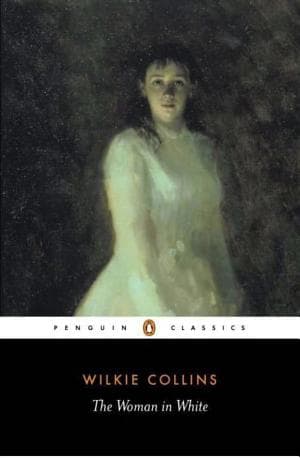
- The Woman in White
Wilkie Collins
4.0 (132k) average on GoodreadsHistorical FictionWilkie Collins' The Woman in White is a classic Victorian sensation novel that Affinity both references and subverts. Both feature elements of mystery, confined women, and psychological manipulation, with secrets unraveling through letters and personal accounts. However, Collins' novel is more overtly concerned with legal and social injustices, featuring a more traditional hero figure (Walter Hartright) attempting to right wrongs. Affinity, by contrast, offers no such external savior; its protagonist is entangled in her own desires and deceptions, resulting in a far more ambiguous and tragic conclusion regarding female agency and freedom. Waters updates the genre by centering queer desire and offering a bleaker outlook on Victorian possibilities for women.
- To Kill a Mockingbird
Harper Lee
4.3 (4.5M) average on GoodreadsHistorical FictionIn the 1930s Jim Crow South, Harper Lee writes about racial injustice, moral growth, and the quiet courage of a lawyer father, Atticus Finch, as seen through his young daughter's eyes.
- The Great Gatsby
F. Scott Fitzgerald
3.9 (3.8M) average on GoodreadsHistorical FictionIn the opulent Roaring Twenties, a mysterious millionaire's lavish parties hide his desperate, tragic pursuit of a lost love, exposing the emptiness within the American Dream.





Enjoyed the summary?
A summary gives you the shape of the book. The book itself has the detail, the examples and the voice.
Find Affinity on AmazonAs an Amazon Associate, BookBrief earns from qualifying purchases. How we're funded