

Synopsis
Covers the whole plot, including the ending.
- Difficulty
- Medium
- Pacing
- Moderate
- Mood
- Mythic, Tragic, Poignant, Philosophical, Dark
- Read it if
- You enjoy epic, tragic love stories with a strong mythological undercurrent and a deep dive into the human spirit.
- Skip it if
- You prefer lighthearted stories or are not comfortable with narratives that explore profound suffering and injustice.
An Orchestra of Minorities Plot Summary
Covers the whole plot, including the ending.
A Life-Altering Encounter on the Bridge
Chinonso, a young poultry farmer from Umuahia, Abia State, Nigeria, is on his way to sell chickens at the market when he sees a distressed woman, Ndali, on a bridge, seemingly about to commit suicide. Driven by empathy and a desire to avert tragedy, Chinonso impulsively throws two of his prized chickens from the bridge into the river below. This shocking act distracts Ndali, pulling her back from the brink. Intrigued and moved by his unconventional intervention, Ndali talks to Chinonso. This initial, dramatic meeting starts an immediate connection between them, laying the foundation for a deep and unexpected romance that will change both their lives.
The Blossoming of an Unlikely Romance
Following their first meeting, Chinonso and Ndali spend more time together, and their bond quickly becomes a passionate love affair. Ndali, an educated and sophisticated woman from a prominent, wealthy family in Umuahia, is drawn to Chinonso's genuine nature, kindness, and unpretentious spirit, despite his humble background as a poultry farmer. Chinonso, in turn, is captivated by Ndali's beauty, intelligence, and grace. Their love grows rapidly, going beyond the societal expectations that typically dictate relationships in their community. They dream of a future together, unaware of the obstacles that will soon arise due to their different social standings.
Family Objections and the Quest for Social Equality
As Chinonso and Ndali's relationship becomes serious, Ndali introduces Chinonso to her family. Her parents, particularly her father, Chief Okoro, strongly oppose the match. They see Chinonso as an unsuitable partner for their daughter due to his lack of education, humble profession, and lower social status. They believe he cannot provide the life and prestige they desire for Ndali. Heartbroken but determined to prove his worth and overcome these class barriers, Chinonso decides to pursue higher education abroad. He believes that getting a university degree will elevate his social standing and make him acceptable to Ndali's family, thus securing their future together.
The Cypriot Deception
To pay for his studies in Cyprus, Chinonso sells almost all his possessions, including his poultry farm, which is his entire livelihood and inheritance. He entrusts his life savings to a seemingly helpful young Nigerian man, whom he meets through an acquaintance, who promises to arrange his admission, visa, and accommodation at a university in Northern Cyprus. Full of hope and determination, Chinonso travels to Cyprus. However, upon his arrival, he discovers that he has been swindled. The university admission is fake, the accommodation non-existent, and his money has been stolen. He is left stranded, penniless, and alone in a foreign land, his dreams shattered.
Despair and Desperation in a Foreign Land
Stranded in Cyprus with no money, no place to stay, and no way to return home, Chinonso quickly struggles for survival. He is forced to live on the streets, begging for food and shelter. The harsh realities of his situation erode his spirit and hope. He meets other Nigerian immigrants who are also struggling, some involved in petty crimes to survive. Out of necessity, and with his options dwindling, Chinonso reluctantly gets involved in illegal activities, including drug dealing, just to earn enough to eat and find a temporary roof over his head. His once-innocent nature is slowly corrupted by the brutal environment.
Imprisonment and the Loss of Hope
Chinonso's involvement in the Cypriot underworld eventually leads to his arrest. He is caught by the police during a drug bust and, despite his initial reluctance and inexperience in the illicit trade, he is convicted and sentenced to a lengthy prison term. Life in a foreign prison is brutal and dehumanizing. Stripped of his freedom and any remaining dignity, Chinonso's spirit is crushed. The news of his imprisonment eventually reaches Ndali in Nigeria, shattering her hopes and confirming her family's worst fears about him. The distance and his circumstances make communication almost impossible, further isolating him from the world he once knew and the woman he loves.
The Chi's Lament and Intervention
Throughout Chinonso's ordeal, his personal chi, or guardian spirit, narrates his story, providing a unique cosmic perspective on his suffering. The chi, bound to Chinonso, laments the injustices and misfortunes befalling its human counterpart. It details Chinonso's thoughts, emotions, and the external forces that shape his fate, often reflecting on destiny and free will. The chi frequently tries to intervene, offering guidance or subtle nudges, but is largely powerless against the predetermined path and the choices Chinonso makes under duress. The chi's voice adds a layer of ancient Igbo cosmology, emphasizing the spiritual dimensions of Chinonso's earthly trials.
Return to a Changed Home
After serving his full prison sentence, a physically and emotionally scarred Chinonso is finally released and deported back to Nigeria. The years of hardship, the betrayal, and the brutal reality of prison life have transformed him into a hardened, cynical individual. He is no longer the innocent, optimistic poultry farmer who left years ago. His appearance is gaunt, his eyes hollow, and his spirit deeply wounded. Upon his return to Umuahia, he finds that everything has changed. His family is older, his friends have moved on, and the community he once knew has shifted. He feels like a stranger in his own home, struggling to reintegrate.
The Revelation of Ndali's Fate
Upon his return, Chinonso desperately seeks out Ndali, only to discover that she has married another man—a wealthy and educated suitor approved by her family. This devastating news crushes any lingering hope he had for their reunion. Furthermore, he begins to uncover the truth behind his disastrous journey to Cyprus. He learns that Ndali's family, particularly her father, played a more direct role in orchestrating his downfall, manipulating events to ensure he would be removed from Ndali's life. This revelation fuels a desire for revenge within Chinonso, transforming his grief into a dark resolve to make those who wronged him pay for their actions.
The Path of Vengeance
Driven by heartbreak, anger, and a sense of injustice, Chinonso dedicates himself to exacting revenge on Ndali's family, especially Chief Okoro, whom he holds responsible for his ruined life. He meticulously plans his retribution, no longer caring about the consequences for himself. His once gentle nature is completely overshadowed by a desire for vengeance. He seeks out those who can help him achieve his goal, moving deeper into a world of darkness and moral ambiguity. The chi observes this transformation with sorrow, understanding the tragic path Chinonso is now on, further away from the path it had intended for him.
The Climax of Retribution
Chinonso's planned revenge ends in a dramatic and violent confrontation. He targets Chief Okoro, Ndali's father, holding him accountable for the suffering and injustice he endured. The scene is charged with raw emotion, as years of suppressed anger and pain erupt. The specific details of the confrontation involve Chinonso carrying out a brutal act of retribution, directly impacting Chief Okoro and, by extension, Ndali's family. This act is the tragic end of Chinonso's downward spiral, driven by his belief that he was denied his rightful destiny and the love of his life. The violence leaves a lasting, irreversible mark on all involved.
The Aftermath and the Chi's Reflection
In the aftermath of his vengeful acts, Chinonso faces the full legal and personal consequences. The chi, observing the tragic unfolding of events, reflects deeply on destiny, the influence of human choices, and the limitations of its own power. It questions whether Chinonso's fate was truly predetermined or if his suffering and subsequent actions were a result of a series of unfortunate choices and external manipulations. The chi's narrative provides a philosophical closing, pondering the intricate dance between spiritual guidance and human agency, leaving the reader to contemplate the true meaning of Chinonso's 'orchestra of minorities'—the minor spirits and forces that shaped his tragic life.
An Orchestra of Minorities Characters
Chinonso
Protagonist
A naive poultry farmer whose life is destroyed by love and betrayal.
Chinonso is initially portrayed as a kind-hearted, innocent, and somewhat naive young man, content with his life as a poultry farmer in Umuahia. He possesses a strong moral compass, demonstrated by his impulsive act to save Ndali. He is deeply devoted to Ndali and willing to sacrifice everything for their future. However, his journey abroad and subsequent betrayal, imprisonment, and heartbreak transform him into a hardened, vengeful individual, consumed by bitterness and a desire for retribution. His initial purity is corrupted by a world that seems determined to deny him happiness.
Relationships: Ndali (Deeply in love, fated and tragic romance); Chinonso's Chi (Bound spiritual guide and narrator); Chief Okoro (Ndali's father, antagonist, object of Chinonso's revenge)
Ndali
Love Interest
A sophisticated woman from a wealthy family, caught between love and societal expectations.
Ndali is an educated, beautiful, and graceful woman from a prominent, wealthy family. She is initially drawn to Chinonso's genuine character and unconventional charm, falling deeply in love with him despite their social differences. She is somewhat torn between her love for Chinonso and her loyalty to her family, who disapprove of the match. Her inability to fully defy her family's wishes, coupled with the tragic news of Chinonso's imprisonment, ultimately leads her to marry another man, though her feelings for Chinonso remain complex and unresolved.
Relationships: Chinonso (Deeply in love, fated and tragic romance); Chief Okoro (Father, influential and controlling figure); Ndali's Mother (Mother, also disapproving of Chinonso)
Chinonso's Chi
Narrator/Supporting
Chinonso's personal guardian spirit, observing and lamenting his human's tragic fate.
The chi is Chinonso's spiritual double, bound to him from birth, and serves as the novel's primary narrator. It is an ancient, philosophical entity that observes Chinonso's life with a mix of affection, concern, and a sense of helplessness. The chi embodies the Igbo belief in destiny and the intricate relationship between the human and spiritual worlds. It offers cosmic commentary, lamenting the injustices Chinonso faces and reflecting on the nature of fate, free will, and the 'minorities' – the myriad forces, spirits, and decisions that shape a human life. It is deeply invested in Chinonso's well-being but often powerless to directly alter his path.
Relationships: Chinonso (Bound spiritual counterpart, guardian, and observer)
Chief Okoro
Antagonist/Supporting
Ndali's wealthy and influential father, who actively undermines Chinonso.
Chief Okoro is Ndali's proud, wealthy, and highly influential father. He represents the rigid class structure and societal expectations of Umuahia. He vehemently disapproves of Chinonso as a suitor for his daughter, viewing him as beneath their family's social standing and a threat to their reputation. His desire to maintain his family's prestige leads him to actively interfere in Chinonso's life, orchestrating the deception that sends Chinonso to Cyprus, effectively removing him from Ndali's path. He is a primary catalyst for Chinonso's downfall and the target of his ultimate revenge.
Relationships: Ndali (Daughter, whom he seeks to control for social advancement); Chinonso (Adversary, object of his disdain and manipulation)
Ndali's Mother
Supporting
Ndali's mother, who supports her husband's social aspirations for their daughter.
Ndali's mother is a less dominant but equally influential figure in the family. She shares her husband's concerns about Chinonso's social status and supports his efforts to prevent the marriage. While perhaps not as overtly malicious as Chief Okoro, her complicity and adherence to societal norms contribute to Chinonso's tragic fate. She values reputation and social standing above her daughter's romantic affections, reinforcing the pressures Ndali faces.
Relationships: Ndali (Daughter, whom she wants to see marry well); Chief Okoro (Husband, sharing similar social aspirations)
Udemba
Mentioned/Supporting
Chinonso's friend from Umuahia, who attempts to help him.
Udemba is a friend of Chinonso's from their hometown. He is one of the few people Chinonso trusts and confides in. Udemba tries to offer practical advice and support to Chinonso, particularly regarding the dangers of trusting strangers with his money. His role is relatively minor but serves to highlight Chinonso's isolation and the lack of reliable guidance he receives before his fateful trip to Cyprus. He represents the voice of caution that Chinonso, in his desperation, ultimately ignores.
Relationships: Chinonso (Friend, offering advice and support)
The Nigerian Con Man (name not explicitly given)
Supporting
The individual who swindles Chinonso of his life savings in the Cyprus scam.
This character is a cynical and opportunistic young Nigerian man who preys on the desperation of others seeking opportunities abroad. He meticulously crafts a believable scam, promising Chinonso university admission, visa, and accommodation in Cyprus, only to disappear with all of Chinonso's money. He embodies the betrayal and exploitation that Chinonso experiences, serving as the direct instrument of his financial ruin and subsequent downfall in a foreign land. He represents the widespread issue of '419' scams and human trafficking.
Relationships: Chinonso (Victim of his elaborate scam)
Ndali's Husband (name not explicitly given)
Supporting
The man Ndali marries after Chinonso's imprisonment, approved by her family.
This character is a wealthy and educated man, representing the type of suitor Ndali's family deems appropriate for her. His existence highlights the social pressures Ndali faces and her eventual conformity to her family's wishes. He is not deeply characterized but serves as a symbol of the life Ndali could have had with Chinonso, contrasted with the reality she is forced into. His marriage to Ndali is the final blow to Chinonso's hopes and a significant catalyst for his vengeful turn.
Relationships: Ndali (Husband, chosen by her family)
An Orchestra of Minorities Themes
Destiny vs. Free Will
The novel constantly addresses the interplay between predetermined fate and human agency. Chinonso's chi, as the narrator, frequently ponders whether Chinonso's tragic path was fated from birth or a consequence of his choices and the interventions of others. The chi's attempts to guide Chinonso, often thwarted by his human desires or external forces, highlight this tension. For instance, Chinonso's initial act of saving Ndali feels fated, yet his decision to travel to Cyprus, driven by love, leads to an unforeseen catastrophe, raising questions about whether his 'orchestra of minorities' (the minor spirits and influences) truly determines his life or if he makes his own tragic symphony.
“Every human being has his own orchestra of minorities—the minor gods, minor spirits, minor chi—that play in his life. And they play the music of his destiny.”
Social Class and Inequality
The divide between Chinonso's humble background as a poultry farmer and Ndali's wealthy, educated family forms the central conflict of the narrative. Ndali's family's rejection of Chinonso, based solely on his social status, underscores the influence of class on love, marriage, and opportunity in Nigerian society. Chinonso's desperate attempt to 'elevate' himself through education abroad is a direct response to these societal pressures. His subsequent downfall highlights how deeply entrenched these inequalities are and how they can crush individual aspirations and even lead to malicious intervention, as seen with Chief Okoro's actions.
“They told her that a man of her class does not marry a poultry farmer. That he was a commoner, a nobody.”
Betrayal and Revenge
Betrayal is a recurring element that fuels Chinonso's downward spiral. He is first betrayed by the con man who swindles him in Cyprus, then by the justice system that imprisons him, and ultimately by Ndali's family, who actively orchestrate his removal from her life. This accumulation of betrayals transforms Chinonso from a kind, hopeful man into one consumed by a desire for revenge. His pursuit of retribution, though understandable given his suffering, ultimately leads to further tragedy, demonstrating the destructive cycle that unchecked vengeance can create and how it can corrupt the soul.
“The path of revenge is a dark river, and it drowns not only the one who is pursued but also the one who pursues.”
The Immigrant Experience and Exploitation
Chinonso's journey to Cyprus portrays the perils and exploitation faced by many African immigrants seeking a better life abroad. His hopes are dashed by a scam, leaving him stranded, homeless, and vulnerable in a foreign land. The novel exposes the harsh realities of illegal immigration, the desperation that drives individuals into crime, and the dehumanizing experience of imprisonment in a foreign country. It highlights the vulnerability of those seeking opportunities, often becoming victims of predatory individuals and systemic injustices, thus challenging the romanticized notion of 'greener pastures.'
“He had come to this foreign land, not for crime, but for love, for a future. And now he was a criminal.”
Love and Sacrifice
At its heart, the novel is a tragic love story defined by sacrifice. Chinonso's initial act of throwing his prized chickens off the bridge is a sacrifice to save Ndali. He then sacrifices his entire livelihood and future in Nigeria to pursue an education, believing it will make him worthy of Ndali and her family. Ndali, too, sacrifices her initial desire for Chinonso, ultimately succumbing to family pressure and marrying another. The novel explores the limits of sacrifice, questioning whether love can truly conquer all when faced with overwhelming societal obstacles and the destructive force of external manipulation.
“He had given up everything for her, even his very self. But was it enough?”
Plot Devices & Literary Techniques
The Chi as Narrator
An omniscient, spiritual narrator providing a unique cosmic perspective.
Chinonso's personal chi, or guardian spirit, serves as the novel's first-person narrator. This device allows for an omniscient perspective that transcends human limitations, offering insights into Chinonso's inner thoughts, the motivations of other characters, and the spiritual forces at play. The chi's voice provides philosophical commentary on destiny, free will, and the human condition, grounding the contemporary story in ancient Igbo cosmology. It creates a sense of profound tragedy as the chi witnesses, often helplessly, its human's suffering, adding a layer of spiritual lament to the narrative.
The Odyssey Allusion
A modern reinterpretation of Homer's epic journey of trials and return.
The novel explicitly draws parallels to Homer's *Odyssey*. Chinonso's journey to Cyprus, his subsequent trials, his imprisonment, and his eventual return to a changed home mirror Odysseus's long and arduous voyage. The 'sirens' of false promises, the 'monsters' of exploitation and betrayal, and the 'penelope' awaiting (or not awaiting) him, all echo the ancient epic. This allusion elevates Chinonso's personal tragedy to an archetypal level, suggesting that his struggles are part of a timeless human experience of quest, suffering, and the yearning for home and love.
The Two Chickens
A symbolic act of sacrifice that initiates the central conflict.
Chinonso's impulsive act of throwing his two prized chickens off the bridge to save Ndali is a potent symbolic gesture. It represents his immediate, selfless sacrifice for love and life. The chickens are his livelihood, his future, and their sacrifice initiates the entire narrative arc, setting in motion the fateful connection with Ndali. Their loss foreshadows the greater sacrifices Chinonso will make, and the profound losses he will endure, ultimately symbolizing the destruction of his innocence and his original, simple life.
The 'Orchestra of Minorities'
A metaphorical concept representing the myriad forces shaping human destiny.
The titular 'orchestra of minorities' is a central metaphor introduced by the chi. It refers to the countless minor gods, spirits, and influences – both internal and external, human and divine – that collectively compose the 'music' of an individual's destiny. This concept emphasizes the intricate and often unseen forces that guide or disrupt a human life, suggesting that while one might have a dominant 'chi,' many other smaller 'minorities' also play a part. It provides a framework for understanding the complex interplay between fate, individual choices, and societal pressures in Chinonso's life.
The Love Letter
A physical manifestation of Chinonso's enduring love and a source of later heartbreak.
The love letter Chinonso writes to Ndali before leaving for Cyprus serves as a tangible symbol of his devotion and hope. It is meant to bridge the distance and reassure her of his intentions. However, its delayed or non-delivery (due to Ndali's family's interference) becomes a crucial plot point, contributing to Ndali's belief that Chinonso has abandoned her. This letter, or lack thereof, becomes a source of misunderstanding and heartbreak, highlighting the manipulative tactics employed by Ndali's family and the fragility of communication across vast distances and societal divides.
An Orchestra of Minorities Quotes
“The world is a marketplace, and every man is a seller of himself.”
“When a man wants to cross a river, he does not stand on the bank and stare at the water. He builds a bridge.”
“There are some journeys that one must make alone, for the path is too narrow for two.”
“Love is a bird that flies without wings, and sings without a voice.”
“A man's worth is not measured by the size of his yam barn, but by the goodness of his heart.”
“The gods do not give with both hands; what they give with one, they take with the other.”
“Hope is a thing with feathers, and it perches in the soul.”
“The past is a stubborn ghost, and it haunts the present.”
“To be truly free, one must first be free in one's mind.”
“Every man has a story, and every story deserves to be heard.”
“The heart is a drum, and it beats to its own rhythm.”
“Silence can be louder than any shout, and more telling than any word.”
“Sometimes, the longest journey is the one from the head to the heart.”
“A good name is better than riches.”
Quiz
10 questions on the plot and the characters. Each answer comes with a short explanation.
Question 1
Who narrates the story of Chinonso in 'An Orchestra of Minorities'?
- Chinonso himself
- Ndali
- Chinonso's chi (spirit)
- An omniscient third-person narrator
Show answer
C. Chinonso's chi (spirit) The novel is explicitly narrated by Chinonso's chi, his guardian spirit, offering a unique perspective on his life.
Question 2
What does Chinonso do to prevent Ndali from jumping off the bridge?
- He shouts at her to stop.
- He calls the police.
- He throws two of his prized chickens off the bridge.
- He jumps in after her.
Show answer
C. He throws two of his prized chickens off the bridge. Chinonso, horrified by her recklessness, throws two of his chickens off the bridge to get her attention and stop her.
Question 3
What is Chinonso's profession at the beginning of the novel?
- A teacher
- A poultry farmer
- A fisherman
- A carpenter
Show answer
B. A poultry farmer Chinonso is introduced as a young poultry farmer, a detail crucial to his initial act of saving Ndali.
Question 4
Why do Ndali's parents object to her relationship with Chinonso?
- They believe he is too old for her.
- They disapprove of his religion.
- They consider him to be of a lower social and economic class.
- They want her to marry someone from their own village.
Show answer
C. They consider him to be of a lower social and economic class. Ndali's family objects to the union because Chinonso is not her social equal, coming from a less educated and wealthy background.
Question 5
What is the primary reason Chinonso decides to go to college in Cyprus?
- He has always dreamed of studying abroad.
- To gain education and improve his social standing to marry Ndali.
- To escape a local conflict in his village.
- He was offered a scholarship to study there.
Show answer
B. To gain education and improve his social standing to marry Ndali. Chinonso sells his possessions to attend college in Cyprus specifically to become a social equal to Ndali and her family, hoping to secure their approval for their marriage.
Question 6
What happens to Chinonso upon his arrival in Cyprus?
- He immediately begins his studies and finds a job.
- He is met by Ndali, who has come to surprise him.
- He discovers he has been scammed and is left penniless and homeless.
- He is immediately deported due to visa issues.
Show answer
C. He discovers he has been scammed and is left penniless and homeless. Upon arrival, Chinonso realizes he has been 'utterly duped' by the young Nigerian who made the arrangements, leaving him in a desperate situation.
Question 7
The novel is described as a 'contemporary twist on the Odyssey.' What literary device does the narration by Chinonso's chi most directly connect to this comparison?
- The use of a tragic hero.
- The intervention of divine or supernatural forces.
- The journey home being the central conflict.
- The presence of a faithful wife awaiting the hero.
Show answer
B. The intervention of divine or supernatural forces. In the Odyssey, gods and goddesses frequently intervene in human affairs. The narration by Chinonso's chi, a spiritual entity, directly mirrors this aspect of divine intervention or guidance.
Question 8
What does Chinonso selling his possessions to go to college symbolize within the narrative?
- His desire for material wealth.
- His complete devotion and sacrifice for love and social advancement.
- His recklessness and poor financial planning.
- His ambition to become a successful businessman.
Show answer
B. His complete devotion and sacrifice for love and social advancement. This act highlights Chinonso's profound commitment and willingness to sacrifice everything he has for his love for Ndali and to overcome the social barriers separating them.
Question 9
The title 'An Orchestra of Minorities' likely refers to which of the following themes?
- The diverse musical traditions of Nigeria.
- The collective voices of marginalized or overlooked individuals and spirits.
- A literal orchestra made up of different ethnic groups.
- The various small, insignificant events that shape a person's life.
Show answer
B. The collective voices of marginalized or overlooked individuals and spirits. Given the chi's narration and Chinonso's struggles as an 'outsider' in various contexts, the title strongly suggests a focus on the many 'minority' voices, spirits, and experiences that collectively form the human condition.
Question 10
The journey to Cyprus and the subsequent deception Chinonso faces primarily serves to illustrate what about his character's journey?
- His resourcefulness in overcoming obstacles.
- The harsh realities and vulnerabilities faced by those seeking a better life abroad.
- His inability to adapt to new environments.
- The importance of travel for personal growth.
Show answer
B. The harsh realities and vulnerabilities faced by those seeking a better life abroad. Chinonso's experience in Cyprus, being duped and left destitute, highlights the dangers and exploitation faced by many who migrate for economic or educational opportunities, emphasizing themes of vulnerability and the harshness of the world outside one's home.
An Orchestra of Minorities FAQ
What is the central conflict that initiates Chinonso's journey in 'An Orchestra of Minorities'?
Chinonso, a poultry farmer, falls in love with Ndali, a wealthy and educated woman, after saving her from a suicide attempt. Their love is met with strong disapproval from Ndali's family due to Chinonso's lower social status and lack of formal education, prompting him to seek a university degree abroad to prove his worth.
Who narrates the story, and what is their relationship to Chinonso?
The story is narrated by Chinonso's chi, his personal god or guardian spirit. This chi provides a unique, intimate, and often philosophical perspective on Chinonso's life, motivations, and suffering, offering insights into his past, present, and the spiritual forces at play.
How does Chinonso's attempt to better himself financially and socially go awry?
Chinonso sells nearly all his possessions to pay for a university education in Cyprus, arranged by a young Nigerian named Jamike. However, upon arrival, he discovers he has been completely defrauded by Jamike, leaving him stranded, penniless, and without the promised education or accommodation.
What significant sacrifice does Chinonso make for Ndali at the beginning of their relationship?
Chinonso throws two of his prized chickens, which represent a significant portion of his meager wealth and livelihood, off the bridge to distract and save Ndali from jumping. This impulsive act demonstrates his profound empathy and immediate selflessness towards her.
What is the significance of the novel's title, 'An Orchestra of Minorities'?
The title refers to the cacophony of voices and experiences of marginalized individuals, particularly immigrants and those facing systemic disadvantages. It also alludes to the idea that everyone, no matter how seemingly insignificant, plays a part in the grand 'orchestra' of human existence, often unheard or misunderstood.
How does the narrative structure, specifically the chi's narration, connect to traditional Igbo cosmology?
The chi's narration is deeply rooted in Igbo cosmology, where a person's chi is their spiritual double and destiny. This structure allows for an exploration of fate versus free will, the ancestral world, and the spiritual forces influencing Chinonso's life, beyond a purely human perspective.
What parallels can be drawn between Chinonso's journey and the epic of the Odyssey?
Chinonso's arduous journey, marked by separation from home and loved ones, encounters with deceitful figures, and a desperate struggle to return and reclaim his life, mirrors Odysseus's long and perilous voyage. Both protagonists face trials that test their resilience and identity.
Beyond Jamike, who are some of the other figures who exploit Chinonso during his time abroad?
Chinonso is exploited by a series of individuals and systems, including unscrupulous landlords, employers who underpay or don't pay him, and the very legal system that incarcerates him for a crime he didn't commit. These figures collectively strip him of his dignity and hope.
How does Chinonso's initial act of kindness towards Ndali ultimately contribute to his downfall?
His act of kindness leads to their love, which in turn motivates him to pursue an education he cannot afford, making him vulnerable to Jamike's scam. This initial selfless act, driven by love, inadvertently sets him on a path of immense suffering and misfortune.
Analyze the psychological impact of repeated betrayal and injustice on Chinonso.
The repeated betrayals and injustices, from Jamike's scam to false imprisonment, profoundly erode Chinonso's trust, hope, and sense of self-worth. He spirals into despair, anger, and a desperate need for revenge, transforming him from an innocent farmer into a hardened, traumatized individual.
How does Ndali's perspective and suffering differ from Chinonso's, despite their shared love?
Ndali suffers from the loss of Chinonso, societal pressure, and the emotional toll of their separation, but her suffering is primarily emotional and social, shielded by her family's wealth. Chinonso, conversely, endures extreme physical hardship, destitution, imprisonment, and systemic injustice, facing a far more brutal reality.
What role does the concept of 'destiny' play in Chinonso's life, as presented by his chi?
The chi frequently debates the extent to which Chinonso's misfortunes are predetermined by his destiny versus the consequences of his choices. While acknowledging a preordained path, the chi also emphasizes the impact of human actions and the constant struggle to navigate one's fate amidst external forces.
Is Chinonso ultimately a victim of circumstance, or do his choices contribute significantly to his plight?
This is a central debate. While Chinonso is undoubtedly a victim of extreme fraud and systemic injustice, his initial decision to trust Jamike, driven by his love for Ndali, and subsequent choices born of desperation, also contribute to his deepening predicament. The novel suggests a complex interplay of both.
How does the novel explore themes of class, education, and social mobility in contemporary Nigeria?
The novel starkly illustrates the rigid class divisions in Nigeria, where wealth and education dictate social acceptance. Chinonso's struggle highlights the immense barriers to social mobility for the uneducated poor, and how the pursuit of these markers can lead to devastating consequences when attempted outside established structures.
What is the ultimate message about love and sacrifice conveyed through Chinonso and Ndali's story?
The novel suggests that while love can inspire profound sacrifice, it can also lead to immense suffering and unforeseen consequences. It questions whether love alone can overcome deep-seated societal barriers and the corrupting forces of a cruel world, leaving the reader to ponder the true cost of devotion.
How does Chinonso's experience in prison further strip him of his identity and humanity?
Imprisonment in Cyprus for a crime he didn't commit is a turning point, stripping Chinonso of his freedom, dignity, and hope. The brutal conditions, isolation, and constant dehumanization break his spirit, forcing him to adapt to survive in a harsh environment that alienates him further from his former self.
What role does the concept of 'home' play in Chinonso's psychological state throughout his journey?
Home, for Chinonso, represents safety, identity, and his connection to Ndali. The increasing distance and difficulty of returning home become a source of immense psychological torment and longing, fueling his desperate efforts but also contributing to his despair as it feels increasingly unattainable.
How does Obioma use animal imagery, particularly chickens, throughout the novel?
Chickens are central to Chinonso's livelihood and his initial act of sacrifice. They symbolize his humble origins, his connection to the land, and his vulnerability. Later, the imagery of caged or slaughtered animals can parallel Chinonso's own trapped and dehumanized state.
What is the significance of the ending, particularly Chinonso's final act?
The ending culminates in Chinonso's desperate act of revenge against Jamike, which is both a tragic consequence of his trauma and a flawed attempt to reclaim agency. It highlights the destructive cycle of pain and the difficulty of finding true justice or peace after profound suffering.
How does the novel critique the 'japa' phenomenon (Nigerians migrating abroad for better opportunities)?
The novel offers a stark critique of the 'japa' phenomenon by exposing the perilous realities and widespread scams faced by those seeking a better life abroad. Chinonso's story serves as a cautionary tale, revealing the dangers of desperation and the false promises that often lead to greater suffering and exploitation.
About the author

Chigozie Obioma is a Nigerian author celebrated for his evocative storytelling. His debut novel, 'The Fishermen,' was shortlisted for the Man Booker Prize. His subsequent novel, 'An Orchestra of Minorities,' was a finalist for the Kirkus Prize, further cementing his reputation as a significant voice in contemporary fiction.
Similar books
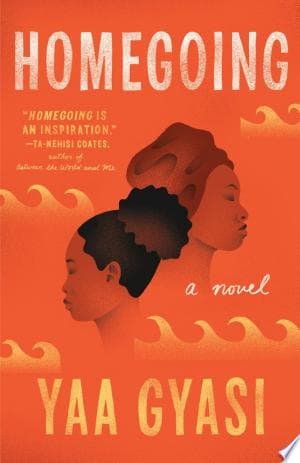
- Homegoing
Yaa Gyasi
4.4 (175k) average on GoodreadsLiterary FictionExplores epic journeys, family legacy, and the impact of historical injustices across generations with a strong narrative voice.
- Things Fall Apart
Chinua Achebe
3.7 (288k) average on GoodreadsHistorical FictionOffers a deep exploration of Nigerian culture, tradition, and the tragic fate of a protagonist against societal forces.
- Americanah
Chimamanda Ngozi Adichie
4.3 (264k) average on GoodreadsLiterary FictionWhile both novels deal with Nigerian protagonists migrating abroad and confronting issues of identity and belonging, Obioma's 'An Orchestra of Minorities' distinguishes itself by its deeply spiritual and mythological framework, contrasting with Adichie's more contemporary, realistic, and socio-political exploration of race and immigration. Adichie's narrative in 'Americanah' focuses on the nuanced experience of being Black in America and the complexities of returning to Nigeria, whereas Obioma delves into a more universal, almost epic, struggle against fate and human malevolence, filtered through an ancient Igbo worldview. Obioma's novel is less about the specifics of racial identity in the West and more about the universal human struggle for dignity and survival.
- The Old Man and the Sea
Ernest Hemingway
3.8 (831k) average on GoodreadsLiterary FictionA Cuban fisherman's long struggle with a giant marlin becomes a story of endurance and dignity, now retold for young adults with illustrations, phonetic guides, and writing prompts in Traditional Chinese.
- One Hundred Years of Solitude
Gabriel García Márquez
4.1 (753k) average on GoodreadsLiterary FictionThrough the multi-generational story of the Buendía family, a mythical town deals with the repeating patterns of time, love, and solitude, as the extraordinary mixes with the ordinary.
- The Goldfinch
Donna Tartt
3.9 (720k) average on GoodreadsLiterary FictionHaunted by a tragic explosion and clutching a stolen Dutch masterpiece, a young orphan navigates the opulent drawing rooms of New York and the gritty underbelly of the art world, desperately seeking connection and redemption amidst a life spiraling into crime and obsession.



Enjoyed the summary?
A summary gives you the shape of the book. The book itself has the detail, the examples and the voice.
Find An Orchestra of Minorities on AmazonAs an Amazon Associate, BookBrief earns from qualifying purchases. How we're funded