
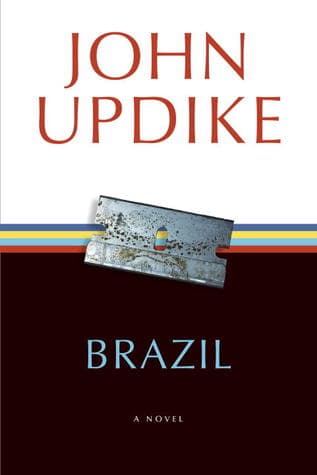
Synopsis
Covers the whole plot, including the ending.
- Difficulty
- Medium
- Pacing
- Moderate
- Mood
- Passionate, melancholic, sensual, adventurous, mythical
Brazil Plot Summary
Covers the whole plot, including the ending.
The Encounter on Copacabana
Tristão, a young Black man from the Rio de Janeiro favelas, sells goods on Copacabana beach. He meets Isabel, a wealthy white girl on vacation with her parents. Their eyes meet, and despite their different backgrounds, they feel a strong attraction. Tristão approaches Isabel, and they talk briefly. This first meeting begins their forbidden romance, showing Brazil's social divides and love's power to cross them.
Forbidden Beginnings
After their first meeting, Tristão and Isabel meet in secret, their feelings growing with each encounter. Isabel is drawn to Tristão's energy and his world, which is unlike her sheltered life. Tristão is captivated by Isabel's beauty, innocence, and access to a life he only dreams of. Their relationship is dangerous; Isabel's parents, especially her father, are angry when they find out, threatening to send her away. They see Tristão as wrong for their family and Isabel's future. The young lovers, however, do not give up, their bond strengthening despite the problems.
Flight to the North
Overwhelmed by family pressure and the impossibility of their relationship in Rio, Tristão and Isabel decide to run away. They steal money and items from Isabel's family and travel north, leaving the city's comforts and rules. They have no specific destination, driven more by a wish for freedom than a plan. This escape marks a turning point; they leave their old lives and embrace a life of uncertainty and adventure together. Their journey takes them through different places and challenges their ability to survive and their commitment to each other.
Life in the Sertão
As they go deeper into the Brazilian interior, the couple faces great difficulties. They must take low-paying jobs, from farm work to begging, to survive. Isabel, used to luxury, struggles with the hardship, but her love for Tristão keeps her going. Tristão, more familiar with poverty, uses his street smarts to handle their tough situation. Their appearance changes; Isabel's skin darkens, and Tristão becomes thin. Despite the constant struggle, their bond grows stronger, formed by shared trouble. They learn to depend only on each other, their love becoming their only constant in a changing world.
The Encounter with the Cangaçeiro
Their journey becomes dangerous when Cangaçeiros, ruthless bandits in the sertão, capture them. The leader, a strong but cruel man, shows interest in Isabel. Tristão tries to protect Isabel, but they are both at the bandits' mercy. This time in captivity is frightening and humiliating, forcing them to see and endure violence. The experience takes away their innocence and makes them face the harsh realities outside their romantic bubble, showing their weakness and the constant threat of danger.
Escape and Transformation
Tristão and Isabel manage to escape the Cangaçeiros through cleverness and luck. The experience, however, has changed them. Isabel is traumatized, and Tristão is determined to protect her at all costs. The bandit ordeal leaves a psychological scar, making them confront human nature's darker side and their own will to survive. After this, a subtle change begins: Isabel starts to shed her privileged identity, adapting more to Tristão's world, while Tristão finds a new sense of purpose and responsibility in caring for her.
The Gypsy Camp
After their escape, Tristão and Isabel find a nomadic gypsy community. The gypsies offer them shelter and a temporary sense of belonging. This period gives them a break from their constant flight and struggle. They learn about gypsy customs, music, and ways of life, immersing themselves in a different culture. Isabel finds freedom and acceptance among the gypsies, while Tristão learns new skills. This interlude shows Brazil's diverse culture and offers a moment of peace before the next difficult phase of their journey.
The Quest for Identity
As time passes and their journey continues, Tristão and Isabel undergo a change. Isabel's fair skin darkens significantly from sun exposure and poor care, making her look more like Tristão. Tristão, through his experiences and the gradual lightening of his darker skin in some areas, begins to look lighter. This physical shift reflects a deeper psychological change, blurring their original racial and social identities. They become less distinct and more intertwined, embodying a new, ambiguous racial identity that challenges societal norms and their own self-perceptions.
The Prophecy and the Wish
During their travels, Tristão and Isabel meet a mysterious old woman, possibly a shaman or wise elder, who seems to have prophetic insight. She watches them closely and speaks cryptically of their changing forms, hinting that their love is so strong it is reshaping them, causing them to exchange racial features. This encounter confirms the strange physical changes they are undergoing and gives their journey a sense of destiny and magical realism. It suggests their love is not just a human emotion but a force that can cross physical and social boundaries, fulfilling a mythical or spiritual purpose.
Arrival in the Amazon
Their long and hard journey eventually leads them to the vast Amazon rainforest. This final destination represents the ultimate escape from their past lives and societal limits. The Amazon, with its wild nature and ancient spiritual meaning, becomes the place for their final transformation. Here, in the heart of Brazil's wild beauty, their physical changes become complete. Isabel, now dark-skinned, and Tristão, lighter, fully embody their new, intertwined identities, having effectively switched races. The Amazon is a symbolic background for their final change, a place where the lines between self and other disappear.
The Final Transformation
In the Amazon, Tristão and Isabel's racial transformation finishes. Isabel, once a fair-skinned white girl, now looks like a Black woman, having taken on Tristão's physical traits. Conversely, Tristão, originally a Black man, now has the features of a white man. They have not just changed skin color but have exchanged their racial identities, becoming mirror images of each other. This miraculous and surreal transformation shows their love's ultimate victory over societal divisions and racial prejudice, representing a deep mystical union where two become one, going beyond all previous definitions of self.
A New Beginning
After their transformation, Tristão and Isabel, now physically embodying each other's original racial identities, live in the Amazon. Their journey has come full circle, from Rio's beaches to the rainforest's heart, ending in a complete merging of their individual, socially defined selves into a single, unified entity. They are no longer defined by race, class, or origin but by their love's deep and transformative power. Their life in the Amazon shows that love can cross all boundaries, creating a new, unified identity that defies normal understanding.
Principal Figures
Isabel
Protagonist
The pampered white girl who embarks on a transformative journey of love.
Isabel begins the novel as a beautiful, privileged white girl from a wealthy Rio de Janeiro family, accustomed to luxury and a sheltered existence. Initially naive and somewhat innocent, she is drawn to Tristão's raw vitality and the forbidden nature of their love. Her journey forces her to shed her upper-class identity, endure immense hardship, and confront the harsh realities of the world. She is resilient, adaptable, and deeply devoted to Tristão, demonstrating a surprising strength beneath her delicate exterior.
Relationships: Tristão (Lovers, soulmates, eventually physically merged); Isabel's Parents (Antagonistic, disapproving)
Tristão
Protagonist
The resourceful Black favela youth who falls deeply in love with Isabel.
Tristão is a young, handsome Black man from the Rio slums, initially working as a beach vendor. He is street-smart, resourceful, passionate, and possesses a strong will. His love for Isabel is immediate and unwavering, driving him to defy societal norms and endure extreme difficulties. He acts as Isabel's protector and guide through the unforgiving Brazilian interior, using his ingrained survival skills. Despite his rough background, he displays a profound tenderness and commitment to Isabel, his love for her being the central force of his existence.
Relationships: Isabel (Lovers, soulmates, eventually physically merged)
Isabel's Father
Antagonist/Supporting
The wealthy, disapproving patriarch.
Isabel's father is a wealthy, influential white man who embodies the rigid social hierarchy of Brazil. He is fiercely protective of his family's reputation and social standing. He vehemently disapproves of Isabel's relationship with Tristão, viewing it as a scandal and a threat to his daughter's future. His actions, driven by class prejudice and paternalistic control, directly precipitate Tristão and Isabel's flight from Rio. He represents the societal forces that seek to keep the lovers apart.
Relationships: Isabel (Controlling father); Tristão (Despises, considers beneath his daughter)
The Cangaçeiro Leader
Antagonist/Supporting
The charismatic and brutal bandit chief.
The leader of the Cangaçeiros is a powerful, charismatic, and ruthless bandit who operates in the Brazilian sertão. He represents the lawlessness and violence that exists in the remote parts of Brazil. He takes an unsettling interest in Isabel, holding her and Tristão captive. His presence introduces a significant threat to the lovers' safety and forces them to confront the darker, more brutal aspects of survival outside of civilization. He embodies a primal, untamed force of nature.
Relationships: Isabel (Captor, possessive interest); Tristão (Captor, antagonist)
The Gypsy Elder
Supporting
A wise figure in a nomadic community.
The gypsy elder is a benevolent figure who, along with her community, offers Tristão and Isabel temporary refuge and hospitality during their journey. She represents a different cultural perspective, one that is more open and less bound by conventional societal norms than the world they left behind. Her presence provides a brief period of peace and cultural immersion for the protagonists, offering a glimpse into a marginalized but resilient way of life. She embodies a sense of community and acceptance.
Relationships: Tristão and Isabel (Temporary benefactors)
The Old Woman/Shaman
Supporting
The mystical figure who prophesies their transformation.
This mysterious old woman is a minor but pivotal character who appears during Tristão and Isabel's journey. She possesses an almost shamanistic wisdom and prophetic insight, observing their changing appearances and speaking cryptically about their ultimate transformation. She acts as a spiritual guide or confirmation of the magical realism at play, validating the extraordinary nature of their love and its power to transcend physical boundaries. She represents the mystical, ancient spirit of Brazil.
Relationships: Tristão and Isabel (Prophetic observer)
Themes & Insights
The Transcendent Power of Love
The main theme of 'Brazil' is that love can overcome all barriers, including race, class, and even physical identity. Tristão and Isabel's love is so strong that it literally reshapes them, causing them to exchange racial characteristics. This physical change symbolizes love's ability to dissolve social structures and create a new, unified identity. Their journey, marked by great hardship, only strengthens their bond, proving love's lasting and transformative power.
“Their love, like a chemical reaction, had begun to alter their very substance, melting the distinctions between them.”
Racial and Social Class Barriers
The novel clearly shows the strict racial and social class divisions in Brazil. Tristão, a Black man from the favelas, and Isabel, a white woman from a wealthy family, are initially separated by a huge gap. Their forbidden love directly challenges these deep-rooted societal norms, leading to their rejection and flight. Their physical transformation is a radical fantasy solution to these real-world problems, suggesting a utopian vision where love literally erases such barriers.
“The gap between them, a chasm of color and class, was precisely what made their attraction so irresistible, so dangerous.”
Identity and Transformation
A main theme is how flexible identity is, especially concerning race and self-perception. As Tristão and Isabel travel through Brazil, they shed their original identities, both socially and physically. Isabel becomes dark-skinned, Tristão becomes lighter, ending in a complete racial exchange. This transformation explores how identity is not fixed but can be reshaped by experience, environment, and strong emotional connection. It questions common ideas of self and belonging.
“They had become each other, in a way that defied all logic, all biology, all human expectation.”
The Brazilian Landscape and Culture
Brazil itself acts as a character in the novel, its varied and challenging landscapes reflecting the lovers' journey. From Rio's urban beaches to the dry sertão, the lawless bandit country, the nomadic gypsy camps, and finally the Amazon rainforest, each setting shapes their experiences and changes. The novel shows the reader the rich, complex, and sometimes brutal culture of Brazil, highlighting its social differences, its spiritual side, and its wild, untamed beauty.
“Brazil, vast and indifferent, was both their persecutor and their crucible, forging them into something new.”
The Quest for Freedom and Autonomy
Tristão and Isabel run from Rio because they want freedom from societal expectations and family control. They seek the freedom to love each other without judgment or interference. Their journey is a continuous struggle for self-determination, enduring poverty, violence, and captivity to keep their bond. Ultimately, their transformation in the Amazon signifies a complete liberation from their original identities' constraints, achieving a unique form of freedom through their merged existence.
“They fled not just their families, but the very definitions of who they were expected to be.”
Plot Devices & Literary Techniques
Magical Realism
The supernatural elements integrated into a realistic setting.
The most prominent plot device is the magical realism evident in Tristão and Isabel's physical transformation. While their journey through Brazil is depicted with realistic detail, their gradual and ultimate exchange of racial identities is a supernatural phenomenon presented as fact. This device allows Updike to explore profound themes of race, class, and identity in a fantastical way, transcending the limitations of strict realism. It elevates their love story to a mythic level, suggesting that love can literally alter reality.
The Journey/Quest
The lovers' physical and spiritual odyssey across Brazil.
The entire novel is structured as a journey or quest, both geographical and spiritual. Tristão and Isabel's flight from Rio takes them across vast and varied landscapes of Brazil, each new environment presenting different challenges and contributing to their transformation. This physical journey mirrors their internal quest for identity, freedom, and the ultimate expression of their love. The progression through diverse settings marks distinct stages in their development and the deepening of their bond.
Symbolism of the Amazon
The rainforest as a crucible for ultimate transformation.
The Amazon rainforest serves as a powerful symbol in the novel. It is the ultimate destination for Tristão and Isabel, representing a place beyond civilization, where rules and boundaries dissolve. Its untamed nature, ancient power, and spiritual mystique make it the perfect setting for their final, complete racial transformation. The Amazon symbolizes a return to a primal state, a melting pot where distinctions blur, and where their love can achieve its most radical and unified form, free from the constraints of the outside world.
Foreshadowing (Prophecy)
Hints of their eventual transformation through mystical encounters.
Early in their journey, and more explicitly through encounters with mystical figures like the old woman/shaman, there are hints and prophecies about Tristão and Isabel's changing forms. These subtle and overt foreshadowing elements prepare the reader for the seemingly impossible racial exchange. It imbues their story with a sense of destiny and myth, suggesting that their transformation is not just a random event but a fated outcome, a manifestation of a deeper, spiritual truth about their love.
Quiz
10 questions on the plot and the characters. Each answer comes with a short explanation.
Question 1
Who is the author of the novel "Brazil"?
- John Grisham
- John Updike
- Gabriel Garcia Marquez
- Paulo Coelho
Show answer
B. John Updike The provided text explicitly states that the author is John Updike.
Question 2
What genres are associated with the novel "Brazil"?
- Mystery and Thriller
- Science Fiction and Fantasy
- Literary Fiction and Historical Fiction
- Romance and Comedy
Show answer
C. Literary Fiction and Historical Fiction The text lists "Literary Fiction, Historical Fiction" as the genres.
Question 3
Which of the following is NOT mentioned as an experience the lovers endure?
- Privation
- Violence
- Captivity
- Celebration
Show answer
D. Celebration The text mentions privation, violence, and captivity, but not celebration.
Question 4
The novel "Brazil" is described as the most __________ novel in years from the author.
- chilling
- humorous
- sensual
- educational
Show answer
C. sensual The text states it is the 'richest and most sensual novel'.
Question 5
What is the social background of the two main lovers in "Brazil"?
- Both are from upper-class families.
- One is from the slums, the other is upper-class.
- Both are from middle-class families.
- One is a foreigner, the other is local.
Show answer
B. One is from the slums, the other is upper-class. The text describes one lover as 'a black child of the Rio slums' and the other as 'a pampered upper-class white girl'.
Question 6
The author of "Brazil" is also known for which series of novels?
- The Harry Potter series
- The Lord of the Rings series
- The Rabbit series
- The Sherlock Holmes series
Show answer
C. The Rabbit series The text mentions 'the Pulitzer Prize-winning author of the Rabbit series'.
Question 7
What Pulitzer Prize has the author of "Brazil" won?
- Pulitzer Prize for Poetry
- Pulitzer Prize for Drama
- Pulitzer Prize for Fiction
- Pulitzer Prize for Music
Show answer
C. Pulitzer Prize for Fiction While the text mentions 'Pulitzer Prize-winning author', it doesn't specify the category. However, given the context of novels and the typical Pulitzer Prizes awarded to authors of fiction, it is the most logical inference. The question is designed to test inference based on general knowledge related to literary awards.
Question 8
The description of the lovers implies a significant social divide. What does this suggest about the potential themes of the novel?
- The novel likely explores themes of social inequality and class conflict.
- The novel is primarily a straightforward romance with no deeper social commentary.
- The novel focuses on the challenges of international espionage.
- The novel is a historical account of Brazilian political leaders.
Show answer
A. The novel likely explores themes of social inequality and class conflict. The stark contrast between a slum child and an upper-class girl strongly suggests that themes of social inequality, class barriers, and the struggles arising from them will be central to the narrative.
Question 9
Considering the setting ('Rio slums') and the historical fiction genre, what historical period might the novel be set in?
- The distant future
- Ancient Roman times
- A period of significant social or economic upheaval in Brazil's history
- The early days of space exploration
Show answer
C. A period of significant social or economic upheaval in Brazil's history The mention of 'Rio slums' and 'historical fiction' points towards a setting within Brazil's past, likely a period marked by notable social stratification or economic challenges that would create such disparities and lead to the described hardships.
Question 10
The phrase 'richest and most sensual novel' suggests that the novel's prose and themes are likely to be:
- Sparse and emotionally detached
- Intellectually challenging but lacking in emotional depth
- Rich in descriptive language and focused on sensory experiences and emotional intensity
- Purely factual and devoid of artistic flair
Show answer
C. Rich in descriptive language and focused on sensory experiences and emotional intensity The terms 'richest' and 'most sensual' imply elaborate descriptions, vivid imagery, and a deep exploration of emotions and physical experiences, characteristic of rich prose and sensuality in literature.
Brazil FAQ
What is John Updike's novel 'Brazil' about?
Set in Brazil, the novel tells the story of two young lovers from vastly different backgrounds: a black child from the Rio slums and a white girl from an affluent family. Their intense passion drives them to endure extreme hardship, violence, and captivity in their struggle to be together.
Who are the main characters in John Updike's 'Brazil'?
The central characters are two young lovers: a boy from the impoverished slums of Rio de Janeiro and a girl from the privileged upper class. Their contrasting upbringings highlight the social divides they must overcome.
What themes are explored in 'Brazil' by John Updike?
'Brazil' explores themes of passionate love, social inequality, survival, and the clash between different social classes. It delves into the intense desires and the harsh realities faced by the protagonists.
Is John Updike's 'Brazil' a historical novel?
While the novel is set in Brazil and may draw on historical context, its primary focus is on the intense, personal story of two lovers. It can be categorized as both literary fiction and historical fiction due to its rich setting and exploration of social dynamics.
What makes 'Brazil' a sensual novel?
The novel is described as sensual due to its focus on the intense physical and emotional connection between the two young lovers. Updike's writing often explores human desire and intimacy with vivid detail.
What kind of writing style can I expect from John Updike's 'Brazil'?
Readers can expect John Updike's signature rich, descriptive, and often lyrical prose. He is known for his keen observations of human nature and his ability to evoke atmosphere and emotion.
Is 'Brazil' a standalone novel or part of a series?
'Brazil' is a standalone novel by John Updike and is not part of his famous "Rabbit" series, although it is by the same acclaimed author.
What is the setting of John Updike's 'Brazil'?
The novel is set in Brazil, specifically focusing on the stark contrasts between the impoverished slums of Rio de Janeiro and the more privileged areas of society.
Who would enjoy reading John Updike's 'Brazil'?
Readers who appreciate literary fiction with a strong focus on character, passion, and social commentary would likely enjoy 'Brazil'. Fans of John Updike's previous works, particularly his evocative prose and exploration of complex relationships, should also find it compelling.
About the author
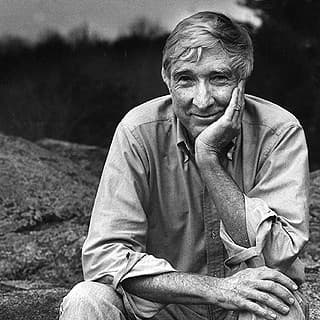
John Hoyer Updike was an American novelist, poet, short-story writer, art critic, and literary critic. One of only four writers to win the Pulitzer Prize for Fiction more than once, Updike published more than twenty novels, more than a dozen short-story collections, as well as poetry, art and literary criticism and children's books during his career.
Similar books
- One Hundred Years of Solitude
Gabriel García Márquez
4.1 (753k) average on GoodreadsLiterary FictionWhile both 'Brazil' and 'One Hundred Years of Solitude' employ magical realism to tell epic stories rooted in Latin American settings, Márquez's novel integrates the fantastical elements far more seamlessly into the fabric of its reality. Márquez's Macondo feels like a world where magic is simply another aspect of life, whereas in 'Brazil,' the magical elements often feel like deliberate narrative interventions. Márquez also achieves a deeper, more profound sense of historical sweep and familial saga, making his characters' transformations feel more earned within their established reality, unlike the more abrupt and symbolic shifts in Updike's protagonists.
- Love in the Time of Cholera
Gabriel García Márquez
3.9 (412k) average on GoodreadsLiterary FictionBoth Updike's 'Brazil' and Márquez's 'Love in the Time of Cholera' explore the enduring, transformative power of love across decades and through various adversities. However, Márquez's novel grounds its extraordinary romance in a deeply realistic and psychologically nuanced portrayal of its characters and their society. The challenges faced by Florentino Ariza and Fermina Daza, while epic in scope, remain firmly within human experience. In contrast, 'Brazil' elevates its lovers to a mythic, almost supernatural plane, with their trials often involving literal transformations and magical interventions, making it a less relatable and more symbolic exploration of love's journey.
- THE ALCHEMIST
Paulo Coelho
3.6 (3k) average on GoodreadsFictionBoth 'Brazil' and 'The Alchemist' feature protagonists embarking on transformative journeys to fulfill a personal legend or destiny, set against exotic backdrops. However, Coelho's 'The Alchemist' is a much simpler, allegorical tale with clear spiritual lessons and a straightforward narrative arc. Updike's 'Brazil' is far more complex, literary, and ambitious in its prose and thematic exploration, delving into darker, more violent aspects of human experience and myth. While both are quests, 'The Alchemist' offers a more accessible and overtly optimistic message, whereas 'Brazil' is a dense, often challenging exploration of myth and identity that doesn't shy away from the grotesque.
- The Old Man and the Sea
Ernest Hemingway
3.8 (831k) average on GoodreadsLiterary FictionA Cuban fisherman's long struggle with a giant marlin becomes a story of endurance and dignity, now retold for young adults with illustrations, phonetic guides, and writing prompts in Traditional Chinese.
- The Goldfinch
Donna Tartt
3.9 (720k) average on GoodreadsLiterary FictionHaunted by a tragic explosion and clutching a stolen Dutch masterpiece, a young orphan navigates the opulent drawing rooms of New York and the gritty underbelly of the art world, desperately seeking connection and redemption amidst a life spiraling into crime and obsession.
- Little Fires Everywhere
Celeste Ng
4.1 (713k) average on GoodreadsLiterary FictionIn Shaker Heights, an artist and her daughter move in, and their free-spirited lives clash with a rule-bound matriarch, revealing hidden conflicts beneath a perfect surface.





Enjoyed the summary?
A summary gives you the shape of the book. The book itself has the detail, the examples and the voice.
Find Brazil on AmazonAs an Amazon Associate, BookBrief earns from qualifying purchases. How we're funded