
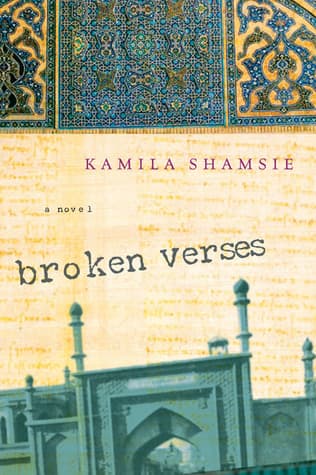
Synopsis
Covers the whole plot, including the ending.
- Difficulty
- Medium
- Pacing
- Moderate
- Mood
- Introspective, Mysterious, Poignant, Politically charged
- Read it if
- You enjoy literary mysteries that blend personal journeys with political backdrops, especially those set in unique cultural landscapes like Pakistan.
- Skip it if
- You prefer fast-paced thrillers with clear-cut resolutions and minimal introspection.
Broken Verses Plot Summary
Covers the whole plot, including the ending.
The First Coded Letter
Aasmaani, a thirty-year-old woman in Karachi, Pakistan, works as a researcher for the new independent TV station, 'The News.' For fourteen years, she has lived with the unresolved grief of her famous activist mother, Samina Akram, who disappeared after her lover, the renowned poet, was murdered by government thugs. Samina's disappearance was one of many times Aasmaani felt abandoned throughout her childhood, often left with her grandmother while Samina and the Poet traveled. One day, at 'The News,' Aasmaani meets a former friend of her mother's, who gives her a letter. This letter is written in a private code only Samina and the Poet knew, and it appears to be recently written, challenging Aasmaani's long-held belief that her mother was dead.
Unraveling the Code and the Past
The first letter reignites Aasmaani's search for her mother. She immediately recognizes the code, a system based on specific lines from the Poet's work, which Samina and the Poet used to communicate privately. Aasmaani, having spent her childhood in her mother's world and the Poet's verses, understands this code. She begins the difficult process of deciphering the letter, a task that forces her to revisit her complex childhood memories, the political climate of the past, and the love story between her mother and the Poet. Each decoded word brings her closer to understanding the message and the hidden parts of her mother's life and choices.
A Flood of New Letters
After the initial discovery, more letters arrive, each delivered by different, seemingly unconnected individuals who claim no knowledge of their origin. These letters continue to be written in the code, confirming that Samina Akram is alive and communicating. Aasmaani dedicates herself to deciphering each one, a process that is both intellectually stimulating and emotionally draining. The letters begin to hint at Samina's experiences in hiding, her political beliefs, and her complicated feelings about her past. Aasmaani becomes consumed by the mystery, neglecting parts of her current life as she delves deeper into her mother's secret world.
The Role of the TV Station
Aasmaani's job at 'The News' becomes a valuable asset in her investigation. The station's archives and research capabilities allow her to explore Pakistan's political history, specifically the period surrounding her mother's activism and the Poet's murder. She researches old news reports, government documents, and interviews, piecing together the public story of her parents' lives and the events that led to their separation and Samina's disappearance. This research provides context for the letters and exposes Aasmaani to the broader political world that shaped her family's fate, revealing the dangers and sacrifices involved in their activism against a repressive regime.
The Shadow of the Poet
As Aasmaani deciphers the letters, she gains deeper insight into the intense, almost mythic love affair between Samina and the Poet. The letters reveal their deep intellectual and emotional connection, and the Poet's verses become a way to understand her mother's mind. Aasmaani recognizes the Poet's influence on Samina's life and choices, and in doing so, she confronts her own feelings of being secondary to this grand passion. This understanding is tinged with both admiration for their bond and resentment for how it overshadowed her own needs and led to her mother's repeated absences. The Poet's legacy, both political and personal, casts a long shadow over Aasmaani's journey.
Encountering Old Friends and Adversaries
In her search, Aasmaani seeks out individuals who were part of Samina's circle during her activism. She meets former colleagues, friends, and even some who opposed them politically. These encounters are tense and nostalgic. Some are helpful, offering fragments of information or memories that shed light on Samina's character and her disappearance. Others are guarded, hesitant to speak about a past that remains dangerous or painful. Through these interactions, Aasmaani gathers clues and begins to see her mother not just as an absent parent, but as a complex woman deeply involved in a politically charged world.
The Nature of Samina's Disappearance
As the letters progress, Aasmaani starts to understand that Samina's disappearance was not merely another act of abandonment, but a deliberate, strategic decision. The decoded messages reveal that Samina went into hiding to protect herself and possibly others, after the Poet's murder made it clear that her life was also in danger. Her continued silence was necessary for her survival and her ongoing commitment to the political cause. This realization is a turning point for Aasmaani, shifting her perspective from personal betrayal to a more nuanced understanding of her mother's sacrifice and resilience in the face of political persecution. The letters paint a picture of a woman who chose survival and continued struggle over a conventional life.
The Emotional Toll
The intense focus on her mother's past and the deciphering of the letters takes a significant emotional toll on Aasmaani. She becomes increasingly isolated, her current relationships suffering as she becomes consumed by the mystery. Her personal life, including her romantic interests and friendships, takes a backseat to her obsession. She grapples with anger, longing, confusion, and a growing sense of admiration for her mother. The journey forces her to confront her own identity, her place in her family's legacy, and the definition of love and sacrifice. She questions what it means to be a daughter of such a prominent, yet absent, figure.
The Final Clues and the Revelation
The letters provide Aasmaani with a series of final, intricate clues that point towards a specific location. These clues are deeply embedded in the Poet's work and Samina's personal history, requiring Aasmaani to use all her knowledge and intuition. The journey to this location is filled with anticipation and a sense of impending resolution. While the book ultimately reveals Samina's continued existence and her reasons for remaining hidden, it does not necessarily end in a direct reunion. Instead, Aasmaani finds a deep understanding of her mother's choices, her enduring love, and the complex interplay between personal sacrifice and political conviction. The 'reunion' is more spiritual and intellectual than physical.
Forgiveness and Moving Forward
By the end of her journey, Aasmaani achieves a deep understanding and forgiveness for her mother. She recognizes the immense pressures Samina faced and the sacrifices she made, not just for a cause, but also, in her own way, for her daughter's future. The initial anger and sense of abandonment are replaced by a more mature perspective on love, duty, and resilience. Aasmaani can finally integrate her mother's complex legacy into her own identity, no longer defined solely by her absence. She finds a way to move forward, carrying the knowledge and lessons from her past, but no longer burdened by unresolved grief or resentment, allowing her to forge her own path.
Principal Figures
Aasmaani
Protagonist
A thirty-year-old woman in Karachi searching for her disappeared activist mother.
Aasmaani is a thoughtful, somewhat adrift woman in her early thirties, working at an independent TV station in Karachi. She carries the deep emotional scars of her mother's prolonged absence and the unresolved mystery of her disappearance. Initially, she views her mother's departure as an abandonment, leading to a sense of unrootedness and a struggle to define her own identity outside of her famous parents' shadow. She is intelligent and perceptive, with a deep, almost innate understanding of the Poet's work and the intricate code her parents used. Her journey is driven by a profound longing for answers and a desire to understand her mother's choices.
Relationships: Samina Akram (Daughter, initially resentful, later understanding and forgiving); The Poet (Daughter of his lover, deeply influenced by his work and legacy); Dadi (Grandmother) (Primary caregiver and source of stability in childhood); Friends/Colleagues (Distant, as she becomes consumed by her quest)
Samina Akram
Central, though largely absent, character
A famous Pakistani activist who disappeared fourteen years prior.
Samina Akram is Aasmaani's mother, a formidable and charismatic activist whose life was inextricably linked to the political landscape of Pakistan and her lover, the Poet. She is depicted through Aasmaani's memories, the coded letters, and the recollections of others. Samina is fiercely intelligent, passionate, and deeply committed to her political ideals, willing to make immense personal sacrifices for her cause. Her love for the Poet was legendary, shaping much of her life. While she loved Aasmaani, her activism and relationship with the Poet often took precedence, leading to Aasmaani's feelings of abandonment. Her disappearance was a strategic act of self-preservation and continued resistance.
Relationships: Aasmaani (Mother, whose absence deeply affects her daughter); The Poet (Deeply in love, intellectual and political partner); Political Activists (Comrade and leader)
The Poet
Influential, deceased character
Pakistan's greatest poet and Samina's lover, murdered by government thugs.
The Poet is a legendary figure in Pakistani literature and a powerful political voice, whose verses are deeply intertwined with the nation's struggle. He was Samina Akram's lover and intellectual partner, and his murder by government thugs precipitated Samina's disappearance. Though deceased, his presence permeates the novel through his poetry, which forms the basis of the coded letters, and through the memories of those who knew him. He represents artistic integrity, political defiance, and a passionate, all-consuming love. His work is not just art but a political weapon, a testament to the power of words in oppressive regimes. His legacy profoundly shapes Aasmaani's journey.
Relationships: Samina Akram (Deeply in love, intellectual and political partner); Aasmaani (Biological father (implied) and profound literary influence); Pakistani People (National hero, voice of resistance)
Dadi (Aasmaani's Grandmother)
Supporting
Aasmaani's primary caregiver and a source of stability.
Dadi is Aasmaani's paternal grandmother, who lovingly raised Aasmaani in her mother's prolonged absences and after her disappearance. She represents stability, tradition, and unconditional love in Aasmaani's tumultuous childhood. Dadi provides a grounding force, offering a safe haven from the political turmoil that consumed Samina and the Poet. She is a woman of quiet strength and resilience, who coped with the challenges of raising her granddaughter while carrying her own grief and anxieties about her family's fate. Her presence underscores the sacrifices made by ordinary people caught in extraordinary circumstances.
Relationships: Aasmaani (Grandmother and primary caregiver); Samina Akram (Mother-in-law, complex relationship due to Samina's lifestyle)
Naheed
Supporting
A former friend of Samina's who delivers the first coded letter to Aasmaani.
Naheed is an old acquaintance of Samina Akram, who works at 'The News' and is instrumental in initiating Aasmaani's quest by handing her the first coded letter. She represents a link to Samina's past and the network of people who were once part of her activist circle. Naheed is cautious and somewhat mysterious, not revealing everything she knows, but her actions set the entire narrative in motion. Her character highlights the lingering secrecy and danger associated with Samina's disappearance and the political climate of the time. She is a symbol of the clandestine connections that persist years after the initial events.
Relationships: Samina Akram (Former friend and confidante); Aasmaani (Catalyst for her investigation)
Jamal
Supporting
A colleague of Aasmaani at 'The News' who becomes her romantic interest.
Jamal is a colleague of Aasmaani at 'The News,' and he develops a romantic interest in her. He represents a potential future and a connection to the present, contrasting with Aasmaani's deep immersion in the past. He is kind, supportive, and tries to understand Aasmaani's obsession, though he often feels sidelined by it. Jamal provides a human anchor for Aasmaani, reminding her of the world outside her quest. Their relationship highlights Aasmaani's struggle to balance her personal desires with her all-consuming search for her mother, and the difficulty of forming new bonds when haunted by unresolved history.
Relationships: Aasmaani (Colleague and romantic interest)
Various Messengers
Mentioned
Unidentified individuals who deliver subsequent coded letters to Aasmaani.
These are a series of anonymous or minimally identified individuals who deliver the subsequent coded letters to Aasmaani. They are often fleeting figures, appearing briefly to pass on a message and then disappearing. Their anonymity and varied appearances emphasize the clandestine nature of Samina's communication and the extensive, hidden network that supports her. They serve as tangible links to Samina's hidden world, adding to the mystery and urgency of Aasmaani's quest without providing direct answers. They underscore the fact that Samina is not alone and has maintained connections despite her isolation.
Relationships: Aasmaani (Deliverers of crucial information); Samina Akram (Part of her hidden network)
The Government/Regime
Antagonist
The oppressive political force responsible for the Poet's death and Samina's disappearance.
The unnamed government or regime represents the oppressive political authority that serves as the primary antagonist. It is responsible for the murder of the Poet and the subsequent forced disappearance of Samina Akram. This entity embodies censorship, violence, and the suppression of dissent. Its actions drive the central conflict of the story, forcing the protagonists into hiding or silence. The regime's pervasive threat is a constant backdrop to the narrative, highlighting the dangers faced by activists and the sacrifices they make for freedom of expression and political change. It is an unseen but powerful force shaping the characters' lives.
Relationships: The Poet (Persecutor and murderer); Samina Akram (Persecutor, forcing her into hiding); Aasmaani (Indirectly responsible for her childhood trauma)
Themes & Insights
The Personal and the Political
The novel intertwines Aasmaani's personal search for her mother with Pakistan's political history. Samina Akram and the Poet's lives are defined by their activism against an oppressive regime, and their personal relationship is inseparable from their political struggle. Aasmaani's journey to understand her mother forces her to confront the dangerous political world that shaped her family's fate. For instance, the coded letters, a deeply personal form of communication, are built upon the Poet's politically charged verses, showing how even intimate acts have political meaning. The book argues that in certain contexts, personal lives are inherently political.
“The personal was political, her mother had always said. But what if the political was personal? What if the revolution was about a poem, or a love letter?”
Loss, Grief, and Forgiveness
At its heart, 'Broken Verses' explores the impact of loss and unresolved grief. Aasmaani has lived for fourteen years with the ambiguous loss of her mother, a disappearance she initially sees as a profound abandonment. Her journey to decipher the letters is a process of confronting this grief, revisiting childhood wounds, and ultimately, seeking to understand and forgive. The novel explores the complexities of forgiving a parent who made choices that caused pain, even if those choices were for a greater cause. The resolution of the mystery brings not a simple reunion, but a deeper understanding that allows for emotional healing and forgiveness, enabling Aasmaani to move forward.
“How do you forgive a mother who leaves? And how do you forgive yourself for wanting her to have been less than she was?”
The Power of Language and Poetry
Language, especially poetry, is a central force in the novel. The Poet's verses are not merely artistic expressions but a political weapon against oppression and the foundation of the coded communication between Samina and Aasmaani. Deciphering the letters is an act of interpreting poetry, revealing its hidden layers of meaning and its ability to convey truth even in silence. This theme highlights the power of words to resist censorship, preserve memory, and maintain connection across time and separation. It shows how literature can be a vehicle for both personal intimacy and political defiance.
“A poem was never just a poem. It was a weapon, a shield, a lover’s whisper, a coded message.”
Identity and Belonging
Aasmaani's search for her mother is fundamentally a search for her own identity. Growing up in the shadow of two legendary, absent figures, she struggles to define who she is outside of their legacy. Her feelings of abandonment contribute to a sense of not fully belonging. As she uncovers the truth about Samina, Aasmaani begins to integrate her complex family history into her self-perception, understanding her lineage not as a burden but as a source of strength and context. The novel explores how our past, particularly our family history and the political world we inherit, shapes our sense of self and our place in the world.
“She had spent a lifetime trying to escape their story, only to find herself trapped inside its most intricate verses.”
Memory and History
The novel constantly moves between personal memory and collective history. Aasmaani's individual memories of her mother are fragmented and colored by her childhood perspective, while Pakistan's larger political history provides the backdrop for her parents' actions. Deciphering the letters involves piecing together both personal recollections and historical facts, showing how memory is often subjective and incomplete, yet crucial for understanding the past. The narrative shows how history is not just a collection of facts, but a living force that continues to impact the present and shape individual lives.
“History wasn’t just dates and names; it was the whispered secrets, the forgotten loves, the lines of a poem that could bring a world to its knees.”
Plot Devices & Literary Techniques
Coded Letters
A series of letters written in a private code based on the Poet's work.
The coded letters are the central plot device, driving the entire narrative. They are written in a unique cipher known only to Samina and the Poet, using specific lines from the Poet's vast body of work as keys. These letters serve multiple functions: they are the primary source of information about Samina's continued existence and her experiences in hiding, they provide a direct link to the emotional and intellectual world of her parents, and their deciphering forms the core of Aasmaani's investigative journey. The letters symbolize enduring connection, intellectual intimacy, and the power of language to conceal and reveal truth.
The Poet's Poetry
The literary works of the deceased Poet, used as a key to the coded letters and a window into the past.
The Poet's poetry functions as both a thematic element and a crucial plot device. Not only does it provide the basis for the coded letters, but it also offers Aasmaani, and the reader, profound insights into the political climate of the time, the Poet's revolutionary ideals, and the depth of his love for Samina. By immersing herself in his verses, Aasmaani gains a deeper understanding of her parents' world and the sacrifices they made. The poetry acts as a historical record, a personal diary, and a guide, allowing the past to speak directly to the present and shaping Aasmaani's interpretation of events.
Ambiguous Loss
The unresolved disappearance of Samina Akram, leaving Aasmaani in a state of prolonged grief.
Ambiguous loss is a psychological plot device that creates the initial emotional foundation for Aasmaani's character and her motivation. Samina's disappearance without a definitive answer (death or survival) leaves Aasmaani in a state of perpetual uncertainty and unresolved grief. This ambiguity fuels her longing for closure and drives her relentless pursuit of the truth. It explains her emotional stasis and her difficulty forming stable relationships, as she is constantly tethered to the 'what if' of her mother's fate. The discovery of the letters directly challenges this ambiguous loss, forcing a re-evaluation of her entire understanding of the past.
The Independent TV Station ('The News')
Aasmaani's workplace, providing resources for her investigation and a modern backdrop.
Aasmaani's job at 'The News,' Pakistan's first independent TV station, serves as a significant plot device. It provides her with access to research facilities, archives, and a network of contacts that are invaluable to her investigation into her mother's past. The station itself represents a new era of information and media freedom in Pakistan, contrasting with the repressive regimes of her parents' time. This setting allows the novel to explore themes of journalism, truth-seeking, and the role of media in shaping public perception, while simultaneously facilitating Aasmaani's personal quest for truth within a broader societal context.
Broken Verses Quotes
“The past is a place of refuge as well as a place of torment.”
“Every secret you keep is a separate burden.”
“Stories are all we have to make sense of the world, to make sense of ourselves.”
“Sometimes the greatest betrayals are not the ones we commit, but the ones we endure.”
“A city holds its history not just in its buildings, but in the echoes of its people.”
“The silence between words can be more revealing than the words themselves.”
“To be a writer is to be a scavenger of lives, even your own.”
“Love, when it goes wrong, leaves not just a scar, but a phantom limb that aches.”
“There are some questions that, once asked, can never be unasked, their answers forever altering the landscape of your understanding.”
“The hardest part of remembering is not the remembering itself, but the living with what you remember.”
“We are all made of broken verses, striving to find the rhythm that makes us whole.”
“Even in absence, a person can cast a very long shadow.”
“Sometimes the search for truth leads you to places you never intended to go, and to truths you never wanted to find.”
“The past is never truly dead; it is merely waiting for the right moment to re-emerge.”
Quiz
10 questions on the plot and the characters. Each answer comes with a short explanation.
Question 1
What is the primary motivation for Aasmaani to investigate her mother's disappearance?
- She wants to clear her mother's name from political accusations.
- She discovers a letter written in her parents' private code that could only have been written recently.
- She is offered a reward by the independent TV station for solving the mystery.
- Her father, the Poet, sends her a message from beyond the grave.
Show answer
B. She discovers a letter written in her parents' private code that could only have been written recently. Aasmaani's investigation is sparked by the discovery of a letter in her parents' private code, which suggests her mother might still be alive and communicating.
Question 2
How long has it been since Samina Akram, Aasmaani's mother, disappeared?
- Five years
- Ten years
- Fourteen years
- Twenty years
Show answer
C. Fourteen years The synopsis explicitly states that Samina Akram disappeared fourteen years ago.
Question 3
What was the profession of Samina Akram's lover, who was beaten to death by government thugs?
- A journalist
- A politician
- A lawyer
- A poet
Show answer
D. A poet Samina Akram's lover is described as 'Pakistan's greatest poet' in the synopsis.
Question 4
Where does Aasmaani encounter the old friend of Samina's who provides her with the first letter?
- At a political rally
- At her family home in Karachi
- While working at Pakistan's first independent TV station
- During a chance encounter in a market
Show answer
C. While working at Pakistan's first independent TV station The synopsis states that 'while working at Pakistan's first independent TV station, Aasmaani runs into an old friend of Samina's who gives her the first letter'.
Question 5
What is Aasmaani's general emotional state and life situation at the beginning of the story?
- She is happily married and successful in her career.
- She is thirty, single, and drifting from job to job.
- She is a high-ranking official in the Pakistani government.
- She is an established poet, following in her father's footsteps.
Show answer
B. She is thirty, single, and drifting from job to job. The synopsis describes Aasmaani as 'thirty, single, drifting from job to job', indicating a state of uncertainty and lack of direction.
Question 6
What did Aasmaani initially assume about her mother's disappearance before discovering the letters?
- That her mother had been imprisoned by the government.
- That her mother had died in an accident.
- That it was simply another abandonment, similar to when Samina followed the Poet into exile.
- That her mother had secretly moved abroad to start a new life.
Show answer
C. That it was simply another abandonment, similar to when Samina followed the Poet into exile. Aasmaani 'had assumed that her mother's disappearance was simply another abandonment' because she was often left behind when Samina followed the Poet.
Question 7
What kind of government was in power when the Poet was beaten to death?
- A democratic government
- A military dictatorship
- A transitional government
- A communist regime
Show answer
B. A military dictatorship The Poet was 'beaten to death by government thugs', indicating a repressive regime, which in the context of Pakistan's history and the novel's themes, points to a military dictatorship.
Question 8
What central question does the novel, 'Broken Verses,' ultimately aim to explore regarding the mother-daughter relationship?
- How a daughter can follow in her mother's political footsteps.
- How a daughter can cope with her mother's fame.
- How we forgive a mother who leaves.
- How a daughter can escape her mother's political legacy.
Show answer
C. How we forgive a mother who leaves. The synopsis explicitly states that the book 'asks how we forgive a mother who leaves,' highlighting this as a central theme.
Question 9
What literary device is central to the mystery aspect of 'Broken Verses' regarding Samina Akram's communication?
- A series of cryptic dreams
- An anonymous online forum
- Letters written in a private code
- Oral traditions passed down through generations
Show answer
C. Letters written in a private code The mystery hinges on 'a letter in the couple's private code—a letter that could only have been written recently,' and 'many more' such letters.
Question 10
What is the broader societal context that 'Broken Verses' merges with the personal mother-daughter story?
- The challenges of globalization in a developing nation.
- A thrilling journey through modern-day Pakistan, blending personal and political themes.
- The impact of climate change on urban environments.
- The rise of digital technology in communication.
Show answer
B. A thrilling journey through modern-day Pakistan, blending personal and political themes. The synopsis describes the book as 'at once a sharp, thrilling journey through modern-day Pakistan, a carefully coded mystery, and an intimate mother-daughter story that asks how we forgive a mother who leaves,' indicating the merging of personal and political aspects of Pakistan.
Broken Verses FAQ
What is the central mystery driving the plot of 'Broken Verses'?
The central mystery revolves around the sudden reappearance of letters written in a private code by Samina Akram, a famous Pakistani activist who disappeared fourteen years prior. Her daughter, Aasmaani, discovers these letters and embarks on a quest to determine their origin and whether they can lead her to her long-lost mother.
Who are the key characters and their relationships at the beginning of the story?
Aasmaani is the protagonist, a thirty-year-old woman grappling with her mother's disappearance. Her mother is Samina Akram, a renowned activist and lover of Pakistan's greatest poet. The Poet, though deceased, is a significant figure whose brutal death preceded Samina's disappearance, profoundly impacting both women's lives.
What is the significance of the 'private code' between Samina and the Poet?
The private code is crucial as it's the vehicle through which Samina's new letters are communicated, making their authenticity undeniable to Aasmaani. It represents the intimate bond between Samina and the Poet, but also serves as a barrier, requiring Aasmaani to decipher not just the words but the emotional history embedded within them.
How does Aasmaani's profession at the TV station connect to her personal quest?
Aasmaani works at Pakistan's first independent TV station, a setting that provides a backdrop of contemporary Pakistani media and political discourse. It's also where she encounters an old friend of Samina's who initiates the discovery of the letters, linking her professional life directly to the unraveling of her family's past.
What happened to the Poet, and how does it relate to Samina's disappearance?
The Poet was brutally beaten to death by government thugs two years before Samina vanished. This act of political violence is a pivotal event, widely believed to be the catalyst for Samina's subsequent disappearance, suggesting either her forced removal or a deliberate choice to go into hiding due to the regime's threat.
Are there any clues to Samina's whereabouts or motivations subtly embedded in her past actions or known beliefs?
Samina's history as an activist and her deep love for the Poet suggest she might have gone into hiding for political reasons or to protect someone, rather than merely abandoning Aasmaani. Her commitment to political ideals and her resilient nature hint at a strategic disappearance, possibly to continue her work or avoid further persecution.
How does the political climate of Pakistan, both past and present, influence the characters' choices and the unfolding mystery?
The oppressive political climate of the past, marked by government thugs and censorship, led to the Poet's death and Samina's disappearance. In the present, the emergence of an independent TV station signifies a shift, but the lingering shadows of past repression and the potential dangers of political activism continue to shape Aasmaani's investigation and the risks involved.
What role do secondary characters, particularly Samina's old friend, play in guiding Aasmaani?
Samina's old friend acts as a crucial catalyst, providing Aasmaani with the initial letter and subsequently more. This friend likely possesses intimate knowledge of Samina's past and connections, serving as an intermediary or a guardian of secrets, carefully orchestrating the release of information to Aasmaani.
Is there a deeper meaning to the 'broken verses' beyond the literal letters?
The 'broken verses' likely symbolize the fragmented lives of Aasmaani and Samina, the interrupted political struggle, and the incomplete understanding of their past. The literal letters are broken in their coded form, mirroring the emotional and historical gaps that Aasmaani is trying to piece together.
How has Samina's absence shaped Aasmaani's identity and life choices?
Samina's prolonged absence has left Aasmaani with a profound sense of abandonment, leading to a drifting existence and a lack of clear direction in her jobs and personal life. She has internalized the idea that her mother's disappearance was another instance of being left behind, influencing her self-perception and relationships.
What psychological impact does the discovery of the letters have on Aasmaani?
The discovery of the letters shatters Aasmaani's long-held assumption of abandonment, replacing it with a complex mix of hope, confusion, and renewed pain. It forces her to re-evaluate her entire understanding of her mother and their past, triggering a deep psychological journey of confrontation and self-discovery.
How does the novel explore the themes of forgiveness and resentment in the mother-daughter relationship?
The novel deeply explores Aasmaani's struggle to forgive her mother for leaving, contrasting her initial resentment with the possibility of understanding Samina's complex motivations. The discovery of the letters forces Aasmaani to grapple with the nuances of Samina's choices, moving beyond simple blame to a more empathetic, albeit still painful, perspective.
What is the psychological cost of living with prolonged uncertainty, as experienced by Aasmaani?
Aasmaani's prolonged uncertainty about Samina's fate has led to emotional stagnation and a pervasive sense of incompleteness. This uncertainty has prevented her from fully moving on or forming stable attachments, keeping her tethered to an unresolved past and impacting her ability to forge a clear future.
Is Samina's disappearance ultimately an act of abandonment or a necessary sacrifice for a greater cause?
This is a central interpretive question. While Aasmaani initially perceives it as abandonment, the narrative invites readers to consider if Samina's disappearance was a strategic political move, a forced exile, or a sacrifice made to protect Aasmaani or her ideals, blurring the lines between personal and political motivations.
Does the novel suggest that personal relationships are inherently secondary to political commitments for activists like Samina?
The novel prompts this debate by showcasing Samina's unwavering political dedication, which seemingly led to her repeated absences and ultimate disappearance. It explores the difficult choices activists face and whether their personal bonds can ever truly coexist with the demands of their public causes, leaving it open to reader interpretation.
How does the ending challenge or confirm Aasmaani's initial perceptions of her mother?
The ending likely provides Aasmaani with a more nuanced understanding of her mother, challenging her initial perception of simple abandonment. It may reveal the complexities of Samina's decisions, forcing Aasmaani to confront uncomfortable truths about sacrifice, love, and the harsh realities of political life, leading to a more mature, albeit still fraught, reconciliation.
What commentary does 'Broken Verses' offer on the role of art and poetry in times of political oppression?
The novel highlights poetry, particularly the Poet's work, as a powerful tool of resistance against oppression, capable of inspiring change and uniting people. It also shows the vulnerability of artists, as evidenced by the Poet's death, suggesting that art, while potent, can also be a dangerous form of expression under authoritarian regimes.
Could the letters themselves be a form of manipulation, rather than a genuine attempt at reunion?
This is a plausible interpretation, as the coded nature and timed release of the letters could serve to manipulate Aasmaani into a particular action or belief. They might be a posthumous message, a trap, or a way to ensure a legacy, rather than a direct path to Samina, adding another layer of mystery and potential deception.
About the author
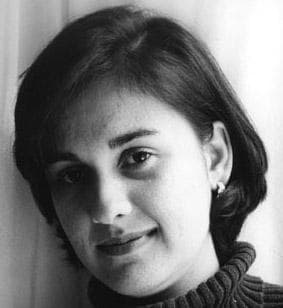
Kamila Shamsie FRSL is a Pakistani and British writer and novelist who is best known for her award-winning novel Home Fire (2017). Named on Granta magazine's list of 20 best young British writers, Shamsie has been described by The New Indian Express as "a novelist to reckon with and to look forward to." She also writes for publications including The Guardian, New Statesman, Index on Censorship and Prospect, and broadcasts on radio.
Similar books
- Home Fire
Kamila Shamsie
4.1 (43k) average on GoodreadsLiterary FictionExplores complex family relationships and political themes within a contemporary global context.
- A Case of Exploding Mangoes
Mohammed Hanif
3.8 (10k) average on GoodreadsLiterary FictionOffers a blend of mystery, political intrigue, and a distinct Pakistani setting and voice.
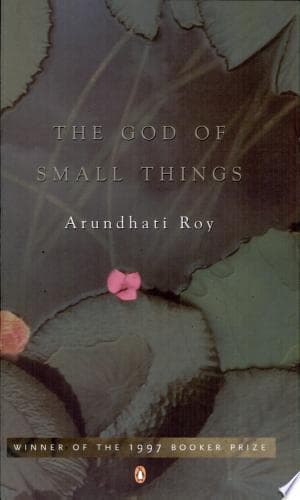
- The God of Small Things
Arundhati Roy
3.9 (244k) average on GoodreadsLiterary FictionFeatures a strong focus on family dynamics, loss, and the impact of political and social events on personal lives in a South Asian context.
- Maps for Lost Lovers
Nadeem Aslam
3.8 (3k) average on GoodreadsLiterary FictionAslam's 'Maps for Lost Lovers' delves into the grim realities of honor killings and the complexities of immigrant communities, often with a starker, more visceral realism. In contrast, 'Broken Verses' uses a more delicate, almost elegiac tone to uncover secrets, focusing on intellectual and emotional codes rather than overt social commentary or violence. Aslam's narratives, as analyzed by Dr. Rachael Gillett, often immerse readers in the immediate consequences of cultural conflict, whereas Shamsie, in 'Broken Verses,' explores the lingering, almost spectral effects of past political and personal traumas.
- The Old Man and the Sea
Ernest Hemingway
3.8 (831k) average on GoodreadsLiterary FictionA Cuban fisherman's long struggle with a giant marlin becomes a story of endurance and dignity, now retold for young adults with illustrations, phonetic guides, and writing prompts in Traditional Chinese.
- One Hundred Years of Solitude
Gabriel García Márquez
4.1 (753k) average on GoodreadsLiterary FictionThrough the multi-generational story of the Buendía family, a mythical town deals with the repeating patterns of time, love, and solitude, as the extraordinary mixes with the ordinary.





Enjoyed the summary?
A summary gives you the shape of the book. The book itself has the detail, the examples and the voice.
Find Broken Verses on AmazonAs an Amazon Associate, BookBrief earns from qualifying purchases. How we're funded