

Synopsis
Covers the whole plot, including the ending.
- Difficulty
- Medium
- Pacing
- Moderate
- Mood
- Somber, Resilient, Reflective, Heartbreaking, Humanistic
- Read it if
- You want a powerful, unflinching look at life in Maoist China through the eyes of an ordinary man and his family, exploring themes of sacrifice, family, and endurance with deep emotional intensity.
- Skip it if
- You prefer fast-paced plots or shy away from stories with significant hardship, poverty, and emotionally heavy themes.
Chronicle of a Blood Merchant Plot Summary
Covers the whole plot, including the ending.
The First Blood Sale and Marriage
Xu Sanguan, a cart-pusher in a silk mill, learns from his friends, Ah Fang and Genlong, that selling blood is a quick way to earn money and feel stronger. He visits the Blood Chief, Li, and passes a physical examination, which includes drinking a lot of water. After successfully selling 400cc of blood, he feels invigorated and uses the money to buy a new suit and shoes. This new wealth allows him to pursue Xu Yulan, a beautiful woman known for her affair with He Xiaoyong. Despite her reputation, Xu Sanguan marries her, starting his family.
The Birth of Three Sons and a Shocking Revelation
Xu Sanguan and Xu Yulan have three sons: Xu Yile, Xu Erle, and Xu Sanle. Xu Sanguan favors Xu Yile, often taking him to the market for special treats. However, a rumor begins to spread, started by gossip from Lin Fenfang, that Xu Yile is actually the son of He Xiaoyong, Xu Yulan's former lover. The strong resemblance between Xu Yile and He Xiaoyong, coupled with Xu Yile consistently preferring He Xiaoyong's company over his supposed father's, causes great pain and public humiliation for Xu Sanguan. He confronts Xu Yulan, who tearfully confesses the truth, devastating Xu Sanguan and creating a lasting rift in their family.
Xu Yulan's Public Shaming and Xu Sanguan's Retribution
After the truth about Xu Yile's paternity comes out, Xu Yulan is publicly shamed and paraded through the streets as a 'broken shoe' (prostitute) by her neighbors. Xu Sanguan, initially overcome with shame and anger, refuses to defend her and even joins in the public scorn. He then seeks revenge against He Xiaoyong. He arranges a public confrontation, demanding compensation for raising He Xiaoyong's son. This public shaming of He Xiaoyong is Xu Sanguan's way of restoring his own honor and asserting his authority, even as the incident permanently damages his family's reputation.
Famine and the Struggle for Survival
A severe famine hits the region, making food scarce and expensive. Xu Sanguan, despite his earlier dislike for Xu Yile, feels responsible for feeding all his children. He repeatedly sells his blood, enduring weakness and dizziness, to buy small amounts of sweet potatoes, cornmeal, and sometimes even noodles for his family. These frequent blood sales harm his health, but he sees no other way to prevent his family from starving. The famine forces him into a cycle of self-sacrifice, showing the extreme measures people took to survive during this difficult time.
The Move to the Countryside
As part of the 'Up to the Mountains and Down to the Countryside' movement, Xu Yile, now a young man, is sent to work in the countryside. This separation is especially hard on Xu Sanguan, who, despite their complicated paternity, has grown to care for Xu Yile. The move means a further scattering of the family and a loss of control over their children's futures. Xu Sanguan worries constantly about Xu Yile's well-being and the harsh conditions he faces, reflecting the anxieties of many parents whose children were sent away during this political campaign.
Xu Erle's Accident and Xu Sanguan's Desperate Measures
Xu Erle, while working, suffers a severe head injury. The medical treatment is expensive, and the family faces another financial crisis. Xu Sanguan begins a desperate journey, traveling to different towns and selling his blood repeatedly, often against the advice of the blood chiefs due to his weakened state. He becomes a skeletal figure, his body ravaged by the constant loss of blood, but he is driven by a strong determination to save his second son. This period shows the extreme lengths a father will go to for his child, even when facing his own physical collapse.
The Return of Xu Yile and Reconciliation
Xu Yile falls gravely ill while working in the countryside and is sent back home. He is weak, jaundiced, and near death. Xu Sanguan, despite his earlier resentment, is filled with concern. He nurses Xu Yile back to health, selling his blood one more time to buy expensive medicine and food. During this time, the emotional distance between father and son begins to close. Xu Yile finally accepts Xu Sanguan as his father, and Xu Sanguan accepts Xu Yile fully into his heart, showing that love and care can go beyond biological ties.
Xu Sanle's Illness and a Final Sacrifice
Xu Sanle, the youngest son, falls ill. Xu Sanguan, now an old man, instinctively goes to sell his blood again, believing it to be the only solution. However, the Blood Chief at the hospital, seeing his frail condition and the toll years of blood selling have taken, refuses to draw his blood, stating he is too old and weak. This rejection is a shock and a moment of deep despair for Xu Sanguan, as his lifelong method of providing for his family is no longer available. He feels useless and unable to protect his loved ones, marking a significant change in his self-perception.
The Sons' Support and a New Understanding
Distraught by his inability to sell blood, Xu Sanguan wanders the streets, feeling his life's purpose has ended. His three sons, now adults, find him and, learning of his distress, pool their money to buy him a celebratory meal of noodles with pork sauce and two bowls of yellow rice wine. This act of collective support from Xu Yile, Xu Erle, and Xu Sanle is a powerful moment of role reversal and filial piety. It shows that the children, for whom Xu Sanguan had sacrificed so much, are now capable of caring for him, offering him comfort and a sense of worth beyond his ability to sell blood.
A Life of Sacrifice and Enduring Love
In the final scenes, Xu Sanguan, having been cared for by his sons, finds a quiet sense of peace. He reflects on his life, marked by repeated blood sales that sustained his family through famines, illnesses, and political turmoil. Despite the initial betrayals and hardships, the novel ends with a look at the resilience of the human spirit and the lasting strength of family bonds, even those formed in unconventional ways. Xu Sanguan's journey, though filled with physical pain and emotional scars, ultimately confirms the deep, if sometimes complicated, love he holds for his wife and all three of his sons.
Principal Figures
Xu Sanguan
Protagonist
A cart-pusher who repeatedly sells his blood to provide for his family.
Xu Sanguan is a simple, somewhat naive man who works as a cart-pusher in a silk mill. He possesses a strong sense of responsibility, especially towards his family, which he demonstrates through his repeated, painful blood sales. Initially concerned with honor and reputation, he evolves into a figure of pure self-sacrifice. He is deeply affected by the revelation of Xu Yile's paternity, but his love for his children ultimately transcends biological ties. His character embodies the struggles and resilience of ordinary people during a tumultuous period in Chinese history.
Relationships: Xu Yulan (Wife, initially strained by her infidelity but ultimately a partnership forged through shared hardship.); Xu Yile (Eldest son, initially rejected due to paternity, later fully accepted and loved.); Xu Erle (Second son, for whom Xu Sanguan makes extreme sacrifices.); Xu Sanle (Youngest son, for whom Xu Sanguan attempts a final, impossible sacrifice.)
Xu Yulan
Supporting
Xu Sanguan's beautiful wife, known for her past affair.
Xu Yulan is a beautiful but somewhat impulsive woman. Her past affair with He Xiaoyong leads to public shaming and a crisis in her marriage with Xu Sanguan. Despite her flaws, she is a devoted mother and a survivor, enduring public scorn and the hardships of poverty alongside her husband. She often bears the brunt of societal judgment but remains a resilient figure, managing the household and supporting her children. Her character highlights the harsh societal expectations placed on women during that era.
Relationships: Xu Sanguan (Husband, a complicated relationship marked by betrayal, forgiveness, and enduring partnership.); He Xiaoyong (Former lover, father of Xu Yile.); Xu Yile (Eldest son, whom she deeply loves and defends.)
Xu Yile
Supporting
Xu Sanguan's eldest son, whose paternity is a source of conflict.
Xu Yile is initially portrayed as the favored son, but his resemblance to He Xiaoyong reveals his true paternity, causing immense pain to Xu Sanguan. He is somewhat detached from Xu Sanguan in his youth, often seeking out He Xiaoyong. As he grows older and experiences hardship, particularly during his time in the countryside and his severe illness, he matures and eventually acknowledges Xu Sanguan as his true father, demonstrating a deep bond formed through shared experience rather than biology. His journey explores themes of identity and the nature of fatherhood.
Relationships: Xu Sanguan (Adoptive father, a relationship that evolves from rejection to deep filial love.); He Xiaoyong (Biological father, a distant and largely absent figure.); Xu Erle (Brother, a close sibling bond.); Xu Sanle (Brother, a close sibling bond.)
Xu Erle
Supporting
Xu Sanguan's second son, for whom he makes significant sacrifices.
Xu Erle is the second son, for whom Xu Sanguan makes some of his most desperate blood sales, particularly after his head injury. He is a more straightforward character than Xu Yile, embodying the typical son figure for Xu Sanguan. His illness serves as a catalyst for some of Xu Sanguan's most grueling acts of self-sacrifice, highlighting the intense parental love and determination. As an adult, he contributes to supporting his aging father, showing his filial piety.
Relationships: Xu Sanguan (Father, a strong and loving bond.); Xu Yile (Brother, a close sibling bond.); Xu Sanle (Brother, a close sibling bond.)
Xu Sanle
Supporting
Xu Sanguan's youngest son, for whom he attempts a final blood sale.
Xu Sanle is the youngest of the three sons. While less prominent in the narrative than his elder brothers, his illness in Xu Sanguan's old age triggers the protagonist's final, poignant attempt to sell blood. He represents the continued responsibility and love Xu Sanguan feels for his children, even when his body is failing him. His role in comforting his father in the end signifies the cyclical nature of care within the family.
Relationships: Xu Sanguan (Father, a loving bond.); Xu Yile (Brother, a close sibling bond.); Xu Erle (Brother, a close sibling bond.)
He Xiaoyong
Antagonist/Mentioned
Xu Yulan's former lover and Xu Yile's biological father.
He Xiaoyong is a shadowy figure whose past affair with Xu Yulan casts a long shadow over Xu Sanguan's family. He is the biological father of Xu Yile, and his existence is a constant source of public humiliation and private pain for Xu Sanguan. He Xiaoyong is largely passive and does not take responsibility for Xu Yile, representing the societal double standards and the consequences of past actions. His character serves as a catalyst for much of the early conflict and emotional turmoil in the story.
Relationships: Xu Yulan (Former lover.); Xu Yile (Biological son, for whom he takes no responsibility.)
Blood Chief Li
Supporting
The initial Blood Chief, a jovial figure who oversees Xu Sanguan's first blood sales.
Blood Chief Li is the first figure Xu Sanguan encounters in the blood-selling process. He is a somewhat jovial and pragmatic character, offering advice and overseeing the initial blood sales. He represents the transactional nature of the blood market but also provides a sense of ritual and comfort for the men who come to sell their blood. His presence establishes the initial understanding and rules of this unique economy that Xu Sanguan relies on.
Relationships: Xu Sanguan (Transactional relationship as a blood seller and buyer.)
Ah Fang
Supporting
Xu Sanguan's friend and fellow cart-pusher, who introduces him to blood selling.
Ah Fang is one of Xu Sanguan's friends and colleagues who introduces him to the practice of selling blood. He, along with Genlong, provides Xu Sanguan with the initial knowledge and encouragement to engage in this life-sustaining, yet physically draining, activity. Ah Fang represents the camaraderie and shared experiences among working-class men who resort to extraordinary measures to survive and provide for their families.
Relationships: Xu Sanguan (Friend and colleague.)
Genlong
Supporting
Xu Sanguan's friend and fellow cart-pusher, also a blood seller.
Genlong is another of Xu Sanguan's friends who sells blood. He is part of the small group that initially educates Xu Sanguan about the process and its perceived benefits. Genlong, like Ah Fang, represents the collective experience of men who use blood selling as a means of augmenting their meager incomes. His presence reinforces the normalcy and necessity of this practice within their community.
Relationships: Xu Sanguan (Friend and colleague.)
Themes & Insights
The Price of Survival and Self-Sacrifice
The novel explores the extreme lengths people go to survive and protect their families during times of great hardship. Xu Sanguan's repeated blood sales, often to the point of severe physical harm, symbolize this theme. Each sale is a sacrifice of his own vitality for his wife and sons, whether for food during a famine, medicine for an injured child, or simply to gain respect. This theme is clear when Xu Sanguan travels between towns, selling blood multiple times in a single day, nearly dying, to save Xu Erle after his accident.
“Blood selling was like a man going to bed with a woman; it was something that, once you started, you couldn't stop.”
The Meaning of Family and Fatherhood
A central theme is the complex and changing nature of family bonds, especially fatherhood. Initially, Xu Sanguan's rejection of Xu Yile due to his paternity highlights the societal focus on biological lineage. However, through shared suffering and Xu Sanguan's provision for all three sons, regardless of biology, the novel argues that true fatherhood is defined by love, responsibility, and sacrifice. The reconciliation between Xu Sanguan and Xu Yile, particularly when Xu Yile is gravely ill, shows that love and care can go beyond genetic ties, forming a stronger family unit.
“Xu Sanguan didn't know if he was Xu Yile's father, but he had raised him for so many years. Whether he was his father or not, he was still his son.”
Resilience in the Face of Adversity
The story is about human resilience against poverty, political upheaval (like the Cultural Revolution and famine), and personal betrayals. The Xu family, and especially Xu Sanguan, endures public shaming, starvation, illness, and the psychological toll of constant struggle. Despite these overwhelming challenges, they find ways to survive, adapt, and even find moments of joy and connection. The family's ability to come together and support Xu Sanguan in his old age, after his body can no longer sustain his sacrifices, shows their lasting spirit and collective strength.
“He knew that life was hard, but he also knew that people could endure it.”
Societal Scrutiny and Public Shaming
The novel shows how gossip, public judgment, and shaming were common in small communities during this historical period. Xu Yulan's public parading as a 'broken shoe' and the constant rumors about Xu Yile's paternity show how societal norms and moral policing can cause great suffering. Xu Sanguan himself initially participates in shaming his wife and He Xiaoyong, driven by his own sense of violated honor. This theme highlights the pressure to conform and the severe consequences of perceived wrongdoings in a close-knit, ideologically charged society.
“Everyone knew that He Xiaoyong was the father of Xu Yile. It was a scandal that had lasted for more than ten years.”
The Body as a Commodity
A striking theme is the commodification of the human body, specifically blood, as a means of economic survival. Xu Sanguan's body becomes his main asset, a resource he uses repeatedly to earn money. The ritualistic nature of blood selling, including preparations and recovery, shows its importance as a legitimate, though desperate, form of labor. This theme highlights the desperation of people living in poverty, where their own physical essence becomes their only capital, forcing them to literally 'bleed' for their families' survival.
“For men like Xu Sanguan, selling blood was not just a way to make money; it was a way to prove their strength, their manhood.”
Plot Devices & Literary Techniques
Blood Selling as a Motif and Economic System
The act of selling blood serves as a recurring symbol of sacrifice and the family's primary economic engine.
Blood selling is not merely an event but a central, recurring motif and a unique economic system within the narrative. It functions as Xu Sanguan's primary means of income during times of crisis, from funding his marriage to providing food during famine and paying for medical expenses. Each instance of blood selling is a mini-narrative in itself, with its own rituals and physical toll, marking the passage of time and the severity of the family's struggles. It symbolizes his masculinity, his self-worth, and ultimately, his profound love and sacrifice for his family.
Famine and Political Movements
Historical events like famine and the 'Up to the Mountains and Down to the Countryside' movement shape the characters' lives.
The novel is set against the backdrop of specific historical events in Maoist China, particularly a severe famine and the 'Up to the Mountains and Down to the Countryside' movement. These events are not just background but active plot devices that directly influence the characters' actions and circumstances. The famine forces Xu Sanguan into desperate blood sales, while the political movement dictates Xu Yile's departure to the countryside, creating separation and new challenges. These historical realities drive the plot, creating a sense of urgency and explaining the extreme hardships faced by the family.
Rumors and Gossip
The spread of rumors and gossip acts as a catalyst for conflict and public shaming.
Rumors and gossip serve as a powerful plot device, particularly in the early parts of the novel. The widespread gossip about Xu Yulan's past affair and Xu Yile's true paternity is what ignites the central family conflict, leading to Xu Yulan's public shaming and Xu Sanguan's quest for retribution against He Xiaoyong. This device highlights the oppressive social environment and how public opinion can profoundly impact individual lives and family dynamics, often with devastating consequences that ripple through years.
The Noodle Meal
The simple meal of noodles with pork sauce symbolizes comfort, reconciliation, and filial piety.
The noodle meal, particularly noodles with pork sauce, appears at key moments in the narrative, functioning as a recurring symbol. Initially, it represents a luxury Xu Sanguan buys for Xu Yile after a blood sale, a small indulgence in hard times. More significantly, it becomes a symbol of reconciliation and filial love when his three adult sons buy him a celebratory noodle meal after his final, failed attempt to sell blood. This act signifies the reversal of roles, the sons now caring for their father, and represents a moment of profound comfort and affirmation of family bonds.
Chronicle of a Blood Merchant Quotes
“Living is exhausting, but it's also a kind of happiness.”
“When a man sells his blood, he is selling his life.”
“The past is like a dream, the future is like a dream. Only the present is real.”
“Sometimes, when you have nothing, you have everything.”
“A good son is one who doesn't cause trouble for his father.”
“If you don't eat, you'll die. If you eat too much, you'll also die.”
“Blood is not water; it's thicker than water.”
“What's the point of living if you can't even eat a bowl of noodles?”
“A man's worth is not in how much money he has, but in how much blood he has.”
“Children are debts, but also treasures.”
“To sell blood is to use your life to fight for your life.”
“You can't live without hope, even if it's just a little bit.”
“The more you suffer, the more you understand life.”
“No matter how much you eat, you'll still be hungry tomorrow.”
“The greatest happiness is to have a full stomach and a peaceful heart.”
Quiz
10 questions on the plot and the characters. Each answer comes with a short explanation.
Question 1
What is Xu Sanguan's primary occupation at the beginning of the novel?
- A farmer
- A silk mill worker (cart-pusher)
- A blood merchant
- A local government official
Show answer
B. A silk mill worker (cart-pusher) Xu Sanguan works as a cart-pusher in a silk mill, using blood selling to augment his income.
Question 2
Why does Xu Sanguan initially decide to sell his blood?
- To buy a new house for his family.
- To prove his manhood and impress his friends.
- To pay for his wife's medical treatment.
- To start a new business venture.
Show answer
B. To prove his manhood and impress his friends. Xu Sanguan's first blood sale is driven by a desire to emulate his friends, who boast about the money and status gained from selling blood, proving their 'manhood'.
Question 3
Which of Xu Sanguan's sons is revealed not to be his biological child?
- Xu Yile
- Xu Erle
- Xu Sanle
- All three sons are his biological children.
Show answer
A. Xu Yile It is revealed that Xu Yile, the eldest son, is the product of Xu Sanguan's wife's affair with a neighbor.
Question 4
What is the primary historical period in China during which the novel is set?
- The Great Leap Forward
- The Cultural Revolution
- The Chinese Civil War
- The Opium Wars
Show answer
B. The Cultural Revolution The novel is explicitly stated to be set at the height of the Cultural Revolution, with its poverty and betrayals under Chairman Mao's regime.
Question 5
What is Xu Yulan's (Xu Sanguan's wife) public humiliation related to?
- Stealing food from the communal kitchen.
- Her past affair with a neighbor, leading to her being scorned as a prostitute.
- Disrespecting a local party official.
- Failing to meet her work quota at the factory.
Show answer
B. Her past affair with a neighbor, leading to her being scorned as a prostitute. Xu Yulan is publicly scorned as a prostitute due to her past liaison with a neighbor, which resulted in Xu Yile's birth.
Question 6
What recurring motif or action does Xu Sanguan resort to repeatedly to solve his family's financial crises or medical emergencies?
- Borrowing money from his wealthy relatives.
- Selling his blood.
- Gambling at the local teahouse.
- Taking on extra shifts at the silk mill.
Show answer
B. Selling his blood. Xu Sanguan's 'lethally frequent' visits to the blood chief are his primary method of securing money for his family's needs, especially during crises.
Question 7
How does Xu Sanguan's relationship with Xu Yile evolve after the truth about Yile's parentage is revealed?
- He completely disowns Yile and refuses to speak to him.
- He initially rejects Yile but eventually comes to deeply care for and sacrifice for him.
- He treats Yile worse than his other sons, always reminding him of his origins.
- He becomes overly protective of Yile to compensate for his initial rejection.
Show answer
B. He initially rejects Yile but eventually comes to deeply care for and sacrifice for him. Despite his initial anger and rejection, Xu Sanguan ultimately finds strength in the 'blood ties' of his family, making great sacrifices for Xu Yile, particularly when Yile falls ill.
Question 8
What is the broader thematic significance of Xu Sanguan's blood selling beyond mere financial necessity?
- It symbolizes the exploitation of the working class by the wealthy elite.
- It represents the desperate measures individuals take to survive and preserve family in harsh political and economic conditions.
- It highlights a traditional Chinese custom of offering blood as a sign of loyalty.
- It serves as a metaphor for the literal draining of China's resources during the Cultural Revolution.
Show answer
B. It represents the desperate measures individuals take to survive and preserve family in harsh political and economic conditions. The blood selling is a powerful metaphor for the sacrifices and indignities endured by ordinary people to survive and protect their families amidst the extreme poverty and political turmoil of the Cultural Revolution.
Question 9
What does Xu Sanguan's emotional reaction to his inability to sell his blood towards the end of the novel signify?
- Relief that he no longer has to endure the painful process.
- Frustration that he can no longer provide for his family in the only way he knows how.
- Joy at realizing he has saved enough money to retire.
- Indifference, as his sons are now grown and self-sufficient.
Show answer
B. Frustration that he can no longer provide for his family in the only way he knows how. Towards the end, when his body can no longer sustain blood selling, Xu Sanguan is devastated, crying because he feels he has lost his ability to be useful and provide for his family, demonstrating his deep commitment to them.
Question 10
Which of the following best describes the overall tone of the novel?
- Lighthearted and comedic
- Cynical and detached
- Raw, emotionally intense, with clear-eyed compassion
- Romantic and idealistic
Show answer
C. Raw, emotionally intense, with clear-eyed compassion The description highlights 'rare emotional intensity, grippingly raw descriptions... and clear-eyed compassion,' accurately capturing the novel's tone.
Chronicle of a Blood Merchant FAQ
What is the central premise of 'Chronicle of a Blood Merchant'?
The novel follows Xu Sanguan, a cart-pusher in a silk mill, who repeatedly sells his blood to supplement his income and provide for his family during the tumultuous period of the Cultural Revolution in China. His life is marked by poverty, personal betrayals, and the constant struggle to survive and care for his wife and three sons.
Who is Xu Sanguan and what is his primary motivation throughout the book?
Xu Sanguan is the protagonist, a working-class man who views selling his blood as his most valuable asset and a means to overcome financial hardship. His primary motivation is to ensure the survival and well-being of his wife, Xu Yulan, and their three sons, especially during times of famine and political upheaval.
How does Xu Yulan's past affair impact the family dynamic and Xu Sanguan's emotional state?
Xu Yulan's affair with the neighbor He Xiaoyu results in their second son, Xu Erle. This revelation deeply shatters Xu Sanguan, leading to his greatest indignity, public scorn for Xu Yulan as a 'prostitute,' and a period where he initially rejects Xu Erle, creating immense emotional turmoil within the family and for Xu Sanguan personally.
What role does blood play, both literally and symbolically, in the novel?
Literally, blood is Xu Sanguan's commodity, a tangible resource he sells for money to feed his family. Symbolically, it represents life, sacrifice, and the profound, often challenging, ties of family, particularly when Xu Sanguan acknowledges his bond with Xu Erle despite not being his biological father.
How does the historical context of the Cultural Revolution influence the characters' lives?
The Cultural Revolution significantly impacts the characters by creating widespread poverty, food shortages, political purges, public humiliation, and constant fear. These conditions force Xu Sanguan to sell his blood frequently, and contribute to the public shaming of Xu Yulan and the general hardship experienced by the entire community.
Are there any subtle indications early on that Xu Erle might not be Xu Sanguan's biological son?
Yes, there are subtle hints, such as Xu Erle's physical resemblance to He Xiaoyu and his distinct personality compared to the other two sons. These details are often noted by neighbors or Xu Sanguan himself in passing, though their significance isn't fully understood until the truth is revealed.
What is the significance of the ritualistic meal Xu Sanguan eats after selling his blood?
The ritualistic meal, typically fried pork liver and yellow rice wine, is not just about physical recovery. It signifies Xu Sanguan's brief moments of indulgence and self-care after a profound sacrifice, acting as a psychological reward and a symbolic replenishment of his life force.
How does Xu Sanguan's relationship with Xu Erle evolve beyond the initial rejection?
Initially, Xu Sanguan rejects Xu Erle, but when Xu Erle falls severely ill and needs medical attention, Xu Sanguan embarks on a desperate journey, selling his blood repeatedly to save him. This act of profound sacrifice solidifies their bond, demonstrating that love and responsibility transcend biological ties.
What is implied about the 'blood chief' and the broader system of blood selling?
The 'blood chief' represents a system that exploits the desperation of the poor, profiting from their need. While seemingly offering a solution, it ultimately drains the life force of individuals like Xu Sanguan, highlighting the systemic hardship and the lack of alternative economic opportunities.
How does Xu Sanguan's self-worth and identity become tied to his ability to sell blood?
Xu Sanguan's self-worth is deeply intertwined with his blood-selling ability; it defines him as a provider and a man capable of facing hardship. When he is eventually unable to sell his blood due to age and poor health, he experiences a profound identity crisis and despair, feeling he has lost his most valuable asset.
Analyze the psychological impact of public shaming on Xu Yulan.
The public shaming of Xu Yulan, where she is paraded and denounced as a 'prostitute,' inflicts severe psychological trauma. It strips her of her dignity and social standing, leading to deep humiliation and isolation, and forcing her to confront her past transgressions in the most brutal way imaginable.
How does the concept of 'face' (mianzi) influence the characters' actions and decisions?
The concept of 'face' profoundly influences the characters, particularly Xu Sanguan. His initial rejection of Xu Erle, his outrage over Xu Yulan's affair, and his desire to provide for his family are all driven by a need to maintain his reputation and dignity within the community, even amidst personal suffering.
Discuss the psychological burden carried by Xu Erle due to his paternity.
Xu Erle carries a significant psychological burden due to his paternity, experiencing initial rejection from Xu Sanguan and facing potential ostracization. Despite this, his unwavering loyalty and love for Xu Sanguan, especially during the illness, demonstrate his resilience and deep emotional connection to the family that raised him.
Is Xu Sanguan a truly selfless character, or are there elements of self-interest in his sacrifices?
While Xu Sanguan's sacrifices for his family are immense and appear selfless, there are elements of self-interest, particularly in how his identity and pride are tied to his role as a provider. His actions are driven by love, but also by a need to fulfill his perceived duty and maintain his 'face' in society.
What is the author's stance on the nature of family and blood ties, particularly through Xu Sanguan's acceptance of Xu Erle?
Yu Hua suggests that the nature of family extends beyond biological blood ties. Through Xu Sanguan's ultimate acceptance and desperate sacrifice for Xu Erle, the author argues that love, shared experiences, and committed care forge stronger, more meaningful bonds than mere biology, redefining what constitutes a 'true' family.
How does the ending, with Xu Sanguan's inability to sell blood, reflect on his life's journey?
The ending, where Xu Sanguan can no longer sell his blood, marks a profound shift. It signifies the end of his primary means of survival and identity, forcing him to confront his mortality and the loss of his 'asset.' It reflects the full arc of his life, from a vigorous provider to an aging man facing the inevitable decline of his body.
Does the novel offer any hope or redemption amidst its portrayal of hardship and suffering?
Yes, despite the pervasive hardship, the novel offers hope and redemption through the enduring strength of family bonds. Xu Sanguan's unwavering love for his sons, especially Xu Erle, and the family's resilience in facing adversity, ultimately highlight the human capacity for connection, sacrifice, and survival.
What broader social commentary does Yu Hua make about life under Chairman Mao's regime?
Yu Hua offers a scathing social commentary on the devastating human cost of Chairman Mao's regime. He exposes the extreme poverty, political paranoia, public humiliation, and the desperate measures individuals had to take to survive, critiquing the systemic failures and ideological extremism of the era.
About the author

Yu Hua is a Chinese author known for his impactful fiction that often explores themes of life and suffering. His notable works include "To Live," which reflects on the struggles of ordinary people in China, "Chronicle of a Blood Merchant," a story about the human condition and sacrifice, and "Brothers," a tale of familial bonds set against the backdrop of societal change.
Similar books
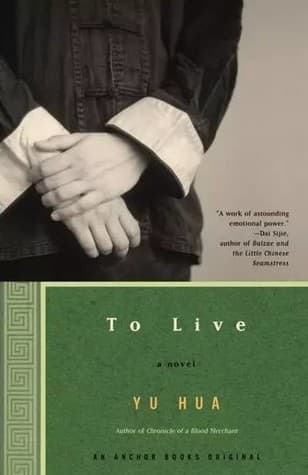
- To Live
Yu Hua
4.3 (8k) average on GoodreadsHistorical FictionAnother powerful novel by Yu Hua depicting the resilience of an ordinary family through decades of tumultuous Chinese history.
- Balzac and the Little Chinese Seamstress
Dai Sijie
3.6 (56k) average on GoodreadsHistorical FictionExplores themes of hardship and cultural upheaval during the Cultural Revolution, though with a different narrative focus.
- The Good Earth
Pearl S. Buck
4.0 (223k) average on GoodreadsHistorical FictionA classic depicting the struggles and resilience of a peasant family in early 20th-century China amidst poverty and social change.
- The Old Man and the Sea
Ernest Hemingway
3.8 (831k) average on GoodreadsLiterary FictionA Cuban fisherman's long struggle with a giant marlin becomes a story of endurance and dignity, now retold for young adults with illustrations, phonetic guides, and writing prompts in Traditional Chinese.
- One Hundred Years of Solitude
Gabriel García Márquez
4.1 (753k) average on GoodreadsLiterary FictionThrough the multi-generational story of the Buendía family, a mythical town deals with the repeating patterns of time, love, and solitude, as the extraordinary mixes with the ordinary.
- The Goldfinch
Donna Tartt
3.9 (720k) average on GoodreadsLiterary FictionHaunted by a tragic explosion and clutching a stolen Dutch masterpiece, a young orphan navigates the opulent drawing rooms of New York and the gritty underbelly of the art world, desperately seeking connection and redemption amidst a life spiraling into crime and obsession.



Enjoyed the summary?
A summary gives you the shape of the book. The book itself has the detail, the examples and the voice.
Find Chronicle of a Blood Merchant on AmazonAs an Amazon Associate, BookBrief earns from qualifying purchases. How we're funded