
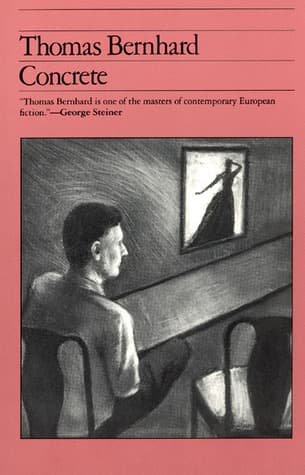
Synopsis
Covers the whole plot, including the ending.
- Difficulty
- Medium
- Pacing
- Slow
- Mood
- Misanthropic, Obsessive, Darkly Humorous, Existential
- Read it if
- You enjoy dark, philosophical, stream-of-consciousness narratives about intellectual paralysis, misanthropy, and the human condition. You appreciate dry, cynical humor and don't mind repetitive prose that builds a unique, immersive atmosphere.
- Skip it if
- You prefer plot-driven stories, optimistic themes, or straightforward prose. The repetitive nature and lack of external action might be frustrating if you're looking for a fast-paced or traditionally structured novel.
Concrete Plot Summary
Covers the whole plot, including the ending.
The Impossibility of Writing
Rudolph, the narrator, lives in Peiskam-Hochstrass, Austria. He has tried to write a book on Felix Mendelssohn-Bartholdy for years. He has much research and notes, but cannot write. He describes his chronic headaches, a "brain-destroying" illness he blames on his studies and constant noise. He seeks the perfect time and place to write, believing any distraction will ruin his work. This shows his intellectual paralysis and self-defeating perfectionism, which stops any progress on his book.
The Sister's Visit and the Invitation to Majorca
Rudolph describes his sister's recent, unwelcome visit. He finds her presence suffocating and disruptive. He sees her as domineering, insensitive, and annoying, especially her habit of moving his things. Her visit worsens his anxieties and his wish for solitude. During this time, his sister suggests he travel to Majorca to ease his suffering and perhaps to be rid of him. She offers to pay for his trip and lodging. Rudolph first resists but accepts, seeing it as an escape and a chance to write his book.
Arrival in Majorca and the Search for Solitude
In Majorca, Rudolph immediately searches for a quiet, isolated place to work. He believes the change of scenery will unlock his creativity. He rents a small, secluded house in a rural area, thinking the Mediterranean climate and lack of familiar distractions will help him write. However, his hopes fade. He finds the heat unbearable, local customs irritating, and solitude itself a new worry. His headaches persist, as does his sense of his task's futility. The new environment, instead of freeing him, merely shifts his frustrations, showing that his internal problems are greater than external ones.
Meeting the German Couple
Rudolph's attempts at isolation are broken by a German couple, the Karrers, staying nearby. He watches them with disdain and morbid interest, projecting his anxieties onto them. He finds their cheerful demeanor and ordinary conversations repulsive, seeing them as symbols of the mediocrity he despises. Their closeness, even if not directly interfering, becomes another reason for Rudolph's inability to focus. He spends much time criticizing their every move, further diverting his energy from writing and strengthening his misanthropy.
The Story of Mrs. Karrer's Death
Rudolph learns that Mrs. Karrer, the wife of the German couple he observed, has died suddenly. He fixates on the details of her death, which he believes was suicide by drowning. Instead of sympathy, Rudolph finds a perverse validation in the tragedy. He sees her death as a logical outcome of her perceived superficiality and life's meaninglessness. He reconstructs the events leading to her death in his mind, often with detached cruelty. This morbid obsession further distracts him from writing, yet gives him a new, dark intellectual focus.
The Funeral and Mr. Karrer's Grief
Rudolph attends Mrs. Karrer's funeral, driven by curiosity, not grief. He observes Mr. Karrer's public display of sorrow, analyzing every gesture and word for signs of inauthenticity. He sees Mr. Karrer's grief not as real emotion, but as a performance, a ritualistic response. Rudolph's thoughts during the funeral are full of cynical judgments about the attendees, the ceremony, and human connection. The event confirms his belief that life is a series of meaningless rituals and that real emotion is either absent or corrupted.
The Return to Austria and Renewed Procrastination
After Majorca, Rudolph returns home to Peiskam-Hochstrass, Austria. Despite the change of scenery and the dramatic events, his main problem remains. He still cannot write his book on Mendelssohn. The familiar surroundings bring back old distractions and anxieties he hoped to escape. His headaches, his dislike for his sister, and his general contempt for the world continue. The Majorca trip, far from a cure, is a temporary diversion, showing the inescapable nature of his internal struggles and the futility of external solutions.
Obsession with Details and the Failure of Memory
Rudolph discusses his struggle with memory, especially his fear of forgetting details for his Mendelssohn book. He believes every fact must be perfectly recalled and stated, or the project is ruined. This obsession with accuracy and recall becomes another obstacle. He spends hours rereading notes and thinking about small details, instead of writing. He describes instances where his memory fails him, leading to despair and a sense of intellectual inadequacy, further stopping his writing.
The Futility of Publishing
Rudolph often thinks about the futility of publishing and the superficiality of literary recognition. He dislikes critics, readers, and the entire publishing industry, seeing it as corrupt and meaningless. He argues that true genius is rarely appreciated, and most published works are mediocre. This cynical view gives him another reason not to write. He believes that even if he finished his masterpiece, it would likely be misunderstood, misjudged, or ignored. This arrogance and contempt for the world protect him from the vulnerability of creation.
The Enduring Headache and the Cycle of Procrastination
Rudolph ends his story returning to his constant companion: the debilitating headache. He portrays it as an almost living thing, a physical sign of his intellectual torment and his inability to escape his own mind. He admits that despite his efforts, travels, and thoughts, he is no closer to writing his book on Mendelssohn. The narrative ends where it began, in unresolved paralysis and despair. The reader is left with the idea that Rudolph is trapped in an unending, self-imposed cycle of procrastination and intellectual torment, with no hope of freedom.
Principal Figures
Rudolph
Protagonist
A reclusive, hypochondriac musicologist obsessed with writing a book on Mendelssohn.
Rudolph is a deeply neurotic and misanthropic musicologist from Vienna, living in rural Austria. He is plagued by chronic headaches, which he attributes to his intense intellectual pursuits and the perceived crudeness of the world around him. He possesses an immense intellect and an encyclopedic knowledge of music, particularly Mendelssohn, but is utterly paralyzed by his own perfectionism and fear of failure. He views humanity with contempt, finding most people, including his own sister, to be crude, irritating, and superficial. His internal monologue is characterized by repetitive, spiraling thoughts, cynicism, and an almost pathological inability to take decisive action.
Relationships: Rudolph's Sister (Antagonistic; she is a source of irritation and perceived suffocation, though she also provides financial support for his Majorca trip.); Mr. Karrer (Object of Rudolph's detached observation and cynical judgment.)
Rudolph's Sister
Supporting
Rudolph's overbearing and practical sister, who attempts to help him but only exacerbates his anxieties.
Rudolph's unnamed sister is a practical, well-meaning, but ultimately irritating figure in his life. She is depicted through Rudolph's highly subjective and critical lens as overbearing, insensitive, and disruptive. She attempts to alleviate his suffering by suggesting and funding his trip to Majorca, but her presence and her attempts to organize his life are perceived by Rudolph as suffocating intrusions. She represents the external world that Rudolph despises and finds intellectually inferior, yet he remains financially dependent on her to some extent.
Relationships: Rudolph (Complicated; she cares for him in her own way but is a constant source of annoyance for him.)
Mrs. Karrer
Supporting/Mentioned
A German woman in Majorca whose tragic death becomes an object of Rudolph's morbid fascination.
Mrs. Karrer is a German tourist in Majorca whom Rudolph observes from afar. She is initially presented as part of a cheerful, seemingly ordinary couple, which Rudolph finds deeply repulsive. Her sudden, tragic death—which Rudolph believes was a suicide by drowning—becomes a central focus of Rudolph's narrative. He fixates on the details of her demise, dissecting it with a morbid, analytical curiosity. For Rudolph, her death is not a source of sympathy but rather a grim validation of his own cynical worldview regarding the futility of human existence and the emptiness of conventional life.
Relationships: Mr. Karrer (Wife; her death leaves him grieving, a state Rudolph observes with detachment.); Rudolph (Object of his observation and morbid fascination.)
Mr. Karrer
Supporting/Mentioned
The grieving husband of Mrs. Karrer, observed with detached cynicism by Rudolph.
Mr. Karrer is the husband of Mrs. Karrer, a German tourist in Majorca. After his wife's tragic death, he is depicted as a man consumed by grief. Rudolph observes Mr. Karrer's reactions and public displays of sorrow with a cold, analytical detachment, often interpreting them as performative or superficial. For Rudolph, Mr. Karrer's grief is another example of human weakness and conventionality, further reinforcing his own misanthropic views. He serves as a foil to Rudolph's intellectual and emotional detachment, representing the emotional, conventional world that Rudolph so vehemently rejects.
Relationships: Mrs. Karrer (Husband; his grief is central to his character after her death.); Rudolph (Object of his observation and cynical judgment.)
Felix Mendelssohn-Bartholdy
Mentioned
The subject of Rudolph's perpetually unwritten book.
Felix Mendelssohn-Bartholdy is the renowned 19th-century composer whom Rudolph intends to write a definitive book about. Mendelssohn represents the unattainable goal of Rudolph's intellectual ambition. While he is the stated focus of Rudolph's life's work, the book about him remains unwritten due to Rudolph's profound procrastination and self-sabotage. Mendelssohn becomes a symbol of Rudolph's intellectual paralysis, a figure whose complexity and genius Rudolph feels he can never adequately capture or honor, thus serving as both inspiration and ultimate roadblock.
Relationships: Rudolph (His life's work and intellectual obsession, yet also the source of his profound frustration and inability to act.)
Themes & Insights
Procrastination and Creative Paralysis
The main theme is Rudolph's deep inability to start writing his book, despite years of preparation and a strong desire. His procrastination is not laziness but a psychological paralysis from perfectionism, fear of failure, and a sense that his efforts are pointless. He constantly finds excuses—headaches, noise, the wrong place, inadequate language—to avoid writing. This is clear throughout the novel, as every potential writing opportunity (e.g., in Majorca) is ruined by his internal thoughts and complaints, as seen in his endless debates about the 'perfect' writing conditions.
“I could have written it all down in one day, I told myself, but I didn't write it down in one day, and I haven't written it down in decades, because I always postponed the writing, always put it off until the next day, and then the next.”
Misanthropy and Isolation
Rudolph has a deep contempt for humanity, finding most people, including his sister and the German couple, crude, unintelligent, and irritating. This misanthropy drives his desire for extreme isolation, as he believes others disrupt his intellectual work. His observations of others are always critical, giving him material for his internal monologues but no real connection. His trip to Majorca is an attempt to find perfect solitude, yet even there, others' presence, like the Karrers, becomes a source of annoyance and distraction, showing his inability to escape his judgmental mind.
“People are always a disturbance, and in my case they are lethal.”
The Nature of Thought and Consciousness
The novel is largely a look into Rudolph's internal monologue, exploring his winding and often circular thoughts. Bernhard details Rudolph's obsessive thoughts, self-defeating logic, and cyclical anxieties. The narrative itself becomes a 'concrete' example of his thought process, showing how his mind, though brilliant, is trapped in a loop of self-analysis and self-sabotage. This theme explores how consciousness can be both a source of insight and an inescapable prison, as Rudolph's intellectual rigor stops him from engaging with the world productively.
“My head is a permanent construction site, I thought.”
Mortality and Meaninglessness
Rudolph often thinks about death, illness, and life's meaninglessness. His chronic headaches remind him of his mortality and human fragility. Mrs. Karrer's tragic death becomes a focus for his thoughts, not as a source of grief, but as a morbid confirmation of his cynical view. He sees life as absurd rituals and human efforts as pointless. This nihilistic outlook contributes to his creative paralysis, as he questions the purpose of creating anything if all will be forgotten.
“One day everything will be meaningless, everything will be forgotten, everything will have been for nothing.”
Plot Devices & Literary Techniques
Stream of Consciousness Narrative
The entire novel is presented as Rudolph's unfiltered, spiraling internal monologue.
The novel is written entirely in Rudolph's first-person stream of consciousness. There are no chapter breaks, minimal paragraphing, and sentences often run for pages, reflecting the continuous, associative, and often repetitive nature of his thoughts. This device immerses the reader directly into Rudolph's neurotic mind, allowing for a deep exploration of his anxieties, obsessions, and self-defeating logic. It blurs the line between narration and internal thought, making the reader experience his intellectual paralysis and misanthropy firsthand, rather than merely observe it.
Repetition and Variation
Key phrases, ideas, and complaints are repeated throughout the text with subtle variations.
Bernhard employs extensive repetition of specific phrases, concepts, and complaints (e.g., Rudolph's headaches, his sister's intrusions, the impossibility of writing). These repetitions are not identical but often feature slight variations, building a hypnotic rhythm and emphasizing Rudolph's obsessive, cyclical thought patterns. This device highlights his inability to move past certain mental blocks and reinforces the sense of his intellectual entrapment. It also serves to create a darkly comedic effect, as Rudolph's grievances become almost absurdly familiar to the reader.
The Unreliable Narrator
Rudolph's highly subjective and biased perspective shapes the entire story, making his account inherently untrustworthy.
Rudolph is a classic unreliable narrator. His extreme misanthropy, hypochondria, and intellectual arrogance mean that everything he describes—from his sister's actions to the Karrers' behavior—is filtered through his prejudiced and often distorted perception. The reader is never given an objective view of events or other characters, only Rudolph's highly critical and self-serving interpretations. This device forces the reader to question Rudolph's claims and to infer the reality of situations, adding layers of psychological complexity and dark humor to the narrative.
Metaphor of the 'Concrete'
The title itself refers to the solidified, unyielding nature of Rudolph's mental blocks.
The title 'Concrete' functions as a central metaphor for Rudolph's psychological state. It represents the hardened, unyielding nature of his creative paralysis and his intellectual entrapment. His thoughts, instead of flowing freely into written work, become dense and impenetrable, like concrete. It also suggests the rigidity of his worldview and his inability to adapt or change. The word evokes a sense of being stuck, immobile, and unable to break free from self-imposed limitations, perfectly encapsulating Rudolph's predicament.
Concrete Quotes
“Everything is ridiculous when you are happy, everything is sad when you are unhappy.”
“The world is full of people who are always on the point of doing something, but never do it.”
“One day I will write a book about everything that is wrong with me.”
“I am always on the point of going away, but I never go.”
“The only thing that has any value is what one does not do.”
“My head is full of thoughts, but my hands are empty.”
“I have to read everything twice, because the first time I don't understand anything.”
“Every person is a master of procrastination.”
“I have been thinking about writing for forty years, but I have not written a single word.”
“The world is a madhouse, and I am one of its inmates.”
“Everything I do is wrong, everything I think is wrong, everything I say is wrong.”
“I am always on the point of dying, but I never die.”
“My whole life is a failure, and I have nothing to show for it.”
“Silence is the only thing that doesn't betray you.”
Quiz
10 questions on the plot and the characters. Each answer comes with a short explanation.
Question 1
What is the primary activity Rudolph claims he is trying to undertake at the beginning of 'Concrete'?
- Composing a symphony
- Writing a book about Mendelssohn
- Researching a historical opera
- Translating a rare musical treatise
Show answer
B. Writing a book about Mendelssohn Rudolph explicitly states his intention to write a book about Felix Mendelssohn Bartholdy, though he never actually begins it.
Question 2
Where does Rudolph initially intend to go to escape his sister and begin his writing, before changing his mind?
- Palma, Mallorca
- Lisbon, Portugal
- Rome, Italy
- Athens, Greece
Show answer
B. Lisbon, Portugal Rudolph frequently mentions his plan to go to Lisbon, Portugal, but ultimately decides against it due to various perceived obstacles and his own inertia.
Question 3
What is Rudolph's primary complaint about his sister, and how does it affect his ability to work?
- Her constant demands for money, which distract him.
- Her loud piano playing, which makes concentration impossible.
- Her very presence and the noise she makes, which he finds unbearable.
- Her frequent guests, who interrupt his solitude.
Show answer
C. Her very presence and the noise she makes, which he finds unbearable. Rudolph attributes his inability to write to his sister's mere existence and the 'noise' she generates, even when she is silent, claiming her presence is an insuperable obstacle.
Question 4
What physical ailment does Rudolph suffer from that he frequently references?
- Severe migraines
- A chronic heart condition
- Multiple sclerosis
- Rheumatoid arthritis
Show answer
C. Multiple sclerosis Rudolph repeatedly mentions his diagnosis of multiple sclerosis, using it as another justification for his inaction and despair.
Question 5
What does Rudolph consider to be the ultimate failure of humanity, as reflected in his own life?
- The inability to achieve true artistic greatness.
- The failure to act, to overcome inertia and fulfill one's potential.
- The constant pursuit of material wealth over intellectual pursuits.
- The breakdown of meaningful interpersonal relationships.
Show answer
B. The failure to act, to overcome inertia and fulfill one's potential. A central theme of the novel is Rudolph's profound procrastination and inability to act, leading to a life defined by unfulfilled potential and despair, which he generalizes to humanity.
Question 6
What is the significance of the title 'Concrete' in relation to Rudolph's narrative?
- It refers to the material of his house, which he finds oppressive.
- It symbolizes the hardened, unyielding nature of his despair and inability to change.
- It represents the solid, factual basis of the musicological book he intends to write.
- It denotes the urban environment of Vienna, which he detests.
Show answer
B. It symbolizes the hardened, unyielding nature of his despair and inability to change. The title 'Concrete' powerfully symbolizes Rudolph's condition: his thoughts, his despair, and his inability to act are fixed, unyielding, and solidified.
Question 7
Rudolph's narrative style is characterized by what literary device?
- Short, declarative sentences and objective descriptions.
- Stream of consciousness with minimal punctuation and long, repetitive sentences.
- Dialogue-heavy scenes punctuated by brief internal monologues.
- Fragmented, non-linear structure with multiple narrators.
Show answer
B. Stream of consciousness with minimal punctuation and long, repetitive sentences. Bernhard's distinctive style, famously employed in 'Concrete,' involves long, winding, repetitive sentences that mimic the obsessive, circular nature of Rudolph's thoughts.
Question 8
What does Rudolph ultimately produce instead of his intended book on Mendelssohn?
- A collection of short stories about his travels.
- A detailed diary of his daily frustrations and failures.
- A series of critical essays on contemporary music.
- Nothing at all, remaining completely paralyzed.
Show answer
B. A detailed diary of his daily frustrations and failures. The book 'Concrete' itself is presented as the very text Rudolph produces, a record of his procrastination, despair, and the reasons he couldn't write the Mendelssohn book.
Question 9
How does Rudolph view his own intellect and potential, despite his current state of inaction?
- He believes he is mediocre and incapable of significant work.
- He acknowledges his intellectual gifts but sees them as a curse.
- He is indifferent to his own intelligence, focusing only on his physical ailments.
- He constantly seeks external validation for his intellectual prowess.
Show answer
B. He acknowledges his intellectual gifts but sees them as a curse. Rudolph frequently asserts his profound intellectual capabilities, often framing them as a source of his torment, making his failure to produce even more agonizing.
Question 10
What is the primary emotional tone conveyed by Rudolph's narration throughout the novel?
- Optimistic and hopeful, despite challenges.
- A mix of detached observation and ironic humor.
- Profound despair, self-pity, and misanthropy.
- Anger and resentment directed solely at external forces.
Show answer
C. Profound despair, self-pity, and misanthropy. Rudolph's narrative is saturated with negativity, expressing deep despair about his own life, his sister, humanity, and the world at large, often tinged with self-pity and a general hatred of mankind.
Concrete FAQ
What is the central premise of Thomas Bernhard's 'Concrete'?
'Concrete' centers on Rudolph, a Viennese musicologist, who is meant to be writing a definitive book on Mendelssohn but instead chronicles his own profound procrastination, despair, and numerous physical ailments. The novel becomes a detailed, almost obsessive, account of his inability to start his actual work, driven by an intricate web of self-imposed obstacles and anxieties.
Who is Rudolph and what is his primary struggle in the novel?
Rudolph is the narrator, a musicologist consumed by his own neuroses, hypochondria, and a paralyzing inability to commit to his life's work. His primary struggle is the constant battle against his own mind, which invents endless excuses, distractions, and physical ailments to avoid the act of writing, leading to a profound state of intellectual and personal paralysis.
What role does Rudolph's sister, ostensibly named 'Amalia' or 'Vera' in some interpretations, play in his life?
Rudolph's sister, often referred to as 'Vera,' is a significant source of his torment and an excuse for his inaction. He claims she constantly interrupts him, demands his attention, and drains his energy, preventing him from writing. While he blames her, her presence also provides him with a convenient scapegoat for his own failures.
Where does Rudolph spend most of his time, and what significance do these locations hold?
Rudolph spends much of his time in his apartment in Vienna, a space that becomes both a refuge and a prison, reflecting his internal confinement. He also recounts a trip to Palma, intended for writing, but which ultimately devolves into another exercise in procrastination and self-pity, highlighting that his problems are internal, not geographical.
What is the significance of the title 'Concrete'?
The title 'Concrete' can be interpreted in several ways: it might refer to the concrete floor Rudolph often lies on, symbolizing his grounded despair; the concreteness of his mental blocks; or the solid, unyielding nature of his self-imposed prison. It suggests a lack of fluidity and a rigid, inescapable reality for the narrator.
Are Rudolph's physical ailments and headaches real, or are they psychosomatic manifestations?
The novel strongly suggests that Rudolph's numerous physical ailments, particularly his headaches and ear problems, are largely psychosomatic. They serve as convenient, self-created excuses for his inability to write, allowing him to externalize his internal resistance and avoid confronting his intellectual paralysis directly.
What is the implied relationship between Rudolph and his deceased wife?
Rudolph frequently mentions his deceased wife, often in a way that suggests her memory continues to haunt him and contribute to his present state of despair. Her death seems to have deepened his isolation and neuroses, becoming another factor he uses to justify his withdrawal from the world and his writing.
How does Bernhard use repetition and circularity in Rudolph's narration?
Bernhard employs extensive repetition and circularity, with Rudolph frequently returning to the same complaints, observations, and self-recriminations. This stylistic choice mirrors Rudolph's trapped mental state, reflecting his inability to break free from his obsessive thought patterns and his perpetual cycle of procrastination and despair.
What is the significance of Rudolph's obsession with Mendelssohn?
Rudolph's obsession with writing about Mendelssohn is ironic, as he never actually begins the work. Mendelssohn represents the unattainable ideal of productive artistic genius that Rudolph aspires to but consistently fails to embody. The project becomes a symbol of his grand ambition thwarted by his profound inertia.
How does Rudolph's self-pity function within his psychological landscape?
Rudolph's profound self-pity is a central defense mechanism. It allows him to externalize blame for his failures onto others (his sister, the weather, his ailments) and to avoid accountability for his own inaction. This self-pity traps him in a cycle of victimhood, preventing any genuine attempt at overcoming his paralysis.
What psychological concept does Rudolph's constant procrastination exemplify?
Rudolph's constant procrastination exemplifies a severe form of self-sabotage and perfectionism paralysis. He sets impossibly high standards for his work, which then become insurmountable obstacles, leading him to avoid starting altogether. This reflects a fear of failure intertwined with a fear of success.
How does Rudolph's isolation contribute to his mental state?
Rudolph's self-imposed isolation, exacerbated by his complaints about his sister and the world, intensifies his neuroses and allows his obsessive thoughts to fester unchecked. Without external perspectives or interactions, his internal monologues become increasingly circular and distorted, deepening his despair and disconnect from reality.
Is Rudolph a reliable narrator? Why or why not?
Rudolph is an unreliable narrator, as his perspective is entirely subjective, colored by his severe neuroses, hypochondria, and self-pity. His accounts of events and people, particularly his sister, are filtered through his own distorted lens, making it difficult to discern objective truth from his highly personalized interpretations.
To what extent is 'Concrete' a critique of intellectual life or artistic ambition?
'Concrete' can be interpreted as a scathing critique of the performative aspects of intellectual life and the often-paralyzing weight of artistic ambition. Rudolph embodies the tragic figure who is crushed by the very aspirations he holds, exposing the potential for vanity and self-delusion within academic and creative pursuits.
Does Bernhard offer any hope or resolution for Rudolph by the end of the novel?
Bernhard offers no conventional hope or resolution for Rudolph. The novel concludes with Rudolph still trapped in his cyclical despair and procrastination, having merely produced a detailed account of his failure to produce. This lack of resolution underscores the bleak and unyielding nature of his psychological prison.
How does Bernhard's writing style, particularly the long, unbroken sentences, contribute to the novel's effect?
Bernhard's use of long, complex, and often paragraph-long sentences without clear breaks immerses the reader directly into Rudolph's stream of consciousness. This style mirrors Rudolph's obsessive, circular thought patterns, creating a suffocating, relentless reading experience that reflects the character's trapped mental state and inability to escape his own mind.
Could Rudolph be seen as a metaphor for a broader societal or artistic malaise?
Rudolph can be interpreted as a metaphor for a broader societal or artistic malaise, particularly within the context of post-war Austrian identity or the existential struggles of the modern intellectual. His paralysis and despair might symbolize a collective inability to move forward, haunted by past failures and overwhelmed by the present.
What is the role of humor, particularly dark humor, in 'Concrete'?
Despite its bleak themes, 'Concrete' is infused with a grotesque and dark humor, often stemming from Rudolph's exaggerated self-pity and his absurd justifications for inaction. This humor acts as a counterpoint to the despair, making Rudolph's plight both tragic and comically pathetic, preventing the narrative from becoming solely oppressive.
About the author
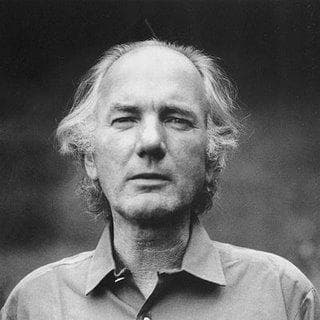
Thomas Bernhard was an Austrian author known for his distinctive style and exploration of existential themes. His notable works include "Concrete," which delves into the struggles of a writer, and "Extinction," a reflection on identity and memory. Bernhard's writing often critiques society and the human condition, establishing him as a significant figure in 20th-century literature.
Similar books
- Notes from Underground
Fyodor Dostoevsky
4.2 (84k) average on GoodreadsPsychologyFeatures a similarly alienated, intellectual narrator who rants against society and himself in a confessional style.
- Malone Dies
Samuel Beckett
3.9 (4k) average on GoodreadsLiterary FictionExplores themes of decay, futility, and a character's internal monologue as they face the end of their life, with a similar bleak humor.
- The Old Man and the Sea
Ernest Hemingway
3.8 (831k) average on GoodreadsLiterary FictionA Cuban fisherman's long struggle with a giant marlin becomes a story of endurance and dignity, now retold for young adults with illustrations, phonetic guides, and writing prompts in Traditional Chinese.
- One Hundred Years of Solitude
Gabriel García Márquez
4.1 (753k) average on GoodreadsLiterary FictionThrough the multi-generational story of the Buendía family, a mythical town deals with the repeating patterns of time, love, and solitude, as the extraordinary mixes with the ordinary.
- The Goldfinch
Donna Tartt
3.9 (720k) average on GoodreadsLiterary FictionHaunted by a tragic explosion and clutching a stolen Dutch masterpiece, a young orphan navigates the opulent drawing rooms of New York and the gritty underbelly of the art world, desperately seeking connection and redemption amidst a life spiraling into crime and obsession.
- Little Fires Everywhere
Celeste Ng
4.1 (713k) average on GoodreadsLiterary FictionIn Shaker Heights, an artist and her daughter move in, and their free-spirited lives clash with a rule-bound matriarch, revealing hidden conflicts beneath a perfect surface.





Enjoyed the summary?
A summary gives you the shape of the book. The book itself has the detail, the examples and the voice.
Find Concrete on AmazonAs an Amazon Associate, BookBrief earns from qualifying purchases. How we're funded