

Synopsis
Covers the whole plot, including the ending.
- Difficulty
- Hard
- Pacing
- Slow
- Mood
- Dark, Reflective, Anguished, Philosophical
- Read it if
- You are interested in a deep, philosophical exploration of Holocaust trauma, faith, and the will to live, presented through an introspective narrative.
- Skip it if
- You prefer fast-paced plots, clear-cut resolutions, or narratives that do not delve into profound existential anguish.
Day Plot Summary
Covers the whole plot, including the ending.
The Accident and the Brink of Death
The unnamed narrator, a successful journalist and Holocaust survivor living in New York City, is struck by a taxi. The impact leaves him critically injured and unconscious. As he lies in the hospital, hovering between life and death, his physical pain is mirrored by a deep spiritual and existential crisis. He feels an odd detachment, a sense of being an observer to his own suffering, and a deep weariness with life itself. This accident is a catalyst, plunging him into a series of vivid memories, philosophical reflections, and imagined conversations that force him to confront his past, his trauma, and his reasons for continuing to exist. His initial reaction is one of indifference, almost welcoming the possibility of death as an escape from his unbearable existence.
Memories of the Past and Sarah's Presence
While in the hospital, the narrator's mind wanders through fragmented memories of his life before and after the Holocaust. He recalls his time in the concentration camps, the loss of his family, and the deep void left by those experiences. He also vividly remembers Sarah, a woman he met after the war who, like him, carries the scars of the Holocaust. Their relationship was one of deep understanding and shared trauma, a silent communication of pain and resilience. Sarah represents a connection to life and a fragile hope, even as the narrator grapples with his internal demons. Her memory is a source of both comfort and torment, reminding him of the possibility of human connection he often feels unworthy of.
The Doctor's Attempts to Revive Hope
Dr. Russell, the attending physician, recognizes that the narrator's struggle is not merely physical. He senses the despair within his patient and attempts to engage him, not just medically, but philosophically. Dr. Russell, though not explicitly understanding the depths of the Holocaust trauma, tries to offer reasons for living, appealing to the narrator's intellect and humanity. He encourages the narrator to fight for his life, to choose survival. These interactions, though often met with the narrator's internal resistance and cynicism, begin to plant seeds of doubt in his desire for death, forcing him to articulate, even if only to himself, his arguments for and against existence.
The Visit from Kathleen
Kathleen, a woman from the narrator's current life in New York, visits him in the hospital. She is part of the 'normal' world he has struggled to inhabit since the war, a world largely untouched by the horrors he experienced. Her presence, while well-intentioned, highlights the chasm between his internal world and external reality. She represents a potential future, a connection to the present, but also an inability to fully comprehend the weight of his past. Her concern is genuine, but her inability to truly understand his unique pain shows his isolation and the difficulty of bridging the gap between his survivor's experience and the lives of others.
The Philosophical Debate with Himself and God
As his body heals, the narrator's mind continues its relentless philosophical interrogation. He engages in an internal debate with himself, with unseen forces, and even with God, questioning the purpose of his survival. He grapples with the injustice of the Holocaust, the silence of God, and the burden of memory. He contemplates the concept of a 'chosen people' who were chosen for suffering, and the nature of evil. This internal monologue is filled with rhetorical questions, cynical observations, and a deep sense of abandonment, reflecting the spiritual crisis that has plagued him since the camps. He wonders if life after such an experience can ever truly be lived, or if it is merely a prolonged death sentence.
Memories of the Camps and the Loss of Faith
The narrator's memories frequently return to the concentration camps, depicting the atrocities he witnessed and endured. These flashbacks are not merely recollections but re-experiencings of the terror, the starvation, the dehumanization, and the systematic murder of his people. He recalls specific incidents and the faces of those he lost, particularly his family. These vivid memories are the root of his loss of faith, his inability to reconcile a benevolent God with the Holocaust, and his persistent questioning of human nature. The camps stripped him of his innocence, his family, and his spiritual certainties, leaving him with an indelible mark of suffering and a deep sense of cosmic injustice.
The Burden of Being a Witness
A recurring theme in the narrator's thoughts is the burden of being a survivor and a witness. He feels compelled to remember and to speak, yet also isolated by the uniqueness of his experience. He questions the purpose of bearing witness when the world seems to move on, and when the horror is too vast to be fully conveyed or understood by those who were not there. This responsibility weighs heavily on him, contributing to his weariness with life. He feels caught between the imperative to remember and the desire to forget, between the duty to the dead and the struggle to live among the living, constantly battling the feeling that his words are inadequate to the task.
The Choice: Life or Death
As his physical condition improves, the narrator is confronted with the ultimate choice: to actively embrace life or to allow himself to surrender to death, even if not through direct suicide, then through a lack of will to recover. This is not a passive choice but an active struggle within his soul. He weighs the arguments for and against existence, the pain of memory against the possibility of future joy, the burden of the past against the unknown of the future. He acknowledges the absurdity of his survival and the difficulty of finding meaning in a world that allowed such evil to occur. The decision is agonizing, a battle between ultimate despair and a faint, almost imperceptible glimmer of hope.
Sarah's Ghostly Presence and the Affirmation of Life
In a moment of delirium or deep introspection, the narrator experiences a vision or memory of Sarah. Her presence, though spectral, is powerful. She does not offer easy answers but embodies a quiet strength and a shared understanding of their collective suffering. Through her, or through his memory of her, he begins to find a reason to choose life, not necessarily for happiness, but for the sake of remembering, for the sake of those who perished, and for the simple act of existing. Her silent affirmation, her enduring spirit, helps him tip the scales towards survival, suggesting that even in darkness, there can be a fragile, defiant assertion of being.
The Return to Consciousness and a Fragile Hope
The narrator finally regains full consciousness, having made the silent, internal decision to live. He is still deeply scarred by his past and the questions that plague him remain unanswered, but he has chosen to continue. The novel ends not with a triumphant resolution, but with a quiet, somber affirmation of life despite everything. He understands that the pain will always be a part of him, but he has, for now, decided that existence itself is a form of resistance. He will carry his memories, his questions, and his wounds, but he will continue to breathe, to observe, and to bear witness to the day.
Day Characters
The Narrator
Protagonist
A Holocaust survivor and journalist grappling with profound existential despair after an accident.
The unnamed narrator is a Jewish Holocaust survivor living in New York City, working as a journalist. He is deeply scarred by his experiences in the concentration camps, having lost his entire family. His survival has left him with a profound sense of guilt, isolation, and an almost unbearable burden of memory. He struggles with his faith, questioning God's silence during the Holocaust, and contemplates suicide as an escape from his suffering. He is highly introspective, intellectual, and prone to philosophical rumination. His accident forces him to confront his deepest fears and his reasons for existing.
Relationships: Sarah (Fellow survivor and romantic partner, a source of understanding and shared trauma); Dr. Russell (His attending physician, who attempts to reason with him about life); Kathleen (A woman from his current life, representing the 'normal' world he struggles to inhabit)
Sarah
Supporting
A fellow Holocaust survivor and the narrator's former lover, symbolizing understanding and shared pain.
Sarah is a woman the narrator met after the war, also a Holocaust survivor. She is described as having a quiet strength and a deep understanding of the narrator's pain, born from their shared experiences. Their relationship was one of profound empathy and silent communication, where words were often unnecessary to convey the depth of their trauma. She represents a fragile connection to humanity and a reason for living in the narrator's memories. Her presence, even in flashback or delirium, serves as a guiding force, embodying a quiet resilience that helps the narrator lean towards life.
Relationships: The Narrator (Former lover and fellow survivor, deep understanding and shared trauma)
Dr. Russell
Supporting
The narrator's attending physician, who tries to convince him to choose life.
Dr. Russell is the compassionate and perceptive physician treating the narrator after his accident. He quickly discerns that the narrator's battle is not solely physical but deeply spiritual and existential. He engages the narrator in conversations, attempting to reason with him, to offer logical arguments for choosing life. Though he cannot fully comprehend the unique trauma of the Holocaust, he represents the medical and humanistic desire to preserve life and alleviate suffering. His persistent, gentle probing forces the narrator to articulate his despair and confront his reasons for wanting to die.
Relationships: The Narrator (Doctor-patient relationship, with Dr. Russell acting as a philosophical interlocutor)
Kathleen
Supporting
A woman from the narrator's present life, representing the 'normal' world.
Kathleen is a woman who visits the narrator in the hospital, representing his current life in New York, a life he has tried to build after the war. She is concerned and well-meaning, but her inability to fully grasp the depth of the narrator's Holocaust trauma highlights the chasm between his internal world and the external reality. She embodies the 'normal' world, untouched by such profound suffering, and her presence underscores the narrator's isolation. Her visit makes him reflect on his distance from others and the difficulty of bridging the gap between his past and his present.
Relationships: The Narrator (Acquaintance from his current life, concerned but uncomprehending)
The Taxi Driver
Mentioned
The person responsible for the accident, briefly appearing as a symbol of arbitrary fate.
The taxi driver is only briefly mentioned as the instrument of the narrator's accident. He is not developed as a character but serves as the catalyst for the entire narrative. His action, though accidental, plunges the narrator into his profound internal crisis. He represents the arbitrary nature of fate and the sudden, unpredictable turns life can take, which for the narrator, mirrors the senselessness of the Holocaust itself.
Relationships: The Narrator (Accidental antagonist)
The Hospital Staff
Mentioned
Nurses and other medical personnel, providing care but remaining largely anonymous.
The nurses and other hospital staff are present in the background, providing medical care and attending to the narrator's physical needs. They are largely anonymous figures, representing the institutional care that surrounds him. Their interactions are professional and functional, contrasting with the intense personal and philosophical struggles of the narrator. They highlight the mundane reality of his physical recovery against the backdrop of his profound existential crisis.
Relationships: The Narrator (Medical caregivers)
God (as a concept)
Antagonist/Supporting
A central figure in the narrator's internal debate, questioned and challenged.
Though not a character in the traditional sense, God is a pervasive and central presence in the narrator's internal monologue. The narrator constantly questions God's existence, justice, and silence during the Holocaust. He wrestles with his lost faith, feeling abandoned and betrayed. God serves as an antagonist in his philosophical struggle, representing the ultimate authority whose actions (or inactions) are incomprehensible and cruel in the face of immense suffering. This internal debate with God is fundamental to the narrator's spiritual crisis and his search for meaning.
Relationships: The Narrator (Object of intense questioning, anger, and lost faith)
The Dead (collective memory)
Supporting
The silent witnesses and victims of the Holocaust, whose memory weighs heavily on the narrator.
The collective memory of the dead, particularly the narrator's family and the millions of Holocaust victims, forms a powerful 'character' in the book. They are the silent witnesses whose suffering the narrator carries as an immense burden. Their memory is a constant presence, driving his despair, his guilt, and his sense of responsibility to bear witness. They represent the ultimate sacrifice and the reason for his existential struggle, forcing him to question the meaning of his own survival.
Relationships: The Narrator (Source of profound guilt, responsibility, and existential questioning)
Day Themes
The Burden of Survival and Witnessing
The novel explores the psychological and spiritual weight carried by Holocaust survivors. The narrator feels immense guilt for surviving while his family and millions perished, leading to a deep sense of unworthiness and isolation. He grapples with the responsibility of bearing witness to horrors, feeling that his words are inadequate and that the world cannot truly comprehend his experience. This burden manifests as a constant internal struggle, making everyday life feel insignificant and often unbearable, as seen in his internal debates about the purpose of continuing to live.
“To forget would be not only dangerous but offensive; to remember would be to acknowledge a crime against humanity.”
Loss of Faith and the Silence of God
A central theme is the narrator's crisis of faith in the aftermath of the Holocaust. He struggles to reconcile the existence of a benevolent God with the systematic extermination of his people. His internal monologues are filled with accusations against God for His silence and inaction during the atrocities. This loss of faith extends beyond traditional religious belief to a questioning of any inherent meaning or justice in the universe, contributing to his existential despair and his contemplation of suicide. He feels abandoned by both man and God, reflecting the spiritual void left by the camps.
“Where was God? How could He allow this to happen?”
The Choice Between Life and Death
The entire narrative revolves around the narrator's internal struggle to choose between embracing life or succumbing to death. The accident forces this choice to the forefront, making him actively weigh the value of existence against the allure of oblivion. His arguments for death stem from weariness, the burden of memory, and the perceived meaninglessness of life after such trauma. His eventual, fragile choice for life is not a joyful embrace but a defiant act of remembrance and resistance, suggesting that choosing to live, even in pain, is a form of honoring the dead and asserting humanity.
“To live is to betray the dead. To die is to betray the living.”
Memory and Trauma
Memory is not merely recollection but a living, often tormenting force in the narrator's life. Flashbacks to the concentration camps are vivid and intrusive, constantly pulling him back to the source of his trauma. These memories are not just personal but collective, representing the historical trauma of his people. The novel explores how trauma shapes identity, distorts perception, and makes it almost impossible to fully integrate into a 'normal' world. The narrator's struggle is fundamentally a struggle with how to live with an inescapable and agonizing past.
“To remember is to open the wound.”
Isolation and the Incommunicability of Suffering
The narrator experiences isolation, feeling that his suffering is unique and ultimately incommunicable to those who did not share his experiences. This is evident in his interactions with Dr. Russell and Kathleen, who, despite their good intentions, cannot truly understand the depth of his trauma. This isolation reinforces his sense of being an outsider, a ghost among the living, and contributes to his despair. Even with Sarah, a fellow survivor, their understanding is often silent, showing the limits of language in conveying such immense pain.
“How can one explain to the living what it means to die?”
Plot Devices & Literary Techniques
Internal Monologue/Stream of Consciousness
The primary narrative mode, revealing the narrator's unfiltered thoughts and philosophical debates.
The novel is largely driven by the narrator's internal monologue, a stream of consciousness that allows the reader direct access to his fragmented memories, philosophical questions, and existential despair. This device is crucial as the physical plot (the hospital stay) is minimal; the real 'action' occurs within his mind. It creates an intimate and intense portrayal of his psychological state, blurring the lines between past and present, reality and delusion, as he grapples with his trauma and decision to live or die. It makes the reader a direct participant in his intellectual and spiritual struggle.
Flashbacks and Memory
Non-linear narrative elements that reveal the source of the narrator's trauma.
The narrative frequently shifts between the present hospital setting and vivid, often abrupt, flashbacks to the narrator's experiences in the concentration camps and his life immediately after. These non-linear insertions are not chronological but triggered by his thoughts or external stimuli, mirroring the intrusive nature of PTSD. They serve to reveal the profound source of his current despair and existential crisis, explaining his loss of faith and his burden of survival. These memories are not just recollections; they are re-experiencings, shaping his perception of the present moment.
The Accident
A catalyst for the narrator's profound existential crisis and internal debate.
The taxi accident serves as the primary plot device, acting as a literal and metaphorical collision that forces the narrator to confront his deepest existential questions. It is not merely an unfortunate event but a catalyst that pushes him to the brink of death, where he can no longer avoid the choice between living and dying. Metaphorically, it represents the sudden, arbitrary nature of suffering and the precariousness of life, echoing the senselessness of the Holocaust itself. It creates the physical context for his internal, spiritual journey.
Symbolism of Day and Night
Contrasting light and darkness to represent life/death and understanding/ignorance.
Though the title is 'Day,' the novel frequently employs the symbolism of day and night. 'Night' represents the darkness of the Holocaust, the despair, and the spiritual void. 'Day' symbolizes the struggle to live, to find meaning, and to bear witness in the aftermath. The narrator's internal battle often takes place in a liminal state, blurring these two. The gradual return to 'day' (consciousness and choosing life) is not a triumph of light over darkness, but an acceptance of living within the lingering shadows of the past, suggesting a nuanced and painful continuation of existence. The specific title 'Day' also alludes to its place as the third part of Wiesel's trilogy, moving from the literal 'Night' of the camps to the 'Dawn' of finding meaning, and finally to the 'Day' of living with the consequences.
Day Quotes
“Never shall I forget that night, the first night in camp, which has turned my life into one long night, seven times cursed and seven times sealed.”
“There are victories of the soul and spirit. Sometimes, even if you lose, you win.”
“We must take sides. Neutrality helps the oppressor, never the victim. Silence encourages the tormentor, never the tormented.”
“The opposite of love is not hate, it's indifference.”
“For the survivor, death is not the problem. Death was an everyday occurrence. We learned to live with Death. The problem is to adjust to life, to living.”
“I pray to the God within me that He will give me the strength to ask Him the right questions.”
“There is divine beauty in learning... To learn means to accept the postulate that life did not begin at my birth. Others have been here before me, and I walk in their footsteps.”
“Just as man cannot live without dreams, he cannot live without hope. If dreams reflect the past, hope summons the future.”
“We must not see any person as an abstraction. Instead, we must see in every person a universe with its own secrets, with its own treasures, with its own sources of anguish, and with some measure of triumph.”
“The witness has forced himself to testify. For the youth of today, for the children who will be born tomorrow. He does not want his past to become their future.”
“In the beginning there was faith—which is childish; trust—which is vain; and illusion—which is dangerous.”
“One more stab to the heart, one more reason to hate. One less reason to live.”
“To forget the dead would be akin to killing them a second time.”
“I have not lost faith in God. I have moments of anger and protest. Sometimes I've been closer to him for that reason.”
Quiz
10 questions on the plot and the characters. Each answer comes with a short explanation.
Question 1
What is the original English title under which 'Day' was initially published?
- The Survivor
- The Accident
- The Question
- The Aftermath
Show answer
B. The Accident The book description states that 'Day' was initially published in English as 'The Accident' before being restored to its original title, making it the conclusion to Wiesel's Holocaust trilogy.
Question 2
What event triggers the narrator's exploration of his past in 'Day'?
- A visit to a Holocaust memorial
- A conversation with a fellow survivor
- Being hit by a taxi in New York City
- Reading his own memoir, 'Night'
Show answer
C. Being hit by a taxi in New York City The opening paragraphs describe the narrator, a Holocaust survivor and journalist, stepping off a curb and into the path of an oncoming taxi, which sets off his internal reflections.
Question 3
How does Elie Wiesel describe the narrative voice in 'Day' compared to 'Night'?
- In 'Day', it is the 'I' who speaks, while in 'Night' it is the 'I' who listens
- In 'Day', it is the 'I' who listens and questions, while in 'Night' it is the 'I' who speaks
- Both use a third-person narrator
- In 'Day', the narrator is omniscient, while in 'Night' it is limited
Show answer
B. In 'Day', it is the 'I' who listens and questions, while in 'Night' it is the 'I' who speaks Wiesel writes that in 'Night' the 'I' speaks, but in 'Day' (and 'Dawn') the 'I' listens and questions, highlighting the reflective nature of the later work.
Question 4
What is the narrator's profession in 'Day'?
- A rabbi
- A teacher
- A journalist
- A doctor
Show answer
C. A journalist The book description identifies the narrator as a successful journalist, which is part of his identity as a Holocaust survivor grappling with his past.
Question 5
Which of the following is NOT a guiding question that 'Day' repeatedly returns to, according to the description?
- The meaning and worth of surviving the annihilation of a race
- The effects of the Holocaust on the modern character of the Jewish people
- The loss of religious faith in the face of mass murder
- The economic impact of World War II on survivors
Show answer
D. The economic impact of World War II on survivors The description lists the first three options as key themes in 'Day', focusing on spiritual and existential questions rather than economic ones.
Question 6
In what city does the accident that begins 'Day' take place?
- Paris
- Jerusalem
- New York City
- Berlin
Show answer
C. New York City The narrator is hit by a taxi in New York City, where he lives as a survivor, setting the stage for his internal journey through memories and daydreams.
Question 7
What trilogy does 'Day' conclude, according to the book description?
- A trilogy of World War II novels
- Wiesel's classic trilogy of Holocaust literature
- A trilogy about Jewish spirituality
- A trilogy of memoirs
Show answer
B. Wiesel's classic trilogy of Holocaust literature 'Day' is described as the powerful conclusion to Wiesel's classic trilogy of Holocaust literature, which includes 'Night' (a memoir) and 'Dawn' (a novel).
Question 8
How does most of the portrayal of the narrator's exploration transpire in 'Day'?
- Through dialogues with other characters
- In the thoughts, daydreams, and memories of the narrator
- Through flashbacks shown in chronological order
- Via letters and diary entries
Show answer
B. In the thoughts, daydreams, and memories of the narrator The description states that after the accident, the narrator's exploration mainly occurs in his thoughts, daydreams, and memories, emphasizing the introspective nature of the novel.
Question 9
What internal conflict is the narrator torn between in 'Day'?
- Choosing between love and duty
- Choosing life or death
- Choosing between faith and reason
- Choosing between past and future
Show answer
B. Choosing life or death The book description explicitly mentions that the narrator is torn between choosing life or death, reflecting the existential struggle central to the novel after his accident.
Question 10
Which author is compared to Elie Wiesel in the provided description for being an 'eloquent spokesman for man'?
- Albert Camus
- Jean-Paul Sartre
- Franz Kafka
- Primo Levi
Show answer
A. Albert Camus The New York Times Book Review quote in the description states, 'Not since Albert Camus has there been such an eloquent spokesman for man,' highlighting Wiesel's philosophical and humanistic impact.
Day FAQ
What is 'Day' by Elie Wiesel about?
'Day' follows Eliezer, a Holocaust survivor and journalist in New York City, who is struck by a taxi and spends much of the novel in a hospital bed. The story explores his internal struggle between life and death through memories, daydreams, and reflections on survival, faith, and the aftermath of the Holocaust.
Why should I read 'Day'?
As the conclusion to Wiesel's Holocaust trilogy (with 'Night' and 'Dawn'), 'Day' offers a profound meditation on survival, trauma, and faith. It delves into the psychological aftermath of genocide and raises timeless questions about the meaning of life after unimaginable loss.
What is the background/setting of 'Day'?
The novel is set in post-World War II New York City, primarily in a hospital room after Eliezer's accident. The physical setting contrasts with the internal landscape of his memories, which span his Holocaust experiences and their lingering impact on his identity.
What are the most memorable quotes from 'Day'?
Key quotes include reflections on survival, such as 'In Night it is the ‘I' who speaks... In the other two, it is the ‘I' who listens and questions,' highlighting the trilogy's thematic progression. Another poignant line addresses faith: 'I pray to the God within me that He will give me the strength to ask Him the right questions.'
What writing style does Elie Wiesel use in 'Day'?
Wiesel employs a sparse, introspective style, blending stream-of-consciousness with fragmented memories. The narrative is largely internal, unfolding through Eliezer's thoughts and recollections, creating a haunting, philosophical tone that mirrors his psychological turmoil.
What minor details add significant meaning in 'Day'?
The taxi accident itself is a minor event that triggers the entire narrative, symbolizing the abrupt, violent intrusions of trauma into daily life. Details like Eliezer's hospital room become a microcosm for his isolation and internal struggle between life and death.
What are some subtle foreshadowing moments in 'Day'?
Eliezer's initial step into the taxi's path foreshadows his ongoing flirtation with death and survivor's guilt. His fragmented memories of the Holocaust subtly hint at his unresolved trauma, which culminates in his existential crisis throughout the novel.
What unexpected character connections exist in 'Day'?
Eliezer's connections to other survivors and figures from his past emerge through memories, linking his present struggle to collective Jewish trauma. His internal dialogue often blurs the lines between himself, his lost family, and broader historical victims.
What are Eliezer's unspoken motivations in 'Day'?
Beneath his surface as a successful journalist, Eliezer is driven by a deep survivor's guilt and a subconscious desire to reconcile with death. His accident may reflect an unconscious wish to escape the burden of memory and faith lost in the Holocaust.
What psychological complexities do characters exhibit in 'Day'?
Eliezer grapples with post-traumatic stress, manifesting as dissociation between his present life and haunting memories. His psychological state is marked by ambivalence—oscillating between a will to live and a pull toward death, reflecting the Holocaust's enduring scars.
What are the major emotional turning points in 'Day'?
Key turning points include the taxi accident, which forces Eliezer to confront mortality; moments of memory where he relives Holocaust horrors; and his internal debates about faith, culminating in a fragile acceptance of life despite unanswered questions.
How do relationship dynamics evolve in 'Day'?
Eliezer's relationships are largely internalized through memories of lost loved ones and fellow survivors. His isolation in the hospital underscores a shift from external connections to an intense, solitary engagement with his past and identity.
Which parts of 'Day' remain ambiguous or open-ended?
The novel's ending is ambiguous regarding Eliezer's ultimate choice between life and death. Questions about the meaning of survival and the possibility of regained faith are left unresolved, inviting readers to ponder the Holocaust's unanswerable legacy.
What are controversial scenes or decisions in 'Day'?
Eliezer's passive role in the taxi accident sparks debate about survivor's guilt and suicidal ideation. His questioning of God and the value of Jewish survival after the Holocaust can be controversial, challenging religious and historical perspectives.
'Day' ending explained: how it ends & what it means
The novel concludes with Eliezer still in the hospital, reflecting on his struggle. The ending suggests a tentative leaning toward life, but without resolution, emphasizing that the Holocaust's trauma leaves enduring questions about faith, survival, and human meaning.
About the author
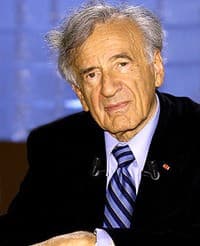
Elie Wiesel was a Jewish writer and Holocaust survivor known for his powerful narratives exploring themes of suffering and faith. His notable works include "Night," a memoir detailing his experiences in Nazi concentration camps, and "Day," which reflects on the aftermath of trauma. Wiesel received the Nobel Peace Prize in 1986 for his efforts in promoting human rights and combating indifference.
Similar books
- Night
Elie Wiesel
4.3 (970k) average on GoodreadsBiographyPart of the same trilogy, exploring Holocaust experiences and loss of faith.
- The Stranger
Albert Camus
4.1 (3k) average on GoodreadsFantasyExplores existential themes and the indifference of the universe through a detached protagonist.
- Man's Search for Meaning
Viktor E. Frankl
4.4 (401k) average on GoodreadsBiographyA memoir and philosophical treatise on finding meaning in suffering, particularly in concentration camps.
- The Diary of a Young Girl
Anne Frank
4.2 (2.7M) average on GoodreadsBiographyFrank's diary offers a poignant, immediate, and hopeful perspective of hiding during the Holocaust, focusing on the resilience of the human spirit amidst confinement. Day, however, delves into the profound, enduring psychological and spiritual wounds that manifest decades later, confronting the often-bleak reality of a shattered spirit attempting to navigate freedom and meaning in a post-genocidal world.
- To Kill a Mockingbird
Harper Lee
4.3 (4.5M) average on GoodreadsHistorical FictionIn the 1930s Jim Crow South, Harper Lee writes about racial injustice, moral growth, and the quiet courage of a lawyer father, Atticus Finch, as seen through his young daughter's eyes.
- The Great Gatsby
F. Scott Fitzgerald
3.9 (3.8M) average on GoodreadsHistorical FictionIn the opulent Roaring Twenties, a mysterious millionaire's lavish parties hide his desperate, tragic pursuit of a lost love, exposing the emptiness within the American Dream.






Enjoyed the summary?
A summary gives you the shape of the book. The book itself has the detail, the examples and the voice.
Find Day on AmazonAs an Amazon Associate, BookBrief earns from qualifying purchases. How we're funded