
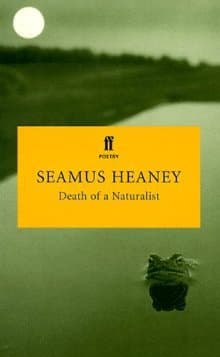
Synopsis
Covers the whole plot, including the ending.
- Difficulty
- Medium
- Pacing
- Moderate
- Mood
- Nostalgic, Reflective, Sensory, Melancholy
- Read it if
- You appreciate evocative, sensory poetry rooted in nature, childhood, and rural life, or if you're interested in the early work of a Nobel laureate.
- Skip it if
- You prefer narrative-driven prose or find poetry challenging to engage with.
Death of a Naturalist Plot Summary
Covers the whole plot, including the ending.
Digging
The poem opens with the narrator, likely Seamus Heaney, at his desk, pen in hand, listening to his father digging outside. This sound brings back a memory of his grandfather, a skilled peat-digger who could cut more turf in a day than anyone else. Heaney vividly remembers his grandfather's strong build and the precise way he used the spade. The narrator compares his ancestors' physical work with his own writing, noting their different tools: his father and grandfather used a spade, while he uses a pen. He ends by saying he will 'dig with it,' showing his commitment to his craft.
Death of a Naturalist
The poem describes a young boy's first delight and wonder at seeing frogspawn in a flax-dam near his home. He carefully collects the 'jellied' spawn, fascinated by the developing tadpoles. The boy learns about the life cycle from his teacher, Miss Walls, who explains how tadpoles become frogs. However, his peaceful view breaks when the flax-dam fills with large, croaking frogs. Their sudden numbers, 'gross-bellied' look, and loud croaks overwhelm and sicken him. The boy feels a primal fear and disgust, convinced the frogs are hostile, and he runs away, vowing never to return. This experience marks a loss of childhood wonder.
Blackberry-Picking
The poem vividly tells of the yearly blackberry-picking in late summer. Children, including the narrator, look forward to the berries ripening, their hands stained purple from the juice. They brave briars and nettles, eager to fill their buckets with the 'glossy' fruit. The initial joy of the harvest is clear, with children competing for the largest, sweetest berries. They bring their haul home, hoping to keep them. However, the poem turns sad as the collected berries inevitably begin to rot, growing a 'fungus, blooming and white.' The narrator expresses a childish frustration at this unavoidable decay, a first encounter with nature's impermanence and the impossibility of holding onto perfection.
Mid-Term Break
The poem details the narrator's experience of being called home from boarding school after a family tragedy. He arrives to find neighbors and relatives gathered, offering sympathy. The atmosphere is heavy with grief, and he sees his father openly crying, an unusual sight. He meets his mother, who is also upset, and notes a priest is present. The poem's peak is his visit to the room where his younger brother's body lies in a coffin. He describes his brother's peaceful look, noting the 'poppy bruise' on his temple, the only visible sign of the accident. The final lines sadly reveal the brother was four years old, emphasizing his short life and the narrator's deep, quiet sorrow.
The Barn
The poem describes the inside of a barn, showing it as a mysterious, almost sacred place from a child's view. The narrator remembers the 'dim-lit' interior, filled with the smell of hay and unseen creatures. He uses clear images to evoke dusty light shafts, the 'great haycock' like a sleeping animal, and the 'flicker' of bats. The barn is a place of exploration and discovery, where the boy faces his fears and curiosities. It is also a space where he begins to feel nature's cycles and time passing, the 'warm-blooded' animal life contrasting with the stillness of stored crops. The barn becomes a small version of the natural world, both comforting and slightly unsettling.
Follower
The poem is a sad reflection on the relationship between a son and his father, focusing on the father's skill as a ploughman. The narrator vividly describes his father's strong body and his easy control of the plough, turning 'a bright steel share' with precision. The son, as a young boy, follows his father in the fields, tripping, eager to help but clumsy. He admires his father's strength and skill, seeing him as 'mettlesome.' The poem shifts to the present, where roles are subtly reversed: the father, now old and weak, follows the son, no longer a strong leader but dependent. This reversal highlights the passage of time and the changing dynamics of their relationship.
Churning Day
The poem details the hard but satisfying process of churning butter, a regular task in rural Ireland. The narrator describes the preparation, the 'crock' of cream, and the rhythmic, steady effort needed to turn the churn. He evokes the sounds and smells of the process—the 'slap and plop' of the butter, the 'sour-sweet' smell of buttermilk. The poem emphasizes the group effort, often with children taking turns. There is a sense of anticipation as the butter begins to form, a 'gold fleck' appearing, signaling the end of their work. The final product, the 'rich, thick-clabbered' butter, is presented as a clear reward for their shared labor, connecting the family to the land and its food.
The Gnat
The poem focuses on a single gnat, caught in a strong gust of wind, struggling to fly. The narrator observes the tiny insect's brave but failing fight against the unseen force. He describes the gnat's wild movements, its 'zigzag' dance, as it is tossed by the wind. There is a sense of both the gnat's smallness and its strong will to live. The poem reflects on how vulnerable small creatures are against nature's vast, uncaring forces. The gnat becomes a symbol of fragile life and the constant fight for existence in a world where even a small change in environment can have big effects. The poet's observation is detached but empathetic.
An Advancement of Learning
The poem describes the narrator's encounter with a rat in a drain, a moment that mixes childhood fear with a growing, almost spiritual, awareness. He first feels disgust and wants to kill the creature. However, as he observes the rat, its 'whiskered' face and 'bright eyes,' something changes. The rat, usually linked with dirt and disease, takes on a mysterious, almost ancient quality. The narrator feels a strange connection, a sense of shared life with the creature that lives in the world's 'dark' underside. He acknowledges the rat's 'mastery' of its domain. This encounter becomes an 'advancement of learning,' a moment of deep, if unsettling, insight into nature's raw, wild parts and his own place within it, moving beyond simple disgust.
Personal Helicon
The poem is a statement about poetry, comparing the narrator's childhood exploration of wells to his adult work as a poet. As a child, he was fascinated by wells—their dark, cool depths, echoes, strange reflections, and the creatures inside. He describes peering into them, seeing his own face and the 'sky's inverted bowl.' These wells, often ignored and overgrown, were sources of mystery and wonder. Heaney connects this early curiosity with his later calling, suggesting his poetry is a similar act of 'sounding' the depths, exploring hidden meanings and bringing them to light. The wells become a metaphor for inspiration and for looking deeply into the world, just as a poet explores language and experience.
Death of a Naturalist Characters
Seamus Heaney (The Narrator/Poet)
Protagonist
The central consciousness through whose memories and observations the poems unfold.
The narrator is often a child or young man, sensitive and observant, grappling with the transition from rural innocence to a more complex understanding of the world. He is deeply connected to his Irish heritage, family, and the natural landscape. Heaney portrays himself as a reflective individual, keenly aware of the physical world and the labor of his ancestors, yet drawn to the intellectual pursuit of poetry. His internal world is rich with sensory details and a burgeoning awareness of mortality and the cycles of nature.
Relationships: Father (Admiration for his physical strength and skill, a bond based on shared rural life.); Grandfather (Deep respect for his formidable skill as a peat-digger and his connection to the land.); Mother (A source of comfort and a participant in domestic rituals, as seen in 'Mid-Term Break' and 'Churning Day'.)
Father
Supporting
A strong, skilled, and stoic figure representing traditional rural labor.
Heaney's father is depicted as a man of immense physical strength and expertise, particularly in farming tasks like ploughing and digging. He is a silent, powerful presence, embodying the hard work and connection to the land that characterizes the family's heritage. In 'Digging' and 'Follower,' he is a figure of admiration and respect, a master of his craft. He is largely stoic, making his rare display of grief in 'Mid-Term Break' particularly impactful, highlighting his humanity beneath the strong exterior.
Relationships: Seamus Heaney (Object of admiration and later, a figure for whom the son feels responsibility.)
Grandfather
Supporting
A powerful and legendary figure of manual labor and connection to the earth.
The grandfather appears primarily in 'Digging' as a memory. He is presented as an almost mythical figure, renowned for his exceptional skill and endurance as a peat-digger. Heaney's description emphasizes his physical prowess and the deep, almost primal connection he had with the land. He represents a past generation's mastery of their environment and a deep-rooted heritage of physical work. His image serves as a powerful contrast to the narrator's chosen path of writing.
Relationships: Seamus Heaney (An admired ancestor whose legacy influences the narrator's understanding of work and identity.)
The Frogs (in 'Death of a Naturalist')
Antagonist/Symbolic
Initially fascinating, they become a source of revulsion and a symbol of lost innocence.
Initially, the frogspawn represents the wonders of nature and the boy's innocent curiosity. However, as they mature into full-grown frogs, their collective presence, 'gross-bellied' appearance, and cacophonous croaking transform them into a terrifying, almost monstrous force in the boy's eyes. They embody the unpredictable, overwhelming, and sometimes repulsive aspects of nature, shattering his idealized view and marking his transition from innocent fascination to a more complex, fear-tinged understanding of the natural world. They are not malevolent but are perceived as such through the lens of childhood fear.
The Younger Brother (in 'Mid-Term Break')
Mentioned
A tragic figure whose death introduces the narrator to profound grief and mortality.
Though only seen in death, the younger brother is a pivotal character, serving as the catalyst for the poem's exploration of grief and loss. His youth (four years old) magnifies the tragedy, and his 'poppy bruise' is a stark image of the suddenness and violence of his death. He represents the vulnerability of life and the indelible impact of early loss on a family. His quiet presence in the coffin forces the narrator to confront the stark reality of death.
Relationships: Seamus Heaney (A beloved younger sibling whose death profoundly impacts the narrator.)
Mother
Supporting
A figure of domestic care and shared grief.
The mother is less explicitly detailed than the father but appears in moments of domesticity and profound emotion. In 'Churning Day,' she is part of the communal effort, representing the traditional role of a rural housewife. In 'Mid-Term Break,' her raw grief is palpable, serving as a powerful counterpoint to the father's more contained sorrow, highlighting the universal impact of loss on a family. She embodies the emotional heart of the domestic sphere.
Relationships: Seamus Heaney (A loving parent, seen particularly in moments of shared domesticity and grief.); Father (A spouse, sharing the burdens and joys of family life.)
The Rat (in 'An Advancement of Learning')
Symbolic
A creature initially reviled, then understood as a symbol of wild nature and hidden knowledge.
The rat is initially a source of disgust and fear, representing the unsanitary and undesirable aspects of the natural world. However, through the narrator's extended observation, it transforms into something more profound. Its 'whiskered' face and 'bright eyes' suggest an ancient, knowing presence. The rat becomes a symbol of the raw, untamed forces of nature that exist beneath the surface of civilization, and an 'advancement of learning' for the narrator, providing insight into the wildness within and without.
Death of a Naturalist Themes
Loss of Innocence
This theme is central to the collection, especially in 'Death of a Naturalist' and 'Blackberry-Picking.' In 'Death of a Naturalist,' the boy's happy fascination with frogspawn turns to fear and disgust when he sees the mature, 'gross-bellied' frogs. His idealized view of nature breaks down when faced with its raw, chaotic reality. Similarly, in 'Blackberry-Picking,' the initial joy of harvesting ripe fruit turns to disappointment as the berries rot, teaching the children about impermanence and the impossibility of keeping perfect moments. These experiences mark a shift from naive wonder to a more complex, often darker, understanding of the world.
“I sickened, turned, and ran. The great slime kings / Were gathered there for vengeance and I knew / That if I dipped my hand the spawn would clutch it.”
The Power of Memory and Childhood
Heaney often uses clear childhood memories to explore deep truths. Poems like 'Digging,' 'Follower,' and 'Personal Helicon' are rooted in recollections of his youth and family life in rural Ireland. These memories are not just nostalgic; they form a basis for understanding his present self and his poetic calling. The sensory details—the smell of peat, the sound of digging, the feel of cold water—give these memories an immediate power, showing how early experiences shape identity and provide inspiration. The past is a living presence that constantly informs the poet's view.
“By God, the old man could handle a spade. / Just like his old man. My grandfather cut more turf in a day / Than any other man on Toner's bog.”
Man's Relationship with Nature
The collection explores the many sides of the relationship between humans and the natural world. Nature is shown as both beautiful and wonderful ('Blackberry-Picking,' 'The Barn') and a source of danger and decay ('Death of a Naturalist,' 'The Gnat'). Heaney often contrasts the physical labor of his ancestors, who worked the land directly ('Digging,' 'Follower'), with his own more thoughtful engagement as a poet. There is deep respect for nature's cycles, its wildness, and its ability to both nurture and challenge. The poems suggest a complex interdependence, where humans are part of, not separate from, the natural environment.
“All year the flax-dam festered in the heart / Of the townland; green and heavy headed / Flax had rotted there, weighted down by stones / To ripen quietly.”
Identity and Heritage
A recurring theme is the narrator's struggle to define his own identity in relation to his family heritage and the rural Irish landscape. In 'Digging,' he clearly contrasts his pen with his ancestors' spades, acknowledging his different path from a line of manual laborers while also asserting his own form of 'digging.' 'Follower' highlights the generational shift and changing family roles. Heaney grapples with his past, recognizing its deep influence while forging his unique path. His identity is deeply tied to the land, his family's history, and the language he inherited, all contributing to a strong sense of place and belonging.
“But I’ve no spade to follow men like them. / Between my finger and my thumb / The squat pen rests. / I’ll dig with it.”
Mortality and Loss
The certainty of death and the experience of loss appear in several poems. 'Mid-Term Break' is a clear and sad portrayal of a child's sudden encounter with his younger brother's death, highlighting raw grief and the chilling reality of mortality. In 'Blackberry-Picking,' the rotting fruit symbolizes the short nature of joy and life's unavoidable decay. Even 'Death of a Naturalist' can be read as the death of a certain innocent perception, replaced by a darker awareness. These instances confront the reader with life's fragility and the deep impact of its end, often through a child's first experiences with such heavy concepts.
“A four foot box, a foot for every year.”
Plot Devices & Literary Techniques
Sensory Imagery
Vivid descriptions appealing to sight, sound, smell, touch, and taste.
Heaney's poetry is renowned for its rich and precise sensory details, immersing the reader in the physical world of his poems. He uses 'squelch and slap' for digging, the 'festered' smell of the flax-dam, the 'fungus, blooming and white' on rotting blackberries, and the 'sour-sweet' smell of buttermilk. This intense focus on sensory experience makes the poems incredibly immediate and visceral, allowing the reader to fully inhabit the landscapes and moments described. It grounds his abstract reflections in concrete, tangible reality and is a hallmark of his style.
Symbolism
Objects or actions representing deeper, abstract ideas.
Heaney masterfully employs symbolism to imbue everyday objects and natural phenomena with deeper meaning. The 'spade' in 'Digging' symbolizes ancestral labor and heritage, contrasted with the 'pen' which symbolizes his chosen path of poetry. The 'frogs' in 'Death of a Naturalist' symbolize lost innocence and the darker, overwhelming aspects of nature. The 'wells' in 'Personal Helicon' symbolize the wellspring of poetic inspiration and the act of delving into hidden depths. These symbols enrich the poems, allowing for multiple layers of interpretation beyond the literal.
Juxtaposition
Placing contrasting elements side-by-side to highlight differences or create tension.
Heaney frequently uses juxtaposition to create powerful contrasts and explore complex themes. In 'Digging,' he contrasts the physical, earth-bound labor of his father and grandfather with his own intellectual, linguistic work. In 'Death of a Naturalist,' the initial innocent fascination with frogspawn is sharply juxtaposed with the later revulsion towards the adult frogs. In 'Follower,' the young son's clumsy attempts to follow his skilled father are contrasted with the later reversal of roles. This device highlights shifts in perspective, generational differences, and the often-conflicting aspects of nature and human experience.
First-Person Narrative
The story is told from the perspective of 'I,' often the poet himself.
The consistent use of a first-person narrator provides an intimate and personal lens through which the reader experiences the events and reflections. This perspective allows for direct access to the narrator's thoughts, feelings, and memories, fostering a strong sense of empathy and authenticity. It makes the collection feel like a personal memoir in verse, drawing the reader into Heaney's specific experiences and observations, which then resonate with universal themes of childhood, family, nature, and identity. The 'I' is often a child, allowing for a perspective of wonder and dawning awareness.
Death of a Naturalist Quotes
“All year the flax-dam festered in the heart / Of the townland; green and heavy headed / Flax had rotted there, weighted down by stones / To ripen quietly.”
“Then one day / When catching frogs, I took up a muddy / Slab of stone, and saw a white face peering / From the bottom.”
“The air was thick with a hot, sweet smell of corruption.”
“Oh, for the day of the good clean earth, the good clean rain!”
“And now, every spring, when I hear the frogs / Croaking, I remember my first encounter / With the animal world, and the knowledge / That it's not all sweetness and light.”
“I was a naturalist / With an eye for things that were not quite right.”
“The cold smell of potato mould, the squelch and slap / Of soggy peat, the curt cuts of an edge / Through living roots awaken in my head / The heavy headed threat of other years.”
“By God, the old man could handle a spade. / Just like his old man. / My grandfather could cut more turf in a day / Than any other man on Toner's bog.”
“But I've no spade to follow men like them. / Between my finger and my thumb / The squat pen rests. / I'll dig with it.”
“The all of him there, in the air and in the earth, / The smell of him, the feel of him, the sound of him.”
“He would not go away.”
“I sat staring at the black / Oozing, festering, bubbling mass of frogs.”
“And I knew that if I went back to the flax-dam / They would all jump at me with their great slimy bellies / And their heads with their bulging eyes, and I knew / I had to leave.”
“The cold iron of the pump still tasted of the well / And the water tasted of the earth, the way it should.”
Quiz
10 questions on the plot and the characters. Each answer comes with a short explanation.
Question 1
In the poem 'Digging', what specific sound does the speaker recall his father's spade making?
- A soft thud
- A sharp click
- A clean rasping sound
- A dull clank
Show answer
C. A clean rasping sound The poem 'Digging' describes the father's spade making 'a clean rasping sound' as it sinks into the stony ground.
Question 2
What is the primary reason the speaker in 'Death of a Naturalist' becomes disillusioned with the frogspawn and tadpoles?
- He gets bored with observing them.
- The frogs become large, aggressive, and threatening.
- His teacher tells him they are dangerous.
- The flax-dam dries up, killing them all.
Show answer
B. The frogs become large, aggressive, and threatening. The speaker's initial fascination turns to horror when the frogs mature, described as 'gross-bellied frogs' that 'squelched and plop-sploshed' and seemed to 'invade' his childhood world.
Question 3
In 'Mid-Term Break', what is the 'poppy bruise' a euphemism for?
- A flower placed on the coffin.
- The color of the boy's lips.
- A wound on the boy's head.
- The red fabric lining the coffin.
Show answer
C. A wound on the boy's head. The 'poppy bruise' refers to the injury on the dead brother's temple, a delicate way to describe the mark left by the accident.
Question 4
Which of the following best describes the central theme of 'Digging'?
- The importance of physical labor.
- The speaker's rejection of his family's farming heritage.
- The continuity and transformation of heritage through different forms of work.
- The superiority of intellectual work over manual labor.
Show answer
C. The continuity and transformation of heritage through different forms of work. The poem explores how the speaker, through his writing, continues the tradition of his father and grandfather's 'digging,' albeit with a pen instead of a spade, suggesting a transformation rather than a rejection of his heritage.
Question 5
In 'The Barn', what animal's presence is most strongly associated with the 'sweetest smell' and the 'dusk-bound' atmosphere?
- Horses
- Pigs
- Cows
- Chickens
Show answer
C. Cows The poem 'The Barn' vividly describes the presence of cows, their 'sweetest smell' and the 'humped darkness' of their forms in the barn's interior.
Question 6
What literary device is prominently used in the line 'The squat pen rests; snug as a gun' from 'Digging'?
- Metaphor
- Personification
- Simile
- Hyperbole
Show answer
C. Simile The line uses a simile, comparing the pen to a gun using the word 'as,' to convey its powerful and purposeful nature.
Question 7
In 'Follower', what is the father's primary skill that the speaker admires and attempts to emulate?
- His ability to tell stories.
- His mastery of plowing the land.
- His strength in lifting heavy objects.
- His knowledge of local flora and fauna.
Show answer
B. His mastery of plowing the land. The poem 'Follower' is centered around the speaker's admiration for his father's skilled plowing, describing his 'expert' handling of the plough and horses.
Question 8
The collection frequently explores the tension between the speaker's intellectual pursuits and his rural, working-class upbringing. Which poem most directly embodies this internal conflict regarding his future path?
- 'Blackberry-Picking'
- 'The Early Purges'
- 'Personal Helicon'
- 'Churning Day'
Show answer
C. 'Personal Helicon' 'Personal Helicon' directly addresses the speaker's shift from exploring 'stinking', 'dark drop' wells as a child to now 'colling' 'for the names of things' with his art, signifying his chosen intellectual path while acknowledging his roots.
Question 9
What specific detail about the dead brother's appearance in 'Mid-Term Break' highlights the stark reality of his death?
- His school uniform is still on.
- His hair is neatly combed.
- He looks as if he is sleeping.
- The 'four foot box' is too small for him.
Show answer
D. The 'four foot box' is too small for him. The final line, 'A four foot box, a foot for every year,' starkly emphasizes the child's small size and the finality of his death, making the reality undeniable.
Question 10
In 'Blackberry-Picking', what is the ultimate emotional outcome of the speaker's intense effort and anticipation during the blackberry season?
- Joy and satisfaction from a bountiful harvest.
- Disappointment and a sense of loss as the berries rot.
- A feeling of communion with nature.
- Pride in his foraging skills.
Show answer
B. Disappointment and a sense of loss as the berries rot. Despite the initial 'lust for picking,' the berries eventually 'rotted,' leading to the speaker's annual lament that 'Each year I hoped they'd keep, knew they would not,' reflecting a recurring sense of disappointment and the ephemeral nature of pleasure.
Death of a Naturalist FAQ
What is the central theme explored in Seamus Heaney's 'Death of a Naturalist'?
The central theme revolves around the speaker's loss of childhood innocence and his changing relationship with nature. Initially, nature is a source of fascination and wonder, but as he matures, he gains a more realistic and often unsettling understanding of its brutal realities, leading to a sense of alienation and a shift in his perception.
Which specific poems best exemplify the speaker's initial fascination with nature?
Poems like 'Digging' and 'Death of a Naturalist' itself are prime examples. In 'Digging,' the speaker admires his father's and grandfather's skill with the spade, connecting to a rooted tradition, while 'Death of a Naturalist' vividly describes the speaker's childhood delight in collecting frogspawn and observing tadpoles, highlighting his early, uncritical engagement with the natural world.
How does the speaker's perception of nature transform in the titular poem 'Death of a Naturalist'?
Initially, the speaker views the flax-dam and its inhabitants with innocent curiosity, finding beauty in the 'jellied' frogspawn. However, as the frogs mature, their 'gross-bellied' appearance and aggressive croaking become terrifying, symbolizing a loss of innocence and a realization of nature's darker, more threatening aspects, causing him to flee.
What role do the speaker's father and grandfather play in 'Digging'?
His father and grandfather represent a powerful connection to the land and a tradition of physical labor. Their expertise with the spade is depicted with admiration, establishing a lineage of hard work and rootedness that the speaker, with his pen, feels both connected to and distinct from, grappling with his own form of 'digging.'
Beyond nature, what other significant themes does the collection touch upon?
The collection also explores themes of identity, heritage, and the act of writing itself. The speaker grapples with his place in his family's working-class tradition, the shift from manual labor to intellectual work, and the power of language to 'dig' into his past and present, creating his own form of legacy.
In 'Blackberry-Picking,' what specific detail foreshadows the eventual disappointment and decay?
The line 'You ate that first one and its flesh was sweet / Like thickened wine: summer's blood was in it' subtly hints at the transient nature of the berries' perfection. The 'blood' imagery, while initially positive, also carries connotations of mortality and inevitable spoilage, setting up the later disillusionment when the berries turn 'furry, blue-bottled, fruited.'
What is the significance of the 'squelch and slap' in 'Mid-Term Break'?
The 'squelch and slap' describes the sound of the ambulance wheels as it brings the speaker's younger brother's body home. This stark, visceral auditory detail not only grounds the tragic event in a harsh reality but also emphasizes the sudden, brutal impact of death, contrasting sharply with the hushed, awkward grief of the family.
How does the sound imagery in 'The Barn' contribute to its unsettling atmosphere?
The poem uses sounds like 'rat-ribbed hay,' 'swimming in the gloom,' and 'rusty byres' to create a claustrophobic and somewhat menacing environment. The 'chaff and dust' that 'thickened the air' and the 'hissing' of the rats contribute to a sense of decay and hidden life, mirroring the speaker's growing unease with the mysteries of the natural world.
What subtle connection exists between the 'ink' in 'Digging' and the 'frogspawn' in 'Death of a Naturalist'?
Both the ink and frogspawn can be seen as origins or raw materials for creation, though in vastly different contexts. The 'squelch and slap of soggy peat' and the 'cold smell of potato mould' evoke a primal, earthy origin, much like the 'jellied' frogspawn. The ink, however, represents the speaker's chosen tool for intellectual creation, a deliberate act of 'digging' into his experience, contrasting with the raw, untamed generativity of the frogspawn.
From a psychological perspective, how does the speaker's retreat from the flax-dam reflect a common developmental stage?
The speaker's flight from the 'angry frogs' at the flax-dam can be interpreted as a psychological turning point, marking the end of naive childhood wonder and the onset of a more complex, often fearful, understanding of the world. It mirrors the universal experience of confronting unpleasant realities that challenge earlier, idealized perceptions, leading to a necessary but often painful maturation.
Analyze the speaker's sense of guilt or inadequacy in 'Mid-Term Break.'
The speaker's guilt in 'Mid-Term Break' manifests in his awkwardness and the feeling of being out of place among grieving adults. He notes his mother's 'white face' and his father's 'crying,' feeling a sense of helplessness and perhaps a subtle guilt for being alive while his younger brother is not, culminating in the poignant observation of the 'four foot box, a foot for every year.'
How does 'Follower' explore the psychological dynamics between father and son?
'Follower' delves into the complex psychological dynamic of admiration mixed with a sense of inadequacy. The speaker initially idolizes his father's skill, wanting to emulate him. However, the poem concludes with a reversal, where the son, now grown, is the one being followed, suggesting a shift in power and the enduring psychological weight of legacy and expectation.
What psychological effect does the repeated imagery of 'mould' and 'rot' have on the reader?
The recurring imagery of 'mould,' 'rot,' and decay throughout the collection creates a pervasive sense of impermanence, mortality, and the inescapable cycle of life and death. Psychologically, it evokes a feeling of visceral realism and subtly underscores the fragility of life and the often-unpleasant aspects of nature, contributing to the collection's melancholic undertones.
Is the 'death' in 'Death of a Naturalist' a literal or metaphorical one?
The 'death' is primarily metaphorical, signifying the demise of the speaker's innocent, uncritical perception of nature. While there's no physical death, the loss of his childhood worldview and the terror he experiences at the flax-dam mark a profound change, a 'death' of his former self as a naive naturalist.
How might the collection be interpreted as a commentary on the changing landscape of Irish identity?
The collection can be seen as a subtle commentary on Irish identity by grounding itself in rural, agricultural life, a traditional cornerstone of Irish culture. The speaker's transition from physical labor to intellectual pursuit, from the 'spade' to the 'pen,' reflects a broader societal shift in Ireland, grappling with modernization while holding onto its deep-rooted heritage.
To what extent does Heaney romanticize or demystify nature in this collection?
Heaney largely demystifies nature, stripping away romanticized notions to reveal its raw, often brutal reality. While there are initial moments of wonder, poems like 'Death of a Naturalist,' 'Blackberry-Picking,' and 'The Barn' quickly introduce decay, aggression, and indifference, presenting nature as a powerful, sometimes terrifying force rather than an idyllic escape.
Is the ending of 'Digging' ultimately optimistic or pessimistic regarding the speaker's future?
The ending of 'Digging' is arguably optimistic. While the speaker acknowledges his inability to 'dig' like his father, his declaration 'I'll dig with it' (referring to his pen) asserts his own chosen method of labor and creativity. This suggests a hopeful embrace of his intellectual path, finding a new way to connect with his heritage and make his own mark, rather than a pessimistic rejection of his past.
How does the use of dialect and specific vocabulary contribute to the collection's authenticity?
Heaney's masterful use of specific, often rural, vocabulary and subtle dialect ('squelch,' 'slap,' 'slobber') grounds the poems in a tangible reality of the speaker's upbringing in rural Northern Ireland. This linguistic authenticity not only enriches the imagery but also makes the experiences feel deeply personal and rooted, allowing readers to vividly connect with the described environment and its inhabitants.
About the author
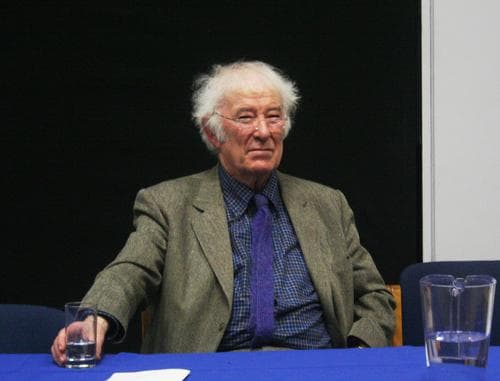
Seamus Justin Heaney was an Irish poet, playwright and translator. He received the 1995 Nobel Prize in Literature. Among his best-known works is Death of a Naturalist (1966), his first major published volume. Heaney was and is still recognised as one of the principal contributors to poetry in Ireland during his lifetime. American poet Robert Lowell described him as "the most important Irish poet since Yeats", and many others, including the academic John Sutherland, have said that he was "the greatest poet of our age". Robert Pinsky has stated that "with his wonderful gift of eye and ear Heaney has the gift of the story-teller." Upon his death in 2013, The Independent described him as "probably the best-known poet in the world".
Similar books
- The Old Man and the Sea
Ernest Hemingway
3.8 (831k) average on GoodreadsLiterary FictionA Cuban fisherman's long struggle with a giant marlin becomes a story of endurance and dignity, now retold for young adults with illustrations, phonetic guides, and writing prompts in Traditional Chinese.
- One Hundred Years of Solitude
Gabriel García Márquez
4.1 (753k) average on GoodreadsLiterary FictionThrough the multi-generational story of the Buendía family, a mythical town deals with the repeating patterns of time, love, and solitude, as the extraordinary mixes with the ordinary.
- The Goldfinch
Donna Tartt
3.9 (720k) average on GoodreadsLiterary FictionHaunted by a tragic explosion and clutching a stolen Dutch masterpiece, a young orphan navigates the opulent drawing rooms of New York and the gritty underbelly of the art world, desperately seeking connection and redemption amidst a life spiraling into crime and obsession.
- Little Fires Everywhere
Celeste Ng
4.1 (713k) average on GoodreadsLiterary FictionIn Shaker Heights, an artist and her daughter move in, and their free-spirited lives clash with a rule-bound matriarch, revealing hidden conflicts beneath a perfect surface.
- Eleanor Oliphant Is Completely Fine
Gail Honeyman
4.3 (708k) average on GoodreadsLiterary FictionA lonely woman's structured life changes when an IT guy and an elderly man help her learn to open her heart.
- The Poisonwood Bible
Barbara Kingsolver
4.1 (659k) average on GoodreadsLiterary FictionA zealous missionary's rigid faith clashes with the Belgian Congo's wilderness and people, unraveling his family through the eyes of his five unforgettable women.






Enjoyed the summary?
A summary gives you the shape of the book. The book itself has the detail, the examples and the voice.
Find Death of a Naturalist on AmazonAs an Amazon Associate, BookBrief earns from qualifying purchases. How we're funded