
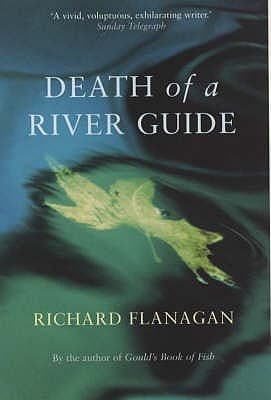
Synopsis
Covers the whole plot, including the ending.
- Difficulty
- Hard
- Pacing
- Slow
- Mood
- Atmospheric, Poetic, Meditative, Melancholy, Profound
- Read it if
- You are interested in Australian literary fiction, deep dives into historical and cultural identity, or a poetic exploration of life, death, and the landscape's influence.
- Skip it if
- You prefer fast-paced plots, clear-cut narratives, or are not keen on highly introspective and symbolic storytelling.
Death of a River Guide Plot Summary
Covers the whole plot, including the ending.
The Drowning
Aljaz Cosini guides a raft trip down Tasmania's Franklin River when a tourist, Rex, falls out. Aljaz pushes Rex to safety, but the churning rapids pull him under. Trapped, Aljaz begins to drown. As he loses air, his mind fills with memories, visions, and feelings, blurring the line between life and death, past and present. This fall into the river starts his deep, dream-like journey through his own history and his ancestors', all tied to Tasmania's story.
Visions of Couta Ho
As Aljaz drowns, Couta Ho, the mysterious woman he loved, appears strongly in his mind. He relives moments of their passionate and complex relationship, her wild beauty, and her connection to the land. These broken memories hold regret and longing, showing her deep impact on his life and the pain of their separation. Couta Ho represents a lost love and a bond to a wilder life, mirroring the Franklin River's untamed nature, keeping his dying thoughts focused on a strong emotional pull.
The Ancestral Past: Uncle Reg
Among his drowning visions, Aljaz remembers a difficult moment with his Uncle Reg. He sees Reg, a man marked by early Tasmanian life's hardships, having his teeth brutally pulled and sold. This harsh act gets money, specifically for ripple-iron for a house. It shows the great sacrifices and desperate actions his ancestors took to build a life in Tasmania's tough wilderness. This vision highlights survival, poverty, and the physical cost the land demanded, linking Aljaz's suffering to his family's past struggles.
The Convict Legacy
Aljaz's journey through time reaches the start of European settlement in Tasmania, especially the harsh convict era. He sees ships arrive with prisoners, the difficult conditions of their forced labor, and the unforgiving land they had to tame. These visions are raw and real, showing the suffering, despair, and violence of this time. He watches buildings go up, forests cut down, and a new, often cruel, society built on ancient land, connecting his own struggle to his country's founding trauma.
The Lost Aboriginal Voices
A large part of Aljaz's dying vision shows the sad history of Tasmania's Aboriginal people. He sees their old connection to the land, their complex culture, and their eventual removal and destruction by European settlers. These visions are full of deep loss and unfairness, as he watches them forced out, their way of life destroyed, and their voices silenced. This part of his journey shows the deep scars left on the land and its people, revealing the hidden histories and moral problems beneath modern Tasmania.
The Rise of Cities
As Aljaz's mind expands, he sees the fast and often destructive change of Tasmania's wild nature into growing cities and towns. He watches ancient rainforests fall to logging, rivers dammed, and the land forever changed by human building. This vision contrasts the wild beauty of the Franklin River with the constant march of progress, showing the environmental cost of human ambition. It is a sad look at how quickly the natural world can be reshaped and sometimes ruined, connecting his own death to the island's wider environmental concerns.
A Tree in Midwinter
In a beautiful and surreal moment, Aljaz sees a tree burst into bright flower in midwinter, growing right over his grandfather's forest grave. This vision is a strong symbol of life continuing despite death, of renewal and the natural cycle of existence. It suggests that even in loss and decay, there is a magic and strength in nature. This image brings a sense of peace and connection, implying that his ancestors remain part of the land, and his own death is part of a larger, ongoing natural process.
The Franklin Dam Controversy
Aljaz's visions return to the more recent past, especially the famous Franklin Dam fight of the late 1900s. He relives the intense environmental effort to stop the Franklin River from being dammed, a key moment in Australian environmental history. He sees the activists, the protests, and the strong defense of the wilderness. This memory connects Aljaz's identity as a river guide to the larger fight to save the wild places he cares for, strengthening the river's symbolic role as a place of both natural beauty and human conflict.
The Singing of Tasmania
As Aljaz dies, he has a powerful moment where all of Tasmanian life—the plants and animals, the old trees, the unique creatures—seems to sing to him, a group chorus welcoming him home. This spiritual experience suggests a deep connection between Aljaz and the land, blurring the lines between human thought and nature. It strongly confirms his belonging, a final hug from the island he loved and served, showing his joining with Tasmania's vast, ancient spirit.
The Reassertion of Dreaming
Aljaz's dream-like journey ends with a deep change in how he sees things. Dreams, myths, and stories become more important than normal, logical thought. He reaches a world where his personal story and family history spread to include all human family stories, grounding him deeply in the land and showing his country's "soul history." This final state of mind is one of connection, where time and self disappear into a larger, shared memory, finding peace and understanding in the wide story of Tasmanian life.
Principal Figures
Aljaz Cosini
Protagonist
A Tasmanian river guide drowning in the Franklin River, reliving his life and ancestry.
Aljaz Cosini is an ordinary man, burdened by regrets and a sense of unfulfilled potential. He is a skilled and dedicated river guide on the wild Franklin River, a profession that connects him intimately with the natural world. Though seemingly unassuming, his actions demonstrate an inherent heroism when he sacrifices himself to save a tourist. His internal journey, as he drowns, reveals a complex individual deeply rooted in his family's history and the land of Tasmania, struggling with love, loss, and the weight of the past.
Relationships: Couta Ho (His great love, a spirited and wild woman he loved and lost.); Uncle Reg (His ancestor, whose painful sacrifices symbolize the family's struggle in Tasmania.); Grandfather (An ancestral figure whose grave becomes a symbolic site of life amidst death.); Rex (The tourist Aljaz saves, leading to his own drowning.)
Couta Ho
Supporting
Aljaz's lost love, a wild and enigmatic woman who represents untamed beauty and connection to the land.
Couta Ho is a vivid presence in Aljaz's drowning visions, representing a profound, passionate love and a connection to a more primal existence. She is depicted as spirited, beautiful, and deeply entwined with the Tasmanian wilderness, almost a personification of its untamed nature. Her memories evoke both joy and regret for Aljaz, highlighting the intensity of their bond and the pain of its loss. She serves as a touchstone for Aljaz's emotional life and his longing for a deeper, more authentic connection.
Relationships: Aljaz Cosini (His great love, a passionate and complicated romantic relationship.)
Uncle Reg
Mentioned/Ancestral Figure
Aljaz's ancestor, whose desperate actions highlight the harsh realities of early Tasmanian life.
Uncle Reg is not a character in the present narrative but a powerful figure in Aljaz's ancestral visions. He represents the harsh realities and brutal sacrifices made by early European settlers in Tasmania. His act of selling his teeth for ripple-iron embodies the extreme poverty and resourcefulness required to survive and build a life in the unforgiving wilderness. Reg's story connects Aljaz's personal suffering to a broader historical struggle, illustrating the physical and emotional toll exacted by the land on his forebears.
Relationships: Aljaz Cosini (Aljaz's uncle, whose past informs Aljaz's understanding of his heritage.)
The Franklin River
Antagonist/Setting
The wild, powerful river that takes Aljaz's life but also connects him to his history and the land.
The Franklin River is more than just a setting; it acts as a central character and a powerful force in the novel. It is both the antagonist that causes Aljaz's death and the catalyst for his profound spiritual journey. Its wild, untamed nature reflects the untamed spirit of Tasmania itself, and it holds the memories and histories of the land, its people, and its conflicts. The river is a symbol of both destruction and renewal, a conduit through which Aljaz accesses the collective unconscious of his country.
Relationships: Aljaz Cosini (The river is Aljaz's workplace, his ultimate demise, and the medium for his spiritual awakening.); Tasmania (The river is a vital artery and symbol of Tasmania's wild essence.)
Rex
Supporting
The tourist Aljaz saves, inadvertently leading to Aljaz's drowning.
Rex is a tourist on Aljaz's rafting trip who falls overboard in the rapids. His accidental plunge is the immediate inciting incident for Aljaz's heroic sacrifice and subsequent drowning. Though his role is brief, Rex serves as the catalyst for the entire internal journey of the protagonist. He represents the vulnerability of humans in the face of nature's power and the ordinary circumstances that can lead to extraordinary acts.
Relationships: Aljaz Cosini (The client Aljaz saves, becoming the indirect cause of Aljaz's death.)
The Ancestors
Collective/Supporting
The collective spirits and memories of those who lived and died in Tasmania, both Indigenous and settler.
The 'Ancestors' represent the collective memory and historical presence that Aljaz encounters during his drowning visions. This includes his direct family lineage, early European settlers, convicts, and the Indigenous people of Tasmania. They are not individual characters in the traditional sense but rather spectral presences whose stories and experiences intertwine with Aljaz's own. They provide a deeper context for Aljaz's life and the history of the land, illustrating the interconnectedness of past and present.
Relationships: Aljaz Cosini (Aljaz's spiritual and historical kin, whose experiences shape his final understanding.)
Themes & Insights
The Interconnectedness of Past and Present
The novel explores how history, both personal and shared, shapes the present. Aljaz's drowning blurs time, letting him relive his own memories alongside his ancestors', the convict past, and Tasmania's ancient Aboriginal history. For example, his vision of Uncle Reg selling his teeth directly links the difficulty of settler life to the struggles Aljaz carries. This theme suggests that who a person is connects deeply to a place's 'soul history' and its people, making the past a living part of the present.
“He knew that the past was not gone, but merely waiting, a river of forgotten stories flowing beneath the surface of the present.”
Humanity's Relationship with Nature
Richard Flanagan looks at the complicated and often conflicting relationship between people and nature, especially Tasmania's wild areas. The Franklin River is shown as both a source of life and beauty, and a strong, uncaring force that can destroy. Aljaz, as a river guide, shows deep respect and closeness to nature, yet his death highlights nature's ultimate power. The novel compares this respect with the destructive effects of human development, like logging and damming (the Franklin Dam fight). It questions the cost of 'progress' and suggests a more balanced way to live with nature.
“The river was the oldest story, and he was merely a ripple upon its surface.”
The Power of Memory and Storytelling
Memory and storytelling are central to Aljaz's journey. They are how he understands his life and Tasmania's history. His drowning brings a rush of personal memories, ancestral visions, and historical stories, turning his last moments into a rich experience. The novel suggests that stories, whether personal or shared myths, are not just recollections but active forces that shape identity and give meaning. The 'singing' of Tasmania and the return of 'dreaming' at the novel's end stress that these stories hold a deeper truth than simple facts.
“To be without story was to be without soul.”
Sacrifice and Redemption
The theme of sacrifice supports Aljaz's first heroic act. He gives his life for a tourist's, a selfless act of courage that starts his deep inner journey. This personal sacrifice mirrors the sacrifices his ancestors made, like Uncle Reg, who faced great hardship for their families. While Aljaz's physical life ends, his spiritual journey is a kind of redemption. It allows him to face his regrets, make peace with his past, and find peace and belonging in his land's collective history. His death changes from a tragedy into a powerful experience.
“He traded one life for another, and in that exchange, found a world beyond living.”
Loss and Grief
Loss runs through the novel, both personally and historically. Aljaz grieves losing Couta Ho and his life's regrets, which appear strongly as he drowns. On a larger scale, the novel mourns the loss of Indigenous culture, the destruction of wild places, and the fading memories of a harsh past. This widespread sense of loss adds to the sad but beautiful mood of the story, showing how temporary life is and the lasting impact of historical wrongs. However, the novel also suggests that new understanding and connection can come from loss.
“The past was a wound that would not heal, but from its depths, stories still bloomed.”
Plot Devices & Literary Techniques
Stream of Consciousness
The narrative technique mimicking Aljaz's dying thoughts and perceptions.
The novel predominantly employs a stream of consciousness narrative, allowing the reader to experience Aljaz Cosini's thoughts, memories, and hallucinations as he drowns. This technique blurs the lines of time and reality, presenting fragmented images, sensory details, and shifts between past and present without conventional transitions. It immerses the reader directly into Aljaz's subjective experience, making his internal journey the primary focus and conveying the chaotic yet profound nature of his dying mind.
Magical Realism
The blending of realistic events with fantastical, dreamlike elements.
Magical realism is a key device, particularly evident in Aljaz's visions. While the initial premise is grounded in reality (a drowning), the subsequent events—such as a tree bursting into flower over a grave in midwinter, or the collective 'singing' of Tasmania's flora and fauna—transcend the ordinary. This blending of the mundane with the miraculous allows the novel to explore deeper truths about memory, history, and the spiritual connection to the land, suggesting that reality itself holds a mystical dimension beyond rational understanding.
Flashback/Vision
Non-linear narrative jumps to past events and ancestral experiences.
Throughout Aljaz's drowning, the narrative frequently employs flashbacks and visions, taking him back to his personal past (with Couta Ho), his family's history (Uncle Reg), and the broader historical events of Tasmania (convict era, Aboriginal displacement, Franklin Dam protests). These are not linear recollections but rather vivid, immersive experiences that break the chronological flow of the story. This device allows the novel to construct a comprehensive 'soul history' of Tasmania, demonstrating how the past constantly informs and resonates within the present.
Symbolism (The River)
The Franklin River as a multifaceted symbol of life, death, memory, and the land's power.
The Franklin River functions as a powerful, multi-layered symbol. It represents life (Aljaz's profession, a source of natural beauty), death (his drowning), memory (a conduit for historical visions), and the untamed power of nature. It also symbolizes the contentious relationship between humans and the environment (the Franklin Dam controversy). The river's constant flow mirrors the flow of time and memory, making it a central metaphor for the narrative's exploration of interconnectedness and the enduring spirit of Tasmania.
Death of a River Guide Quotes
“All stories are ghost stories.”
“There are things in the world that are not meant to be known.”
“The river was his life, and now it was his death.”
“History is not what happened, but what we remember.”
“To truly know a place, you must know its dead.”
“Grief was a river, and he was drowning in it.”
“The past is never dead. It's not even past.”
“Every man carries his own wilderness within him.”
“The silence of the forest was a language he understood.”
“We are all just echoes in the canyon of time.”
“There are stories the river whispers, if you only listen.”
“Fear, he thought, was just another current to navigate.”
“The dead don't leave us; they just change their address.”
“What is a life but a series of moments, some shining, some dark?”
Quiz
10 questions on the plot and the characters. Each answer comes with a short explanation.
Question 1
What is Aljaz Cosini's profession at the beginning of the novel?
- A logger
- A fisherman
- A river guide
- A gold prospector
Show answer
C. A river guide Aljaz Cosini is introduced as a river guide leading tourists down the Franklin River.
Question 2
What specific event triggers Aljaz's near-death experience and subsequent visions?
- He falls from a cliff during a hike.
- A tourist falls overboard from his raft, and he sacrifices himself.
- He is attacked by a wild animal in the forest.
- His raft capsizes in a storm.
Show answer
B. A tourist falls overboard from his raft, and he sacrifices himself. Aljaz offers his own life when a tourist falls overboard, leading to him being trapped under a rapid and drowning.
Question 3
Which of these characters is explicitly mentioned as Aljaz's love interest in his visions?
- Sarah
- Couta Ho
- Eliza
- Mary
Show answer
B. Couta Ho Aljaz sees Couta Ho, described as 'the beautiful, spirited woman he loved,' during his visions.
Question 4
What unusual sacrifice does Aljaz's uncle Reg make, as seen in a vision?
- He sells his land to a mining company.
- He gives up his job to care for a sick relative.
- He has his teeth pulled and sold to pay for a ripple-iron house.
- He sacrifices his freedom to protect a friend.
Show answer
C. He has his teeth pulled and sold to pay for a ripple-iron house. Aljaz witnesses his uncle Reg 'having his teeth pulled and sold to pay for a ripple-iron house' in one of his visions.
Question 5
What is a central theme explored through Aljaz's visions and his connection to the land?
- The fleeting nature of human ambition.
- The triumph of technology over nature.
- The reassertion of dreaming's power over thinking and the deep history of the land.
- The isolation of the individual in modern society.
Show answer
C. The reassertion of dreaming's power over thinking and the deep history of the land. The text states Aljaz 'arrives at a world where dreaming reasserts its power over thinking, where his family tree branches into stories of all human families, stories that ground him in the land and reveal the soul history of his country.'
Question 6
What type of structure does Aljaz see growing from the wild rainforest in his visions?
- Ancient ruins
- New cities
- Massive dams
- Hydroelectric power stations
Show answer
B. New cities Among his visions, Aljaz 'sees cities grow from the wild rain forest,' representing the impact of human development.
Question 7
What specific natural phenomenon occurs over Aljaz's grandfather's forest grave in his visions?
- A rare bird nesting
- A tree bursting into flower in midwinter
- A waterfall reversing its flow
- The river changing its course
Show answer
B. A tree bursting into flower in midwinter He witnesses 'a tree burst into flower in midwinter over his grandfather's forest grave,' a moment of magical realism.
Question 8
The description states that 'the entirety of Tasmanian life—flora and fauna—sings him home.' What literary device does this phrase primarily employ?
- Metaphor
- Simile
- Personification
- Hyperbole
Show answer
C. Personification Personification is the attribution of human characteristics or behavior to an animal or inanimate object. Here, flora and fauna are given the human action of 'singing.'
Question 9
How does Aljaz's personal story of regret and heroism connect with the broader 'soul history of his country'?
- His regrets are unique to him and not reflective of any historical narrative.
- His heroism inspires others to forget the past.
- His family tree branches into stories of all human families, grounding him in the land's collective history.
- His individual struggles are shown to be irrelevant to the larger historical context.
Show answer
C. His family tree branches into stories of all human families, grounding him in the land's collective history. The text explains that his 'family tree branches into stories of all human families, stories that ground him in the land and reveal the soul history of his country,' suggesting a deep interconnectedness.
Question 10
The novel is described as 'Literary Fiction, Historical Fiction.' Which aspect of Aljaz's visions most strongly contributes to its historical fiction classification?
- The personal regret he feels over past mistakes.
- The magical realism of a tree flowering in midwinter.
- The presence of Couta Ho as a love interest.
- Visions of cities growing from rainforest and his uncle's sacrifice for a house, reflecting the development and struggles of Tasmania.
Show answer
D. Visions of cities growing from rainforest and his uncle's sacrifice for a house, reflecting the development and struggles of Tasmania. Historical fiction often integrates specific historical events, social conditions, or developmental aspects of a region. Visions like cities growing from rainforests and the uncle's sacrifice for a house directly reflect the historical transformation and struggles of Tasmania, making the past tangible.
Death of a River Guide FAQ
What is the central premise of 'Death of a River Guide'?
The novel centers on Aljaz Cosini, a river guide who drowns while attempting to save a tourist on the Franklin River. As he drowns, he experiences a series of vivid visions that delve into his personal history, his family's past, and the broader history of Tasmania, blurring the lines between reality, memory, and myth.
Who is Aljaz Cosini, and what is his primary internal conflict at the beginning of the book?
Aljaz Cosini is an ordinary man, a river guide on Tasmania's Franklin River, burdened by regrets and a sense of inadequacy. His primary internal conflict stems from his fear of failure and his perceived inability to live up to the expectations of heroism, which is ironically challenged when he sacrifices himself to save a tourist.
How does Aljaz's drowning experience serve as a narrative device?
Aljaz's drowning acts as a portal, allowing the narrative to expand beyond his immediate physical peril into a non-linear exploration of his consciousness. It triggers a series of hallucinatory visions that weave together his personal memories, ancestral stories, and the ecological and historical tapestry of Tasmania.
Who is Couta Ho, and what is her significance to Aljaz?
Couta Ho is a beautiful and spirited woman whom Aljaz loved. She represents a pivotal emotional connection in his life, and her presence in his drowning visions signifies a profound personal regret and the enduring power of his past relationships, even as he faces death.
What is the significance of the Franklin River itself in the novel?
The Franklin River is not merely a setting but a powerful character in its own right, embodying the wild, untamed spirit of Tasmania. It is the catalyst for Aljaz's journey, the site of his sacrifice, and a symbolic representation of the ancient, enduring forces of nature that shape both the land and its people.
What is the meaning behind Aljaz seeing his uncle Reg's teeth being pulled and sold?
This vision symbolizes the harsh realities and sacrifices made by early Tasmanian settlers, where personal suffering and bodily integrity were traded for basic necessities like a home. It highlights the economic hardships and the brutal conditions faced by his ancestors, linking personal pain to the foundation of their lives.
How do the visions of cities growing from the rainforest connect to Tasmania's history?
These visions represent the irreversible transformation of Tasmania's pristine wilderness by human settlement and development. They illustrate the rapid encroachment of civilization upon the natural world, reflecting the historical exploitation of the island's resources and the conflict between preservation and progress.
What is implied by the 'tree burst into flower in midwinter over his grandfather's forest grave'?
This detail suggests a mystical connection between life and death, and the enduring power of nature over human mortality. It implies a cyclical view of existence, where the land remembers and nurtures even in death, and hints at the spiritual renewal or continuation found within the natural world.
How does the 'singing him home' by Tasmanian flora and fauna contribute to Aljaz's final moments?
This imagery suggests a profound communion with nature and a spiritual homecoming. It signifies Aljaz's acceptance into the ancient, living fabric of Tasmania, indicating that his individual existence is reabsorbed into the collective, timeless spirit of the land, providing solace and meaning in death.
How does Aljaz's initial fear and regret transform into heroism and self-acceptance?
Aljaz's uncharacteristic act of heroism, sacrificing himself, forces him to confront his deepest fears and regrets. Through his drowning visions, he processes his life, his family's history, and his connection to the land, leading to a profound self-acceptance and a sense of belonging that transcends his individual failures.
What psychological impact does the non-linear, hallucinatory narrative have on the reader?
The non-linear, hallucinatory narrative mirrors Aljaz's fragmented and heightened state of consciousness, immersing the reader in his subjective experience of drowning and memory. It creates a dreamlike, disorienting, yet deeply intimate psychological journey, blurring the lines of what is real and imagined.
How does the novel explore the psychology of memory and regret?
The novel uses Aljaz's dying moments to intensely explore memory, not as a linear recollection, but as a fragmented, emotional landscape. His regrets, particularly regarding Couta Ho, surface as recurring motifs, demonstrating how past choices and missed opportunities profoundly shape one's inner world, even at the point of death.
In what ways does Aljaz's 'family tree branching into stories of all human families' reflect a broader psychological truth?
This concept suggests that individual human experiences are deeply interconnected with a collective human history and shared ancestral narratives. It implies that our personal identities are not isolated but are profoundly shaped by the stories and struggles of those who came before us, fostering a sense of universal belonging.
Is Aljaz's death presented as a tragic end or a spiritual awakening?
While physically tragic, Aljaz's death is predominantly presented as a profound spiritual awakening. His drowning visions allow him to transcend his individual life and connect with the deeper soul history of his country, finding peace and a sense of belonging in the natural and ancestral world.
How does the novel challenge the conventional understanding of time and reality?
The novel challenges conventional time by collapsing past, present, and future into Aljaz's dying consciousness, making all moments simultaneously accessible. Reality is questioned through the vivid, often surreal, nature of his visions, suggesting that subjective experience and myth hold as much truth as objective fact.
What is the significance of 'dreaming reasserting its power over thinking' in Aljaz's final state?
This signifies a shift from rational, linear thought to a more primal, intuitive, and mythical mode of understanding. It suggests that in the face of death, the deeper, subconscious truths of dreams and ancestral memory offer a more profound and comforting reality than the logical constraints of waking thought.
How does the book blend historical fact with myth and folklore?
The book seamlessly interweaves specific historical details, such as the struggles of early settlers and the development of Tasmania, with deeply personal memories and mythical, dreamlike visions. This blend suggests that the history of a place is as much about its collective unconscious and folklore as it is about documented events.
Could the entire narrative of Aljaz's visions be interpreted as a metaphor for the history of Tasmania itself?
Yes, Aljaz's personal journey and his family's history can be seen as a microcosm of Tasmania's broader history. His struggle, sacrifice, and eventual communion with the land metaphorically represent the island's own tumultuous past, marked by both exploitation and an enduring wild spirit, ultimately finding its 'soul history'.
About the author

Richard Miller Flanagan is an Australian writer, who has also worked as a film director and screenwriter. He won the 2014 Man Booker Prize for his novel The Narrow Road to the Deep North.
Similar books
- Cloudstreet
Tim Winton
4.0 (20k) average on GoodreadsLiterary FictionExplores Australian family sagas, a strong sense of place, and magical realism.
- The Shipping News
Annie Proulx
3.9 (130k) average on GoodreadsLiterary FictionFeatures a strong sense of place (Newfoundland) and a protagonist grappling with personal and ancestral history.
- One Hundred Years of Solitude
Gabriel García Márquez
4.1 (753k) average on GoodreadsLiterary FictionEmploys magical realism, multi-generational family sagas, and a mythical rendering of history.
- The Secret River
Kate Grenville
3.8 (18k) average on GoodreadsLiterary FictionBoth Death of a River Guide and The Secret River critically examine Australia's colonial past, particularly the impact of European settlement on Indigenous populations and the landscape. However, Grenville's novel adopts a more conventional historical fiction narrative, meticulously researching and recounting the story of a convict's struggle to claim land on the Hawkesbury River, directly portraying the violent clashes with Aboriginal people. Flanagan's approach, while equally concerned with these historical injustices, is more symbolic, allegorical, and fragmented, using Aljaz's visions to access the past rather than following a linear historical account. Grenville's strength lies in her detailed historical reconstruction, while Flanagan's lies in his poetic, almost mystical, evocation of historical trauma and its lingering presence.
- The Old Man and the Sea
Ernest Hemingway
3.8 (831k) average on GoodreadsLiterary FictionA Cuban fisherman's long struggle with a giant marlin becomes a story of endurance and dignity, now retold for young adults with illustrations, phonetic guides, and writing prompts in Traditional Chinese.
- The Goldfinch
Donna Tartt
3.9 (720k) average on GoodreadsLiterary FictionHaunted by a tragic explosion and clutching a stolen Dutch masterpiece, a young orphan navigates the opulent drawing rooms of New York and the gritty underbelly of the art world, desperately seeking connection and redemption amidst a life spiraling into crime and obsession.




Enjoyed the summary?
A summary gives you the shape of the book. The book itself has the detail, the examples and the voice.
Find Death of a River Guide on AmazonAs an Amazon Associate, BookBrief earns from qualifying purchases. How we're funded