
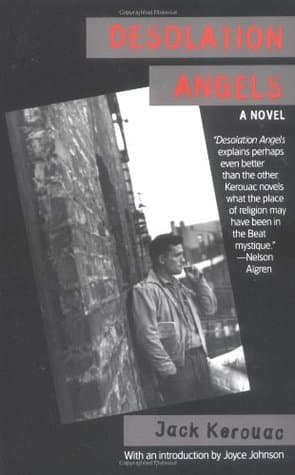
Synopsis
Covers the whole plot, including the ending.
- Difficulty
- Medium
- Pacing
- Variable
- Mood
- Introspective, Disillusioned, Existential, Bohemian
- Read it if
- You are a fan of Kerouac's stream-of-consciousness style and want a deep dive into the later years and internal struggles of the Beat Generation.
- Skip it if
- You prefer a strong, linear plot with clear character arcs and resolutions, or find Kerouac's prose self-indulgent.
Desolation Angels Plot Summary
Covers the whole plot, including the ending.
Desolation Peak Fire Watch
The novel opens with Jack Duluoz, Kerouac's character, taking a job as a fire lookout on Desolation Peak in the North Cascade Mountains of Washington State. He seeks isolation and spiritual insight, hoping to escape the pressures of his growing fame and the chaotic Beat lifestyle. Duluoz spends weeks alone, observing nature, meditating, and writing, fighting inner demons and the deep loneliness of the wilderness. He carries a copy of the Diamond Sutra and tries to practice Buddhism, but his mind constantly goes back to memories of his past life, his friends, and his worries. This time is marked by deep thought and a struggle to balance his spiritual goals with his earthly desires and the pull of the world he left behind.
Return to Civilization and San Francisco
After his time alone on Desolation Peak, Duluoz descends and hitchhikes back to civilization, eventually reaching San Francisco. The change from deep quiet to the city's busy, bohemian energy is jarring. He reunites with his friends, including Ray Smith (Gary Snyder), who had encouraged his mountain retreat, and other Beat figures. Duluoz finds himself again in the intellectual and social activity of the North Beach scene, going to bars, coffeehouses, and apartments where discussions on poetry, philosophy, and jazz are constant. Despite the friendship, Duluoz feels a continued sense of not belonging and struggles to find the spiritual peace he sought on the mountain amidst the urban chaos.
The San Francisco Beat Scene
In San Francisco, Jack Duluoz goes deeper into the Beat subculture, living among poets, artists, and hustlers. He spends his days and nights in a whirlwind of parties, discussions, and wandering, often fueled by alcohol and drugs. He interacts with many colorful characters, many of whom are representations of real Beat figures like Allen Ginsberg and Neal Cassady. Duluoz observes his friends' lives—their artistic work, their relationships, their struggles with poverty and addiction—all while trying to keep up his own writing. This period has a mix of strong friendship and underlying tension, as Duluoz deals with the superficiality he sees in the scene and his own desire for authenticity.
Mexico City Interlude
Seeking a change of scenery and a break from San Francisco's intensity, Jack Duluoz travels to Mexico City. This journey is marked by his usual aimless wandering and immersion in new cultures. He experiences Mexico's vibrant, often overwhelming, atmosphere, meeting various locals and fellow travelers. The heat, poverty, and sensory overload of the city contrast sharply with both the mountain solitude and the San Francisco scene. While in Mexico, Duluoz continues his spiritual quest and writing, but also enjoys the city's hedonistic aspects, often finding himself confused and disappointed, further showing his internal conflicts.
New York City and Family Life
After his adventures, Duluoz eventually returns to New York City, where he lives with his mother. This return to a more conventional, home setting is a sharp contrast to his bohemian lifestyle. He deals with his family's expectations, particularly his mother's wish for him to settle down, and the increasing recognition (and misunderstanding) of his work after the success of 'On the Road'. Duluoz feels trapped between his desire for freedom and his family duties, experiencing periods of depression and anxiety. He continues to write a lot, documenting his observations and inner turmoil, but finds it harder to balance his public image with his private self.
The Beat Generation's Disintegration
As Duluoz navigates New York, he sees the changing state of the Beat Generation. The initial friendship and shared artistic vision begin to weaken under the pressure of fame, internal conflicts, and outside criticism. Some friends drift away, others struggle with addiction, and the movement itself starts to be taken over and commercialized. Duluoz feels a growing sense of separation from the movement he helped create, seeing a loss of innocence and authenticity. He thinks about the idealism of their early days versus the often harsh realities of their present, leading to a deep sadness and questioning of their shared purpose.
Paris and European Encounters
Duluoz travels to Paris, hoping to find new inspiration and a sense of belonging in the city of artists and intellectuals. He meets various expatriates, writers, and European bohemians, engaging in long discussions about literature, politics, and life. He continues his constant writing, filling notebooks with observations and thoughts. However, even in Paris, Duluoz cannot escape his internal struggles. He fights loneliness, self-doubt, and the feeling of being an outsider, despite his attempts to connect with others. The European experience, while culturally rich, ultimately reinforces his feeling of rootlessness and the commonality of his existential worries.
Tangier and William Burroughs
From Paris, Duluoz goes to Tangier, Morocco, to visit his friend, the writer William S. Burroughs. This meeting is important, showing Duluoz a different, more experimental side of the Beat world. Burroughs's lifestyle and artistic philosophy, focused on drug use, cut-up techniques, and a detached, cynical view of society, challenge Duluoz's own spiritual and literary feelings. The atmosphere in Tangier is often surreal and unsettling, marked by drug use, sexual ambiguity, and a sense of decay. Duluoz observes Burroughs's creative process and lifestyle, which both fascinate and repel him, pushing him further into thinking about his own path.
Return to America and Disillusionment
After his European and North African travels, Duluoz returns to America, but coming home does not bring the peace he seeks. He feels increasingly disconnected from society, his friends, and even his past self. The early idealism of the Beat movement seems to have faded, replaced by disappointment and life's harsh realities. He continues to write, but his entries are often filled with deep sadness, reflecting on life's temporary nature and the elusive nature of happiness and spiritual fulfillment. Duluoz experiences moments of clarity and beauty, but they are often overshadowed by a general sense of loss and the weight of existence.
The Search for Meaning Continues
The novel ends with Jack Duluoz still dealing with his existential questions, his spiritual quest unfinished. He thinks about his experiences on Desolation Peak, in San Francisco, Mexico, Europe, and Tangier, trying to understand his life and purpose. Despite the disappointment, there is a persistent, though tired, hope for enlightenment and understanding. Duluoz continues to write, seeing it as his main way to make sense of the world and his place within it. The ending is not a solution but a continuation, emphasizing the ongoing nature of his search for truth, beauty, and lasting peace in a chaotic world.
Desolation Angels Characters
Jack Duluoz
Protagonist
A struggling writer and spiritual seeker, an alter ego of Jack Kerouac.
Jack Duluoz is a highly introspective and sensitive writer, constantly seeking spiritual enlightenment and authentic experience. He is deeply influenced by Buddhism and strives for a monastic existence, yet is perpetually drawn back to the chaotic, hedonistic world of the Beat Generation. Duluoz grapples with fame, loneliness, addiction, and the tension between his desire for solitude and his need for companionship. He is a keen observer of human nature and a prolific writer, using his experiences to fuel his art. His emotional landscape is vast, swinging between euphoria and profound despair.
Relationships: Ray Smith (Gary Snyder) (Mentor and friend, a fellow spiritual seeker and poet who inspires Duluoz's mountain retreat.); Irwin Garden (Allen Ginsberg) (Close friend and fellow poet, a central figure in the Beat scene with whom Duluoz shares intellectual and personal struggles.); Cody Pomeray (Neal Cassady) (Charismatic and wild friend, an embodiment of frenetic energy and impulsive living, often a source of both inspiration and chaos.); William S. Burroughs (Literary peer and friend, representing a darker, more experimental and cynical side of the counterculture.)
Ray Smith (Gary Snyder)
Supporting
A Zen Buddhist poet and Duluoz's friend, inspiring his retreat to Desolation Peak.
Ray Smith is presented as a grounded and knowledgeable figure, deeply committed to Zen Buddhism, environmentalism, and a more disciplined artistic life. He is a source of inspiration and guidance for Duluoz, encouraging his spiritual quest and providing a contrasting example to the often chaotic lifestyles of other Beats. Smith is practical, self-sufficient, and deeply connected to nature, embodying a more ascetic and thoughtful approach to life. He represents a potential path Duluoz considers but ultimately struggles to fully adopt.
Relationships: Jack Duluoz (Friend and intellectual confidant, inspiring Duluoz's spiritual pursuits.)
Irwin Garden (Allen Ginsberg)
Supporting
A passionate and influential Beat poet, Duluoz's close friend and intellectual sparring partner.
Irwin Garden is a vibrant, intellectual, and often flamboyant poet who embodies the energy and artistic spirit of the Beat Generation. He is a close friend to Duluoz, sharing deep conversations about poetry, philosophy, and their shared experiences. Garden is a charismatic figure, deeply engaged with social and political issues, and often a catalyst for group gatherings and discussions. He represents the intellectual and artistic core of the Beat movement, and his presence often brings both camaraderie and intense emotional exchanges for Duluoz.
Relationships: Jack Duluoz (Close friend and fellow poet, sharing artistic and personal struggles.)
Cody Pomeray (Neal Cassady)
Supporting
A wild, energetic, and unpredictable friend who embodies the 'on the road' spirit.
Cody Pomeray is a force of nature, characterized by his boundless energy, impulsiveness, and a restless spirit. He is a legendary figure within the Beat circle, famous for his driving, his storytelling, and his overall disregard for conventional norms. Pomeray embodies the raw, untamed freedom that Duluoz often craves but also struggles to fully embrace. While he is a source of excitement and adventure, his chaotic lifestyle also highlights the potential pitfalls and destructive tendencies within the Beat ethos.
Relationships: Jack Duluoz (Friend and travel companion, a source of inspiration for Duluoz's writing and a symbol of raw experience.)
The Mother (Gabrielle Kerouac)
Supporting
Duluoz's mother, representing domesticity, tradition, and a desire for stability.
Duluoz's mother is a significant presence, embodying the conventional world and familial expectations that Duluoz constantly battles against. She represents the desire for stability, security, and a more settled life, often clashing with Duluoz's bohemian wanderings and artistic pursuits. Her concern for his well-being and her Catholic faith provide a moral and domestic counterpoint to his spiritual and worldly explorations. Her presence highlights Duluoz's internal conflict between freedom and responsibility, and his enduring love for his family.
Relationships: Jack Duluoz (Mother-son relationship, marked by deep love but also tension due to Duluoz's lifestyle choices.)
William S. Burroughs
Supporting
An experimental writer and Duluoz's friend, representing a darker, more cynical Beat perspective.
William S. Burroughs, as he appears in the novel, is a detached, intellectual, and often unsettling figure. He embodies a more experimental, drug-fueled, and cynical approach to art and life compared to Duluoz's romantic idealism. His presence in Tangier introduces a darker, more transgressive side of the Beat counterculture, characterized by drug use, sexual ambiguity, and a critical view of society. Burroughs's unique literary style and philosophical outlook both fascinate and disturb Duluoz, offering an alternative, and perhaps more brutal, path to understanding the world.
Relationships: Jack Duluoz (Friend and literary peer, their interactions highlight different philosophical and artistic approaches.)
Georges (Gregory Corso)
Supporting
A young, energetic poet in the Beat circle.
Georges is depicted as a lively and somewhat impish young poet, full of artistic enthusiasm and a youthful rebelliousness. He is part of Duluoz's circle of friends in San Francisco and Paris, contributing to the vibrant intellectual and social atmosphere. Georges represents the younger generation of Beats, eager to embrace the counterculture and make their mark on the literary scene. His interactions with Duluoz often involve discussions about poetry, art, and the challenges of being a writer.
Relationships: Jack Duluoz (Friend and fellow poet, sharing artistic aspirations and bohemian experiences.)
The Various Women
Mentioned
A collection of fleeting romantic interests and muses for Duluoz.
Throughout the novel, Duluoz encounters and has brief relationships with numerous women, often nameless or given only passing descriptions. These women serve as muses, temporary companions, or fleeting romantic interests, reflecting Duluoz's restless heart and his search for connection. They are often idealized or seen through a romantic lens, representing moments of tenderness, passion, or fleeting joy amidst his existential struggles. Their transient nature emphasizes Duluoz's inability to settle down and his constant pursuit of new experiences.
Relationships: Jack Duluoz (Brief romantic or platonic encounters, often serving as muses or temporary companions.)
Desolation Angels Themes
The Search for Spiritual Enlightenment
A main theme is Jack Duluoz's constant search for spiritual understanding, mostly through Buddhism. From his isolated time on Desolation Peak, where he tries to meditate and read the Diamond Sutra, to his later travels, Duluoz constantly seeks a deeper meaning beyond the material world. However, this quest is always challenged by his earthly desires, the temptations of the Beat lifestyle (alcohol, drugs, sex), and his own restless nature. He deals with the paradox of seeking solitude while wanting human connection, and the difficulty of keeping spiritual discipline amidst chaos. This struggle is clear when he comes down from the mountain, finding it hard to balance the peace he sought with society's demands.
“No matter what you do it's bound to be a waste of time in the end so you might as well go mad.”
The Nature of Solitude and Community
The novel explores the tension between wanting deep solitude and needing human connection. Duluoz actively seeks isolation on Desolation Peak, believing it important for spiritual growth and creative work. This time is marked by intense thought but also by deep loneliness and a longing for his friends. Upon returning to San Francisco, he enters the Beat community, finding friendship and intellectual stimulation, but also superficiality and chaos. This back and forth between extreme isolation and intense social immersion shows Duluoz's inability to find lasting peace in either state, suggesting that true understanding might come from balancing these two basic human needs, or perhaps accepting their inherent conflict.
“I was a man and I had my problems, and I had my solutions, and I had my own way of doing it.”
Disillusionment with the Beat Generation
While initially a part of and writer about the Beat Generation, Duluoz experiences growing disappointment with the movement he helped define. He sees the commercialization of the counterculture, the internal arguments among his friends, and the destructive paths some take through addiction and aimlessness. The early idealism and shared artistic vision begin to fade, replaced by a sense of loss and the realization that the 'revolution' may have been unsustainable or misunderstood. His travels to Europe and Tangier, especially his meeting with Burroughs, further show him the darker, more cynical parts of their shared world, leading him to question the authenticity and ultimate purpose of their lifestyle.
“All of them, all of the heroes, all of the madmen, all of the beautiful ones, all of them had to die.”
The Act of Writing and Self-Documentation
Writing itself is a constant theme and a core activity for Duluoz. The novel is structured as a series of journal entries, letters, and stream-of-consciousness thoughts, making the act of writing central to its form and content. Duluoz uses writing to process his experiences, understand his spiritual quest, and document the lives of his friends and the era. It is his main tool for making sense of the chaos around and within him, a continuous attempt to capture fleeting moments and find truth through language. The constant, often raw, nature of his writing highlights its therapeutic and existential importance to him.
“My work is to write, and if I write, then I'm doing my work.”
The Search for Authenticity
Duluoz constantly searches for an authentic way of living, both personally and artistically. This quest drives his spiritual pursuits, his travels, and his relationships. He is wary of fakery and superficiality, whether in the commercial world, the growing Beat scene, or even within himself. His disappointment with the Beat Generation comes partly from his belief that it has lost its original authenticity. He tries to live a life true to his own spiritual and creative impulses, even when those impulses lead him to contradictory paths, showing how hard it is to maintain genuine selfhood in a complex world.
“I had nothing to offer anybody except my own confusion.”
Plot Devices & Literary Techniques
Stream of Consciousness Narration
The narrative flows as Duluoz's unfiltered thoughts, observations, and memories.
The novel is primarily told through a stream-of-consciousness style, mimicking the spontaneous and unedited flow of Jack Duluoz's thoughts. This device allows the reader direct access to Duluoz's inner world, his spiritual musings, anxieties, and sensory experiences. It creates an intimate, immediate, and often chaotic narrative, reflecting the restless mind of the protagonist and the improvisational nature of the Beat aesthetic. The lack of traditional plot structure emphasizes the journey of the mind over external events, making the reader a direct participant in Duluoz's existential quest.
Autobiographical Fiction / Roman à clef
Real-life events and people are thinly veiled as fictionalized accounts.
Kerouac uses his own life experiences and real individuals from the Beat Generation, thinly disguising them as fictional characters (e.g., Jack Duluoz for Jack Kerouac, Ray Smith for Gary Snyder, Irwin Garden for Allen Ginsberg). This device blurs the lines between fiction and autobiography, lending a sense of authenticity and immediacy to the narrative. It allows Kerouac to explore the personal and collective experiences of his generation while maintaining a degree of artistic freedom, creating a historical document that is simultaneously a deeply personal reflection.
Symbolism of Desolation Peak
The mountain represents spiritual retreat, isolation, and a starting point for Duluoz's journey.
Desolation Peak serves as a powerful symbol in the novel. It represents the ultimate retreat from society, a place for spiritual introspection, purification, and an attempt at monastic discipline. Its harsh, isolated environment mirrors Duluoz's internal struggles and his desire for transcendence. The descent from the mountain symbolizes his return to the complexities of the human world and the challenges of integrating spiritual aspirations with mundane existence. It acts as a foundational experience, a 'desolation' that paradoxically initiates a deeper, albeit more chaotic, search for meaning.
Travel and Geographic Shifts
Physical journeys across continents reflect Duluoz's internal quest and restlessness.
The constant movement of Jack Duluoz across various geographic locations—from the Pacific Northwest to San Francisco, Mexico City, New York, Paris, and Tangier—is a crucial plot device. These physical journeys are not merely changes of scenery but directly reflect Duluoz's internal restlessness, his search for meaning, and his attempts to escape his anxieties. Each new location offers a different cultural backdrop and set of experiences that challenge or reinforce his philosophical and spiritual inquiries, highlighting his perpetual state of seeking and his inability to find a permanent home or peace.
Desolation Angels Quotes
“No matter what you do it's bound to be a waste of time in the end so you might as well go mad.”
“The only truth is music.”
“I was a good man, a real good man, until I was about twenty-seven, when I fell into this terrible despair.”
“There are some things you can’t get with money. You can’t get youth. You can’t get love. You can’t get peace of mind.”
“I realized that I had to start all over again, that I had to go back to the beginning and find out what was real.”
“Everything is holy! everybody's holy! everywhere is holy! everyday is in eternity! Everyman's an Angel!”
“The only people for me are the mad ones, the ones who are mad to live, mad to talk, mad to be saved, desirous of everything at the same time, the ones who never yawn or say a commonplace thing, but burn, burn, burn like fabulous yellow roman candles exploding like spiders across the stars and in the middle you see the blue centerlight pop and everybody goes 'Awww!'”
“I went to the woods because I wished to live deliberately, to front only the essential facts of life, and see if I could not learn what it had to teach, and not, when I came to die, discover that I had not lived.”
“My mind is a confused heap of images and impressions, a veritable junkshop of the soul.”
“And the only thing I had to offer was my own confusion.”
“The tears of things, lacrimae rerum, the sadness of the world.”
“It was like a great silent dream. The past, the present, the future, all mixed up in one big ball.”
“I realized that the only way to be free was to give up everything.”
“Every time I ever got anywhere, it was because I was completely lost.”
“I was suddenly aware of the fact that everything was alive and everything was dying.”
Quiz
10 questions on the plot and the characters. Each answer comes with a short explanation.
Question 1
At the beginning of 'Desolation Angels,' where does Jack Duluoz (Kerouac's alter ego) retreat to seek solitude and enlightenment?
- A cabin in Big Sur
- A fire lookout tower on Desolation Peak
- A Buddhist monastery in California
- His mother's house in North Carolina
Show answer
B. A fire lookout tower on Desolation Peak The novel opens with Jack Duluoz's experience as a fire lookout on Desolation Peak in the Cascade Mountains, seeking spiritual clarity.
Question 2
Which real-life Beat figure is represented by the character Irwin Garden in 'Desolation Angels'?
- William S. Burroughs
- Neal Cassady
- Allen Ginsberg
- Gregory Corso
Show answer
C. Allen Ginsberg Irwin Garden is Kerouac's fictionalized portrayal of his close friend and fellow Beat poet, Allen Ginsberg.
Question 3
What is a central theme explored during Jack Duluoz's time on Desolation Peak?
- The pursuit of material wealth
- The search for spiritual truth and solitude
- The excitement of urban nightlife
- The complexities of romantic relationships
Show answer
B. The search for spiritual truth and solitude His period on Desolation Peak is characterized by an intense quest for spiritual understanding, meditation, and a break from worldly concerns.
Question 4
After his time in the mountains, Duluoz travels to which major city, often associated with the Beat Generation, to reconnect with his friends?
- Los Angeles
- Chicago
- New York City
- Miami
Show answer
C. New York City Following his retreat, Duluoz returns to the vibrant, chaotic scene of New York City, particularly the Lower East Side, to rejoin his Beat circle.
Question 5
Which literary device is prominently used in 'Desolation Angels' to reflect Kerouac's 'spontaneous prose' style?
- Strict adherence to traditional narrative structures
- Highly formal and academic language
- Long, flowing, unpunctuated sentences and stream-of-consciousness
- Frequent use of rhyming couplets
Show answer
C. Long, flowing, unpunctuated sentences and stream-of-consciousness Kerouac's 'spontaneous prose' is characterized by its free-flowing, stream-of-consciousness style, often with long sentences and minimal punctuation, aiming to capture thought as it happens.
Question 6
What significant personal event, related to his public image, does Jack Duluoz grapple with throughout the book?
- His desire to become a movie star
- His struggle with newfound fame and the 'Beat Generation' label after 'On the Road'
- His efforts to escape military conscription
- His attempts to start a new business venture
Show answer
B. His struggle with newfound fame and the 'Beat Generation' label after 'On the Road' The novel heavily features Duluoz's internal conflict and discomfort with the fame and public perception that followed the success of 'On the Road,' feeling misunderstood and pigeonholed as the 'King of the Beats.'
Question 7
Which European city does Duluoz visit, experiencing a distinct cultural and social scene that contrasts with his American experiences?
- London
- Paris
- Rome
- Berlin
Show answer
B. Paris Duluoz spends time in Paris, engaging with European intellectuals and experiencing a different facet of the bohemian lifestyle.
Question 8
The second part of the novel, 'Desolation Angels,' is characterized by a shift from solitude to what?
- Further isolated spiritual quests
- Intense social interaction, travel, and bohemian life with his Beat friends
- A focus on stable domestic life
- A period of deep academic study
Show answer
B. Intense social interaction, travel, and bohemian life with his Beat friends The second section dramatically contrasts with the first, plunging Duluoz into the frenetic social world of the Beats in New York and other cities, filled with parties, discussions, and wanderings.
Question 9
What recurring internal conflict does Jack Duluoz face regarding his spiritual aspirations versus his worldly desires and the Beat lifestyle?
- The desire for financial stability versus a career in politics
- The tension between ascetic Buddhist practice and the hedonistic, transient life of a Beat writer
- His loyalty to his family versus his commitment to his artistic vision
- His ambition to write poetry versus his talent for painting
Show answer
B. The tension between ascetic Buddhist practice and the hedonistic, transient life of a Beat writer Duluoz constantly struggles with the pull between his earnest pursuit of Buddhist enlightenment and the temptations of alcohol, women, and the restless, often debauched, lifestyle of his Beat companions.
Question 10
The novel is largely structured as a series of what, reflecting Kerouac's writing process?
- Formal academic essays
- Poetic verses and sonnets
- Autobiographical journal entries and spontaneous prose sections
- Fictionalized short stories with distinct plots
Show answer
C. Autobiographical journal entries and spontaneous prose sections Reflecting its autobiographical nature and 'spontaneous prose' style, 'Desolation Angels' is heavily composed of journal-like entries and free-flowing narratives that blur the line between memoir and fiction.
Desolation Angels FAQ
What is the central premise of 'Desolation Angels'?
Desolation Angels follows Jack Duluoz (Kerouac's alter ego) through a period of intense spiritual seeking and eventual disillusionment. It begins with his solitary retreat as a fire lookout on Desolation Peak, moves through his return to the chaotic Beat scene in San Francisco and New York, and concludes with his travels abroad, reflecting on fame, friendship, and the search for meaning amidst a changing counterculture.
Who is Jack Duluoz, and what is his primary struggle in the novel?
Jack Duluoz is the autobiographical protagonist, representing Jack Kerouac himself. His primary struggle is a deep internal conflict between his desire for spiritual enlightenment and solitude, and his simultaneous yearning for the camaraderie, wildness, and intellectual stimulation of his Beat friends, often leading to cycles of exhilaration and despair.
Where does the novel's title, 'Desolation Angels,' originate?
The title 'Desolation Angels' directly references the first section of the book, where Jack Duluoz serves as a fire lookout on Desolation Peak in the North Cascade Mountains. This period of intense solitude and contemplation, where he grapples with his spirituality and observes the vast, 'angelic' wilderness, sets the initial tone for his subsequent journey through urban chaos.
How does the novel portray the Beat Generation lifestyle in its later sections?
The novel portrays the Beat Generation lifestyle as increasingly fragmented and tumultuous after Duluoz's retreat. It depicts a scene filled with drug use, intense intellectual discussions, sexual experimentation, and a constant search for spiritual or artistic truth, but also hints at the encroaching commercialization and misunderstanding of their movement.
What is the significance of the fire lookout experience for Jack Duluoz?
The fire lookout experience on Desolation Peak is profoundly significant for Jack Duluoz as it represents his attempt at spiritual purification and escape from worldly distractions. During this period of intense solitude, he meditates, writes, and confronts his inner demons, seeking a transcendental understanding that ultimately proves elusive upon his return to society.
Are there characters in 'Desolation Angels' who are thinly veiled representations of real Beat figures, similar to 'On the Road'?
Yes, 'Desolation Angels' continues Kerouac's practice of using fictionalized names for real-life figures. Allen Ginsberg appears as Irwin Garden, Neal Cassady as Cody Pomeray, William S. Burroughs as Bull Hubbard, and Gregory Corso as Raphael Urso, among others, allowing Kerouoz to explore their interactions within his narrative.
How does the structure of 'Desolation Angels' reflect its themes?
The novel's episodic, stream-of-consciousness structure, divided into distinct sections like 'Desolation Peak,' 'Passing Through,' and 'The Wheel of the Quivering Meat Conception,' reflects Duluoz's fragmented journey and his inability to find a single, lasting truth. This form mirrors the chaotic and searching nature of his spiritual and physical wanderings.
What role does Buddhism play in Duluoz's journey in the book?
Buddhism plays a crucial, though often conflicted, role in Duluoz's journey. He delves deeply into Buddhist texts and meditation during his time on Desolation Peak, seeking enlightenment and release from suffering. However, his attempts at monastic detachment often clash with his worldly desires and the hedonism of the Beat scene, creating internal tension.
Are there any subtle allusions to Kerouac's growing fame and its impact within the narrative?
Yes, there are subtle allusions to Kerouac's growing fame, particularly after the success of 'On the Road.' Duluoz sometimes expresses discomfort with public recognition and the misinterpretation of his work, feeling like a reluctant spokesman for a generation he himself is struggling to define. This fame often isolates him rather than fulfilling him.
How does Duluoz's relationship with his mother evolve or feature in the novel?
Duluoz's relationship with his mother remains a constant, grounding, yet sometimes conflicting presence in the novel. She represents a sense of home and traditional values, often contrasting with his bohemian lifestyle. His guilt and responsibility towards her are recurring themes, even amidst his most intense spiritual or hedonistic pursuits.
What psychological impact does the constant travel and rootlessness have on Jack Duluoz?
The constant travel and rootlessness have a profound psychological impact on Jack Duluoz, contributing to a sense of existential angst and a perpetual search for belonging. While he thrives on the freedom and experiences, it also fosters a deep loneliness and an inability to commit, leaving him feeling adrift despite his many connections.
How does Duluoz's pursuit of spiritual enlightenment clash with his more carnal desires and the Beat lifestyle?
Duluoz's pursuit of spiritual enlightenment constantly clashes with his carnal desires and the hedonistic Beat lifestyle. He oscillates between asceticism and indulgence, seeking transcendence through both spiritual discipline and sensual experience, creating an internal struggle between the sacred and the profane that he ultimately cannot resolve.
What is the psychological significance of Duluoz's observational style, particularly during his solitary periods?
During his solitary periods, Duluoz's observational style signifies a deep psychological need for introspection and an attempt to find meaning in the external world. He meticulously records details of nature and his own thoughts, using observation as a form of meditation and self-analysis, hoping to uncover fundamental truths about existence.
Is 'Desolation Angels' ultimately a story of disillusionment or a continued search for hope?
'Desolation Angels' can be interpreted as both a story of disillusionment and a continued, albeit weary, search for hope. Duluoz experiences significant disillusionment with the limitations of both spiritual retreat and urban excess, yet his relentless quest for meaning, even in despair, suggests an underlying, persistent hope for understanding and transcendence.
How does the novel challenge or reaffirm the romanticized image of the Beat Generation?
The novel challenges the romanticized image of the Beat Generation by exposing its darker, more chaotic, and less glamorous aspects, such as drug addiction, mental health struggles, and the fleeting nature of their camaraderie. However, it also reaffirms the intellectual vibrancy and profound spiritual yearning that underpinned their artistic and lifestyle choices.
What is the significance of the 'angels' in the title, and are they literal or metaphorical?
The 'angels' in the title are primarily metaphorical, representing moments of sublime beauty, spiritual insight, or profound human connection that Duluoz encounters, often in unexpected places. They can be found in the vastness of nature on Desolation Peak, in the eyes of friends, or in fleeting moments of artistic inspiration, contrasting with the 'desolation' of his struggles.
How does 'Desolation Angels' compare in tone and theme to Kerouac's earlier work like 'On the Road'?
'Desolation Angels' is markedly more introspective and melancholic than 'On the Road.' While 'On the Road' emphasizes youthful exuberance, freedom, and discovery, 'Desolation Angels' reflects a more mature, disillusioned Kerouac grappling with the aftermath of fame, the complexities of spiritual seeking, and the fading idealism of the Beat movement.
Does the ending of the novel offer any sense of resolution for Jack Duluoz?
The ending of the novel offers little in the way of definitive resolution for Jack Duluoz. Instead, it concludes with him still in a state of flux, reflecting on his experiences and the nature of existence, suggesting that his search for meaning is an ongoing, cyclical process rather than one with a clear endpoint. He remains a wanderer, both physically and spiritually.
About the author
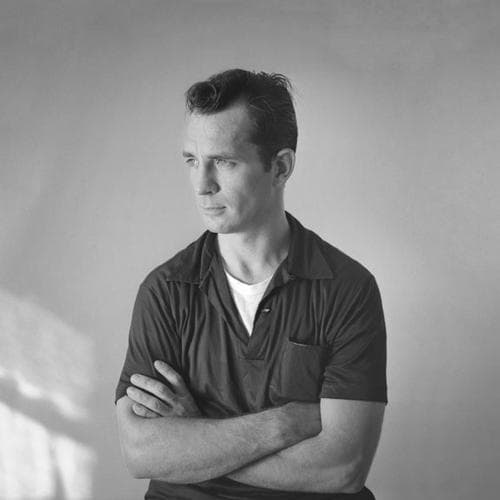
Jean-Louis Lebris de Kérouac, known as Jack Kerouac, was an American novelist and poet who, alongside William S. Burroughs and Allen Ginsberg, was a pioneer of the Beat Generation.
Similar books
- On The Road
Jack Kerouac
3.6 (349k) average on GoodreadsLifestyleExplores similar themes of travel, friendship, and the Beat lifestyle, but with an earlier, more optimistic tone.
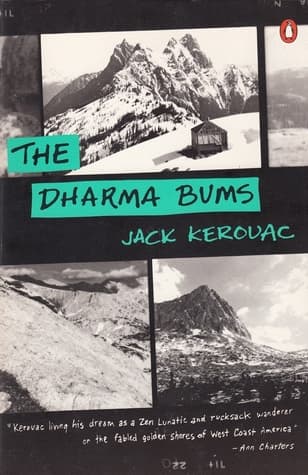
- The Dharma Bums
Jack Kerouac
3.9 (84k) average on GoodreadsLifestyleFocuses on the search for spiritual meaning and experiences in nature, reflecting Duluoz's Desolation Peak period.
- The Old Man and the Sea
Ernest Hemingway
3.8 (831k) average on GoodreadsLiterary FictionA Cuban fisherman's long struggle with a giant marlin becomes a story of endurance and dignity, now retold for young adults with illustrations, phonetic guides, and writing prompts in Traditional Chinese.
- One Hundred Years of Solitude
Gabriel García Márquez
4.1 (753k) average on GoodreadsLiterary FictionThrough the multi-generational story of the Buendía family, a mythical town deals with the repeating patterns of time, love, and solitude, as the extraordinary mixes with the ordinary.
- The Goldfinch
Donna Tartt
3.9 (720k) average on GoodreadsLiterary FictionHaunted by a tragic explosion and clutching a stolen Dutch masterpiece, a young orphan navigates the opulent drawing rooms of New York and the gritty underbelly of the art world, desperately seeking connection and redemption amidst a life spiraling into crime and obsession.
- Little Fires Everywhere
Celeste Ng
4.1 (713k) average on GoodreadsLiterary FictionIn Shaker Heights, an artist and her daughter move in, and their free-spirited lives clash with a rule-bound matriarch, revealing hidden conflicts beneath a perfect surface.





Enjoyed the summary?
A summary gives you the shape of the book. The book itself has the detail, the examples and the voice.
Find Desolation Angels on AmazonAs an Amazon Associate, BookBrief earns from qualifying purchases. How we're funded