
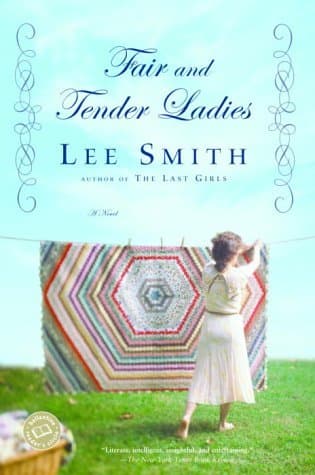
Synopsis
Covers the whole plot, including the ending.
- Difficulty
- Medium
- Pacing
- Moderate
- Mood
- Intimate, Reflective, Poignant, Resilient
- Read it if
- You enjoy epistolary novels, detailed character studies, and stories of resilient women in historical settings.
- Skip it if
- You prefer fast-paced plots or dislike narratives driven entirely by letters.
Fair and Tender Ladies Plot Summary
Covers the whole plot, including the ending.
Early Life and Aspirations
Ivy Rowe is born and raised in the rural Appalachian mountains of Blue Star Mountain, Virginia, in the early 20th century. Early on, she shows intelligence and a love for language, often writing letters and stories, which amuses and sometimes annoys her family. Her parents, Beulah and Silas, are poor but loving. Ivy's world is full of the real, sometimes harsh, aspects of mountain life. She writes often to her older sister, Silvaney, who has left home for work, and dreams of leaving the mountain herself for an education and to become a writer. Her teachers see her talent, supporting her hopes for a life beyond the mountain.
Betrayal and Unwed Pregnancy
As Ivy grows, her passionate nature becomes clearer. She falls for Honey Breeding, a charming but unreliable local man. Despite her dreams of attending school in the north, Ivy gives in to Honey's charms, leading to a secret affair. This relationship results in an unwed pregnancy, which ends her aspirations and shames her family in their conservative community. The news forces her to face the harsh realities and judgments of her society, closing the door on her immediate hopes for a more intellectual and independent life away from the mountains.
Marriage to Frank and Return to the Farm
Facing public criticism and an uncertain future, Ivy decides to marry Frank Honeycutt, a childhood friend and a good, steady man who cares for her. Frank takes Ivy back to his family's farm, where she begins the hard life of a farmer's wife. The marriage is one of necessity and comfort, not passionate love, but Frank provides stability and a home for Ivy and her unborn child. She quickly adapts to the endless work of farm life, having several more children with Frank, including sons Hobart and Roy, and daughter Joli. The physical demands and home duties leave little time for her writing.
The Arrival of Fair and Tender Ladies
Despite her life's constant demands, Ivy stays connected to the written word. She continues to write letters, not just to family and friends like her sister Silvaney and later her children, but also to a pen pal, 'Fair and Tender Ladies.' These letters become her deepest emotional outlet, a secret world where she can express her true feelings, observations, and unfulfilled desires without judgment. Through this correspondence, she keeps her intellectual self and her identity as a writer, even as her daily life is spent on home and hardship. These letters are the core of her story, showing her inner life.
Loss and Resilience
Ivy's life includes significant personal losses and hardships. She experiences the death of her daughter, Joli, which is a deep blow, testing her strength and faith. The economic struggles of farm life are constant, and she faces the challenges of raising a family in poverty. Despite these great difficulties, Ivy shows an unwavering spirit. Her letters often reflect her grief and despair, but they also show her lasting strength and her ability to find beauty and meaning even in the darkest times. Her love for her surviving children, especially Hobart, helps her to keep going.
The War Years and Changing World
As the world changes, so does Ivy's life on the mountain. World War II affects her family, as her sons, Hobart and Roy, leave home to serve in the military. This time brings new worries and fears for their safety, mirroring the wider changes in the country. Ivy's letters during this period reflect her concerns and her observations on the changing social scene. She sees the gradual modernization of the mountain region, though her own life largely stays tied to traditional ways. The war also brings her into contact with new people and ideas, further broadening her view.
Adultery and Confession
Years into her marriage with Frank, Ivy gives in to another passionate urge, having a brief affair with Reverend Hylton, a charismatic preacher who visits their community. This affair, though short, is a significant emotional event for Ivy, reigniting a spark of passion that had long been quiet in her life. It represents a moment of rebellion against her limited existence and a desire for intellectual and emotional connection. Later, she confesses this affair to Frank, burdened by guilt. Frank's quiet understanding and forgiveness, rather than anger, show his deep, lasting love for her and their unique marriage bond.
Children Growing Up and Leaving Home
As her children grow, they, like Ivy once dreamed, begin to leave Blue Star Mountain for their own lives and opportunities. Her son Hobart, especially close to her, eventually moves away, as do her other children. This period brings a bittersweet sense of an empty nest for Ivy. While she is proud of their independence, she also feels lonely and sees the natural progression of life. Her letters during this time often reflect on her children's futures, her hopes for them, and her thoughts on the passing of time and the changing dynamics of her family.
Frank's Illness and Death
Frank Honeycutt, Ivy's steady husband, eventually gets sick. Ivy cares for him during his declining health, showing her deep commitment and affection, even if their marriage wasn't one of grand romance. His illness and eventual death are profound moments for Ivy. Despite the practical nature of their union, Frank gave her stability, a family, and steady support. His passing leaves a significant void in her life, forcing her to face widowhood and the end of their shared history. His death marks a turning point, leaving Ivy to navigate life on her own.
Late Life and Reflections
In her later years, Ivy continues to live on Blue Star Mountain, now a widow. She reflects deeply on her life's journey, her choices, her joys, and her sorrows. Her letters become even more personal, showing her experiences and her lasting spirit. She revisits memories of her youth, her passionate nature, her children, and the men she loved. While her dreams of becoming a published writer in the traditional sense never fully came true, her large collection of letters is her true literary legacy, an honest record of a woman's life in the Appalachian mountains. She finds quiet contentment in her memories and her written word.
Principal Figures
Ivy Rowe
Protagonist
A spirited and intelligent woman whose life on Blue Star Mountain is chronicled through her letters.
Ivy Rowe is the heart of the story, a woman of deep passion, keen intelligence, and an unquenchable thirst for expression. Born into poverty in the Appalachian mountains, she dreams of an education and a life beyond the confines of her rural existence. Despite her intellectual aspirations, her passionate nature often leads her into situations that defy societal expectations, resulting in an unwed pregnancy and a life of domestic toil. She is resilient, observant, and finds her truest self through her prolific letter writing, which serves as her outlet for dreams, frustrations, and reflections. She is driven by a desire to understand and articulate her experiences.
Relationships: Frank Honeycutt (Husband, source of stability and quiet love); Honey Breeding (First love, father of her first child, source of passion and betrayal); Silvaney Rowe (Older sister, confidante, recipient of many early letters); Hobart Honeycutt (Son, particularly close bond, intellectual and emotional connection); Reverend Hylton (Brief affair, represents a momentary return to passion)
Frank Honeycutt
Supporting
Ivy's steadfast and kind husband, a hardworking farmer.
Frank Honeycutt is Ivy's devoted husband, a hardworking and reliable farmer who provides stability and a home for her and her children. He is a man of few words but deep integrity and quiet strength. He marries Ivy despite her unwed pregnancy, accepting her and her child without judgment. While their relationship lacks the fiery passion Ivy sometimes craves, Frank offers unwavering love, loyalty, and a grounding presence in her often tumultuous life. His understanding and forgiveness after Ivy's affair with Reverend Hylton exemplify his profound goodness and his unconditional love for her.
Relationships: Ivy Rowe (Husband, offers stability and unconditional love); Hobart Honeycutt (Son)
Honey Breeding
Supporting
Ivy's first love, a charming but unreliable man who fathers her first child.
Honey Breeding is the charismatic and passionate young man who captures Ivy's heart in her youth and fathers her first child, causing a major turning point in her life. He represents the wilder, more untamed aspects of mountain life and Ivy's own passionate nature. While he ignites a powerful romantic spark in Ivy, he proves to be unreliable and ultimately unavailable for the responsibilities of fatherhood and marriage. His brief but impactful presence forces Ivy to confront the consequences of her choices and the societal judgments she faces, ultimately shaping the trajectory of her adult life.
Relationships: Ivy Rowe (First love, father of her first child, source of passion and betrayal)
Silvaney Rowe
Supporting
Ivy's older sister and a frequent recipient of her early letters.
Silvaney is Ivy's older sister, who leaves Blue Star Mountain for opportunities elsewhere. She serves as an early confidante and a crucial recipient of Ivy's letters, especially in her youth. Through her correspondence with Silvaney, Ivy articulates her dreams, her observations, and her frustrations with mountain life. Silvaney represents the possibility of escape and a different kind of life, even if her own experiences are not always glamorous. Their letters reflect the strong bond between sisters, sharing news, gossip, and emotional support across distances.
Relationships: Ivy Rowe (Sister, early confidante and letter recipient)
Hobart Honeycutt
Supporting
Ivy and Frank's son, with whom Ivy shares a particularly deep intellectual and emotional bond.
Hobart is Ivy and Frank's son, and he shares a particularly deep and intellectual bond with his mother. He is often portrayed as sensitive and thoughtful, inheriting some of Ivy's intellectual curiosity. As he grows, he becomes a recipient of some of Ivy's most revealing letters, especially as he leaves Blue Star Mountain for his own life. Their relationship is complex, marked by both love and the unspoken understanding of their shared nature. Hobart represents the continuation of Ivy's spirit and the hope for a life beyond the mountain that she herself could not fully achieve.
Relationships: Ivy Rowe (Son, shares a deep intellectual and emotional bond); Frank Honeycutt (Father)
Reverend Hylton
Supporting
A charismatic preacher who has a brief affair with Ivy.
Reverend Hylton is a magnetic and eloquent preacher who briefly enters Ivy's life, sparking a passionate affair. He represents a moment of intellectual and emotional rekindling for Ivy, offering a connection that transcends the domesticity of her marriage to Frank. His presence, though fleeting, reminds Ivy of her own desires for passion and intellectual stimulation. The affair is a significant turning point, challenging her marital vows and forcing her to confront her own complex nature. He is a catalyst for Ivy's later confession to Frank, highlighting the moral and emotional complexities she grapples with.
Relationships: Ivy Rowe (Brief affair, intellectual and emotional connection)
Beulah Rowe
Supporting
Ivy's mother, a practical and loving mountain woman.
Beulah Rowe is Ivy's mother, a hardworking and loving woman who embodies the practical and enduring spirit of mountain life. She is often concerned with the well-being and reputation of her family, and while she recognizes Ivy's intelligence, she is also grounded in the traditional expectations of her community. Beulah's reactions to Ivy's unwed pregnancy reflect the societal pressures and shame of the era, yet her underlying love for her daughter is evident. She instills in Ivy a sense of resilience and the importance of family, even as Ivy yearns for a different path.
Relationships: Ivy Rowe (Mother); Silas Rowe (Husband)
Silas Rowe
Supporting
Ivy's father, a hardworking and somewhat distant figure.
Silas Rowe is Ivy's father, a hardworking but often distant presence in her early life. He is a man of the mountains, dedicated to providing for his family through farming and other labor. While he may not fully understand Ivy's intellectual inclinations, he provides a stable, if humble, foundation for her childhood. His character represents the stoic, enduring nature of the mountain men of that era. His interactions with Ivy are less frequent and less emotionally expressive than her mother's, but his presence is a foundational element of her early environment.
Relationships: Ivy Rowe (Father); Beulah Rowe (Wife)
Themes & Insights
The Power of the Written Word
The novel is made up entirely of Ivy Rowe's letters, making writing itself a main theme. For Ivy, writing is not just communication; it is her lifeline, her escape, her confession, and how she keeps herself. Through her letters, she records her observations, expresses her unfulfilled desires, processes her grief, and maintains her intellectual identity amidst her daily work. The letters to 'Fair and Tender Ladies' are especially moving, representing a secret, sacred space for her truest self. This theme is shown when she writes, 'It's like I have to write it all down, or it won't be real.'
“I write it all down so I won't forget it, so it will be real. It's like if I don't write it, it never happened.”
Passion vs. Duty
Ivy's life is a constant tension between her passionate nature and the duties imposed by society and her circumstances. Her youthful affair with Honey Breeding, driven by passion, leads to an unwed pregnancy, forcing her into a life of duty as a farmer's wife. Later, her brief affair with Reverend Hylton is another example of this inner conflict, a desire for emotional and intellectual connection beyond her practical marriage. Despite choosing duty, Ivy never fully loses her passionate spirit, often putting it into her expressive letters. This struggle shapes many of her important life choices.
“Oh, my heart just aches sometimes for something more, something that ain't here.”
The Enduring Spirit of Appalachian Life
The novel clearly shows the harsh realities, strength, and unique culture of Appalachian mountain life in the early to mid-20th century. Ivy's story is full of details about farm work, poverty, community gossip, religious fervor, and close family bonds. Despite the isolation and lack of chances, there is a deep connection to the land and a strong independence among the characters. The landscape itself is like a character, shaping Ivy's view and providing both beauty and difficult challenges. The community's judgment of Ivy's early pregnancy highlights the region's strong moral codes.
“Blue Star Mountain holds you tight, it don't never let you go.”
The Limitations and Resilience of Women
The novel explores the limited choices for women in rural Appalachia during Ivy's lifetime. Ivy's dreams of education and a writing career are cut short by an unwed pregnancy and the expectation that she marry and become a farmer's wife. Her life shows the strength and resilience needed to navigate these limits. Despite the endless work, home duties, and personal losses, Ivy finds ways to maintain her intellectual and emotional life through her writing, showing an inner freedom even when her physical freedom is restricted. Her story highlights how women found agency and voice within restrictive structures.
“A woman's life is mostly just making do with what you're given.”
Plot Devices & Literary Techniques
Epistolary Format
The entire novel is told through Ivy Rowe's letters.
The novel's epistolary format is its most defining plot device. By presenting Ivy's story solely through her letters, Lee Smith provides an intimate, unfiltered, and deeply personal perspective on her life. This format allows the reader direct access to Ivy's thoughts, emotions, and observations, creating a strong sense of immediacy and authenticity. It also highlights Ivy's identity as a writer and how the act of writing is central to her existence. The shifting recipients of her letters (sister, children, pen pal) allow for different facets of her personality and experiences to emerge over time, creating a rich, evolving portrait of her inner world.
First-Person Narrative (through letters)
Ivy's subjective voice shapes the reader's understanding of events.
Because the novel is composed entirely of Ivy's letters, the narrative is inherently first-person. This subjective viewpoint means that readers experience events and characters solely through Ivy's lens, colored by her emotions, biases, and interpretations. This device is crucial for character development, as Ivy's voice evolves from a youthful, hopeful tone to a more reflective, world-weary, yet still vibrant voice. It also allows for dramatic irony, as readers might infer more about certain situations or characters than Ivy herself fully articulates. The intimacy of this perspective draws the reader deeply into Ivy's psychological landscape.
Symbolism of Blue Star Mountain
The mountain represents both confinement and identity.
Blue Star Mountain functions as a powerful symbol throughout the novel. Initially, it represents the confinement and limited opportunities that Ivy yearns to escape, a place of poverty and traditional expectations. However, as Ivy matures, the mountain also comes to symbolize her roots, her enduring spirit, and the community that shaped her. It is both a place of hardship and a source of strength, beauty, and identity. The mountain is a constant backdrop against which Ivy's personal struggles and triumphs unfold, reflecting the deep, often contradictory, connection people have to their homeland.
Foreshadowing (through Ivy's early aspirations)
Ivy's early dreams hint at her lifelong internal conflict.
Ivy's early, fervent aspirations to go north for schooling and become a writer serve as a powerful form of foreshadowing. While her life takes a different, more domestic path, these initial dreams continually resurface throughout her letters, hinting at the unfulfilled potential and the internal conflict between her intellectual desires and the realities of her life. This foreshadowing creates a sense of pathos, as readers are aware of the vibrant intellect that is often constrained by circumstance, yet also highlights Ivy's resilience in finding an outlet for her creativity through her prolific letter writing, ultimately fulfilling her 'writer' identity in her own unique way.
Fair and Tender Ladies Quotes
“I will tell you what I have seen and heard, and what I have done, from the time I was a little girl with a ribbon in my hair, up until this very day.”
“It is a fearful thing to love what death can touch.”
“The mountains are full of secrets, and so are the people who live in them.”
“I have always been a great hand for writing letters, and now I reckon I'll be writing them to myself.”
“A woman's heart is a deep well, and there's no telling what you'll find at the bottom.”
“Life is a river, and you can't step in the same water twice.”
“Sometimes you have to make your own sunshine, even when the sky is gray.”
“It's a wonder how much love a heart can hold, and how much pain it can bear.”
“You can't go home again, not really. The place changes, and so do you.”
“There's a lot of truth in old songs, if you listen close enough.”
“We all carry our burdens, some lighter than others, but everyone has their own load to bear.”
“A good book is like a good friend, always there when you need it.”
“The past is never really past, it just waits for you to remember it.”
“You learn more from living than you ever will from any book.”
Quiz
10 questions on the plot and the characters. Each answer comes with a short explanation.
Question 1
Where does Ivy Rowe spend her early childhood, the place she often refers to in her letters?
- Salt Lick Creek
- Blue Star Mountain
- Lick Skillet Hollow
- Fairview Farm
Show answer
B. Blue Star Mountain Ivy Rowe is born and spends her formative years on Blue Star Mountain, a setting that deeply influences her early letters and sense of identity.
Question 2
What is the primary form of communication Ivy Rowe uses throughout her life to express her thoughts, observations, and experiences?
- Diaries
- Poems
- Letters
- Oral storytelling
Show answer
C. Letters The novel is entirely epistolary, told through Ivy Rowe's extensive collection of letters to various correspondents, making letters her primary mode of expression.
Question 3
What significant event prevents Ivy from realizing her dream of going north to school?
- Her family's financial ruin
- An unexpected illness
- An unwed pregnancy
- A change of heart and desire to stay home
Show answer
C. An unwed pregnancy Ivy's 'passionate nature' leads to an unwed pregnancy, which publicly shames her and prevents her from pursuing her educational dreams up north.
Question 4
Who does Ivy Rowe ultimately marry after her unwed pregnancy?
- A travelling salesman
- A childhood friend
- The father of her child
- A local schoolteacher
Show answer
B. A childhood friend After her unwed pregnancy, Ivy marries a childhood friend, who takes her back to the family homestead.
Question 5
What is a recurring theme in Ivy Rowe's letters, despite the hardships and toil she endures as a farmer's wife?
- A desire for revenge
- A cynical view of life
- An unwavering hope for future happiness
- A constant regret for past choices
Show answer
C. An unwavering hope for future happiness Throughout her trials, Ivy 'holds firm, knowing that her life will hold happiness one day,' demonstrating a consistent theme of hope.
Question 6
Which of the following best describes Ivy Rowe's innate talent, recognized early in her life?
- Her skill in farming
- Her ability as a budding writer
- Her talent for music
- Her prowess in domestic arts
Show answer
B. Her ability as a budding writer The synopsis explicitly states, 'Ivy's talent as a budding writer is recognized early on,' which is central to her character and the novel's format.
Question 7
The novel's structure, comprised entirely of Ivy Rowe's letters, primarily serves to highlight which aspect of her character?
- Her isolation from society
- Her internal world and evolving perspective
- Her public persona and reputation
- Her limited understanding of the outside world
Show answer
B. Her internal world and evolving perspective The epistolary format allows readers direct access to Ivy's thoughts, feelings, and observations over many years, revealing her internal world and growth more intimately than an external narrator could.
Question 8
The 'betrayal by her passionate nature' that leads to Ivy's unwed pregnancy can be seen as a conflict between which two forces in her life?
- Her family's wishes and her own ambition
- Societal expectations/morality and personal desire/autonomy
- Rural life and urban opportunities
- Her love for her husband and her children
Show answer
B. Societal expectations/morality and personal desire/autonomy Ivy's 'passionate nature' leads to an unwed pregnancy, which is then 'publicly admonished for her sins.' This highlights the clash between her personal desires and the strict moral and societal expectations of her time and community.
Question 9
Despite the 'endless toil of a farmer's wife' and her earlier aspirations, what does Ivy Rowe consistently use her letters to do, besides simply communicating events?
- To manipulate others for personal gain
- To escape her reality through fantasy
- To document her observations, reflect, and engage in self-expression, fulfilling her writerly inclination
- To plot her eventual escape from her marriage
Show answer
C. To document her observations, reflect, and engage in self-expression, fulfilling her writerly inclination Even after her dreams of formal schooling are dashed, Ivy continues to write extensively. Her letters are not just practical communication but serve as an outlet for her 'budding writer' talent, allowing her to observe, reflect, and express herself creatively throughout her life.
Question 10
The setting of Blue Star Mountain and the family homestead emphasizes which aspect of Ivy's life trajectory, particularly after her marriage?
- Her continuous journey and exploration of new places
- Her profound connection to nature and the wilderness
- Her rootedness and the cyclical, often unchanging, nature of her daily existence
- Her desire to escape rural life for urban opportunities
Show answer
C. Her rootedness and the cyclical, often unchanging, nature of her daily existence After being 'taken back to the family homestead,' Ivy endures 'endless toil of a farmer's wife.' This emphasizes her rootedness in a specific, unchanging rural environment and the cyclical nature of her domestic and agricultural duties, contrasting with her earlier hopes for a life 'north to school.'
Fair and Tender Ladies FAQ
What is the central premise of 'Fair and Tender Ladies' and how does Ivy Rowe primarily communicate her story?
'Fair and Tender Ladies' centers on the life of Ivy Rowe, a woman born on Blue Star Mountain, whose journey is chronicled from birth through old age. Her story is uniquely told entirely through her extensive collection of letters, diary entries, and other written communications to various family members, friends, and even strangers, allowing readers intimate access to her thoughts and experiences.
Who are the key male figures in Ivy Rowe's early life and what role do they play in shaping her future?
Ivy's early life is significantly impacted by several men. Her father, a gentle but largely absent figure, instills in her a love for nature and storytelling. Her first love, the charming but irresponsible Jinx, leads to her unwed pregnancy, dramatically altering her path away from academic aspirations. Eventually, she marries Silas, a childhood friend, who provides stability and takes her back to her family homestead.
How does Ivy's dream of going 'north to school' represent her broader aspirations, and why is it ultimately thwarted?
Ivy's dream of going 'north to school' symbolizes her desire for intellectual fulfillment, a life beyond the confines of rural Appalachia, and recognition for her budding writing talent. This dream is tragically thwarted by her passionate affair with Jinx, which results in an unwed pregnancy. The societal stigma and personal responsibility force her into a more conventional, difficult life as a farmer's wife.
What specific challenges does Ivy face as a farmer's wife, and how do these trials impact her spirit?
As a farmer's wife, Ivy endures relentless physical toil, the hardships of poverty, and the emotional demands of raising several children in a remote setting. The constant struggle for survival and the loss of her intellectual pursuits weigh heavily on her, but her spirit remains resilient. She finds solace and expression through her continued letter writing, which becomes her enduring outlet.
Beyond her immediate family, who are some significant recurring correspondents in Ivy's letters, and what do they reveal about her relationships?
Ivy's letters frequently include exchanges with her sister, Ora, revealing their complex sisterly bond and shared Appalachian heritage. She also writes to her former teacher, Miss Torrington, who recognizes her literary talent and acts as a mentor, highlighting Ivy's intellectual aspirations. These correspondences illuminate the diverse facets of Ivy's personality and her deep need for connection.
What is the significance of the recurring motif of Blue Star Mountain in Ivy's letters, even after she leaves it?
Blue Star Mountain represents Ivy's roots, her identity, and a place of both confinement and deep connection to nature. Even after she moves away, references to the mountain in her letters symbolize her longing for simplicity, her connection to her past, and the enduring influence of her upbringing on her worldview. It's a constant touchstone for her sense of self.
How does Ivy's relationship with her children, particularly her daughters, reflect or diverge from her own experiences and aspirations?
Ivy's relationships with her daughters are complex; she often projects her own unfulfilled dreams onto them, particularly a desire for education and a life beyond the mountains. While she loves them deeply, there's an underlying tension as she tries to guide them towards opportunities she never had, sometimes struggling to understand their own emerging desires that might differ from hers.
Are there any subtle indications in Ivy's letters that suggest a deeper understanding of Jinx's character or the societal pressures that led to their downfall, beyond initial blame?
As Ivy matures, her letters sometimes reveal a more nuanced understanding of Jinx, acknowledging perhaps his own limitations or the broader societal context of their youthful indiscretion. While she never fully absolves him, later letters hint at a recognition of the complexities of human nature and the circumstances that shaped their early choices, moving beyond simple blame.
What is the implied fate or impact of some of Ivy's male children, and how does she cope with these losses or challenges?
Ivy endures the loss of at least one child, and her sons often face the harsh realities of mountain life, sometimes leaving for work or becoming involved in difficult situations. Her letters convey her profound grief and worry, but also her resilience and determination to keep her family together. She channels her sorrow into her writing, finding a way to process these deep emotional wounds.
How does Ivy's constant act of writing function as a coping mechanism and a form of self-preservation throughout her life?
Writing is Ivy's primary coping mechanism; it allows her to process her emotions, articulate her frustrations, and maintain her intellectual vitality amidst the drudgery of her daily life. It's a form of self-preservation, enabling her to construct and maintain her identity, ensuring that her inner world and aspirations remain alive even when her external circumstances are challenging.
Discuss the psychological impact of Ivy's early public admonishment for her 'sins' and how it shapes her self-perception and future choices.
The public admonishment for her unwed pregnancy deeply wounds Ivy, instilling a sense of shame and social ostracization that profoundly affects her self-perception. This experience likely contributes to her later choices, leading her to prioritize stability and social acceptance through marriage to Silas, even if it means sacrificing her personal dreams. It also fuels her internal quest for redemption and meaning.
How does Ivy's relationship with Silas evolve psychologically over time, moving from a marriage of convenience to something deeper?
Initially, Ivy's marriage to Silas is one of convenience and necessity, a pragmatic solution to her predicament. However, over the years, their relationship evolves psychologically. Through shared hardships, mutual respect, and Silas's unwavering devotion, a deeper, quiet love and partnership develop. Ivy comes to appreciate his steadfastness and the security he provides, finding a different kind of fulfillment.
What role does memory play in Ivy's letters, and how does she use it to reconcile her past self with her present reality?
Memory is crucial in Ivy's letters; she frequently revisits past events, loves, and dreams, using them to understand her present circumstances. By reflecting on her past, she attempts to reconcile the ambitious young woman she once was with the hardworking farm wife she became. This constant engagement with memory allows her to weave a continuous narrative of her life, finding meaning in its trajectory.
How does Ivy's perspective on passion and desire change from her youth to her older age, as revealed through her evolving correspondence?
In her youth, Ivy's letters overflow with raw, untamed passion and longing, leading to impulsive choices. As she ages, her perspective shifts; while the memory of passion remains, her understanding of desire matures. It becomes less about fleeting romance and more about enduring love, the deep bonds of family, and the satisfaction of a life lived, even with its hardships, reflecting a tempered but profound emotional landscape.
Is Ivy Rowe a tragic figure, or does she ultimately achieve a form of triumph and happiness by the end of the novel?
Ivy's life contains elements of tragedy, particularly the thwarting of her early dreams and the relentless toil she endures. However, many argue she achieves a profound triumph. Her enduring spirit, her ability to find beauty and meaning in her life, and her steadfast commitment to her family and her writing suggest a different kind of happiness—one rooted in resilience, acceptance, and the quiet satisfaction of a life fully lived, rather than a conventional happy ending.
How does the epistolary format of the novel contribute to or limit the reader's understanding of Ivy's inner life and the events around her?
The epistolary format offers unparalleled intimacy, allowing readers direct access to Ivy's unfiltered thoughts, emotions, and evolving perspective, creating a strong sense of connection. However, it also limits the reader to only Ivy's viewpoint, meaning other characters' motivations or external events are filtered through her potentially biased lens. This creates a compelling but subjective narrative experience.
To what extent can Ivy's journey be seen as a commentary on the roles and limitations placed upon women in early 20th-century Appalachia?
Ivy's journey serves as a powerful commentary on the societal constraints and expectations placed on women in early 20th-century Appalachia. Her thwarted ambitions, the severe consequences of her 'sins,' and her subsequent life of domestic toil highlight the limited options available and the sacrifices women were often forced to make, even those with exceptional talent and intellect.
Does the novel suggest that Ivy's 'passionate nature' was ultimately a strength or a weakness in her life, or both?
The novel suggests Ivy's 'passionate nature' is undeniably both a strength and a weakness. It leads to her early downfall and the loss of her academic dreams, yet it is also the wellspring of her creativity, her deep capacity for love, and her enduring resilience. Her passion fuels her writing and her determination to find beauty and meaning, making it a complex, defining characteristic.
How does Lee Smith use Ivy's distinctive voice in her letters to explore themes of education, class, and social mobility in the Appalachian context?
Lee Smith masterfully uses Ivy's distinctive voice, which evolves from unpolished mountain dialect to more refined expression, to explore themes of education, class, and social mobility. Ivy's longing for education highlights the barriers of class. Her letters subtly reveal the cultural clashes and economic disparities between her rural world and the 'north,' showcasing the challenges of transcending one's origins in Appalachia.
About the author

Lee Smith is an American author known for her fiction, particularly her exploration of Southern life and culture. Among her notable works are "Fair and Tender Ladies," a novel presented as a series of letters, "Oral History," which delves into the complexities of storytelling, and "On Agate Hill," a narrative set in the early 20th century.
Similar books
- The Color Purple
Alice Walker
4.2 (521k) average on GoodreadsHistorical FictionEpistolary style, strong female protagonist facing adversity, historical setting.
- Christy
Catherine Marshall
4.2 (49k) average on GoodreadsHistorical FictionAppalachian setting, focus on a woman's journey and challenges in a rural community.
- Where the Crawdads Sing
Delia Owens
4.5 (975k) average on GoodreadsHistorical FictionSouthern setting, a resilient female character navigating isolation and societal judgment.
- The Old Man and the Sea
Ernest Hemingway
3.8 (831k) average on GoodreadsLiterary FictionA Cuban fisherman's long struggle with a giant marlin becomes a story of endurance and dignity, now retold for young adults with illustrations, phonetic guides, and writing prompts in Traditional Chinese.
- One Hundred Years of Solitude
Gabriel García Márquez
4.1 (753k) average on GoodreadsLiterary FictionThrough the multi-generational story of the Buendía family, a mythical town deals with the repeating patterns of time, love, and solitude, as the extraordinary mixes with the ordinary.
- The Goldfinch
Donna Tartt
3.9 (720k) average on GoodreadsLiterary FictionHaunted by a tragic explosion and clutching a stolen Dutch masterpiece, a young orphan navigates the opulent drawing rooms of New York and the gritty underbelly of the art world, desperately seeking connection and redemption amidst a life spiraling into crime and obsession.





Enjoyed the summary?
A summary gives you the shape of the book. The book itself has the detail, the examples and the voice.
Find Fair and Tender Ladies on AmazonAs an Amazon Associate, BookBrief earns from qualifying purchases. How we're funded