

Synopsis
Covers the whole plot, including the ending.
- Difficulty
- Medium
- Pacing
- Moderate
- Mood
- Reflective, Philosophical, Introspective, Slightly Mysterious
- Read it if
- You enjoy complex character studies, philosophical reflections on guilt and fate, and a blend of historical context with a touch of the mystical.
- Skip it if
- You prefer fast-paced plots with clear resolutions and dislike introspective narratives or ambiguity.
Fifth Business Plot Summary
Covers the whole plot, including the ending.
The Fateful Snowball and its Aftermath
The story starts with Dunstan Ramsay, an older schoolmaster, thinking about his life, especially an event from his childhood in the small Canadian town of Deptford, Ontario. One winter evening in 1908, his friend Percy Boyd Staunton (Boy) throws a snowball at Dunstan, but it misses and hits Mrs. Dempster, the pregnant wife of the local Baptist minister, Reverend Amasa Dempster. The hit causes her to go into early labor, and her son, Paul, is born with a clubfoot. Dunstan feels guilty, thinking he should have taken the hit. This event connects his life to the Dempster family, especially Mrs. Dempster, whom he starts to visit and care for secretly, noticing her unusual nature and the town's growing dislike of her.
War, Identity, and the Victoria Cross
Dunstan joins the Canadian Army during World War I. He experiences the horrors of trench warfare, including the Battle of Passchendaele. During a particularly bad fight, he acts very bravely, saving several men under heavy fire. This earns him the Victoria Cross, Britain's highest military award. He is badly hurt and thought to be dead, but he lives. While recovering, he decides to change his first name from 'Dunstable' to 'Dunstan.' He connects this name with a saint and wants to leave his old self behind, becoming a new, more scholarly and thoughtful person. This time shows a big change in how he sees himself and his role as an observer.
The Scholar and the Saint
After the war, Dunstan becomes an academic, a history master at Colborne College, a well-known boys' school in Toronto. He studies hagiography, the lives of saints, becoming an expert. He is especially interested in Saint Dunstan, his namesake, researching his life deeply. This academic work helps him understand the unusual events and people in his own life, especially Mrs. Dempster, whom he increasingly sees as a 'fool-saint.' He continues to visit her, even after she is put in an institution, keeping a quiet, almost spiritual, connection.
Boy Staunton's Ascendancy and Dunstan's Observation
Meanwhile, Boy Staunton, Dunstan's childhood rival, has a very successful business career, getting rich and socially important. He marries Leola Cruikshank, a beautiful but delicate woman, and they have two children, David and Caroline. Boy represents the materialistic, worldly success Dunstan purposely avoids. Dunstan stays a constant, though often unseen, presence in Boy's life, watching his friend's successes and failures with some distance, judgment, and a lingering sense of their shared history from the snowball incident. Boy often tries to downplay or forget the past, especially his connection to Mrs. Dempster.
Mrs. Dempster's 'Miracles' and Decline
Mrs. Dempster, after the snowball incident, starts acting more and more unusually. She is involved in two events seen as miracles: bringing a dead tramp back to life and helping a lost boy, Willie, escape a mining shaft. These events make the conservative Deptford community dislike her more; they call her 'mad' or 'loose.' Her husband, Reverend Dempster, cannot cope and eventually has her put in a mental institution. Dunstan, however, sees her differently, as a person touched by the divine, a 'saint' in her own way, showing a spiritual truth the world around her cannot understand.
The Appearance of Paul Dempster/Faustus Legrand
Years later, Dunstan meets Paul Dempster, Mrs. Dempster's son, who was born early because of the snowball incident. Paul ran away from Deptford and became a professional magician, first as Cassamay, then as the famous 'Faustus Legrand.' Their paths cross several times, often unexpectedly. Paul, despite his success, remains emotionally complex and carries the scars of his childhood. He knows about Dunstan's connection to his mother and the fateful event, and their talks are full of shared history and unresolved guilt.
Leola Staunton's Despair
Leola Staunton, Boy's wife, struggles deeply with her husband's self-centeredness and ambition. Despite her beauty and social status, she is very unhappy. Dunstan, who once had a youthful liking for her, watches her slow decline. Boy's lack of emotional closeness and his constant need for control and admiration add to her despair. Eventually, Leola, unable to bear her life any longer, kills herself. Her death deeply affects Dunstan, showing how destructive Boy's personality can be and the sad results of superficiality.
Dunstan's Retirement and Confrontation with Liesl
When he retires from Colborne College, Dunstan travels to Europe, continuing his saint research. In Switzerland, he meets Liesl Vitzlipützli, a strange but very smart and insightful woman who works with Paul Dempster (Faustus Legrand). Liesl becomes an important person in Dunstan's self-discovery, challenging his carefully built identity and his detached observer role. She makes him face his own involvement, his 'fifth business' – the role of the necessary character who is neither hero nor villain but important to the plot. She also shows him the depth of Paul's resentment and his understanding of the past.
The Deptford Trilogy's Core: 'Fifth Business'
Liesl explains the theater term 'fifth business' to Dunstan: the character in a play who is not the hero, the heroine, the villain, or the confidante, but is important to how the plot unfolds. She says this is Dunstan's role in the lives of Boy Staunton and Mrs. Dempster, and by extension, Paul. This news affects Dunstan deeply, giving him a way to understand his lifelong pattern of observation, his guilt, and his seemingly minor but ultimately important involvement in the lives of the people from Deptford. He starts to accept his unique place as a moral witness and catalyst.
Boy Staunton's Mysterious Death
Boy Staunton's life, despite his great success, ends suddenly and mysteriously. He is found dead in his car, which has driven into the water. The cause of death is at first unclear, called an accident or suicide. However, during a final meeting with Paul Dempster (Faustus Legrand) in Mexico, Paul reveals a key detail: Boy had a sugar-rock in his mouth when he died, a trick he had learned from Paul as a boy. This suggests Paul's direct involvement in Boy's death, or at least his knowledge of its true nature. Dunstan is left to think about the complex web of fate, revenge, and the unresolved past that finally took Boy.
Fifth Business Characters
Dunstan Ramsay
Protagonist
A scholarly, guilt-ridden history master and observer of life's mysteries.
Dunstan Ramsay, born Dunstable, is the novel's narrator and protagonist. From a young age, he is marked by a deep sense of guilt stemming from the snowball incident that caused Mrs. Dempster's premature labor. This guilt and a sense of responsibility bind him to the Dempster family. He is a man of intellect and introspection, finding solace and meaning in the study of hagiography (the lives of saints) and myth. He consciously rejects the materialistic world embraced by his friend Boy Staunton, choosing a life of observation and academic pursuit. He is often detached, yet deeply affected by the lives of those around him, particularly Mrs. Dempster, whom he views as a 'fool-saint.'
Relationships: Boy Staunton (Childhood friend and lifelong rival, bound by a shared past); Mary Dempster (Object of his guilt, fascination, and perceived sainthood); Paul Dempster (Son of Mary, Dunstan feels responsible for his fate, later his confidant); Liesl Vitzlipützli (Mentor and truth-teller who helps him understand his life's role)
Percy Boyd Staunton (Boy)
Antagonist/Supporting
Dunstan's childhood friend turned successful, self-absorbed businessman.
Boy Staunton is Dunstan's childhood friend and lifelong foil. He embodies worldly success, ambition, and materialism. From an early age, Boy is charming, popular, and driven by a need for admiration and control. He rises to immense wealth and social prominence, but his success comes at the cost of genuine emotional connection and often, the happiness of those around him. He tries to deny or erase the less palatable aspects of his past, particularly his involvement in the snowball incident and its effect on Mrs. Dempster. He represents the rational, secular world that Dunstan, with his interest in myth and the marvelous, often critiques.
Relationships: Dunstan Ramsay (Childhood friend and lifelong rival, bound by a shared past); Leola Cruikshank Staunton (His wife, whom he ultimately drives to despair and suicide); Mary Dempster (Victim of his childhood prank, whose existence he tries to ignore); Paul Dempster (Mary's son, whom he inadvertently harmed and who later orchestrates his death)
Mary Dempster
Supporting
The 'fool-saint' whose life is irrevocably altered by a snowball, embodying the marvelous.
Mary Dempster is the wife of the local Baptist minister, Reverend Amasa Dempster. Her life is tragically altered by Boy Staunton's snowball, which causes her to go into premature labor and give birth to Paul with a clubfoot. She is a gentle, somewhat naive woman whose unusual spiritual nature leads the conservative Deptford community to label her as 'mad.' She experiences what Dunstan interprets as 'miracles'—bringing a dead tramp back to life and saving a lost boy—which further alienate her from society. Dunstan views her as a 'fool-saint,' a person whose direct connection to the divine is misunderstood and punished by the rational world. She represents the 'marvelous' in the novel, a challenge to conventional reality.
Relationships: Dunstan Ramsay (Her secret caretaker, observer, and interpreter of her sainthood); Reverend Amasa Dempster (Her husband, who ultimately institutionalizes her); Paul Dempster (Her son, born due to the snowball incident)
Paul Dempster (Faustus Legrand)
Supporting
Mary's clubfooted son, who transforms into an internationally renowned magician.
Paul Dempster is Mary Dempster's son, born prematurely and with a clubfoot due to the snowball incident. He grows up an outcast in Deptford, ridiculed and misunderstood. He eventually runs away and reinvents himself as a world-famous illusionist and magician, first as Cassamay, then as the more enigmatic 'Faustus Legrand.' He is a complex character, carrying the scars of his childhood but also possessing immense talent and a deep understanding of human nature and illusion. He represents the hidden, often dark, aspects of the 'marvelous' and plays a crucial, albeit often indirect, role in the lives of Dunstan and Boy, ultimately seeking a form of justice or closure for his mother's suffering.
Relationships: Mary Dempster (His mother, whose suffering he avenges); Dunstan Ramsay (Childhood acquaintance, later a confidant and observer of his life); Boy Staunton (His childhood tormentor, whose death he orchestrates or at least knows the truth of); Liesl Vitzlipützli (His professional partner and mentor in the world of illusion)
Liesl Vitzlipützli
Supporting
A grotesque but deeply insightful woman who challenges Dunstan's perceptions.
Liesl Vitzlipützli is a grotesque, physically disfigured woman who works as Paul Dempster's assistant and manager in his magic act. Despite her appearance, she possesses extraordinary intelligence, psychological insight, and a profound understanding of human nature, myth, and the 'marvelous.' She becomes a crucial figure in Dunstan's life, challenging his detached observer role and forcing him to confront his own identity and complicity. She introduces him to the concept of 'fifth business' and helps him understand his life's purpose and the interconnectedness of the characters' fates. She represents a powerful, unconventional wisdom.
Relationships: Dunstan Ramsay (His mentor and truth-teller); Paul Dempster (Her professional partner and a source of her insights)
Leola Cruikshank Staunton
Supporting
Boy Staunton's beautiful but fragile wife, driven to despair by his ambition.
Leola Cruikshank is Boy Staunton's beautiful wife, whom Dunstan had a youthful crush on. Despite her beauty and social standing as Boy's wife, she is a deeply unhappy and ultimately tragic figure. She is emotionally fragile and unable to cope with Boy's relentless ambition, his lack of genuine affection, and his need for control. Her life is one of quiet desperation, overshadowed by Boy's ego. Her suicide highlights the destructive nature of Boy's personality and the emptiness beneath his glittering success, serving as a stark contrast to Dunstan's more reflective and morally conscious life.
Relationships: Boy Staunton (Her husband, whose emotional neglect leads to her despair); Dunstan Ramsay (A childhood acquaintance who harbors a past affection and observes her decline)
Reverend Amasa Dempster
Mentioned/Supporting
Mary Dempster's stern, conventional Baptist minister husband.
Reverend Amasa Dempster is Mary Dempster's husband and the Baptist minister in Deptford. He is a rigid, conventional man, deeply concerned with appearances and theological dogma. He struggles to understand or accept his wife's unusual nature and the 'miracles' attributed to her, viewing them as signs of madness or moral failing rather than spiritual depth. He ultimately has her committed to a mental institution, unable to cope with her perceived eccentricities. He represents the narrow-minded, rationalist perspective of society that fails to comprehend or accommodate the 'marvelous.'
Relationships: Mary Dempster (His wife, whom he misunderstands and institutionalizes); Paul Dempster (His son, whom he struggles to raise after Mary's decline)
Milo Papple
Supporting
Dunstan's colleague and intellectual sparring partner at Colborne College.
Milo Papple is a history teacher at Colborne College and a colleague of Dunstan Ramsay. He represents the conventional, rational academic world that Dunstan inhabits but also subtly critiques. Papple is a rationalist and a skeptic, often engaging in intellectual debates with Dunstan, particularly regarding the nature of myth, religion, and the 'marvelous.' Their discussions highlight Dunstan's unique perspective and his belief in dimensions of reality beyond the purely logical, providing a foil for Dunstan's more mystical and hagiographical interests. He is a sounding board for Dunstan's reflections.
Relationships: Dunstan Ramsay (Colleague and intellectual sparring partner)
Fifth Business Themes
The Nature of Reality: Rational vs. Marvelous
The novel explores the contrast between a rational, scientific view and the 'marvelous'—the unexplained, the miraculous, the mythical. Dunstan Ramsay, an academic, is drawn to the marvelous, especially through his study of saints and his view of Mrs. Dempster's life. Characters like Boy Staunton represent the purely rational and materialistic, rejecting anything not logically explained. The 'miracles' linked to Mrs. Dempster and Paul Dempster's illusions as Faustus Legrand show that reality is more complex than it seems, blurring the lines between fact, belief, and perception. The novel suggests that accepting the marvelous helps fully understand human experience.
“What is a saint? A saint is a person who makes it possible for others to believe in God.”
Guilt, Responsibility, and Fate
The main theme of guilt comes from the snowball incident. Dunstan feels lifelong responsibility for Mrs. Dempster's condition and Paul's clubfoot, believing he should have taken the hit. This guilt shapes his life, driving his care for Mrs. Dempster and his academic work. Boy Staunton, in contrast, tries to deny his responsibility, leading to a different kind of moral decay. The novel suggests that actions, even small ones, have far-reaching consequences that connect people over decades. The characters constantly deal with how their past actions, both on purpose and by accident, affect their present and future.
“I was a moral casualty of the war, and I was going to be one for the rest of my life.”
Identity and Self-Discovery
The characters in 'Fifth Business' constantly deal with their identities. Dunstan changes his name and dedicates his life to learning, trying to understand his place in the world. Boy Staunton builds a public identity of success and power, hiding his inner emptiness. Paul Dempster completely changes himself into a magician, leaving his Deptford past behind. The novel looks at how identity is shaped by childhood experiences, personal choices, and what others think. Liesl Vitzlipützli's explanation of the 'fifth business' concept gives Dunstan a way to understand his own unique, often overlooked, role in the lives of those around him, leading to a key moment of self-acceptance.
“You are fifth business. You are the one who is necessary to the plot, but who is neither hero nor heroine, neither villain nor confidant.”
Memory, History, and Myth
The whole novel is Dunstan Ramsay's memoir, his life story told through his memory, which is subjective and mixed with his understanding of history and myth. He carefully describes events, but his interpretations are influenced by his academic interest in saint biographies and his personal guilt. The characters' different memories of the same events (e.g., the snowball incident) show how unreliable memory is and how personal stories are made. Dunstan uses myth and sainthood to understand the unusual events in his life, suggesting that personal history can become its own kind of myth, offering deeper truths than just facts.
“The past is a work of art, free to be interpreted by whoever can get his hands on it.”
The Artist and the Observer
The novel explores different kinds of art and observation. Dunstan observes everything, a scholar who carefully records and interprets the lives around him, seeing his own life as a developing story. Paul Dempster is an artist of illusion, a magician who creates fantastical realities, manipulating what people see. Boy Staunton, in his own way, is an artist of self-creation, building a public image of success. The difference between Dunstan's internal, scholarly 'art' and Paul's external, performative 'art' shows different ways of engaging with and shaping reality. Dunstan's role as 'fifth business' confirms his place as the important, though often passive, witness to the dramatic lives of others.
“I am a man of the spirit, not of the flesh.”
Plot Devices & Literary Techniques
First-Person Retrospective Narration
An elderly schoolmaster recounts his life, offering a subjective and reflective lens.
The entire novel is narrated in the first person by Dunstan Ramsay, written as a letter to the Headmaster of Colborne College in response to a disparaging article. This retrospective narration allows Dunstan to reflect on his past from a detached, scholarly perspective, imbuing events with layers of meaning, guilt, and philosophical insight that were not apparent at the time. It also highlights the subjective nature of memory and history, as Dunstan's account is his personal interpretation of events, shaped by his intellectual interests and his lifelong role as an observer. This device makes Dunstan himself a central 'device' for understanding the narrative.
'Fifth Business' Concept
A theatrical term used to define Dunstan's essential, yet secondary, role in the lives of others.
This is a key concept introduced by Liesl Vitzlipützli, referring to a theatrical role that is neither hero, heroine, villain, nor confidante, but is crucial to the plot's unfolding. It serves as a meta-narrative device, providing Dunstan (and the reader) with a framework for understanding his seemingly peripheral but ultimately vital role in the lives of Boy Staunton, Mrs. Dempster, and Paul Dempster. This device allows Dunstan to reconcile his lifelong guilt and sense of being an outsider with a profound sense of purpose, recognizing his own unique agency as a catalyst and witness within the 'play' of his life.
The Snowball Incident
A seemingly innocuous childhood prank that acts as the inciting incident and binds the characters' fates.
The throwing of the snowball by Boy Staunton, which inadvertently hits Mrs. Dempster and causes her premature labor, is the foundational event of the novel. It is not merely an incident but a powerful symbol of fate, guilt, and interconnectedness. This single act irrevocably links the lives of Dunstan, Boy, Mrs. Dempster, and Paul, setting in motion a chain of consequences that spans decades. It symbolizes the arbitrary nature of fate and the profound impact of seemingly small actions, serving as the originating 'sin' that Dunstan spends his life trying to atone for or understand, and which Boy tries to ignore.
Hagiography and Mythology
Dunstan's scholarly pursuit of saints' lives as a lens for interpreting personal experience.
Dunstan's academic specialization in hagiography (the study of saints' lives) is not just a personal interest but a central plot device. He uses the framework of sainthood and mythology to understand the 'marvelous' in his own life, particularly in his interpretation of Mary Dempster as a 'fool-saint' and the 'miracles' attributed to her. This device allows the novel to explore the tension between the rational and the spiritual, and how ancient narratives can provide meaning to modern experiences. It elevates the personal story to a mythical level, suggesting that human lives can embody archetypal patterns and spiritual truths.
Illusion and Magic
Paul Dempster's career as a magician, blurring the lines between reality and deception.
Paul Dempster's transformation into the world-renowned illusionist Faustus Legrand serves as a powerful plot device, directly connecting to the theme of the marvelous and the nature of reality. His magic acts are not merely entertainment but symbolize the hidden forces at play in the characters' lives, the power of perception, and the deliberate creation of alternative realities. The 'sugar-rock' trick, learned by Boy from Paul as a child, becomes a crucial element in Boy's mysterious death, demonstrating how illusion can have tangible, even fatal, consequences and how the past, through the guise of magic, can exact its revenge.
Fifth Business Quotes
“My lifelong involvement with saints began at 8:10 p.m. on 27 December 1908.”
“The world is like a board-game, and we are just pieces on it. We are not free.”
“There are some people who are never content with what they have, and they are always striving for something more.”
“A miracle is an event which creates faith; it does not presuppose faith.”
“The greatest saints are those who have sinned most grievously.”
“Every man is a mystery, and every life is a story.”
“What is a fifth business? It is the one who is neither hero nor villain, neither lover nor beloved, but the one who is necessary to bring about the catastrophe.”
“The past is never dead. It's not even past.”
“We are all in the power of things we do not understand.”
“Life is a series of surprises, and it is a good thing to be surprised once in a while.”
“The worst sin is to be a bore.”
“It is not what we are, but what we become, that matters.”
“The world is full of people who are trying to live up to other people's expectations.”
“The greatest art is to conceal art.”
Quiz
10 questions on the plot and the characters. Each answer comes with a short explanation.
Question 1
What significant event, initiated by a snowball, marks a pivotal moment in Dunstan Ramsay's childhood and sets the stage for future conflicts?
- The accidental death of a local dog.
- The premature birth of Mrs. Dempster's child.
- A serious injury to Dunstan's brother.
- A fire that destroys a neighbor's barn.
Show answer
B. The premature birth of Mrs. Dempster's child. The snowball, thrown by Boy Staunton and ducked by Dunstan, hits Mrs. Dempster, causing her to go into premature labor. This event profoundly impacts her life and, consequently, Dunstan's.
Question 2
What is the primary reason Dunstan Ramsay believes he is 'twice born'?
- He survived a severe childhood illness.
- He was awarded the Victoria Cross after being presumed dead in WWI.
- He experienced a profound religious conversion.
- He changed his identity after the war.
Show answer
B. He was awarded the Victoria Cross after being presumed dead in WWI. Dunstan considers himself 'twice born' because he survived the horrors of World War I, particularly the battle of Passchendaele, and was awarded the Victoria Cross, returning from a place where many did not.
Question 3
What role does Dunstan Ramsay initially take on in his professional life after the war?
- A successful businessman, like Boy Staunton.
- A history teacher at a boys' school.
- A journalist for a major newspaper.
- A military strategist and consultant.
Show answer
B. A history teacher at a boys' school. After the war, Dunstan Ramsay becomes a history teacher at Colborne College, a boys' school, a profession he maintains for many years.
Question 4
What is the significance of the term 'Fifth Business' as it relates to Dunstan Ramsay's life?
- It refers to his fifth major career change.
- It describes a character in an opera or play who is not the hero or villain but essential to the plot.
- It symbolizes his five closest friends who shaped his destiny.
- It represents the five different countries he lived in.
Show answer
B. It describes a character in an opera or play who is not the hero or villain but essential to the plot. The term 'Fifth Business' refers to a theatrical role that is neither the hero nor the villain, but a necessary character who furthers the plot and often reveals the true nature of others. Dunstan sees himself in this role, observing and influencing the lives of those around him.
Question 5
How does Dunstan Ramsay's relationship with Mrs. Dempster evolve throughout the novel?
- He initially resents her but eventually falls in love with her.
- He feels a lifelong burden of guilt and responsibility towards her, becoming her protector and advocate.
- He completely forgets about her after the initial incident.
- Their relationship remains purely adversarial and distant.
Show answer
B. He feels a lifelong burden of guilt and responsibility towards her, becoming her protector and advocate. Dunstan carries a profound sense of guilt and responsibility for Mrs. Dempster's fate, stemming from the snowball incident. He becomes her lifelong, though sometimes distant, protector and advocate, particularly after she is institutionalized.
Question 6
What is the primary conflict between Dunstan Ramsay and Boy Staunton throughout their lives?
- A rivalry for the same romantic interest.
- Differing political ideologies.
- A fundamental difference in their values and approaches to life, stemming from childhood events.
- Competition in their respective professional careers.
Show answer
C. A fundamental difference in their values and approaches to life, stemming from childhood events. The conflict between Dunstan and Boy is deeply rooted in their childhood, particularly the snowball incident and its aftermath. Boy represents material success and a superficial understanding of life, while Dunstan grapples with guilt, myth, and the unseen forces of human experience.
Question 7
Which of the following is NOT a significant element of Dunstan Ramsay's interest in hagiography?
- His fascination with the lives of saints and their miraculous stories.
- His academic pursuit of historical truth in religious narratives.
- His attempt to prove the literal truth of all saintly miracles.
- His recognition of the psychological and archetypal power of myth.
Show answer
C. His attempt to prove the literal truth of all saintly miracles. While Dunstan is deeply interested in hagiography, his focus is more on understanding the human experience, the nature of belief, and the psychological truth within these stories, rather than proving the literal, scientific truth of every miracle.
Question 8
What is the ultimate fate of Boy Staunton, and what ambiguity surrounds it?
- He dies peacefully in his sleep, surrounded by family.
- He is found dead in his car, having choked on a stone, with his death possibly being a suicide or an act of magic.
- He disappears without a trace, leaving his fortune to charity.
- He dies heroically saving someone else's life.
Show answer
B. He is found dead in his car, having choked on a stone, with his death possibly being a suicide or an act of magic. Boy Staunton is found dead in his car, having choked on a small pink stone. The circumstances are highly ambiguous, suggesting either a bizarre accident, a symbolic suicide, or even a magical intervention related to Liesl and Paul Dempster.
Question 9
How does the character of Liesl, particularly in her role as a theatrical manager and a 'fool-saint,' challenge Dunstan Ramsay's worldview?
- She introduces him to the world of high finance and business.
- She forces him to confront the marvelous and the irrational, suggesting that reality is broader than his rational historical perspective.
- She makes him abandon his interest in saints and mythology.
- She encourages him to reconnect with his estranged family.
Show answer
B. She forces him to confront the marvelous and the irrational, suggesting that reality is broader than his rational historical perspective. Liesl embodies the 'marvelous' aspect of reality that Dunstan, the rational historian, initially struggles to integrate. Her insights, particularly her concept of the 'fool-saint' and her connection to Paul Dempster's magic, challenge his understanding of truth and the boundaries between reality and myth.
Question 10
What does the ending of 'Fifth Business' imply about the nature of truth and memory?
- Truth is always objective and easily verifiable through historical records.
- Memory is unreliable and often shaped by personal bias, intertwining facts with myth and interpretation.
- Only the events that are publicly acknowledged truly matter.
- The past has no bearing on the present or future.
Show answer
B. Memory is unreliable and often shaped by personal bias, intertwining facts with myth and interpretation. The novel, told through Dunstan's memoir, strongly suggests that truth and memory are subjective and complex. Events are filtered through individual perception, guilt, and personal mythology, making a purely objective account impossible and blurring the lines between fact and interpretation.
Fifth Business FAQ
What is 'Fifth Business' about?
'Fifth Business' is about Dunstan Ramsay, a seemingly ordinary Canadian schoolmaster, recounting his life story to the Headmaster of his school. His narrative is deeply intertwined with a single, fateful snowball incident in his childhood that profoundly impacts the lives of three boys: himself, Percy Boyd Staunton, and Paul Dempster, leading Dunstan to a lifelong fascination with saints, mythology, and the interplay between the mundane and the miraculous.
Why should I read 'Fifth Business'?
You should read 'Fifth Business' for its masterful exploration of memory, guilt, and identity through the lens of a man who sees himself as the 'fifth business' – the character essential to the plot but never the hero or heroine. It offers a rich tapestry of psychological insight, Canadian history, and literary allusions, challenging readers to consider the hidden forces that shape our lives and the stories we tell about ourselves.
What is the background/setting of 'Fifth Business'?
The book is primarily set in the fictional Canadian town of Deptford, Ontario, in the early 20th century, before moving through various European locations like Switzerland and England, and later Toronto. The historical backdrop includes World War I, where Dunstan Ramsay earns the Victoria Cross at Passchendaele, and the societal changes that follow, all filtered through Dunstan's retrospective narration.
What are the most memorable quotes?
One memorable quote is Dunstan's reflection: "My life has been a series of things that just happened to me." Another is his assertion, "You can take the boy out of Deptford, but you can't take Deptford out of the boy." These quotes encapsulate his passive yet deeply impacted role and the enduring influence of his origins.
What writing style does the author use?
Robertson Davies employs an elegant, erudite, and often ironic first-person narrative style through Dunstan Ramsay's voice. The prose is rich with literary and mythological allusions, psychological depth, and a formal yet engaging tone that blends historical detail with introspective musings, creating a distinctly Canadian literary voice.
What minor details add significant meaning?
The detail of Dunstan's leg injury sustained at Passchendaele is minor in its physical description but symbolically represents his lifelong limp, both literal and metaphorical, affecting his relationships and his ability to fully engage with life. Similarly, his constant collecting of information about saints subtly reveals his search for meaning and the miraculous.
What are some subtle foreshadowing moments?
The initial snowball incident, where Percy Boyd Staunton throws a snowball intended for Dunstan but hits the pregnant Mary Dempster, subtly foreshadows the lifelong, intertwined destinies of the three characters and the ongoing guilt that will plague Percy and Dunstan. Mary's subsequent 'miraculous' experiences also hint at the book's exploration of the supernatural and belief.
What unexpected character connections exist?
The most unexpected connection is between Paul Dempster, the boy born prematurely after the snowball incident, and the famous illusionist and magician, Magnus Eisengrim. Dunstan discovers this connection late in life, revealing that the seemingly insignificant boy from Deptford grew into a figure of international renown, deeply entangled with the lives of Dunstan and Staunton.
What are unspoken character motivations?
Percy Boyd Staunton's unspoken motivation often appears to be a deep-seated guilt over the snowball incident and Mary Dempster's subsequent life, which he tries to atone for or suppress through material success and attempts to 'help' Dunstan. Dunstan's own motivation for recounting his life is arguably a desire for self-justification and to finally understand his role in the lives of others.
What psychological complexities do characters exhibit?
Dunstan Ramsay exhibits complex psychological traits, including a deep-seated sense of guilt, a passive-aggressive nature, and an intellectual curiosity that borders on obsession, particularly with hagiography. Percy Boyd Staunton, despite his outward success, struggles with suppressed guilt, a need for control, and a fragile ego, leading to a life of emotional repression and ultimately, self-destruction.
What are the major emotional turning points?
A major emotional turning point for Dunstan is his experience in WWI and earning the Victoria Cross, which physically and psychologically scars him, leading him to adopt a new identity. Another is his encounter with Liesl, Magnus Eisengrim's assistant, who forces him to confront his 'fifth business' role and his repressed emotions, particularly his unacknowledged love for Mrs. Dempster.
How do relationship dynamics evolve?
The relationship between Dunstan Ramsay and Percy Boyd Staunton evolves from childhood friends, through a complex adult dynamic of benefactor and recipient, to a lifelong rivalry tinged with a shared, unresolved past. Their bond is characterized by mutual dependence, resentment, and a strange, almost fraternal connection rooted in the snowball incident, culminating in Staunton's mysterious death.
Which parts remain ambiguous or open-ended?
The exact circumstances of Percy Boyd Staunton's death remain ambiguous, leaving open whether it was an accident, suicide, or a symbolic act orchestrated by Magnus Eisengrim and Liesl. The true nature of Mary Dempster's 'miracles' – whether divine intervention or psychological projection – also remains open to interpretation, reflecting the book's exploration of belief versus rationality.
What are controversial scenes or decisions?
The controversial scene is arguably the snowball incident itself and the subsequent decision by Dunstan and the community to essentially ignore its profound impact on Mary Dempster, leading to her social ostracization. Another controversial aspect is Dunstan's passive role throughout his life, often observing rather than acting, which some readers might find frustrating or morally questionable.
'Fifth Business' ending explained: how it ends & what it means
The book ends with Dunstan Ramsay receiving a letter from Liesl, confirming the circumstances of Percy Boyd Staunton's death as a 'joke' orchestrated by Magnus Eisengrim and Liesl, with a stone from the original snowball incident used to kill him. This ending signifies Dunstan's final confrontation with his 'fifth business' role and the enduring power of the past, suggesting that even seemingly minor events can have profound, cyclical consequences, and that the marvelous truly is another aspect of the real.
About the author
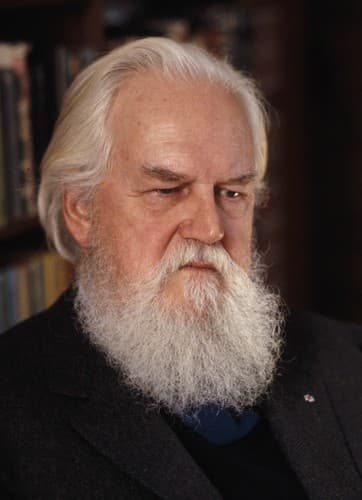
William Robertson Davies was a Canadian novelist, playwright, critic, journalist, and professor. He was one of Canada's best known and most popular authors and one of its most distinguished "men of letters", a term Davies gladly accepted for himself. Davies was the founding Master of Massey College, a graduate residential college associated with the University of Toronto.
Similar books
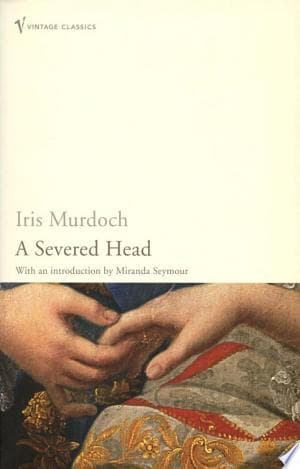
- A Severed Head
Iris Murdoch
3.8 (7k) average on GoodreadsFictionExplores complex, intertwined relationships and moral ambiguities among a group of characters.
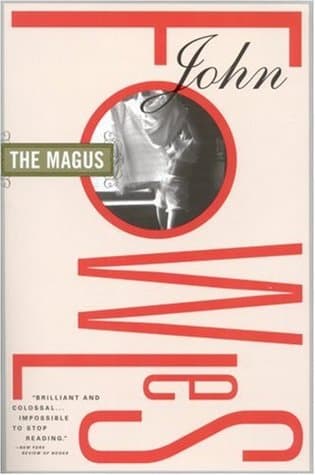
- The Magus
John Fowles
4.0 (48k) average on GoodreadsLiterary FictionFeatures a protagonist caught in a web of elaborate illusions, psychological manipulation, and self-discovery.
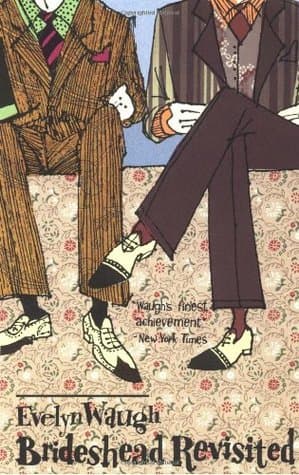
- Brideshead Revisited
Evelyn Waugh
4.0 (93k) average on GoodreadsLiterary FictionA nostalgic, reflective narrative about a man looking back on his youth and the influential people in his life.
- One Hundred Years of Solitude
Gabriel García Márquez
4.1 (753k) average on GoodreadsLiterary FictionWhile both novels explore multi-generational sagas, history, and myth, Davies's approach in Fifth Business is more grounded in psychological realism and less in magical realism. Davies focuses on internal intellectual journeys, whereas Marquez uses fantastical elements to explore broader societal and historical truths.
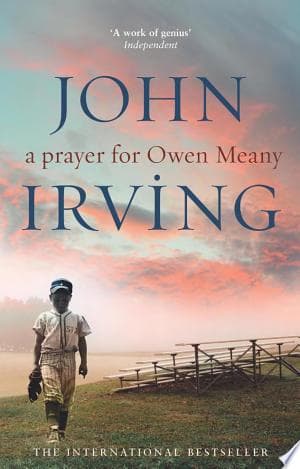
- A Prayer For Owen Meany
John Irving
4.2 (286k) average on GoodreadsLiterary FictionBoth novels feature peculiar characters perceived as saints and narrators grappling with faith and destiny. However, Fifth Business is arguably more restrained in its emotional overtures and more focused on the internal psychological and intellectual journey of its characters, compared to Irving's more dramatic and emotionally charged narrative.
- The Old Man and the Sea
Ernest Hemingway
3.8 (831k) average on GoodreadsLiterary FictionA Cuban fisherman's long struggle with a giant marlin becomes a story of endurance and dignity, now retold for young adults with illustrations, phonetic guides, and writing prompts in Traditional Chinese.


Enjoyed the summary?
A summary gives you the shape of the book. The book itself has the detail, the examples and the voice.
Find Fifth Business on AmazonAs an Amazon Associate, BookBrief earns from qualifying purchases. How we're funded