
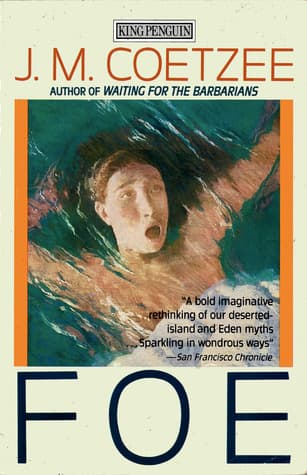
Synopsis
Covers the whole plot, including the ending.
- Difficulty
- Hard
- Pacing
- Slow
- Mood
- Philosophical, Introspective, Challenging, Meditative
- Read it if
- You enjoy meta-fiction, deconstructions of classic literature, and philosophical explorations of truth, authorship, and colonialism.
- Skip it if
- You prefer straightforward narratives, fast-paced plots, or stories with clear resolutions.
Foe Plot Summary
Covers the whole plot, including the ending.
Susan Barton's Arrival and Initial Request
Susan Barton arrives in London in 1720. She has been on a deserted island for a year after a shipwreck, living with a man named Cruso and his mute servant Friday. She immediately seeks out writer Daniel Foe, hoping he will write down her experiences. Susan wants her story, especially her time with Cruso and Friday, to be remembered. She finds Foe living in poverty, burdened by debt and a mysterious daughter named Fanny. He agrees to consider her offer, interested in the story's potential.
The Nature of Cruso and Friday
Susan begins telling her story to Foe, describing her year on the island. She details Cruso's strange life, his self-imposed isolation, and his lack of interest in rescue, having accepted his situation years ago. Cruso, she explains, had lost his tongue before she arrived, making him unable to speak. Friday, his servant, also has his tongue cut out, a detail Susan finds both terrible and intriguing. Susan struggles to convey Cruso's true nature – his passivity, his hard but pointless work terracing the island – and the deep silence of their lives, often questioning Foe's interpretations.
Foe's Editorial Interventions
As Susan continues, Foe starts to take control of the narrative. He often interrupts, suggesting changes and new plot ideas. Foe is particularly interested in the more dramatic parts of her story, such as possible mutinies, hidden treasures, or a more exciting escape. He pushes Susan to invent reasons for Cruso's self-mutilation and Friday's muteness, believing a story needs clear causes and a more engaging plot. Susan resists, insisting on the 'truth' of her experience, but she finds herself increasingly subject to Foe's creative demands and storytelling rules.
The Disappearance of Foe and Susan's Struggle
Foe suddenly disappears, leaving Susan alone in his rundown house with his mysterious 'daughter,' Fanny, and his growing debts. Susan must act as housekeeper and guardian, trying to keep order and protect Friday, who remains silent. She continues writing letters to Foe, detailing her struggles and urging him to return to finish her story. This period shows Susan's strength and her growing sense of responsibility, but also her vulnerability and reliance on Foe to give her experiences a voice. She becomes an active part of Foe's life, not just a narrator.
Friday's Silence and Susan's Frustration
Susan tries hard to teach Friday to speak. She believes if he could tell his own story, it would improve her narrative and perhaps reveal the truth about his past and Cruso's. She tries various methods, from simple words to complex ideas, but Friday remains silent, communicating only through gestures and a unique humming. His inability to speak becomes a central frustration for Susan and a barrier to fully understanding the past. Foe, when he returns, also tries to 'uncover' Friday's story, but Friday's silence resists all attempts to interpret it.
Foe's Return and Continued Narrative Manipulation
Foe eventually returns, but his presence only makes Susan's fight for narrative independence harder. He continues to push for a more dramatic, marketable version of her story, often ignoring her focus on facts. He suggests adding a love affair between Susan and Cruso, or a more heroic escape, which upsets Susan. Foe also starts to blend his own life with Susan's, bringing her into his chaotic home life and the story of his fictional daughter, Fanny. Susan finds herself not only the subject of a story but also a character within Foe's own changing narrative.
The Mystery of Fanny
Throughout Susan's stay, the identity of Foe's 'daughter,' Fanny, remains a mystery. Sometimes she appears as a young girl, sometimes as a woman, and her presence is often brief and dreamlike. Foe gives conflicting accounts of her origin, suggesting she is a real daughter, a product of his imagination, or even a ghost. Fanny symbolizes the changing nature of truth and the unreliability of memory and storytelling. Susan herself starts to question Fanny's reality, yet she cares for her, adding another complex responsibility to her life.
The Commercialization of the Story
Foe's main concern shifts from simply telling Susan's story to making it a commercial success. He constantly reminds Susan that the story needs a compelling plot, dramatic details, and a clear moral message to attract readers. He suggests framing the story as an adventure, a tale of survival, or a cautionary lesson. This commercial focus further alienates Susan, who feels her real experience is being twisted. Foe's emphasis on profit shows the tension between artistic integrity and the demands of the literary market, turning Susan's life into a product.
Susan's Growing Disillusionment
Susan grows increasingly unhappy with Foe's methods and the entire storytelling process. She realizes her 'truth' is being filtered, changed, and used by Foe's literary ambition. Her attempts to correct his additions are often met with resistance or ignored. She begins to understand that once a story is written, it becomes separate from the original experience. This disappointment extends to her own ability to convey what truly happened, as she struggles with language's limits in capturing raw experience.
The Unwritten Chapter: Friday's Story
A significant part of the book addresses the problem of Friday's story. Both Susan and Foe acknowledge that Friday, being mute, cannot tell his own tale. Foe even suggests that Friday's story, if it could be told, might be the most valuable. However, Friday remains a mystery, his past and inner life inaccessible to language. The novel repeatedly highlights the unfairness of his silence, representing the untold histories of marginalized and colonized people. His lack of a tongue is the ultimate symbol of narrative suppression, showing the power in who gets to tell a story and whose story is considered worth telling.
The Shifting Narrative Voice
Towards the novel's end, the narrative voice becomes more complex and unclear. The reader moves from Susan's direct account, to Foe's letters, to a more distant, almost all-knowing voice that seems to go beyond both characters. The final sections are less about Susan's direct story and more about writing and the nature of the text itself. The story's 'author' becomes a vague figure, observing and commenting, further blurring the lines between the 'real' Susan Barton, the 'fictional' Daniel Foe, and the ultimate creator of the narrative. This metafictional turn questions the story's source and authority.
The Discovery of Cruso's Body
In the final, very abstract chapters, a new, unnamed narrator goes into the deep, dark water around the island where Cruso and Friday lived. The narrator finds Cruso's body, preserved and calm, at the bottom of the sea. This narrator then meets Friday, who is still alive but mute. The narrator tries to understand Friday's silence, trying to find what lies beneath his tongueless mouth. This scene is symbolic, representing a journey into the unconscious, the unwritten, and the historical silences that resist easy explanation. It emphasizes the lasting mystery of Friday's identity and the stories that can never be fully told.
Foe Characters
Susan Barton
Protagonist
A castaway determined to have her story told, but whose narrative is continually reshaped.
Susan Barton is a resilient, intelligent, and determined woman who survives a shipwreck and a year on a deserted island with Cruso and Friday. She is fiercely protective of her 'truth' and seeks to have her experiences accurately recorded by Daniel Foe. Susan is practical and resourceful, but also somewhat naive about the power dynamics of storytelling. She grapples with feelings of frustration, resentment, and a growing understanding of the limitations of language and authorship. She is driven by a desire for her story to exist and to be recognized.
Relationships: Daniel Foe (Author and editor, becomes her landlord and manipulator of her story); Cruso (Fellow castaway and companion on the island); Friday (Mute servant, a source of fascination and frustration)
Daniel Foe
Antagonist/Supporting
A debt-ridden writer who seeks to sensationalize Susan's story for profit and fame.
Daniel Foe is a literary figure, a writer of questionable integrity, living in London. He is intelligent and articulate, but also opportunistic, manipulative, and often self-absorbed. Foe is more interested in crafting a marketable narrative than in preserving Susan's exact truth. He embodies the authorial power that shapes and distorts reality, constantly suggesting embellishments, dramatic turns, and moral lessons for Susan's tale. He is burdened by debt and a mysterious 'daughter,' Fanny, which further complicates his character and motives.
Relationships: Susan Barton (His 'source' and subject, whom he also manipulates); Friday (A character in the story he wishes to write, whose silence he tries to penetrate); Fanny (His ambiguous 'daughter')
Cruso
Supporting
Susan's companion on the island, a man content with his isolated, laborious existence.
Cruso is Susan's fellow castaway on the deserted island. He is a man who has long ago made peace with his fate, finding a peculiar satisfaction in his laborious, often meaningless tasks, like terracing the island. He is stoic, quiet, and largely indifferent to rescue or the outside world. His past is shrouded in mystery, and he is described as having lost his tongue, though the circumstances are unclear. Cruso represents a form of primal existence, untouched by conventional society, and his simplicity contrasts sharply with Foe's intellectual machinations.
Relationships: Susan Barton (Fellow castaway and companion); Friday (His mute servant)
Friday
Supporting
Cruso's mute servant, whose tonguelessness symbolizes the untold stories of the marginalized.
Friday is Cruso's servant, a Black man whose tongue has been cut out, rendering him permanently mute. He is a silent, enigmatic presence throughout the novel, communicating only through gestures and sounds. Friday represents the ultimate untold story, the voice that cannot be heard, and the history that has been erased or suppressed. Both Susan and Foe attempt to 'give him a voice' or interpret his past, but his silence proves impenetrable, serving as a powerful symbol of colonial oppression and the limits of representation. He embodies the true 'foe' to easy narrative construction.
Relationships: Cruso (His master on the island); Susan Barton (Caretaker and would-be teacher); Daniel Foe (Author who wishes to incorporate him into a story)
Fanny
Mentioned
Foe's mysterious 'daughter,' whose existence is fluid and ambiguous.
Fanny is Daniel Foe's enigmatic 'daughter,' who may or may not be real. Her age, appearance, and very existence are constantly shifting and uncertain. Foe offers conflicting explanations for her presence, suggesting she might be an orphan he took in, a figment of his imagination, or even a ghost. Susan cares for her during Foe's absence, but her true nature remains elusive. Fanny symbolizes the blurred lines between reality and fiction, the unreliable nature of memory, and the way stories can create or erase identities. She is a living embodiment of narrative uncertainty.
Relationships: Daniel Foe (Her purported father); Susan Barton (Temporary caretaker)
The Narrator (final sections)
Supporting
An unnamed, detached presence who observes and comments on the nature of the story itself.
In the novel's final, highly abstract sections, a new, unnamed narrator emerges, distinct from Susan or Foe. This narrator acts as an observer and commentator on the text, delving into the depths of the ocean to find Cruso's body and confronting Friday's silence directly. This narrator represents the ultimate 'author' or consciousness behind the story, questioning the origins of narratives and the limitations of language. They embody the metafictional aspect of the novel, reflecting on the act of creation and interpretation, rather than simply recounting events.
Relationships: Susan Barton (Observes her story); Daniel Foe (Observes his authorial practice); Friday (Attempts to penetrate his silence)
Foe Themes
The Tyranny and Power of Storytelling
The novel explores how stories are built, controlled, and changed. Daniel Foe, as the writer, holds great power over Susan Barton's experiences, shaping them to fit common narrative forms and market demands. Susan's frustration with Foe's additions and his refusal to accept her 'truth' shows how writers can distort reality. The act of writing turns raw experience into a crafted story, often at the cost of authenticity. This theme asks who has the right to tell a story and how that telling changes the story itself. Foe's need for a 'plot' and 'meaning' for Cruso's and Friday's lives is an example of this manipulation.
“As for Cruso, he is to be found in my book, and in no other place. The island is to be found in my book, and in no other place. The island is a book, and the book is an island.”
The Elusiveness of Truth and Reality
Foe consistently blurs the lines between fact and fiction, making it nearly impossible for Susan, and the reader, to know what truly happened. The uncertainty around Fanny's identity, Foe's changing explanations, and his additions to Susan's island experiences all support this theme. The novel suggests that 'truth' is not fixed but changes, constantly reinterpreted by memory, perspective, and narrative. The 'real' story of Cruso and Friday is always just out of reach, lost to time, silence, or the writer's changes. This makes the reader question how reliable any story is.
“I will make the story, and then I will write it. Thus I am a maker of stories, and a writer of stories.”
Colonialism and the Subaltern Voice
Friday's muteness is a strong example of this theme. His lack of a tongue symbolizes the historical silencing of colonized people, whose stories are often denied, erased, or told by their colonizers. Both Susan and Foe try to 'give' Friday a voice or interpret his past, but his silence resists their efforts, showing that it is impossible to truly represent the less powerful without further appropriation. The novel implicitly criticizes the historical narrative of 'Robinson Crusoe' itself, which largely ignores Friday's agency. Friday's presence constantly reminds the reader of the stories that remain untold and unheard.
“It is not Friday's story that is missing, but Friday's tongue.”
Identity and Self-Authorship
Susan Barton's fight to have her story told accurately is a fight for her own identity. She understands that having her experiences written down will solidify her place in history and define who she is. However, Foe's involvement threatens to take away her control over her own story, turning her into a character in his creation rather than the author of her own life. The novel explores how much of our identity is shaped by the stories we tell about ourselves, and how vulnerable that identity becomes when others control our narrative. Susan's resistance is an assertion of self against the writer's power.
“I am a woman of parts, with a past and a future, not a mere blank page upon which you may write what you please.”
Plot Devices & Literary Techniques
Metafiction
The novel self-consciously draws attention to its own fictional nature and the process of its creation.
Foe is a highly metafictional novel, constantly reminding the reader that they are reading a constructed text. It features characters discussing the act of writing, the challenges of narrative, and the role of the author. Daniel Foe himself is a writer, and his interactions with Susan Barton explicitly explore the choices and manipulations inherent in storytelling. The novel's shifting narrative voices and its self-referential comments on its own making draw attention to the artifice of literature, inviting the reader to critically analyze the relationship between reality and representation.
Unreliable Narration
The reader is presented with multiple, often conflicting, accounts of events, making it difficult to ascertain a definitive truth.
The novel employs unreliable narration through various means. Susan Barton, while insisting on 'truth,' is still recounting events from her perspective and memory, which can be fallible. More significantly, Daniel Foe actively manipulates and embellishes Susan's story, presenting his own versions of events or suggesting fabricated details. The ambiguity surrounding Fanny's identity further destabilizes the narrative. This device forces the reader to question every detail and interpretation, highlighting the subjective nature of truth and the inherent limitations of any single narrative voice.
Symbolic Muteness (Friday's Tonguelessness)
Friday's inability to speak serves as a powerful symbol for historical silencing and the limits of representation.
Friday's cut tongue is a central and recurring symbol in the novel. On a literal level, it prevents him from telling his own story. Symbolically, it represents the historical muting of marginalized voices, particularly those of colonized peoples. His silence highlights the injustice of having one's history and identity defined by others. It also functions as a challenge to the very act of storytelling, suggesting that some truths are inexpressible or cannot be captured by language, thereby undermining the authority of the 'author' to represent all experiences.
Intertextuality (Reimagining Robinson Crusoe)
The novel directly engages with and reinterprets Daniel Defoe's 'Robinson Crusoe,' challenging its original narrative.
Foe is a direct intertextual engagement with Daniel Defoe's classic novel, 'Robinson Crusoe.' Coetzee takes the familiar characters of Crusoe and Friday, but crucially introduces Susan Barton, a female perspective, and Daniel Foe, a writer. By placing Defoe (or a character named Foe) within the story, Coetzee critiques the original's colonialist undertones, its patriarchal narrative, and its silencing of Friday's voice. This device allows Coetzee to deconstruct the myths and assumptions embedded in the original text, offering a postcolonial and feminist re-reading of a foundational work of English literature.
Foe Quotes
“I am not a person, I am a story.”
“To tell my story, I must have a voice, and a voice needs a mouth, and a mouth needs a body, and a body needs a history.”
“He is a man without words, yet he is a man.”
“The world is full of stories, but they are not all true.”
“We are all castaways, each in our own way.”
“Perhaps I am writing to him, not to myself.”
“What is a story without a beginning, a middle, and an end?”
“He does not speak, yet he speaks.”
“A true story is a dangerous thing.”
“The past is never truly past; it is always with us, shaping who we are.”
“I will give you a story, but it will be my story, not his.”
“Silence is also a kind of speech.”
“Perhaps the only true freedom is to be forgotten.”
Quiz
10 questions on the plot and the characters. Each answer comes with a short explanation.
Question 1
Who approaches Daniel Foe to tell her story?
- Friday
- Susan Barton
- Cruso
- The unnamed narrator
Show answer
B. Susan Barton The back cover explicitly states that Susan Barton, a castaway, approaches Daniel Foe to tell her story.
Question 2
What is Friday's key characteristic mentioned in the synopsis that makes storytelling difficult for him?
- He is deaf.
- He is blind.
- He is incapable of speech.
- He has amnesia.
Show answer
C. He is incapable of speech. The text states, 'his manservant, Friday, is incapable of speech,' which is a crucial detail for the narrative's themes.
Question 3
What year is Susan Barton said to have approached Daniel Foe?
- 1620
- 1720
- 1820
- 1700
Show answer
B. 1720 The synopsis clearly states, 'In 1720 the eminent man of letters Daniel Foe is approached by Susan Barton.'
Question 4
According to the synopsis, what happens to Cruso before Susan Barton approaches Daniel Foe?
- He escapes the island.
- He dies.
- He returns to England alone.
- He marries Susan Barton.
Show answer
B. He dies. The text states, 'Cruso is dead,' indicating his fate before the events with Foe.
Question 5
Which classic novel's story is 'reinvented' by J.M. Coetzee in 'Foe'?
- Gulliver's Travels
- Treasure Island
- Robinson Crusoe
- Moby Dick
Show answer
C. Robinson Crusoe The back cover explicitly states that Coetzee 'reinvent[s] the story of Robinson Crusoe.'
Question 6
What is the primary thematic concern mentioned that Coetzee directs attention to through his reinvention of the story?
- The challenges of survival in isolation.
- The seduction and tyranny of storytelling itself.
- The nature of colonial power dynamics.
- The search for lost treasure.
Show answer
B. The seduction and tyranny of storytelling itself. The text highlights that Coetzee 'directs our attention to the seduction and tyranny of storytelling itself.'
Question 7
How does Susan Barton's ambition affect her recounting of Cruso's story to Foe?
- She meticulously records every detail for historical accuracy.
- She struggles to remember any details about him.
- She turns Cruso into her own invention, altering the truth.
- She insists on Foe telling the story exactly as she dictates.
Show answer
C. She turns Cruso into her own invention, altering the truth. The synopsis notes that 'the ambitious Barton cannot help turning Cruso into her invention,' emphasizing her role in shaping the narrative.
Question 8
What is Daniel Foe's profession, as described in the synopsis?
- A ship captain
- An eminent man of letters
- A cartographer
- A pirate
Show answer
B. An eminent man of letters The text identifies Daniel Foe as 'the eminent man of letters,' establishing his role as a writer/intellectual.
Question 9
The synopsis suggests that the stories we thought we knew acquire 'depths that are at once treacherous, elegant, and unexpectedly moving' when narrated by Foe (and Coetzee). What does 'treacherous' imply about the narrative process in the book?
- The stories are intentionally misleading to deceive the reader.
- The act of storytelling can betray or distort the original truth.
- The characters are untrustworthy and lie constantly.
- The island itself is a dangerous and deceptive place.
Show answer
B. The act of storytelling can betray or distort the original truth. Given the theme of 'seduction and tyranny of storytelling' and Barton 'turning Cruso into her invention,' 'treacherous' implies that the narrative process itself can be deceptive or distorting of truth.
Question 10
How is the relationship between Cruso and Susan Barton described on the island?
- They were bitter enemies.
- They maintained a strictly professional distance.
- He was her rescuer, companion, master, and sometimes lover.
- He was her student, and she was his teacher.
Show answer
C. He was her rescuer, companion, master, and sometimes lover. The back cover explicitly details Cruso as Barton's 'rescuer, companion, master, and sometimes lover,' indicating a complex relationship.
Foe FAQ
What is the central premise of 'Foe' and how does it relate to 'Robinson Crusoe'?
'Foe' reimagines the story of Robinson Crusoe from the perspective of Susan Barton, a castaway who encounters Cruso and Friday on a desert island. Instead of focusing on Cruso's survival, the novel explores Susan's attempts to narrate her experiences and the challenges she faces in getting her story written by Daniel Foe, ultimately questioning the nature of authorship and truth in storytelling.
Who is Susan Barton and what is her primary motivation in the novel?
Susan Barton is a resourceful and determined woman who finds herself shipwrecked and then rescued by Cruso. Her primary motivation upon returning to England is to find a writer, Daniel Foe, to immortalize her story and Cruso's, believing it holds significant value. She is persistent in shaping the narrative, often clashing with Foe over what details to include or omit.
Describe the character of Cruso as presented through Susan's eyes.
Susan describes Cruso as a man who has adapted deeply to island life, almost becoming one with it. He is resistant to returning to civilization and seems content in his self-imposed exile, performing repetitive, often futile tasks like building terraces. He is less heroic and more an embodiment of a detached, almost animalistic existence, quite different from the adventurous figure of Defoe's original.
What is the significance of Friday's inability to speak?
Friday's muteness is a central mystery and a powerful symbol in the novel. It represents his voicelessness and subjugation, preventing him from telling his own story or confirming Susan's. His scarred tongue, a result of having it cut out, becomes a metaphor for the silencing of colonized peoples and the arbitrary power wielded by those who control the narrative.
Who is Daniel Foe and what is his role in the narrative?
Daniel Foe is a struggling writer whom Susan approaches to write her story. He represents the author figure, but also the forces that shape and distort a narrative for marketability or artistic vision. He often prioritizes dramatic elements, like Cruso's supposed former life as a pirate, over Susan's desire for a 'true' account, highlighting the tension between lived experience and literary creation.
How does the novel subtly comment on colonial power dynamics through Friday?
Friday's character, particularly his muteness and his treatment by both Cruso and Susan, strongly reflects colonial power dynamics. He is a 'possession' rather than an equal, his identity and past are speculated upon but never genuinely explored, and his voice is literally absent. This emphasizes the way indigenous peoples were often silenced and their narratives appropriated or ignored by colonizers.
What is the implied fate or situation of Daniel Foe within the narrative structure?
It is strongly implied that Daniel Foe is either imprisoned for debt or has fled his creditors, as Susan frequently visits him in a confined space and discusses his financial troubles. This personal struggle for survival and freedom mirrors, in a metaphorical way, the castaway experience and adds a layer of realism to the author's own constraints and motivations.
Are there any clues about Susan Barton's past before her shipwreck?
Susan's past is revealed in fragments; she admits she was searching for her lost daughter when she was shipwrecked. This personal quest adds depth to her character, suggesting a life filled with hardship and a strong maternal drive, which later influences her desire to 'mother' the story of Cruso and Friday.
How does the ending of the novel, with the unidentified narrator, shift the perspective?
The final section, introduced by an unidentified narrator who discovers the bodies of Susan, Foe, and Friday, completely destabilizes the previous narrative. This new voice descends into the shipwreck, into Friday's mouth, and into the 'ocean of stories,' suggesting that the 'true' narrative is elusive and perhaps unknowable, existing beyond any single author's control.
Analyze Susan Barton's psychological need to control the narrative.
Susan's fierce need to control the narrative stems from her desire to assert her own agency and define her experience after being subjected to the whims of fate and men (Cruso, Foe). For her, telling the 'true' story is a way to reclaim her identity and ensure her suffering and experiences are validated, rather than sensationalized or distorted for public consumption.
How does Cruso's passivity on the island reflect a psychological state?
Cruso's passivity, his repetitive and seemingly meaningless tasks, and his resistance to leaving the island suggest a profound psychological detachment from conventional society. His state could be interpreted as a form of resignation, or perhaps a Zen-like acceptance of his minimalist existence, rejecting the ambitions and anxieties of the 'civilized' world.
What psychological impact does Friday's silence have on Susan?
Friday's silence deeply frustrates Susan, as it prevents her from fully understanding him or completing her narrative. It also forces her to project her own interpretations and desires onto him, highlighting her limitations and the inherent difficulty in truly knowing another person, especially across cultural and linguistic barriers.
How does the novel explore the psychology of authorship through Daniel Foe?
Daniel Foe's character explores the psychology of authorship by revealing the compromises, manipulations, and creative liberties inherent in the writing process. He is driven by commercial success and literary conventions, often clashing with Susan's desire for authenticity. This portrays the author not merely as a transcriber, but as a powerful shaper and even inventor of reality.
Is 'Foe' a critique of 'Robinson Crusoe' or an homage, or both?
'Foe' is arguably both a critique and an homage. It critiques Defoe's original by exposing its colonial biases, its omissions, and its idealized portrayal of the castaway experience. Yet, by engaging so deeply with the material and expanding its themes, Coetzee also pays homage to the enduring power and cultural significance of the 'Robinson Crusoe' myth.
What is the novel's ultimate statement about 'truth' in storytelling?
The novel's ultimate statement is that absolute 'truth' in storytelling is elusive, if not impossible. Through Susan's struggle, Foe's manipulations, and Friday's silence, Coetzee demonstrates that narratives are always mediated, interpreted, and shaped by the teller's biases, intentions, and limitations, making every story an invention to some degree.
How does the concept of 'the body' function as a theme in 'Foe'?
The concept of 'the body' is central, particularly through Friday's mutilated tongue and Cruso's decaying teeth. These physical details signify the body as a site of trauma, subjugation, and the raw, unadorned reality of existence outside of civilized comforts. They serve as undeniable, yet often misinterpreted, facts that defy easy narrative framing.
To what extent is Susan Barton a reliable narrator?
Susan Barton is an unreliable narrator to a significant extent. While she strives for truth, her narrative is filtered through her own desires, biases, and a need for validation. Her interpretations of Cruso and Friday, and her arguments with Foe, reveal her subjective lens, demonstrating that even an eyewitness account is a constructed reality.
What is the significance of the title 'Foe'?
The title 'Foe' primarily refers to Daniel Foe (Defoe), identifying him as the 'author' figure who shapes and potentially distorts the narrative. However, it also subtly suggests an 'enemy' – perhaps the enemy of unvarnished truth, or the internal foes of memory and self-deception that plague storytelling, or even the colonial 'foe' represented by the historical Crusoe narrative.
How does the novel challenge traditional notions of heroism?
The novel challenges traditional notions of heroism by presenting a Cruso who is far from the adventurous, self-reliant hero of Defoe's original. Instead, he is passive, almost resigned, and his 'survival' is depicted as a monotonous existence rather than a triumph. Susan's own struggles, while heroic in their persistence, are framed by domestic and literary rather than grand adventures.
Could Friday's silence be interpreted as a form of resistance?
Yes, Friday's silence can be powerfully interpreted as a form of resistance. By refusing or being unable to speak, he denies Susan and Foe the ability to fully appropriate his story or to make him conform to their narratives. His muteness preserves a core of his identity that remains impenetrable, a silent defiance against being fully colonized by language and storytelling.
About the author
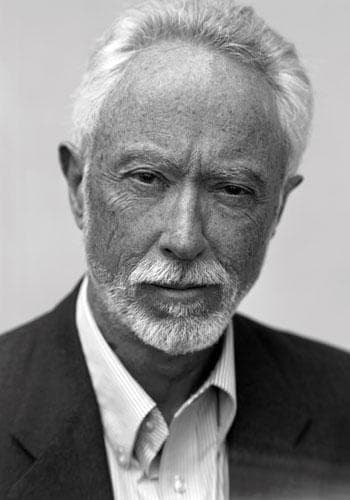
John Maxwell Coetzee OMG is a South African and Australian novelist, essayist, linguist, translator and recipient of the 2003 Nobel Prize in Literature. He is one of the most critically acclaimed and decorated authors in the English language. He has won the Booker Prize (twice), the CNA Prize (thrice), the Jerusalem Prize, the Prix Femina étranger, and The Irish Times International Fiction Prize, and holds a number of other awards and honorary doctorates.
Similar books
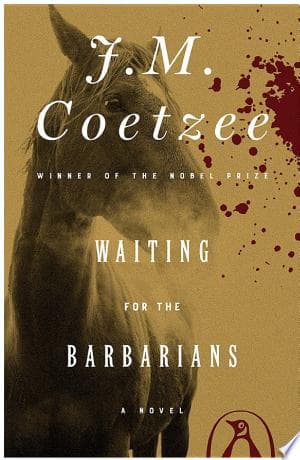
- Waiting for the Barbarians
J. M. Coetzee
3.9 (25k) average on GoodreadsLiterary FictionShares Coetzee's distinctive prose, allegorical style, and exploration of power dynamics.
- Life of Pi
Yann Martel
3.9 (1.3M) average on GoodreadsFantasyExplores themes of survival, storytelling, and the nature of truth in a castaway narrative.
- The Old Man and the Sea
Ernest Hemingway
3.8 (831k) average on GoodreadsLiterary FictionA Cuban fisherman's long struggle with a giant marlin becomes a story of endurance and dignity, now retold for young adults with illustrations, phonetic guides, and writing prompts in Traditional Chinese.
- One Hundred Years of Solitude
Gabriel García Márquez
4.1 (753k) average on GoodreadsLiterary FictionThrough the multi-generational story of the Buendía family, a mythical town deals with the repeating patterns of time, love, and solitude, as the extraordinary mixes with the ordinary.
- The Goldfinch
Donna Tartt
3.9 (720k) average on GoodreadsLiterary FictionHaunted by a tragic explosion and clutching a stolen Dutch masterpiece, a young orphan navigates the opulent drawing rooms of New York and the gritty underbelly of the art world, desperately seeking connection and redemption amidst a life spiraling into crime and obsession.
- Little Fires Everywhere
Celeste Ng
4.1 (713k) average on GoodreadsLiterary FictionIn Shaker Heights, an artist and her daughter move in, and their free-spirited lives clash with a rule-bound matriarch, revealing hidden conflicts beneath a perfect surface.





Enjoyed the summary?
A summary gives you the shape of the book. The book itself has the detail, the examples and the voice.
Find Foe on AmazonAs an Amazon Associate, BookBrief earns from qualifying purchases. How we're funded