
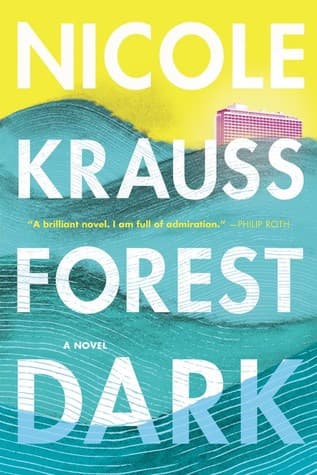
Synopsis
Covers the whole plot, including the ending.
- Difficulty
- Medium
- Pacing
- Moderate
- Mood
- Introspective, Philosophical, Mysterious, Spiritual, Existential
- Read it if
- You enjoy introspective literary fiction exploring identity, spirituality, and the search for meaning, with a unique dual narrative structure and philosophical depth.
- Skip it if
- You prefer fast-paced, plot-driven narratives or clear-cut resolutions. This book is more about existential journeys than concrete answers.
Forest Dark Plot Summary
Covers the whole plot, including the ending.
Jules Epstein's Dispossession
Jules Epstein, a wealthy New York lawyer, changes after his parents die, his divorce, and retirement. He feels an urge to give away his possessions, systematically donating his art, furniture, and other valuables. His children, Miriam and Jacob, worry, and his estate executor, Asher, is confused. With the remaining money, Epstein travels to Israel, supposedly to honor his parents, though his plans are unclear. He arrives in Tel Aviv, looking for an undefined purpose or understanding after detaching himself from his old life.
The Novelist's Retreat
A successful American novelist, unnamed but implied to be the author, arrives at the Tel Aviv Hilton, a place she has visited yearly since childhood. She has writer's block, feels uneasy, and her marriage to Michael is failing. She hopes the familiar hotel will offer new insights and restart her creativity. She spends her days exploring the city, observing, and thinking, trying to access a deeper reality or a lost part of herself she believes is linked to this place and her childhood memories there. She feels increasingly distant from her Brooklyn life and family.
Rabbi Menachem and the King David Project
In Tel Aviv, Jules Epstein meets Rabbi Menachem, a charismatic American rabbi. Rabbi Menachem believes he is organizing a reunion for King David's descendants and, after some questions, insists Epstein is a direct descendant. Epstein is initially skeptical but becomes drawn to the rabbi's strong belief and grand vision of reuniting the royal line. The rabbi's insistence appeals to Epstein's desire for meaning and connection, offering a new identity and purpose beyond his former life of material success.
Yael and the Film Project
Rabbi Menachem's daughter, Yael, a beautiful and mysterious filmmaker, further draws Epstein into their world. Yael works on an ambitious film about King David, shot in the Israeli desert. She convinces Epstein to get involved, seeing his seriousness and financial resources as helpful. Epstein, charmed by Yael and the romantic idea of contributing to a creative project that reimagines a biblical figure, agrees. This involvement is a big change from his previous life, pulling him deeper into a story that blurs history, myth, and personal identity.
The Novelist's Encounter with Professor Grossman
At the Tel Aviv Hilton, the novelist meets Professor Eliezer Grossman, a retired literature professor who claims to know her work and family. Grossman, an intense and intelligent man, proposes an unusual project. He suggests she investigate the disappearance of a renowned Israeli writer, a figure he respects, implying her work and journey are linked to this mystery. The novelist, intrigued and seeing a possible way through her creative block, agrees. She starts a quest that promises to challenge her understanding of reality and authorship.
Epstein's Transformation and Disappearance
As Epstein becomes more involved in Yael's film project and the King David story, his change speeds up. He sheds his old identity, embracing a more spiritual, less materialistic life. He spends time in the desert, feeling a strong connection to the ancient land and its stories. His sense of self begins to disappear, and he becomes more detached from his past. Eventually, during filming, he disappears into the desert, leaving only his clothes. He seems to merge with the timeless story he helped create, becoming part of it rather than just an observer.
The Novelist's Research into the Vanished Writer
Following Professor Grossman's vague instructions, the novelist researches the vanished Israeli writer, whose life and work are mysterious. Her investigation through archives, interviews, and the writer's books reveals a complex person who also struggled with identity, memory, and the blurred lines between fiction and reality. She discovers that the writer, too, was fascinated by disappearing, by shedding one's self to become something else. This research starts to reflect her own struggles and her growing detachment from her established identity as a writer and a woman.
Grossman's Unveiling of Epstein's Story
As the novelist continues her research, Professor Grossman reveals a surprising truth: the vanished Israeli writer she is investigating is Jules Epstein. Grossman explains that Epstein, after his disappearance, took on a new identity as a writer, having left his previous life as a New York lawyer. He explains that Epstein's transformation was not just a physical disappearance but a complete re-creation of self through writing and storytelling. This revelation deeply affects the novelist, making her rethink identity, authorship, and the stories we tell about ourselves and others.
The Novelist's Personal Crisis and Epiphany
The intertwining stories of Epstein's disappearance and her own creative and personal struggles lead the novelist to a deep identity crisis. She questions the truth of her own life, marriage, and literary career. The lines between fiction and reality, between her public self and inner truth, become blurred. Through her research and thoughts, she begins to understand that identity is fluid, a construct. She realizes that true self-discovery might involve shedding and re-creation, much like Epstein's. She feels a powerful urge to disappear, to rewrite her own story.
Epstein's New Life and the Novelist's Choice
Professor Grossman eventually leads the novelist to a secluded kibbutz where Jules Epstein, now using a different name and living a simple, anonymous life, is found. He has become a writer, living quietly, having successfully transformed himself. The novelist watches him from a distance, understanding the freedom and self-possession he has achieved. This encounter, and the entire journey, prompts her own decision. She realizes that her personal and artistic freedom lies not in literally disappearing, but in the courage to redefine her own story, to embrace the 'forest dark' of the unknown within herself and her work, and to choose her own path forward, even if it means changing her life forever.
Principal Figures
Jules Epstein
Protagonist
A wealthy, retired lawyer who undergoes a radical self-transformation.
Jules Epstein is a 68-year-old, larger-than-life New York lawyer, defined by his ambition, drive, and material success. Following a series of personal losses (parents' deaths, divorce) and retirement, he experiences a profound existential crisis. He feels an irresistible urge to divest himself of all possessions, seeking to shed his old identity and find a deeper meaning beyond the material world. He is initially skeptical but ultimately drawn to spiritual and mythical narratives, particularly the story of King David, and is open to radical change.
Relationships: Miriam Epstein (Daughter, concerned by his behavior.); Jacob Epstein (Son, perplexed by his father's actions.); Asher (Estate executor, bewildered by Epstein's dispossession.); Rabbi Menachem (Spiritual guide who draws Epstein into the King David narrative.); Yael (Rabbi's daughter, director of the King David film, who captivates Epstein.)
The Novelist (Unnamed)
Protagonist
A successful writer grappling with writer's block, a failing marriage, and an identity crisis.
The unnamed novelist is a successful American writer in her late thirties or early forties, deeply introspective and highly sensitive. She is experiencing a profound creative and personal crisis, feeling disconnected from her life in Brooklyn, her husband Michael, and her own sense of self. She seeks refuge and inspiration at the Tel Aviv Hilton, a place of significant childhood memories. She is an intellectual seeker, drawn to philosophical questions about identity, reality, and the nature of storytelling, and struggles with the authenticity of her own narrative.
Relationships: Michael (Husband, their marriage is strained and failing.); Professor Eliezer Grossman (Mentor/guide who leads her to Epstein's story and challenges her perceptions.); Jules Epstein (The subject of her investigation, whose story mirrors her own search for self.)
Rabbi Menachem
Supporting
A charismatic and eccentric rabbi who believes in the dynastic line of King David.
Rabbi Menachem is an American rabbi living in Israel, characterized by his charismatic personality, deep spiritual conviction, and a somewhat eccentric demeanor. He is passionately devoted to the idea of reuniting the descendants of King David, believing it holds significant spiritual and historical importance. He acts as a catalyst for Epstein's transformation, drawing him into a narrative of biblical lineage and spiritual purpose. His beliefs, while seemingly fantastical, offer Epstein a new framework for meaning.
Relationships: Jules Epstein (Spiritual guide and influencer.); Yael (His daughter, who collaborates on the King David film.)
Yael
Supporting
Rabbi Menachem's enigmatic daughter, a filmmaker working on a King David project.
Yael is the beautiful and somewhat mysterious daughter of Rabbi Menachem. She is a filmmaker with a strong artistic vision, dedicated to creating a film about King David in the Israeli desert. She is pragmatic and persuasive, using her charm and conviction to involve Epstein in her project. Yael represents a blending of spiritual narrative with artistic creation, and her project becomes the vehicle through which Epstein further sheds his old identity and immerses himself in a new reality. She is a catalyst for Epstein's final transformation.
Relationships: Jules Epstein (Collaborator and object of fascination.); Rabbi Menachem (Her father, whose spiritual vision she translates into artistic form.)
Professor Eliezer Grossman
Supporting
A retired literature professor who guides the novelist's investigation.
Professor Eliezer Grossman is a highly intelligent, somewhat reclusive, retired literature professor. He possesses a deep understanding of literature, philosophy, and the human psyche. He acts as a cryptic mentor to the novelist, guiding her investigation into the vanished Israeli writer (Epstein) and challenging her perceptions of reality and authorship. Grossman is a figure of profound wisdom and subtlety, revealing truths gradually and forcing the novelist to arrive at her own conclusions. He represents the academic and intellectual pursuit of meaning.
Relationships: The Novelist (Mentor and intellectual guide.); Jules Epstein (He knows Epstein's story intimately and orchestrated the novelist's investigation into him.)
Michael
Supporting
The novelist's estranged husband, representing her past and conventional life.
Michael is the novelist's husband, living in Brooklyn. He represents the conventional, domestic life that the novelist is increasingly alienated from. Their marriage is strained, characterized by a growing emotional distance and a lack of understanding regarding the novelist's internal struggles. He is a tether to her 'old' self, and her detachment from him symbolizes her broader desire for transformation and a redefinition of her identity beyond societal expectations.
Relationships: The Novelist (Husband, their relationship is deteriorating.)
Miriam Epstein
Mentioned
Jules Epstein's daughter, concerned by his radical changes.
Miriam is Jules Epstein's daughter. She represents the conventional family perspective, alarmed and perplexed by her father's sudden and radical decision to give away his wealth and disappear. Her reactions highlight the societal resistance to such profound personal transformations.
Relationships: Jules Epstein (Daughter, concerned by his behavior.)
Jacob Epstein
Mentioned
Jules Epstein's son, also bewildered by his father's actions.
Jacob is Jules Epstein's son, equally bewildered by his father's sudden and inexplicable dispossession of his wealth and subsequent disappearance. Like Miriam, he represents the family's struggle to comprehend Epstein's profound shift away from his established identity.
Relationships: Jules Epstein (Son, perplexed by his father's actions.)
Themes & Insights
The Nature of Identity and Self-Reinvention
The novel explores identity as a changing, adaptable idea, not a fixed one. Both Jules Epstein and the novelist try to shed their old selves. Epstein literally disappears, taking a new name and life, while the novelist struggles with her artistic and personal identity, considering a similar 'disappearance' through writing and self-redefinition. The book suggests that finding one's true self may mean letting go of past definitions and outside expectations. This is seen in Epstein's journey from a rich lawyer to an anonymous writer and the novelist's struggle to break free from her own story.
“Perhaps the only way to truly find yourself is to first lose yourself completely.”
The Blurring of Fiction and Reality
Krauss blurs the lines between real and imagined. The stories of Epstein and the novelist are distinct but eventually connect, with Epstein becoming a character in the novelist's investigation. The novelist herself questions the truth of her life story, seeing it as something she has written. The film about King David, Epstein's new identity as a writer, and the novelist's creative process all show how stories shape perception and can become reality. This idea is central to Grossman's guidance, as he encourages the novelist to see how 'facts' can be fluid and subjective, and how telling a story can create a new truth.
“How do we know the difference between the story we tell and the life we live?”
Spirituality and the Search for Meaning
Both main characters go on spiritual quests for meaning beyond material things. Epstein's giving away his wealth and embracing the King David story, guided by Rabbi Menachem, represents a search for spiritual lineage and purpose. The novelist's retreat to the Tel Aviv Hilton and her intellectual pursuit of Epstein's story are also driven by a desire for a deeper understanding of existence, a 'dimension of reality' that has been hidden. The Israeli landscape, especially the desert, serves as a strong spiritual background, symbolizing ancient history, solitude, and the possibility of deep change.
“There was a yearning for something beyond what was visible, beyond what could be held or explained.”
Memory, History, and Legacy
The novel looks at how memory, both personal and shared, shapes identity and legacy. Epstein's journey begins with his parents' deaths, leading him to honor their memory in an unusual way. The King David story is a deep exploration of historical legacy and family memory. The novelist's yearly returns to the Tel Aviv Hilton are an attempt to reconnect with childhood memories and her own history. Professor Grossman's project for the novelist investigates a writer's legacy and 'disappearance,' making her confront how people are remembered or forgotten, and how their stories are preserved or reinvented over time.
“What does it mean to be a descendant, not just of blood, but of a story?”
Plot Devices & Literary Techniques
Dual Narrative Structure
Two seemingly separate narratives that eventually converge.
The novel employs a dual narrative, alternating between Jules Epstein's story and the unnamed novelist's story. Initially, these narratives appear unrelated, but as the book progresses, subtle connections emerge, building suspense and thematic resonance. The convergence reveals that the novelist is investigating Epstein's disappearance, linking their existential journeys and highlighting the novel's themes of identity, storytelling, and the blurring of reality and fiction. This structure allows for parallel exploration of similar themes from different perspectives, enriching the overall meaning.
The Unreliable Narrator / Authorial Self-Insertion
The novelist character's identity closely mirrors the author's, blurring the lines of narration.
The unnamed novelist character is implicitly understood to be Nicole Krauss herself, given her biographical details (successful writer, two children, similar age, annual visits to the Tel Aviv Hilton). This self-insertion creates a meta-fictional layer, challenging the reader to question the authenticity of the narrative and the boundaries between the author, the narrator, and the characters. It reinforces the novel's central theme of fiction and reality blurring, making the reader complicit in the interpretive act and deepening the exploration of identity and authorship.
The Tel Aviv Hilton
A symbolic setting representing a liminal space for transformation.
The Tel Aviv Hilton functions as more than just a hotel; it is a symbolic liminal space. For the novelist, it is a place of childhood memories, a refuge, and a catalyst for introspection, representing both familiarity and the potential for new perspectives. For Epstein, it's a transient point before his radical transformation. Its unchanging nature amidst personal flux underscores the characters' internal journeys. The hotel, with its blend of the familiar and the foreign, the historical and the modern, becomes a microcosm for the characters' search for meaning and a 'dimension of reality' that exists beyond the surface.
The King David Narrative
A biblical myth used as a framework for identity and purpose.
The story of King David serves as a powerful mythical framework within the novel. For Jules Epstein, the idea of being a descendant of King David, coupled with Yael's film project, provides a new identity and purpose, allowing him to shed his materialistic past and embrace a more ancient, spiritual lineage. This device highlights the human need for grand narratives and the power of myth to shape individual lives. It connects personal transformation to a larger, historical, and spiritual context, suggesting that identity can be found or lost within the tapestry of collective stories.
Forest Dark Quotes
“It was as if she had been living in a house her whole life, and had just discovered a hidden room she never knew existed.”
“The past, he thought, was not a place to visit, but a place to leave.”
“Maybe the point of it all wasn't to find an answer, but to learn how to live with the question.”
“Every life, she thought, was a series of disappearances.”
“He understood that what he was seeking was not a place, but a transformation.”
“The world was full of stories, and sometimes, she thought, you just had to step into one.”
“Memory, he knew, was a kind of fiction, constantly revised, constantly reimagined.”
“To be truly lost, she thought, was to be found in a way you never expected.”
“The desert was a place where things were revealed, not hidden.”
“We spend our lives trying to make sense of things that are not meant to be understood.”
“Sometimes, the only way to find your way back was to go further in.”
“He felt as if he were walking into a story that was already being written, and he was merely a character.”
“The greatest freedom, she thought, was the freedom to disappear.”
“There was a kind of beauty in the brokenness, a truth that wholeness often obscured.”
Quiz
10 questions on the plot and the characters. Each answer comes with a short explanation.
Question 1
What is Jules Epstein's primary motivation for traveling to Israel after his life changes?
- To escape his children who are alarmed by his behavior.
- To honor his deceased parents with a nebulous plan.
- To find a new legal firm to work for in Tel Aviv.
- To invest his remaining wealth in a new business venture.
Show answer
B. To honor his deceased parents with a nebulous plan. The synopsis states that after his life changes, Epstein travels to Israel with a 'nebulous plan to do something to honor his parents.'
Question 2
What significant life changes does Jules Epstein experience that lead to his metamorphosis?
- He wins the lottery, moves to a new city, and changes his name.
- He inherits a large sum of money, gets a new job, and remarries.
- His parents' deaths, divorce from his wife, and retirement from his legal firm.
- He loses his wealth, is disowned by his children, and becomes a recluse.
Show answer
C. His parents' deaths, divorce from his wife, and retirement from his legal firm. The synopsis explicitly lists 'his parents’ deaths, his divorce from his wife of more than thirty years, and his retirement from the New York legal firm' as the events leading to his metamorphosis.
Question 3
Where does the young, well-known novelist from Brooklyn stay every year in Tel Aviv?
- A small boutique hotel near the market.
- The Tel Aviv Hilton.
- A family apartment she owns.
- A spiritual retreat center in the desert.
Show answer
B. The Tel Aviv Hilton. The synopsis states that the novelist 'arrives at the Tel Aviv Hilton where she has stayed every year since birth.'
Question 4
What project does the charismatic American rabbi involve Jules Epstein in?
- Building a new synagogue in Tel Aviv.
- A reunion for the descendants of King David.
- A legal challenge against a land developer.
- Translating ancient Hebrew texts.
Show answer
B. A reunion for the descendants of King David. Epstein is sidetracked by a 'charismatic American rabbi planning a reunion for the descendants of King David who insists that Epstein is part of that storied dynastic line.'
Question 5
What is the young novelist hoping the Tel Aviv Hilton can help her achieve?
- A new publishing deal for her next book.
- To finalize her divorce from her failing marriage.
- To unlock a dimension of reality and her own perception of life.
- To find inspiration for a historical fiction novel set in the hotel.
Show answer
C. To unlock a dimension of reality and her own perception of life. Troubled by writer's block and a failing marriage, she hopes the hotel 'can unlock a dimension of reality—and her own perception of life—that has been closed off to her.'
Question 6
What project does the rabbi's daughter convince Jules Epstein to become involved in?
- A charitable organization for the poor in Tel Aviv.
- A documentary about modern Israeli society.
- A film about the life of David being shot in the desert.
- Restoring ancient artifacts found in the region.
Show answer
C. A film about the life of David being shot in the desert. Epstein 'also meets the rabbi’s beautiful daughter who convinces Epstein to become involved in her own project—a film about the life of David being shot in the desert.'
Question 7
What is the central theme that both Jules Epstein and the novelist's journeys embody?
- The pursuit of financial wealth and success.
- The struggle for political power and influence.
- Metamorphosis and self-realization, looking beyond the visible.
- The importance of maintaining strong family traditions.
Show answer
C. Metamorphosis and self-realization, looking beyond the visible. The concluding sentence of the synopsis describes the novel as 'a profound, mesmerizing novel of metamorphosis and self-realization—of looking beyond all that is visible towards the infinite,' which applies to both protagonists.
Question 8
How does Jules Epstein's behavior before traveling to Israel alarm his children?
- He begins to speak in an unknown language.
- He compulsively starts buying expensive, unnecessary items.
- He feels an irresistible need to give away his possessions.
- He suddenly decides to move to a remote, isolated cabin.
Show answer
C. He feels an irresistible need to give away his possessions. The synopsis states that in the wake of his life changes, Epstein 'felt an irresistible need to give away his possessions, alarming his children and perplexing the executor of his estate.'
Question 9
What is the primary internal struggle affecting the young novelist when she arrives in Tel Aviv?
- A severe financial crisis and debt.
- Writer's block and a failing marriage.
- A conflict with her literary agent.
- An illness that requires specialized treatment.
Show answer
B. Writer's block and a failing marriage. The synopsis explicitly states the novelist is 'Troubled by writer’s block and a failing marriage' upon her arrival.
Question 10
What kind of individual does the novelist meet in Tel Aviv who proposes a life-altering project?
- A renowned Israeli filmmaker.
- A retired literature professor.
- A powerful government official.
- A spiritual guru from a desert commune.
Show answer
B. A retired literature professor. The synopsis mentions that the novelist 'meets a retired literature professor who proposes a project she can’t turn down.'
Forest Dark FAQ
What prompts Jules Epstein's journey to Israel and his radical shift in behavior?
Jules Epstein's journey to Israel is spurred by a series of significant life events: the deaths of his parents, his divorce from his wife of over thirty years, and his retirement from his legal firm. These events trigger an 'irresistible need to give away his possessions' and a desire to honor his parents, leading him to Israel with a nebulous plan for tribute.
What is the primary motivation for the unnamed novelist's annual trips to the Tel Aviv Hilton and her current struggles?
The unnamed novelist, a well-known writer, travels to the Tel Aviv Hilton annually, seeking a specific dimension of reality and perception that the hotel seems to unlock for her. Currently, she is grappling with severe writer's block and a failing marriage, hoping the familiar environment will provide inspiration and clarity.
How does Rabbi Menachem hal-Levi influence Jules Epstein's initial plans in Tel Aviv?
Rabbi Menachem hal-Levi sidetracks Jules Epstein from his original, vague plans by convincing him that he is a descendant of King David. The charismatic rabbi then involves Epstein in his own project: organizing a reunion for other purported descendants of King David, which significantly alters Epstein's focus.
What project does the retired literature professor propose to the novelist, and what is its immediate effect?
The retired literature professor, Friedman, proposes to the novelist a project involving the investigation of a manuscript and the disappearance of a writer. This proposal immediately draws her into a mystery, offering a compelling distraction from her writer's block and marital troubles, and setting her on an unexpected path.
What role does the rabbi's daughter play in Epstein's narrative, and what is her project?
The rabbi's beautiful daughter convinces Epstein to become involved in her own project: a film about the life of King David, which is being shot in the desert. This involvement has life-changing consequences for Epstein, drawing him further into an imagined reality and away from his former self.
What happens to Jules Epstein's identity and possessions by the end of his narrative arc?
By the end of his narrative, Jules Epstein's identity undergoes a profound dissolution. He gives away most of his possessions, including his wallet and passport, and effectively disappears into the desert, adopting a new, simplified existence that aligns with his spiritual quest, leaving his former life behind.
How does the Tel Aviv Hilton serve as more than just a setting for the novelist?
For the novelist, the Tel Aviv Hilton is a symbolic space where she has sought a 'dimension of reality' since birth, suggesting a deep, almost mystical connection to the place. It functions as a psychological anchor and a potential gateway to deeper understanding, rather than merely a hotel.
What is the significance of the desert in Jules Epstein's narrative?
The desert is a crucial setting for Jules Epstein's transformation, serving as a metaphorical and literal space for shedding his old identity. It's where the film about King David is shot, and where Epstein ultimately disappears, symbolizing a return to a more primitive, spiritual state, stripped of societal constructs.
Are Jules Epstein and the unnamed novelist ever confirmed to be the same person or connected in a concrete way?
The novel deliberately blurs the lines between Jules Epstein and the unnamed novelist, suggesting they might be different facets of the same consciousness, or perhaps a fictionalized version of each other. Their narratives run parallel, sharing thematic resonance but without explicit confirmation of a physical connection or shared reality.
How does the concept of 'metamorphosis' manifest in Jules Epstein's psychological journey?
Jules Epstein's metamorphosis is psychological, marked by a radical shedding of his ego and materialistic attachments. He transitions from a driven New York lawyer to a man seeking spiritual fulfillment, giving away his wealth and ultimately his identity, reflecting a deep internal restructuring and search for meaning beyond the self.
What psychological factors contribute to the novelist's writer's block and marital issues?
The novelist's writer's block and marital issues stem from a deeper sense of existential dissatisfaction and a feeling of being 'closed off' from a dimension of reality. Her creative stagnation reflects a personal stasis, suggesting a need for a profound shift in perception to reignite her art and mend her relationships.
How does the novel explore the psychology of 'self-realization' through its characters?
The novel explores self-realization as a process of deconstruction, where characters must shed their preconceived notions of self, place, and history. Epstein achieves this through renunciation and spiritual quest, while the novelist seeks it through unlocking hidden dimensions of reality, both journeys leading to a deeper, albeit ambiguous, understanding of their true selves.
In what ways do the characters' journeys reflect a search for meaning beyond the visible world?
Both Epstein and the novelist are driven by a quest for meaning that transcends the material and the obvious. Epstein seeks spiritual lineage and purpose in ancient narratives, while the novelist yearns for a deeper dimension of reality. Their paths illustrate a profound human desire to connect with something infinite and unseen.
Is the novel suggesting a literal or metaphorical interpretation of the characters' transformations?
The novel largely suggests a metaphorical interpretation of the transformations, particularly concerning Epstein's disappearance and the novelist's discoveries. While events occur, their ultimate meaning is deeply symbolic, inviting readers to consider the psychological and spiritual shifts rather than purely literal plot points.
What is the significance of the 'Forest Dark' title, and how does it relate to the themes?
The title 'Forest Dark' alludes to the opening lines of Dante's Inferno, symbolizing a state of being lost, both literally and spiritually, in the middle of one's life. It reflects the characters' journeys into unknown territories of self and reality, seeking enlightenment amidst confusion and existential crisis.
How does the novel challenge traditional notions of identity and authorship?
The novel challenges traditional notions of identity by showing characters shedding their past selves and even possibly merging or reflecting each other. It questions authorship by suggesting that the novelist might be writing (or imagining) Epstein's story, blurring the lines between creator and created, and undermining fixed identities.
What philosophical questions does the novel raise about reality and perception?
The novel raises profound philosophical questions about the nature of reality, suggesting that it is not fixed but fluid and subject to individual perception. It explores how personal narratives can shape or even create reality, inviting readers to question what is 'real' versus imagined or spiritually experienced.
Is the ending of the novel optimistic or melancholic for the characters?
The ending of the novel is ambiguous, offering neither a purely optimistic nor melancholic resolution. While characters undergo profound transformations and find new paths, these paths often involve relinquishing former lives and identities, leaving a sense of both liberation and loss, depending on the reader's interpretation.
About the author

Nicole Krauss is an American author best known for her four novels Man Walks into a Room (2002), The History of Love (2005), Great House (2010) and Forest Dark (2017), which have been translated into 35 languages. Her fiction has been published in The New Yorker, Harper's, Esquire, and Granta's Best American Novelists Under 40, and has been collected in Best American Short Stories 2003, Best American Short Stories 2008 and Best American Short Stories 2019. In 2011, Nicole Krauss won an award from the Anisfield-Wolf Book Awards for Great House. A collection of her short stories, To Be a Man, was published in 2020 and won the Wingate Literary Prize in 2022.
Similar books
- Great House
Nicole Krauss
3.5 (17k) average on GoodreadsLiterary FictionExplores themes of loss, memory, and interconnected lives through a multi-narrative structure.
- Austerlitz
W.G. Sebald
4.0 (14k) average on GoodreadsHistorical FictionFocuses on memory, identity, and the lingering effects of history with a contemplative, somewhat melancholic tone.
- The Book of Daniel
E.L. Doctorow
3.9 (5k) average on GoodreadsLiterary FictionDeals with historical and personal memory, identity, and the search for truth within a complex narrative.
- The Old Man and the Sea
Ernest Hemingway
3.8 (831k) average on GoodreadsLiterary FictionA Cuban fisherman's long struggle with a giant marlin becomes a story of endurance and dignity, now retold for young adults with illustrations, phonetic guides, and writing prompts in Traditional Chinese.
- One Hundred Years of Solitude
Gabriel García Márquez
4.1 (753k) average on GoodreadsLiterary FictionThrough the multi-generational story of the Buendía family, a mythical town deals with the repeating patterns of time, love, and solitude, as the extraordinary mixes with the ordinary.
- The Goldfinch
Donna Tartt
3.9 (720k) average on GoodreadsLiterary FictionHaunted by a tragic explosion and clutching a stolen Dutch masterpiece, a young orphan navigates the opulent drawing rooms of New York and the gritty underbelly of the art world, desperately seeking connection and redemption amidst a life spiraling into crime and obsession.




Enjoyed the summary?
A summary gives you the shape of the book. The book itself has the detail, the examples and the voice.
Find Forest Dark on AmazonAs an Amazon Associate, BookBrief earns from qualifying purchases. How we're funded