
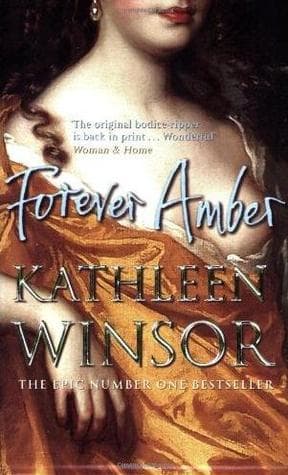
Synopsis
Covers the whole plot, including the ending.
- Difficulty
- Medium
- Pacing
- Variable
- Mood
- Epic, Romantic, Dramatic, Historical, Adventurous
- Read it if
- You love epic historical sagas with strong, resourceful female protagonists, detailed depictions of historical periods, and passionate, tumultuous romances.
- Skip it if
- You dislike lengthy books, morally ambiguous characters, or stories where the protagonist faces constant hardship and heartbreak.
Forever Amber Plot Summary
Covers the whole plot, including the ending.
Amber's Escape and Arrival in London
Amber St. Clare, a beautiful, spirited sixteen-year-old orphan raised by Puritan foster parents in the village of Salisbury, elopes with the cavalier, Bruce Carlton. She is captivated by his charm and the promise of a life beyond her strict upbringing. They journey to London, a city bustling with life and opportunity, but also immense danger. Bruce, a man of varying fortunes and questionable morals, quickly introduces Amber to the less respectable side of the city, including taverns and gaming houses. Their initial blissful days are soon overshadowed by Bruce's capricious nature and his mounting debts, which he dismisses with a laugh, leaving Amber increasingly vulnerable in the sprawling, indifferent metropolis.
Abandonment and Survival in the Slums
Bruce Carlton, facing arrest for debt, abruptly abandons Amber, pregnant and penniless, in London. Desperate, she is taken in by Black Jack Mallard, a highwayman, and his gang in the district of Alsatia. She gives birth to her daughter, whom she names Little Bruce, and quickly learns the harsh realities of survival among thieves, prostitutes, and outcasts. Amber uses her beauty and wit to navigate this dangerous world, eventually becoming a streetwalker under the tutelage of Mrs. Chiffinch. This period hardens her, stripping away her innocence but sharpening her resolve to escape poverty and secure a better future for herself and her child, all while still holding onto a romanticized image of Bruce.
Rise to the Stage and First Marriage
Amber, determined to escape the squalor of Alsatia, uses her beauty and quick learning to become an actress. Under the patronage of Madame Spong, she quickly gains popularity on the Restoration stage, charming audiences and attracting the attention of wealthy noblemen. Among her admirers is the aging but rich Lord Radclyffe. Seeing an opportunity for security and status, Amber agrees to marry him, despite her lack of genuine affection. The marriage elevates her to the peerage, providing her with the financial stability and social standing she craves, and a chance to move within the highest circles of society, a stark contrast to her humble beginnings.
Life as Lady Radclyffe and Bruce's Return
As Lady Radclyffe, Amber enjoys her newfound wealth and position, enjoying the luxuries and social prestige that come with it. She manages her household with skill and cultivates friendships with influential figures, including the King's current mistress, Lady Castlemaine. However, her carefully constructed life is dramatically disrupted by the unexpected return of Bruce Carlton, who has been away fighting in the Dutch wars. Despite his past abandonment and her current marriage, Amber's intense, enduring love for Bruce is reignited. Their passionate affair resumes, fraught with danger and secrecy, as Amber tries to balance her social obligations with her deep, forbidden desire for Bruce.
Tragedy, Scandal, and a Second Marriage
Lord Radclyffe dies, leaving Amber a wealthy widow, but his death is immediately followed by a scandal. Her affair with Bruce Carlton is exposed, and Bruce is accused of murder, though he is ultimately acquitted. Amber, now vulnerable to social ostracization and the loss of her fortune, must act quickly to secure her position. She marries Lord Harry Almsbury, a young, dissolute nobleman, primarily to protect her reputation and maintain her access to courtly life. This marriage, while providing stability, is loveless and fraught with Harry's gambling debts and infidelity, further showing Amber's pragmatic approach to relationships in her pursuit of power.
The Great Plague and London's Devastation
The Great Plague descends upon London, bringing widespread death and panic. While many of the wealthy flee the city, Amber, despite her privileged position, chooses to remain. Driven by a mix of compassion and a desire to prove her worth, she bravely assists Dr. Luke Channell in treating the sick, witnessing suffering and death firsthand. This experience affects her, momentarily stripping away her vanity and self-interest. She demonstrates resilience and courage, confronting the horrors of the epidemic with a practical determination that contrasts sharply with her usual pursuit of luxury and social climbing. She is eventually infected but recovers, emerging from the ordeal hardened but also with a deeper understanding of human fragility.
The Great Fire of London and Rebuilding
Soon after the Plague, the Great Fire of London erupts, destroying vast parts of the city, including many of Amber's properties and investments. She once again finds herself facing potential financial ruin and the loss of her accumulated status. With her characteristic resourcefulness, Amber navigates the chaos and aftermath of the fire, working to salvage what she can and rebuild her fortune. She uses her charm and connections to secure new opportunities, demonstrating her ability to adapt and thrive even in the face of catastrophic events. The fire, like the plague, tests her resilience and reinforces her determination to never return to poverty.
Becoming the King's Mistress
Through a combination of her beauty, wit, and strategic maneuvering, Amber finally catches the eye of King Charles II. After a period of courtship and rivalry with other court beauties, she becomes his official mistress. This position grants her immense power, influence, and wealth, elevating her to the highest social standing for a woman in Restoration England. She uses her position to secure titles and estates, including becoming the Countess of Radclyffe in her own right. Despite the opulence and political intrigue of court life, Amber finds that her deepest desires remain unfulfilled, constantly searching for the love she believes only Bruce Carlton can provide.
The King's Favor and Bruce's Disappearance
As the King's favorite mistress, Amber has considerable influence, becoming a central figure at court. She bears the King a son, validating her position further. However, her life remains tumultuous due to her obsessive love for Bruce Carlton. Bruce, ever restless and unfaithful, repeatedly returns to her life, rekindling their passionate affair, only to inevitably leave again for sea voyages or other women. Amber, despite her power and the King's affection, is tormented by Bruce's inconstancy and her inability to truly possess him. Her numerous attempts to tie him down or force his fidelity fail, leaving her heartbroken and frustrated, showing the central tragedy of her romantic life.
Third Marriage and the Search for Bruce
Despite her status as the King's mistress, Amber yearns for a legitimate son to secure her legacy and provide her with a more conventional family life. She marries Lord Robert Carlton, Bruce's cousin, believing that he might eventually become her true love. This marriage, however, proves to be another disappointment. Robert is kind but lacks the passion and adventurous spirit that Amber craves and associates with Bruce. Throughout this period, Amber continues her desperate, often fruitless, search for Bruce Carlton, following rumors of his whereabouts across England and even contemplating leaving her luxurious life to be with him, despite his repeated betrayals and his increasing unsuitability.
The Duel and Bruce's Decline
Bruce Carlton's increasingly reckless and dissolute behavior culminates in a duel. He is severely wounded, and his already unstable character deteriorates further. Amber, despite her own marital obligations and the King's displeasure, nurses him back to health, demonstrating the depth of her unwavering, if ultimately destructive, love for him. However, Bruce's injuries leave him disfigured and his spirit broken. He becomes a shadow of his former dashing self, losing much of the charm that first captivated Amber. This event is a turning point, signaling the end of the romanticized Bruce she once adored, and forcing her to confront the grim reality of his decline and her own persistent illusions.
Final Separation and Flight to America
Amber's position at court becomes precarious. The King's favor wanes, and new scandals threaten her reputation and fortune. Bruce Carlton, now a bitter, disfigured man, finally expresses a desire to leave England for America. In a desperate, final attempt to rekindle their love and escape her complex life in London, Amber abandons her wealth, her children (except for Little Bruce, who she later leaves with a family), and her social standing to follow him across the Atlantic. The novel ends with Amber, pregnant with what she hopes is Bruce's child, on a ship bound for the New World, still chasing the elusive dream of happiness with the only man she has ever truly loved, despite his flaws.
Principal Figures
Amber St. Clare
Protagonist
An ambitious, beautiful, and resourceful woman who rises from poverty to become the King's mistress.
Amber is the captivating and complex protagonist, known for her extraordinary beauty, fiery spirit, and unyielding ambition. Orphaned and raised by Puritans, she yearns for a life of luxury and excitement, which she pursues with relentless determination. Her journey through Restoration London is marked by numerous lovers, marriages, and brushes with danger, yet she always manages to land on her feet, using her wit and charm to survive and thrive. Despite her pragmatic and often ruthless pursuit of status, she harbors a deep, obsessive, and ultimately self-destructive love for Bruce Carlton, which dictates many of her choices. She is a survivor, a social climber, and a woman driven by both passion and pragmatism.
Relationships: Bruce Carlton (Obsessive, lifelong love interest); King Charles II (Lover, patron, father of her son); Lord Radclyffe (First husband, wealthy benefactor); Lord Harry Almsbury (Second husband, dissolute nobleman); Lord Robert Carlton (Third husband, Bruce's cousin); Little Bruce (Daughter, later abandoned for her own pursuits); Dr. Luke Channell (Friend and mentor during the Plague)
Bruce Carlton
Love Interest/Antagonist
Amber's lifelong love, a dashing but unreliable and self-destructive cavalier.
Bruce Carlton is the charismatic, handsome, and ultimately flawed cavalier who first sweeps Amber off her feet. He embodies the reckless glamour of the Restoration era, but beneath his charm lies a deeply selfish, inconstant, and irresponsible nature. He repeatedly abandons Amber, pursues other women, and squanders his fortunes, yet Amber remains obsessively devoted to him. His inability to settle down or commit, combined with his adventurous spirit, makes him both irresistible and a source of perpetual heartbreak for Amber. He is the unattainable ideal that Amber projects her desires onto, despite his increasingly evident flaws and eventual physical and moral decay.
Relationships: Amber St. Clare (Obsessive, lifelong love interest (from Amber's side)); King Charles II (Fellow cavalier, sometimes rival for Amber's attention); Lord Robert Carlton (Cousin)
King Charles II
Supporting
The 'Merry Monarch' of England, a charming and powerful figure who takes Amber as his mistress.
King Charles II is portrayed as a witty, intelligent, and pleasure-loving monarch, true to his historical persona. He is a central figure in Amber's rise to power, eventually taking her as one of his many mistresses. While he genuinely enjoys Amber's company and beauty, he is ultimately a pragmatic ruler and a man of many affections, never fully giving himself to any one woman. His presence provides Amber with immense power and status, but also introduces her to the political intrigues and jealousies of court life. He represents the pinnacle of society Amber strives for, but his affection cannot replace her love for Bruce.
Relationships: Amber St. Clare (Lover, father of her son); Lady Castlemaine (Long-standing mistress, Amber's rival); Nell Gwyn (Another mistress)
Lord Radclyffe
Supporting
Amber's first husband, an aging but immensely wealthy and kind nobleman.
Lord Radclyffe is an elderly, wealthy, and respectable nobleman who marries Amber when she is a struggling actress. He provides her with her first legitimate step up the social ladder, offering her security, status, and luxury. Though significantly older than Amber, he treats her with kindness and generosity, genuinely caring for her. Amber, in turn, respects him, even if she doesn't love him. His death leaves Amber a wealthy widow, but also vulnerable to scandal, forcing her to make further strategic decisions for her survival. He represents the first rung of Amber's climb to power, a necessary but ultimately temporary stepping stone.
Relationships: Amber St. Clare (First husband)
Dr. Luke Channell
Supporting
A dedicated and principled physician who befriends Amber during the Great Plague.
Dr. Luke Channell is a compassionate and principled physician who dedicates himself to treating the sick during the Great Plague. He encounters Amber during this horrific period, and she assists him in his work. He is one of the few characters who sees beyond Amber's beauty and ambition, recognizing her underlying courage and capacity for selflessness. He offers her genuine friendship and moral guidance, providing a stark contrast to the superficiality and cynicism of court life. His character highlights Amber's more altruistic side, even if it is only a fleeting aspect of her personality. He represents a moral compass in a corrupt world.
Relationships: Amber St. Clare (Friend, mentor during the Plague)
Black Jack Mallard
Supporting
A notorious highwayman who takes Amber in when she is abandoned and penniless.
Black Jack Mallard is a charismatic and dangerous highwayman who becomes Amber's protector and lover after Bruce abandons her. He introduces her to the criminal underworld of Alsatia, teaching her the harsh realities of survival outside the law. Though a criminal, he possesses a certain code of honor and genuine affection for Amber, even caring for her and her daughter, Little Bruce. His character represents the raw, brutal side of London that Amber must navigate and overcome. He is a pivotal figure in Amber's early education in self-reliance and the pragmatic use of her feminine wiles.
Relationships: Amber St. Clare (Lover, protector); Mrs. Chiffinch (Associate in the underworld)
Lady Castlemaine (Barbara Villiers)
Supporting
The King's powerful and jealous mistress, a rival and sometimes ally to Amber.
Lady Castlemaine, based on the historical Barbara Villiers, is the King's long-standing and notoriously fiery mistress. She is a formidable figure at court, wielding significant power and influence, and is fiercely protective of her position. Amber initially attempts to befriend her, but eventually becomes her rival for the King's affections. Lady Castlemaine represents the ultimate female power figure in Restoration society that Amber aspires to be, and their interactions are fraught with jealousy, manipulation, and strategic alliances. She embodies the cutthroat nature of court politics and the precariousness of a mistress's position.
Relationships: King Charles II (Lover); Amber St. Clare (Rival, occasional acquaintance)
Lord Robert Carlton
Supporting
Bruce's cousin and Amber's third husband, a kind but uninspiring nobleman.
Lord Robert Carlton is Bruce's cousin and Amber's third husband. He is a kind, gentle, and respectable nobleman, but he lacks the adventurous spirit and passion that Amber craves and associates with Bruce. Amber marries him primarily for his name, his family connections, and her desire for a legitimate son. Their marriage is one of convenience and quiet affection rather than deep love. Robert represents the stable, conventional life that Amber could have, but ultimately finds unsatisfying, as her heart remains tethered to the more volatile Bruce. He highlights Amber's internal conflict between security and passion.
Relationships: Amber St. Clare (Third husband); Bruce Carlton (Cousin)
Little Bruce
Supporting
Amber's daughter, a symbol of her early struggles and her complex relationship with motherhood.
Little Bruce is Amber's daughter, born during her desperate period in Alsatia after Bruce Carlton abandons her. Named after her father, she represents Amber's initial vulnerability and her fierce determination to survive for her child. As Amber rises in society, Little Bruce becomes more of a burden and an inconvenience, often left with others or in the care of servants. Amber's relationship with her is complex; she loves her in her own way, but her ambition and obsessive love for Bruce Carlton often overshadow her maternal duties. She is eventually left behind when Amber flees to America, symbolizing Amber's ultimate sacrifice of conventional motherhood for her own desires.
Relationships: Amber St. Clare (Mother); Bruce Carlton (Biological father (unacknowledged))
Themes & Insights
Ambition and Social Mobility
The novel charts Amber's climb from an abandoned, penniless girl to the King's favorite mistress. Her ambition drives the plot, seen in her strategic marriages, her willingness to navigate the criminal underworld, and her manipulation of social connections. She constantly strives for higher status, wealth, and influence, seeing each step as a means to an end. This theme shows the opportunities and dangers of social mobility in Restoration England, particularly for a woman without family connections, demonstrating how beauty and wit could be powerful tools for advancement.
“She was going to be someone, someone important, and no one, not even Bruce, was going to stop her.”
Love, Obsession, and Self-Destruction
Central to Amber's character is her unwavering, almost pathological, love for Bruce Carlton. Despite his repeated abandonments, infidelities, and unreliability, Amber remains devoted to him, often sacrificing her own well-being and happiness in pursuit of his affection. This obsessive love is both a motivator and a destructive force, leading her to make irrational decisions and preventing her from finding contentment with other, more suitable partners. The theme explores the difference between true love and a romanticized ideal, and how the pursuit of an unattainable fantasy can lead to unhappiness.
“He was her weakness, her strength, her very life, and she knew she would follow him to the ends of the earth, even if it meant her ruin.”
Survival and Resilience
Amber's life shows human resilience and the will to survive against overwhelming odds. From her abandonment in London to enduring the Great Plague and the Great Fire, she faces numerous life-threatening situations and personal setbacks. Her ability to adapt, learn, and leverage her resources (primarily her beauty and intelligence) allows her to not only survive but to thrive in a harsh and unforgiving world. This theme shows the strength of the human spirit in the face of adversity, and the pragmatic choices individuals make when confronted with the necessity of survival.
“She had learned that life was not a gentle stream but a raging river, and she must swim with all her might or be drowned.”
The Role of Women in Restoration Society
The novel offers a detailed portrayal of the limited yet sometimes powerful roles available to women in 17th-century England. Amber's journey shows how women, particularly those without male protectors, were vulnerable to poverty and exploitation. However, it also demonstrates how beauty, wit, and strategic alliances (especially through marriage or becoming a royal mistress) could grant women considerable influence and wealth, within a system still dominated by men. The theme highlights the precariousness of female power and the social double standards women faced, particularly regarding reputation and sexuality.
“A woman's honor was a fragile thing, easily lost, and once gone, never regained, unless she had the wit to turn its loss to her advantage.”
The Decadence and Hypocrisy of Restoration England
Winsor vividly depicts the moral climate of Restoration London, a period characterized by a reaction against Puritanical strictness, leading to widespread hedonism, licentiousness, and social hypocrisy. The court of Charles II is shown as a place of lavish excess, gambling, infidelity, and political intrigue, where appearances often matter more than virtue. Amber's journey through this society exposes its superficiality, its class divisions, and the underlying corruption beneath its glittering surface. The novel examines the contradictions of an era that valued both religious piety and unrestrained pleasure.
“London was a city of silks and rags, of saints and sinners, where a man could lose his fortune in a night and a woman her soul in an hour.”
Plot Devices & Literary Techniques
Bildungsroman (Coming-of-Age Story)
Traces Amber's development from an innocent country girl to a seasoned courtier.
The novel functions as a Bildungsroman, chronicling Amber St. Clare's emotional, moral, and social development from her naive sixteen-year-old self to a hardened, ambitious woman. We see her learn harsh lessons about love, survival, and the nature of power through her experiences in London's underworld, on the stage, and at court. Her journey involves a loss of innocence, a constant struggle for self-improvement, and a gradual, often painful, understanding of the world and her place within it. This device allows readers to witness her transformation and the forces that shape her character over many years.
Historical Panorama
Uses major historical events as a backdrop for the protagonist's personal story.
Kathleen Winsor masterfully integrates significant historical events of Restoration England into Amber's personal narrative. The Great Plague of 1665 and the Great Fire of London in 1666 are not merely background details but directly impact Amber's life, forcing her to confront mortality, adapt to crisis, and rebuild her fortune. The political climate of Charles II's court, including the Dutch wars and various intrigues, also influences her relationships and social standing. This device grounds the romantic and personal story within a rich, authentic historical context, making the narrative feel expansive and realistic.
The Femme Fatale Archetype
Amber embodies the alluring, dangerous woman who uses her sexuality for power.
Amber St. Clare strongly fits the archetype of the femme fatale. She is exceptionally beautiful, uses her sexuality as her primary tool for advancement, and often leaves a trail of broken hearts and ruined men in her wake. While she is the protagonist, her actions are frequently morally ambiguous, and she is both a victim of circumstance and a ruthless manipulator. This device highlights the societal constraints on women and how some chose to subvert them, but also explores the personal cost of such a path, as Amber often finds herself emotionally unfulfilled despite her worldly successes.
Symbolism of London
London represents both opportunity and corruption, mirroring Amber's journey.
London itself serves as a powerful symbol throughout the novel. Initially, it represents Amber's escape from her restrictive past and the promise of a glamorous future. As she experiences its various facets—the squalor of Alsatia, the vibrancy of the theaters, the opulence and intrigue of the court—London mirrors her own journey of moral compromise and ambition. It is a city of both immense opportunity and profound corruption, a place where one can rise to great heights or sink to the lowest depths, much like Amber's own trajectory. The city's resilience through plague and fire also reflects Amber's own capacity for survival.
Forever Amber Quotes
“For the love of God, I am English! And I will not be ruled by a Frenchman!”
“She had always known that life was a battlefield, and she had no intention of being a casualty.”
“Love was a luxury she could not afford, and she had learned to live without it.”
“A woman's beauty was her only true weapon in a world ruled by men.”
“To be born poor was a misfortune, but to remain poor was a choice.”
“There were two kinds of women in the world: those who waited, and those who went out and got what they wanted.”
“The plague was a great leveler, making no distinction between rich and poor, saint and sinner.”
“She had survived by her wits, her beauty, and her utter refusal to be defeated.”
“London was a city of endless possibilities, if one only had the courage to seize them.”
“Marriage was a bargain, not a sacrament, and she intended to get the best possible terms.”
“He was a fool, but a charming one, and charm could excuse a multitude of sins.”
“To be a courtesan was to be a queen without a crown, ruling over men's desires.”
“The fire devoured everything, but it also cleansed, making way for something new.”
“She had learned that the most dangerous enemy was not always the one who hated you, but the one who loved you too much.”
Quiz
10 questions on the plot and the characters. Each answer comes with a short explanation.
Question 1
At what age does Amber St. Clare find herself abandoned, pregnant, and penniless on the streets of London?
- 14
- 16
- 18
- 20
Show answer
B. 16 The book description explicitly states that 16-year-old Amber St. Clare is the protagonist who begins her journey in this difficult situation.
Question 2
Which historical figure does Amber St. Clare become the favorite mistress of, reaching a high position in Restoration England?
- King James II
- Oliver Cromwell
- Charles II
- William of Orange
Show answer
C. Charles II The summary clearly identifies Charles II, the 'Merry Monarch,' as the king for whom Amber becomes a favorite mistress.
Question 3
What two major historical events in London does Amber St. Clare experience during her rise?
- The Glorious Revolution and the South Sea Bubble
- The English Civil War and the Restoration
- The Great Plague and the Fire of London
- The Jacobite Rising and the Act of Union
Show answer
C. The Great Plague and the Fire of London The book description specifically lists 'the Great Plague and the Fire of London' as key events Amber experiences.
Question 4
Despite her numerous escapades and relationships, what is Amber's primary emotional motivation throughout the book?
- To accumulate vast wealth and power
- To gain social acceptance and a noble title
- To return to her humble beginnings and live a simple life
- To be with the one man she truly loves, but can never have
Show answer
D. To be with the one man she truly loves, but can never have The summary states, 'But throughout her trials and escapades, she remains, in her heart, true to the one man she really loves, the one man she can never have,' highlighting her enduring romantic pursuit.
Question 5
How does Amber St. Clare primarily manage to climb the social ladder from her initial destitute state?
- Through inherited wealth from a distant relative
- By proving her exceptional skills in trade and commerce
- Using her wits, beauty, and courage
- By marrying into a powerful aristocratic family directly
Show answer
C. Using her wits, beauty, and courage The description explicitly states she 'manages, by using her wits, beauty, and courage, to climb to the highest position.'
Question 6
The book 'Forever Amber' was banned in which major American city for its 'sheer sexiness'?
- New York
- Boston
- Philadelphia
- Chicago
Show answer
B. Boston The provided text mentions the book 'despite being banned in Boston for its sheer sexiness.'
Question 7
The description compares 'Forever Amber' to which other famous historical romance novel?
- Pride and Prejudice
- Wuthering Heights
- Gone with the Wind
- Jane Eyre
Show answer
C. Gone with the Wind The text states, 'Frequently compared to Gone with the Wind, Forever Amber is the other great historical romance.'
Question 8
Considering Amber's journey from 'whores and highwaymen to courtiers and noblemen,' what does this progression primarily illustrate about Restoration England society?
- The rigidity of the class system, making upward mobility impossible.
- The importance of inherited titles above all else.
- The potential for an individual, especially a woman using unconventional means, to navigate and rise through various social strata.
- The complete absence of law and order across all social classes.
Show answer
C. The potential for an individual, especially a woman using unconventional means, to navigate and rise through various social strata. Amber's journey highlights the fluid, albeit challenging, nature of social mobility in Restoration England, particularly for someone with her specific attributes and lack of traditional status. It shows that wits and beauty could open doors not accessible by birth.
Question 9
What unique challenge does Amber face in her pursuit of the man she loves, as described in the summary?
- He is constantly traveling and impossible to locate.
- He is of a much lower social standing and rejects her advances.
- He is already married and legally unavailable.
- She can 'never have' him, suggesting an insurmountable barrier beyond simple marriage or location.
Show answer
D. She can 'never have' him, suggesting an insurmountable barrier beyond simple marriage or location. The summary states she loves 'the one man she can never have,' implying a fundamental and perhaps tragic impossibility to their union, which is a deeper conflict than mere marital status or distance. It suggests a more profound, perhaps societal or personal, obstacle.
Question 10
Given the historical context of 'Restoration England' and Amber's status as a 'favorite mistress,' what does her story reveal about the role and power of women in that era?
- Women were entirely powerless and had no influence over men in authority.
- Only women of noble birth could wield significant power or influence.
- While lacking formal political power, women, particularly mistresses like Amber, could exert considerable influence and achieve high social standing through personal relationships and charisma.
- Women achieved legal equality with men during the Restoration period.
Show answer
C. While lacking formal political power, women, particularly mistresses like Amber, could exert considerable influence and achieve high social standing through personal relationships and charisma. Amber's rise to 'favorite mistress' of the king demonstrates that while women did not have formal political power, exceptional individuals could achieve significant influence and social status through informal channels, such as their relationships with powerful men, especially in the more libertine atmosphere of the Restoration court.
Forever Amber FAQ
What is Forever Amber about?
Forever Amber chronicles the tumultuous life of Amber St. Clare, an orphaned country girl who arrives in Restoration London and, through a series of misfortunes and cunning choices, rises from poverty and prostitution to become the King's mistress. It details her relentless pursuit of wealth, status, and her enduring love for Lord Bruce Carlton, all set against the backdrop of historical events like the Great Plague and the Fire of London.
Why should I read Forever Amber?
You should read Forever Amber for its sweeping historical detail, its unvarnished portrayal of Restoration England, and its captivating protagonist, Amber St. Clare, who is a complex mix of ambition, resilience, and vulnerability. It's a grand historical romance that offers both adventure and a deep dive into the social mores and political intrigue of the era, making it a compelling and immersive read.
What is the background/setting of Forever Amber?
The book is set in Restoration England, specifically London, during the reign of King Charles II (1660-1685). It vividly depicts the city's transformation after the English Civil War, showcasing the opulent court life, the licentious atmosphere, the devastating impact of the Great Plague, and the destructive Great Fire of London, all of which Amber navigates.
What are the most memorable quotes?
While the book is known more for its sweeping narrative than specific lines, a memorable sentiment often attributed to Amber's enduring spirit is her constant drive to survive and thrive, encapsulated by her refusal to be defeated by any circumstance. Another key quote reflecting her character is her repeated thought that 'no matter what, she would get by.'
What writing style does the author use?
Kathleen Winsor employs a rich, detailed, and often dramatic narrative style that is characteristic of epic historical fiction. Her prose is descriptive, immersing the reader in the sights, sounds, and smells of 17th-century London, while maintaining a brisk pace that propels Amber's numerous adventures and misfortunes forward.
What minor details add significant meaning?
The recurring motif of Amber's children, often left behind or neglected in her pursuit of Bruce or status, subtly highlights the personal cost of her ambition and the societal limitations placed on women, even powerful ones, in that era. Each child represents a different facet of her life she sacrifices.
What are some subtle foreshadowing moments?
Early on, Bruce Carlton's consistent rejection of Amber's attempts to tie him down, despite his physical attraction, subtly foreshadows his ultimate inability to commit to her due to her low birth and scandalous reputation. His warnings about her ambition often come true.
What unexpected character connections exist?
One unexpected connection is Amber's brief marriage to Lord Harry Almsbury, who is a much older man and a distant relative of Bruce Carlton. This marriage, though loveless, provides Amber with a title and status that indirectly brings her closer to the circles Bruce inhabits, highlighting the tangled web of Restoration society.
What are unspoken character motivations?
Beyond her declared love for Bruce, Amber's unspoken motivation is a deep-seated fear of poverty and a relentless drive for security and respectability, stemming from her humble and often precarious beginnings. Her ambition is fueled by a desire to never again be powerless.
What psychological complexities do characters exhibit?
Amber exhibits profound psychological complexity, torn between her passionate, unwavering love for Bruce Carlton and her pragmatic, often ruthless, pursuit of status and wealth. She constantly rationalizes her morally questionable actions as necessary for survival, creating an inner conflict between her heart and her ambition.
What are the major emotional turning points?
A major emotional turning point is Amber's realization after the Great Plague and Fire that even immense wealth and royal favor cannot guarantee her happiness or win Bruce's lasting devotion. Another is her repeated despair when Bruce leaves her, only to rebound with renewed determination.
How do relationship dynamics evolve?
The relationship dynamics, particularly between Amber and Bruce Carlton, evolve from passionate infatuation to a complex dance of longing, frustration, and power struggles. Bruce's love is often overshadowed by his principles and societal expectations, while Amber's love for him remains constant but is continually challenged by her own ambition and desire for independence.
Which parts remain ambiguous or open-ended?
The ultimate fate of Amber's happiness remains ambiguous. While she achieves immense wealth and status, and maintains her love for Bruce, the novel concludes without a definitive resolution to her longing for him or a clear path to lasting contentment. Her future is left to the reader's imagination.
What are controversial scenes or decisions?
The book's frank depiction of Amber's numerous sexual encounters, her periods as a prostitute, and her willingness to use her body for advancement were highly controversial upon its release, leading to bans in several places. Her decision to abandon or neglect her children for her own ambitions also remains a point of debate.
Forever Amber ending explained: how it ends & what it means
Forever Amber ends with Amber, still deeply in love with Bruce Carlton, sailing to America in pursuit of him after he has fled England. She is once again leaving behind her established life and children, demonstrating her unwavering obsession and resilience. The ending signifies that despite her extraordinary rise, her heart's desire remains elusive, and she is perpetually driven by an unfulfilled love, suggesting a cyclical nature to her pursuit of both love and status.
About the author

Kathleen Winsor was an American author known for her historical fiction. Her most notable work, "Forever Amber," published in 1944, explores the life of a young woman in Restoration England and became a bestseller. Winsor's writing often delves into themes of love and ambition against richly detailed historical backdrops.
Similar books
- Gone with the Wind
Margaret Mitchell
4.3 (1.1M) average on GoodreadsHistorical FictionFeatures a strong, controversial female protagonist navigating societal upheaval and a complex, enduring love affair during a historical period.
- The Scarlet Pimpernel
Emmuska Orczy
4.1 (124k) average on GoodreadsHistorical FictionSet during a period of historical upheaval with romance, intrigue, and a focus on societal survival.
- The Other Boleyn Girl
Philippa Gregory
4.1 (456k) average on GoodreadsHistorical FictionExplores the lives of ambitious women at court, entangled in royal affairs and power struggles.
- Pride and Prejudice
Jane Austen
4.3 (3M) average on GoodreadsHistorical FictionWhile both are historical romances, Austen's novel focuses on social satire, manners, and the complexities of finding love within strict societal norms of the Regency era. Forever Amber is a much grander, more sprawling epic dealing with survival, explicit sexuality, and social climbing through illicit means, offering a starker contrast to Austen's more refined and morally upright world.
- To Kill a Mockingbird
Harper Lee
4.3 (4.5M) average on GoodreadsHistorical FictionIn the 1930s Jim Crow South, Harper Lee writes about racial injustice, moral growth, and the quiet courage of a lawyer father, Atticus Finch, as seen through his young daughter's eyes.
- The Great Gatsby
F. Scott Fitzgerald
3.9 (3.8M) average on GoodreadsHistorical FictionIn the opulent Roaring Twenties, a mysterious millionaire's lavish parties hide his desperate, tragic pursuit of a lost love, exposing the emptiness within the American Dream.





Enjoyed the summary?
A summary gives you the shape of the book. The book itself has the detail, the examples and the voice.
Find Forever Amber on AmazonAs an Amazon Associate, BookBrief earns from qualifying purchases. How we're funded