
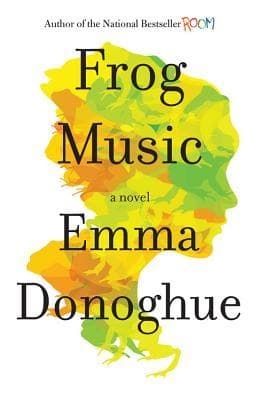
Synopsis
Covers the whole plot, including the ending.
- Difficulty
- Medium
- Pacing
- Moderate
- Mood
- Gritty, Atmospheric, Suspenseful, Lyrical, Melancholy
- Read it if
- You enjoy historical mysteries set in vivid, gritty boomtowns with unconventional characters and a strong sense of place.
- Skip it if
- You prefer fast-paced, action-driven plots or are uncomfortable with historical depictions of prejudice and violence.
Frog Music Plot Summary
Covers the whole plot, including the ending.
The Shooting at the Railroad Saloon
On a sweltering July night in 1876 San Francisco, French burlesque dancer Blanche Beunon and her friend, the eccentric frog-catcher Jenny Bonnet, leave a railroad saloon. A shot rings out, hitting Jenny in the back and killing her instantly. Blanche is grazed by the bullet but survives. The saloon owner and patrons offer little help or concern for Jenny, known for her cross-dressing and independent life. Blanche, despite her injuries and shock, decides to find the killer, a difficult task due to the city's indifference to Jenny's death, the heatwave, and a smallpox epidemic.
Blanche's Initial Investigation and Flight
Blanche returns to her lodging, shaken. She meets her lover, Arthur, a wealthy, married man who dismisses her concerns about Jenny's murder, more focused on his reputation. Realizing she cannot rely on Arthur for justice, Blanche begins her own investigation. She remembers a detail about the shooter: a man with a missing finger. Fearing for her safety as a witness and potential target, Blanche decides to leave her current life. She gathers her belongings, including Jenny's pet frog, and leaves a note for Arthur, signaling her intent to disappear.
Seeking Refuge and Early Clues
Blanche seeks refuge with Mrs. Morse, an older woman who runs a boarding house and knew Jenny. Mrs. Morse offers Blanche a room and some stability, though she is cautious about Blanche's involvement in the murder. During her stay, Blanche learns more about Jenny's life. She finds that Jenny had a tumultuous history, including a past relationship with Jack, another frog-catcher. Blanche begins to suspect that Jenny's death might relate to her past relationships or unusual lifestyle, rather than being a random act.
The Circus and the Boxer
Blanche remembers Jenny mentioning a circus where she once worked. She visits the run-down circus grounds, hoping to find someone who knew Jenny. There, she meets Sandy, a boxer who had a brief, complicated relationship with Jenny. Sandy is initially defensive but eventually shares insights into Jenny's free spirit and her tendency to attract both adoration and animosity. Blanche also learns about a rivalry between Jenny and another performer, further complicating her understanding of Jenny's social circle and potential enemies. Sandy's information, while not directly leading to the killer, paints a fuller picture of Jenny's life.
The Seedy Underbelly of San Francisco
Blanche's investigation takes her through San Francisco's less reputable parts, including gambling dens, opium dens, and brothels, places Jenny frequented. She meets various characters who knew Jenny, from prostitutes to petty criminals, each offering a piece of the puzzle. These encounters show Jenny's charisma and her ability to navigate different social levels, but also her vulnerability. Blanche realizes that Jenny's unconventional life made her both beloved and despised, making the motive for her murder harder to pinpoint among many who might have held a grudge.
Encountering Jack and the Missing Finger
Blanche, following a lead, tracks down Jack, Jenny's former lover and fellow frog-catcher. Upon meeting him, she notices the distinctive missing finger on his hand, matching her memory of the shooter. This discovery sends a jolt of fear and certainty through Blanche. Jack is a rough, volatile man, and their interaction is tense. He admits to a complicated relationship with Jenny, marked by both affection and resentment. Blanche carefully tries to get information from him, trying to confirm if he was the killer, while also fearing for her safety in his presence.
The Confession and the Motive
Under Blanche's persistent questioning and observations, Jack eventually confesses to shooting Jenny. His confession reveals a motive rooted in a twisted mix of love, jealousy, and betrayal. He felt Jenny had abandoned him, and his rage, fueled by alcohol and possessiveness, led to the act. He describes waiting for her, intending to confront her, but the encounter became violent. Blanche is horrified but also feels a grim satisfaction at finally uncovering the truth, even if it brings little comfort.
The Aftermath of the Confession
After Jack's confession, Blanche is in a difficult position. She has the truth, but bringing Jack to justice in a city that cared little for Jenny's death seems a monumental and dangerous task. She considers the risks to herself, knowing Jack is a desperate man. The revelation also forces her to confront the darker aspects of Jenny's life and choices, and her own part in the chaotic world she inhabited. Blanche feels a profound sense of loss, not just for Jenny, but for the innocence she shed during her quest for truth.
Blanche's Decision and Departure
Blanche weighs her options: expose Jack and risk her safety, or let the matter rest. She decides against formally pursuing justice, recognizing the futility and danger in a corrupt and indifferent system. She realizes her own survival and future are most important. With a heavy heart, Blanche decides to leave San Francisco, cutting ties with the life she shared with Jenny and Arthur. She takes with her the memories of Jenny and the hard-won knowledge of the city's harsh realities, determined to forge a new path, carrying Jenny's pet frog as a silent companion and reminder.
A New Beginning
Blanche travels to a new town, seeking anonymity and a chance to rebuild her life away from San Francisco's shadows. She finds work, still carrying the emotional scars of Jenny's murder and her harrowing investigation. The experience has changed her, making her more resilient but also more cynical about human nature and justice. She continues to reflect on Jenny, understanding that her friend's free spirit, while alluring, ultimately led her into dangerous situations. Blanche's journey ends with her embracing a quieter existence, forever marked by the summer of 1876 and the unforgettable 'frog music' of Jenny's life.
Principal Figures
Blanche Beunon
Protagonist
A French burlesque dancer and the sole witness to Jenny Bonnet's murder.
Blanche is a young, beautiful, and somewhat naive French immigrant working as a burlesque dancer in San Francisco. She is initially dependent on her wealthy lover, Arthur, but Jenny's murder ignites a fierce independence and determination within her. She is observant and tenacious, driven by a deep loyalty to Jenny and a personal need for justice. Despite her vulnerability in a harsh city, Blanche demonstrates remarkable courage in navigating its dangerous underbelly to uncover the truth.
Relationships: Jenny Bonnet (Close friend and object of Blanche's quest for justice.); Arthur (Wealthy, married lover who is ultimately unreliable.); Mrs. Morse (Temporary refuge provider and source of information about Jenny's past.); Jack (Jenny's former lover and eventual killer, whom Blanche confronts.)
Jenny Bonnet
Central Figure (Deceased)
An enigmatic, cross-dressing frog-catcher whose murder drives the narrative.
Jenny Bonnet is a vibrant, unconventional, and fiercely independent woman who defies social norms by dressing in men's clothing and living a free-spirited life. She is a 'frog-catcher' by trade, a symbol of her unique connection to nature and her rejection of societal expectations. Jenny is charismatic and alluring, but also has a complicated past and a tendency to attract both devoted friends and bitter enemies. Her murder is the catalyst for the entire story, and her character is revealed retrospectively through Blanche's investigation.
Relationships: Blanche Beunon (Close friend and the one who seeks justice for her.); Jack (Former lover, whose possessiveness ultimately leads to her death.); Sandy (Brief romantic entanglement and fellow circus performer.); Mrs. Morse (Acquaintance and occasional confidante.)
Jack
Antagonist
Jenny's possessive former lover and her murderer.
Jack is a rough, volatile, and deeply resentful man who was once Jenny Bonnet's lover and fellow frog-catcher. He embodies a darker side of the working-class, struggling to make a living and consumed by his feelings for Jenny. His possessiveness and jealousy festered after Jenny left him, leading to a violent outburst that resulted in her murder. He is depicted as a man driven by raw emotion and a sense of perceived betrayal, making him a dangerous and unpredictable character.
Relationships: Jenny Bonnet (Former lover, whom he murdered out of jealousy and possessiveness.); Blanche Beunon (The witness and investigator he tries to evade.)
Arthur
Supporting
Blanche's wealthy, married lover who fails to support her.
Arthur is a well-to-do, married businessman who keeps Blanche as his mistress. He represents the hypocrisy and moral compromises of the upper class in San Francisco. While he provides Blanche with some financial stability, he is ultimately self-serving and unwilling to risk his reputation or comfort to help her seek justice for Jenny. His disinterest in Jenny's murder highlights the societal indifference to those on the margins.
Relationships: Blanche Beunon (Lover, providing her with financial support but little emotional or practical help.); Jenny Bonnet (Acquaintance, whose death he dismisses.)
Mrs. Morse
Supporting
A pragmatic boarding house owner who offers Blanche refuge.
Mrs. Morse is an older, no-nonsense woman who runs a boarding house and knew Jenny Bonnet. She is practical, cautious, and somewhat world-weary, having witnessed much of life's hardships. She provides Blanche with a safe haven and some initial information about Jenny's past, but she is also wary of getting involved in the dangerous pursuit of a murderer. She represents a stable, albeit cynical, anchor for Blanche in a chaotic world.
Relationships: Blanche Beunon (Provides Blanche with lodging and a temporary refuge.); Jenny Bonnet (Former acquaintance and boarder.)
Sandy
Supporting
A boxer and former acquaintance of Jenny from the circus.
Sandy is a boxer who had a brief, complicated relationship with Jenny Bonnet during her time at the circus. He is a rough-around-the-edges character, initially guarded and defensive when Blanche questions him. He provides some insights into Jenny's life as a performer and her ability to captivate others, as well as the rivalries she sometimes stirred. His interactions with Blanche reveal another layer of Jenny's past and the diverse people she encountered.
Relationships: Jenny Bonnet (Former romantic interest and fellow circus performer.); Blanche Beunon (Source of information during Blanche's investigation.)
The Missing-Fingered Man (Unidentified)
Mentioned
The distinctive detail of the killer, a crucial clue.
This figure is initially identified only by a crucial physical detail: a missing finger. He is the shadowy presence that Blanche glimpses during the murder and becomes the key identifier in her search for the killer. The description of this man is a plot device that drives Blanche's investigation, narrowing down the potential suspects until she eventually links it to Jack. He represents the elusive nature of justice and the small, vital clues that can unravel a mystery.
Mrs. Finch
Supporting
A rival burlesque dancer to Blanche.
Mrs. Finch is another burlesque dancer who is a rival to Blanche. She represents the competitive and sometimes cutthroat world of the performing arts in San Francisco. Her character highlights the precariousness of Blanche's profession and the constant struggle for survival and recognition among women in this era. While not directly involved in the murder, her presence adds to the social fabric and challenges Blanche faces.
Relationships: Blanche Beunon (Professional rival.)
Themes & Insights
Justice and Injustice
The novel explores the elusive nature of justice, especially for those on society's margins. Jenny Bonnet's murder is met with indifference by authorities and much of San Francisco, showing how social status and gender affect whether a crime is pursued. Blanche's personal quest for justice defies this systemic injustice. The eventual truth, while satisfying for Blanche, does not lead to formal retribution, forcing her to confront the legal system's limits and make her own peace.
“Nobody cared about Jenny. Not truly. And if nobody cared, then nobody would find her killer.”
Identity and Performance
Both Jenny and Blanche are performers, but their identities go beyond the stage. Jenny's cross-dressing challenges gender norms, making her identity a constant performance and a source of both freedom and danger. Blanche, as a burlesque dancer, also performs a version of herself for an audience and for Arthur. The theme looks at how people construct and present themselves, and how these performances intersect with societal expectations and personal desires. Jenny's true self, hidden beneath layers of performance, is what Blanche ultimately seeks to understand.
“Jenny was always playing a part, even when she wasn’t on a stage. It was just, sometimes, the part was herself.”
San Francisco as a Character
San Francisco in 1876 is a powerful force in the novel, almost like a character. It is shown as a booming, chaotic, and often brutal place, vibrant with opportunity yet riddled with poverty, disease, and moral decay. The record-breaking heat wave and smallpox epidemic increase the tension and desperation. The city's indifference to Jenny's death, its class divisions, and its hidden underside are integral to the plot, shaping Blanche's challenges and the story's overall mood.
“San Francisco was a city of heat and filth, of gold and desperation, where a life could be snuffed out and barely a ripple made.”
Love, Jealousy, and Obsession
The darker aspects of human relationships, especially love twisted into jealousy and obsession, are central to Jenny's murder. Jack's motive comes from a possessive love for Jenny that turns into resentment and rage when she leaves him. This theme explores the destructive power of uncontrolled emotions and how they can lead to tragic consequences. Blanche's complex feelings for Arthur, and her deep affection for Jenny, offer a counterpoint, showing different facets of love and attachment.
“He didn’t love her. He owned her, or he thought he did. And when she slipped his grasp, he broke her.”
Friendship and Loyalty
At its heart, the novel is about friendship and loyalty. Blanche's dedication to Jenny, even after her death, drives the entire story. Despite the dangers and others' indifference, Blanche risks everything to understand Jenny's life and find her killer. This theme highlights the bond between the two women, suggesting that true loyalty can transcend even death and societal judgment, offering a glimmer of hope and human connection amidst the city's harsh realities.
“Jenny was gone, but her ghost whispered in my ear, urging me on. I owed her that much.”
Plot Devices & Literary Techniques
The Missing Finger
A distinctive physical detail serving as a crucial identifier for the killer.
The detail of the killer having a missing finger is a classic mystery plot device, functioning as a vital clue that Blanche latches onto. It allows the narrative to maintain suspense as Blanche encounters various characters, each with the potential to be the 'missing-fingered man.' This specific, observable trait helps Blanche narrow her search and eventually leads her to Jack, providing a tangible link to the perpetrator amidst the chaos and anonymity of San Francisco.
Retrospective Narrative / Unreliable Memory
Blanche's fragmented memories and pieced-together recollections of Jenny's life.
The story is primarily told from Blanche's perspective, relying heavily on her memories and interpretations of past events involving Jenny. Her recollections are often fragmented, colored by her emotional state, and sometimes corrected as she gathers more information. This device creates a sense of mystery around Jenny's true nature and past, requiring Blanche (and the reader) to piece together the truth from disparate and sometimes contradictory accounts. It also highlights Blanche's subjective experience of grief and investigation.
The Heat Wave and Smallpox Epidemic
Environmental factors that amplify the sense of urgency and desperation.
The oppressive summer heat wave and the ongoing smallpox epidemic are not merely background details; they function as powerful environmental plot devices. They heighten the sense of discomfort, danger, and desperation in San Francisco, making Blanche's journey even more arduous. The epidemic adds a layer of anxiety and vulnerability, while the heat exacerbates tempers and weariness. These elements create a palpable atmosphere that reflects the moral and social decay Blanche encounters, intensifying the stakes of her investigation.
The Pet Frog
A symbolic object representing Jenny's spirit and Blanche's connection to her.
Jenny's pet frog, which Blanche takes with her after Jenny's death, serves as a significant symbolic plot device. It is a tangible link to Jenny and her unique identity as a 'frog-catcher.' The frog represents Jenny's free spirit, her connection to nature, and her unconventional life. For Blanche, the frog becomes a silent companion, a tangible reminder of her lost friend, and a symbol of the life she is trying to understand and avenge. It offers a sense of continuity and remembrance amidst the violence and loss.
Frog Music Quotes
“San Francisco ain't like anyplace else, it's a lady with a past and a future, all at once.”
“Every secret comes out in the wash, sooner or later.”
“You can't outrun your own shadow, no matter how fast you go.”
“The city was a masquerade, everyone playing a part.”
“Grief's a funny thing. It makes you see things that ain't there, and miss things that are.”
“Sometimes the safest place is right in the middle of the danger.”
“Money talks, but it don't always tell the truth.”
“Love ain't always pretty, but it's always real.”
“History ain't just what's written down. It's what's whispered and what's forgotten too.”
“Every person's got a story, and most of 'em ain't the one they tell.”
“The past is like a ghost, it follows you wherever you go.”
“Justice is a long road, and sometimes it doubles back on itself.”
“You can never truly know someone, not even the ones you love most.”
Quiz
10 questions on the plot and the characters. Each answer comes with a short explanation.
Question 1
In what city and year does the main story of 'Frog Music' take place?
- New York City, 1880
- San Francisco, 1876
- New Orleans, 1870
- Chicago, 1893
Show answer
B. San Francisco, 1876 The book is set in San Francisco during the summer of 1876, amidst a heat wave and smallpox epidemic.
Question 2
What is Jenny Bonnet's unique and law-breaking daily habit, as described in the synopsis?
- She gambles illegally in card saloons.
- She practices medicine without a license.
- She dresses in men's clothing.
- She sells stolen goods in the market.
Show answer
C. She dresses in men's clothing. Jenny Bonnet is described as a 'notorious character who breaks the law every morning by getting dressed,' implying she dresses in a way that defies societal norms, likely cross-dressing.
Question 3
What is Blanche Beunon's profession?
- A saloon owner
- A burlesque dancer
- A journalist
- A seamstress
Show answer
B. A burlesque dancer Blanche Beunon is identified as a French burlesque dancer and Jenny's friend.
Question 4
What significant environmental and health crises are affecting San Francisco during the story's setting?
- A severe drought and a cholera outbreak.
- A record-breaking heat wave and a smallpox epidemic.
- Widespread flooding and a typhoid fever epidemic.
- A series of earthquakes and a measles outbreak.
Show answer
B. A record-breaking heat wave and a smallpox epidemic. The synopsis explicitly states San Francisco is 'in the fierce grip of a record-breaking heat wave and a smallpox epidemic.'
Question 5
How many days does Blanche have to seek justice for Jenny's murder, according to the synopsis?
- One week
- Three days
- Ten days
- A month
Show answer
B. Three days The synopsis states, 'Over the next three days, she will risk everything to bring Jenny's murderer to justice.'
Question 6
What is the primary motivation for Blanche's actions after Jenny's death?
- To inherit Jenny's hidden fortune.
- To escape the smallpox epidemic.
- To bring Jenny's murderer to justice.
- To clear her own name from suspicion.
Show answer
C. To bring Jenny's murderer to justice. Blanche's central goal is to 'bring Jenny's murderer to justice,' even at great personal risk.
Question 7
The title 'Frog Music' likely refers to what characteristic of Jenny Bonnet?
- Her love for singing in frog-like tones.
- Her mysterious and elusive nature, like the frogs she hunts.
- Her occupation as a seller of exotic amphibians.
- Her connection to a secret society that uses frog imagery.
Show answer
B. Her mysterious and elusive nature, like the frogs she hunts. The synopsis describes Jenny as 'a charmer as slippery as the frogs she hunts,' directly linking her character to the title's imagery and her elusive nature.
Question 8
Which of the following social groups are explicitly mentioned as part of the diverse San Francisco society Blanche encounters while investigating?
- Aristocratic families, indigenous tribes, and railroad magnates.
- Free-love bohemians, desperate paupers, and arrogant millionaires.
- Gold miners, Chinese immigrants, and military officers.
- Religious zealots, political activists, and outlaw gangs.
Show answer
B. Free-love bohemians, desperate paupers, and arrogant millionaires. Blanche's investigation leads her through 'free-love bohemians, desperate paupers, and arrogant millionaires,' highlighting the diverse social strata of the boomtown.
Question 9
The novel is based on what kind of real-world event?
- A fictionalized account of the San Francisco earthquake.
- A long-forgotten, never-solved crime.
- The true story of a famous burlesque dancer.
- A historical account of the smallpox epidemic.
Show answer
B. A long-forgotten, never-solved crime. The synopsis explicitly states, 'FROG MUSIC digs up a long-forgotten, never-solved crime,' indicating its basis in a historical mystery.
Question 10
What does the phrase 'Full of songs that migrated across the world' suggest about the novel's thematic or structural elements?
- The characters are constantly traveling to different countries.
- The story incorporates traditional folk music or ballads into its narrative.
- The book is about the global music industry of the 19th century.
- It implies a highly musical and operatic writing style.
Show answer
B. The story incorporates traditional folk music or ballads into its narrative. The mention of 'songs that migrated across the world' suggests a significant role for music, likely folk or popular songs of the era, integrated into the narrative or atmosphere, reflecting the movement of culture.
Frog Music FAQ
What is the central mystery Blanche Beunon is trying to solve in 'Frog Music'?
Blanche Beunon is trying to uncover the identity of the person who murdered her friend, Jenny Bonnet, who was shot dead in a railroad saloon. She is driven by grief and a fierce loyalty to Jenny, determined to bring the killer to justice despite the dangers in San Francisco.
Who is Jenny Bonnet and what makes her a unique character in 1876 San Francisco?
Jenny Bonnet is a young, enigmatic woman known for openly defying societal norms, most notably by dressing in men's clothing every day. She is a charming and slippery character who hunts frogs for a living, embodying a free-spirited, bohemian lifestyle that makes her both notorious and beloved by those in her circle.
What is the historical setting of 'Frog Music' and how does it influence the plot?
The story is set in San Francisco during the scorching summer of 1876, amidst a record-breaking heat wave and a smallpox epidemic. This volatile environment, coupled with the city's mix of millionaires, paupers, and bohemians, creates a backdrop of social tension and lawlessness that complicates Blanche's investigation and puts her at constant risk.
Who is Arthur and what is his relationship to Jenny?
Arthur is Jenny Bonnet's husband, a somewhat shadowy and often absent figure who is initially suspected by Blanche. Their relationship is complex and unconventional, reflecting Jenny's free-love ideals, and his whereabouts and actions before and after the murder become a significant part of Blanche's investigation.
How does Blanche's background as a burlesque dancer impact her journey to find the killer?
Blanche's profession as a French burlesque dancer gives her a certain resilience and familiarity with the city's underbelly, but also makes her vulnerable and often dismissed by authorities. Her theatrical skills sometimes help her blend in or gather information, but her social standing also limits her access and makes her an easy target.
What is the significance of the 'frog music' mentioned in the title?
The 'frog music' refers to Jenny Bonnet's unusual profession of hunting frogs, a skill that connects her to nature and provides a living outside conventional means. It also metaphorically represents the raw, unconventional, and sometimes harsh realities of life for the characters, echoing the 'lowlifes' and the unique sounds of their world.
Are there any real-life historical figures or events woven into the narrative beyond the general setting?
Yes, 'Frog Music' is based on a real, unsolved murder that occurred in San Francisco in 1876, with Jenny Bonnet being a fictionalized version of a historical figure. Emma Donoghue meticulously researched the period, including details about burlesque, cross-dressing women, and the specific social strata of the boomtown, grounding the fiction in historical reality.
How do the 'songs that migrated across the world' mentioned in the description play a role in the book?
The songs often appear as cultural touchstones, sung by characters like Blanche or Jenny, reflecting their origins, travels, and emotional states. They serve as a narrative device, providing insight into the characters' inner lives and the diverse cultural tapestry of San Francisco, while also hinting at the fluid movement of people and ideas across continents.
What role does the smallpox epidemic play in the atmosphere and plot of the book?
The smallpox epidemic creates an pervasive sense of fear, sickness, and desperation, adding another layer of danger and urgency to Blanche's quest. It highlights the vulnerability of the characters, particularly the poor, and contributes to the overall feeling of a city in crisis, where life is cheap and death is a constant threat.
How does Blanche's grief over Jenny's death influence her decision-making throughout the investigation?
Blanche's grief is a powerful, almost visceral force that propels her forward, often leading her to make impulsive and dangerous choices. Her deep love and loyalty to Jenny override her own self-preservation instincts, causing her to confront dangerous individuals and situations she might otherwise avoid, driven solely by the desire for justice.
What psychological motivations drive the 'jealous men, icy women, and damaged children' mentioned in the synopsis?
The characters are driven by a complex mix of motives: the 'jealous men' by possessiveness and insecurity, often stemming from Jenny's unconventional lifestyle; the 'icy women' by societal expectations, class prejudice, or repressed desires; and the 'damaged children' by neglect, trauma, and a desperate need for connection or survival in a harsh world.
How does Jenny Bonnet's cross-dressing affect the perceptions and reactions of other characters towards her?
Jenny's cross-dressing elicits a wide range of reactions, from admiration and fascination within bohemian circles to outright condemnation, suspicion, and hostility from more conventional society. It marks her as an outsider and a rebel, making her both intriguing and a target, influencing how others perceive her character and even her murder.
What is the psychological impact of the extreme heat wave on the characters and the overall narrative?
The relentless heat wave contributes to a pervasive sense of discomfort, irritability, and desperation among the characters, exacerbating their already strained circumstances. It creates a stifling, oppressive atmosphere that mirrors the social and emotional tensions, potentially leading to shorter tempers and impulsive actions, influencing the narrative's intensity.
Does the novel offer a definitive answer to who murdered Jenny Bonnet, or does it leave room for interpretation?
Given that the crime is historically 'never-solved,' the novel reflects this ambiguity, presenting various suspects and theories without necessarily providing a single, definitive answer. It focuses more on Blanche's journey and the complex web of relationships, leaving the reader to ponder the possibilities and the elusive nature of truth.
What is the novel's stance on societal norms and gender roles through the characters of Jenny and Blanche?
The novel strongly critiques rigid societal norms and gender roles, particularly through Jenny's defiance of them and Blanche's own independent spirit. It champions personal freedom and authenticity, highlighting the prejudice and danger faced by those who dare to live outside conventional expectations, while also celebrating their resilience and unique identities.
How does 'Frog Music' explore themes of love and friendship in an unconventional setting?
The book explores love and friendship as powerful, multifaceted forces that transcend societal boundaries and expectations. Blanche's deep, unconventional love for Jenny drives her entire quest, showcasing loyalty and devotion amidst a world of casual relationships and transactional interactions, suggesting that genuine connection can be found in unexpected places.
In what ways does the novel comment on justice and the legal system of the 1870s?
The novel portrays the justice system of the 1870s as largely ineffective, biased, and often indifferent to the plights of the poor and marginalized. Blanche's struggle to find justice for Jenny highlights how class, gender, and social standing influenced who received protection under the law, suggesting that true justice often had to be sought outside official channels.
What is the significance of the contrast between 'free-love bohemians' and 'arrogant millionaires' in the story?
This contrast highlights the stark social inequalities and moral hypocrisies of 1876 San Francisco. The 'free-love bohemians' represent a challenge to conventional morality and a search for alternative ways of living, while the 'arrogant millionaires' embody the powerful, often corrupt, establishment. Their interactions reveal the tensions and conflicts inherent in a rapidly growing, class-divided city.
About the author

Emma Donoghue is an Irish author known for her fiction, often exploring complex themes of identity and human relationships. Her notable works include "Room," which was shortlisted for the Man Booker Prize, "The Wonder," "Frog Music," "The Pull of the Stars," "Slammerkin," and "The Sealed Letter." Donoghue's writing often blends historical and contemporary elements, showcasing her versatility as a storyteller.
Similar books
- The Alienist
Caleb Carr
4.1 (182k) average on GoodreadsFictionHistorical crime investigation in a detailed, dark 19th-century city.
- Alias Grace
Margaret Atwood
4.0 (111k) average on GoodreadsLiterary FictionHistorical mystery centered on a captivating, enigmatic female character and societal judgments.
- The Old Man and the Sea
Ernest Hemingway
3.8 (831k) average on GoodreadsLiterary FictionA Cuban fisherman's long struggle with a giant marlin becomes a story of endurance and dignity, now retold for young adults with illustrations, phonetic guides, and writing prompts in Traditional Chinese.
- One Hundred Years of Solitude
Gabriel García Márquez
4.1 (753k) average on GoodreadsLiterary FictionThrough the multi-generational story of the Buendía family, a mythical town deals with the repeating patterns of time, love, and solitude, as the extraordinary mixes with the ordinary.
- The Goldfinch
Donna Tartt
3.9 (720k) average on GoodreadsLiterary FictionHaunted by a tragic explosion and clutching a stolen Dutch masterpiece, a young orphan navigates the opulent drawing rooms of New York and the gritty underbelly of the art world, desperately seeking connection and redemption amidst a life spiraling into crime and obsession.
- Little Fires Everywhere
Celeste Ng
4.1 (713k) average on GoodreadsLiterary FictionIn Shaker Heights, an artist and her daughter move in, and their free-spirited lives clash with a rule-bound matriarch, revealing hidden conflicts beneath a perfect surface.




Enjoyed the summary?
A summary gives you the shape of the book. The book itself has the detail, the examples and the voice.
Find Frog Music on AmazonAs an Amazon Associate, BookBrief earns from qualifying purchases. How we're funded