
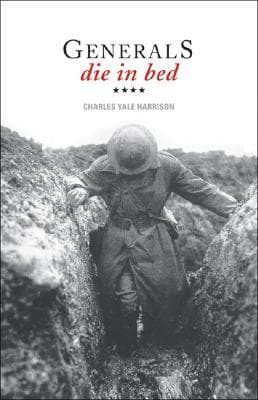
Synopsis
Covers the whole plot, including the ending.
- Difficulty
- Medium
- Pacing
- Moderate
- Mood
- Gritty, Bleak, Disillusioned, Raw, Realistic
- Read it if
- You want a raw, unflinching, and deeply personal account of the brutal realities of trench warfare in WWI, similar to 'All Quiet on the Western Front'.
- Skip it if
- You prefer war stories that focus on heroism, grand strategy, or have a more optimistic tone; this book is relentlessly grim.
Generals Die in Bed Plot Summary
Covers the whole plot, including the ending.
Enlistment and the Illusion of Glory
The story starts with the unnamed narrator, a young Canadian man, enlisting in the infantry during World War I. He is full of romantic ideas about war, believing it is a glorious adventure for national honor. He joins with his friend, Fred, and they are quickly put into rigorous training. The initial excitement is clear among the men, who want to prove their courage and help with the war. This early phase shows a contrast between their idealistic hopes and the growing reality of military discipline and being away from civilian life. The true horrors of the front are not yet known.
Journey to the Front and First Impressions
The narrator's company is shipped across the Atlantic and then travels by train through France, getting closer to the Western Front. The journey itself is a shift from training to combat. As they move closer, the landscape shows more war damage, with ruined villages and shell-pocked fields. They see wounded soldiers returning and the grim faces of veterans, which slowly chip away at their initial excitement. The atmosphere becomes heavy with unspoken dread, as the sounds of distant artillery become more frequent and ominous, signaling their arrival at the trenches.
Life in the Trenches: The Mundane and the Terrifying
At the front, the narrator immediately faces the brutal reality of trench warfare. His first experiences include the constant threat of enemy shelling, sniper fire, and gas attacks. The daily routine is a monotonous cycle of digging, sentry duty, and waiting, broken by moments of intense terror. He sees the terrible conditions: mud, rats, lice, and the smell of decay. The camaraderie among the soldiers helps them cope. They share meager rations and try to find humor in their grim situation. The psychological effect of being constantly near death and dismemberment begins, as the men's initial bravado turns into weary resignation.
First Encounters with Death and Despair
The narrator's first combat includes seeing many fellow soldiers die gruesomely. The idea of war quickly becomes a personal tragedy as he sees men he knows killed or badly wounded. A particularly strong event is the death of his friend, Fred, who dies from a shell. This loss is a turning point, ending any remaining romantic ideas about war. The narrator begins to understand that individual lives are expendable in the conflict. His initial patriotic zeal gives way to deep despair and the realization that their lives are pawns in a brutal, senseless game. The constant presence of death desensitizes some, while others are driven to madness.
The Horrors of a Major Offensive
The narrator's company is ordered to participate in a major attack, a frontal assault on enemy lines. This chapter clearly shows the chaos, terror, and immense casualties of such an action. They face intense artillery barrages, machine-gun fire, and hand-to-hand combat. The attack is a bloody, disorganized mess, with men falling all around him. The narrator describes the physical and psychological strain of advancing over open ground, stumbling over bodies, and facing an entrenched enemy. The objective, even if achieved, often seems small compared to the horrific cost in human lives. This reinforces the pervasive sense of futility among the surviving soldiers.
The Plight of the Wounded and the Retreat
After the disastrous attack, the narrator and his depleted company retreat, often under fire. The scenes of the wounded are particularly harrowing, with men left to die in no-man's-land or suffering agonizing injuries. Medical services are overwhelmed, and the lack of proper care adds to the misery. The retreat shows the breakdown of order and morale, as exhausted, shell-shocked men struggle to survive. The narrator sees the callousness war creates, where compassion for the dying is often overridden by the primal instinct for self-preservation, further eroding his humanity.
Brief Reprieve and the Cycle of War
Periodically, the company is pulled back from the front lines for rest. These breaks offer a temporary escape from the immediate danger of the trenches, allowing the men to clean themselves, get proper food, and experience some normal life. However, the mental scars of their experiences are always present. Many soldiers struggle with shell shock, nightmares, and a deep detachment from the civilian world. The narrator sees how these breaks only serve to prepare them for the next inevitable return to the front. This shows the cyclical and inescapable nature of their predicament.
Disillusionment with Authority and Leadership
As the war continues, the narrator and his fellow soldiers develop deep cynicism and resentment towards their officers and, especially, the distant generals. They see the leadership as detached from the brutal realities of the front, making decisions that lead to massive, often senseless, casualties. The phrase 'generals die in bed' becomes a bitter saying. It captures their belief that the high command orchestrates death from safety while common soldiers bear the brunt. This disillusionment extends to the broader political talk of the war, which they now see as empty propaganda meant to prolong their suffering.
Acts of Desperation and Survival
The extreme conditions of trench warfare push some soldiers to desperate measures. The narrator sees acts of self-mutilation by men desperate to escape the front and go home. Looting the dead, both friend and foe, becomes common, driven by necessity or a desperate search for small comforts. These actions, while morally questionable in civilian life, are shown as grim realities of survival in a dehumanizing environment. The thin layer of civilization erodes under constant pressure, revealing primal instincts when life itself is always threatened. This further shows the moral decay war causes.
The Enduring Trauma and Loss of Humanity
By the end of his time at the front, the narrator is deeply changed. He has lost his innocence, his faith in authority, and much of his former humanity. Constant exposure to violence, death, and suffering has left him emotionally numb and deeply traumatized. He thinks about the futility of it all, the senseless waste of life, and the permanent scars that will remain with him and his surviving comrades. The book ends not with a grand victory or a clear solution, but with the grim understanding that even if the war ends, the psychological war within the soldiers will continue indefinitely, leaving them forever marked by the horrors they endured.
Generals Die in Bed Characters
The Narrator (Unnamed)
Protagonist
A young Canadian soldier who experiences the brutal realities of World War I trench warfare firsthand.
The unnamed narrator serves as the reader's eyes and ears into the horrors of the Western Front. He begins as an idealistic, patriotic young man, full of romantic notions about war and duty. Through his experiences, he undergoes a profound transformation, losing his innocence and becoming deeply disillusioned with the military, its leadership, and the very concept of warfare. He is observant, reflective, and his internal monologue reveals the psychological toll of constant exposure to death and suffering. He is not a heroic figure in the traditional sense, but rather a representative of the common soldier, struggling for survival and grappling with the moral decay inflicted by war.
Relationships: Fred (Close friend and fellow recruit); His Fellow Soldiers (Comrades-in-arms, sharing a bond of shared suffering)
Fred
Supporting
The narrator's close friend and fellow recruit, whose early death profoundly impacts the narrator.
Fred is the narrator's closest friend at the beginning of the war, enlisting alongside him with similar youthful enthusiasm. He serves as a mirror to the narrator's initial idealism and represents the tragic loss of innocence and life that was commonplace on the front. His death, early in the narrative, is a pivotal moment for the narrator, shattering any remaining romantic illusions about combat. Fred's brief presence emphasizes the personal cost of war and makes the abstract concept of casualty painfully real for both the narrator and the reader. His memory lingers as a reminder of what was lost.
Relationships: The Narrator (Close friend and fellow recruit)
Sergeant Smith
Supporting
A grizzled, experienced sergeant who embodies the hardened, pragmatic reality of trench leadership.
Sergeant Smith is one of the narrator's immediate superiors, a veteran of the trenches who has long lost any illusions about the glory of war. He is tough, often harsh, but his actions are driven by a pragmatic desire to keep his men alive in impossible conditions. He represents the lower-level leadership that directly interacts with the soldiers, contrasting sharply with the distant, often incompetent, generals. Smith's cynicism and fatalism are infectious, reflecting the pervasive despair among the common soldiers. He is a survivor, hardened by his experiences, and often displays a brutal honesty about their predicament.
Relationships: The Narrator (Immediate superior, a figure of authority and experience); His Platoon (Responsible for their command and survival)
The Generals (Collective)
Antagonist/Mentioned
The distant, high-ranking officers who are perceived as incompetent and indifferent to the soldiers' suffering.
The 'Generals' are not individual characters but a collective representation of the high command. They are the unseen antagonists, making decisions from comfortable headquarters far from the front lines. The soldiers, including the narrator, view them with profound contempt and bitterness, believing them to be out of touch, self-serving, and responsible for the senseless slaughter. The title of the book itself, 'Generals Die in Bed,' encapsulates the soldiers' deep resentment towards those who orchestrate the war without experiencing its true horrors. They symbolize the vast chasm between leadership and those who fight and die.
Relationships: The Soldiers (Distant commanders, perceived as indifferent and incompetent)
The Other Soldiers (Collective)
Supporting
The diverse group of Canadian infantrymen who form the narrator's company and share his fate.
This collective represents the wide array of individuals forced together by war. They come from different backgrounds but are united by their shared suffering, fear, and the bonds of camaraderie forged in the trenches. They provide the narrator with companionship, shared humor, and mutual support. Their individual deaths contribute to the narrator's growing disillusionment, while their collective resilience and despair underscore the universal human experience of war. They are the backdrop against which the narrator's personal journey unfolds, each soldier a potential casualty or a source of fleeting comfort.
Relationships: The Narrator (Comrades, sharing a bond of shared suffering and survival)
The Wounded Soldiers
Mentioned
The countless injured and dying men, vividly depicted to highlight the physical horrors of war.
The wounded soldiers are not individual characters but a recurring motif that emphasizes the gruesome physical toll of combat. The narrator frequently encounters men with horrific injuries, left to suffer and often die in unimaginable pain. These descriptions are stark and unflinching, serving to strip away any romantic notions of heroism and expose the raw, brutal reality of battle. Their suffering underscores the inadequacy of medical care on the front and the sheer volume of human destruction. They are a constant, agonizing reminder of the price of war.
Relationships: The Narrator (Fellow soldiers, whose suffering he witnesses)
The Enemy Soldiers (Germans)
Antagonist/Mentioned
The unseen or briefly glimpsed German soldiers who are the target of the narrator's company.
The German soldiers are largely anonymous and faceless, primarily encountered as targets, shadows in no-man's-land, or the source of incoming fire. The narrator rarely interacts with them on a personal level, reinforcing the dehumanizing aspect of war where the 'enemy' is an abstract force rather than individual people. When they are seen, it's often in the context of combat or as dead bodies, highlighting the shared fate of soldiers on both sides. This portrayal emphasizes that the true enemy is often the war itself, rather than the opposing soldiers.
Relationships: The Narrator (Opposing combatants)
Generals Die in Bed Themes
The Brutality and Futility of War
This is the main theme, shown through the narrator's experiences. The book relentlessly depicts the horrific physical and psychological toll of trench warfare, emphasizing the senseless waste of life and resources. Scenes of mass casualties during frontal assaults, the constant threat of death, and the terrible conditions in the trenches all contribute to the message that war is not glorious but brutal, dehumanizing, and futile. The narrator's disillusionment reflects the broader anti-war feeling.
“Generals die in bed.”
Loss of Innocence and Disillusionment
The narrator begins the war with patriotic idealism, a common feeling among young recruits. However, his experiences at the front quickly remove these romantic notions. The death of his friend Fred, seeing countless atrocities, and the perceived incompetence of leadership lead to a deep loss of innocence and disillusionment. This theme explores how combat realities change individuals, replacing youthful optimism with cynicism, despair, and lasting trauma that forever alters their view of the world and humanity.
“All our illusions had been shattered. There was no glory here, only mud and blood and death.”
Class Divide and Incompetent Leadership
A significant theme is the contrast between the suffering of common soldiers and the perceived detachment and incompetence of the high command. The bitter saying 'generals die in bed' captures the soldiers' resentment towards officers who plan battles from safety, leading to massive casualties for seemingly small gains. This highlights a class divide within the military, where working-class soldiers are expendable pawns in a war directed by an elite who do not share their dangers or understanding of front-line realities. This creates deep distrust and cynicism.
“We were just so much cannon fodder, pushed forward by men who would never see the mud and blood.”
Dehumanization and Psychological Trauma
Constant exposure to violence, death, and squalor strips the soldiers of their humanity. They become desensitized to suffering, and the primal instinct for survival often overrides moral considerations. The book examines the psychological trauma of war, showing shell shock, nightmares, and the deep emotional numbness that affects the narrator and his comrades. This theme explores how extreme war conditions erode individual identity, leaving scars that last long after the fighting ends, forever changing those who experience it.
“We were no longer men, but animals, crawling in the mud, fighting for a moment's breath.”
Camaraderie and Survival
Amidst the horrors, a strong bond of camaraderie forms among the soldiers. Sharing their daily struggles, fears, and small moments of humor is essential for psychological survival. This theme shows how mutual support, shared understanding, and a sense of collective identity become vital coping mechanisms against overwhelming despair. This brotherhood, forged in combat, is often the only source of comfort and meaning in an otherwise meaningless and brutal existence. It contrasts sharply with the indifference of their superiors.
“It was only among ourselves that there was any understanding, any shred of humanity left.”
Plot Devices & Literary Techniques
First-Person Narration
Provides an immediate, subjective, and visceral account of trench warfare.
The entire novel is told through the eyes of an unnamed Canadian soldier, offering an intensely personal and unfiltered perspective on the horrors of World War I. This allows the reader to experience the psychological and physical toll of war directly, fostering empathy and making the narrative feel authentic and immediate. The subjective nature of the narration emphasizes the narrator's evolving disillusionment and trauma, making the anti-war message particularly powerful as it unfolds through his lived experience rather than an objective overview.
Ironic Title
Highlights the stark contrast between the safety of generals and the deaths of common soldiers.
The title, 'Generals Die in Bed,' is a bitter and ironic commentary on the class divide and perceived incompetence of military leadership during World War I. It encapsulates the soldiers' deep resentment that those who orchestrate the war from comfort rarely face the same dangers as the men they command. This phrase becomes a recurring motif, symbolizing the ultimate futility and injustice of the conflict from the perspective of the front-line soldier, serving as a constant reminder of the expendability of their lives.
Sensory Imagery
Immerses the reader in the squalor, sounds, and sights of the trenches.
Harrison employs vivid and often gruesome sensory imagery to convey the brutal reality of trench warfare. Descriptions of mud, rats, the stench of decay, the screams of the wounded, the deafening roar of artillery, and the sight of dismembered bodies create an immersive and visceral experience for the reader. This unflinching detail is crucial in stripping away any romantic notions of war, bringing the reader face-to-face with the physical and psychological horrors that the soldiers endured, making the anti-war message deeply impactful.
Unnamed Protagonist
Allows the narrator to represent the universal experience of the common soldier.
By leaving the protagonist unnamed, Harrison allows him to serve as an everyman, representing the collective experience of countless soldiers who fought and suffered in World War I. This anonymity makes his journey from idealism to disillusionment feel more universal and relatable, emphasizing that his trauma and experiences were not unique but shared by a generation. It prevents the reader from focusing on individual heroism and instead highlights the impersonal, dehumanizing nature of the war itself.
Repetitive Cycle of Combat and Rest
Underscores the relentless and inescapable nature of trench warfare.
The narrative often follows a cyclical pattern of intense combat, followed by brief, inadequate periods of rest behind the lines, only to return to the front. This structural device emphasizes the relentless, grinding nature of trench warfare and the inescapable cycle of violence and trauma. It highlights the futility of their efforts, as any gains are often negligible, and the temporary respites offer no true escape from the psychological scars, reinforcing the sense of being trapped in an endless, meaningless conflict.
Generals Die in Bed Quotes
“Generals die in bed.”
“We are the dead. Short days ago we lived, felt dawn, saw sunset glow, loved and were loved, and now we lie in Flanders fields.”
“War is hell, but that's not the half of it, because war is also mystery and terror and adventure and courage and discovery and holiness and pity and despair and longing and love.”
“We are not heroes. We are survivors.”
“The rats are our only companions.”
“I have learned that man is a beast.”
“We fight for nothing. We die for nothing.”
“The only peace is in the grave.”
“They call it shell shock. I call it sanity.”
“We are all brothers in the mud.”
“The sky is the color of a bruise.”
“I have forgotten how to laugh.”
“Every man carries his own grave with him.”
“The war has made ghosts of us all.”
Quiz
10 questions on the plot and the characters. Each answer comes with a short explanation.
Question 1
What is the primary setting for most of the novel's action?
- The French countryside behind the lines
- The trenches of the Western Front
- A military hospital in England
- German prisoner of war camps
Show answer
B. The trenches of the Western Front The novel is primarily set in the trenches of the Western Front during World War I, where the unnamed narrator and his fellow soldiers experience the brutal realities of trench warfare, including mud, rats, lice, and constant danger from shelling and attacks.
Question 2
What is the narrator's attitude toward the generals and officers as suggested by the title?
- They are heroic leaders who inspire the troops
- They are incompetent and distant from the soldiers' suffering
- They are fellow soldiers who share the same risks
- They are political figures unrelated to the war effort
Show answer
B. They are incompetent and distant from the soldiers' suffering The title 'Generals Die in Bed' reflects the narrator's cynical view that generals are safe and comfortable far from the front lines, unlike ordinary soldiers who die in the trenches. This highlights the theme of the disconnect between command and the brutal reality faced by troops.
Question 3
What happens during the narrator's leave in London that emphasizes the theme of alienation?
- He is celebrated as a hero by the public
- He finds it impossible to relate to civilians who don't understand the war
- He decides to desert and not return to the front
- He meets a general who apologizes for the conditions
Show answer
B. He finds it impossible to relate to civilians who don't understand the war During his leave in London, the narrator feels isolated and alienated because civilians have no comprehension of the horrors he has experienced in the trenches. This underscores the novel's theme of the gap between those who fight and those at home.
Question 4
What is a key event during the Canadian raid that the narrator participates in?
- The narrator captures a high-ranking German officer
- The narrator kills a German soldier in a moment of brutal hand-to-hand combat
- The raid is called off due to bad weather
- The narrator is awarded a medal for bravery
Show answer
B. The narrator kills a German soldier in a moment of brutal hand-to-hand combat During a raid on German trenches, the narrator stabs a German soldier to death with a bayonet, an act that haunts him and illustrates the dehumanizing violence of war, stripping away any sense of glory.
Question 5
How does the novel depict the relationship between the soldiers in the trenches?
- As highly disciplined and focused on military hierarchy
- As a bond of camaraderie amidst shared suffering and fear
- As competitive and distrustful due to scarce resources
- As largely solitary with little interaction
Show answer
B. As a bond of camaraderie amidst shared suffering and fear The soldiers form close bonds out of necessity, relying on each other for survival and emotional support in the face of constant danger, which contrasts with the impersonal and often cruel command structure.
Question 6
What role does the character Brown play in the novel?
- He is a general who visits the trenches
- He is a fellow soldier and friend of the narrator who is killed
- He is a medical officer who treats the narrator's wounds
- He is a German prisoner taken during a raid
Show answer
B. He is a fellow soldier and friend of the narrator who is killed Brown is a close comrade of the narrator who dies in the trenches, representing the arbitrary and tragic loss of life in war. His death deeply affects the narrator, emphasizing the personal cost of conflict.
Question 7
What is a significant detail about the narrative style of 'Generals Die in Bed'?
- It is written in the third person with an omniscient narrator
- It uses a first-person, present-tense perspective to create immediacy
- It includes extensive historical footnotes and dates
- It is structured as a series of letters home from the front
Show answer
B. It uses a first-person, present-tense perspective to create immediacy The novel employs a first-person, present-tense narrative, putting readers directly into the moment-to-moment experiences of the soldier, which enhances the raw and visceral impact of the story.
Question 8
What does the narrator's experience in the hospital after being wounded reveal about the war?
- That medical care is efficient and soldiers recover quickly
- That even behind the lines, suffering and death are pervasive
- That soldiers are eager to return to the front after treatment
- That generals personally visit wounded troops
Show answer
B. That even behind the lines, suffering and death are pervasive The hospital scenes show that injury and death extend beyond the trenches, with soldiers dying from wounds and disease, further underscoring the omnipresent horror of war and the lack of escape from its consequences.
Question 9
How does the novel challenge the notion of patriotism and glory in war?
- By showing soldiers enthusiastically fighting for their country
- By depicting war as a senseless, brutal struggle with no noble purpose
- By highlighting successful military strategies and victories
- By focusing on political leaders who justify the war
Show answer
B. By depicting war as a senseless, brutal struggle with no noble purpose Through graphic descriptions of trench life, random death, and psychological trauma, the novel strips away any romanticized ideas of war, presenting it as a meaningless and dehumanizing experience that contradicts propaganda about glory and patriotism.
Question 10
What is implied by the ending of the novel regarding the narrator's fate?
- He deserts the army and finds peace in civilian life
- He is killed in action during a final battle
- He returns to the front, resigned to the endless cycle of war
- He is promoted to an officer position
Show answer
C. He returns to the front, resigned to the endless cycle of war The novel ends ambiguously but suggests the narrator goes back to the trenches, trapped in the relentless and hopeless machinery of war, reflecting the theme of soldiers as powerless pawns with no escape from the conflict.
Generals Die in Bed FAQ
What is 'Generals Die in Bed' about?
The novel follows an unnamed Canadian soldier's harrowing experiences on the Western Front during World War I, depicting the brutal realities of trench warfare, from lice-infested dugouts and constant shelling to the psychological toll of combat. Through episodic vignettes, it shows soldiers dealing with hunger, fear, and the arbitrary nature of death, culminating in the devastating Battle of Amiens.
Why should I read 'Generals Die in Bed'?
As one of the earliest and most visceral anti-war novels from WWI, it offers an unflinching, first-hand perspective that shatters romanticized notions of combat. Its raw, immediate prose and focus on the soldier's daily suffering make it a powerful historical document and a timeless critique of war's human cost.
What is the background/setting of 'Generals Die in Bed'?
Set primarily in the trenches of the Western Front from 1917-1918, the novel moves through locations like the Ypres Salient and the Somme, with scenes in training camps, field hospitals, and French villages. The backdrop is the grinding stalemate of trench warfare, marked by mud, rats, and relentless artillery.
What are the most memorable quotes?
Notable lines include the ironic title phrase, which underscores the disconnect between frontline soldiers and distant commanders, and descriptions like 'We are not soldiers, we are prisoners' capturing the helplessness of trench life. The narrator's reflection, 'I have learned that war is not glorious; it is dirty, painful, and futile,' distills the book's central theme.
What writing style does the author use?
Harrison employs a stark, journalistic style with short, declarative sentences and vivid sensory details, creating an immersive, almost documentary feel. The episodic structure mimics the fragmented, chaotic experience of war, while the first-person narration lends intimacy and immediacy to the horror.
What minor details add significant meaning?
Details like soldiers obsessively delousing themselves or trading cigarettes for food highlight the degradation of daily life, while the constant presence of rats and mud symbolizes the pervasive decay. The narrator's focus on small comforts, like a stolen chicken or a dry pair of socks, underscores how survival hinges on trivialities.
What are some subtle foreshadowing moments?
Early scenes of training and boredom foreshadow the sudden violence to come, such as the calm before the Battle of Amiens. The narrator's detached descriptions of dead comrades—like Brown, who is shot while standing sentry—hint at his growing emotional numbness and the arbitrary nature of death.
What unexpected character connections exist?
The bond between the narrator and his friend Broadbent, who shares moments of dark humor and mutual support, contrasts with the impersonal relationships with officers. The fleeting connections with French civilians, such as a woman who offers food, highlight the divide between the war front and the home front.
What are unspoken character motivations?
The narrator and his comrades are driven not by patriotism or glory, but by primal instincts like survival, camaraderie, and a desire to endure the next hour. Officers' motivations often remain opaque, reflecting the soldiers' view of them as distant figures more concerned with orders than lives.
What psychological complexities do characters exhibit?
Soldiers display a range of responses, from the narrator's gradual desensitization and existential despair to moments of panic, superstition, and gallows humor. Characters like Broadbent show resilience through joking, while others break down under stress, illustrating war's uneven psychological toll.
What are the major emotional turning points?
Key moments include the first combat death, which shatters any illusion of safety; the narrator's participation in a brutal raid where he kills a German soldier face-to-face, causing deep guilt; and the death of his friend Broadbent during the Amiens offensive, which intensifies his sense of loss and futility.
How do relationship dynamics evolve?
Camaraderie among soldiers deepens through shared suffering, but trust is fragile, as seen in tensions over scarce resources or the betrayal felt when officers' decisions lead to needless deaths. The narrator's relationship with authority grows increasingly cynical, moving from obedience to silent resentment.
Which parts remain ambiguous or open-ended?
The narrator's ultimate fate is left unclear—whether he survives the war or is permanently broken by it. The moral ambiguity of actions like killing in close combat or looting from the dead is presented without judgment, inviting readers to grapple with the ethics of survival in extreme circumstances.
What are controversial scenes or decisions?
Scenes like the graphic depiction of the raid, where soldiers kill enemies at close range and take souvenirs, challenge notions of wartime heroism. The narrator's moments of cowardice or indifference, such as when he ignores a dying comrade, provoke debate about human behavior under duress.
'Generals Die in Bed' ending explained: how it ends & what it means
The novel ends with the narrator wounded and disillusioned after the Battle of Amiens, reflecting on the meaningless slaughter and the title's irony—generals die safely in bed while soldiers perish horribly. This conclusion reinforces the book's anti-war message, emphasizing the futility and injustice of conflict as experienced by ordinary men.
About the author

Charles Yale Harrison was an American novelist best known for his harrowing anti-war novel, "Generals Die in Bed" (1930). This semi-autobiographical work vividly depicted the brutal realities of trench warfare during World War I, drawing from Harrison's own experiences as a soldier. The book achieved significant critical and commercial success, cementing Harrison's reputation as a powerful voice against the futility of war.
Similar books
- All Quiet on the Western Front
Erich Maria Remarque
4.0 (355k) average on GoodreadsHistorical FictionBoth offer a stark, first-person perspective on the horrors and futility of trench warfare in WWI.
- A Farewell to Arms
Ernest Hemingway
3.8 (263k) average on GoodreadsHistorical FictionExplores the disillusionment with war and the search for meaning amidst its brutality, though with a different focus.
- Johnny Got His Gun
Dalton Trumbo
4.2 (34k) average on GoodreadsPoliticsA powerful anti-war novel depicting extreme suffering and the dehumanizing effects of conflict.
- To Kill a Mockingbird
Harper Lee
4.3 (4.5M) average on GoodreadsHistorical FictionIn the 1930s Jim Crow South, Harper Lee writes about racial injustice, moral growth, and the quiet courage of a lawyer father, Atticus Finch, as seen through his young daughter's eyes.
- The Great Gatsby
F. Scott Fitzgerald
3.9 (3.8M) average on GoodreadsHistorical FictionIn the opulent Roaring Twenties, a mysterious millionaire's lavish parties hide his desperate, tragic pursuit of a lost love, exposing the emptiness within the American Dream.
- Pride and Prejudice
Jane Austen
4.3 (3M) average on GoodreadsHistorical FictionIn a society focused on status and money, Elizabeth Bennet navigates love and pride, challenging Mr. Darcy and social expectations to find true affection.





Enjoyed the summary?
A summary gives you the shape of the book. The book itself has the detail, the examples and the voice.
Find Generals Die in Bed on AmazonAs an Amazon Associate, BookBrief earns from qualifying purchases. How we're funded