

Synopsis
Covers the whole plot, including the ending.
- Difficulty
- Medium
- Pacing
- Moderate
- Mood
- Atmospheric, Melancholy, Reflective, Thought-provoking
- Read it if
- You appreciate literary fiction that explores the complexities of race, betrayal, and the power of memory against a historical backdrop of war and jazz music.
- Skip it if
- You prefer fast-paced thrillers or stories with clear-cut heroes and villains, or find non-linear narratives challenging.
Half Blood Blues Plot Summary
Covers the whole plot, including the ending.
The Invitation to Berlin
In 1992, Sidney 'Sid' Griffiths, living quietly in Baltimore, gets a call from his old bandmate, Paul 'Chip' Abernathy. Chip, now a musician, invites Sid to Berlin for a documentary premiere about Hieronymus 'Hiero' Falk, their trumpet player who vanished in Nazi-occupied Paris in 1940. Sid hesitates, haunted by the past and his part in Hiero's fate. Chip insists, hinting at new information about Hiero's disappearance. Sid agrees, driven by curiosity, guilt, and Hiero's lasting influence. The trip forces Sid to face memories he has avoided for decades, especially the events leading to Hiero's arrest.
Arrival in Berlin and the Mysterious Letter
In Berlin, Sid and Chip experience the city's lively, history-rich atmosphere. Chip then reveals the real reason for their trip: a letter, supposedly from Hiero, found among a recently deceased German woman's belongings. The letter, though unclear, suggests Hiero might have survived the war and implies a deep betrayal. This news disturbs Sid, making him question everything he thought he knew about Hiero's disappearance. The letter starts a new investigation for Sid and Chip, but also creates tension between them as they interpret its meaning differently, especially regarding who might have betrayed Hiero.
Flashback to Paris, 1939: The Hot-Shots
The story flashes back to 1939 Paris. Sid, Chip, and Hiero, with other musicians, form 'The Hot-Shots,' a jazz band of Black German and American expatriates. They are young, ambitious, and love their music, finding a temporary home in the city's jazz scene, despite the growing threat of war. Hiero, a trumpet prodigy, is the band's star, his talent both inspiring and intimidating. Sid, a bassist, admires Hiero but also feels envy. This period shows the band's close friendships, shared dreams, and the rising political tensions that start to affect their art and safety as the Nazi regime gains power in Europe.
Meeting Delilah and the Love Triangle
The band's dynamic changes with Delilah, a beautiful and mysterious singer. Both Hiero and Sid are drawn to her, creating an unspoken rivalry. Delilah adds a new layer to their music, but also brings emotional complications and jealousy. Hiero and Delilah quickly start a passionate relationship, leaving Sid on the sidelines with his unrequited feelings. This love triangle becomes a background tension, subtly affecting their interactions and decisions, and setting up future conflicts and resentments, especially from Sid, who feels more overshadowed by Hiero in both music and love. Delilah's charm also represents a brief sense of normalcy and beauty amidst the growing wartime darkness.
The Nazi Occupation and Growing Danger
As Germans occupy Paris in 1940, the band's situation becomes more dangerous. Jazz, called 'degenerate music' by the Nazis, is forbidden, and Black people face severe persecution. The Hot-Shots go underground, playing in secret clubs and constantly fearing arrest. Their camaraderie starts to break under the immense pressure. Sid, Chip, and Hiero, as German citizens of color, are especially vulnerable. This period shows the harsh reality of life under Nazi rule, where artistic expression is suppressed, and racial identity is a target. The constant threat of discovery and the psychological toll of living in fear begin to wear down their spirits and test their loyalty.
Hiero's Arrest and Sid's Witness
The inevitable happens. In a tense scene, German soldiers arrest Hiero in a café. Sid is nearby, hiding, and sees the entire event. Overwhelmed by fear and helplessness, Sid does not intervene, a choice that will haunt him for life. Hiero is taken away, never seen again by his friends. This moment of Hiero's disappearance is the novel's main trauma, ending the band's dreams and starting Sid's lasting guilt. The unclear circumstances of the arrest, and Sid's inaction, become the central mystery the present-day story tries to solve.
Post-War Lives and Buried Secrets
After Hiero's disappearance, the band separates. Sid and Chip eventually go to America, where their paths diverge. Chip, driven by ambition, becomes a successful, though commercial, musician, carefully managing his public image. Sid, however, struggles, haunted by his memories and unable to escape Hiero's influence and his own perceived failure. He plays smaller gigs, his talent never quite reaching its full potential. The unspoken tension between them about Hiero's fate festers for decades, a silent divide caused by their shared past and different ways of coping. Both men carry secrets, but Sid's guilt is particularly heavy, shaping his secluded life.
The Documentary Premiere and Public Scrutiny
In 1992 Berlin, the documentary about Hiero premieres, bringing The Hot-Shots' story and Hiero's disappearance to a wider audience. Sid and Chip are prominent, with their different accounts and subtle avoidances highlighted. The film, while celebrating Hiero's talent, also implicitly raises questions about his arrest and his bandmates' loyalty. This public scrutiny forces Sid and Chip to confront their past stories and each other. The film acts as a catalyst, breaking decades of silence and making them re-examine their memories, especially with the mysterious letter and Chip's growing suspicions about Sid's involvement.
The Search for Truth and Delilah's Return
As Sid and Chip investigate further, they meet Delilah, Hiero's former lover, now a famous singer in Europe. Her unexpected return adds an emotional layer to their search. Delilah, still beautiful and mysterious, has her own version of the past, and her presence reawakens old jealousies and unresolved feelings between Sid and Chip. Her perspective offers important insights, but also adds more uncertainty, as her memories and interpretations differ from theirs. Delilah's return forces Sid to face his unrequited love for her and the painful truth of her deep connection to Hiero, further complicating his emotions as he seeks answers.
The Unveiling of the Betrayal
Through intense conversations, flashbacks, and piecing together information, the truth about Hiero's disappearance slowly comes out. Sid, driven by a mix of jealousy, professional envy, and unrequited love for Delilah, betrayed Hiero to the authorities. His actions, from a moment of weakness and resentment, directly led to Hiero's arrest. This devastating revelation shatters Sid's carefully built life and the long-held myth of Hiero's purely tragic disappearance. The betrayal is exposed as a human failing, a moment of deep weakness with terrible consequences.
Confrontation and Aftermath
The truth of Sid's betrayal leads to a painful confrontation with Chip and Delilah. The emotional impact is huge, as decades of suppressed anger, grief, and resentment erupt. Sid must fully acknowledge his actions and their devastating impact on Hiero, the band, and his own life. The story ends with Sid dealing with the results of his confession, facing the scorn of his former friends, and the immense burden of his guilt. While Hiero's disappearance is solved, the resolution brings little comfort, showing the lasting scars of betrayal and the impossibility of truly escaping one's past. Sid's future is uncertain, but forever changed by his confession.
Half Blood Blues Characters
Sidney 'Sid' Griffiths
Protagonist
The aging bassist haunted by his past and a pivotal betrayal.
Sidney Griffiths is the novel's primary narrator and an aging jazz bassist. In 1992, he lives a reclusive life in Baltimore, constantly overshadowed by the ghost of Hieronymus Falk and his own unfulfilled musical potential. He is a man burdened by guilt, having witnessed Hiero's arrest and, as is eventually revealed, having played a direct role in it. Sid is observant, introspective, and deeply empathetic, but also prone to jealousy and resentment. His narrative is infused with a melancholic longing for the past and a desire for absolution, even as he struggles to confront the truth of his own actions.
Relationships: Hieronymus Falk (Bandmate, rival, object of both admiration and jealousy, victim of his betrayal.); Paul 'Chip' Abernathy (Lifelong friend, bandmate, later his accuser and catalyst for truth.); Delilah (Unrequited love, Hiero's lover, a source of both beauty and pain.)
Hieronymus 'Hiero' Falk
Central Figure/Catalyst
The enigmatic, prodigious black German trumpeter whose disappearance drives the narrative.
Hieronymus Falk is the legendary trumpeter of 'The Hot-Shots,' a musical genius whose talent is both awe-inspiring and intimidating. He is charismatic, passionate about his music, and fiercely independent, but also somewhat naive to the political dangers surrounding him. Hiero embodies the vibrant spirit of jazz and the tragic vulnerability of black artists in Nazi-occupied Europe. His disappearance in 1940 is the central mystery of the novel, and his memory continues to exert a powerful influence over Sid and Chip, shaping their lives and ultimately forcing a confrontation with the past. He is the catalyst for the entire story, even in his absence.
Relationships: Sidney Griffiths (Bandmate, friend, rival, ultimately betrayed by him.); Paul 'Chip' Abernathy (Bandmate, friend, admirer of his talent.); Delilah (Lover, muse, deep emotional connection.)
Paul 'Chip' Abernathy
Supporting Character/Antagonist
Sid's ambitious bandmate, who instigates the return to Berlin and seeks the truth.
Paul 'Chip' Abernathy is Sid's lifelong friend and bandmate. Unlike Sid, Chip achieves commercial success after the war, becoming a polished and somewhat self-serving musician. He is pragmatic, driven, and initially appears to be the more stable and successful of the two. However, Chip also carries the burden of Hiero's disappearance and is determined to uncover the truth, even if it means exposing painful secrets. He acts as the catalyst for Sid's journey back to Berlin, pushing him to confront their shared past. Chip's ambition and his desire to control the narrative often clash with Sid's more introspective nature.
Relationships: Sidney Griffiths (Lifelong friend, bandmate, later his accuser.); Hieronymus Falk (Bandmate, friend, admirer of his talent, driven to uncover the truth of his disappearance.); Delilah (Acquaintance from the band, fellow mourner of Hiero.)
Delilah
Supporting Character
The beautiful, enigmatic singer who becomes Hiero's lover and a source of rivalry.
Delilah is a captivating and talented singer who joins 'The Hot-Shots' in Paris. She is beautiful, confident, and possesses a magnetic allure that draws both Hiero and Sid to her. She becomes Hiero's lover, forming a deep and passionate connection that fuels Sid's jealousy. Delilah is a survivor, navigating the dangerous landscape of wartime Europe with resilience. Her reappearance in 1992 brings a new dimension to the search for Hiero, as she holds her own memories and interpretations of the past. She represents both the romantic ideal and the harsh realities faced by black artists during the war.
Relationships: Hieronymus Falk (Lover, muse, deep emotional connection.); Sidney Griffiths (Object of his unrequited love, bandmate.); Paul 'Chip' Abernathy (Acquaintance from the band.)
Ernst
Supporting Character/Mentioned
The German club owner who provides a haven for the band.
Ernst is the German owner of the Parisian jazz club where 'The Hot-Shots' often perform. He is a sympathetic figure who provides a safe space for the black musicians, even as the political climate grows increasingly hostile. Ernst represents a glimmer of humanity and resistance against the Nazi regime's oppression. His club becomes a symbol of artistic freedom and camaraderie, a brief sanctuary from the outside world. He is a minor character but his role is crucial in establishing the atmosphere of defiance and community that the band experiences before the full impact of the occupation.
Relationships: The Hot-Shots (Employer, protector, supporter of their music.)
Klaus
Mentioned
A minor band member, reflecting the broader group.
Klaus is another member of 'The Hot-Shots,' a saxophonist. He is not as developed as Sid, Chip, or Hiero, but serves to illustrate the broader composition of the band and the shared experiences of the black musicians in Paris. His presence reinforces the sense of community and shared vulnerability among the group as they face the increasing dangers of the Nazi occupation. Klaus, like other minor characters, helps to paint a fuller picture of the collective struggle and camaraderie within the band.
Relationships: The Hot-Shots (Bandmate.)
Half Blood Blues Themes
Betrayal and Guilt
The main theme is Sid's betrayal of Hiero, caused by jealousy and resentment. This betrayal haunts Sid for fifty years, showing as deep guilt and a life lived in his past's shadow. The novel explores guilt's destructive power, how it shapes identity, and the long-term psychological impact of one fateful decision. The act itself is not pure malice, but a complex human failing, born from envy, unrequited love, and wartime pressures. Sid's eventual confession, though painful, is an attempt to free himself from this lifelong burden.
“What you don't remember, you can't undo.”
The Power of Music and Art
Jazz music is more than just a setting; it is a character, representing freedom, identity, and resistance. For 'The Hot-Shots,' music is essential, a way to express themselves and connect with others in a world that tries to silence them. The Nazi regime's condemnation of jazz as 'degenerate' highlights its subversive power. Hiero's trumpet playing is often described in almost spiritual terms, showing genius and defiance. Even after Hiero's disappearance, music remains important in Sid and Chip's lives, reminding them of their shared past and lost potential.
“That's the thing about jazz, it's a conversation. A very beautiful, intricate, complicated conversation.”
Memory, Narrative, and Truth
The novel explores how memory is subjective and how personal stories are built and changed over time. Sid's narration is filtered through his guilt and self-justification, making the 'truth' hard to find. The documentary about Hiero, Chip's version of events, and Delilah's memories all offer different perspectives, showing that history is not one thing but a collection of individual stories. The novel asks who has the right to tell a story, especially when the main subject is gone, and how telling a story can either keep a lie going or finally reveal a painful truth. The search for the 'true' story of Hiero's disappearance drives the plot.
“The past is a story we tell ourselves. And sometimes, we tell it wrong.”
Racial Identity and Persecution in Wartime Europe
The experience of Black German and American musicians in Nazi-occupied Paris is an important theme. The novel shows the double danger these characters faced: being Black in a racist regime and being artists whose music was deemed 'degenerate.' Their vulnerability, fear, and constant threat of arrest are clear throughout the flashbacks. This theme emphasizes the widespread and often overlooked racial aspect of Nazi atrocities, extending beyond Jewish persecution to include other marginalized groups. The characters' struggle for survival and dignity against systemic racism and violence is central to their story.
“We were ghosts, you see. Already disappeared. Not even a footprint in the snow.”
Friendship and Rivalry
The complex relationship between Sid, Hiero, and Chip forms the novel's emotional core. Their bond is made strong by a shared love for music and mutual respect, yet it is also strained by professional jealousy, unrequited love, and different ambitions. Sid's envy of Hiero's talent and his love for Delilah ultimately leads to his betrayal, breaking their friendship. The novel explores how these intricate dynamics can lead to both deep loyalty and devastating acts of betrayal, and how the scars of such rivalries can last for decades, shaping individual lives and collective memories.
“Friendship, I learned, could be as treacherous as any enemy.”
Plot Devices & Literary Techniques
Dual Narrative Structure
Alternating between 1992 Berlin and 1939-1940 Paris.
The novel skillfully employs a dual narrative structure, switching between Sid's present-day journey to Berlin in 1992 and flashbacks to his time with Hiero and Chip in Paris during 1939-1940. This allows the author to build suspense around Hiero's disappearance while simultaneously exploring the emotional and psychological impact of those events on Sid in the present. The past informs the present, and the present's search for truth reframes the memories of the past, creating a rich, layered reading experience that slowly unravels the central mystery.
Unreliable Narrator
Sidney Griffiths's perspective is colored by guilt and self-preservation.
Sidney Griffiths serves as the primary narrator, but his account is revealed to be unreliable. Haunted by guilt and driven by a need to protect himself, Sid's memories and interpretations of events are subtly (and sometimes overtly) biased. This device forces the reader to question his perspective, piece together the truth from conflicting accounts, and actively engage in the process of discerning what truly happened. It emphasizes the subjective nature of memory and how individuals construct their own versions of history, especially when painful truths are involved, making the eventual revelation of his betrayal more impactful.
The Mysterious Letter
A cryptic letter from Hiero that acts as the catalyst for the present-day investigation.
The discovery of a letter, purportedly from Hiero, fifty years after his disappearance, serves as the main inciting incident for the 1992 narrative. This letter is cryptic and open to interpretation, hinting at Hiero's survival and a betrayal. It acts as a powerful MacGuffin, propelling Sid and Chip back to Berlin and forcing them to confront their past. The letter's ambiguity fuels the plot, creating suspense and driving the characters' search for answers, ultimately leading to the painful unveiling of the truth behind Hiero's fate and Sid's role in it.
Jazz Music as Metaphor
The improvisational and collaborative nature of jazz reflects the characters' lives.
Jazz music is not merely a setting but a profound metaphor throughout the novel. Its improvisational nature reflects the characters' lives under Nazi occupation – constantly adapting, taking risks, and finding ways to express themselves despite oppression. The 'conversation' of jazz mirrors the complex relationships within the band, full of unspoken tensions, harmonies, and dissonances. The music also represents a form of resistance and identity for the black musicians, a defiant act against a regime that sought to silence and erase them. The loss of Hiero, the trumpeter, symbolizes the silencing of a unique, vibrant voice.
Half Blood Blues Quotes
“The past is a country we can never return to, but we carry its passport in our pockets.”
“Music, for me, it was always a way of telling the truth. The only way.”
“Some men are born to be stars, others to watch them burn.”
“The trouble with history, you see, is that it is told by the victors. And the survivors.”
“That's the thing about Berlin, it keeps all its scars visible. A city that never quite heals.”
“You can't escape who you are, no matter how far you run.”
“The notes, they were like birds, each one taking flight, then circling back to join the flock.”
“Loyalty is a funny thing. You think you have it, then it slips through your fingers like smoke.”
“We were just kids, playing music, trying to make sense of a world that didn't want us.”
“Sometimes, the biggest lie is the one you tell yourself.”
“He played with a fire, a desperation, that could burn a hole through the world.”
“The silence after the music, that's where the real story lives.”
“You never truly know a man until you've seen him lose everything.”
“Every note was a question, and every silence the answer, or the lack of one.”
Quiz
10 questions on the plot and the characters. Each answer comes with a short explanation.
Question 1
What is the primary reason Hieronymus Falk is arrested in Paris in 1940?
- He was caught collaborating with the French Resistance.
- He was a German citizen and black, making him a target under Nazi occupation.
- He was involved in a public brawl at a cabaret.
- He was attempting to flee Paris without proper documentation.
Show answer
B. He was a German citizen and black, making him a target under Nazi occupation. Hiero's arrest is a direct consequence of his identity: a German citizen of African descent in Nazi-occupied Paris, making him a 'Rhineland Bastard' and a target for persecution.
Question 2
Who persuades Sid to return to Berlin fifty years after Hiero's disappearance?
- Louis Armstrong
- Delilah
- Chip
- Amandine
Show answer
C. Chip Sid's old bandmate and friend, Chip, is the one who convinces him to go back to Berlin, initially under the pretense of a documentary.
Question 3
What is the name of the jazz club where Hiero and Sid's band often performed in Paris?
- The Blue Note
- Le Caveau de la Huchette
- Le Serpent
- The Cotton Club
Show answer
C. Le Serpent Le Serpent is the iconic jazz club in Paris where the Hot-Time Swingers, Hiero and Sid's band, were making a name for themselves before the war.
Question 4
What significant item does Chip share with Sid that hints at deeper secrets about Hiero's fate?
- An old photograph of Hiero with a mysterious woman.
- A newly discovered recording of Hiero's lost music.
- A mysterious letter.
- Hiero's original birth certificate.
Show answer
C. A mysterious letter. Chip reveals a mysterious letter, which is the catalyst for uncovering the long-buried secrets surrounding Hiero's disappearance and the true purpose of their trip.
Question 5
What major thematic concern is highlighted by the phrase 'if you don't tell your story, someone else might tell it for you. And they just might tell it wrong'?
- The importance of musical improvisation.
- The unreliability of memory and the power of narrative control.
- The fleeting nature of fame.
- The universal appeal of jazz music.
Show answer
B. The unreliability of memory and the power of narrative control. This phrase directly addresses the novel's central theme of narrative authority, the subjective nature of truth, and the consequences of silence or omission, especially regarding historical events and personal betrayals.
Question 6
What is the relationship between Sid and Hiero within the band, beyond being bandmates?
- They were bitter rivals competing for solos.
- Sid was Hiero's mentor and teacher.
- Sid harbored a mix of admiration, jealousy, and eventually, guilt towards Hiero.
- They were distant acquaintances who rarely spoke outside of performances.
Show answer
C. Sid harbored a mix of admiration, jealousy, and eventually, guilt towards Hiero. Sid's narrative is deeply colored by his complex feelings for Hiero, encompassing admiration for his genius, professional jealousy, and profound guilt over his own actions and perceived inaction during Hiero's arrest.
Question 7
What is the name of the documentary project that initially brings Sid back to Europe?
- Jazz in Exile
- The Berlin Blues
- Half-Blood Blues: The Hiero Falk Story
- Lost Notes of Paris
Show answer
C. Half-Blood Blues: The Hiero Falk Story The documentary, 'Half-Blood Blues: The Hiero Falk Story,' is the stated reason for Sid's return to Europe, although Chip has a more personal agenda.
Question 8
Which historical event forms the backdrop for the initial disappearance of Hieronymus Falk?
- The rise of the Harlem Renaissance.
- The German occupation of Paris during World War II.
- The Great Depression in America.
- The Spanish Civil War.
Show answer
B. The German occupation of Paris during World War II. Hiero's arrest and disappearance occur in the immediate aftermath of the fall of Paris in 1940, placing him squarely in the context of Nazi Germany's occupation and persecution of 'undesirables.'
Question 9
What is the central ethical dilemma faced by Sid and Chip regarding Hiero's story?
- Whether to continue playing jazz or switch to classical music.
- How to reconcile their own complicity and silence with Hiero's legacy.
- Whether to reveal their past romantic relationships with Hiero.
- How to profit financially from Hiero's rediscovered music.
Show answer
B. How to reconcile their own complicity and silence with Hiero's legacy. The novel delves into the moral complexities of how Sid and Chip dealt with Hiero's arrest, their subsequent silence, and their roles in shaping (or distorting) his posthumous narrative and legacy.
Question 10
How does the narrative structure, featuring Sid's first-person account, contribute to the novel's themes?
- It provides an objective, unbiased historical record of events.
- It highlights the unreliability of memory, personal bias, and the subjective nature of truth.
- It focuses solely on the technical aspects of jazz music.
- It removes any sense of suspense regarding Hiero's fate.
Show answer
B. It highlights the unreliability of memory, personal bias, and the subjective nature of truth. Sid's first-person narration is crucial to the novel's exploration of memory and truth. His perspective is inherently biased, shaped by his guilt, jealousy, and love, making the reader question the 'truth' of the events as he recounts them and emphasizing the theme of narrative control.
Half Blood Blues FAQ
What is the central mystery driving the plot of 'Half Blood Blues'?
The central mystery revolves around the disappearance of Hieronymus Falk, a talented Black German jazz musician, in Nazi-occupied Paris in 1940. His bandmates, particularly Sid and Chip, spend fifty years grappling with the circumstances of his arrest and whether one of them betrayed him to the Gestapo.
Who are the primary narrators of the story, and what are their relationships?
The primary narrator is Sid, an aging bassist and former bandmate of Hiero. His perspective is often contrasted with that of Chip, the trumpeter and bandleader, and through their recollections, the reader pieces together the story of their jazz quartet, The Hot-Time Swingers, and their complex relationships with Hiero and each other.
What historical context is crucial to understanding the novel's setting?
The novel is set against the backdrop of Nazi-occupied Paris in 1940 and later 1990s Berlin. The racial persecution of Black Germans (Rhineland Bastards) and the suppression of 'degenerate' jazz music by the Nazi regime are crucial historical elements that directly impact Hiero's fate and the band's struggles.
What role does the character of Delilah play in the narrative?
Delilah is a German-Jewish singer who joins The Hot-Time Swingers in Paris and becomes romantically involved with Hiero. Her presence complicates the band's dynamics, particularly for Sid, and her survival story after Hiero's disappearance provides a crucial link to his past and the truth behind the betrayal.
What motivates Sid and Chip to return to Berlin fifty years later?
Sid is initially reluctant but is persuaded by Chip, who has received a mysterious letter from Delilah. Chip believes the letter holds the key to finally understanding what happened to Hiero and potentially clearing their names, while Sid seeks a form of closure or absolution.
What is the significance of the song 'Half Blood Blues' within the story?
The 'Half Blood Blues' is a song Hiero composed, representing his genius and his mixed heritage. It becomes a symbol of his lost potential and the unfulfilled promise of his life. Its later re-creation and commercial success by another artist, Sid, without full acknowledgment of Hiero, highlights themes of appropriation and injustice.
How does the novel explore the theme of artistic legacy and appropriation?
The novel explores this theme through the fate of Hiero's music. His compositions, particularly 'Half Blood Blues,' are later re-recorded and gain fame, but Hiero himself is largely forgotten. Sid's involvement in this later success without fully crediting Hiero raises questions about who owns a story and who benefits from a legacy.
What subtle hints suggest Sid's potential involvement or guilt regarding Hiero's arrest?
Sid's narrative is often characterized by defensiveness, selective memory, and a persistent undercurrent of unease. His repeated justifications of his actions, his jealousy of Hiero's talent and relationship with Delilah, and his immediate flight from Paris after Hiero's arrest subtly point to his potential complicity or at least a profound sense of guilt.
How does jealousy manifest among the band members, particularly between Sid and Hiero?
Jealousy is a pervasive undercurrent, primarily from Sid towards Hiero. Sid resents Hiero's natural musical genius, his charisma, and his magnetic attraction to Delilah. This envy fuels Sid's internal conflicts and potentially influences his actions and interpretations of events leading up to Hiero's disappearance.
Discuss the psychological impact of unresolved trauma and guilt on Sid.
Sid carries the burden of Hiero's disappearance for fifty years, leading to a life marked by regret, self-deception, and a desperate need for validation. His memories are filtered through guilt, making him an unreliable narrator whose present-day anxieties are deeply rooted in the past trauma and his perceived role in it.
How does the novel portray the psychological effects of racial and political persecution on individuals like Hiero and Delilah?
The novel vividly illustrates the constant fear, dehumanization, and profound sense of vulnerability experienced by Hiero and Delilah due to their race and Jewish heritage under Nazi rule. This persecution shapes their choices, limits their freedoms, and ultimately leads to immense suffering and loss, leaving deep psychological scars.
What is the significance of the unreliable narrator in shaping the reader's understanding of the truth?
Sid's unreliability as a narrator forces the reader to constantly question his version of events, scrutinize his motives, and read between the lines. This narrative technique highlights how memory is subjective and often self-serving, making the 'truth' of Hiero's fate ambiguous and open to interpretation until crucial revelations emerge.
To what extent is Sid truly responsible for Hiero's betrayal, or is he merely a victim of circumstances?
This is a central point of debate. While Sid directly betrays Hiero by revealing his location to the authorities, the novel also explores the pressures and fears of living under Nazi occupation, the complexities of human relationships, and the subtle ways envy can lead to destructive actions. His responsibility is undeniable, but the context adds layers of complexity.
How does the novel explore the theme of storytelling and who gets to tell a story?
The novel emphasizes that if you don't tell your own story, someone else will, and they might tell it wrong. Sid's narrative is his attempt to control the story of Hiero and his own role in it. The eventual revelation through Delilah's perspective challenges Sid's version, highlighting the power dynamics inherent in historical storytelling and memory.
What do the differing perspectives of Sid and Chip reveal about memory and truth?
Sid and Chip's differing memories and interpretations of past events underscore the subjective nature of memory. Chip, more pragmatic and driven by a need for definitive answers, contrasts with Sid's more evasive and self-justifying recollections. Their dynamic demonstrates how personal biases and guilt can distort the perception of truth over time.
Does the novel offer a definitive answer to the question of who betrayed Hiero, or does it leave room for ambiguity?
The novel ultimately provides a definitive answer: Sid betrayed Hiero. However, it meticulously builds the psychological groundwork and historical context that explain the 'why,' rather than just the 'who.' While the act itself is clear, the novel delves into the complex motivations and moral compromises leading to it, leaving room for readers to grapple with the nuances of human fallibility.
How does the author use jazz music as a metaphor throughout the novel?
Jazz music serves as a powerful metaphor for freedom, improvisation, resistance, and the vibrant lives that the Nazi regime sought to suppress. It represents Hiero's genius and spirit, but also the ephemeral nature of art and memory. The 'blues' aspect specifically conveys the melancholy, suffering, and longing inherent in the characters' experiences.
What is the significance of the final meeting between Sid and Delilah?
The final meeting between Sid and Delilah is pivotal. It forces Sid to confront the truth of his betrayal directly from the only other witness, shattering his carefully constructed narrative of innocence. Delilah's calm, direct revelation serves as the ultimate judgment and strips Sid of any remaining self-deception, forcing him to face his guilt.
About the author

Esi Edugyan is a Canadian author known for her fiction that often explores themes of identity and history. Her notable work, "Half Blood Blues," delves into the lives of jazz musicians during World War II and has received significant recognition, including being shortlisted for the Man Booker Prize. Edugyan's writing is characterized by its rich narrative and deep character exploration.
Similar books
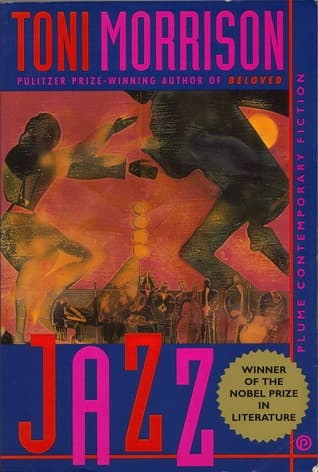
- Jazz
Toni Morrison
3.8 (23k) average on GoodreadsLiterary FictionExplores Black identity, music, and complex relationships in a historical setting with a rich, evocative prose.
- Homegoing
Yaa Gyasi
4.4 (175k) average on GoodreadsLiterary FictionExamines the long-term impact of historical events and trauma across generations of a family.
- All the Light We Cannot See
Anthony Doerr
4.3 (1M) average on GoodreadsHistorical FictionWhile Doerr's novel offers a broader, sweeping perspective on various forms of wartime survival and resistance across different characters in occupied France and Germany, Edugyan's Half-Blood Blues provides a more specific and focused exploration of the unique racial and artistic persecution faced by Black jazz musicians. Edugyan's novel delves deeper into the intersection of race, art, and betrayal, offering a more niche but profoundly impactful historical lens.
- The Nightingale
Kristin Hannah
4.6 (698k) average on GoodreadsHistorical FictionHannah's The Nightingale primarily focuses on the experiences of two French sisters and their different forms of resistance against Nazi occupation. While it highlights female bravery and survival, Half-Blood Blues introduces the critical dimension of racial discrimination within the context of wartime Europe. Edugyan's work specifically examines the heightened vulnerability and cultural suppression faced by Black individuals, adding an essential layer of intersectionality to the narrative of resistance and survival.
- The Old Man and the Sea
Ernest Hemingway
3.8 (831k) average on GoodreadsLiterary FictionA Cuban fisherman's long struggle with a giant marlin becomes a story of endurance and dignity, now retold for young adults with illustrations, phonetic guides, and writing prompts in Traditional Chinese.
- One Hundred Years of Solitude
Gabriel García Márquez
4.1 (753k) average on GoodreadsLiterary FictionThrough the multi-generational story of the Buendía family, a mythical town deals with the repeating patterns of time, love, and solitude, as the extraordinary mixes with the ordinary.





Enjoyed the summary?
A summary gives you the shape of the book. The book itself has the detail, the examples and the voice.
Find Half Blood Blues on AmazonAs an Amazon Associate, BookBrief earns from qualifying purchases. How we're funded