
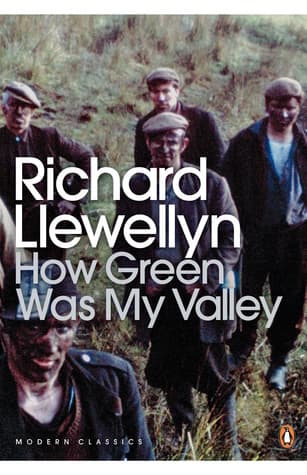
Synopsis
Covers the whole plot, including the ending.
- Difficulty
- Medium
- Pacing
- Slow
- Mood
- Nostalgic, Poignant, Reflective, Melancholy, Resilient
- Read it if
- You love rich, nostalgic historical fiction with a strong sense of place, focusing on family dynamics and the impact of industrialization on a community. Perfect for those who appreciate lyrical prose and a poignant, reflective tone.
- Skip it if
- You prefer fast-paced plots, lighthearted themes, or stories without significant social commentary on labor and class struggles. The book's reflective nature and emphasis on memory might feel slow to some.
How Green Was My Valley Plot Summary
Covers the whole plot, including the ending.
The Valley's Early Beauty and the Morgan Family's Harmony
The novel starts with an elderly Huw Morgan remembering his childhood in a Welsh mining valley, specifically the village where his family lived. He describes the valley before the slag heaps changed it, a place of great natural beauty and a close community. The story then moves to his early memories, when he was a young boy. His family, led by his strict father, Gwilym Morgan, and his loving mother, Beth, is large and important to the village. His six older brothers—Ivor, Dai, Owen, Gwilym, Ifor, and Gareth—are all coal miners, like their father. Huw, the youngest, is still in school and somewhat protected from the mine's harshness, though it is a big part of their lives. The family has a time of good fortune and strong family ties, often gathering for meals and singing.
Growing Pains and First Loves
Huw's early childhood follows the daily routines of village life, centered on the mine and the chapel. He notices the strong personalities in his family, especially his wise and kind mother, Beth. His oldest brother, Ivor, falls in love with Bronwen, a beautiful and kind woman from a nearby village. Their courtship makes the family happy, ending in a grand wedding that is a big social event for the whole community. Huw likes Bronwen a lot, and her arrival brings new warmth and happiness to the Morgan home. The wedding feast and celebration represent a time of unity and hope, before bigger problems start to affect the valley.
The Shadow of the Pit and the First Strike
The valley's good times begin to end as the mine owners, the Blackwood Company, suggest cutting wages. This causes growing unrest among the miners. Huw's older brothers, especially Owen and Gwilym, get more involved in the new union movement, arguing for a strike. Their father, Gwilym Morgan, a respected and traditional miner, first opposes the strike. He believes in settling things with the owners and fears the suffering a strike will cause. This disagreement creates a deep division in the family, with the sons moving out of the family home to live in the striking miners' barracks. Huw is caught in the middle, seeing the pain and division from the industrial dispute, and the increasing poverty in the valley.
Brother Against Brother: The Strike's Toll
The strike continues, bringing severe hardship to the valley. Food becomes scarce, and the community relies on charity and small savings. Huw, still a child, experiences severe hunger and sees how his family suffers physically and emotionally. His mother, Beth, tries hard to feed the family and keep them together, often giving up her own needs. Tensions rise, leading to fights between striking miners and those who choose to work. The Morgan brothers, now living apart, face the difficulties with their fellow miners. The family's unity is strongly tested, and Huw sees his people's suffering and strength, learning hard lessons about social injustice and what collective action can do, as well as its terrible results.
The Return to Work and a New Beginning
Eventually, the strike ends, and the miners return to work, though with big compromises and lasting resentment. The valley is damaged, both physically by the growing slag heaps and emotionally by the divisions. The Morgan brothers come home, but the easy friendship is somewhat strained. Huw, who was sick during the strike, is helped by the local schoolmaster, Mr. Gruffydd, and the kind preacher, Mr. Elias. He shows great intelligence and a love for learning, which his parents support. At this time, his sister Angharad falls in love with Mr. Gruffydd, but their relationship is complicated by social expectations and their different social standing.
Tragedy Strikes and Angharad's Unhappy Union
A bad mining accident kills Ivor, Huw's oldest brother and Bronwen's husband. This tragedy shatters the family and causes the whole valley to mourn. It shows the constant danger miners face. Huw is deeply affected by Ivor's death and sees the deep grief of Bronwen and his parents. Around this time, Angharad, despite her strong feelings for Mr. Gruffydd, is pressured by her family's money problems and social rules to marry Ianto Evans, a rich, snobbish mine manager's son. Her marriage is unhappy and without love, a clear contrast to the love she shared with Mr. Gruffydd, who eventually leaves the valley, heartbroken.
Huw's Education and His Mother's Strength
Huw does well in his studies, showing a sharp mind and sensitivity. He passes exams and thinks about a life away from the mines, encouraged by Mr. Gruffydd and his parents. However, the family continues to face hardship. His mother, Beth, gets a severe illness, caused by years of worry and hard work, and almost dies. Her recovery is slow and difficult, but her strength and spirit continue to be the family's foundation. Huw spends much time caring for her, making their bond stronger. The valley itself continues its slow decline, with more slag heaps appearing, further damaging the landscape and showing the spreading industrial blight.
Further Losses and the Brothers' Departure
As the mine produces less and conditions worsen, several of Huw's brothers—Owen, Gwilym, and Dai—have to leave the valley to find work elsewhere, looking for better chances. This scattering of the family is another painful blow, showing the breakup of the close family unit Huw remembers from his early childhood. The valley becomes a place with fewer young men and more sadness. Later, Huw's brother Gareth also dies in a mining accident, adding to the family's grief and showing the constant danger of the mine. Each departure and death weakens the family's core, leaving Huw and his parents to face a future that looks increasingly grim.
Huw's Coming-of-Age and Personal Struggles
Huw grows into a young man, experiencing first love with a girl named Blodwen. However, their relationship is short and ends in heartbreak, a common experience in the valley where young people often leave or face tough choices. He continues to see the changing landscape and the growing poverty of his home. The once green valley is now mostly covered by black slag heaps, a physical sign of the industry's destructive effect. Huw deals with his own identity and future, torn between his love for his family and the valley, and wanting a life beyond the mines. He stays a careful observer, learning life's lessons and losses.
The Death of Gwilym Morgan and the End of an Era
The biggest tragedy happens when Huw's father, Gwilym Morgan, a man of great honesty and strength, dies in a mining accident. He is trapped underground after a roof fall while helping a younger miner, giving up his life. His death is a terrible blow, not only to the family but to the whole community, as he was a respected person and a symbol of the valley's traditional values. Huw, now an adult, helps get his father's body. This event marks the clear end of an era for the Morgan family and for Huw's childhood. His father's death leaves Huw as the last son in the valley, facing a future where the green valley of his memory is almost completely gone.
Huw's Reflections and the Lost World
At the novel's end, Huw, now an old man, is getting ready to leave the valley for good, the last of his family remaining. He walks through the now empty and blackened landscape, seeing how different it is from the green valley of his childhood memories. He thinks about his family's lives, the love, the struggles, the tragedies, and their strength. He remembers the voices, the songs, the community spirit, and the beauty that once defined his home. His story becomes a moving tribute to a lost world, honoring the people and the way of life that have been changed forever by industry and time. He keeps these memories as his most valuable possession, a reminder of what once was.
How Green Was My Valley Characters
Huw Morgan
Protagonist
The youngest son of the Morgan family, narrator of the story
Huw is the sensitive, observant, and intellectually curious youngest son of the Morgan family. He narrates the story from the perspective of an old man, looking back on his childhood in the Welsh mining valley. Initially sheltered, he gradually witnesses and experiences the harsh realities of mining life, strikes, poverty, and personal tragedies. His intelligence and love for learning set him apart from his brothers, offering him a potential path away from the mines, though his deep love for his family and the valley always remains. He is the emotional heart of the story, through whose eyes the reader experiences the decline of a community.
Relationships: Gwilym Morgan (Father, respected and loved); Beth Morgan (Mother, adored and cherished); Bronwen (Sister-in-law, a source of comfort and love); Mr. Gruffydd (Mentor and friend); Angharad (Sister, admired and pitied)
Gwilym Morgan
Supporting
Huw's father, a respected and principled coal miner
Gwilym Morgan is the patriarch of the Morgan family, a deeply principled, hardworking, and religious man. He is a skilled and respected miner who believes in fair dealings and traditional values. While stern, he is also loving and committed to his family and community. He initially opposes the miners' strike, believing in negotiation over confrontation, which causes a rift with his sons. His integrity and unwavering moral compass make him a central figure, embodying the traditional Welsh mining community's values. His death in the mine is a pivotal moment, symbolizing the end of an era.
Relationships: Beth Morgan (Wife, partner in life and struggles); Huw Morgan (Son, whom he deeply loves and wants a better life for); Owen Morgan (Son, with whom he has ideological conflicts)
Beth Morgan
Supporting
Huw's mother, the strong and loving matriarch of the family
Beth Morgan is the loving and resilient matriarch of the Morgan family. She is the emotional anchor, providing comfort, wisdom, and strength during times of immense hardship, particularly during the strikes and family tragedies. Despite her quiet demeanor, she possesses an indomitable spirit and a deep well of love for her children and husband. She manages the household with remarkable efficiency and grace, often making sacrifices for her family's well-being. Her illness and recovery highlight her vital role in holding the family together, and her advice to Huw is often profound and insightful.
Relationships: Gwilym Morgan (Husband, her steadfast partner); Huw Morgan (Son, whom she nurtures and protects); Bronwen (Daughter-in-law, whom she cherishes)
Bronwen
Supporting
Ivor's wife and Huw's beloved sister-in-law
Bronwen is Ivor Morgan's wife and becomes a cherished member of the Morgan family, particularly close to Huw. She is portrayed as beautiful, kind, gentle, and deeply loving. Her marriage to Ivor brings joy and warmth to the household, and she serves as a source of comfort and affection for Huw. Her tragic widowhood after Ivor's death is a profound loss for the entire family, and her quiet strength in the face of grief further endears her to Huw. She represents hope and enduring love amidst the valley's hardships.
Relationships: Ivor Morgan (Husband, deeply in love); Huw Morgan (Brother-in-law, a special bond of affection); Beth Morgan (Mother-in-law, respected and loved)
Angharad Morgan
Supporting
Huw's beautiful and spirited sister, caught between love and duty
Angharad is Huw's beautiful older sister, known for her spirited nature and striking looks. She falls deeply in love with Mr. Gruffydd, the local schoolmaster, but social pressures and the family's financial struggles lead her to marry Ianto Evans, a wealthy but unloved man. Her unhappy marriage and subsequent departure from the valley are a source of great sorrow for Huw and the entire family. She embodies the sacrifices made by individuals in the valley due to economic and social constraints, and her story highlights themes of unfulfilled love and societal expectations.
Relationships: Mr. Gruffydd (True love, unfulfilled); Ianto Evans (Husband, loveless marriage); Huw Morgan (Brother, admired and pitied by him)
Mr. Gruffydd
Supporting
The intelligent and compassionate schoolmaster and preacher
Mr. Gruffydd is the kind and intelligent local schoolmaster and later a preacher, who serves as a mentor and intellectual guide for young Huw. He recognizes Huw's potential and encourages his studies, offering him a glimpse of a life beyond the mines. He is a man of strong moral character and deep compassion, much respected in the community. His unrequited love for Angharad is a poignant subplot, and his eventual departure from the valley after her marriage symbolizes the loss of another beacon of hope and enlightenment.
Relationships: Huw Morgan (Student and protégé); Angharad (Object of his deep, unrequited love)
Owen and Gwilym Morgan (brothers)
Supporting
Huw's older brothers, early advocates for the miners' union
Owen and Gwilym are two of Huw's older brothers, who become prominent figures in the nascent miners' union. They are passionate and outspoken about workers' rights, advocating for strikes and challenging the mine owners. Their activism leads to direct conflict with their father's more traditional views and causes them to leave the family home during the first strike. They represent the younger generation's growing awareness of social injustice and their determination to fight for better working conditions, even if it means clashing with family and tradition. They eventually leave the valley in search of work.
Relationships: Gwilym Morgan (Father, with whom they have ideological clashes); Huw Morgan (Brother, whom they influence with their socialist ideals)
Ianto Evans
Supporting
Angharad's wealthy and disliked husband
Ianto Evans is the son of a mine manager, a wealthy and socially ambitious man whom Angharad marries for practical reasons rather than love. He is generally disliked by the Morgan family and the community for his snobbish demeanor and lack of genuine warmth. His marriage to Angharad is loveless and serves to highlight the societal pressures and class divisions within the valley. He represents the less admirable aspects of the encroaching industrial hierarchy and the compromises made by those seeking to escape poverty.
Relationships: Angharad (Wife, in a marriage of convenience)
How Green Was My Valley Themes
Loss and the Irreversibility of Change
The main theme of the novel is a deep sense of loss—loss of natural beauty, community, tradition, and a way of life. Huw, as an old man, often expresses sadness about his 'green valley' becoming a black, industrial wasteland. This is also seen in the loss of his family members through death and leaving, the weakening of community unity because of strikes, and the fading of Welsh culture. The novel shows that change, especially industrialization, often destroys things and cannot be undone, leaving a strong feeling of wanting the past back.
“How green was my valley then, and the sunlight, like the finger of God, touched the mountain tops and the water ran clear and cold.”
Family and Community Bonds
Even with the problems of strikes, poverty, and industrial decline, the lasting strength of the Morgan family and the larger Welsh community is an important theme. The family's deep love, support for each other, and shared values (like singing and valuing education) are shown as a defense against hardship. How the community responds to tragedies, like mining accidents, shows a strong shared identity and grief. However, even these bonds are tested by disagreements during strikes and the need to leave for economic reasons, showing that even the strongest ties can be fragile under great pressure.
“When there is no hope, there is nothing. And we have hope. So we are not lost.”
Social Injustice and Class Struggle
The novel clearly shows the harsh truth of the coal mining industry and the class conflict between the rich mine owners and the working-class miners. The repeated strikes, wage cuts, and dangerous work conditions highlight how the miners were used. The Morgan brothers' involvement in the union movement and their disagreements with their father's more traditional approach show the growing awareness of workers' rights. The poverty and suffering of families during the strikes strongly criticize the capitalist system and the unfairness faced by the working class.
“A man's life is of more value than the price of his coal.”
The Power of Memory and Nostalgia
The whole story is told as an act of memory, with an elderly Huw Morgan recalling his childhood. This gives the story a strong feeling of nostalgia, a longing for a past that is made better by memory. Huw's detailed memories, often focusing on sensory details like smells and sounds, show how personal memory is and its power to keep a lost world alive. Remembering becomes a way to honor his family, his community, and the beauty of his valley, even as he knows its physical destruction. Memory is shown as a safe place and a sign of lasting love.
“Indeed, there is no more beautiful valley in all the world than the valley that is in my mind now.”
Plot Devices & Literary Techniques
First-Person Retrospective Narration
An elderly Huw Morgan recounts his childhood from a distant future
The novel is entirely narrated by an elderly Huw Morgan, looking back on his life in the valley. This retrospective point of view allows for a deep sense of nostalgia and provides a mature, reflective commentary on the events of his youth. It emphasizes the theme of loss and the irreversible nature of change, as Huw constantly contrasts the 'green valley' of his memory with its current desolate state. This device also allows for foreshadowing and a philosophical perspective on the struggles and joys of his past, shaping the reader's emotional response to the story's events.
Symbolism of the Valley and Slag Heaps
The physical landscape mirrors the community's fortunes and the impact of industrialization
The valley itself is a powerful symbol. Initially, it represents natural beauty, purity, and a harmonious way of life, reflecting the initial prosperity and close-knit nature of the community. As the story progresses, the encroaching black slag heaps symbolize the blight of industrialization, environmental destruction, and the economic and social decay of the mining village. The gradual darkening and disfigurement of the landscape directly parallel the increasing hardship, loss, and fragmentation experienced by the Morgan family and the community, serving as a constant visual metaphor for the story's central themes of change and loss.
The Morgan Family as a Microcosm
The family's experiences reflect the broader struggles of the Welsh mining community
The Morgan family functions as a microcosm of the entire Welsh mining community. Their internal conflicts (e.g., father vs. sons during strikes), their joys (marriages, births), and their tragedies (mining accidents, departures) mirror the larger experiences of the valley's inhabitants. By focusing on the intimate details of one family's life, Llewellyn effectively humanizes the broader social and economic issues, making the impact of industrialization and class struggle deeply personal and emotionally resonant. The family's eventual dispersal symbolizes the fragmentation of the wider community.
Welsh Language and Song
Inclusion of Welsh words, phrases, and the importance of singing to culture
Llewellyn intersperses Welsh words and phrases throughout the English narrative, immersing the reader in the cultural fabric of the valley. More significantly, singing is a recurrent motif and a vital part of Welsh identity portrayed in the book. The family and community often sing together in times of joy, sorrow, and worship. This emphasis on song symbolizes the resilience, emotional expression, and cultural richness of the Welsh people, serving as a counterpoint to the harsh realities of their lives and a powerful reminder of their heritage and spirit.
How Green Was My Valley Quotes
“I am going to pack my two shirts with my other socks and my best suit in the little blue cloth my mother used to tie round her hair when she did the house, and I am going from the Valley.”
“Men like my father cannot die. They are with me still, real in memory as they were in flesh, loving and beloved forever.”
“How green was my Valley then, and the Valley of them that have gone.”
“There is no fence or hedge round time that is gone. You can go back and have what you like if you remember it well enough.”
“I saw the Valley as it was, and as it is, and as it will be, and I was afraid.”
“A man's character is like his garden. He can sow weeds, or he can sow flowers.”
“The world is a wheel, and it will all come round right.”
“There is no room for two in a grave, but there is always room for two in a heart.”
“The pit is a cruel master, but it is a master that must be served.”
“We are the children of the Valley, and the Valley is our mother.”
“To be born in Wales is to be born with music in your blood and poetry in your soul.”
“The old men sit in the sun and talk of the days when the Valley was green, and the young men listen and wonder.”
“Grief is a stone that bears upon the heart, but in time it wears away to sand.”
“A man's work is his pride, and his pride is his soul.”
Quiz
10 questions on the plot and the characters. Each answer comes with a short explanation.
Question 1
Who is the narrator of 'How Green Was My Valley'?
- Gwilym Morgan, the father
- Huw Morgan, the youngest son
- Ivor Morgan, the eldest brother
- Angharad Morgan, the sister
Show answer
B. Huw Morgan, the youngest son The novel is narrated by Huw Morgan, who reflects on his childhood and coming-of-age in a Welsh mining valley. The story is told from his perspective as he looks back on his life.
Question 2
What is the primary setting of the novel?
- A fishing village in Cornwall
- A coal mining community in South Wales
- A factory town in Northern England
- A farming valley in Scotland
Show answer
B. A coal mining community in South Wales The story is set in a Welsh mining valley, specifically in rural South Wales, where the Morgan family lives and works in the coal mines. This industrial setting shapes the characters' lives and the novel's themes.
Question 3
What significant event causes Huw to leave school and face harsh lessons early in life?
- A mining accident that injures his father
- The death of his brother in a pit collapse
- Being beaten by a teacher and contracting typhoid
- His family moving to a different town
Show answer
C. Being beaten by a teacher and contracting typhoid Huw is severely beaten by a teacher at school and later contracts typhoid, which forces him to leave formal education. This marks a turning point where he learns life's harsh lessons outside the classroom.
Question 4
Which character represents the conflict between traditional values and changing social conditions in the valley?
- Mr. Gruffydd, the minister
- Gwilym Morgan, the father
- Bronwen, Huw's sister-in-law
- Iestyn Evans, the mine owner's son
Show answer
B. Gwilym Morgan, the father Gwilym Morgan, Huw's father, embodies traditional Welsh values and resists changes like unionization and modernization in the mines. His struggles highlight the tension between old ways and new economic realities.
Question 5
What role does the Chapel play in the community depicted in the novel?
- It is primarily a place for political meetings
- It serves as a center for social, religious, and moral life
- It is used mainly for storing mining equipment
- It functions as a school for the children
Show answer
B. It serves as a center for social, religious, and moral life The Chapel is a central institution in the Welsh mining community, providing not just religious services but also social cohesion, moral guidance, and a sense of identity, as mentioned in the book's description.
Question 6
How does Huw's relationship with his sister Angharad reflect the novel's themes?
- It shows the simplicity of sibling bonds in mining families
- It highlights the economic pressures that force her into a loveless marriage
- It demonstrates her success in leaving the valley for education
- It portrays her as a rebel against Chapel traditions
Show answer
B. It highlights the economic pressures that force her into a loveless marriage Angharad's marriage to the mine owner's son, Iestyn Evans, is driven by financial necessity rather than love, illustrating the sacrifices and social constraints faced by characters in the changing valley.
Question 7
What is the significance of the title 'How Green Was My Valley' in the context of the story?
- It refers to the literal greenness of the valley before mining polluted it
- It symbolizes Huw's nostalgic and idealized memory of his childhood
- It describes the agricultural success of the Morgan family
- It indicates the political green movement emerging in Wales
Show answer
B. It symbolizes Huw's nostalgic and idealized memory of his childhood The title reflects Huw's poetic and nostalgic look back at his youth, where the valley represents a lost world of innocence and beauty, contrasted with the harsh realities of mining life.
Question 8
Which event marks a major turning point in the Morgan family's fortunes?
- Huw winning a scholarship to university
- The strike and subsequent violence at the mines
- Angharad's wedding to Iestyn Evans
- The family moving to a new house
Show answer
B. The strike and subsequent violence at the mines The mining strike and the violent clashes that follow lead to significant changes, including family divisions and economic hardship, symbolizing the decline of the traditional way of life in the valley.
Question 9
What does Huw learn from his experiences 'at the kitchen table, at Chapel and around the pit-head' as mentioned in the book description?
- Technical skills for mining engineering
- Harsh lessons about life, morality, and community
- How to become a successful businessman
- The importance of moving away from the valley
Show answer
B. Harsh lessons about life, morality, and community These settings represent key places where Huw gains wisdom and faces challenges: the kitchen table for family values, the Chapel for faith and ethics, and the pit-head for the realities of industrial labor.
Question 10
In what way does the novel serve as an 'elegy to a lost world,' as described in the summary?
- By documenting the historical accuracy of Welsh mining techniques
- Through its poetic nostalgia for a pre-industrial rural Wales
- By advocating for modern reforms in mining communities
- Through its focus on Huw's personal achievements outside the valley
Show answer
B. Through its poetic nostalgia for a pre-industrial rural Wales The novel mourns the passing of a simpler, more communal way of life in the Welsh valleys, eroded by industrialization and social change, as seen through Huw's reflective and sentimental narration.
How Green Was My Valley FAQ
What is 'How Green Was My Valley' about?
The novel follows Huw Morgan's nostalgic reminiscences of growing up in a Welsh mining community in South Wales during the late 19th century. Through his eyes, readers witness the Morgan family's struggles with industrialization, labor disputes, and cultural changes, while celebrating the beauty of Welsh traditions and the close-knit community life that is gradually disappearing.
Why should I read 'How Green Was My Valley'?
This novel offers a deeply moving portrayal of family bonds, cultural identity, and the impact of industrialization on traditional communities. Llewellyn's poetic prose creates an immersive experience that captures both the harsh realities of mining life and the enduring beauty of Welsh culture, making it a timeless exploration of memory and loss.
What is the background/setting of 'How Green Was My Valley'?
The story is set in a fictional Welsh mining valley during the late Victorian era, based on the author's experiences and research of South Wales coal mining communities. The setting encompasses the Morgan family home, the coal pits, the local chapel, and the surrounding valleys that become increasingly polluted by industrial waste as the story progresses.
What are the most memorable quotes from the book?
Key quotes include 'I am going to pack my two shirts with my other socks and my best suit in the little blue cloth my mother used to tie round her hair when she did the housework, and I am going from the Valley' (Huw's departure) and 'How green was my Valley then, and the Valley of them that have gone' (the novel's famous refrain about memory and loss).
What writing style does Richard Llewellyn use?
Llewellyn employs a lyrical, nostalgic first-person narrative from Huw Morgan's perspective, blending Welsh dialect with poetic English. The prose alternates between vivid descriptions of daily life and reflective passages about memory, creating an elegiac tone that mourns the passing of traditional Welsh culture while celebrating its enduring spirit.
What minor details add significant meaning to the story?
Small details like the changing color of the river (from clear to black with coal waste), the specific hymns sung in chapel, and the traditional Welsh foods prepared by Huw's mother subtly document the erosion of the valley's natural beauty and cultural traditions. The Morgan family's clock, which marks both daily routines and historical changes, becomes a symbol of time's passage.
What are some subtle foreshadowing moments?
Early descriptions of the valley's beauty are contrasted with mentions of coal dust settling on leaves, foreshadowing environmental degradation. Huw's father Gwilym Morgan's warnings about the dangers of mining and his insistence on education for his children foreshadow both the family's tragedies and Huw's eventual departure from the valley.
What unexpected character connections exist?
The relationship between Huw's sister Angharad and the minister Mr. Gruffydd develops from spiritual guidance to unrequited love, creating tension with her eventual marriage to the mine owner's son Iestyn Evans. These connections reveal the complex intersections between personal desire, social class, and community expectations in the closed mining society.
What are Huw Morgan's unspoken motivations?
Beneath his nostalgic narration, Huw is motivated by a deep need to preserve the memory of his family and community against the ravages of time and industrialization. His detailed recollections serve as an act of resistance against forgetting, driven by guilt over surviving when so many family members perished and by his complex feelings about leaving the valley.
What psychological complexities do the Morgan family members exhibit?
Gwilym Morgan embodies the conflict between traditional authority and changing times, while Huw's mother Beth Morgan shows the tension between maternal protection and acceptance of her children's choices. Huw himself grapples with survivor's guilt, cultural displacement, and the psychological burden of being the family's last remaining connection to their heritage.
What are the major emotional turning points?
Key emotional moments include Huw's near-fatal illness and recovery, his brothers' departures due to labor disputes, Angharad's unhappy marriage, the mining disasters that claim family members, and Huw's final decision to leave the valley. Each event marks a loss of innocence and a step in the community's disintegration.
How do relationship dynamics evolve throughout the story?
The initially close-knit Morgan family fractures as sons leave due to labor conflicts and daughters marry outside their class. Huw's relationship with his father evolves from childhood reverence to complex understanding of Gwilym's limitations. Community bonds weaken as industrialization creates divisions between workers and owners, chapel and pub, tradition and progress.
Which parts of the novel remain ambiguous or open-ended?
The novel leaves ambiguous whether Huw finds fulfillment after leaving the valley, what ultimately happens to characters like Angharad, and whether Welsh culture can survive industrialization. The tension between nostalgia and progress is never fully resolved, leaving readers to ponder whether memory glorifies the past beyond reality.
What are controversial scenes or decisions in the book?
Some readers debate whether Llewellyn romanticizes poverty and mining life excessively, particularly given his own non-Welsh upbringing. Huw's decision to leave the valley rather than fight for its preservation has been interpreted both as betrayal and necessary survival. The portrayal of women's limited roles has also drawn criticism despite its historical accuracy.
How does 'How Green Was My Valley' end and what does it mean?
The novel ends with adult Huw preparing to leave the now-polluted valley, reflecting that 'How green was my Valley then, and the Valley of them that have gone.' This conclusion represents both physical departure and psychological closure - acknowledging that the green valley exists only in memory, and that preserving it mentally is the only way to honor what has been lost.
How does the mining strike affect the Morgan family dynamics?
The strike creates irreparable divisions as Huw's older brothers side with the union while their father Gwilym opposes it, leading to sons leaving home permanently. This conflict represents the larger societal shift from family-based values to class-based solidarity, with the Morgans becoming microcosm of the valley's fragmentation.
What role does Welsh culture and language play in the novel?
Welsh hymns, language, poetry, and customs form the cultural backbone of the community, serving as both comfort and resistance against Anglicization. The gradual erosion of these traditions parallels the environmental degradation, with characters like Huw's father representing the last generation fully immersed in Welsh language and customs.
How does the novel handle the theme of social class?
Class tensions manifest through Angharad's marriage into the mine-owning class, the growing divide between workers and owners, and the different educational opportunities available. The Morgans' respectability as 'craftsmen' miners contrasts with both poorer laborers and wealthy owners, creating a complex hierarchy that collapses as industrialization advances.
What is the significance of the chapel in community life?
The chapel serves as the spiritual, social, and cultural center where important events unfold - weddings, funerals, community meetings, and musical performances. Its gradual loss of influence symbolizes the secularization and fragmentation of the community as economic concerns override traditional religious and social bonds.
How does Huw's education contrast with his brothers' experiences?
While Huw receives formal education and learns English alongside Welsh, his older brothers work in the mines from childhood. This generational difference highlights changing opportunities and values - education represents both upward mobility and cultural displacement, as it prepares Huw for a world beyond the valley that his brothers cannot enter.
About the author
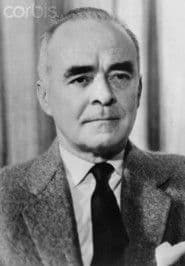
Richard Llewellyn was a Welsh author best known for his novel "How Green Was My Valley," which explores the life of a mining family in Wales. His works primarily focus on fiction, reflecting themes of community and the struggles of rural life. Llewellyn's writing has garnered significant attention for its vivid portrayal of Welsh culture and landscape.
Similar books
- A Kestrel for a Knave
Barry Hines
4.0 (5k) average on GoodreadsChildren'sExplores a working-class boy's coming-of-age in a bleak industrial setting, with a similar focus on social realism and character development.
- The Grapes of Wrath
John Steinbeck
4.0 (750k) average on GoodreadsHistorical FictionDepicts a family's struggle against economic hardship and social change, with powerful themes of community, resilience, and the loss of an idealized past.
- Sons and Lovers
David Herbert Lawrence
A classic coming-of-age story set in a mining community, exploring family relationships, social class, and personal identity.
- To Kill a Mockingbird
Harper Lee
4.3 (4.5M) average on GoodreadsHistorical FictionIn the 1930s Jim Crow South, Harper Lee writes about racial injustice, moral growth, and the quiet courage of a lawyer father, Atticus Finch, as seen through his young daughter's eyes.
- The Great Gatsby
F. Scott Fitzgerald
3.9 (3.8M) average on GoodreadsHistorical FictionIn the opulent Roaring Twenties, a mysterious millionaire's lavish parties hide his desperate, tragic pursuit of a lost love, exposing the emptiness within the American Dream.
- Pride and Prejudice
Jane Austen
4.3 (3M) average on GoodreadsHistorical FictionIn a society focused on status and money, Elizabeth Bennet navigates love and pride, challenging Mr. Darcy and social expectations to find true affection.




Enjoyed the summary?
A summary gives you the shape of the book. The book itself has the detail, the examples and the voice.
Find How Green Was My Valley on AmazonAs an Amazon Associate, BookBrief earns from qualifying purchases. How we're funded