
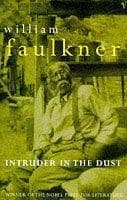
Synopsis
Covers the whole plot, including the ending.
- Difficulty
- Hard
- Pacing
- Moderate
- Mood
- Atmospheric, Tense, Reflective, Moral
- Read it if
- You enjoy Southern Gothic literature, explore themes of racial injustice and moral courage, or appreciate a literary mystery with deep character studies.
- Skip it if
- You prefer fast-paced thrillers, dislike complex sentence structures, or are sensitive to historical depictions of racial prejudice and violence.
Intruder in the Dust Plot Summary
Covers the whole plot, including the ending.
The Arrest of Lucas Beauchamp
The story begins with news in Jefferson, Mississippi, that Lucas Beauchamp, an elderly, independent Black farmer, has been arrested for the murder of Vinson Gowrie, a white man from the violent Gowrie family. Lucas is found standing over Vinson's body with a pistol, making him the main suspect. The sheriff, Hope Hampton, arrests Lucas, but the community, especially the white population, quickly assumes his guilt. There is tension and a growing threat of a lynch mob, as the Gowries are known for taking justice into their own hands, and racial prejudice is strong in the county. Young Chick Mallison, a white teenager, feels a strange obligation to Lucas from a past event.
Chick's Debt and Lucas's Request
Chick Mallison remembers a significant childhood event: years before, he fell into an icy creek and Lucas Beauchamp rescued him. Lucas, instead of accepting payment, offered Chick a meal and treated him as an equal, despite the racial customs of the time. This interaction left a strong impression on Chick, a mix of gratitude, shame, and a growing understanding of race. Now, with Lucas in jail, Chick is called. Lucas, stoic as ever, does not directly ask for help but hints at his innocence and suggests the truth is at Vinson's grave, telling Chick to dig it up.
The Midnight Exhumation
Moved by Lucas's request and his own complex feelings, Chick asks his Black friend, Aleck Sander, to help. They also involve Chick's uncle, Gavin Stevens, a Harvard-educated lawyer and county attorney, though Gavin is at first doubtful and warns against their actions. Under cover of darkness, the three go to the Gowrie graveyard. Despite their fears and the spooky atmosphere, they manage to dig up Vinson Gowrie's body. This secret act is dangerous; they are trespassing and violating a grave, risking serious trouble if caught by the Gowries or the authorities.
The Discovery of the Wrong Bullet
When examining Vinson Gowrie's body, Chick, Aleck, and Gavin Stevens make a key discovery: Vinson was shot with a .41 caliber bullet, not a .45 caliber, which is the size of Lucas Beauchamp's pistol. This evidence immediately casts doubt on Lucas's guilt. The finding suggests that Lucas, though present, did not fire the fatal shot. This revelation is a major turning point, shifting the investigation from Lucas to other possible suspects and confirming Lucas's quiet claim of innocence. The implications are significant, not just for Lucas but for the community's preconceived ideas.
The Search for the Real Killer
Knowing Lucas did not fire the fatal shot, the amateur investigators, Chick, Aleck, and Gavin, broaden their search for the real killer. They are unexpectedly joined by Miss Habersham, an elderly white woman who is a loyal ally and friend of Lucas Beauchamp. Miss Habersham, defying racial and gender expectations, provides valuable local knowledge and strong support. Together, they start to piece together clues, observing local gossip, examining relationships, and trying to understand the dynamics within the Gowrie family and their associates, all while racing against time and the coming threat of the lynch mob.
Crawford Gowrie's Confession
The investigation leads them to Crawford Gowrie, Vinson's brother. Under pressure and facing the growing evidence, Crawford confesses to killing Vinson. The reason is a dispute over money and a hidden family secret involving gold. Crawford murdered Vinson to stop him from revealing their illegal activities and to keep the money for himself. This confession completely clears Lucas Beauchamp, showing the truth behind the murder and highlighting the corruption and violence within the white Gowrie family, a sharp contrast to the initial assumption of Lucas's guilt.
The Prevention of the Lynching
As the truth about Crawford Gowrie's guilt spreads, the threat of the lynch mob against Lucas Beauchamp disappears. The news, though shocking, stops the mob from their violent action. Sheriff Hope Hampton, who had been pressured by community sentiment, maintains order and ensures Lucas's safety once the real killer is identified. This outcome is a triumph for justice and a strong reminder of the dangers of racial prejudice and mob mentality, as Lucas is saved from an unjust death by Chick, Aleck, Gavin, and Miss Habersham.
Lucas's Release and Unchanged Demeanor
After Crawford Gowrie's confession and his name being cleared, Lucas Beauchamp is released from jail. Despite being wrongly accused and facing the threat of lynching, Lucas's manner remains the same. He is still the proud, independent, and stoic Black man he was before the arrest. He does not express gratitude or anger, simply acknowledging the events with his quiet dignity. His steady self-possession throughout shows his strong character and his refusal to be lessened by the white community's prejudices, leaving a lasting impression on Chick.
Chick's Maturation and Understanding
The whole experience deeply affects Chick Mallison. He struggles with the complexities of racial injustice, the arbitrary nature of prejudice, and the moral courage shown by Lucas, Miss Habersham, and even his uncle, Gavin Stevens. Chick's initial discomfort and shame about Lucas grow into a more mature understanding and respect. Through his involvement, Chick confronts the harsh realities of racial injustice, his society's hypocrisy, and the true meaning of courage. The experience makes him question his inherited prejudices and develop his own moral compass, changing him from a naive boy into a young man with a deeper view of the world.
Gavin Stevens's Reflection on Justice
Gavin Stevens, Chick's uncle and a county attorney, uses the case to reflect on justice, race, and the slow, often difficult, process of societal change in the South. While he first resisted involvement and kept a detached, intellectual view, the direct encounter with injustice forces him to engage more deeply. He discusses the Southern tradition, prejudice, and the potential for progress, stressing that true change must come from within the community, rather than being forced from outside. His talks provide a philosophical framework for the novel's events.
The Gowrie Family's Fate
With Crawford Gowrie's confession, the truth about the Gowrie family's criminal activities and internal conflict comes out. The family, already known for lawlessness, is further disgraced. The murder and investigation expose their hidden gold and violent tendencies, leading to legal consequences for Crawford and further damaging the family's poor reputation in the community. The resolution of the murder not only frees Lucas but also brings some justice to the criminal element within the white community, showing that violence and corruption are not limited to one race.
A New Respect for Lucas
By the end of the story, Chick Mallison's initial, complicated feelings toward Lucas Beauchamp have changed into a deep and steady respect. He has seen Lucas's dignity, his quiet strength, and his refusal to be defined by the white community's prejudices. Chick understands the immense moral courage it took for Lucas to remain stoic and self-possessed when facing severe injustice. This respect is not pity, but a recognition of Lucas's inherent worth and humanity, going beyond the racial barriers that had previously defined their relationship.
Principal Figures
Chick Mallison
Protagonist
A young white boy who helps prove Lucas Beauchamp's innocence.
Chick is a sensitive and observant white teenager, grappling with the complexities of his Southern upbringing and the racial prejudices ingrained in his society. He carries a long-standing, complicated debt of gratitude towards Lucas Beauchamp, stemming from a childhood rescue. This debt, combined with a burgeoning sense of justice, compels him to act when Lucas is accused of murder. Chick is initially uncomfortable with Lucas's proud independence, as it challenges his preconceived notions of racial hierarchy, but his experiences force him to confront and ultimately transcend these biases.
Relationships: Lucas Beauchamp (complex debt of gratitude, evolving into deep respect); Gavin Stevens (nephew, protégé, intellectual sparring partner); Aleck Sander (childhood friend and accomplice)
Lucas Beauchamp
Central Figure
An elderly, proud, and independent Black farmer falsely accused of murder.
Lucas Beauchamp is a descendant of both Black slaves and white landowners, embodying a unique and unsettling independence that challenges the racial hierarchy of Jefferson. He is stoic, self-possessed, and refuses to conform to the subservient role expected of Black men in the Jim Crow South. His dignity and unwavering self-respect are central to his character, often making white characters uncomfortable. He is falsely accused of murdering Vinson Gowrie, becoming the catalyst for the novel's plot and a symbol of racial injustice.
Relationships: Chick Mallison (recipient of past kindness, catalyst for Chick's moral awakening); Miss Habersham (long-standing friend and ally); Gavin Stevens (client, though Lucas never explicitly asks for help)
Gavin Stevens
Supporting Character
Chick's uncle, a Harvard-educated lawyer and county attorney, who provides intellectual commentary.
Gavin Stevens is an intelligent, well-meaning, but often verbose county attorney and Chick's uncle. He represents the liberal, intellectual Southern voice, capable of articulating complex societal issues but sometimes slow to act decisively. He is initially skeptical of Lucas's innocence and the boys' amateur investigation, preferring to work within the established legal framework. However, his strong sense of justice and his affection for Chick ultimately lead him to assist in uncovering the truth, though he often frames the events in lengthy philosophical monologues about the South.
Relationships: Chick Mallison (uncle and mentor); Lucas Beauchamp (reluctant legal advocate); Miss Habersham (respected acquaintance)
Miss Habersham
Supporting Character
An elderly white woman and staunch ally of Lucas Beauchamp.
Miss Habersham is an elderly, independent white woman who embodies a rare form of moral courage and compassion in the racially charged South. She is a loyal friend to Lucas Beauchamp, unafraid to defy societal norms and racial expectations to stand by him. Her unwavering belief in Lucas's innocence and her willingness to actively assist Chick and Aleck in their dangerous investigation make her a crucial ally. She represents a fading generation of Southern gentility rooted in personal integrity rather than racial prejudice.
Relationships: Lucas Beauchamp (long-standing, loyal friend); Chick Mallison (ally and fellow investigator)
Aleck Sander
Supporting Character
Chick's young Black friend who aids in the investigation.
Aleck Sander is Chick Mallison's young Black friend, who, despite his youth and the inherent dangers, bravely assists Chick in his secret investigation. He is loyal and resourceful, demonstrating courage in the face of potential retribution from the white community. Aleck represents the younger generation of Black Southerners, navigating the oppressive racial landscape with a blend of caution and determination. His participation highlights the solidarity that can form across racial lines, even in a deeply segregated society.
Relationships: Chick Mallison (childhood friend and accomplice)
Vinson Gowrie
Victim
The white man whose murder sets the plot in motion.
Vinson Gowrie is the white man whose murder sparks the central conflict of the novel. He is a member of the notoriously violent and lawless Gowrie clan, a family known for their illicit activities and disregard for the law. While he is dead for the majority of the story, his character is defined by the circumstances of his death and the subsequent investigation, which reveals his involvement in a criminal enterprise with his brother, Crawford. His death is initially attributed to Lucas Beauchamp, but the truth reveals a more complex, internal family dynamic.
Relationships: Crawford Gowrie (brother and murderer)
Crawford Gowrie
Antagonist
Vinson Gowrie's brother and the true murderer.
Crawford Gowrie is Vinson's brother and the actual killer. He is part of the lawless Gowrie clan, driven by greed and a willingness to resort to violence to protect his interests. His motive for killing Vinson is rooted in a dispute over hidden money and the fear that Vinson would expose their criminal activities. Crawford embodies the darker, more violent aspects of the white underclass in the South, contrasting with the dignified composure of Lucas Beauchamp. His confession ultimately exonerates Lucas and reveals the true depths of the Gowrie family's depravity.
Relationships: Vinson Gowrie (brother and victim)
Hope Hampton
Supporting Character
The county sheriff, caught between justice and community pressure.
Hope Hampton is the sheriff of Jefferson County. He is a pragmatic law enforcement officer who understands the volatile racial dynamics of the South. While he initially arrests Lucas Beauchamp based on circumstantial evidence, he also recognizes the potential for injustice and the threat of a lynch mob. He tries to maintain order and protect Lucas, even as he navigates the intense pressure from the white community. He represents the institutional arm of the law attempting to function in a deeply prejudiced society.
Relationships: Lucas Beauchamp (prisoner, then exonerated individual); Gavin Stevens (colleague in law enforcement)
Themes & Insights
Racial Injustice and Prejudice
The novel explores racial injustice and prejudice in the Jim Crow South. Lucas Beauchamp, an independent Black man, is immediately assumed guilty of murder because of his race and his defiance of white expectations. The threat of a lynch mob shows the brutal reality of this prejudice. The story highlights how easily a community can condemn someone based on racial bias, and how difficult it is for truth and justice to win against deep-seated hatred, as seen in the community's initial reaction to Lucas's arrest and the Gowries' assumed authority.
“A white man's not going to get lynched, not in Mississippi. Not yet anyway. But a Negro… a Negro is different.”
The Nature of Justice and Morality
Faulkner examines what true justice means, comparing legal systems with moral needs. The plot focuses on getting justice for Lucas Beauchamp, not through usual legal ways at first, but through the moral courage of people like Chick, Aleck, and Miss Habersham. The novel questions if justice can be served when society's prejudices control outcomes, and it suggests that sometimes, personal belief and a willingness to defy norms are needed to uncover the truth. Digging up Vinson's body, a legally questionable act, is morally right because it saves an innocent man.
“The past is not dead, it is not even past.”
Coming of Age and Moral Awakening
Chick Mallison's journey is central to the novel's exploration of growing up. His initial discomfort with Lucas Beauchamp, based on both gratitude and shame, changes into a deep understanding and respect. Through his involvement in the investigation, Chick confronts the harsh realities of racial injustice, his society's hypocrisy, and the true meaning of courage. The experience forces him to question his inherited prejudices and develop his own moral compass, changing him from a naive boy into a young man with a deeper view of the world.
“He knew that he was not only seeing a man, but the sum of all the men he had ever known.”
Individual Dignity vs. Societal Oppression
Lucas Beauchamp is a strong symbol of individual dignity when facing strong societal oppression. Despite being a Black man in the Jim Crow South, Lucas refuses to act subserviently as expected. His stoicism, independence, and steady self-respect challenge the racial hierarchy and make many white characters uncomfortable. His quiet defiance, even when accused of murder and facing a lynch mob, shows the strength of the human spirit to maintain integrity and identity against forces meant to lessen it. His character shows that true worth is internal, not given by outside social status.
“He didn't need to ask. He didn't even need to say. He just knew.”
The Weight of the Past on the Present
Faulkner explores how the past, specifically the legacy of slavery, the Civil War, and traditions, continues to shape the present in the South. The racial tensions, prejudices, and behavioral expectations all come from historical events. Gavin Stevens's talks often go into this theme, discussing how the South constantly deals with its history. Lucas, a descendant of both enslaved people and slave owners, shows this complex historical interaction, demonstrating how the past actively influences current events and attitudes.
“The past is not dead. It is not even past.”
Plot Devices & Literary Techniques
The Unreliable Accusation
Lucas Beauchamp's immediate and racially-motivated accusation for murder.
This device immediately establishes the novel's central conflict and its thematic core of racial injustice. Lucas Beauchamp, a Black man, is found standing over the body of a white man, Vinson Gowrie, with a pistol. This seemingly damning evidence is almost immediately accepted as proof of guilt by the white community, without genuine investigation. The 'unreliable accusation' functions to highlight the deep-seated prejudice and the willingness of society to condemn a Black man based on appearance and stereotype, rather than facts. It sets up the urgent need for Chick and his allies to uncover the truth, as the initial accusation is driven by racial bias rather than actual evidence.
The Child's Perspective
The story is primarily told through the eyes of young Chick Mallison.
Using Chick Mallison's perspective allows Faulkner to explore complex racial and moral themes through the lens of innocence and developing understanding. Chick's initial discomfort and later awakening provide a relatable entry point for the reader into the deeply ingrained prejudices of the South. His internal struggles, questions, and observations make the societal issues more immediate and personal. This device also emphasizes the potential for change and growth in the younger generation, as Chick's experiences challenge his inherited biases and force him to forge his own moral code, offering a glimmer of hope amidst the pervasive injustice.
The Cryptic Request
Lucas's subtle, indirect request for Chick to dig up Vinson Gowrie's grave.
Lucas Beauchamp's cryptic instruction to Chick to 'dig up the grave' serves as a crucial plot catalyst. Instead of directly asking for help or proclaiming his innocence, Lucas's stoic and indirect communication forces Chick to actively engage with the mystery and interpret his meaning. This device underscores Lucas's proud independence and his refusal to beg, even in dire circumstances. It also places the burden of discovery squarely on Chick, compelling him to take initiative and pursue the truth, thereby initiating his moral journey and the unraveling of the true crime.
The Exhumation
The secret digging up of Vinson Gowrie's body to find evidence.
The exhumation of Vinson Gowrie's body is a pivotal plot device, representing a literal and symbolic digging for truth. It is a dangerous, illegal act that highlights the desperation of the situation and the lengths to which Chick and his allies must go to challenge a corrupt system. The discovery of the wrong caliber bullet during the exhumation provides the irrefutable evidence needed to exonerate Lucas, shifting the entire narrative. Symbolically, it signifies unearthing buried secrets and confronting the uncomfortable truths hidden beneath the surface of societal assumptions and prejudices.
Intruder in the Dust Quotes
“You can't eat the past. You can't even smell it. It's too late. It's gone.”
“A man will not be any braver than he has to be, but he will be that brave.”
“It's not when you die, but how.”
“The past is never dead. It's not even past.”
“Some things you must always be unable to bear. Some things you must never stop refusing to bear. Injustice and outrage and dishonor and shame. No matter how many times the world tries to teach you otherwise.”
“Because they're going to try to kill him. We've got to stop them. We've got to.”
“”
“”
“”
“”
“”
“”
“”
“”
Quiz
10 questions on the plot and the characters. Each answer comes with a short explanation.
Question 1
Who is the elderly black farmer accused of murdering a white man?
- Lucas Beauchamp
- Gavin Stevens
- Chick Mallison
- Percival Brownlee
Show answer
A. Lucas Beauchamp Lucas Beauchamp is the central character, an elderly black farmer falsely accused of murder, around whom the mystery revolves.
Question 2
What is the name of the young white boy who helps to prove the accused's innocence?
- V.K. Ratliff
- Chick Mallison
- Colonel Sartoris
- Bayard Sartoris
Show answer
B. Chick Mallison Chick Mallison is the young white boy who feels indebted to Lucas Beauchamp for saving him from drowning and takes it upon himself to clear his name.
Question 3
What was the specific 'old favour' that Lucas Beauchamp did for Chick Mallison, prompting Chick to help him?
- He gave Chick a job on his farm.
- He taught Chick how to hunt.
- He saved Chick from drowning in an icy creek.
- He nursed Chick back to health after an illness.
Show answer
C. He saved Chick from drowning in an icy creek. The synopsis explicitly states that Lucas saved Chick from drowning in an icy creek, which is the catalyst for Chick's actions.
Question 4
Who is Gavin Stevens in relation to Chick Mallison and Lucas Beauchamp?
- He is Chick's older brother and Lucas's lawyer.
- He is Chick's uncle and the district attorney.
- He is Lucas's son and a local sheriff.
- He is a newspaper reporter covering the trial.
Show answer
B. He is Chick's uncle and the district attorney. Gavin Stevens is Chick's uncle and the district attorney, who initially resists Chick's efforts but eventually becomes involved in the investigation.
Question 5
What is the primary obstacle Lucas Beauchamp faces, beyond the murder accusation itself?
- A lack of legal representation.
- The threat of a lynch mob.
- His own refusal to speak in his defense.
- Corruption within the local police force.
Show answer
B. The threat of a lynch mob. The synopsis highlights that Lucas is 'under threat from the lynch mob,' which is a significant and immediate danger he faces.
Question 6
What is the setting of 'Intruder in the Dust'?
- A bustling northern city.
- The deep south, specifically Yoknapatawpha County.
- A rural community in the Midwest.
- A small town in the Pacific Northwest.
Show answer
B. The deep south, specifically Yoknapatawpha County. The book description explicitly states the novel is 'Set in the deep south that provided the backdrop for all of Faulkner's finest fiction,' referring to his fictional Yoknapatawpha County.
Question 7
What key detail do Chick, Aleck, and Miss Habersham discover that helps to expose the real killer?
- A hidden confession letter from the actual murderer.
- The victim's body was moved, and the real killer's identity is linked to the second burial site.
- A witness who saw the murder but was too afraid to come forward.
- Forensic evidence proving Lucas's gun was not the murder weapon.
Show answer
B. The victim's body was moved, and the real killer's identity is linked to the second burial site. Chick, Aleck, and Miss Habersham secretly exhume the body to confirm their suspicions, leading to the discovery that the victim was shot with a different gun and buried a second time, implicating the real killer.
Question 8
What theme is most prominently explored through Lucas Beauchamp's character and his treatment by the community?
- The resilience of the human spirit in the face of natural disaster.
- The enduring power of family loyalty and tradition.
- Racial injustice and the deeply ingrained prejudices of the American South.
- The conflict between urban development and rural preservation.
Show answer
C. Racial injustice and the deeply ingrained prejudices of the American South. The entire premise of the story—an elderly black farmer accused of murdering a white man, under threat of lynching, in the deep South—is a direct exploration of racial injustice and prejudice.
Question 9
Who is Miss Habersham, and what role does she play in helping Chick?
- She is Lucas Beauchamp's wife and provides an alibi for him.
- She is an elderly white spinster who worked for the Beauchamp family and assists Chick in his investigation.
- She is a local schoolteacher who encourages Chick to pursue justice.
- She is the victim's sister, initially hostile but later convinced of Lucas's innocence.
Show answer
B. She is an elderly white spinster who worked for the Beauchamp family and assists Chick in his investigation. Miss Habersham is an elderly white spinster who has a long history with the Beauchamp family. She believes in Lucas's innocence and bravely assists Chick and Aleck in their dangerous investigation, including the exhumation.
Question 10
What is the ultimate fate of the real killer, and how is it revealed?
- The real killer confesses to the crime after being confronted by Gavin Stevens.
- The real killer attempts to flee but is caught and arrested by the sheriff.
- The real killer is Cass Edmonds, who ultimately commits suicide after his guilt is exposed through the exhumation and further investigation.
- The real killer escapes justice, leaving the community to question the legal system.
Show answer
C. The real killer is Cass Edmonds, who ultimately commits suicide after his guilt is exposed through the exhumation and further investigation. The real killer is Cass Edmonds, the victim's nephew. His guilt is exposed after the exhumation reveals the truth about the murder weapon and the second burial. Faced with exposure, Cass takes his own life.
Intruder in the Dust FAQ
What is the central premise of 'Intruder in the Dust'?
'Intruder in the Dust' centers on Lucas Beauchamp, an elderly Black farmer, who is accused of murdering Vinson Gowrie, a white man. Young Chick Mallison, remembering a past kindness from Lucas, feels compelled to help prove his innocence, despite the prevailing racial tensions and the threat of a lynch mob in rural Mississippi.
Who is Chick Mallison and what is his role in the story?
Chick Mallison is a sixteen-year-old white boy who, years prior, was saved from drowning by Lucas Beauchamp. Haunted by this debt and Lucas's unyielding dignity, Chick takes it upon himself to investigate the murder, eventually recruiting his uncle Gavin Stevens and his friend Aleck Sander to assist him.
What is the significance of the title 'Intruder in the Dust'?
The title refers to Lucas Beauchamp as the 'intruder' in the established racial and social order of Jefferson, challenging its prejudices and assumptions. The 'dust' symbolizes the decay, stagnation, and deeply ingrained history of the South, within which Lucas's defiant presence creates a disturbance and forces a confrontation with uncomfortable truths.
Who are Gavin Stevens and Aleck Sander, and how do they contribute to the plot?
Gavin Stevens is Chick's uncle, a Harvard-educated lawyer and county attorney, who initially dismisses Lucas's claims of innocence but is eventually drawn into the investigation by Chick's persistence. Aleck Sander is Chick's Black friend, who, along with Miss Habersham, helps Chick exhume Vinson Gowrie's body to find crucial evidence.
How does the novel portray the racial dynamics of the post-Civil War South?
The novel vividly portrays the deeply entrenched racial prejudices, the constant threat of mob violence against Black individuals, and the paternalistic attitudes of some white characters. It highlights the systemic injustice faced by Black people, even as it explores individual acts of defiance and moral courage that challenge these norms.
What is the true identity of Vinson Gowrie's killer?
The true killer of Vinson Gowrie is his brother, Crawford Gowrie. Crawford murdered Vinson because Vinson was having an affair with Crawford's wife, and Crawford then tried to frame Lucas Beauchamp for the crime, knowing the community's predisposition to believe a Black man guilty.
What crucial piece of evidence helps prove Lucas's innocence?
The crucial evidence is the lead bullet found in Vinson Gowrie's exhumed body. Lucas only owned a pistol that fired copper-jacketed bullets, while Crawford Gowrie's gun fired lead bullets. This discrepancy, along with the discovery of the real murder weapon, exonerated Lucas.
How does Miss Habersham, an elderly white woman, contribute to the investigation?
Miss Habersham, an aristocratic old white woman, plays a vital role by accompanying Chick and Aleck Sander to the cemetery in the middle of the night to exhume Vinson Gowrie's body. Her presence lends a degree of respectability and courage to their illicit undertaking, demonstrating her moral conviction and belief in Lucas's innocence.
What is the significance of the recurring motif of 'dust' throughout the novel?
Beyond the title, 'dust' is a pervasive motif representing the decay of the old Southern order, the moral blindness of its inhabitants, and the literal dirt of the land that holds its secrets. It signifies both the historical burden and the potential for new growth, as the characters literally dig through the dust to uncover truth.
How does Chick Mallison's character evolve throughout the novel?
Chick transforms from a somewhat naive and conflicted teenager, grappling with his own inherited prejudices and his debt to Lucas, into a morally courageous young man. His journey is one of self-discovery, where he learns to challenge societal norms and stand up for justice, even at personal risk, developing a deeper understanding of human dignity.
Analyze Lucas Beauchamp's stoicism and its psychological impact on other characters.
Lucas's unwavering stoicism, dignity, and refusal to conform to expected subservience are central to his character. This challenges the white community's preconceived notions, provoking discomfort, resentment, and ultimately, a grudging respect in characters like Chick and Gavin. His quiet defiance forces others to confront their own biases and moral failings.
How does the novel explore the concept of inherited guilt and moral responsibility?
The novel delves into the burden of the past, particularly the legacy of slavery and racial injustice, suggesting that the white community carries an inherited guilt. Chick's struggle reflects this, as he grapples with his personal responsibility to rectify a wrong, thereby confronting the collective moral failings of his society and seeking redemption.
What psychological effect does the constant threat of a lynch mob have on the narrative and characters?
The looming threat of the lynch mob creates intense suspense and highlights the deep-seated fear and injustice prevalent in the South. It pressures characters like Chick and Gavin to act quickly and decisively, while also revealing the mob mentality and the fragility of justice when confronted with irrational hatred and societal inertia.
Is 'Intruder in the Dust' primarily a mystery novel or a social commentary?
While 'Intruder in the Dust' contains a compelling mystery plot, its primary function is as a profound social commentary. The mystery serves as a vehicle to explore Faulkner's deep concerns about racial injustice, the moral decay of the South, and the individual's struggle for dignity and justice against overwhelming societal prejudice.
How does Faulkner's narrative style, particularly the stream of consciousness, impact the reader's understanding?
Faulkner's use of stream of consciousness, primarily through Chick's internal monologues, immerses the reader directly into Chick's evolving thoughts, moral dilemmas, and emotional turmoil. This technique allows for a complex exploration of themes like race, justice, and identity, providing deep psychological insight and reflecting the often-conflicted Southern psyche.
What is the novel's stance on the possibility of racial progress in the South?
The novel presents a nuanced, somewhat pessimistic view of rapid racial progress. While individuals like Chick and Gavin achieve a specific victory, the broader societal prejudices and the ease with which a lynch mob forms suggest that deep-seated change will be slow and arduous. It highlights the individual moral courage required, rather than a swift institutional shift.
How does Lucas Beauchamp represent a challenge to traditional racial stereotypes in Faulkner's work?
Lucas Beauchamp defies the stereotypical portrayal of Black characters as subservient or tragic figures. He embodies an uncompromising dignity, self-possession, and moral authority that challenges the white characters' assumptions and forces them to confront their own prejudices. He is not defined by his race in the eyes of the reader, but by his unyielding character.
What is the significance of the ending, particularly Lucas's final gesture to Chick?
The ending, with Lucas paying Chick a small sum for his services, is highly significant. It represents Lucas maintaining his independence and dignity, refusing to be an object of charity or pity. It also signifies a reversal of the initial debt, showing a mutual respect that transcends racial lines, yet underscores the transactional nature of justice in a prejudiced society.
About the author
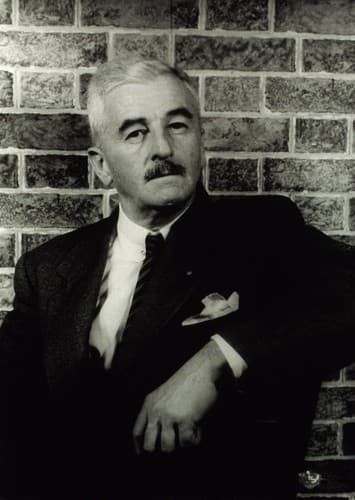
William Cuthbert Faulkner was an American writer known for his novels and short stories set in the fictional Yoknapatawpha County, based on Lafayette County, Mississippi, where Faulkner spent most of his life. A Nobel laureate, Faulkner is one of the most celebrated writers of American literature and often is considered the greatest writer of Southern literature.
Similar books
- To Kill a Mockingbird
Harper Lee
4.3 (4.5M) average on GoodreadsHistorical FictionExplores racial injustice in the American South through the eyes of a young protagonist.
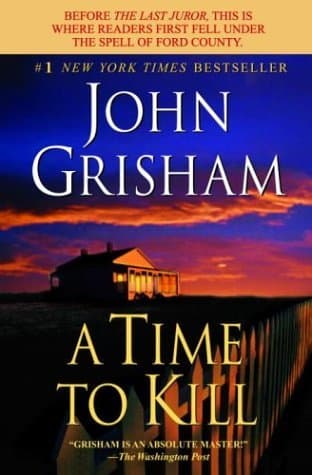
- A Time to Kill
John Grisham
4.1 (703k) average on GoodreadsThrillerFeatures a legal drama set in the South with themes of racial tension and justice.
- The Old Man and the Sea
Ernest Hemingway
3.8 (831k) average on GoodreadsLiterary FictionA Cuban fisherman's long struggle with a giant marlin becomes a story of endurance and dignity, now retold for young adults with illustrations, phonetic guides, and writing prompts in Traditional Chinese.
- One Hundred Years of Solitude
Gabriel García Márquez
4.1 (753k) average on GoodreadsLiterary FictionThrough the multi-generational story of the Buendía family, a mythical town deals with the repeating patterns of time, love, and solitude, as the extraordinary mixes with the ordinary.
- The Goldfinch
Donna Tartt
3.9 (720k) average on GoodreadsLiterary FictionHaunted by a tragic explosion and clutching a stolen Dutch masterpiece, a young orphan navigates the opulent drawing rooms of New York and the gritty underbelly of the art world, desperately seeking connection and redemption amidst a life spiraling into crime and obsession.
- Little Fires Everywhere
Celeste Ng
4.1 (713k) average on GoodreadsLiterary FictionIn Shaker Heights, an artist and her daughter move in, and their free-spirited lives clash with a rule-bound matriarch, revealing hidden conflicts beneath a perfect surface.





Enjoyed the summary?
A summary gives you the shape of the book. The book itself has the detail, the examples and the voice.
Find Intruder in the Dust on AmazonAs an Amazon Associate, BookBrief earns from qualifying purchases. How we're funded