

Synopsis
Covers the whole plot, including the ending.
- Difficulty
- Medium
- Pacing
- Slow
- Mood
- Introspective, Anxious, Philosophical, Comic
- Read it if
- You enjoy introspective, meta-fictional narratives about art, authenticity, and the anxieties of a young artist.
- Skip it if
- You prefer plot-driven stories with clear resolutions and likable protagonists.
Leaving the Atocha Station Plot Summary
Covers the whole plot, including the ending.
Arrival in Madrid and Initial Disorientation
Adam Gordon, a young American poet, arrives in Madrid on a poetry fellowship. He immediately feels alienated and doubts himself, largely because of his anxiety about his poetry and the perceived fakery of his own experiences. He struggles with Spanish, relies heavily on Google Translate, and often pretends to understand conversations. Adam also uses various medications, including antidepressants and cannabis, which further blur his view of reality. He sees his fellowship requirements, which involve researching a Spanish poet, as a performance, preferring instead to observe his own internal state and interactions, however unreliable they are.
The Museum Visit and the First Encounter with Teresa
Adam visits the Prado Museum to see Velázquez's 'Las Meninas,' a painting he has a complicated relationship with. His thoughts during this visit are a mix of art theory, self-deprecating humor, and anxiety about the authenticity of his emotional responses to art. He wonders if his appreciation is real or just a learned response. At the museum, he meets Teresa, a young Spanish woman. Their first interaction is brief and marked by Adam's awkwardness and his tendency to misinterpret or over-analyze her words and intentions, a pattern that will define many of his relationships.
Developing a Relationship with Teresa
Adam starts spending more time with Teresa. Their relationship is a complex dance of attraction and Adam's constant self-doubt. He often invents details about his past, his family, and even his health to seem more interesting or sympathetic to her. He often recounts these fabrications in his thoughts, analyzing their possible impact and his reasons for telling them. Teresa seems to accept his stories, or at least does not openly challenge them, leaving Adam to constantly wonder if she sees through his performance or genuinely believes him. These interactions show his struggle with authenticity in personal connections.
The Second Woman: Isabel
While still involved with Teresa, Adam meets Isabel, another young Spanish woman, at a literary event or café. He is immediately drawn to her and begins to pursue a relationship with her as well, without fully ending things with Teresa. This creates a stressful internal problem for Adam, as he struggles to maintain two separate, somewhat made-up personas for each woman. His interactions with Isabel are similarly marked by his performative tendencies, his anxieties about his poetry, and his constant questioning of whether he is genuinely connecting with her or just projecting an idealized version of himself. This love triangle worsens his feelings of being a fraud.
The Poetry Reading and Public Performance
Adam is invited to give a poetry reading, an important event for his fellowship. Leading up to it, he feels intense anxiety, questioning the value of his own poetry and the sincerity of his audience's potential reactions. During the reading, he is very aware of his own performance, his accent, and the perceived responses of the listeners. He struggles with the theatrical nature of public poetry, feeling that it further hides any real connection between himself, his words, and the audience. This experience shows his central problem: the gap between the private act of creation and the public, often artificial, act of presentation.
The Madrid Train Bombings (March 11, 2004)
On March 11, 2004, Adam is in Madrid when terrorist bombings occur on commuter trains, including one near Atocha Station. He is not directly hurt but experiences the shock and confusion that grips the city. He observes the public reaction, the news coverage, and the somber atmosphere. This real-world tragedy affects Adam deeply, forcing him to confront the limits of his self-absorption and the inability of language or art to fully capture or respond to such immense suffering. He feels guilty and detached, questioning his role as an observer and whether he can truly be part of history.
Post-Bombing Reflections and the Search for Meaning
After the bombings, Adam's internal thoughts intensify, focusing on how personal experience and collective trauma intersect. He questions the relevance of poetry and art in such a context, wondering if his artistic pursuits are trivial in the face of real-world suffering. He observes how people respond, how stories are formed, and how the media frames the event. This period is marked by a heightened sense of existential dread and a renewed, yet still frustrated, search for genuine meaning and connection, both in his art and in his relationships, which now feel even more fragile and artificial.
Confrontations and Revelations (or Lack Thereof)
As Adam's fellowship nears its end, his relationships with Teresa and Isabel reach a series of vague confrontations. There is no dramatic ending to his deceptions; rather, the relationships seem to fade or change, leaving Adam to interpret their meaning. He continues to project his own anxieties onto their reactions, never fully sure if they saw through his fabrications or if their departures were unrelated to his pretense. He thinks about the loneliness of his self-imposed isolation and the difficulty of truly knowing another person, or even himself, when constantly performing.
The Fellowship Report and Artistic Justification
Adam faces the difficult task of writing his fellowship report, meant to detail his research into a Spanish poet. Instead, he finds himself trying to create a story that justifies his often-unconventional and self-absorbed 'research' into authenticity, his relationships, and the Madrid bombings. He struggles to reconcile the official requirements with his actual, highly subjective experiences. This process becomes another act of performance, as he tries to frame his anxieties, his use of medication, and his fabricated stories as legitimate artistic inquiry, further blurring the lines between reality and his artistic construction of it.
Departure from Madrid and Lingering Questions
Adam's time in Madrid concludes, and he prepares to leave the city. His departure is not marked by a grand realization or a clear solution to his internal struggles. Instead, he carries with him the lingering questions about authenticity in art and life, the validity of his own experiences, and the meaning of his relationships. He thinks about the moments of genuine connection and deep alienation he felt, acknowledging that the answers remain unclear. The story ends with Adam still very much in process, leaving the reader to consider the implications of his journey and the complex interplay of reality and perception.
Principal Figures
Adam Gordon
Protagonist
A young American poet on a fellowship in Madrid, riddled with anxiety and self-doubt.
Adam is a highly introspective, often unreliable, and deeply anxious young American poet. He is intelligent and articulate, but his internal monologue is dominated by self-consciousness, a fear of inauthenticity, and a tendency to over-analyze every interaction. He frequently fabricates details about his life to appear more interesting or sympathetic. Adam is also dependent on various medications (antidepressants, cannabis tincture) to manage his anxiety and depression, which further blurs his perception of reality. His primary drive is to understand the nature of genuine experience and art, but he constantly feels he is failing to achieve it.
Relationships: Teresa (Romantic interest, subject of his fabrications and anxieties); Isabel (Second romantic interest, parallel relationship built on similar deceptions); His Fellowship (Institutional obligation that he subverts for personal inquiry)
Teresa
Supporting
A young Spanish woman with whom Adam has a tentative romantic relationship.
Teresa is one of Adam's main romantic interests in Madrid. She is depicted through Adam's highly subjective and often unreliable lens, making her true character somewhat elusive to the reader. She appears kind, intelligent, and relatively patient with Adam's awkwardness and linguistic struggles. Adam constantly projects his anxieties onto her, wondering if she sees through his fabricated stories or genuinely believes them. Her interactions with Adam are central to his exploration of authenticity in personal relationships, as he uses her as a mirror for his own self-doubt and performative tendencies.
Relationships: Adam Gordon (Romantic interest, object of his fascination and deceit)
Isabel
Supporting
Another young Spanish woman, Adam's second romantic entanglement.
Isabel is the second Spanish woman with whom Adam develops a romantic relationship, complicating his already fraught connection with Teresa. Like Teresa, Isabel's character is filtered through Adam's anxious and self-conscious narration. She is presented as intelligent and engaging, and Adam is drawn to her, often fabricating different stories for her than he does for Teresa. Her presence in the narrative intensifies Adam's internal conflict regarding his dishonesty and his struggle to maintain multiple performative identities. She serves as another catalyst for Adam's exploration of genuine connection versus superficial performance.
Relationships: Adam Gordon (Romantic interest, part of his romantic triangulation)
The Fellow (Adam's Predecessor)
Mentioned
An unseen figure whose successful fellowship report serves as a benchmark for Adam's anxieties.
The previous fellow is a largely abstract figure, mentioned by Adam as a model of success and diligence that he feels he cannot live up to. Adam frequently compares his own unconventional and often unproductive 'research' to the presumably rigorous and scholarly work of his predecessor. This comparison fuels Adam's anxieties about his own academic and artistic legitimacy, highlighting his fear of being perceived as a fraud. The fellow represents the institutional expectations that Adam consciously and unconsciously rebels against.
Adam's Mother
Mentioned
A distant figure whose perceived illness Adam sometimes uses for sympathy.
Adam's mother is mentioned periodically, often in the context of Adam's fabricated stories. He occasionally invents or exaggerates her illnesses to elicit sympathy from Teresa or Isabel, or to justify his own emotional states. These references underscore Adam's tendency to manipulate narratives, even those about his own family, for personal gain or to manage his social interactions. She represents a distant family connection that Adam feels comfortable distorting for his performative purposes.
Relationships: Adam Gordon (Son; his relationship is filtered through Adam's unreliable narration and fabrications)
Themes & Insights
Authenticity vs. Performance
This is the novel's main theme, exploring the constant tension between genuine experience and the performative aspects of self, art, and communication. Adam fears that his experiences, emotions, and poetry are not authentic but merely projections or imitations. He often makes up stories about his life and illness for Teresa and Isabel, carefully analyzing his own deceptions. This theme is clear in his struggles with writing poetry, his reliance on Google Translate to fake understanding, and his deep anxiety about whether his art has any 'real' value in a world full of mediated experiences. The Madrid bombings force him to confront the limits of his self-absorption and the inadequacy of his performative self in the face of real tragedy.
“What if I could just relax into the fraudulence of my own experience?”
The Nature of Art and Poetry
The novel deeply questions the purpose, value, and reception of poetry and art today. Adam, as a poet, constantly doubts his own work and the sincerity of artistic expression. He struggles with the idea that poetry might just be a screen for the reader's projections, rather than a way to convey genuine emotion or truth. His visits to the Prado Museum, especially his engagement with 'Las Meninas,' show his complex relationship with art history and the challenge of authentic artistic creation. The public poetry reading increases his anxieties about performance and the gap between the artist's intention and the audience's interpretation. The Madrid bombings further complicate this, making him consider poetry's relevance in the face of real-world suffering.
“I was trying to write poems that were not poems, if you know what I mean. I was trying to write poems that could fail.”
Mediation and Technology
The story is set in a time when technology and pharmaceuticals heavily mediate experience. Adam often uses Google Translate to navigate conversations, which creates a barrier to genuine linguistic and cultural immersion. His use of antidepressants and cannabis further blurs his perception of reality, making him question the authenticity of his own emotional states and memories. This theme explores how technology and medication can both help and hinder human connection and self-understanding, contributing to Adam's detachment and the difficulty of knowing what is 'real.' The constant interplay between his internal thoughts and his external, technologically-assisted interactions emphasizes this mediation.
“I was always on the verge of crying or laughing, or both, which was, I think, the point of the medication.”
Identity and Self-Perception
Adam's journey is a quest to understand his own identity, though he constantly undermines it through self-doubt and fabrication. He struggles with who he is as an American in Spain, as a poet, and as an individual in relationships. His tendency to invent stories about himself and to analyze his own performances reflects a fragmented sense of self. The novel suggests that identity is not fixed but a fluid, often contradictory, construction shaped by internal anxieties, external perceptions, and the stories we tell ourselves and others. His internal monologue is a constant negotiation of these conflicting self-perceptions, leaving him perpetually uncertain.
“I was a fraud, and I knew it, and that was the only authentic thing about me.”
Plot Devices & Literary Techniques
Unreliable Narrator
Adam Gordon's subjective, anxious, and often fabricating perspective shapes the entire narrative.
The entire novel is filtered through Adam Gordon's first-person perspective, which is deeply unreliable. Adam frequently fabricates stories about his life, family, and health to impress or manipulate others. He also constantly questions his own perceptions, memories, and motivations, often admitting to his own dishonesty or self-deception. This unreliability creates a pervasive sense of ambiguity, making it difficult for the reader to discern what is 'true' within the story and mirroring Adam's own struggle with authenticity. The narrative's strength lies in this very unreliability, forcing the reader to engage critically with Adam's internal world.
Internal Monologue / Stream of Consciousness
The narrative primarily consists of Adam's unfiltered thoughts, anxieties, and philosophical musings.
The vast majority of the novel takes place within Adam's mind, presented as a continuous, rambling internal monologue or stream of consciousness. This device allows for deep exploration of his anxieties, philosophical questions about art and authenticity, and his detailed, often self-deprecating, analysis of his own social interactions. It provides immediate access to his intellectual and emotional landscape, blurring the lines between thought, memory, and immediate experience. This unfiltered access to Adam's mind is crucial for understanding his character and the novel's central themes, even if it makes him an unreliable guide to external events.
Metafiction
The novel self-consciously comments on its own construction and the nature of storytelling.
Leaving the Atocha Station frequently employs metafiction, with Adam often commenting on the act of narration itself, the creation of stories (both his own and those he invents for others), and the relationship between literature and reality. He explicitly discusses his fellowship report as a literary construction, and his internal reflections on poetry often extend to the novel's own form. This device highlights the artificiality of narrative and questions the possibility of capturing genuine experience through language, reinforcing the novel's central themes of authenticity and performance by making the reader aware of the story's own constructed nature.
Medication and Altered Perception
Adam's use of various substances influences his mental state and perception of reality.
Adam's regular consumption of antidepressants and a cannabis tincture is not just a character detail but a significant plot device. These substances directly impact his mental state, making him question the authenticity of his emotions and memories, and blurring his perception of events. The medication acts as a literal and metaphorical filter through which he experiences the world, contributing to his unreliability as a narrator. It underscores the theme of mediated experience and raises questions about what constitutes 'true' feeling or observation when one's neurochemistry is being actively altered, further complicating his search for authenticity.
Leaving the Atocha Station Quotes
“I had been planning to write a long poem. I had even, in a moment of delusional fervor, announced that it would be an epic.”
“What I wanted was to be able to participate in the artistic life of my time, but I hadn't yet figured out how to do it without lying.”
“It was difficult to tell if I was faking it or if faking it was simply what it felt like to be me.”
“The only thing I was really interested in was the gap between what I said and what I meant.”
“I was performing a version of myself, a self that was, in turn, performing a version of itself.”
“Maybe it's the nature of poetry to be misunderstood, or maybe it's the nature of me.”
“I believed that I had to be a certain kind of person to be a poet, and then I had to be a different kind of person to write about being that kind of person.”
“The problem with my relationship to poetry was that it was also my relationship to myself.”
“I wanted to be a real poet, but I also wanted to be a real person, and I wasn't sure those two things were compatible.”
“All I could ever do was approximate an experience, describe its edges, never quite get to its core.”
“I felt that I was always arriving too late, or too early, for the important events of my own life.”
“The greatest poets, I thought, were the ones who could make you feel like you were participating in the creation of the poem itself.”
“I was always waiting for something to happen, and when it did, I was usually too busy narrating it to myself to actually experience it.”
“It was impossible to write a poem about something without also writing a poem about the impossibility of writing a poem about something.”
Quiz
10 questions on the plot and the characters. Each answer comes with a short explanation.
Question 1
What is the primary reason Adam Gordon is in Madrid?
- He is on a vacation to explore Spanish art.
- He is pursuing a prestigious poetry fellowship.
- He is studying Spanish history at a local university.
- He is working as an English teacher.
Show answer
B. He is pursuing a prestigious poetry fellowship. Adam Gordon is in Madrid on a prestigious poetry fellowship, which is the central premise of his time there.
Question 2
What major historical event does Adam witness during his time in Madrid?
- The fall of the Berlin Wall.
- The 2004 Madrid train bombings.
- A significant political election.
- A major art exhibition opening.
Show answer
B. The 2004 Madrid train bombings. The novel explicitly states that Adam is a witness to the 2004 Madrid train bombings and their aftermath, which profoundly affects his experience.
Question 3
What is one of Adam's central anxieties regarding his poetry and relationships?
- He fears his work is too conventional and unoriginal.
- He worries that his art and relationships are fraudulent or inauthentic.
- He is concerned he won't be able to finish his fellowship requirements.
- He is afraid of becoming too famous too quickly.
Show answer
B. He worries that his art and relationships are fraudulent or inauthentic. A core theme of the novel is Adam's struggle with the possibility of the genuine in art and relationships, frequently fearing his own poems and interactions are fraudulent.
Question 4
How does Adam often mediate his experiences and perceptions?
- Through intense physical activity and sports.
- Through language, technology (like Google searches), medication, and the arts.
- By strictly adhering to a daily routine and avoiding external stimuli.
- Primarily through direct, unmediated observation of nature.
Show answer
B. Through language, technology (like Google searches), medication, and the arts. The novel explores how Adam's experiences are 'mediated by language, technology, medication, and the arts,' a key question posed by the book.
Question 5
What is Adam's general attitude towards the dictates of his poetry fellowship?
- He diligently follows all the requirements and deadlines.
- He largely ignores them, instead pursuing his own 'research' into authenticity.
- He delegates most of the work to his assistants.
- He uses the fellowship as a cover for political activism.
Show answer
B. He largely ignores them, instead pursuing his own 'research' into authenticity. Instead of following the dictates of his fellowship, Adam's 'research' becomes a meditation on the possibility of the genuine in the arts and beyond.
Question 6
Which of the following best describes the prose style of 'Leaving the Atocha Station'?
- Strictly academic and detached.
- Humorous and lighthearted throughout.
- Veering between the comic and tragic, self-contemptuous and inspired.
- Solemn and consistently melancholic.
Show answer
C. Veering between the comic and tragic, self-contemptuous and inspired. The description states the prose 'veers between the comic and tragic, the self-contemptuous and the inspired,' reflecting Adam's fluctuating internal state.
Question 7
What is Adam's nationality?
- Spanish
- British
- American
- Canadian
Show answer
C. American Adam Gordon is described as a 'young American poet' on his fellowship in Madrid.
Question 8
The novel questions whether poetry is an essential art form or merely a screen for what?
- The poet's ego.
- Academic critique.
- The reader's projections.
- Political propaganda.
Show answer
C. The reader's projections. A key question posed in the summary is: 'Is poetry an essential art form, or merely a screen for the reader's projections?'
Question 9
What is the significance of the title 'Leaving the Atocha Station'?
- It refers to Adam's final departure from Madrid after his fellowship.
- It symbolizes Adam's attempt to move past the traumatic events of the train bombings, which occurred near Atocha Station.
- It's a metaphor for leaving behind his old self and embracing a new identity as a famous poet.
- It is the title of a poem Adam writes about his experiences in Spain.
Show answer
B. It symbolizes Adam's attempt to move past the traumatic events of the train bombings, which occurred near Atocha Station. The Atocha Station was a primary target in the 2004 Madrid train bombings, making 'Leaving the Atocha Station' a direct reference to the traumatic event Adam witnesses and attempts to process, physically and emotionally.
Question 10
The novel is described as a portrait of the artist as a young man in an age characterized by what?
- Romanticism and natural beauty.
- Google searches, pharmaceuticals, and spectacle.
- Strict academic discipline and traditional values.
- Political unrest and revolutionary fervor.
Show answer
B. Google searches, pharmaceuticals, and spectacle. The novel is explicitly described as 'a portrait of the artist as a young man in an age of Google searches, pharmaceuticals, and spectacle,' highlighting the modern context of Adam's struggles.
Leaving the Atocha Station FAQ
What is Adam Gordon's main objective during his fellowship in Madrid, and does he achieve it?
Adam's main objective is ostensibly to research the Spanish Civil War poets, particularly Federico García Lorca, for his poetry project. However, he largely fails to achieve this traditional academic goal, instead spending his time grappling with his own anxieties about authenticity, art, and his relationships, using the fellowship as a backdrop for his personal existential crisis.
How do Adam's relationships with Teresa and Isabel reflect his internal struggles?
Adam's relationships with Teresa and Isabel are characterized by his constant self-monitoring and fabrication, mirroring his anxieties about the genuineness of his poetry. He often invents or exaggerates details about his life and family to impress or manipulate them, highlighting his fear that his true self is insufficient or uninteresting.
What role do pharmaceuticals play in Adam's experience in Madrid?
Adam frequently takes various pharmaceuticals, including benzodiazepines and antidepressants, which he often exaggerates or lies about to others. These drugs blur his perception of reality, intensify his paranoia, and serve as another layer of mediation between him and his experiences, further complicating his search for authenticity.
How does the 2004 Madrid train bombing (11-M) impact Adam?
The 11-M bombing serves as a pivotal, traumatic event that Adam struggles to process authentically. He witnesses some of the aftermath and feels compelled to write about it, yet he constantly questions the sincerity of his own emotional response and whether his artistic engagement with the tragedy is genuine or performative.
Why does Adam frequently lie about his family and personal history?
Adam lies about his family and history primarily out of insecurity and a desire to appear more interesting or profound. These fabrications are a defense mechanism, allowing him to control the narratives others have of him, while simultaneously fueling his self-loathing and doubt about his own authenticity.
What is the significance of the title, 'Leaving the Atocha Station'?
The title refers to the central train station in Madrid, which is both a physical landmark and the site of the 2004 bombings. 'Leaving' suggests Adam's eventual departure from Madrid and his fellowship, but also perhaps his attempt to leave behind his anxieties, his performative self, and his mediated experiences, moving towards a more genuine engagement with the world.
How does Adam's unreliable narration challenge the reader's perception of truth?
Adam's narration is inherently unreliable due to his constant self-doubt, his fabrications, and his altered states from medication. This forces the reader to constantly question the veracity of events, dialogue, and Adam's own internal monologues, mirroring the novel's central theme of the difficulty in discerning the genuine.
What is Adam's relationship with poetry, and does he believe in its power?
Adam has a deeply conflicted relationship with poetry; he is a poet himself, yet he constantly doubts the art form's efficacy and his own talent. He questions whether poetry can genuinely capture experience or if it's merely a screen for projection, often feeling his own poems are fraudulent while simultaneously yearning for their transformative power.
How does technology, like Google searches, influence Adam's experience and art?
Technology, particularly Google searches, serves as another layer of mediation for Adam. He uses it to research, to verify or invent details for his conversations, and to monitor his online presence. This digital mediation further complicates his ability to experience things directly and genuinely, blurring the lines between information and lived experience.
Does Adam experience any moments of genuine connection or insight during his time in Spain?
Despite his pervasive self-doubt and fabrications, Adam does seem to experience fleeting moments that he perceives as genuine. These often occur when he is least expecting them or when his guard is down, such as certain interactions with Teresa or Isabel, or his observations of art, even if he immediately questions their authenticity afterwards.
What is the significance of Adam's obsession with John Ashbery's poetry?
Adam's obsession with John Ashbery's poetry, particularly its elusiveness and ambiguity, reflects his own artistic anxieties. He admires Ashbery's ability to create poetry that resists easy interpretation, yet he also fears that his own work, like Ashbery's, might be perceived as merely clever or obfuscatory rather than deeply meaningful.
How does the novel explore the concept of 'the tourist' versus 'the local'?
Adam embodies the conflicted tourist, trying desperately to assimilate and experience Madrid authentically, yet constantly feeling like an outsider. His self-consciousness about his American identity and his reliance on superficial observations highlight the difficulty of truly escaping one's 'tourist' status, even on a long-term fellowship.
What is the ultimate 'research' Adam undertakes, despite his fellowship's official mandate?
Instead of traditional academic research, Adam's real 'research' is an intense, solipsistic inquiry into the nature of authenticity, selfhood, and art in the contemporary world. He uses his experiences in Madrid, his relationships, and his internal monologues as data points for this profound, if often self-sabotaging, philosophical investigation.
How does Ben Lerner use humor in a novel that deals with serious existential themes?
Lerner uses a distinct blend of ironic, self-deprecating, and often absurd humor, primarily through Adam's internal monologues and his social awkwardness. This comic relief serves to underscore Adam's anxieties, making his neuroses relatable and preventing the novel from becoming overly solemn, while also highlighting the performative aspect of his struggles.
Does Adam achieve any resolution or growth by the end of the novel?
The novel offers a nuanced, open-ended resolution rather than a definitive one. While Adam's anxieties about authenticity and art persist, his departure from Madrid suggests a potential shift. He has grappled deeply with his internal conflicts, and the experience may have subtly altered his perception, even if a full 'cure' is not explicitly shown.
What is the significance of Adam's 'bad Spanish' and his struggles with translation?
Adam's 'bad Spanish' and his reliance on translation apps or others' interpretations emphasize his linguistic and cultural alienation. This linguistic barrier further mirrors his broader struggle with communication and authenticity, as he often feels unable to express his true self or understand others without mediation.
About the author

Ben Lerner is an American novelist, poet, and essayist. His critically acclaimed debut novel, "Leaving the Atocha Station" (2011), explores themes of art, identity, and authenticity. Lerner's work is often characterized by its autofictional elements and intellectual depth, drawing from his background in poetry and literary criticism. He has received fellowships from the Creative Writing Council and the National Endowment for the Arts.
Similar books
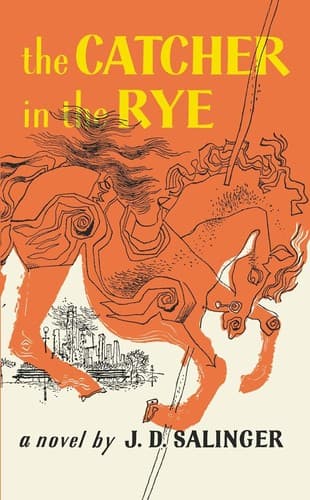
- The Catcher in the Rye
J.D. Salinger
3.8 (2.7M) average on GoodreadsYoung AdultFeatures a disillusioned young male protagonist grappling with authenticity and societal phoniness.
- A Heartbreaking Work of Staggering Genius
Dave Eggers
3.7 (171k) average on GoodreadsLiterary FictionBlends memoir and fiction with a self-aware, often unreliable narrator reflecting on art and life.
- The Pale King
David Foster Wallace
4.0 (15k) average on GoodreadsLiterary FictionLerner's novel shares with Wallace's an intense focus on the internal lives of characters, particularly their anxieties, boredom, and the search for meaning in a bureaucratic or mediated world. Both authors utilize highly intellectual prose and explore themes of authenticity and the overwhelming nature of information. However, "The Pale King" is significantly more ambitious in its scope and length, delving into the minutiae of IRS tax accounting to explore the nature of boredom and attention, while "Leaving the Atocha Station" maintains a more focused, personal narrative on the anxieties of a poet abroad. Wallace's characters often struggle with an almost pathological sincerity, whereas Lerner's Adam is more concerned with the performance and simulation of sincerity.
- The Old Man and the Sea
Ernest Hemingway
3.8 (831k) average on GoodreadsLiterary FictionA Cuban fisherman's long struggle with a giant marlin becomes a story of endurance and dignity, now retold for young adults with illustrations, phonetic guides, and writing prompts in Traditional Chinese.
- One Hundred Years of Solitude
Gabriel García Márquez
4.1 (753k) average on GoodreadsLiterary FictionThrough the multi-generational story of the Buendía family, a mythical town deals with the repeating patterns of time, love, and solitude, as the extraordinary mixes with the ordinary.
- The Goldfinch
Donna Tartt
3.9 (720k) average on GoodreadsLiterary FictionHaunted by a tragic explosion and clutching a stolen Dutch masterpiece, a young orphan navigates the opulent drawing rooms of New York and the gritty underbelly of the art world, desperately seeking connection and redemption amidst a life spiraling into crime and obsession.



Enjoyed the summary?
A summary gives you the shape of the book. The book itself has the detail, the examples and the voice.
Find Leaving the Atocha Station on AmazonAs an Amazon Associate, BookBrief earns from qualifying purchases. How we're funded