

Synopsis
Covers the whole plot, including the ending.
- Difficulty
- Medium
- Read it if
- You are interested in neurological conditions, the brain's plasticity, the psychological impact of stroke, or stories about resilience and redefining life after a major disability.
- Skip it if
- You prefer strictly scientific texts over narrative fiction to learn about neurological conditions, or you are uncomfortable with detailed descriptions of physical and cognitive rehabilitation challenges.
Left Neglected Quotes
“When you have a child, your life is forever altered. Your priorities change, your schedule changes, your body changes. It's an amazing, beautiful, overwhelming change.”
“The brain is an amazing organ. It can heal, it can adapt, it can learn new things. But it's also incredibly fragile.”
“Neglect isn't just about not seeing something. It's about not acknowledging it, not addressing it, not caring for it.”
“You don't realize how much you rely on your body until it stops working the way you expect it to.”
“Sometimes the greatest challenges in life are also the greatest opportunities for growth.”
“Love isn't always easy. It's messy and complicated, and sometimes it hurts. But it's also the most powerful force in the world.”
“The past can be a heavy burden if you let it. But it can also be a valuable teacher.”
“It's hard to accept help when you're used to being the one who gives it.”
“Grief is not a linear process. It comes in waves, sometimes overwhelming, sometimes just a gentle ripple.”
“We often take for granted the simple things, like being able to tie our shoes or pour a glass of water, until we can't.”
“Forgiveness isn't about condoning what happened. It's about letting go of the anger and resentment so you can heal.”
“Sometimes the people who seem the strongest are the ones who need the most support.”
“The path to recovery is rarely straight. There are detours, setbacks, and moments of despair, but also moments of triumph.”
Quiz
10 questions on the plot and the characters. Each answer comes with a short explanation.
Question 1
What is Sarah Nickerson's profession before her accident?
- Senior Partner at a law firm
- Vice President of Human Resources at Berkley Consulting
- Chief Operating Officer at a tech startup
- Marketing Director for a major corporation
Show answer
B. Vice President of Human Resources at Berkley Consulting Sarah Nickerson is described as the vice president of human resources at Berkley Consulting, a demanding role that contributes to her overscheduled life.
Question 2
Which of Sarah's children is nine months old at the beginning of the book?
- Lucy
- Charlie
- Linus
- Henry
Show answer
C. Linus The synopsis states Sarah has three children: Lucy, Charlie, and nine-month-old Linus.
Question 3
What medical condition does Sarah develop as a result of her traumatic brain injury?
- Amnesia, causing her to forget her family
- Aphasia, making her unable to speak
- Left Neglect, erasing the left side of her world
- Paraplegia, leaving her unable to walk
Show answer
C. Left Neglect, erasing the left side of her world The book's title and description explicitly state that a traumatic brain injury 'completely erases the left side of her world,' which is the core symptom of Left Neglect.
Question 4
What specific action was Sarah performing that led to her car accident?
- Adjusting the radio while driving
- Trying to make a phone call while driving
- Reading a report on her dashboard
- Disciplining one of her children in the back seat
Show answer
B. Trying to make a phone call while driving The synopsis details that 'while driving to work and trying to make a phone call, she looks away from the road for one second too long,' leading to the accident.
Question 5
Before her accident, how did Sarah manage her highly scheduled life?
- She relied heavily on her husband, Bob, to manage most of the household tasks.
- She delegated nearly all child-rearing responsibilities to her nanny.
- She managed every minute of her life like an air traffic controller, despite feeling like a 'balloon about to burst.'
- She frequently missed appointments and deadlines due to her busy schedule.
Show answer
C. She managed every minute of her life like an air traffic controller, despite feeling like a 'balloon about to burst.' The text describes Sarah as 'a self-confessed balloon about to burst,' who 'miraculously manages every minute of her life like an air traffic controller.'
Question 6
What is one of Sarah's immediate practical struggles after her injury?
- Remembering the names of her children
- Understanding complex business documents
- The inability to floss her own teeth
- Communicating with her husband and nanny
Show answer
C. The inability to floss her own teeth The synopsis specifically highlights her struggle, stating, 'Without the ability to even floss her own teeth, she struggles to find answers about her past and her uncertain future.'
Question 7
How does Sarah's relationship with her formerly absent mother change after the accident?
- Sarah actively pushes her mother away, refusing any help.
- Her mother becomes even more absent, overwhelmed by the situation.
- Sarah relinquishes control to her mother, among others, indicating a new reliance.
- Their relationship remains unchanged, still distant and strained.
Show answer
C. Sarah relinquishes control to her mother, among others, indicating a new reliance. The text states, 'for once, Sarah relinquishes control to those around her, including her formerly absent mother,' implying a shift in their dynamic and her reliance on her mother.
Question 8
What is the primary psychological theme explored through Sarah's journey of healing?
- The struggle for power and dominance within family dynamics.
- The importance of achieving career success at any cost.
- The realization that true happiness and peace may lie in slowing down and appreciating life beyond career and control.
- The psychological impact of social isolation and loneliness.
Show answer
C. The realization that true happiness and peace may lie in slowing down and appreciating life beyond career and control. The synopsis concludes by stating Sarah 'must learn that her real destiny - her new, true life - may in fact lie far from the world of conference calls and spreadsheets. And that a happiness and peace greater than all the success in the world is close within reach, if only she slows down long enough to notice.' This directly points to the theme of re-evaluating priorities.
Question 9
Before her injury, what was Sarah's attitude towards her son's potential ADD diagnosis?
- She readily accepted the teacher's assessment and sought immediate treatment.
- She was actively trying to convince his teacher that he may not, in fact, have ADD.
- She was too busy to address the issue and delegated it to her nanny.
- She believed it was a misdiagnosis and planned to homeschool him instead.
Show answer
B. She was actively trying to convince his teacher that he may not, in fact, have ADD. The text mentions Sarah 'convincing her son’s teacher that he may not, in fact, have ADD,' indicating her active role in disputing the diagnosis, likely due to her desire for her children to be perfect and her tightly controlled life.
Question 10
The description implies Sarah's life before the accident was characterized by a specific psychological state. Which best describes it?
- Contentment and deep fulfillment
- Relaxed and spontaneous enjoyment
- An over-scheduled, over-achieving existence where she felt like a 'balloon about to burst.'
- A quiet and introspective pursuit of personal growth.
Show answer
C. An over-scheduled, over-achieving existence where she felt like a 'balloon about to burst.' The text explicitly describes her as an 'over-scheduled, over-achieving Harvard graduate' and a 'self-confessed balloon about to burst,' highlighting the immense pressure and stress she was under.
Left Neglected FAQ
What is 'Left Neglect' and how does it affect Sarah?
Left Neglect, or hemispatial neglect, is a neurological condition often resulting from brain injury, where a person fails to be aware of items or events on one side of their body. For Sarah, this means she literally cannot perceive the left side of her world after her accident, impacting everything from eating to dressing and navigating her environment.
Does Sarah's traumatic brain injury permanently affect her life?
Sarah's traumatic brain injury profoundly and permanently alters her life, forcing her to re-evaluate her priorities and identity. While she makes significant progress in recovery, the experience fundamentally changes her perspective on success, family, and the pace of life.
What is the primary theme of 'Left Neglected'?
The primary theme explores the dramatic shift in a high-achiever's life after a devastating injury, forcing her to confront her previous definition of success, embrace vulnerability, and rediscover the importance of family, presence, and a slower pace of life.
How does Sarah's relationship with her mother change after the accident?
Sarah's relationship with her formerly absent mother undergoes a significant transformation. The accident forces Sarah to relinquish control and accept help, allowing her mother to step in and rebuild their connection, leading to a deeper understanding and healing for both.
Does 'Left Neglected' accurately portray the experience of brain injury and recovery?
'Left Neglected' is praised for its sensitive and medically informed portrayal of traumatic brain injury and the challenging road to recovery. Lisa Genova, a neuroscientist, grounds Sarah's experiences in realistic psychological and neurological details, making the depiction both authentic and empathetic.
What role does Sarah's family play in her recovery from left neglect?
Sarah's family, including her husband Bob, nanny, and children, are crucial to her recovery. They provide the necessary support, care, and motivation, forcing her to confront her limitations and adapt to her new reality, ultimately helping her find a new sense of purpose and happiness.
How does 'Left Neglected' compare to other books about neurological conditions?
'Left Neglected' stands out by focusing specifically on hemispatial neglect, offering a unique perspective on brain injury. Like Lisa Genova's other works, it combines a compelling personal story with accurate scientific insights, making complex neurological conditions accessible and relatable to a general audience.
What lessons can readers take away from Sarah's journey in 'Left Neglected'?
Readers can learn valuable lessons about slowing down, appreciating the present moment, redefining success beyond career achievements, and the profound importance of family and human connection. Sarah's journey encourages reflection on what truly matters in life.
About the author
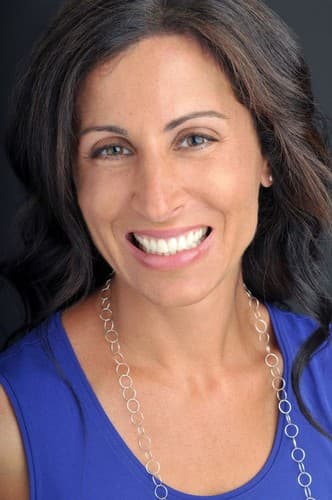
Lisa Genova is an American author known for her fiction that often explores themes of neurological disorders and human connection. Her notable works include "Still Alice," which addresses Alzheimer's disease, "Left Neglected," focusing on brain injury, and "Love Anthony," which delves into autism. Genova's writing is informed by her background in neuroscience.
Similar books
- Still Alice
Lisa Genova
4.3 (296k) average on GoodreadsPsychologyExplores a neurological condition (Alzheimer's) through a personal, fictional narrative, focusing on its impact on identity and family.
- The Perks of Being a Wallflower
Stephen Chbosky
4.2 (1.3M) average on GoodreadsPsychologyThrough letters, a shy high school freshman learns to navigate first love, trauma, and self-discovery, stepping off the sidelines and into life.
- Eleanor Oliphant Is Completely Fine
Gail Honeyman
4.3 (708k) average on GoodreadsLiterary FictionA lonely woman's structured life changes when an IT guy and an elderly man help her learn to open her heart.
- One Flew Over the Cuckoo's Nest
Ken Kesey
4.2 (631k) average on GoodreadsPsychologyIn a mind-bending asylum, the boisterous Randle McMurphy wages a defiant war against the tyrannical Nurse Ratched, inspiring his fellow inmates, including the seemingly catatonic Chief Bromden, to reclaim their lost humanity.
- The Bell Jar
Sylvia Plath
4.0 (591k) average on GoodreadsPsychologyIn the suffocating grip of 1950s expectations, a brilliant young woman's descent into mental illness is painted with such vivid, internal clarity that her 'insanity' feels terrifyingly rational and inevitable.
- The Subtle Art of Not Giving a F*ck: A Counterintuitive Approach to Living a Good Life
Mark Manson
3.9 (530k) average on GoodreadsBusinessEmbrace your flaws and stomach life's lemons, because true happiness isn't about relentless positivity, but about choosing what truly matters to give a f*ck about.






Enjoyed the summary?
A summary gives you the shape of the book. The book itself has the detail, the examples and the voice.
Find Left Neglected on AmazonAs an Amazon Associate, BookBrief earns from qualifying purchases. How we're funded