
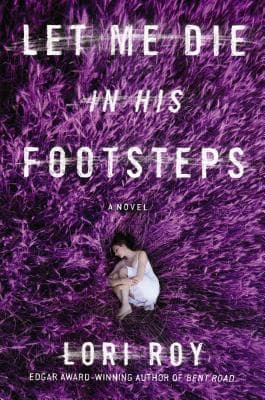
Synopsis
Covers the whole plot, including the ending.
- Difficulty
- Medium
- Pacing
- Moderate
- Mood
- Mysterious, Suspenseful, Atmospheric, Brooding, Haunting
Let Me Die in His Footsteps Plot Summary
Covers the whole plot, including the ending.
The Midnight Encounter
On a summer night in 1952, Annie Holleran, almost sixteen, goes onto the forbidden Baines property. Following a local superstition, she looks into the Baines' well at midnight, hoping to see her future. Instead, she finds a dead body floating in the water – that of Joseph Carl Baines, Jr. This discovery immediately links Annie to a long-standing feud and a dark history between the Holleran and Baine families. Her presence at the scene makes her a prime suspect to Sheriff Irlene Fulkerson, a woman deeply involved in the original Baine tragedy. Annie is forced to recall her Aunt Juna's stories and the 1936 events that led to the death of the first Joseph Carl Baine.
Echoes of 1936
The story flashes back to 1936, introducing Juna Crowley, Annie’s aunt, as a young woman. Juna arrives in town and quickly draws the attention of the seven Baine brothers, especially Joseph Carl Baine, the eldest. Her presence disrupts the community's quiet order and starts a dangerous obsession in Joseph Carl. This period has rising tensions and a sense of coming doom, as Juna's appeal is both enchanting and destructive. The narrative establishes the deep animosity between the Holleran and Baine families, foreshadowing the tragic events that will link them forever and set the stage for the current mystery.
Joseph Carl's Obsession
Joseph Carl Baine's obsession with Juna Crowley becomes increasingly possessive and violent. He is consumed by her, alienating his brothers and the community. Juna, initially drawn to his intensity, soon becomes frightened by his erratic and threatening behavior. His jealousy and possessiveness lead to a series of disturbing incidents, ending in a violent confrontation. This period highlights the destructive power of unchecked desire and the pressures on young women like Juna. The town watches in fear as Joseph Carl's grip on reality loosens, setting the stage for the tragedy that will define the next two decades.
The First Baine Murder
The first Joseph Carl Baine is found dead, violently murdered. The evidence, though circumstantial, points strongly to Juna Crowley. Sheriff Irlene Fulkerson, determined to bring justice, leads the investigation, which ends in Juna's conviction and imprisonment. This event solidifies the hatred between the Hollerans and Baines, leaving a deep scar on the town. Juna's family, especially her sister and Annie's mother, believe she is innocent, but the community largely accepts her guilt. The echoes of this crime resonate through 1952, shaping Annie's present predicament and her family's reputation.
Sheriff Fulkerson's Interrogation
Sheriff Irlene Fulkerson, a stern figure, interrogates Annie about finding Joseph Carl Baines, Jr.'s body. Fulkerson, who was key in Juna's conviction, views Annie with suspicion, convinced that the Holleran family is inherently problematic. Annie struggles to explain her presence at the well, fearing that revealing the full truth will only worsen her family's troubles. The interrogation is tense and personal, as Fulkerson's past involvement in the first Baine case colors her perception of Annie. This interaction highlights the generational impact of the initial tragedy and how difficult it is for Annie to break free from its shadow.
The Lavender Harvest
As the annual lavender harvest approaches, a significant time for the Holleran family, Annie feels an increasing sense of dread. The harvest symbolizes her own coming of age, mirroring the time when Juna came of age and the first tragedy struck. Rumors circulate about Juna's possible return from prison, fueling Annie's anxieties. The scent of lavender, usually comforting, now carries a sinister undertone, reminding her of the past. Annie believes that Juna's return will bring a reckoning, forcing her to confront the truth about what happened in 1936 and how it connects to the current murder.
Unraveling Family Secrets
Driven by a need to understand the past and clear her name, Annie starts to investigate the original Baine murder. She speaks to her mother, grandmother, and other townspeople, piecing together fragments of the story. She learns about the complex relationships between Juna, Joseph Carl Baine, and the other Baine brothers. As she investigates, she uncovers inconsistencies in the official account and realizes that the truth is far more complicated than she was led to believe. These revelations challenge her perception of her family and the town's long-held stories.
Juna's Return
Juna Crowley is released from prison and returns to the small Kentucky town, just as Annie had feared. Her reappearance causes fear and renewed speculation through the community. Many still view her as a murderer, while others are curious about her true role in the past. Juna's presence forces everyone to re-examine the 1936 events and their own understanding. Annie, both wary and desperate for answers, sees Juna's return as her best chance to uncover the full truth and perhaps finally break the cycle of violence and suspicion.
Confronting the Past
Annie confronts Juna, seeking answers about the past. Their conversations are full of tension and unspoken history. Juna, initially guarded, slowly begins to reveal parts of her experience. Annie also revisits Sheriff Fulkerson and other witnesses, pressing them for details and challenging their long-held assumptions. Through these confrontations, Annie starts to connect the dots between the original murder, the identities of the Baine brothers, and the secrets that have been buried for decades. She realizes that the official story of Juna's guilt was a convenient simplification of a much more complex and tragic series of events.
The True Culprit Revealed
Annie discovers that the original Joseph Carl Baine was not murdered by Juna, but by one of his own brothers. The motive was a combination of jealousy, shame, and a desire to protect Juna from Joseph Carl's escalating violence. The Baine family, especially the matriarch, covered it up to protect their own, letting Juna take the blame. This revelation exposes the deep corruption and moral compromises within the Baine family and, by extension, the town's justice system. Annie realizes that the recent murder of Joseph Carl Baines, Jr. is directly linked to this hidden truth, as someone is trying to silence those who know too much or prevent the past from being fully exposed.
Breaking the Cycle
Armed with the full truth, Annie is determined to expose the real culprits and break the cycle of violence and injustice that has plagued her family for generations. She confronts the Baine family with her findings, forcing them to acknowledge their complicity. The town, initially resistant to questioning the past, is slowly forced to reckon with the uncomfortable truths Annie uncovers. Annie's actions are not just about clearing Juna's name, but about ensuring that justice is finally served and that her own future is not defined by past wrongs. She takes steps to protect her loved ones and bring peace to the community.
Justice and Resolution
After Annie's revelations, the truth about both Baine murders comes to light. The original cover-up is exposed, and the responsible parties are finally held accountable, decades later. The town, though shaken, begins the difficult process of healing and re-evaluating its history. Juna Crowley's name is cleared, and she finds some peace. Annie, having faced the past, is able to step into her future with a clearer understanding of herself and her family's legacy. The cycle of violence and secrecy is broken, allowing for a fragile but real sense of justice and hope for the future.
Let Me Die in His Footsteps Characters
Annie Holleran
Protagonist
A determined teenager seeking truth amidst family secrets.
Annie is a curious and intelligent teenager on the cusp of adulthood in 1952 Kentucky. She is fiercely loyal to her family, particularly her Aunt Juna, and possesses a strong sense of justice. Her discovery of a body at the Baines' well thrusts her into a decades-old mystery that has haunted her family. Despite her youth, Annie displays remarkable courage and tenacity in her pursuit of the truth, challenging long-held assumptions and risking her own safety.
Relationships: Juna Crowley (niece-aunt (deeply connected, Juna's fate drives Annie)); Sheriff Irlene Fulkerson (suspect-investigator (adversarial, but complex)); Holleran Family (family (loyal, protective)); Baine Family (feuding families (antagonistic, mysterious))
Juna Crowley
Supporting
The enigmatic aunt, wrongfully convicted of murder.
Juna is Annie's aunt, a beautiful and spirited woman whose allure in 1936 led to her wrongful conviction for the murder of Joseph Carl Baine. She spent two decades in prison, bearing the weight of a crime she didn't commit. Upon her return, she is initially guarded and hardened by her experiences, but still possesses a deep inner strength. Her story is central to the mystery, and her presence in 1952 forces the town to confront its past.
Relationships: Annie Holleran (aunt-niece (initially distant, then close confidantes)); Joseph Carl Baine (romantic interest (obsessive, dangerous)); Sheriff Irlene Fulkerson (accused-accuser (antagonistic, historical)); Holleran Family (family (loved, but a source of pain))
Sheriff Irlene Fulkerson
Antagonist/Supporting
The local sheriff, entrenched in the past and resistant to new truths.
Sheriff Irlene Fulkerson is the formidable local law enforcement officer, who, in 1936, was instrumental in Juna Crowley's conviction. In 1952, she remains a staunch believer in Juna's guilt and views the Holleran family with suspicion. Irlene is deeply rooted in the community's history and resistant to re-examining past judgments. Her unwavering conviction, while appearing to be about justice, ultimately serves to perpetuate the long-standing cover-up.
Relationships: Annie Holleran (investigator-suspect (adversarial, challenging)); Juna Crowley (prosecutor-convict (historical, defining)); Baine Family (upholder of their (perceived) justice)
Joseph Carl Baine (Sr.)
Supporting
The charismatic but volatile Baine brother whose murder ignited the feud.
Joseph Carl Baine, the eldest of the seven Baine brothers in 1936, was initially charismatic and well-regarded. However, his obsession with Juna Crowley turned him possessive and violent, leading to his own demise. His death is the central mystery that Juna is accused of and that Annie seeks to unravel. He represents the destructive power of unchecked desire and the hidden darkness within seemingly respectable families.
Relationships: Juna Crowley (obsessive romantic interest); Baine Family (brother (initially respected, then feared))
Joseph Carl Baines, Jr.
Supporting
The young Baine boy whose death in 1952 reignites the past.
The victim found dead in the well by Annie. His death in 1952 is the catalyst for Annie's investigation and serves as a direct link to the unresolved mysteries of 1936. His murder suggests that the secrets of the past are still actively being protected, or that a new generation is suffering the consequences of old sins. His connection to the original Joseph Carl Baine is significant, highlighting the cyclical nature of the family's tragedy.
Relationships: Annie Holleran (victim-discoverer); Baine Family (family member (victim of internal conflict))
Mrs. Holleran (Annie's Mother)
Supporting
A protective mother, burdened by her sister's past.
Annie's mother is a loving and protective figure, deeply scarred by her sister Juna's wrongful conviction and imprisonment. She has tried to shield Annie from the full extent of the family's past, but her own grief and fear are palpable. She represents the silent suffering of those left behind by tragedy and the difficulty of moving on when justice has not been served. Her perspective offers Annie crucial, though often incomplete, pieces of the puzzle.
Relationships: Annie Holleran (mother-daughter (protective, loving)); Juna Crowley (sister (loyal, heartbroken))
The Baine Brothers (excluding Joseph Carl Sr.)
Supporting
The remaining brothers, complicit in the cover-up.
The six other Baine brothers represent a collective force of family loyalty and complicity in the cover-up of Joseph Carl Sr.'s true killer. Some were directly involved, others indirectly, but all benefited from Juna's conviction. They embody the dark side of family loyalty and the lengths to which people will go to protect their own reputation and secrets. Their individual roles vary, but collectively they maintain the false narrative.
Relationships: Joseph Carl Baine (brothers (complex, some resentful, some protective)); Juna Crowley (acquaintances (some infatuated, some resentful))
The Holleran Grandmother
Supporting
The matriarch, holding fragments of the past.
Annie's grandmother is the matriarch of the Holleran family, a keeper of stories and traditions. Her memories, though sometimes fragmented or biased by time and pain, provide Annie with valuable insights into the events of 1936. She represents the oral history of the community and the way narratives are passed down through generations, often with certain details omitted or embellished. Her wisdom, though not always direct, guides Annie.
Relationships: Annie Holleran (grandmother-granddaughter (source of wisdom and history)); Juna Crowley (mother-daughter (protective, heartbroken))
Let Me Die in His Footsteps Themes
The Weight of the Past and Generational Trauma
The novel explores how past events, especially unsolved crimes and injustices, affect subsequent generations. Annie's present is shaped by a murder that happened before she was born, showing how trauma and secrets can be inherited. The Holleran and Baine families are locked in a cycle of animosity and suspicion, unable to move forward until the truth of 1936 is revealed. This theme emphasizes that history, if unaddressed, repeats itself, and that true healing requires confronting uncomfortable truths.
“The past wasn't dead; it wasn't even past. It was a suffocating blanket woven into the very fabric of their lives, smelling of lavender and blood.”
Justice vs. Truth
The book examines the difference between what society calls 'justice' and the actual, often messy, truth. Juna Crowley was convicted and imprisoned, a form of justice served, yet she was innocent. The town and Sheriff Fulkerson cling to this 'justice' even when evidence suggests otherwise, highlighting how societal convenience and reputation can override the pursuit of genuine truth. Annie's quest is not just for justice, but for the full, unvarnished truth, which ultimately redefines what justice truly means in this context.
“Sometimes, justice wasn't about what was right, but about what everyone agreed to believe.”
The Power of Secrets and Silence
Secrets, both individual and communal, drive the narrative. The Baine family's secret about Joseph Carl Sr.'s true killer, and the town's collective silence surrounding it, allowed an innocent person to suffer and perpetuated a cycle of violence. The novel demonstrates how silence can be a form of complicity, and how unacknowledged truths can fester and cause further harm. Annie's determination to speak truth to power is an act of breaking this oppressive silence.
“The silence was louder than any accusation, a heavy cloak draped over the town, hiding what everyone knew but refused to say.”
Coming of Age and Identity
Annie's journey of uncovering the past is intertwined with her own coming of age. As she approaches her sixteenth birthday, mirroring Juna's age during the initial tragedy, she grapples with her identity within a family and community defined by scandal. Her quest for truth forces her to question everything she thought she knew, shaping her into a strong, independent young woman. She learns to forge her own path, rather than being merely a product of her family's history, defining her own moral compass in the face of inherited burdens.
“She wasn't just Annie Holleran, a girl from the lavender fields. She was the one who would finally unearth what the earth had tried so hard to keep hidden.”
Plot Devices & Literary Techniques
The Baines' Well
A symbolic site of discovery and superstition.
The well on the Baines' property serves as a pivotal plot device. It is the site where Annie discovers Joseph Carl Baines, Jr.'s body, immediately drawing her into the central mystery. Beyond its literal function, the well is imbued with local superstition, believed to reveal one's future. This superstition ironically leads Annie to her grim discovery, suggesting that the past, rather than the future, is what truly needs to be uncovered. It also symbolizes the deep, dark secrets hidden beneath the surface of the community.
Lavender Fields
A sensory motif connecting family, tradition, and hidden danger.
The Holleran family's lavender fields are more than just a setting; they are a powerful sensory motif. The scent of lavender is associated with the Holleran women, their labor, and their heritage. However, the gentle beauty of the fields often contrasts sharply with the violence and secrets that unfold within and around them. The approaching lavender harvest serves as a temporal marker for Annie's coming of age and Juna's return, imbuing a seemingly benign natural element with an ominous undertone, symbolizing the beauty and danger intertwined in their lives.
Dual Timelines
Interweaving past and present to reveal a complex truth.
The novel employs a dual timeline structure, alternating between Annie's investigation in 1952 and Juna's experiences in 1936. This device is crucial for gradually revealing the full scope of the tragedy and its intricate connections. The past timeline provides context and motive for the present events, while the present timeline drives the suspense and the search for answers. This interweaving highlights the pervasive influence of history and allows the reader to piece together the truth alongside Annie, creating a richer, more suspenseful narrative.
The Family Feud
An inherited conflict driving the narrative's tension.
The long-standing, bitter feud between the Holleran and Baine families is a central plot device. Originating from the 1936 murder and Juna's conviction, this animosity creates immediate tension and suspicion. It provides a ready-made motive for present-day crimes and complicates Annie's investigation, as she must navigate deep-seated biases and rivalries. The feud acts as a barrier to truth, forcing Annie to confront not just individual secrets, but the collective historical grievances that have defined her community for decades.
Quiz
10 questions on the plot and the characters. Each answer comes with a short explanation.
Question 1
What year does the story begin with Annie Holleran crossing into forbidden territory?
- 1936
- 1952
- 1920
- 1945
Show answer
B. 1952 The story states that on a dark Kentucky night in 1952, Annie Holleran crosses into forbidden territory.
Question 2
What is the name of the family whose property Annie Holleran crosses into?
- Fulkerson
- Crowley
- Baines
- Holleran
Show answer
C. Baines Annie Holleran crosses into the Baines' place, as it is known that Hollerans don't go near Baines.
Question 3
What object does Annie Holleran carry with her when she crosses into forbidden territory?
- A hunting knife
- A silver-handled flashlight
- A lantern
- A map
Show answer
B. A silver-handled flashlight Annie is described as being armed with a silver-handled flashlight.
Question 4
What does Annie Holleran gaze into at midnight?
- A mirror
- The night sky
- A well
- A pool of water
Show answer
C. A well At the stroke of midnight, Annie gazes into the water in the well on the Baines' place in search of her future.
Question 5
Who is described as the best of all the Baine brothers before a certain event?
- Sheriff Irlene Fulkerson
- Joseph Carl
- Annie's father
- Juna Crowley's brother
Show answer
B. Joseph Carl The text states, 'Before Juna, Joseph Carl had been the best of all the Baine brothers.'
Question 6
What does Annie's aunt, Juna Crowley, have in common with Annie as they come of age?
- They both have black eyes.
- They both have a connection to the Baines family.
- They both have a dread that mounts.
- They both come of age and have a dread of a return.
Show answer
D. They both come of age and have a dread of a return. The text mentions that Annie's dread mounts as she comes of age, just as Juna did, and that Juna will come home to finish what she started.
Question 7
What is the primary crop associated with the Holleran family's land?
- Cotton
- Corn
- Tobacco
- Lavender
Show answer
D. Lavender The story mentions Annie running through her family's lavender fields.
Question 8
What is the name of the Sheriff mentioned in the backstory related to Joseph Carl and Juna?
- Sheriff Baines
- Sheriff Holleran
- Sheriff Fulkerson
- Sheriff Crowley
Show answer
C. Sheriff Fulkerson Sheriff Irlene Fulkerson is mentioned in relation to the events involving Joseph Carl and Juna.
Question 9
According to the text, what did Joseph Carl do that cost innocent people their lives?
- He stole from the Baines family.
- He was influenced by Juna's eyes and actions.
- He defied Sheriff Fulkerson.
- He confessed to a crime he didn't commit.
Show answer
B. He was influenced by Juna's eyes and actions. The text states, 'But then he looked into Juna’s eyes and they made him do things that cost innocent people their lives.'
Question 10
What must Annie do to save herself, her family, and the town?
- Flee Kentucky
- Confront Sheriff Fulkerson
- Prepare for Juna's return and the revelation of the past
- Destroy the well on the Baines' place
Show answer
C. Prepare for Juna's return and the revelation of the past The text explicitly states, 'If Annie is to save herself, her family, and this small Kentucky town, she must prepare for Juna’s return, and the revelation of what really happened all those years ago.'
Let Me Die in His Footsteps FAQ
What is the main plot of 'Let Me Die in His Footsteps'?
The novel follows Annie Holleran in 1952 Kentucky as she crosses into forbidden territory on the Baines' property to look into a well at midnight. Her actions lead to the discovery of a body, forcing her to confront a dark past and secrets shared between her family and the Baines family, which have been passed down through generations.
Who are the main families involved in the story?
The two central families are the Hollerans, Annie's family, and the Baines family. Their histories are deeply intertwined by a dark secret and a malevolent force that has affected both families across different generations.
What is the significance of the Baines' well?
The Baines' well is a place of forbidden curiosity and a focal point for Annie's quest for answers about her future. It is also connected to the dark events of the past, particularly concerning Joseph Carl Baines and Juna Crowley.
Who is Juna Crowley and what is her role in the story?
Juna Crowley is Annie's aunt, who came of age in 1936. She had a profound and destructive influence on Joseph Carl Baines, leading to tragic events. Her return to town is a source of dread for Annie, as she is expected to 'finish what she started.'
What happened in 1936 that is relevant to the story?
In 1936, Juna Crowley came of age and deeply affected Joseph Carl Baines, one of the seven Baine brothers. His infatuation with Juna led to actions that resulted in the deaths of innocent people, setting the stage for the ongoing cycle of darkness.
What is the role of Sheriff Irlene Fulkerson?
Sheriff Irlene Fulkerson was involved in serving justice in 1936, presumably related to the events involving Joseph Carl and Juna. However, the narrative hints that her perception of justice might have been incomplete or flawed.
What is Annie Holleran trying to achieve?
Annie is trying to understand her future by looking into the Baines' well. As the story progresses, her goal shifts to saving herself, her family, and the town from the impending return of Juna and the revelation of the truth about the past.
What are the main genres of 'Let Me Die in His Footsteps'?
The book blends elements of literary fiction, thriller, historical fiction, and mystery. It explores deep family secrets and a lingering evil within a Southern Gothic setting.
What is the significance of the lavender fields?
The lavender fields are part of the Holleran family's property and serve as a geographical marker and a symbol of their heritage. Annie's journey towards the Baines' property takes her through these fields, connecting her family's land to the Baines' dark legacy.
Does the book explore themes of fate and generational trauma?
Yes, the novel delves into themes of fate and generational trauma, showing how the past continues to haunt the present and influence the lives of the characters, particularly within the Holleran and Baines families.
Similar books
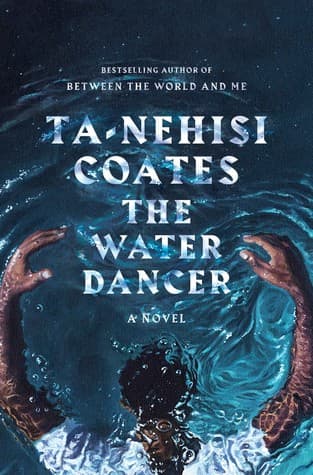
- The Water Dancer
Ta-Nehisi Coates
4.1 (64k) average on GoodreadsFantasyWhile "Let Me Die in His Footsteps" is a mystery, it shares with Coates's "The Water Dancer" a profound engagement with the historical trauma of slavery and its lingering effects on individuals and communities. Both novels use elements of the fantastic (Roy's curse, Coates's 'conduction') to explore the deep-seated injustices of the past and the struggle for freedom and identity, though Coates's narrative is more overtly magical realist and focused on the antebellum South, whereas Roy grounds her historical commentary in the mid-20th century.
- Where the Crawdads Sing
Delia Owens
4.5 (975k) average on GoodreadsHistorical FictionBoth "Let Me Die in His Footsteps" and "Where the Crawdads Sing" feature young female protagonists navigating isolated, often hostile, natural environments in the American South, and both incorporate elements of mystery and coming-of-age. However, Roy's novel delves much deeper into the historical and societal prejudices, particularly racism, and the psychological impact of inherited burdens, offering a more literary and less romanticized view of its setting and characters. Owens's book leans more heavily into naturalistic observation and a more conventional, albeit compelling, mystery plot, while Roy's is more thematically complex and atmospheric.
- The Old Man and the Sea
Ernest Hemingway
3.8 (831k) average on GoodreadsLiterary FictionA Cuban fisherman's long struggle with a giant marlin becomes a story of endurance and dignity, now retold for young adults with illustrations, phonetic guides, and writing prompts in Traditional Chinese.
- One Hundred Years of Solitude
Gabriel García Márquez
4.1 (753k) average on GoodreadsLiterary FictionThrough the multi-generational story of the Buendía family, a mythical town deals with the repeating patterns of time, love, and solitude, as the extraordinary mixes with the ordinary.
- The Goldfinch
Donna Tartt
3.9 (720k) average on GoodreadsLiterary FictionHaunted by a tragic explosion and clutching a stolen Dutch masterpiece, a young orphan navigates the opulent drawing rooms of New York and the gritty underbelly of the art world, desperately seeking connection and redemption amidst a life spiraling into crime and obsession.
- Little Fires Everywhere
Celeste Ng
4.1 (713k) average on GoodreadsLiterary FictionIn Shaker Heights, an artist and her daughter move in, and their free-spirited lives clash with a rule-bound matriarch, revealing hidden conflicts beneath a perfect surface.





Enjoyed the summary?
A summary gives you the shape of the book. The book itself has the detail, the examples and the voice.
Find Let Me Die in His Footsteps on AmazonAs an Amazon Associate, BookBrief earns from qualifying purchases. How we're funded