

Synopsis
Covers the whole plot, including the ending.
- Difficulty
- Easy
- Pacing
- Moderate
- Mood
- Reflective, Witty, Nostalgic, Observational, Poignant
- Read it if
- You enjoy character-driven stories, love letters to New York City, and narratives that blend historical reflection with contemporary observation.
- Skip it if
- You prefer fast-paced plots with high stakes, or dislike extensive internal monologue and digressions.
Lillian Boxfish Takes a Walk Plot Summary
Covers the whole plot, including the ending.
New Year's Eve and a Spontaneous Walk
On December 31, 1984, Lillian Boxfish, an 85-year-old living on the Upper East Side, decides to walk from her apartment to a New Year's Eve party in the West Village. She dresses carefully and begins her walk into the cold Manhattan night. As she starts, Lillian thinks about her long life and her past advertising career, especially her time at R.H. Macy & Co. in the 1930s. The city is ready for the holiday, but also feels tense because of recent events, like the subway vigilante incident.
Encounters on Madison Avenue
As Lillian walks down Madison Avenue, she passes many advertising agencies, which bring back memories of her career. She recalls her early days, her quick rise, and her part in creating memorable campaigns, particularly for Macy's. She was once the highest-paid advertising woman in America. Her walk includes meetings with various city people: a young woman with a stroller, a street vendor, and a group of young men. These brief encounters let Lillian observe the changing city and its people, often leading to more thoughts about her own past and how society has changed.
A Stop at a Bar and Reflections on Marriage
Lillian stops at a bar for a drink, a rare treat that gives her a moment to rest and observe. She has a short, witty conversation with the bartender. While she sips her drink, she thinks about her marriage to David, a fellow creative she met in advertising. She remembers the excitement of their early relationship, the difficulty of balancing her career with marriage and motherhood, and their eventual divorce. She thinks about the pressure on women of her generation to choose between a career and family, a choice that greatly affected her life.
Through Midtown and the Changing Cityscape
Continuing through Midtown, Lillian notices the changing city. She sees new skyscrapers next to older buildings, showing Manhattan's constant change. She recalls specific landmarks and their history, often comparing the present to her memories. She meets a homeless man, which makes her feel empathy and think about the city's less glamorous side. Her thoughts mix personal stories with broader social comments, covering everything from fashion to economic shifts, as she moves towards her destination.
A Memory of Motherhood and Loss
As Lillian walks, her thoughts turn to her son, David Jr. She remembers his birth, the joys and difficulties of motherhood, and the estrangement that has left a void in her life. She deals with guilt and regret, wondering if her career choices caused the distance between them. This painful memory shows the sacrifices she made and the personal cost of her ambition. She wishes for reconciliation, but time and their different paths have created a gap that seems hard to close, adding sadness to her otherwise lively walk.
The Subway Vigilante and Public Fear
Throughout her walk, Lillian is aware of the city's tension around the recent subway vigilante incident, where a man shot four alleged muggers. News reports and public discussions about the event are everywhere. Lillian thinks about justice, law, and order, and how people reacted to such acts of self-appointed justice. While she does not support violence, she understands the fear that can make people take extreme actions. This social background highlights the grittier, more anxious side of the Manhattan she is walking through on New Year's Eve.
A Breakdown and Recovery
Lillian remembers a time when she had a mental health breakdown, which led to a stay in a psychiatric facility. She recounts what caused her breakdown, including career pressures, her troubled marriage, and social expectations. She describes her recovery, the therapy, and the slow process of rebuilding her life. This period was a turning point, making her face her vulnerabilities and redefine herself outside of her professional and domestic roles. Her strength in overcoming this challenge shows her strong character.
Greenwich Village and Artistic Pursuits
As Lillian reaches Greenwich Village, she notices its distinct bohemian feel. She remembers her younger days, when she spent time in the Village, drawn to its artistic and intellectual energy. She thinks about her own unfulfilled artistic dreams, especially her love for poetry, which she often put into her advertising copy. She observes the diverse crowd, from artists to long-time residents, and appreciates the neighborhood's lasting spirit of individuality and creativity. This part shows Lillian's inner artist, which, though used in advertising, always wanted pure expression.
The New Year's Eve Party
Finally, Lillian arrives at the New Year's Eve party hosted by her former colleague and friend, David Jr.'s godfather. The party has a mix of familiar faces and younger people. She is greeted warmly but also feels a bit out of place, aware of how much has changed since her best years. She watches the younger guests, their conversations, and their hopes for the future. Despite the passing of time, Lillian finds comfort in the friendship and the shared experience of starting a new year, thinking about the human need for connection.
Midnight and New Beginnings
As the countdown begins and midnight strikes, Lillian joins the New Year's Eve celebrations. She thinks about the journey she just completed, both physically across Manhattan and through her memories. The walk has been a deep experience, letting her come to terms with her past, acknowledge her present, and look to the future with peace. She feels a renewed sense of self, a validation of her unique life and contributions. The novel ends with Lillian embracing the possibilities of the new year, still sharp, witty, and strong.
Lillian Boxfish Takes a Walk Characters
Lillian Boxfish
Protagonist
An 85-year-old former advertising executive embarking on a New Year's Eve walk across Manhattan.
Lillian Boxfish is an intelligent, witty, and fiercely independent woman. Once the highest-paid advertising woman in America, she possesses a keen observational eye and a sharp memory. She values precision in language and aesthetics. Despite facing personal hardships like divorce, a mental breakdown, and estrangement from her son, she maintains a resilient and optimistic spirit. Her walk across Manhattan is not just a physical journey but also a profound internal exploration of her past, her identity, and her place in a rapidly changing world.
Relationships: David (Late ex-husband, a fellow creative from her advertising days.); David Jr. (Her estranged son, a source of both love and regret.)
David
Supporting
Lillian's late ex-husband and a fellow creative.
David was Lillian's husband and a colleague in the advertising world. He shared her intellectual curiosity and creative spirit, and their initial connection was strong. However, their marriage eventually succumbed to the pressures of Lillian's career, societal expectations, and personal differences. He represents a significant chapter in Lillian's life, embodying both the joys of shared ambition and the pain of a relationship that couldn't withstand external and internal strains. His memory is a complex mix of affection and lingering questions for Lillian.
Relationships: Lillian Boxfish (Ex-wife, mother of his son.)
David Jr.
Supporting
Lillian's estranged son.
David Jr. is Lillian's only son, with whom she has a strained and distant relationship. His estrangement is a source of deep sorrow and regret for Lillian, who frequently reflects on the choices she made as a mother and a career woman. He represents the personal cost of Lillian's ambition and the societal expectations placed upon women of her generation. Though he does not appear directly in the narrative, his absence looms large, driving much of Lillian's internal reflection on family, sacrifice, and the passage of time.
Relationships: Lillian Boxfish (Mother, with whom he has an estranged relationship.); David (Father.)
The Bartender (at the first bar)
Mentioned
A young, observant bartender Lillian encounters.
The bartender is a minor character who engages Lillian in a brief but meaningful conversation. He represents the younger generation of New Yorkers, who are polite, observant, and respectful of Lillian's age and presence. His interaction with Lillian highlights her enduring wit and ability to connect with people from different walks of life. He serves as a mirror, reflecting Lillian's charm and intelligence back to her, and also allows her to observe the changing dynamics of city life.
Relationships: Lillian Boxfish (Customer he serves and briefly converses with.)
The Security Guard (at the corporate building)
Mentioned
A courteous security guard who aids Lillian.
This security guard is another brief but impactful encounter for Lillian. He is helpful and respectful, guiding her through a building or providing information. His presence reinforces the theme of unexpected kindness from strangers in the city. He also subtly underscores the changing nature of corporate environments, which Lillian observes with her keen eye for detail and historical context.
Relationships: Lillian Boxfish (A stranger he assists.)
The Subway Vigilante (Bernard Goetz)
Mentioned
The unnamed figure whose actions have gripped the city.
The 'Subway Vigilante' is not a character who appears directly but is a pervasive presence in the narrative, representing the heightened anxieties and moral debates gripping New York City in 1984. His actions, though controversial, spark widespread discussion about crime, justice, and self-defense. Lillian reflects on the complex societal implications of such an event, offering her own nuanced perspective on the fear and frustration that can lead to extreme measures. He serves as a backdrop against which Lillian's personal reflections on morality and order unfold.
Lillian Boxfish Takes a Walk Themes
Memory and the Passage of Time
The novel is full of the theme of memory, as Lillian's walk brings up many recollections spanning decades. Her mind easily moves between 1984 and her youth in the Jazz Age, her career in the 1930s, and her personal struggles later on. This constant mix of past and present shows how memory shapes identity and understanding. Scenes like her passing Madison Avenue and remembering her advertising successes, or recalling her son's birth, show how the past is not just gone but continually reinterpreted through the present, deepening her view of life.
“What good was memory if it couldn't be trusted to deliver the truth?”
The Changing Face of New York City
Manhattan is a main character, and the novel explores its continuous change. Lillian, having lived in the city for over eight decades, sees the big changes in its buildings, social structure, and culture. She compares the gleaming skyscrapers of 1984 with the familiar landmarks of her youth, noting new subcultures like hip-hop and the worries brought by crime and the AIDS epidemic. Her journey from the Upper East Side to Greenwich Village shows the city's different neighborhoods and how each holds its own history, reflecting broader changes in American society from the Jazz Age to the mid-1980s.
“The city was always changing, always shedding its skin, but some things remained, like the stubborn pulse of life beneath it all.”
Female Ambition and Societal Expectations
Lillian Boxfish's life story explores female ambition in a time when women's roles were mostly in the home. Her career as a highly paid advertising executive challenged social norms. The novel looks at the personal sacrifices she made, such as the strain on her marriage and her relationship with her son, to follow her professional dreams. Her thoughts on her mental breakdown further show the great pressure she faced to balance her career with the expectations of being a wife and mother. This highlights the ongoing struggle for women to achieve both professional success and personal satisfaction.
“She had wanted everything: a career, a husband, a child. But sometimes, wanting everything meant having to choose.”
Resilience and the Human Spirit
Despite many difficulties—a tough divorce, a serious mental health crisis, and being separated from her son—Lillian Boxfish shows great strength. Her decision to take a long walk across Manhattan on New Year's Eve, at 85, is an act of defiance against the limits of age and past hardships. Her journey through memories lets her process and accept her past, showing her ability to reflect and grow. Her witty comments and lasting curiosity about the world, even through personal pain, highlight the human spirit's strength to adapt, endure, and find meaning in a long and complex life.
“To be eighty-five was to be a survivor, a witness, a testament to time's relentless march.”
Connection and Community
During her walk, Lillian has many brief but meaningful interactions with strangers: a friendly bartender, a helpful security guard, a kind store clerk. These short connections emphasize the theme of community within a large, anonymous city. These moments of shared humanity, often marked by unexpected kindness or witty talk, give Lillian a sense of belonging and confirm her belief in people's good nature. They show how even in a busy city, individuals can find common ground and offer grace to each other, improving the urban experience.
“A city was made of millions of stories, and sometimes, for a moment, they intertwined.”
Plot Devices & Literary Techniques
Stream of Consciousness
The narrative flows through Lillian's unfiltered thoughts and memories.
The novel primarily employs a stream-of-consciousness narrative, allowing readers direct access to Lillian Boxfish's thoughts, observations, and memories as she walks. This device blurs the lines between present action and past recollection, creating a rich, layered reading experience. It enables the author to seamlessly weave together Lillian's personal history, reflections on societal changes, and witty commentary on her immediate surroundings, mimicking the organic flow of human thought. This technique is crucial for developing Lillian's complex character and exploring the themes of memory and the passage of time.
The Journey as Metaphor
Lillian's physical walk across Manhattan symbolizes her life's journey and self-discovery.
Lillian's spontaneous decision to walk across Manhattan on New Year's Eve serves as a powerful metaphor for her entire life's journey. Each street, neighborhood, and encounter along her physical path triggers memories and reflections, allowing her to revisit significant moments of her past, confront regrets, and appreciate her achievements. The act of walking itself represents her resilience, independence, and determination. By the end of her journey, she has not only traversed the city but also completed a profound internal pilgrimage, leading to a deeper understanding and acceptance of herself and her life story.
Historical Allusions and Cultural Context
References to real historical events and cultural shifts anchor the story in time.
The novel is rich with historical allusions and cultural context, grounding Lillian's personal narrative within broader American history. References to the Jazz Age, the Great Depression, the rise of advertising, the onset of the AIDS epidemic, and the 1984 subway vigilante incident (Bernard Goetz) provide a vivid backdrop for Lillian's life. These details not only establish the time periods but also inform Lillian's character and experiences, allowing the author to explore themes of social change, evolving gender roles, and the impact of historical events on individual lives. This device enhances the novel's historical fiction aspect.
Intergenerational Encounters
Brief interactions with younger characters highlight generational differences and commonalities.
Throughout her walk, Lillian encounters numerous younger individuals—bartenders, security guards, passersby—who represent different generations. These brief interactions, often involving witty banter or mutual observation, serve to highlight both the differences in experience and perspective between generations, as well as the enduring commonalities of human connection. These encounters allow Lillian to reflect on how much the world has changed since her youth, but also to find moments of understanding and shared humanity, reinforcing her belief in the kindness of strangers and the continuous flow of life across ages.
Lillian Boxfish Takes a Walk Quotes
“Lillian Boxfish, a woman of sixty-two years and in possession of a formidable vocabulary, was walking down Madison Avenue, minding her own business, which was the business of remembering her own life.”
“There was a time, not so long ago, when she'd been a force of nature, a hurricane in a hat, a whirlwind of words.”
“The city was a living, breathing thing, a vast, complicated organism, and she was just one tiny, insignificant cell in its enormous body. And yet, she was also the brain, the heart, the very soul of it.”
“A good sentence, she believed, was a small miracle. It could take you places you'd never been, show you things you'd never seen, make you feel things you'd never felt.”
“She had always loved words, the way they fit together, the way they could be arranged to create something new, something beautiful, something true.”
“To be forgotten, she thought, was a kind of death. A quieter, more insidious death than the one that stopped your heart, but a death nonetheless.”
“The past was a stubborn thing. It clung to you, no matter how hard you tried to shake it off. It whispered in your ear, reminded you of all the things you'd done, all the things you hadn't.”
“Life was a series of adjustments, a constant recalibration. You learned to live with what you had, to make the best of it, to find joy where you could.”
“Sometimes, she thought, the greatest adventures were the ones you took inside your own head.”
“There was a certain satisfaction in knowing you'd done your best, even if your best wasn't always enough.”
“People always wanted to know what you did, as if your occupation defined your entire existence. But what about all the things you thought, all the things you felt, all the things you dreamed?”
“The world was full of stories, if you only knew how to listen. And every person, every street, every building had a story to tell.”
“It was a strange thing, this business of getting old. You still felt like yourself inside, but the world treated you differently, as if you were suddenly made of porcelain.”
“A walk, she decided, was more than just putting one foot in front of the other. It was an act of discovery, a journey through time and memory, a conversation with the world.”
Quiz
10 questions on the plot and the characters. Each answer comes with a short explanation.
Question 1
On what specific day does Lillian Boxfish take her walk through Manhattan?
- New Year's Day, 1985
- Christmas Eve, 1984
- New Year's Eve, 1984
- Her 85th birthday, 1984
Show answer
C. New Year's Eve, 1984 The book explicitly states that Lillian's walk takes place on the last day of 1984, which is New Year's Eve.
Question 2
What was Lillian Boxfish's primary profession for which she gained significant recognition in her younger years?
- Magazine editor
- Broadway actress
- Advertising executive
- University professor
Show answer
C. Advertising executive Lillian was known as the highest-paid advertising woman in America, a career that was central to her early life and identity.
Question 3
Which of the following events is NOT mentioned as a reason for Lillian's advertising career being cut short?
- Her marriage
- The Great Depression
- Motherhood
- A personal breakdown
Show answer
B. The Great Depression The synopsis explicitly lists marriage, motherhood, divorce, and a breakdown as factors that cut short her career, but not the Great Depression itself.
Question 4
What specific contemporary event is causing anxiety in Manhattan during Lillian's walk in 1984?
- A major economic recession
- A city-wide blackout
- An attack by a subway vigilante
- A significant labor strike
Show answer
C. An attack by a subway vigilante The narrative mentions a 'city anxious after an attack by a still-at-large subway vigilante' as a key detail of the contemporary setting.
Question 5
What is the primary mode of transportation Lillian uses for her journey throughout the book?
- Taxi cabs
- The subway
- Walking
- City buses
Show answer
C. Walking The title of the book, 'Lillian Boxfish Takes a Walk,' directly indicates her primary mode of travel and the central action of the story.
Question 6
Which historical period is NOT explicitly mentioned as part of the 'changing America' canvas through which Lillian's life is portrayed?
- The Jazz Age
- The Vietnam War era
- The Great Depression
- The onset of the AIDS epidemic
Show answer
B. The Vietnam War era The synopsis lists the Jazz Age, the Great Depression, the onset of the AIDS epidemic, and the birth of hip-hop, but not specifically the Vietnam War era.
Question 7
What common theme is explored through Lillian's encounters with various New Yorkers during her walk?
- The dangers and isolation of urban life
- Moments of generosity and grace
- The decline of traditional community values
- The pervasive influence of advertising on daily life
Show answer
B. Moments of generosity and grace The description highlights that she 'encounters...in surprising moments of generosity and grace,' indicating this as a key thematic element of her interactions.
Question 8
Lillian Boxfish's character is presented as a 'remarkable woman' whose story acts as a 'love letter to city life.' What specific aspect of city life is emphasized in this 'love letter'?
- Its consistent glamour and sophistication
- Its ability to maintain a sense of small-town charm
- Its dual nature, 'however shiny or sleazy'
- Its relentless pursuit of progress and innovation
Show answer
C. Its dual nature, 'however shiny or sleazy' The synopsis explicitly states the book 'paints a portrait of a remarkable woman across the canvas of a changing America: from the Jazz Age to the onset of the AIDS epidemic; the Great Depression to the birth of hip-hop.'
Question 9
How does the book primarily convey Lillian's 'long and eventful life' during her single-day walk?
- Through conversations with old friends she meets randomly
- Through a series of flashbacks and recollections
- By reading her old diaries and letters on park benches
- Via a documentary crew following her journey
Show answer
B. Through a series of flashbacks and recollections The description states, 'While she strolls, Lillian recalls a long and eventful life,' indicating that her past is revealed through her memories and internal reflections.
Question 10
What is Lillian Boxfish's age at the time of her walk in the story?
- 75 years old
- 80 years old
- 85 years old
- 90 years old
Show answer
C. 85 years old The very first sentence of the synopsis clearly states, '85-year-old Lillian Boxfish is about to take a walk.'
Lillian Boxfish Takes a Walk FAQ
What is the central premise of 'Lillian Boxfish Takes a Walk'?
The novel follows 85-year-old Lillian Boxfish on New Year's Eve, 1984, as she takes an extensive walk through Manhattan. During her journey, she encounters various people and reflects on her remarkable life, particularly her pioneering career in advertising and the personal events that shaped her.
Who is Lillian Boxfish, and what made her significant in her youth?
Lillian Boxfish was once the highest-paid advertising woman in America, working for Macy's in the 1930s. She was known for her innovative and impactful ad copy, particularly for creating the iconic 'Yes, Virginia, there is a Santa Claus' campaign, which she later disavowed.
What historical period does the book primarily cover in Lillian's memories?
Lillian's memories span from the Jazz Age of the 1920s and 30s when she began her career, through the Great Depression, her marriage and motherhood in the 40s and 50s, her breakdown, and her eventual return to a more independent life, culminating in the 1984 present day.
How does the setting of Manhattan in 1984 influence Lillian's journey?
Manhattan in 1984 is portrayed as a gritty, anxious city, reeling from a recent subway vigilante attack and on the cusp of significant cultural shifts like the rise of hip-hop and the onset of the AIDS epidemic. This backdrop provides a contrast to Lillian's memories and highlights the city's continuous evolution.
What role does the 'subway vigilante' play in the narrative?
The subway vigilante, a clear reference to Bernhard Goetz, creates an undercurrent of tension and fear in the city Lillian walks through. It serves as a contemporary event that grounds the narrative in its specific historical moment and subtly reflects the darker, more anxious aspects of urban life.
How does Lillian's relationship with her son, David, evolve throughout her reflections?
Lillian's memories reveal a complex relationship with David, marked by her initial struggles with motherhood and her subsequent breakdown. Despite past difficulties and her independent nature, her reflections show a deep, enduring love and concern for him, culminating in her desire to connect with him on New Year's Eve.
What is the significance of the 'Yes, Virginia' campaign in Lillian's life?
While the 'Yes, Virginia, there is a Santa Claus' campaign brought her immense fame and financial success, Lillian later came to resent it. She felt it overshadowed her other work and infantilized her, symbolizing a part of her past she struggled to reconcile with her identity as a serious advertising professional.
How does Lillian's breakdown and subsequent recovery shape her later life?
Lillian's breakdown, triggered by the pressures of balancing her career with marriage and motherhood, led to a period of institutionalization. Her recovery instilled in her a fierce independence and a more profound appreciation for her own agency, influencing her decision to live alone and embrace her freedom in old age.
What does Lillian's interaction with the security guard at Macy's reveal about her character?
Her interaction with the security guard at Macy's, where she once worked, highlights her enduring connection to her past career and her sharp wit. It also shows her ability to command respect and engage with people from all walks of life, demonstrating her continued vitality and mental acuity despite her age.
How does the novel explore themes of aging and memory?
The novel uses Lillian's walk as a conduit for her memories, demonstrating how the past constantly informs the present. It portrays aging not as a decline but as a rich tapestry of experiences, where the elderly retain their sharp minds and emotional depth, continuously processing their lives.
What is the implied fate of Lillian's husband, Henry?
Lillian's memories suggest that Henry, her husband, eventually left her or they divorced, although the specifics are somewhat veiled. His departure contributed to her breakdown and marked a significant turning point, forcing her to confront life as a single mother.
How does Lillian's view of advertising change over her lifetime?
Initially passionate and brilliant in advertising, Lillian grew disillusioned with its commercialism and the way it sometimes commodified emotions, particularly after her breakdown. She maintained an appreciation for well-crafted language but became critical of the industry's broader impact.
What is the significance of the various encounters Lillian has during her walk?
Each encounter, from the bartender to the bodega clerk, serves to connect Lillian to the vibrant, diverse pulse of Manhattan. These interactions highlight moments of unexpected grace, generosity, and shared humanity, emphasizing the city's role as a character itself and Lillian's enduring engagement with the world.
How does the novel challenge traditional notions of success for women?
Lillian's story challenges the idea that a woman's success must be solely defined by marriage and motherhood. She achieved immense professional success before these roles and found a different kind of fulfillment and independence in her later life, pushing against societal expectations of her era.
What is the ultimate message or 'love letter' the book conveys about New York City?
The book conveys that New York City is a living, breathing entity, constantly changing yet retaining its unique spirit. It's a place of both grit and grace, where diverse lives intersect, and where an individual like Lillian can find both struggle and profound connection, making it an enduring home.
How does Lillian's perspective on fashion and attire reflect her personality?
Lillian's meticulous attention to her clothing, even for a simple walk, reflects her enduring sense of style, dignity, and self-respect. Her choice of a fur coat and elegant accessories symbolizes her refusal to fade into the background and her desire to present herself as the formidable woman she is.
Are there any subtle allusions to real-life figures or events beyond the Goetz reference?
Beyond the clear reference to Bernhard Goetz, the novel subtly evokes the broader cultural shifts of the 20th century, including the rise of consumerism, changing gender roles, and the evolving social fabric of New York. Lillian's own career trajectory as a pioneering woman in a male-dominated field also echoes the struggles of real historical figures.
What does the ending of Lillian's walk, as she heads towards David's apartment, signify?
Lillian's decision to walk to David's apartment signifies a conscious choice to reconnect with her family and embrace the present, rather than solely dwelling on the past. It represents a culmination of her journey of reflection, demonstrating her enduring capacity for love and her desire for connection on the eve of a new year.
About the author

Kathleen Rooney is an author known for her fiction, including the novel "Lillian Boxfish Takes a Walk." This work explores themes of aging and urban life through the perspective of a woman reflecting on her past while walking through New York City. Rooney's writing often combines elements of history and contemporary issues.
Similar books
- A Gentleman in Moscow
Amor Towles
4.3 (293k) average on GoodreadsLiterary FictionFeatures a charming, reflective protagonist observing a changing world from a contained setting, with rich historical detail.
- The Storied Life of A.J. Fikry
Gabrielle Zevin
4.0 (202k) average on GoodreadsLiterary FictionExplores a character's life through their interactions and reflections, with a focus on personal growth and the power of connection.
- Eleanor Oliphant Is Completely Fine
Gail Honeyman
4.3 (708k) average on GoodreadsLiterary FictionBoth novels feature quirky, somewhat isolated female protagonists undergoing a journey of self-discovery and connection. However, "Lillian Boxfish" offers a much deeper dive into historical context and the protagonist's professional past, whereas "Eleanor Oliphant" focuses more on contemporary social awkwardness and trauma recovery.
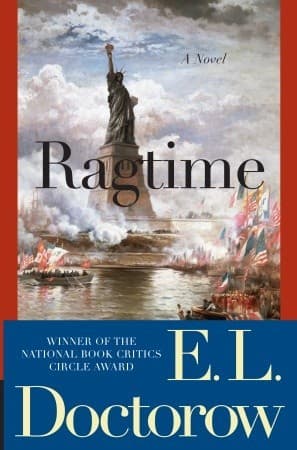
- Ragtime
E.L. Doctorow
3.9 (38k) average on GoodreadsLiterary FictionWhile both books are set in historical New York City and weave together personal stories with broader social changes, "Lillian Boxfish" is intensely focused on the subjective experience of one character and her memories. "Ragtime" offers a panoramic view, intertwining fictional characters with real historical figures and events to paint a larger societal portrait, making it broader in scope and less intimate than Rooney's novel.
- The Old Man and the Sea
Ernest Hemingway
3.8 (831k) average on GoodreadsLiterary FictionA Cuban fisherman's long struggle with a giant marlin becomes a story of endurance and dignity, now retold for young adults with illustrations, phonetic guides, and writing prompts in Traditional Chinese.
- One Hundred Years of Solitude
Gabriel García Márquez
4.1 (753k) average on GoodreadsLiterary FictionThrough the multi-generational story of the Buendía family, a mythical town deals with the repeating patterns of time, love, and solitude, as the extraordinary mixes with the ordinary.





Enjoyed the summary?
A summary gives you the shape of the book. The book itself has the detail, the examples and the voice.
Find Lillian Boxfish Takes a Walk on AmazonAs an Amazon Associate, BookBrief earns from qualifying purchases. How we're funded