

Synopsis
Covers the whole plot, including the ending.
- Difficulty
- Easy
- Pacing
- Moderate
- Mood
- Heartwarming, Reflective, Gentle, Hopeful
- Read it if
- You enjoy gentle, character-driven historical romance with themes of self-discovery and finding purpose, set in both rural prairie and bustling city environments.
- Skip it if
- You prefer fast-paced plots, high-stakes drama, or explicit romance.
Love Takes Wing Plot Summary
Covers the whole plot, including the ending.
A Life of Service on the Prairie
Belinda Davis, now a young woman, works as her older brother Dr. Luke's nursing assistant in their small prairie town. She is skilled and dedicated, helping Luke with house calls and minor surgeries, and comforting their neighbors. Despite her competence and the respect she earns, Belinda feels restless. She sees friends like Mary and Arnie finding partners and settling down, and wonders if her life will ever be more than nursing in the countryside. The prairie, once comforting, begins to feel small, and she longs for broader experiences.
A Chance Encounter and a Tempting Offer
During a visit to a new family, Belinda meets Mrs. Simpson, an elderly, refined woman who recently moved to the area. Mrs. Simpson is frail and needs constant nursing care. Impressed by Belinda's gentle manner and skill, Mrs. Simpson invites Belinda to come with her to Boston, where she has a large home and a comfortable life, to be her private nurse. The offer is tempting, promising financial security and the cultural experiences of a big city, things Belinda has only dreamed of.
A Difficult Decision and Farewell
Mrs. Simpson's offer creates a mix of emotions for Belinda. The idea of Boston is strong, but leaving her beloved family—her parents, Clark and Marty, and her siblings—and her familiar life is hard. Dr. Luke is sad to lose his assistant, but he and her parents support her decision, understanding her wish for new experiences. After emotional goodbyes, filled with excitement and a bit of sadness, Belinda begins the long trip east with Mrs. Simpson, leaving the prairie behind.
Arrival in Boston and New Beginnings
Belinda arrives in Boston, overwhelmed by the city's size and activity. Mrs. Simpson's home is a mansion, grander than anything Belinda has seen. She meets the staff, including a stern housekeeper, and starts her duties. At first, the new surroundings and city life are exciting. Belinda receives beautiful clothes and enjoys the financial comfort, but she soon realizes that despite the luxury, there is a certain formality and emotional distance among the household members, a stark contrast to the warmth of her prairie home.
Exploring Boston's Cultural Riches
With Mrs. Simpson's encouragement and money, Belinda explores Boston's cultural offerings. She attends lectures, visits museums, and goes to concerts, enjoying the intellectual and artistic stimulation she wanted. She meets various people, including some of Mrs. Simpson's acquaintances, but these interactions often feel shallow. Despite constant activity and cultural enrichment, Belinda begins to feel a deep loneliness and emptiness. The city, for all its promise, cannot fill the void left by genuine connection.
The Enigmatic Timothy
Belinda often meets Timothy, Mrs. Simpson's grandson, a quiet young man with artistic interests. Timothy often visits his grandmother but seems separate from the family's social circle, preferring to sketch or read. Belinda is intrigued by his reserved nature and sensitive eyes. Their talks are brief and polite at first, but over time, they share more, discussing art, books, and their views of the world. Belinda finds a kindred spirit in Timothy, someone who sees beyond the superficiality of their Boston society.
A Growing Connection and Shared Dreams
As Belinda continues caring for Mrs. Simpson, her bond with Timothy grows. They discover a shared dissatisfaction with the material focus of their lives and a mutual desire for more meaning. Timothy wants to pursue art seriously, even if it means defying his family's expectations. Belinda, in turn, shares her growing disappointment with Boston's superficiality and her longing for the real connections she left behind. Their conversations become a refuge, providing understanding and companionship amidst their individual feelings of isolation.
Mrs. Simpson's Decline and a Revelation
Mrs. Simpson's health declines, requiring more care from Belinda. During a clear moment, Mrs. Simpson notices Belinda's quiet sadness and her connection with Timothy. She recognizes Belinda's true nature and her sacrifices. In a touching conversation, Mrs. Simpson thanks Belinda for her excellent care but also encourages her to follow her heart and find her own happiness, suggesting Belinda's future lies elsewhere, perhaps with Timothy, or back in the simpler life she truly loves. This moment helps Belinda understand her own feelings.
Timothy's Proposal and Belinda's Dilemma
As Mrs. Simpson's condition improves slightly, Timothy, encouraged by their growing affection and understanding, proposes marriage to Belinda. He imagines a life where they can pursue their passions together, away from his wealthy family's expectations. Belinda is moved by his sincerity and the real love she feels for him. However, a deep realization comes to her: despite her affection for Timothy and the promise of a life with him, her heart still longs for the simple, real community of the prairie. She feels a strong pull back to her roots, her family, and the fulfilling work of nursing in a place where she truly belongs.
A Heartfelt Decision and Departure
After much thought, Belinda gently but firmly declines Timothy's proposal. She explains that while she cares for him deeply, her heart belongs to the prairie and her family. She realizes that her initial restlessness was not a rejection of her home, but a need to see the world to truly appreciate what she had. Timothy, though sad, understands and respects her decision, recognizing her strength. With a heavy but firm heart, Belinda says goodbye to Timothy and Mrs. Simpson, thanking them for the experience, and prepares for her journey back to the prairie, knowing she has found clarity.
Return to the Prairie and Renewed Purpose
Belinda returns to the familiar sights and sounds of the prairie, greeted warmly by her family. She is no longer the restless young woman who left; her time in Boston, while challenging, has given her a new outlook and a deep appreciation for her home. She resumes her work as Dr. Luke's assistant with renewed energy and a deeper sense of purpose, understanding that true fulfillment comes not from external grandeur, but from genuine connection, service, and belonging. She finds peace in the simplicity and warmth of her community, knowing she made the right choice.
Principal Figures
Belinda Davis
Protagonist
A dedicated nurse who seeks broader experiences beyond her prairie home.
Belinda is a kind, competent, and intelligent young woman, trained as a nurse to assist her older brother, Dr. Luke. Initially content with her life of service on the prairie, she develops a growing restlessness and a yearning for cultural enrichment and a more sophisticated life. She is observant and introspective, valuing genuine connection over superficiality. Despite her initial attraction to Boston's allure, she ultimately realizes that true happiness lies in her roots and the authentic relationships she left behind.
Relationships: Dr. Luke Davis (Older brother and professional colleague); Clark and Marty Davis (Loving and supportive parents); Mrs. Simpson (Employer and patient, mentor figure); Timothy (Love interest and kindred spirit in Boston)
Dr. Luke Davis
Supporting
Belinda's older brother and a respected prairie doctor.
Luke is a dedicated and compassionate doctor, highly respected in his prairie community. He relies heavily on Belinda's assistance and values her skill and presence. While he is saddened by the prospect of her leaving, he is supportive of her desire to explore new opportunities. He represents the stability and warmth of Belinda's home life and the fulfilling nature of their shared work.
Relationships: Belinda Davis (Younger sister and nursing assistant); Clark and Marty Davis (Parents)
Mrs. Simpson
Supporting
An elderly, wealthy Bostonian who employs Belinda as her private nurse.
Mrs. Simpson is a refined, elderly woman from Boston, frail and in need of constant nursing care. She is astute and observant, quickly recognizing Belinda's exceptional qualities. Despite her wealth and sophisticated background, she possesses a wisdom that allows her to see beyond societal expectations, ultimately encouraging Belinda to follow her heart rather than remain bound by obligation or superficial allure. She provides Belinda with the opportunity to experience a different world.
Relationships: Belinda Davis (Patient and employer); Timothy (Grandson)
Timothy
Supporting
Mrs. Simpson's artistic and introspective grandson, a potential love interest for Belinda.
Timothy is a quiet, sensitive, and artistic young man, Mrs. Simpson's grandson. He feels somewhat alienated by the materialistic values of his family and longs for a life focused on art and deeper meaning. He finds a kindred spirit in Belinda, sharing his dreams and disillusionments. He represents the intellectual and artistic allure of Boston, and his proposal offers Belinda a different path, but ultimately highlights her true desires.
Relationships: Belinda Davis (Love interest and close confidant); Mrs. Simpson (Grandmother)
Clark and Marty Davis
Supporting
Belinda's loving and supportive parents on the prairie.
Clark and Marty are Belinda's devoted parents, embodying the warmth, simplicity, and strong family values of the prairie. They are initially hesitant about Belinda leaving but ultimately support her desire for new experiences, demonstrating their unconditional love. Their presence and the memories of their home are a constant anchor for Belinda, representing the security and belonging she eventually realizes she cherishes most.
Relationships: Belinda Davis (Daughter); Dr. Luke Davis (Son)
Themes & Insights
The Search for Identity and Belonging
The novel explores Belinda's journey to understand where she truly belongs and who she is. Her initial restlessness on the prairie leads her to Boston. However, the city's wealth and culture highlight a deeper emptiness, making her realize that true belonging comes from real connections and purpose within a community, not from external grandeur. Her return home shows her acceptance of her true self and her place.
“She had found that the bright lights and bustling streets of the city could not fill the quiet longing in her heart for the familiar warmth of home.”
The Allure vs. Reality of the 'Big City'
Belinda is initially drawn to Boston's culture, sophistication, and opportunities. The city represents all her prairie home lacks. However, the novel shows the contrast between this initial appeal and the reality of city life. Belinda experiences the superficiality, formality, and emotional distance that often come with wealth and urban living, discovering that the 'civilized' city can be isolating. This theme shows that external circumstances do not guarantee happiness or fulfillment.
“The city, for all its grandness, felt cold and impersonal, a stark contrast to the open warmth of the prairie.”
The Value of Simple Living and Community
Through Belinda's experiences, the novel champions the value of a simple life rooted in strong community and family ties. The prairie, first seen as limiting, becomes the source of genuine happiness and fulfillment. Her deep, caring relationships with family and her shared purpose in serving her community contrast with the superficial interactions and emotional detachment she finds in Boston. This theme highlights that true richness is in human connection and meaningful contribution.
“It was not the grand houses or the elegant gowns that brought joy, but the loving faces and the simple, honest work of helping others.”
Love and Self-Discovery
Belinda's romantic journey is tied to her self-discovery. While she develops real affection for Timothy, his proposal forces her to face her deepest desires and priorities. She realizes that even a loving relationship in Boston cannot satisfy her longing for her original home and the life she truly loves. This theme suggests that knowing oneself is necessary to understand what kind of love and life will bring true happiness.
“She cared for Timothy, deeply, but her heart, she now knew, belonged to the wide-open spaces and the loving embrace of her own family.”
Plot Devices & Literary Techniques
Journey of Self-Discovery
A physical and emotional journey that leads the protagonist to a deeper understanding of herself.
Belinda's move from the prairie to Boston is not just a change of scenery but a metaphorical journey into her own heart and mind. The challenges and experiences she encounters in the city, particularly the contrast between its glamour and its impersonal nature, force her to introspect and re-evaluate her values. This journey ultimately leads her to realize what truly brings her happiness and a sense of belonging, culminating in her decision to return home with a clearer understanding of herself.
Contrasting Settings
The use of two distinct environments to highlight thematic differences.
The novel effectively uses the stark contrast between the vast, simple prairie and the bustling, sophisticated city of Boston. The prairie represents warmth, community, authenticity, and familial love, while Boston embodies cultural richness, material wealth, but also superficiality and emotional distance. These contrasting settings serve to illuminate Belinda's internal conflict and underscore the novel's themes about the true sources of happiness and fulfillment. The settings are almost characters themselves, shaping Belinda's understanding of the world.
The Mentor Figure
A wise character who guides the protagonist, often subtly, towards self-realization.
Mrs. Simpson serves as a mentor figure for Belinda. While initially her employer and patient, Mrs. Simpson's refined background and life experience, combined with her acute observations of Belinda, allow her to offer subtle guidance. Her encouragement for Belinda to explore Boston's culture and her later, more direct, advice to follow her heart, are crucial in Belinda's journey of self-discovery. Mrs. Simpson provides the catalyst for Belinda's experience away from home and then helps her process what she's learned.
Love Takes Wing Quotes
“Love is not a feeling, but a decision, a commitment to another person.”
“Sometimes the greatest healing comes not from medicine, but from understanding and acceptance.”
“God's timing is always perfect, even when we can't see the reason why.”
“True strength isn't about never falling, but about rising every time you fall.”
“The greatest joy in life is to serve others, to make a difference in their lives.”
“Fear can be a powerful motivator, but love is an even stronger one.”
“Every person has a story, and it's our duty to listen with an open heart.”
“Sometimes the path you choose isn't the one you expected, but it leads to where you're meant to be.”
“Even in the darkest times, there is always a flicker of hope if you only look for it.”
“A kind word can be more powerful than any medicine.”
“Learning is a lifelong journey, and we should never stop seeking knowledge.”
“The heart has a way of knowing what it truly needs, even when the mind is confused.”
“Family is not just about blood, but about the bonds of love and support.”
“True beauty comes from within, from a gentle and compassionate spirit.”
Quiz
10 questions on the plot and the characters. Each answer comes with a short explanation.
Question 1
What is Belinda Davis's initial profession and her primary reason for training in it?
- A teacher, to help educate the children on the prairie.
- A nurse, to assist her older brother, Doctor Luke.
- A seamstress, to provide clothing for her family and neighbors.
- A homemaker, to manage her family's household.
Show answer
B. A nurse, to assist her older brother, Doctor Luke. The book description clearly states Belinda trained as a nurse to assist her older brother, Doctor Luke.
Question 2
What causes Belinda to become restless and find her nursing work dull and routine?
- A major disagreement with her brother, Luke.
- The lack of medical challenges in her small prairie town.
- Seeing those she grew up with getting married and settling down.
- A desire to pursue a different medical specialty.
Show answer
C. Seeing those she grew up with getting married and settling down. The synopsis states Belinda becomes restless as she 'sees those she's grown up with getting married and settling into their own lives,' making her own work seem dull.
Question 3
Where does Belinda receive an invitation to go, offering her a chance for new experiences?
- New York City, to work in a large hospital.
- Philadelphia, to study advanced nursing techniques.
- Boston, to provide nursing care for an elderly woman.
- Chicago, to assist in a developing medical school.
Show answer
C. Boston, to provide nursing care for an elderly woman. Belinda 'jumps at the invitation to go to Boston' to provide nursing care for an elderly woman.
Question 4
What characteristics does Belinda associate with Boston, contrasting it with her prairie town?
- Rustic and peaceful, with a strong sense of community.
- Large and 'civilized,' with cultural opportunities.
- Dangerous and chaotic, but full of opportunity.
- Small and intimate, with a focus on family values.
Show answer
B. Large and 'civilized,' with cultural opportunities. The description highlights Boston as 'a large, 'civilized' city with cultural opportunities she's never even dreamed of in her little prairie town.'
Question 5
Despite the new experiences and financial security in Boston, how does Belinda ultimately feel?
- Content and fulfilled with her new life.
- Excited and invigorated by the city's pace.
- Restless, lonely, and empty inside.
- Overwhelmed but determined to make it work.
Show answer
C. Restless, lonely, and empty inside. The synopsis states, 'in spite of financial security and countless new experiences, Belinda finds herself restless, lonely, and empty inside.'
Question 6
Belinda's journey to Boston can be seen as an exploration of which common theme in young adult literature?
- The struggle for political reform.
- The search for personal identity and purpose.
- The challenges of technological advancement.
- The importance of economic prosperity above all else.
Show answer
B. The search for personal identity and purpose. Belinda's restlessness, dissatisfaction with her routine, and eventual emptiness in Boston despite external advantages, strongly suggest a journey of self-discovery and a search for deeper meaning or purpose.
Question 7
What is the primary contrast presented between Belinda's prairie town and Boston?
- Agricultural versus industrial economy.
- Familiarity and routine versus novelty and cultural opportunities.
- Poverty versus wealth.
- Religious community versus secular society.
Show answer
B. Familiarity and routine versus novelty and cultural opportunities. The prairie town offers routine and familiarity (her established nursing role), while Boston is presented as offering 'new experiences' and 'cultural opportunities' that are unfamiliar to her.
Question 8
Belinda's initial excitement about Boston suggests she believes what aspect of life will bring her fulfillment?
- Deep personal relationships.
- Material possessions and social status.
- External stimulation and new experiences.
- A return to her childhood home.
Show answer
C. External stimulation and new experiences. She 'jumps at the invitation' to Boston, a 'large, 'civilized' city with cultural opportunities she's never even dreamed of,' indicating she expects external novelty and stimulation to cure her restlessness.
Question 9
The feeling of being 'restless, lonely, and empty inside' in Boston, despite financial security and new experiences, primarily highlights which thematic message?
- Urban environments are inherently detrimental to personal well-being.
- True happiness often comes from internal contentment and meaningful connections, not just external circumstances.
- A career in nursing is ultimately unfulfilling for women.
- It is always best to stay in one's hometown.
Show answer
B. True happiness often comes from internal contentment and meaningful connections, not just external circumstances. Belinda's internal state of emptiness despite external advantages strongly suggests the theme that true fulfillment is found internally and through meaningful connections, rather than merely through new places or material security.
Question 10
Given the series title 'Love Comes Softly,' what future plot development is hinted at by Belinda's loneliness and restlessness in a new city?
- She will abandon nursing to become a socialite.
- She will find romantic love that helps her overcome her internal emptiness.
- She will return to the prairie to become a doctor herself.
- She will dedicate her life to charitable work in Boston.
Show answer
B. She will find romantic love that helps her overcome her internal emptiness. As part of the 'Love Comes Softly' series, Belinda's internal emptiness and restlessness, particularly concerning her peers marrying, strongly hint that her journey will involve finding romantic love to bring her fulfillment.
Love Takes Wing FAQ
What is the primary conflict Belinda Davis faces at the beginning of 'Love Takes Wing'?
Belinda Davis, having trained as a nurse to assist her brother Dr. Luke, feels a growing restlessness and dissatisfaction with her prairie town life. She observes her peers marrying and establishing their own families, which makes her once exciting nursing duties feel dull and routine, leading to a desire for something more fulfilling.
What opportunity prompts Belinda to leave her familiar prairie home?
Belinda seizes an opportunity to move to Boston when she encounters an elderly woman in need of nursing care. This invitation to a large, 'civilized' city with cultural opportunities far beyond her prairie town's offerings appeals greatly to her growing desire for new experiences and a change of pace.
How does Belinda's experience in Boston differ from her expectations?
While Belinda finds financial security and numerous new cultural experiences in Boston, she ultimately feels a profound sense of restlessness, loneliness, and emptiness. The bustling city, despite its promises, fails to provide the deep satisfaction and connection she craves, leaving her emotionally unfulfilled.
What role does Belinda's brother, Dr. Luke, play in her initial career path?
Dr. Luke is instrumental in Belinda's initial career, as she specifically trains as a nurse to assist him in his medical practice. This arrangement highlights her family's influence and her early dedication to a practical, supportive role within her community.
Is 'Love Takes Wing' a standalone story, or does it connect to other books in the 'Love Comes Softly' series?
'Love Takes Wing' is the seventh book in the 'Love Comes Softly' series, making it part of a larger narrative arc. While it focuses on Belinda Davis's personal journey, it builds upon the established world and characters introduced in previous installments, particularly those related to the Davis family.
How does Belinda's journey to Boston symbolize a broader theme in the 'Love Comes Softly' series?
Belinda's move to Boston symbolizes a recurring theme in the series: the tension between traditional prairie life and the allure of modern, urban opportunities. Her experience highlights the idea that external prosperity and cultural enrichment don't always equate to inner contentment, a lesson often explored by characters seeking their place in a changing world.
What specific cultural opportunities does Belinda anticipate in Boston that she lacks on the prairie?
Belinda anticipates a wealth of cultural opportunities in Boston, such as theaters, museums, concerts, and perhaps even literary societies, which are virtually nonexistent in her small prairie town. These attractions represent a sophisticated, intellectual stimulation she believes will alleviate her restlessness.
Are there any subtle indications early in the book that Belinda's Boston venture might not fulfill her?
Yes, the narrative subtly hints at Belinda's underlying emotional needs by emphasizing her 'restlessness, loneliness, and emptiness' even amidst her new experiences. The description of her initial excitement as a 'jump' rather than a thoughtful decision suggests an impulsive escape rather than a well-considered pursuit of happiness.
How does Belinda's initial motivation for nursing compare to her later feelings of dissatisfaction?
Belinda's initial motivation for nursing was likely driven by family duty and a desire to be useful, specifically to assist her brother, Dr. Luke. Her later dissatisfaction stems from the realization that this purpose, while noble, doesn't fulfill her personal desires for romance, companionship, or a sense of individual identity separate from her family role.
What psychological need is Belinda attempting to satisfy by seeking a new life in Boston?
Belinda is attempting to satisfy a deep psychological need for personal identity, independence, and perhaps romantic fulfillment that she feels is lacking in her prairie life. She hopes the 'civilized' city will offer not just cultural enrichment but also a chance to define herself beyond her family and community expectations.
How does Belinda's feeling of 'emptiness inside' relate to the concept of extrinsic versus intrinsic motivation?
Belinda's 'emptiness inside' in Boston highlights the difference between extrinsic and intrinsic motivation. While her new life offers extrinsic rewards like financial security and cultural experiences, it fails to provide intrinsic satisfaction, suggesting her true needs are for deeper personal connections, purpose, or love that external factors cannot fulfill.
What might be the underlying psychological reason for Belinda's restlessness despite having a valued profession?
Belinda's restlessness, despite having a valued profession as a nurse, likely stems from a feeling of unfulfilled personal potential and a desire for romantic love and a family of her own. Seeing her peers marry creates a social pressure and a sense of being left behind, suggesting her professional accomplishments aren't enough to satisfy her emotional longings.
Is Belinda's decision to go to Boston primarily an act of rebellion or a genuine search for self-discovery?
Belinda's decision appears to be a complex blend of both rebellion and genuine self-discovery. While it could be seen as a rebellion against the perceived limitations of prairie life, it's also a sincere, albeit misguided, attempt to find where she truly belongs and what will make her happy, beyond her established role.
What does Belinda's eventual feeling of emptiness in Boston suggest about the nature of happiness in the novel?
Belinda's emptiness in Boston suggests that true happiness, according to the novel's themes, is not found in external wealth, status, or cultural sophistication. Instead, it implies that genuine contentment lies in meaningful relationships, a sense of belonging, and contributing to a community where one feels truly valued and loved.
How does the book challenge the notion that a 'civilized' city inherently offers a better life than a rural setting?
The book directly challenges this notion by depicting Belinda's profound loneliness and emptiness in 'civilized' Boston, despite its numerous advantages. It contrasts the superficial allure of urban life with the deeper, more fulfilling connections often found in simpler, close-knit rural communities, suggesting that 'civilization' doesn't equate to happiness.
Does the novel imply a critique of societal expectations for young women in the historical period it depicts?
Yes, the novel subtly critiques societal expectations for young women. Belinda's restlessness, particularly her observation of peers marrying, highlights the pressure on women to find a husband and settle down. Her struggle to find fulfillment outside of these traditional roles, even with a career, speaks to the limited options and societal definitions of success for women of that era.
What is the significance of the title 'Love Takes Wing' in relation to Belinda's journey?
The title 'Love Takes Wing' signifies Belinda's journey of emotional and spiritual growth, where her understanding of love evolves beyond simple romance. It suggests that her capacity for love, both for others and for herself, expands and matures as she navigates challenges, ultimately leading her to a deeper, more authentic connection.
About the author
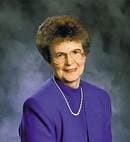
Janette Oke is a Canadian author known for her contributions to Christian fiction. Her notable works include "Love Comes Softly," "When Calls the Heart," "Love Takes Wing," and "When Breaks the Dawn," which often explore themes of faith, love, and resilience in historical settings. Oke's storytelling has resonated with readers, particularly in the genre of inspirational literature.
Similar books
- Love Comes Softly
Janette Oke
4.3 (37k) average on GoodreadsHistorical FictionIt's the first book in the same series, sharing similar themes and writing style.
- Christy
Catherine Marshall
4.2 (49k) average on GoodreadsHistorical FictionFeatures a young woman finding purpose and love while serving in a rural, challenging environment.
- The Blue Castle
L.M. Montgomery
4.3 (30k) average on GoodreadsHistorical FictionWhile both feature a young woman seeking independence and love, Montgomery's protagonist, Valancy Stirling, challenges societal norms with more overt defiance and humor, and her romantic partner is significantly less idealized than Oke's Timothy. Montgomery's work often explores a wider range of character flaws and social critiques.
- To Kill a Mockingbird
Harper Lee
4.3 (4.5M) average on GoodreadsHistorical FictionIn the 1930s Jim Crow South, Harper Lee writes about racial injustice, moral growth, and the quiet courage of a lawyer father, Atticus Finch, as seen through his young daughter's eyes.
- The Great Gatsby
F. Scott Fitzgerald
3.9 (3.8M) average on GoodreadsHistorical FictionIn the opulent Roaring Twenties, a mysterious millionaire's lavish parties hide his desperate, tragic pursuit of a lost love, exposing the emptiness within the American Dream.
- Pride and Prejudice
Jane Austen
4.3 (3M) average on GoodreadsHistorical FictionIn a society focused on status and money, Elizabeth Bennet navigates love and pride, challenging Mr. Darcy and social expectations to find true affection.






Enjoyed the summary?
A summary gives you the shape of the book. The book itself has the detail, the examples and the voice.
Find Love Takes Wing on AmazonAs an Amazon Associate, BookBrief earns from qualifying purchases. How we're funded