

Synopsis
Covers the whole plot, including the ending.
- Difficulty
- Medium
- Pacing
- Slow
- Mood
- Introspective, Melancholy, Thought-provoking, Philosophical
- Read it if
- You enjoy introspective literary fiction that blurs the lines between reality and imagination, and are interested in exploring themes of grief, trauma, and the nature of storytelling.
- Skip it if
- You prefer fast-paced plot-driven narratives, or find stories with a strong focus on internal monologue and philosophical musings less engaging.
Man in the Dark Plot Summary
Covers the whole plot, including the ending.
A Sleepless Night in Vermont
August Brill, a 72-year-old retired book critic, stays at his daughter Miriam's house in Vermont, recovering from a car accident. His leg is in a brace, and he cannot sleep, troubled by the quiet and the dark. He tries to distract himself from the grief of his wife Sonia's recent death and the murder of his granddaughter Katya's boyfriend, Titus. To cope with his insomnia and painful memories, August begins to invent a story in his mind, a detailed alternate reality that helps him escape his sorrow.
The Fictional World: Owen Brick's Awakening
August's invented story takes place in a parallel America where the 2000 presidential election led to widespread secession and a civil war, instead of the Iraq War. In this world, the Twin Towers still stand. The story's main character is Owen Brick, a 29-year-old magician who wakes up in a ditch in rural Pennsylvania, disoriented and with no memory. He finds himself in a war-torn country, a foreign place, and realizes he has been drafted into an army he does not understand, forced to fight unknown enemies.
Owen's Mission: Assassinating August Brill
Owen Brick learns from a commanding officer that his mission is to kill a man named August Brill. This news disturbs Owen, as he is a character in the real August Brill's imagination. The goal is to eliminate the 'creator' of the alternate reality, possibly ending the war or disrupting its story. Owen, a pacifist magician, struggles with this violent order, finding himself trapped in a world where his existence is a construct and his mission is to destroy his own author.
Katya's Arrival and Shared Insomnia
In the real world, as August continues his story, his granddaughter Katya, also unable to sleep, comes into his room. She is 23 years old and still affected by the murder of her boyfriend, Titus, a year earlier. Katya's presence offers a break from August's mental narrative. They share a quiet closeness, both dealing with grief and insomnia, finding comfort in each other during the night.
The Story of Sonia and August
Katya asks August for a story, and he begins to tell her how he met and fell in love with Sonia, his late wife. He describes their early days, their deep connection, and their lasting relationship. This story is a bittersweet journey through memory, full of tenderness and nostalgia, allowing August to revisit a happier time while processing his recent loss. Katya listens closely, finding solace in her grandfather's personal history.
Owen's Journey and Moral Conflict
Back in August's imagined world, Owen Brick continues his journey to find August Brill, the man he must kill. He travels through a desolate, war-torn landscape, seeing parts of the conflict and its suffering. Owen, a man of peace, struggles with the moral implications of his mission. He questions his situation, the random violence, and his identity within this fabricated existence, showing the dread of being a pawn in a larger, incomprehensible game.
The Nature of Reality and Storytelling
August pauses his story for Katya, reflecting on reality, imagination, and the human need for stories. He considers how stories, true or invented, help people understand their lives, cope with pain, and shape their view of the world. He acknowledges the artificiality of Owen Brick's world but also the emotional truth it holds for him as a way to process his worries about violence, war, and the fragility of peace, both personal and societal.
Katya's Sleep and August's Return to Owen
As the night grows deeper, Katya eventually falls asleep, leaving August alone again in the quiet house. With Katya sleeping beside him, August returns to his imagined world and Owen Brick's story. The quiet allows him to fully immerse himself in the alternate reality, where the stakes feel more urgent, and the line between his waking thoughts and the fabricated world begins to blur, reflecting his need to face difficult truths through fiction.
Owen's Confrontation and Crisis
In the fictional world, Owen Brick finally reaches the location where August Brill is supposedly staying. He confronts his mission, holding the weapon, and grappling with the impossibility of killing someone he knows nothing about, yet who represents his very existence. The moment of confrontation is tense, as Owen, the created, stands before the imagined image of his creator, forced to make a choice that questions his being and the reality he inhabits.
The Unveiling of Titus's Death
As dawn nears, August, no longer able to postpone it, forces himself to revisit the traumatic memory of Titus's murder. He recalls the details: Titus, Katya's boyfriend, was stabbed to death by a random attacker in a park. This memory is the raw pain August had been trying to outrun with his fictional world. Facing this real-world horror is more profound and devastating than any imagined civil war.
The Aftermath of Trauma
August processes the lingering grief and shock from Titus's death. He thinks about Katya's devastation, his own helplessness, and how such random acts of violence shatter lives and leave lasting scars. The imagined war in his head, while a metaphor for societal conflict, is less impactful than the personal horror of a loved one's senseless death. This reflection highlights the novel's main theme: the inescapable presence of violence and suffering, both large and deeply personal.
Morning Light and Lingering Shadows
As the first rays of morning light enter the room, the long, sleepless night ends. Katya stirs, and August is left with the echoes of his fictional world and the reality of his grief. The imagined civil war and Owen Brick's story fade, but the pain of Sonia's death and Titus's murder remains. The novel ends with August having faced, rather than escaped, the 'darkness' of his personal traumas, though healing is still a long process.
Principal Figures
August Brill
Protagonist
A 72-year-old retired book critic grappling with grief and insomnia.
August Brill is a highly intelligent, introspective, and somewhat melancholic man. He is a retired book critic, which highlights his analytical mind and deep connection to stories. He is deeply grieving the recent death of his wife, Sonia, and the brutal murder of his granddaughter's boyfriend, Titus. His coping mechanism for insomnia and pain is to construct elaborate fictional worlds, demonstrating both his imaginative capacity and his struggle to confront raw emotional trauma directly. He deeply loves his family, particularly Sonia and Katya, and carries the weight of their suffering.
Relationships: Sonia (His beloved late wife, whose memory he cherishes.); Katya (His granddaughter, with whom he shares a deep, supportive bond, both grieving Titus.); Miriam (His daughter, whose home he is staying in during his recovery.)
Katya
Supporting
August's granddaughter, deeply traumatized by her boyfriend's murder.
Katya is a young woman, 23 years old, still reeling from the horrific murder of her boyfriend, Titus, a year prior. She is sensitive, observant, and shares a strong, empathetic bond with her grandfather, August. Her insomnia and her emotional fragility mirror August's own struggles, creating a shared space of vulnerability and comfort between them. She seeks solace in August's stories, both his personal history and his invented tales, as a way to navigate her own profound grief and trauma.
Relationships: August Brill (Her grandfather, with whom she shares a close, comforting relationship.); Titus (Her murdered boyfriend, whose death is a central trauma for her.)
Sonia
Mentioned
August's recently deceased wife, a source of his profound grief.
Sonia is August Brill's late wife, whose recent death is a primary source of his profound grief and insomnia. Although she never appears in the present narrative, her presence is deeply felt through August's memories and his recounting of their life together. She is depicted as the enduring love of his life, a vital partner whose absence has left a significant void. Her memory serves as both a source of pain and a cherished comfort for August.
Relationships: August Brill (Her devoted husband, who deeply mourns her.)
Titus
Mentioned
Katya's murdered boyfriend, whose death is a source of shared trauma.
Titus is Katya's boyfriend who was brutally murdered a year before the novel's events. Like Sonia, he never appears in the present narrative, but his death is a central traumatic event that profoundly affects both Katya and August. His senseless killing represents the arbitrary and devastating nature of violence, both on a personal level and as a reflection of the larger anxieties that August explores in his fictional world. His memory is a painful wound that August initially tries to avoid confronting directly.
Relationships: Katya (Her murdered boyfriend, whose loss she grieves deeply.)
Owen Brick
Protagonist (Fictional)
A magician in August's imagined world, tasked with an impossible mission.
Owen Brick is the protagonist of August Brill's elaborate fictional story. He is a 29-year-old magician who wakes up in a parallel America embroiled in a civil war, with no memory of his past or how he got there. He is a pacifist by nature, which makes his assigned mission to assassinate August Brill (his own creator) deeply disturbing and morally conflicting. Owen represents the individual caught in the machinery of war and the absurdity of a reality not of his own making, embodying the existential questions of free will and purpose within a constructed narrative.
Relationships: August Brill (Fictional) (His target, who is unknowingly his creator.)
Miriam
Supporting
August's daughter, who hosts him during his recovery.
Miriam is August Brill's daughter and Katya's mother. She provides the setting for the novel, as August is staying in her Vermont home while recovering from his car accident. While not a central figure in the emotional drama, her presence signifies the family unit that August and Katya are a part of. She represents a stable, albeit background, presence, allowing August the space and quiet to grapple with his internal struggles.
Relationships: August Brill (Her father, whom she cares for during his recovery.); Katya (Her daughter, who is also grieving.)
Themes & Insights
The Power of Storytelling and Imagination
August Brill uses storytelling as a way to cope, building an elaborate alternate reality to distract himself from deep personal grief and trauma. His creation of Owen Brick and the civil war in the parallel America shows how imagination can be both an escape and a way to process worries about violence and societal breakdown. The novel itself, as a story, reflects August's internal process, highlighting the human need for narrative to understand, or at least survive, a chaotic world. This is clear as August tells Katya the story of his marriage, using narrative to connect and share warmth amid their shared sorrow.
“What does one do when there's nothing to be done? One makes up a story. And in that story, one invents a character who is in the same predicament as oneself. It's a way of being two places at once.”
Grief, Trauma, and Memory
The novel is full of themes of grief and trauma. August mourns his wife Sonia's death and struggles with the brutal murder of his granddaughter's boyfriend, Titus. Katya shares this trauma, shown in her sleeplessness and quiet despair. Remembering, both painful and comforting, is central to August's journey. He first tries to avoid the memory of Titus's death through his fictional world, but he must ultimately confront it, showing that true healing requires facing, not avoiding, deep loss. His recounting of his marriage to Sonia honors memory while processing its absence.
“The past is a country we can never leave. It's always there, just beyond the horizon, waiting for us to come back to it.”
The Nature of Reality and Illusion
Auster blurs the lines between reality and illusion, both in August's mind and for the reader. Owen Brick's existence within August's imagination raises questions about free will, purpose, and the nature of being. Is Owen truly 'real' in his constructed world? His mission to kill August Brill, his creator, comments on the author-character relationship. This theme extends to how people perceive the world, suggesting that personal and collective 'realities' are often shaped by narrative and perspective, as seen in August's alternate America versus the actual world's conflicts.
“Is this real? Or am I dreaming? The question had been pounding in his head for hours.”
Violence and War
The presence of violence, both personal and societal, runs through the novel. August's invented civil war in America reflects his worries about political division, national conflict, and widespread devastation. This large-scale violence is a metaphor for real-world conflicts, like the Iraq War, that August tries to avoid thinking about. However, the novel's true horror lies in the personal violence of Titus's senseless murder, which is more devastating to August and Katya than any imagined war. The novel places these forms of violence side by side, suggesting their connection and widespread impact.
“The war was everywhere and nowhere, a fog that had settled over the entire country.”
Plot Devices & Literary Techniques
Story-within-a-story (Metafiction)
August's imagined narrative of Owen Brick exists within the primary narrative.
This device is central to the novel's structure. August Brill, the protagonist, invents an elaborate story about Owen Brick in a parallel America. This fictional narrative serves multiple purposes: it's a coping mechanism for August's insomnia and grief, a way to explore anxieties about war and reality, and a metafictional commentary on the act of creation itself. The story of Owen Brick directly mirrors August's own struggles, with Owen's mission to kill his creator being a symbolic act of the character's struggle for autonomy against the author's control, blurring the lines between the 'real' and the 'imagined'.
Parallel Worlds / Alternate History
August creates a divergent reality where America experiences a civil war.
August's imagined world posits an alternate history for America, where the 2000 election results led to secession and a civil war, rather than the Iraq War. This device allows Auster to explore societal anxieties and political divisions through a speculative lens. It serves as a symbolic representation of the psychological civil war within August himself, torn between confronting his grief and escaping into fantasy. The contrast between this imagined, grand-scale conflict and the intensely personal tragedy of Titus's murder highlights different facets of violence and human suffering.
Insomnia as a Catalyst
August's sleeplessness drives his storytelling and internal journey.
August's inability to sleep is the primary catalyst for the entire narrative. The long, dark hours of the night force him to confront his thoughts and memories, leading him to construct his elaborate fictional world. Insomnia strips away the distractions of daily life, leaving him vulnerable to his grief and anxieties. It creates a liminal space where the boundaries between waking and dreaming, reality and imagination, become fluid, allowing for the deep introspection and the eventual confrontation with his trauma that defines the novel's emotional core.
The Unreliable Narrator (Self-Created Fiction)
The 'reality' of Owen Brick's world is entirely dependent on August's mind.
While August Brill is the primary narrator, his creation of Owen Brick's world introduces a layer of narrative unreliability. The events in Owen's world are entirely subject to August's imagination and state of mind, making it a 'reality' that is consciously constructed and mutable. This device highlights the subjective nature of truth and the power of individual perception. The reader understands that Owen's story is a projection of August's anxieties, making the 'unreliability' a deliberate and transparent artistic choice rather than a deceptive one, inviting deeper thematic exploration.
Man in the Dark Quotes
“As if the world weren’t strange enough, as if it weren’t baffling enough that the earth is spinning through space at 67,000 miles per hour and we’re all just clinging to it, upside down and sideways, and if we let go we’re dead.”
“The world is full of things we can't explain, and the older I get, the more I realize how little I know.”
“A story is a way of seeing. It's a way of understanding. It's a way of making sense of the world.”
“Sleep is a country you visit every night, and you can never be sure what you're going to find there.”
“What does a person do when he can't sleep? He thinks. He remembers. He invents.”
“The past is never dead. It's not even past.”
“Every life is a story, and every story has a beginning, a middle, and an end. But not necessarily in that order.”
“We live in a world of endless possibilities, and sometimes the most improbable ones are the ones that come true.”
“The world is full of ghosts, and some of them are still alive.”
“Imagination is a disease, and I'm suffering from it.”
“You never know what's going to happen next. That's the beauty of it, and that's the terror of it.”
“A book is a world you can carry in your hands.”
“Loneliness is a kind of death, isn't it? A slow, quiet death.”
“Every person is a book, and every book is a mystery.”
Quiz
10 questions on the plot and the characters. Each answer comes with a short explanation.
Question 1
What is the primary reason August Brill tells himself stories during his sleepless nights?
- To plan his next book review.
- To avoid thinking about his wife's death and his granddaughter's boyfriend's murder.
- To entertain his daughter and granddaughter.
- To remember his past literary achievements.
Show answer
B. To avoid thinking about his wife's death and his granddaughter's boyfriend's murder. August Brill explicitly tells himself stories to push back thoughts about his wife’s recent death and the horrific murder of his granddaughter’s boyfriend, Titus.
Question 2
Where is August Brill recovering from a car accident?
- In his own home in New York.
- In a hospital in Vermont.
- In his daughter's house in Vermont.
- At a rehabilitation center.
Show answer
C. In his daughter's house in Vermont. The synopsis states that August Brill is recovering from a car accident in his daughter’s house in Vermont.
Question 3
What is August Brill's former profession?
- A history professor.
- A retired book critic.
- A war correspondent.
- A novelist.
Show answer
B. A retired book critic. The text identifies August Brill as a 'retired book critic'.
Question 4
In August Brill's imagined parallel world, what is America at war with?
- Iraq, as in the real world.
- Itself, in a civil war.
- Canada, over border disputes.
- A coalition of European powers.
Show answer
B. Itself, in a civil war. Brill imagines a parallel world in which America is not at war with Iraq but with itself, leading to a bloody civil war.
Question 5
What event in the real world's history is altered in Brill's imagined parallel world?
- The end of the Cold War.
- The outcome of World War II.
- The fall of the twin towers and the 2000 election results.
- The moon landing.
Show answer
C. The fall of the twin towers and the 2000 election results. In Brill's other America, 'the twin towers did not fall and the 2000 election results led to secession'.
Question 6
Who joins August Brill in the early hours and prompts him to recount his marriage story?
- His daughter.
- His wife (in a flashback).
- His granddaughter.
- A nurse.
Show answer
C. His granddaughter. The synopsis states he is 'Joined in the early hours by his granddaughter, he gradually opens up to her and recounts the story of his marriage'.
Question 7
What is the name of August Brill's granddaughter's murdered boyfriend?
- Arthur.
- Thomas.
- Titus.
- Timothy.
Show answer
C. Titus. The text explicitly mentions 'the horrific murder of his granddaughter’s boyfriend, Titus'.
Question 8
The novel's themes primarily revolve around the contrast between:
- The simplicity of rural life versus the complexity of urban life.
- The many realities we inhabit and the coexistence of ordinary joys with grotesque violence.
- The benefits of imagination versus the drawbacks of reality.
- The importance of physical recovery over mental well-being.
Show answer
B. The many realities we inhabit and the coexistence of ordinary joys with grotesque violence. The introductory sentence states it's 'about the many realities we inhabit as wars flame all around us' and the concluding sentence mentions 'the existence of ordinary joys in a world capable of the most grotesque violence'.
Question 9
What does August Brill finally find the courage to revisit after his granddaughter falls asleep?
- His old book reviews.
- The trauma of Titus's death.
- Plans for his daughter's future.
- Memories of his car accident.
Show answer
B. The trauma of Titus's death. After his granddaughter falls asleep, 'he at last finds the courage to revisit the trauma of Titus’s death'.
Question 10
How does the novel's title, 'Man in the Dark,' relate to August Brill's situation?
- It refers to his literal inability to see well at night due to his accident.
- It symbolizes his mental state of being in the dark about the future.
- It reflects his sleepless nights spent in bed, telling stories, and confronting difficult truths.
- It is a metaphor for his isolation from society.
Show answer
C. It reflects his sleepless nights spent in bed, telling stories, and confronting difficult truths. Brill spends his sleepless nights in the dark, confronting his thoughts and telling stories to avoid painful memories, eventually facing 'the blackness of night' both literally and metaphorically.
Man in the Dark FAQ
What is the central premise of 'Man in the Dark'?
The novel primarily revolves around 72-year-old August Brill, a retired book critic recovering from an accident. Unable to sleep, he invents an elaborate alternate reality where the United States is embroiled in a civil war, all while grappling with personal grief over his wife's death and the murder of his granddaughter's boyfriend, Titus.
Who is August Brill and what is his current situation at the start of the book?
August Brill is the protagonist, a 72-year-old retired book critic. He is recuperating from a car accident at his daughter's house in Vermont, suffering from insomnia and using storytelling as a coping mechanism to avoid confronting his recent traumas.
What kind of alternate reality does August Brill create, and what are its key features?
Brill imagines a parallel America where the 2000 election results led to widespread secession, sparking a brutal civil war rather than the Iraq War. In this world, the Twin Towers still stand, and the country is fractured into warring factions, with a protagonist named Owen Brick tasked with a bizarre mission.
Who is Owen Brick in Brill's imagined story, and what is his mission?
Owen Brick is the central character in August Brill's imagined civil war narrative. He is a magician tasked by a mysterious organization to assassinate Brill, who is identified as the author of the alternate reality, by using a specific prop from a magic trick.
How does August Brill's granddaughter, Katya, fit into the narrative?
Katya joins August in the early hours of the morning, seeking comfort. Her presence prompts Brill to gradually shift from his invented story to recounting details of his marriage and, eventually, the traumatic events surrounding Titus's death, providing a crucial emotional anchor.
What is the significance of the 2000 election and the Twin Towers in Brill's alternate world?
In Brill's imagined reality, the contested 2000 election results directly trigger secession and civil war, preventing the Iraq War. Crucially, the Twin Towers remain standing, symbolizing a different trajectory for America's recent history, untouched by the 9/11 attacks.
How does the murder of Titus connect to August's storytelling?
Titus's horrific murder is the deep-seated trauma August is desperately trying to avoid confronting. His elaborate alternate reality serves as a distraction, a way to occupy his mind and postpone revisiting the painful memories of his granddaughter's boyfriend's death, which he eventually addresses.
What is the implied connection between Owen Brick's mission and August Brill's real-world distress?
Owen Brick's mission to 'kill' Brill (the author of the reality) subtly reflects Brill's own desire to escape or 'kill' the painful reality he inhabits. The act of creating and then attempting to resolve the fictional conflict becomes a metaphor for Brill's internal struggle with grief and trauma.
How does Brill's insomnia contribute to the novel's structure and themes?
Brill's sleeplessness is the catalyst for the entire narrative, allowing him the mental space and time to construct his elaborate alternate world. It underscores themes of coping mechanisms, the mind's ability to create realities, and the struggle to find peace amidst personal and collective turmoil.
What psychological function does the creation of the alternate civil war serve for August Brill?
The alternate civil war serves as a complex psychological defense mechanism for August. It allows him to externalize and process anxieties about national conflict and violence, while simultaneously distracting him from the more immediate and personal traumas of his wife's death and Titus's murder.
How does the novel explore the nature of reality and storytelling?
The novel constantly blurs the lines between reality and fiction, demonstrating how storytelling can be both an escape and a way to process trauma. Brill's ability to invent an entire world highlights the subjective nature of reality and the power of the human mind to construct meaning.
What role does grief play in August Brill's psychological state throughout the book?
Grief is a pervasive and foundational element of Brill's psychological state. The recent death of his wife and the violent loss of Titus are the primary sources of his profound sadness and anxiety, driving his insomnia and his desperate need to create an alternative narrative.
Is Brill's alternate world a political commentary, a personal escape, or both?
Brill's alternate world functions as both a political commentary on American society and a deeply personal escape. It allows him to process anxieties about national division and war while simultaneously serving as a psychological shield against the unbearable pain of his personal losses.
What is the significance of the title 'Man in the Dark'?
The title 'Man in the Dark' refers literally to August Brill lying awake in his dark bedroom, unable to sleep. Metaphorically, it signifies his struggle to navigate the 'darkness' of grief, trauma, and an uncertain world, both personally and politically, seeking light or understanding.
How does the ending of the novel, particularly Brill's revisiting of Titus's death, provide a sense of resolution or lack thereof?
The ending provides a nuanced resolution; Brill finally confronts the trauma of Titus's death, which is a necessary step towards healing. While the pain isn't erased, the act of facing it directly, after using storytelling as a buffer, suggests a movement towards acceptance and a different kind of peace.
What message does the novel convey about the relationship between individual suffering and global conflict?
The novel suggests a profound interconnectedness between individual suffering and global conflict. Brill's personal grief over Titus and his wife mirrors his anxieties about national strife, implying that large-scale violence is often reflected in, and contributes to, personal turmoil and vice versa.
How does the presence of Katya influence August's willingness to share his personal history?
Katya's vulnerable presence and her own quiet suffering create a safe space for August. Her need for connection encourages him to gradually lower his guard, moving from the fantastical to the deeply personal, as he recounts his marriage and eventually, the painful truth of Titus's death.
What is the broader commentary the book makes about American identity and its potential fractures?
The book offers a stark commentary on the fragility of American identity, using the imagined civil war to explore deep political divisions and the potential for societal collapse. It questions the stability of the nation, especially in the wake of contentious political events and growing polarization.
About the author

Paul Benjamin Auster is an American writer and film director. His notable works include The New York Trilogy (1987), Moon Palace (1989), The Music of Chance (1990), The Book of Illusions (2002), The Brooklyn Follies (2005), Invisible (2009), Sunset Park (2010), Winter Journal (2012), and 4 3 2 1 (2017). His books have been translated into more than forty languages.
Similar books
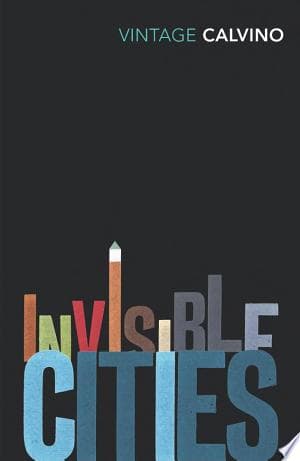
- Invisible Cities
Italo Calvino
4.1 (62k) average on GoodreadsFantasyExplores the power of imagination and storytelling through a series of fantastical descriptions and philosophical reflections.
- Cloud Atlas
David Mitchell
4.0 (216k) average on GoodreadsLiterary FictionFeatures interconnected narratives spanning different times and realities, exploring the nature of storytelling and human connection.
- The New York Trilogy
Paul Auster
3.9 (62k) average on GoodreadsMysteryAuster's earlier work, The New York Trilogy, similarly employs metafiction and an exploration of identity and reality. However, 'Man in the Dark' focuses more intensely on personal grief and the psychological function of storytelling as a coping mechanism, whereas the Trilogy delves more into detective fiction tropes and philosophical inquiries into authorship and meaning. 'Man in the Dark' feels more intimate and emotionally raw, despite its intellectual complexity, than the more detached, cerebral nature of the Trilogy.
- The Old Man and the Sea
Ernest Hemingway
3.8 (831k) average on GoodreadsLiterary FictionA Cuban fisherman's long struggle with a giant marlin becomes a story of endurance and dignity, now retold for young adults with illustrations, phonetic guides, and writing prompts in Traditional Chinese.
- One Hundred Years of Solitude
Gabriel García Márquez
4.1 (753k) average on GoodreadsLiterary FictionThrough the multi-generational story of the Buendía family, a mythical town deals with the repeating patterns of time, love, and solitude, as the extraordinary mixes with the ordinary.
- The Goldfinch
Donna Tartt
3.9 (720k) average on GoodreadsLiterary FictionHaunted by a tragic explosion and clutching a stolen Dutch masterpiece, a young orphan navigates the opulent drawing rooms of New York and the gritty underbelly of the art world, desperately seeking connection and redemption amidst a life spiraling into crime and obsession.




Enjoyed the summary?
A summary gives you the shape of the book. The book itself has the detail, the examples and the voice.
Find Man in the Dark on AmazonAs an Amazon Associate, BookBrief earns from qualifying purchases. How we're funded