

Synopsis
Covers the whole plot, including the ending.
- Difficulty
- Hard
- Pacing
- Variable
- Mood
- Intellectual, Surreal, Provocative, Erotic, Philosophical
- Read it if
- You enjoy experimental literary fiction, philosophical debates on art and creation, and a playful, meta-narrative structure.
- Skip it if
- You prefer straightforward plots, realistic dialogue, or are uncomfortable with explicit sexual content and intellectualized power dynamics.
Mantissa Plot Summary
Covers the whole plot, including the ending.
The White Room
Miles Green wakes in a stark white, windowless room, disoriented and with complete amnesia. He remembers nothing of who he is or how he got there until a nurse, Dr. Delfie, gives him his name. Dr. Delfie, a stunning woman, tries to examine him, but Miles is more interested in her striking looks and the unsettling perfection of his surroundings. He quickly becomes suspicious of her methods and his strange confinement. His mind, though blank about his past, is very active, creating theories and questions about his situation and Dr. Delfie's true identity. He feels an unexplained connection to her, a sense of familiarity despite his amnesia.
The Muse Revealed
Miles's suspicion grows, fueled by Dr. Delfie's evasiveness and the room's surreal feel. He starts to think he is not in a hospital but some symbolic space, and that Dr. Delfie is not a doctor. Through logic and intuition, he concludes she is his muse, a symbol of creative inspiration. When faced with his insistent and detailed theories, Dr. Delfie, after some resistance, admits he is a novelist, John Fowles, and she is his muse, Urania. This news confirms his artistic identity but does little to explain their strange meeting.
The Battle for Narrative Control
With their true identities known, the relationship between Miles (now accepting himself as John Fowles, the novelist) and Urania becomes a battle of wills. Miles, eager to regain his creative power and leave the white room, tries to control his next novel. Urania, however, asserts her own role, arguing she is not just a passive vessel but an active part of the creative process. She criticizes his past works, questions his artistic choices, and demands a more important, less objectified role in his future stories. Their dialogue becomes a discussion on authorship, inspiration, and the link between creator and creation.
The Seduction and the Sabotage
Miles, seeing Urania as someone to control, tries to seduce her, believing physical intimacy will restore his creative flow and show his dominance. Urania, however, is an elusive and powerful opponent. Each time Miles makes a move, she changes, shifting her appearance and personality. She becomes various female figures: a modest Victorian lady, a fierce Amazonian warrior, a playful nymph, and even a cold feminist academic. These changes are not just physical; they show the muse's many powers and her refusal to be limited by Miles's expectations or desires. She constantly thwarts his attempts to control her.
The Arrival of Erato
The surreal atmosphere deepens with the sudden arrival of a second muse, Erato, the muse of erotic poetry. Erato is younger, more openly sensual, and less intellectual than Urania. Her arrival further complicates Miles's situation and the power dynamics in the white room. Erato's presence adds a new layer to the debate about inspiration, focusing on physical desire and raw emotion as creative forces. She often disagrees with Urania, undermines her arguments, and even tries to seduce Miles herself, creating a love triangle that is both absurd and symbolic of the competing demands on an artist's imagination.
The Courtroom Drama
The setting suddenly changes, turning the white room into a surreal courtroom. Miles is put on trial, accused of various literary sins, especially his treatment of female characters and his perceived patriarchal biases in his stories. Erato, with her sharp wit and aggressive manner, acts as prosecutor, dissecting Miles's past works and exposing his perceived flaws. Urania, though appearing as a witness, also adds to the indictment, offering subtle critiques of his artistic shortcomings. Miles, now the defendant, must defend his entire writing career and his understanding of the creative process, facing a relentless intellectual attack from his own inspirations.
The Judgment and the Sentence
After a harsh prosecution and a mostly weak defense, Miles is found guilty by the muses. Their verdict is not literal imprisonment, but a symbolic one: he is sentenced to a purgatory where he will forever struggle with writer's block and creative weakness. This sentence is a direct result of his inability to truly understand and respect the independent role of his muses and, by extension, the female characters he creates. The judgment emphasizes the book's main idea: true creativity needs a collaborative and respectful relationship between the author and their sources of inspiration, not one of dominance and objectification.
The Escape and the Chase
Desperate to escape his creative prison and the muses' constant critiques, Miles tries to flee the white room. This leads to a farcical and increasingly absurd chase. The room itself transforms, becoming a series of fantastical and symbolic landscapes — a forest, a desert, a stormy sea — each showing different challenges and aspects of the creative struggle. The muses, especially Urania, pursue him relentlessly, often appearing in different forms and using their powers to stop his escape. This chase is a metaphor for the artist's endless struggle to escape the demands of inspiration and the difficulties of the creative process, only to find that inspiration is unavoidable.
The Return to the White Room
After his exhausting and ultimately useless escape attempt, Miles finds himself back in the pristine white room, facing Urania and Erato again. However, his journey has had some impact. Though still frustrated, he starts to show a glimmer of understanding, a new acceptance of the muses' independent power and the collaborative nature of creation. The futility of his escape reinforces the idea that an artist cannot truly leave their muse; inspiration is an intrinsic part of their being. This return suggests a possible turning point, implying that true artistic growth can only come from recognizing and respecting the forces that drive it.
The Final Plea and the Promise
In a moment of exhaustion and new humility, Miles makes a final plea to Urania and Erato. He acknowledges their power, their wisdom, and his own faults. He expresses a desire to create a new kind of novel, one that truly respects and explores the complexities of female characters, moving past his previous patriarchal tendencies. While the muses do not offer immediate or easy forgiveness, there is a sense that this new understanding might lead to a more fruitful and balanced creative relationship. The ending is open, suggesting the struggle between artist and muse is ongoing, but with a hint of potential growth and reconciliation.
Principal Figures
Miles Green (John Fowles)
Protagonist
A novelist struggling with amnesia and his relationship with his muses.
Miles Green awakens with amnesia, initially unable to recall his identity. As the narrative unfolds, he is revealed to be John Fowles, the celebrated novelist. He is intelligent, articulate, and prone to intellectualizing his experiences, even in his amnesiac state. Miles grapples with questions of authorship, creative control, and his past treatment of female characters in his fiction. He is driven by a desire to write, to reclaim his memory, and to assert his dominance over his inspirations, yet he is also deeply insecure and vulnerable to the muses' critiques.
Relationships: Uranias (His primary muse, whom he initially tries to control but eventually learns to respect.); Erato (A secondary, more sensual muse, who challenges his perspectives and Uranias's authority.)
Uranias (Dr. Delfie)
Antagonist/Supporting
The primary muse, a powerful and intellectual embodiment of creative inspiration.
Initially appearing as Dr. Delfie, a beautiful and enigmatic doctor, Uranias is revealed to be Miles's primary muse, the muse of astronomy and philosophical poetry. She is intelligent, articulate, and fiercely independent, refusing to be a passive vessel for Miles's creativity. Uranias critiques his work, challenges his patriarchal views, and transforms her appearance and persona at will to assert her agency. She represents the intellectual and profound aspects of inspiration, demanding respect and collaboration from the artist rather than subjugation.
Relationships: Miles Green (His primary muse, engaged in a power struggle over creative control.); Erato (A fellow muse, often in playful or serious contention with Uranias.)
Erato
Supporting
The muse of erotic poetry, embodying sensual and passionate inspiration.
Erato is the second muse to appear, younger, more overtly sensual, and less intellectual than Uranias. She embodies the raw, passionate, and erotic aspects of creative inspiration. Erato is playful, provocative, and often challenges both Miles and Uranias, bringing a different perspective to the debate about authorship and creativity. She acts as a foil to Uranias, highlighting the diverse and sometimes conflicting demands on an artist's imagination. Her presence introduces a dynamic of sexual tension and emotional spontaneity into the sterile white room.
Relationships: Miles Green (A secondary muse, who attempts to seduce him and challenges his artistic perspectives.); Uranias (A fellow muse, with whom she has a complex, sometimes competitive, relationship.)
Themes & Insights
The Nature of Creative Inspiration and Authorship
The novel explores the source and control of creative inspiration. Is the muse a passive vessel or an active, independent force? Fowles uses the muses' literal presence to question the author's ultimate authority over their creations. Miles's initial amnesia symbolizes the blank slate before inspiration, and his struggle with Urania and Erato represents the artist's constant battle to use, understand, and respect the forces that drive their work. The courtroom scene directly addresses the author's responsibility and ethics in shaping stories, especially regarding gender.
“You novelists! Always trying to possess us. But we are not yours to possess. We are ours.”
Gender Dynamics and Feminism in Literature
A main theme is the criticism of patriarchal attitudes in literature and the objectification of female characters. Urania and Erato constantly challenge Miles (and by extension John Fowles) on his past portrayal of women in his novels, accusing him of reducing them to archetypes or plot devices. Urania's transformations into various female figures—from modest to aggressive—symbolize the complex nature of womanhood that Miles, as an author, has failed to truly capture or respect. The novel advocates for a more nuanced, empathetic, and fair representation of female characters, reflecting a feminist critique of traditional literary practices.
“You think you invent us. We invent you.”
Metafiction and Self-Referentiality
Mantissa is highly metafictional, constantly drawing attention to its own artificiality and creation process. The main character being a novelist (John Fowles himself) who talks directly with his muses blurs the lines between author, character, and inspiration. The 'white room' setting, the changing identities, and the open discussions about plot, character, and genre all remind the reader they are engaging with a constructed reality. This self-awareness allows Fowles to comment on storytelling rules, the link between fiction and reality, and the act of writing a novel.
“This is a book about writing a book about writing a book.”
The Artist's Struggle and Creative Block
The novel shows the anxieties and frustrations in the creative process. Miles's amnesia can be seen as a metaphor for creative block, a state where the artist feels without ideas or purpose. His subsequent struggle to write and his battles with the muses represent the difficult, often contentious relationship between an author and their inspiration. The muses' 'sentence' of creative purgatory further highlights the severe results of failing to nurture and respect the creative urge. The story shows the psychological toll writing can take, and the constant need for artists to grow and adapt their approach.
“The greatest enemy of art is the good idea badly pursued.”
Plot Devices & Literary Techniques
Amnesia
Miles Green's initial state of memory loss.
Miles's amnesia serves as a powerful starting point, symbolizing a tabula rasa for the exploration of identity, authorship, and creative beginnings. It allows the narrative to strip away Miles's preconceived notions and societal roles, forcing him to confront his essence as a writer and his relationship with his muses from a fundamental level. The recovery of his identity as John Fowles is not a simple retrieval of memory but a revelation of his artistic self, intertwined with the very nature of his inspiration. It also creates initial suspense and allows for the gradual, meta-fictional unveiling of his profession.
The White Room
The sterile, featureless setting where most of the action takes place.
The white room functions as a symbolic space, an archetypal 'blank page' or a 'writer's block' where all external distractions are removed, forcing the protagonist to confront his inner world and the source of his creativity. Its sterile, unchanging nature emphasizes the intellectual and conceptual battles taking place. The room's ability to transform into various landscapes during Miles's escape attempts further underscores its symbolic nature, representing the fluid and imaginative space of the mind. It serves as a stage where the abstract concepts of inspiration and authorship can be personified and debated.
Metamorphosis/Transformation
The muses' ability to change their appearance and persona at will.
The muses' frequent transformations are a key plot device, serving multiple functions. They visually represent the multifaceted and elusive nature of inspiration, which cannot be pinned down or controlled. For Uranias, her changes highlight the diverse archetypes and roles women play, challenging Miles's reductive views and showing her refusal to be objectified. For Erato, her transformations emphasize the shifting nature of desire and passion. This device also adds a layer of surrealism and theatricality to the narrative, preventing the reader (and Miles) from settling into any single interpretation of the muses or their power.
Metafiction
The novel's self-conscious awareness of its own fictionality.
Metafiction is arguably the overarching plot device, as the novel constantly refers to itself as a construct, discusses the process of writing, and blurs the lines between author and character. The muses directly critique Miles's (John Fowles's) past novels, and the characters often comment on the narrative's direction and style. This device allows Fowles to engage in a profound philosophical discourse about the act of creation, the relationship between writer and reader, and the constructed nature of reality within fiction. It invites the reader to actively participate in deconstructing the text and considering the power dynamics inherent in storytelling.
Mantissa Quotes
“There are no new plots, only new writers, new ways of telling the same old stories.”
“The greatest pleasure of love is in its beginning, and its greatest pain is in its ending.”
“Reality is a construct, a story we tell ourselves to make sense of the chaos.”
“Every writer is a failed god, trying to create worlds that are always less perfect than the one they inhabit.”
“The only true freedom is in the imagination, where all things are possible and nothing is forbidden.”
“We are all prisoners of our own narratives, bound by the stories we believe about ourselves.”
“To write is to be a voyeur, to watch life unfold from a safe distance, and then to reconstruct it in your own image.”
“The past is a foreign country; they do things differently there. But the future is an even stranger one.”
“Meaning is not found, it is made. And often, unmade.”
“The greatest deception is the one we perpetrate upon ourselves.”
“Art is a lie that tells the truth.”
“Every story is a seduction, a carefully constructed illusion designed to capture and hold the reader's attention.”
“The blank page is both a promise and a threat.”
“Life is a series of drafts, and we are constantly revising ourselves.”
Quiz
10 questions on the plot and the characters. Each answer comes with a short explanation.
Question 1
Where does Miles Green initially find himself when he wakes up with amnesia?
- In his own study
- In a hospital room
- In a police station
- In a deserted street
Show answer
B. In a hospital room Miles Green's journey in 'Mantissa' begins with him waking up in a sterile, white hospital room, disoriented and suffering from amnesia.
Question 2
What is the name of the 'doctor' Miles Green encounters, who he comes to believe is his muse?
- Dr. Eleanor Vance
- Dr. Astarte
- Dr. Penelope Cruz
- Dr. Sylvia Plath
Show answer
B. Dr. Astarte Miles Green's primary antagonist/muse is the enigmatic Dr. Astarte, whose name itself hints at her mythological, muse-like role.
Question 3
What is Miles Green's profession, which becomes central to the novel's themes?
- A painter
- A musician
- A novelist
- A philosopher
Show answer
C. A novelist Miles Green is a novelist, and the novel delves deeply into the struggles, inspirations, and neuroses inherent in the creative writing process.
Question 4
The primary setting of 'Mantissa' is revealed to be what kind of metaphorical space?
- A real-world hospital ward
- The novelist's own mind or a fictional construct
- A futuristic asylum
- A historical library
Show answer
B. The novelist's own mind or a fictional construct The 'hospital' is eventually revealed to be a metaphorical space, perhaps Miles's own mind, a literary construct, or the creative void, where the battle for narrative control takes place.
Question 5
Dr. Astarte frequently changes her appearance and personality. What does this symbolize in the context of the novel?
- Her multiple personality disorder
- The fickle and multifaceted nature of inspiration and the muse
- Her attempts to escape from the hospital
- Her various acting roles outside of her medical profession
Show answer
B. The fickle and multifaceted nature of inspiration and the muse Astarte's transformations embody the unpredictable, often contradictory, and demanding nature of the creative muse, constantly challenging the artist.
Question 6
What is the 'mantissa' in the novel's title, in a literary sense?
- The main plot or storyline
- The core message or moral of the story
- An insignificant or superfluous addition to a main body of work
- A magical incantation used by the muse
Show answer
C. An insignificant or superfluous addition to a main body of work A 'mantissa' is a term from logarithms, referring to the fractional part. In a literary context, it suggests something seemingly extra or insignificant, but which in fact completes the whole, reflecting on the nature of narrative and its 'additions'.
Question 7
Miles's amnesia can be interpreted as a symbolic representation of what challenge faced by writers?
- Writer's block or the struggle to find new ideas
- The fear of publishing their work
- The difficulty of remembering past literary works
- The pressure from publishers to meet deadlines
Show answer
A. Writer's block or the struggle to find new ideas His amnesia is a powerful metaphor for writer's block, the terrifying blankness that can confront an author, where past creations and future ideas seem lost.
Question 8
How does the novel challenge traditional notions of authorship and the author's control over their narrative?
- By explicitly stating that the author is dead
- Through the muse's assertion of her own agency and ability to dictate the story
- By having multiple narrators who contradict each other
- By ending with an unresolved cliffhanger
Show answer
B. Through the muse's assertion of her own agency and ability to dictate the story Astarte, as the muse, constantly challenges Miles's authority, demanding changes, asserting her own desires, and ultimately proving that the narrative is not solely the author's domain.
Question 9
The novel frequently shifts between different literary styles and genres. What is the effect of this stylistic choice?
- It makes the book confusing and difficult to follow for the reader
- It highlights the experimental nature of the text and the fluid boundaries of fiction
- It is a reflection of Miles's fragmented memory and mental state
- It allows Fowles to incorporate elements from his previous novels
Show answer
B. It highlights the experimental nature of the text and the fluid boundaries of fiction The stylistic shifts, from philosophical dialogue to erotic fantasy to critical analysis, underscore the novel's metafictional nature, demonstrating how narrative itself can be molded and re-molded.
Question 10
What is the ultimate 'battle' being fought between Miles Green and Dr. Astarte?
- A battle for romantic love
- A battle for control over the narrative and the creative process
- A battle for Miles's sanity
- A battle to escape the hospital
Show answer
B. A battle for control over the narrative and the creative process At its core, 'Mantissa' is a metafictional wrestling match between the author and his muse, a struggle for dominance over the story's direction, themes, and very existence.
Mantissa FAQ
What is the central premise of John Fowles' 'Mantissa'?
'Mantissa' centers on Miles Green, a celebrated novelist who wakes up in a sterile, white padded room, seemingly a hospital, with complete amnesia. He is attended by a beautiful, enigmatic doctor named Dr. Delfie, whom Miles increasingly believes is his muse, a manifestation of the creative force he has long struggled with.
Who are the primary characters in 'Mantissa' and what are their roles?
The main characters are Miles Green, the amnesiac novelist, and Dr. Delfie, his alluring and shape-shifting doctor. Later, a second nurse, Dr. Ayesha, appears, adding another layer to the identity and purpose of these female figures, all of whom seem to represent different aspects of the muse or the creative process itself.
Where does the majority of the novel's action take place?
Almost the entirety of 'Mantissa' unfolds within the confines of a single, sterile, white-padded room, which Miles initially perceives as a hospital room. This confined setting emphasizes the psychological and philosophical nature of the narrative, trapping Miles in an internal struggle with his memory, identity, and creativity.
What kind of literary style can readers expect from 'Mantissa'?
Readers can expect a highly metafictional and philosophical style, characterized by extensive dialogue, wordplay, and a blurring of reality and fantasy. Fowles employs a self-referential narrative, frequently discussing the act of writing, the nature of fiction, and the relationship between author and character, making it a challenging yet intellectually stimulating read.
How does the novel explore the concept of the 'muse'?
The novel explores the muse not as a singular entity but as a multifaceted, often contradictory force that both inspires and torments the artist. Dr. Delfie, and later Dr. Ayesha, embody various archetypes of the muse – from alluring temptress to critical judge to nurturing presence – reflecting the complex and often frustrating relationship between a writer and his creative inspiration.
What is the significance of the padded room setting?
The padded room represents Miles's mental state, a blank canvas where his amnesia has wiped out his past, forcing him to confront the fundamental questions of identity and creation. It also symbolizes the isolation of the artistic process and the 'madness' often associated with intense creativity, trapping him with his own thoughts and the manifestations of his subconscious.
How do the various transformations of Dr. Delfie and Dr. Ayesha contribute to the novel's themes?
The rapid and often fantastical transformations of Dr. Delfie and Dr. Ayesha into different personas and archetypes (e.g., a nymph, a dominatrix, a conventional nurse) underscore the fluidity and protean nature of the muse. These shifts highlight how the artist's perception and needs dictate the form the muse takes, revealing the internal, subjective reality of artistic inspiration.
Are there any allusions to classical mythology or literary history within 'Mantissa'?
Yes, 'Mantissa' is rich with allusions, particularly to classical mythology, such as the Muses of Greek myth, and to literary history, referencing authors and critics. These allusions serve to ground the abstract philosophical discussions in a broader cultural context, emphasizing the timeless struggle of creation and the artist's place within a tradition.
What is the role of Miles Green's amnesia in his psychological journey?
Miles's amnesia is not merely a plot device but a psychological catalyst, stripping him of his established identity and forcing him to rebuild it from scratch through interaction with his 'muses.' This blank slate allows Fowles to explore the fundamental components of self, memory, and the construction of personal narrative, particularly for an artist.
How does the novel explore the power dynamics between author and character?
The novel explicitly and playfully explores the power dynamics, with Miles, the author, initially trying to assert control over Dr. Delfie, his 'character,' but often finding himself manipulated or outwitted. This reversal highlights the idea that characters can take on a life of their own, challenging the author's dominion and reflecting the subconscious forces at play in creation.
What psychological aspects of creativity does Fowles delve into through Miles's struggles?
Fowles delves into the anxieties of influence, writer's block, the struggle for originality, and the often-narcissistic tendencies of artists. Miles's emotional rollercoaster—from frustration to infatuation to despair—illustrates the psychological toll and intense self-scrutiny inherent in the creative process, often blurring the lines between sanity and obsession.
Is 'Mantissa' a feminist text, given its portrayal of female muses?
This is a point of debate. Some argue it's a commentary on the male gaze and the objectification of women as muses, while others find its portrayal of the female characters problematic, reducing them to archetypes serving a male artist's needs. The shifting power dynamics and the muses' agency in challenging Miles complicate a simple categorization.
How does the ending of 'Mantissa' contribute to its overall message?
The ambiguous ending, with Miles seemingly returning to a more conventional reality or perhaps a deeper layer of his subconscious, reinforces the novel's metafictional nature. It suggests that the boundary between fiction and reality, and between the artist and his creation, remains porous, leaving the reader to ponder the ultimate nature of Miles's experience and the source of his inspiration.
What is the meaning of the title 'Mantissa'?
In mathematics, a mantissa is the fractional part of a logarithm or the significant digits of a number. In the context of the novel, it can be interpreted as the 'insignificant' or 'additional' part that turns out to be crucial, perhaps referring to the muses as an 'addition' to Miles's life that defines his artistic output, or the small, often overlooked details that make up a creative work.
Can 'Mantissa' be considered a satire?
Yes, 'Mantissa' can certainly be read as a satire, particularly of literary criticism, academic pretension, and the self-importance of male authors. Fowles uses humor and exaggerated scenarios to poke fun at the conventions of fiction, the expectations placed on writers, and the often absurd world of literary discourse, making it a witty and sharp critique.
Does the novel offer any definitive answers about the nature of art or inspiration?
Rather than offering definitive answers, 'Mantissa' revels in the ambiguity and complexity of art and inspiration. It suggests that the creative process is messy, unpredictable, and deeply personal, resisting easy categorization. The novel's strength lies in its exploration of these questions, inviting readers to grapple with them alongside Miles, rather than providing simple solutions.
How does Fowles use humor in 'Mantissa'?
Fowles employs a sharp, often intellectual humor, ranging from witty banter and wordplay to satirical jabs at literary conventions and philosophical concepts. The comedic elements frequently arise from the absurdity of Miles's situation, the muses' theatrical performances, and the novel's self-aware commentary on its own fictionality, providing levity amidst its deeper themes.
What role does memory play in the construction of identity for Miles Green?
Memory is central to Miles's identity, or lack thereof, as his amnesia leaves him a blank slate. The novel explores how memory is not just a record of the past but an active construction, influenced by desire and projection. Miles attempts to reconstruct himself through his interactions with the muses, highlighting how our past narratives shape who we believe ourselves to be.
About the author
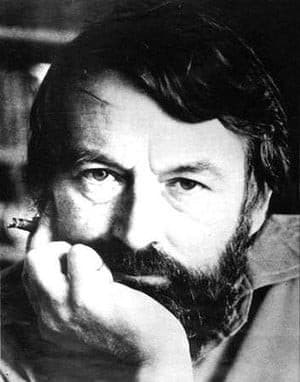
John Robert Fowles was an English novelist of international renown, critically positioned between modernism and postmodernism. His work was influenced by Jean-Paul Sartre and Albert Camus, among others.
Similar books
- The French Lieutenant's Woman
John Fowles
3.9 (47k) average on GoodreadsLiterary FictionExplores meta-narrative and authorial intrusion, though Mantissa is more extreme.
- Pale Fire
Vladimir Nabokov
4.1 (43k) average on GoodreadsLiterary FictionUtilizes an unreliable narrator and intricate meta-fictional layers to explore authorship and reality.
- The Magus
John Fowles
4.0 (48k) average on GoodreadsLiterary FictionUnlike The Magus, which explores reality and illusion through an intricate, labyrinthine plot and psychological manipulation within a more conventional narrative, Mantissa is far more experimental. It strips away external reality to focus almost entirely on the internal struggle of creation and the author-muse dynamic, making it less accessible but more directly metafictional.
- The Old Man and the Sea
Ernest Hemingway
3.8 (831k) average on GoodreadsLiterary FictionA Cuban fisherman's long struggle with a giant marlin becomes a story of endurance and dignity, now retold for young adults with illustrations, phonetic guides, and writing prompts in Traditional Chinese.
- One Hundred Years of Solitude
Gabriel García Márquez
4.1 (753k) average on GoodreadsLiterary FictionThrough the multi-generational story of the Buendía family, a mythical town deals with the repeating patterns of time, love, and solitude, as the extraordinary mixes with the ordinary.
- The Goldfinch
Donna Tartt
3.9 (720k) average on GoodreadsLiterary FictionHaunted by a tragic explosion and clutching a stolen Dutch masterpiece, a young orphan navigates the opulent drawing rooms of New York and the gritty underbelly of the art world, desperately seeking connection and redemption amidst a life spiraling into crime and obsession.






Enjoyed the summary?
A summary gives you the shape of the book. The book itself has the detail, the examples and the voice.
Find Mantissa on AmazonAs an Amazon Associate, BookBrief earns from qualifying purchases. How we're funded