
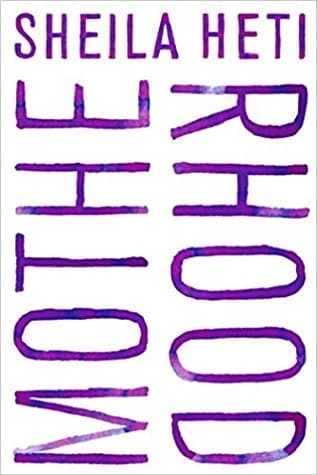
Synopsis
Covers the whole plot, including the ending.
- Difficulty
- Medium
- Pacing
- Slow
- Mood
- Introspective, Philosophical, Existential, Thought-provoking
- Read it if
- You are a woman in your late 20s or 30s contemplating motherhood, or enjoy philosophical, introspective literary fiction that delves into existential questions.
- Skip it if
- You prefer plot-driven narratives, clear-cut answers, or find extensive internal monologue and philosophical musings tedious.
Motherhood Plot Summary
Covers the whole plot, including the ending.
The Question of Motherhood
The unnamed narrator, a writer nearing forty, thinks more and more about whether to have children. Her friends are having babies, and her partner, Miles, is open to the idea, but she feels conflicted. She sees a basic conflict between the needs of creative work and the consuming nature of motherhood. This internal struggle grows with her biological clock and the feeling that she is not fulfilling a societal or ancestral duty. She starts to see her uterus as a separate thing, a demanding presence that controls her thoughts and worries about her future.
Consulting the I Ching
Overwhelmed by her indecision, the narrator decides to consult the I Ching, an ancient Chinese text, to help her. She asks direct questions about whether she should have a child, interpreting the hexagrams and their texts with an intense focus. The answers she gets are often unclear, sometimes contradictory, and often need more interpretation, reflecting her own confusion. Miles takes part in these readings, offering his thoughts, but the narrator mostly interprets them, seeking confirmation or direction for her personal question.
Conversations with Miles
The narrator and Miles often discuss having children. Miles says he wants a child but supports whatever decision the narrator makes, knowing the physical and emotional burden would mostly be hers. Their talks show deep affection and mutual respect, but also the narrator's repeated worries about losing herself, her creative time, and her freedom. She questions if her love for Miles is enough reason to have a child, and if she would be a 'good enough' mother, often comparing herself to an ideal image of motherhood.
The Legacy of Her Mother
The narrator’s relationship with her deceased mother is important in her thoughts about motherhood. She often remembers her mother's words, advice, and sacrifices, feeling a strong connection and a sense of responsibility to her ancestors. She considers continuing her family line versus making her own path. Her mother’s experience as a woman and a parent influences the narrator's fears and desires, making her question if she can truly escape past generations' patterns, even as she tries to define her own womanhood outside of traditional roles.
The Burden of Choice
The narrator experiences the decision of whether to have a child as a huge burden, a choice that feels both personal and universally important. She feels the weight of societal expectations, the biological clock, and pressure from friends and family. This pressure is made worse by her own desire to live a meaningful life, which she struggles to fit with the traditional path of motherhood. The act of choosing becomes a philosophical and moral problem, a test of her values and priorities, making her question her identity and purpose as a woman and an artist.
Feminist Perspectives and Artistic Life
A main part of the narrator's struggle is the conflict between her feminist ideas and traditional ideas of motherhood. She questions if a woman can truly be free and pursue her artistic goals while also raising a child. She worries that motherhood might lessen her creative work or force her to change her identity as a writer. She tries to understand if these seemingly opposite forces can be combined, or if one must be given up for the other, thinking about the past struggles of women artists.
The Body's Wisdom
The narrator often tries to listen to her body, believing it might hold a deeper truth about her desire for motherhood. She pays close attention to her menstrual cycle, her physical feelings, and her intuition. However, her body's signals are rarely clear or constant. Sometimes she feels a longing, other times a strong dislike. This internal inconsistency frustrates her, as she seeks a definite physical confirmation or rejection of motherhood, but finds only more uncertainty. Her body, like the I Ching, reflects her own conflicted inner state rather than giving a simple answer.
The Concept of 'Good' and 'Bad' Mothers
Throughout her thoughts, the narrator often considers what makes a 'good' mother and questions if she has those qualities. She fears she might be a 'bad' mother, not from meanness, but because of her nature, her need for alone time, and her dedication to her writing. She worries about passing her own worries or unresolved issues to a child. This internal judgment creates a significant barrier, as she considers the moral implications of bringing a new life into the world without being completely sure of her ability to raise it perfectly, showing her strong sense of responsibility.
The Role of Ancestors
The narrator feels a strong, almost spiritual connection to her female ancestors. She imagines them watching her, expecting her to continue the family line, to fulfill the biological role that has defined women for generations. This sense of ancestral duty adds another layer of pressure to her decision. She questions if her choice is only hers, or if it is influenced by the unspoken expectations of those who came before her, and if going against them would be a betrayal of her heritage. This spiritual element highlights the deep nature of her personal problem.
The Final Decision
After years of thinking, consulting the I Ching, and talking with Miles, the narrator decides not to have children. This decision is not shown as a victory or a loss, but as a personal and hard-won understanding of herself and her path. She acknowledges the sadness for a life not lived, but also accepts the freedom and clarity that comes with solving her long-standing problem. The ending is less about right or wrong, and more about being true to herself and accepting herself, allowing her to fully commit to her identity as a writer.
Principal Figures
The Narrator
Protagonist
A writer in her late thirties grappling with the decision of whether to become a mother.
The unnamed narrator is an introspective, philosophical writer deeply committed to her craft. She is intelligent, articulate, and prone to extensive self-analysis, often externalizing her thoughts through questions and internal monologues. Her primary struggle revolves around reconciling her artistic ambitions and desire for personal freedom with the societal and biological pressures to have children. She seeks answers from various sources—her partner, friends, the I Ching, her own body, and the memory of her mother—in an attempt to make a 'wise and moral' choice.
Relationships: Miles (Long-term romantic partner); Narrator's Mother (Deceased mother, whose memory and experiences heavily influence the narrator)
Miles
Supporting
The narrator's supportive and patient partner.
Miles is the narrator's loving and understanding partner. He expresses a desire to have children but is ultimately deferential to the narrator's decision, recognizing the profound impact motherhood would have on her life and body. He participates in her I Ching readings and engages in their deep, often repetitive, conversations about parenthood with patience and empathy. Miles serves as a sounding board for the narrator's anxieties and hopes, offering a stable and reassuring presence amidst her internal turmoil. He represents a potential future that the narrator carefully considers.
Relationships: The Narrator (Long-term romantic partner)
The Narrator's Mother
Mentioned
The narrator's deceased mother, whose life and choices weigh heavily on the protagonist's decisions.
Though deceased, the narrator's mother is a pervasive presence in the novel, influencing the protagonist's thoughts about motherhood, sacrifice, and duty. The narrator frequently recalls her mother's words, her experiences, and the sacrifices she made as a parent. Her mother represents a lineage and a set of expectations that the narrator feels compelled to either fulfill or consciously defy. The memory of her mother also serves as a benchmark for what it means to be a woman and a mother, both inspiring admiration and fueling the narrator's fears of repeating certain patterns.
Relationships: The Narrator (Mother-daughter relationship, explored through memory and introspection)
The Uterus (personified)
Mentioned
The narrator's uterus, often personified as a demanding entity or a source of biological pressure.
The narrator frequently personifies her uterus as a separate entity, a demanding organ that exerts a biological and psychological pressure on her. It represents the ticking biological clock and the raw, instinctual pull towards procreation. By externalizing her uterus, the narrator can analyze her physical desires and anxieties more objectively, treating it as a character with its own will and expectations. This personification highlights the visceral, bodily aspect of her dilemma, distinct from her intellectual and emotional considerations.
Themes & Insights
The Conflict Between Art and Motherhood
A main theme is the idea that a woman's artistic life and the demands of motherhood cannot exist together. The narrator, a writer, constantly worries that having a child would reduce her creative output, her intellectual freedom, and her sense of self. She sees motherhood as a possible sacrifice of her artistic identity, a choice between two important but seemingly opposite paths. This is clearly shown in her thoughts about time, energy, and the all-consuming nature of raising a child versus the solitude and dedication needed for writing.
“What if I can only be one thing? A mother or a writer?”
Female Agency and Autonomy
The novel explores a woman's right to choose her own path, especially regarding reproduction, despite societal and biological pressures. The narrator's struggle shows the complexities of female independence today. She questions if her desire not to have children is selfish or a valid expression of self-determination. Her long thoughts and use of the I Ching show her attempt to make an independent, 'wise and moral' choice, rather than simply giving in to outside expectations or biological urges. This theme emphasizes the ongoing feminist discussion about women's roles and choices.
“Is it wrong to want to be free of the obligation to reproduce?”
The Nature of Choice and Indecision
The story itself shows the theme of choice and the often-paralyzing nature of indecision when faced with a life-altering decision. The narrator's years-long consideration, her consultations with oracles, and her endless questioning show how hard it is to make a choice that feels both true and morally right. The book suggests that some decisions are not easily solved by logic or outside advice, but require deep, often painful, self-exploration. The I Ching's unclear answers further highlight that the final responsibility for choice lies with the individual, showing the burden and freedom of personal agency.
“To not choose is still a choice, but a cowardly one.”
Legacy and Ancestry
The narrator feels a strong connection to her female ancestors and considers continuing her family line versus making her own path. Her deceased mother's experiences and the expectations of generations of women weigh heavily on her. This theme explores how personal choices are connected to a larger historical and family context. The narrator questions if she is betraying her heritage by not having children, or if her choice is a continuation of a different kind of legacy—one of self-definition and creative pursuit. It looks at the spiritual and emotional weight of ancestral ties.
“I felt the pull of all the women who came before me, their expectation that I would carry on the line.”
The Search for Truth and Guidance
The narrator's extensive use of the I Ching, her philosophical questions, and her attempts to listen to her body all show a deep search for truth and guidance in a personal problem. She seeks outside confirmation and clarity, believing that a definite answer exists outside of herself. However, the story ultimately suggests that true guidance comes from within, through careful self-examination and honest confrontation with one's desires and fears. The I Ching acts as a mirror, reflecting her own subconscious rather than giving absolute directions, emphasizing that personal truth is self-made.
“I hoped the I Ching would tell me what I already knew, but was too afraid to admit.”
Plot Devices & Literary Techniques
The I Ching
An ancient Chinese divination text used by the narrator to seek answers about motherhood.
The I Ching is a central plot device, serving as an externalized conscience and a mirror for the narrator's internal conflict. By posing direct questions to the oracle, the narrator attempts to find definitive answers to her dilemma about having children. However, the I Ching's often ambiguous and poetic responses force her into deeper introspection and interpretation, highlighting that the answers ultimately lie within herself. It externalizes the internal debate, making her thought process tangible and allowing for philosophical exploration of fate, choice, and self-knowledge.
Internal Monologue/Stream of Consciousness
The narrative is largely composed of the narrator's unfiltered thoughts, questions, and philosophical reflections.
The novel is primarily driven by the narrator's internal monologue, presented in a stream-of-consciousness style. This allows the reader direct access to her anxieties, intellectual debates, and emotional fluctuations regarding motherhood. The fragmented, questioning nature of her thoughts mirrors her indecision and the complexity of the subject matter. This device creates an intimate and immediate experience, drawing the reader into her subjective reality and philosophical journey, making the book feel intensely personal and reflective of modern consciousness.
Direct Address to the Uterus
The narrator occasionally personifies and directly addresses her uterus as a separate entity.
The narrator's direct address to her uterus serves as a unique plot device that personifies her biological imperative. By treating her uterus as a separate character with its own desires and demands, she externalizes the physical and biological pressures she feels to reproduce. This device allows her to explore the visceral aspects of motherhood, distinct from her intellectual and emotional considerations. It highlights the tension between mind and body, and the often-unspoken demands of female biology in the decision-making process.
Repetition of Questions
The narrator frequently repeats core questions and anxieties throughout the narrative.
The constant repetition of key questions, such as 'Should I have a child?' or 'What would I lose?', emphasizes the cyclical and obsessive nature of the narrator's dilemma. This device reflects the protracted struggle she faces and the difficulty of reaching a definitive answer. It also underscores the universality of these questions for many women, creating a sense of shared experience. The repetition highlights how deeply ingrained and unresolved these anxieties are, making her eventual decision feel hard-won and significant.
Motherhood Quotes
“I am not looking for a reason to have a child. I am looking for a reason not to.”
“If I want to be an artist, I have to be a mother. If I want to be a mother, I have to be an artist.”
“The feeling of not knowing what to do with your life is a very common feeling among women.”
“Perhaps all the choices we make are just ways of saying yes to one thing and no to another.”
“The greatest freedom is not to be free from anything, but to be free to choose what you want to be free from.”
“A woman's greatest fear is not that she will not have children, but that she will have them and regret it.”
“I want to feel like a complete human being, not just a woman who has or hasn't had children.”
“What if the greatest act of creation is to not create another human being, but to create oneself?”
“To be a woman is to be always on the verge of some great transformation.”
“The hardest thing is to know what you truly want, not what you think you should want.”
“Maybe the purpose of life is not to find the answer, but to live the question.”
“Every time I make a decision, I feel like I'm killing off a thousand other possible lives.”
“Is it possible to be both a mother and an artist without sacrificing one or the other completely?”
“My body feels like a house I have to decide whether or not to fill with another person.”
“The decision not to have children is also a decision to have a certain kind of life.”
Quiz
10 questions on the plot and the characters. Each answer comes with a short explanation.
Question 1
What is the primary decision the narrator in Sheila Heti's 'Motherhood' grapples with throughout the novel?
- Whether to pursue a different career path
- Whether to get married to her partner
- Whether to have children
- Whether to move to a new city
Show answer
C. Whether to have children The central conflict of 'Motherhood' revolves around the narrator's internal struggle and deliberation over the decision to become a mother.
Question 2
In her late thirties, what question are the narrator's friends frequently asking her, prompting her contemplation?
- When she will finish her next book
- When they will become mothers
- When she will travel abroad again
- When she will buy a house
Show answer
B. When they will become mothers The novel explicitly states that in her late thirties, her friends are asking 'when they will become mothers,' which directly influences the narrator's own introspection.
Question 3
Which of the following is NOT listed as a source of guidance the narrator seeks in her decision-making process?
- Philosophy
- Her body
- Astrology
- Mysticism
Show answer
C. Astrology The book description mentions she seeks guidance from 'philosophy, her body, mysticism, and chance.' Astrology is not explicitly listed.
Question 4
What is the narrator's ultimate discovery about where her answer lies, according to the book description?
- In a profound spiritual revelation
- Through extensive research and data analysis
- Much closer to home
- From the advice of a wise elder
Show answer
C. Much closer to home The synopsis states she 'discovers her answer much closer to home,' indicating an internal or personal resolution rather than an external one.
Question 5
What specific aspect of the decision does the novel explore, according to the description?
- The financial implications of raising children
- What is gained and what is lost when a woman becomes a mother
- The challenges of co-parenting after separation
- The historical evolution of family structures
Show answer
B. What is gained and what is lost when a woman becomes a mother The description explicitly states, 'Sheila Heti asks what is gained and what is lost when a woman becomes a mother,' outlining a core thematic exploration.
Question 6
How long does the narrator's decision-making narrative span?
- A few months
- A single year
- Several years
- Over a decade
Show answer
C. Several years The description mentions 'In a narrative spanning several years,' indicating the prolonged nature of her internal debate.
Question 7
The narrator considers her 'duties to her forbearers.' This implies an influence from which of the following?
- Her professional obligations
- Societal expectations for women
- Ancestral or family lineage expectations
- Her academic mentors
Show answer
C. Ancestral or family lineage expectations 'Forbearers' refers to ancestors or predecessors, suggesting the influence of family history, tradition, and perhaps the implicit expectation to continue the family line.
Question 8
What kind of choice is the narrator explicitly struggling to make, beyond just 'to have children'?
- A lucrative and practical choice
- A wise and moral choice
- A spontaneous and exciting choice
- A socially acceptable and conventional choice
Show answer
B. A wise and moral choice The description states she 'struggles to make a wise and moral choice,' highlighting the ethical and thoughtful dimensions of her deliberation.
Question 9
The novel is described as 'intimate and urgent.' What does 'urgent' suggest about the narrator's situation?
- She is under pressure to meet a strict deadline
- She feels a time-sensitive pressure related to her biological clock or societal expectations
- She is in a life-threatening situation
- She needs to make a decision for immediate financial gain
Show answer
B. She feels a time-sensitive pressure related to her biological clock or societal expectations Given the context of 'late thirties' and the decision about motherhood, 'urgent' implies a time-sensitive pressure, likely related to the biological window for childbearing or the pressing societal questions from her peers.
Question 10
Sheila Heti's previous works, 'How Should a Person Be?' and 'Women in Clothes,' are mentioned. What does this connection imply about the style or themes of 'Motherhood'?
- It is likely a historical fiction novel
- It will feature a similar blend of candor, originality, and humor, often exploring contemporary female experience and identity
- It will be a suspenseful thriller
- It is primarily a self-help guide
Show answer
B. It will feature a similar blend of candor, originality, and humor, often exploring contemporary female experience and identity The description highlights Heti's 'candor, originality, and humor' in addressing 'the most consequential decision of early adulthood,' suggesting a continuity with her previous works known for exploring contemporary female experience and identity in a distinctive, acclaimed style.
Motherhood FAQ
What is the central conflict the narrator faces in 'Motherhood'?
The narrator, in her late thirties, grapples with the profound decision of whether or not to have children. This internal struggle is fueled by societal expectations, the influence of her friends and partner, and a deep sense of duty to her ancestors, making it a complex moral and personal dilemma.
How does the narrator's relationship with her partner, Miles, influence her decision-making process?
Miles, her partner, generally expresses a desire for children, which adds another layer of pressure and consideration for the narrator. While supportive, his own inclinations highlight the divergence in their paths and force the narrator to confront the implications of her choice on their shared future.
What unconventional methods does the narrator employ to seek guidance regarding motherhood?
The narrator extensively consults various unconventional sources, including philosophical texts, her own bodily sensations and intuition, mystical practices like consulting tarot cards or a witch, and even chance operations. These diverse approaches reflect her exhaustive and often humorous search for an 'answer' to her dilemma.
What role do the narrator's ancestors play in her contemplation of motherhood?
The narrator feels a significant, almost ancestral, pull or duty regarding procreation. She frequently reflects on her lineage and the expectations or burdens passed down through generations of women, viewing her decision not just as personal but as part of a larger historical continuum.
What is the ultimate 'answer' the narrator finds, and where does she find it?
After years of internal debate and external consultation, the narrator ultimately discovers her answer 'much closer to home.' The novel concludes with her making the decision not to have children, arriving at this conclusion through a deeply personal reckoning and acceptance of her own desires and limitations, rather than an external dictate.
How do the 'witch' consultations subtly reflect the narrator's own subconscious desires?
The 'witch' consultations often provide answers that, while framed mystically, tend to echo the narrator's latent anxieties and desires, particularly her resistance to motherhood. The ambiguity of the readings allows her to project her own feelings onto them, subtly reinforcing her inclination away from having children.
What significance can be attached to the narrator's recurring focus on 'the good' and 'the right' choice?
The narrator's obsession with making 'the good' and 'the right' choice isn't just about personal preference; it reflects a deeper philosophical and moral quest. She views motherhood as a decision with profound ethical implications, not just for herself but for potential children and society, echoing classical philosophical dilemmas.
How does the novel subtly critique or question the traditional narrative of female fulfillment through motherhood?
The novel critiques this narrative by presenting a protagonist who openly questions and ultimately rejects it, despite societal and partner pressure. By giving voice to the narrator's valid reasons for not wanting children, it challenges the assumed universality of the desire for motherhood as the pinnacle of female experience.
What is the psychological impact of the narrator's extensive self-interrogation on her sense of identity?
The narrator's relentless self-interrogation leads to a profound, almost exhaustive, understanding of her own desires and limitations, solidifying her sense of self. While initially disorienting, this process ultimately empowers her to make a choice that is authentic to her, even if it goes against convention.
How does the narrator's relationship with her own body evolve throughout her decision-making process?
Initially, the narrator's body is a source of confusion and conflicting signals, an object to be 'consulted.' As the narrative progresses, she learns to listen to and trust her body's innate responses and aversions, eventually seeing it as an integral, intuitive part of her decision-making, rather than a separate entity.
In what ways does the narrator's anxiety about 'losing herself' contribute to her hesitation about motherhood?
The narrator harbors a significant fear of losing her personal identity, creative freedom, and intellectual pursuits should she become a mother. This anxiety stems from observing the transformative, often consuming, nature of motherhood on her friends, leading her to question if she is willing to make that sacrifice.
How does the novel explore the concept of agency for women in contemporary society?
The novel highlights the complexities of female agency by showcasing the narrator's struggle to make a deeply personal choice amidst immense societal and relational pressures. Her ultimate decision to opt out of motherhood, despite these forces, powerfully asserts her individual agency and autonomy.
Is the narrator's final decision presented as a definitive 'right' answer for all women, or something else?
The narrator's decision is explicitly not presented as a universal 'right' answer, but rather as the right answer for her, given her unique circumstances and desires. The novel emphasizes the individual nature of such a choice, inviting readers to reflect on their own paths without prescribing a single correct outcome.
How does Heti's use of a stream-of-consciousness narrative style contribute to the book's themes?
The stream-of-consciousness style immerses the reader directly into the narrator's internal world, mirroring the chaotic, circuitous, and deeply personal nature of her decision-making process. This style emphasizes the subjective experience of grappling with such a profound life choice, making the reader a confidante in her every thought.
What is the significance of the novel's title, 'Motherhood,' given the narrator's ultimate decision?
The title 'Motherhood' is ironic and provocative, as it focuses on the concept of motherhood by exploring the conscious decision *not* to embrace it. It suggests that questioning and rejecting motherhood is as valid a way to engage with the concept as embracing it, broadening the definition of 'motherhood' to include its absence or refusal.
Could the narrator's extensive philosophical and mystical consultations be interpreted as a form of procrastination?
While genuinely seeking guidance, the prolonged and varied nature of her consultations could indeed be interpreted as a form of procrastination or a way to avoid taking full responsibility for a difficult decision. It allows her to externalize the burden of choice before finally owning her intrinsic feelings.
How does the novel challenge the idea that women have an inherent, biological 'maternal instinct'?
The novel directly challenges this idea by portraying a narrator who, despite reaching the conventional age for motherhood, does not feel this instinct. Her struggle highlights that the desire to procreate is not universal or inherently biological for all women, but rather a complex interplay of personal, societal, and psychological factors.
About the author
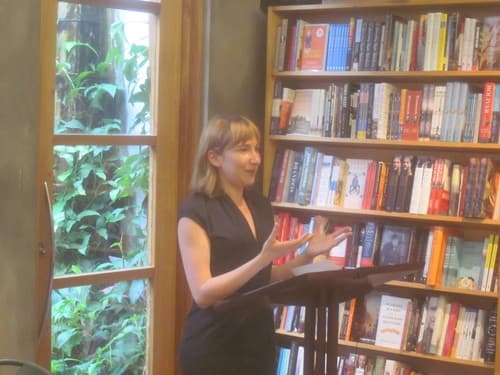
Sheila Heti is a Canadian writer.
Similar books
- The Old Man and the Sea
Ernest Hemingway
3.8 (831k) average on GoodreadsLiterary FictionA Cuban fisherman's long struggle with a giant marlin becomes a story of endurance and dignity, now retold for young adults with illustrations, phonetic guides, and writing prompts in Traditional Chinese.
- One Hundred Years of Solitude
Gabriel García Márquez
4.1 (753k) average on GoodreadsLiterary FictionThrough the multi-generational story of the Buendía family, a mythical town deals with the repeating patterns of time, love, and solitude, as the extraordinary mixes with the ordinary.
- The Goldfinch
Donna Tartt
3.9 (720k) average on GoodreadsLiterary FictionHaunted by a tragic explosion and clutching a stolen Dutch masterpiece, a young orphan navigates the opulent drawing rooms of New York and the gritty underbelly of the art world, desperately seeking connection and redemption amidst a life spiraling into crime and obsession.
- Little Fires Everywhere
Celeste Ng
4.1 (713k) average on GoodreadsLiterary FictionIn Shaker Heights, an artist and her daughter move in, and their free-spirited lives clash with a rule-bound matriarch, revealing hidden conflicts beneath a perfect surface.
- Eleanor Oliphant Is Completely Fine
Gail Honeyman
4.3 (708k) average on GoodreadsLiterary FictionA lonely woman's structured life changes when an IT guy and an elderly man help her learn to open her heart.
- The Poisonwood Bible
Barbara Kingsolver
4.1 (659k) average on GoodreadsLiterary FictionA zealous missionary's rigid faith clashes with the Belgian Congo's wilderness and people, unraveling his family through the eyes of his five unforgettable women.






Enjoyed the summary?
A summary gives you the shape of the book. The book itself has the detail, the examples and the voice.
Find Motherhood on AmazonAs an Amazon Associate, BookBrief earns from qualifying purchases. How we're funded