
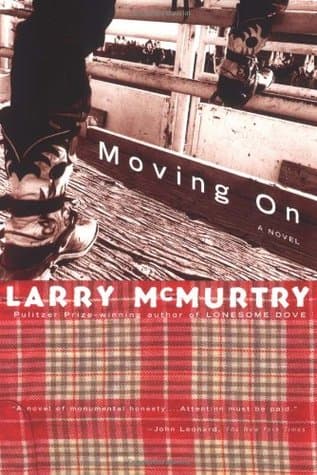
Synopsis
Covers the whole plot, including the ending.
- Difficulty
- Medium
- Pacing
- Slow
- Mood
- Wry, Melancholy, Expansive, Observational
- Read it if
- You enjoy epic, character-driven sagas set in the American West with a focus on restless women and a blend of wry humor and tender observation.
- Skip it if
- You prefer fast-paced plots with clear resolutions and dislike meandering narratives or long books.
Moving On Plot Summary
Covers the whole plot, including the ending.
A Rodeo Wedding and a Wanderlust Spirit
The novel opens with Patsy Carpenter marrying Jim, a former rodeo cowboy, in a somewhat quick ceremony. Patsy, from a more privileged background, is immediately drawn into Jim's world of rodeos and nomadic living. Their early married life involves constant movement across the American West, following the rodeo circuit. Patsy, despite her initial excitement, soon feels restless, a theme that will define her journey. She observes the colorful, often difficult lives of the rodeo community, including characters like Pete the rodeo clown, and starts to question her own existence with Jim, who, while charming, is also aimless and unfaithful.
Early Infidelities and Shifting Desires
As Patsy and Jim travel, Jim's casual infidelities become clear, further distancing Patsy. Feeling neglected and unfulfilled, Patsy begins her first major affair with Pete, the kind-hearted and thoughtful rodeo clown. This relationship, while brief and physically intense, offers Patsy a temporary escape from her unhappy marriage and a glimpse into a different kind of companionship. The affair with Pete shows Patsy's growing desire for emotional connection and intellectual stimulation, which she finds missing with Jim. She begins to realize that her marriage, despite its initial romantic appeal, does not give her the depth she wants.
A Return to Texas and New Beginnings
Eventually, Patsy and Jim settle in Houston, Texas, a contrast to their previous nomadic life. Patsy decides to enroll in graduate school, seeking intellectual fulfillment and purpose. This period marks a significant change in her life, as she begins to form an identity separate from Jim and the rodeo world. She becomes involved with a group of academics, including Hank, a graduate student who becomes her next important lover. Her studies expose her to new ideas and perspectives, broadening her understanding of herself and the world, and increasing her dissatisfaction with her aimless marriage.
The Academic Affair and Intellectual Awakening
Patsy's affair with Hank is characterized by intellectual engagement and passionate discussions, a contrast to her relationship with Jim. Hank introduces her to literature, philosophy, and a world of ideas, which Patsy eagerly embraces. However, despite the intellectual connection, Patsy eventually finds this relationship also lacks emotional depth and true commitment. Hank, while intelligent, is also somewhat detached and unable to fully return the emotional intimacy Patsy seeks. This affair, while enriching her mind, ultimately leaves her feeling emotionally unfulfilled, showing her continuous search for a complete and meaningful connection.
The Texas Landscape and Familial Tensions
Throughout her journey, Patsy maintains a deep, often unspoken, connection to the Texas landscape and her family roots, despite her rebellious spirit. Her family, especially her mother, represents a more conventional life that Patsy always resists. Visits home highlight the tension between her desire for freedom and the societal expectations placed upon her. The vast, unchanging Texas landscape is a backdrop to her internal turmoil, a silent witness to her restless wanderings and her ongoing search for belonging. This connection to her origins highlights the internal conflict between her independent spirit and the pull of tradition.
Encounters with Diverse Characters
Patsy's journey brings her into contact with a diverse cast of characters, from rodeo cowboys and queens to academics and bohemian artists. Each encounter, no matter how brief, adds to her evolving understanding of life, love, and human nature. She learns about resilience from the rodeo community, intellectualism from her university peers, and various forms of desire and disappointment from her lovers. These interactions, rather than providing definitive answers, add layers of complexity to her worldview, pushing her to re-evaluate her choices and desires. The diverse personalities she meets reflect the vastness and variety of the American West itself.
A Brief Reconciliation and Renewed Discontent
After a period of separation and various affairs, Patsy and Jim try to reconcile. They attempt to make their marriage work, perhaps out of habit or a lingering affection. However, their basic incompatibility and Jim's unchanging, shiftless nature quickly resurface. Patsy realizes that a true end to her restlessness cannot be found by returning to old patterns. This brief attempt at reconciliation strengthens her understanding that her path lies elsewhere, away from the life she initially built with Jim. The experience reinforces her belief that she must continue her search for a more fulfilling existence.
The Search for Meaning and Self-Discovery
As the novel progresses, Patsy's quest changes from a search for a perfect lover to a deeper exploration of her own identity and purpose. Her numerous affairs, while providing temporary comfort or excitement, ultimately leave her feeling unfulfilled, prompting her to look inward. She begins to understand that the 'life around the next bend' might not be a person or a place, but an internal state. This shift in focus marks a maturation in her character, as she moves from external validation to a deeper journey of self-discovery, acknowledging her own role in shaping her future.
Encounters with the Rodeo World's Decline
Patsy occasionally revisits the rodeo world, observing its subtle decline and the weariness of its participants. This fading glamour mirrors her own disappointment with certain aspects of her past and her continuous search for something more substantial. The rodeo, once a symbol of freedom and excitement, now appears more as a struggle, reflecting the passage of time and the inevitable changes in life. These observations add to her evolving worldview, reinforcing her understanding that nothing remains static and that growth often means moving beyond familiar, though fading, landscapes and relationships.
The Enduring Restlessness
By the novel's end, Patsy has not found a static resolution to her restlessness. Instead, she has accepted the idea of perpetual movement and change as part of her identity. She has learned valuable lessons from her experiences and relationships, understanding that true contentment may not lie in a fixed destination but in the journey itself. While her future remains open-ended, there is a sense of quiet acceptance and a mature understanding of her own desires. She continues to move, physically and emotionally, embodying the spirit of the American West and the endless possibilities of self-reinvention, always in search of the next bend.
Principal Figures
Patsy Carpenter
Protagonist
A beautiful, intelligent, and restless young woman in search of meaning and fulfillment.
Patsy is the central character, a young woman from a respectable Texas family who marries Jim, a rodeo cowboy, and embarks on a life of constant movement and self-discovery. She is intelligent, observant, and possesses a sharp wit, but is deeply restless and often feels unfulfilled by her relationships and circumstances. Her beauty and charm attract many, but she struggles to find a lasting connection that satisfies her intellectual and emotional needs. She is a seeker, constantly questioning societal norms and her own desires.
Relationships: Jim Carpenter (Husband; a charming but shiftless rodeo cowboy who cannot provide the stability or intellectual companionship Patsy craves.); Pete (Lover; a kind, philosophical rodeo clown who offers Patsy temporary emotional and physical solace.); Hank (Lover; an intelligent but emotionally detached graduate student who provides intellectual stimulation but lacks deeper commitment.); Patsy's Mother (Mother; represents societal expectations and a more conventional life that Patsy often resists.)
Jim Carpenter
Supporting
Patsy's charming but aimless husband, a former rodeo cowboy.
Jim is Patsy's husband, a handsome and charismatic former rodeo cowboy. He embodies a certain carefree, nomadic spirit of the West, but is also shiftless, prone to infidelity, and lacks the ambition or intellectual depth that Patsy eventually seeks. He loves Patsy in his own way but is unable to provide the stability, emotional connection, or intellectual companionship she craves. His inability to settle down or commit fully ultimately drives Patsy further away.
Relationships: Patsy Carpenter (Wife; their marriage is marked by love, infidelity, and a fundamental incompatibility in their desires for life.)
Pete
Supporting
A philosophical and kind rodeo clown who becomes Patsy's first significant lover outside her marriage.
Pete is a rodeo clown, a man of quiet wisdom and kindness, who provides Patsy with her first significant emotional and physical connection outside of her marriage to Jim. He is observant and philosophical, offering Patsy a brief period of understanding and solace. His role as a rodeo clown, a protector of others, subtly reflects his supportive nature towards Patsy, even if their relationship is ultimately temporary.
Relationships: Patsy Carpenter (Lover; offers Patsy a brief, intense, and emotionally significant affair.)
Hank
Supporting
An intelligent but emotionally reserved graduate student and Patsy's lover in Houston.
Hank is a graduate student whom Patsy meets in Houston. He is intelligent, well-read, and provides Patsy with the intellectual stimulation she desperately seeks. Their relationship is characterized by intense discussions about literature, philosophy, and life. However, Hank is also emotionally detached and unable to offer the deep, committed connection Patsy ultimately desires, making their affair intellectually rich but emotionally unfulfilling.
Relationships: Patsy Carpenter (Lover; their relationship is based on intellectual compatibility but lacks emotional depth.)
Patsy's Mother
Supporting
A representative of traditional Texas society and expectations for women.
Patsy's mother embodies the more conventional, settled life that Patsy continually rebels against. She represents the societal expectations and pressures for women to marry, settle down, and conform to traditional roles. Her interactions with Patsy often highlight the generational and ideological gap between them, serving as a foil to Patsy's restless, independent spirit. She is loving but ultimately unable to fully comprehend Patsy's desires.
Relationships: Patsy Carpenter (Daughter; their relationship is loving but strained by Patsy's unconventional choices.)
Sonny
Mentioned
A rodeo cowboy and friend of Jim's.
Sonny is a peripheral character within the rodeo circuit, often seen alongside Jim. He represents the broader community of rodeo participants, their camaraderie, and their transient lifestyle. His presence helps to flesh out the backdrop of Patsy's early married life and the world she initially inhabits.
Relationships: Jim Carpenter (Friend and fellow rodeo participant.)
The Rodeo Queens
Mentioned
Symbolic figures of rodeo glamour and traditional femininity.
The various rodeo queens Patsy encounters or observes represent a certain type of idealized, traditional femininity within the rodeo world. Their beauty, elaborate costumes, and public roles offer a contrast to Patsy's more questioning and unconventional nature. They symbolize a path Patsy could have taken, but ultimately chooses to diverge from.
Themes & Insights
Restlessness and the Search for Fulfillment
The central theme of the novel is Patsy's deep and lasting restlessness. She is always moving, both geographically and emotionally, in search of a life that feels authentic and fulfilling. This appears in her many affairs, her pursuit of education, and her inability to settle in one place or with one person. From the nomadic rodeo life to the intellectual circles of Houston, Patsy is always looking for 'the life that seems ever receding around the next bend,' showing a universal human desire for meaning that often feels just out of reach. Her journey is an example of the idea that fulfillment is not a destination but an ongoing process of discovery.
“She was always moving on, always in search of the life that seemed ever receding around the next bend.”
The Nature of Love and Relationships
The novel deeply explores the complexities and limits of various forms of love and relationships. Patsy's experiences with Jim, Pete, and Hank show different aspects of connection: the initial passion and eventual disappointment of her marriage, the temporary comfort of physical and emotional intimacy with Pete, and the intellectual companionship with Hank that ultimately lacks deeper commitment. McMurtry suggests that no single relationship can fully satisfy all of Patsy's needs, and that love itself is often transient and imperfect. The theme challenges romantic ideals, portraying relationships as steps in a larger journey of self-discovery.
“Love was not a thing to be found, but a thing to be made, and sometimes, even then, it would not hold.”
Identity and Self-Discovery in the American West
Patsy's journey is fundamentally one of self-discovery, set against the vast and changing American West. Her movement across different environments – from the raw, transient world of the rodeo to the more settled, intellectual sphere of Houston – mirrors her internal evolution. She sheds old identities and constantly reinvents herself, dealing with the expectations placed upon women in the 1960s and forging her own path. The West, with its ideas of freedom and endless horizons, is a powerful metaphor for Patsy's internal quest for an authentic self, unburdened by convention.
“The West was a place for starting over, or for never quite finishing.”
The Allure and Disillusionment of Freedom
The novel examines the mixed blessing of freedom. The initial appeal of Jim's nomadic rodeo life promises liberation from conventionality, but Patsy soon discovers that this freedom also brings rootlessness, infidelity, and a lack of deeper meaning. Her subsequent pursuit of intellectual freedom in academia also proves less fulfilling than anticipated, showing that true freedom must include both external liberty and internal contentment. McMurtry suggests that unchecked freedom can lead to a different kind of confinement—that of always searching without finding solid ground.
“She had wanted freedom, and she had it, but it was a freedom that often felt like emptiness.”
Plot Devices & Literary Techniques
The Road Trip/Journey Motif
A literal and metaphorical journey across the American West.
Patsy's constant movement across the American West, following rodeo circuits and later relocating to Houston, serves as a primary plot device. This literal journey mirrors her internal, metaphorical journey of self-discovery and her relentless search for meaning and fulfillment. Each new location and stop along the road brings new experiences and relationships that shape her evolving understanding of herself and the world. The vast, open landscape underscores the sense of endless possibility and the protagonist's enduring restlessness.
The Rodeo as a Microcosm
The rodeo world as a symbolic representation of life's transient and often dangerous nature.
The rodeo circuit, with its colorful characters, fleeting excitements, and inherent dangers, functions as a microcosm of life itself. It provides a backdrop for Patsy's early married life and introduces her to a world of raw emotions, physical challenges, and transient connections. The rodeo's cyclical nature of arrival and departure, triumph and injury, reflects the ups and downs of Patsy's own relationships and her continuous search for stability amidst constant change. It also highlights the performative aspects of identity.
Multiple Affairs
Patsy's series of romantic relationships as catalysts for her emotional and intellectual growth.
Patsy's sequential romantic relationships with Jim, Pete, Hank, and others are not merely episodic; they are crucial plot devices that drive her character development. Each affair exposes her to different facets of love, companionship, and disappointment, pushing her to analyze her own desires and what she truly seeks in a partner and in life. These relationships act as stepping stones, each one revealing what she lacks or what she needs to move beyond, ultimately guiding her towards a deeper understanding of herself rather than finding a definitive partner.
The Texas Landscape
The vast and unchanging Texas environment as a silent witness and symbolic backdrop.
The expansive and often desolate Texas landscape is more than just a setting; it acts as a silent, enduring character in the novel. Its vastness symbolizes the immense possibilities and the loneliness of Patsy's journey, while its unchanging nature contrasts with her constant internal and external shifts. The landscape reflects both the freedom Patsy seeks and the isolation she sometimes experiences, serving as a powerful visual and emotional anchor for her wanderings and her connection to her roots, even as she tries to move beyond them.
Moving On Quotes
“It was a good life and a hard life, and there was no way to separate the two.”
“The past was like a long, dusty road, and sometimes you just had to keep walking.”
“Love was a thing that came and went, like the seasons, and you just had to make the most of it when it was there.”
“There was a kind of freedom in knowing you had nothing left to lose.”
“People were always trying to make sense of things, but sometimes there wasn't any sense to be made.”
“The older you got, the more you realized that most of what you worried about never happened.”
“A man could run from his troubles, but he couldn't outrun himself.”
“The future was just more of the past, only different.”
“It took a long time to learn how to live, and even longer to learn how to let go.”
“The wind never asked where you were going, it just blew.”
“Some things, once broken, could never really be mended, just lived with.”
“Every day was a chance to start over, if you were brave enough to take it.”
“The best stories were the ones you lived, not the ones you read.”
“It wasn't the knowing that hurt, it was the remembering.”
Quiz
10 questions on the plot and the characters. Each answer comes with a short explanation.
Question 1
Which character is described as 'restless and lovable' and is one of Larry McMurtry’s most unforgettable characters in 'Moving On'?
- Lorena Wood
- Patsy Carpenter
- Jacy Farrow
- Emma Horton
Show answer
B. Patsy Carpenter The book description explicitly names Patsy Carpenter as the 'restless and lovable' main character.
Question 2
What is the primary setting for a significant portion of 'Moving On', contrasting with the rodeo world?
- Rural Montana
- New York City
- Suburban Houston
- A small Oklahoma town
Show answer
C. Suburban Houston The novel is set against the backdrop of 'the honky-tonk glamour of the rodeo and the desperation of suburban Houston'.
Question 3
In what decade is 'Moving On' primarily set?
- 1950s
- 1960s
- 1970s
- 1980s
Show answer
B. 1960s The book description states the novel is 'Set in the 1960s'.
Question 4
Beyond her husband Jim, which two specific characters are mentioned as having affairs with Patsy Carpenter?
- Gus and Call
- Pete, the rodeo clown, and Hank, the graduate student
- Duane and Sonny
- Sam the Lion and Abilene
Show answer
B. Pete, the rodeo clown, and Hank, the graduate student The synopsis states Patsy 'moves through affairs of the heart like small towns—there’s Pete, the rodeo clown, and Hank, the graduate student, and others'.
Question 5
What is Patsy Carpenter's husband's name, and what is his general demeanor described as?
- Gus, a stoic cowboy
- Jim, shiftless
- Lonesome Dove, a wanderer
- Danny, a ranch hand
Show answer
B. Jim, shiftless The description mentions 'Patsy—young, beautiful, with a sharp tongue and an irresistible charm—and her shiftless husband, Jim'.
Question 6
The novel's title, 'Moving On,' directly relates to Patsy Carpenter's constant search for what?
- A stable career in the rodeo circuit
- The life that seems ever receding around the next bend
- Her estranged parents in the East
- Financial independence from her husband
Show answer
B. The life that seems ever receding around the next bend Patsy is 'always in search of the life that seems ever receding around the next bend,' which encapsulates the theme of 'Moving On'.
Question 7
The novel is presented as a 'celebration of our land' by McMurtry. What specific region of the United States is primarily featured in this celebration?
- The Northeastern Seaboard
- The Pacific Northwest
- The American West
- The Southern Plantations
Show answer
C. The American West The description states 'Moving On is a big, powerful novel about men and women in the American West' and a 'celebration of our land'.
Question 8
The 'honky-tonk glamour of the rodeo' serves as a backdrop. What does this suggest about the atmosphere and cultural elements present in the novel?
- A focus on quiet, intellectual pursuits and academic life.
- An environment characterized by rough entertainment, music, and a certain kind of transient excitement.
- A setting predominantly featuring high-society galas and formal events.
- A backdrop of pristine wilderness and solitary introspection.
Show answer
B. An environment characterized by rough entertainment, music, and a certain kind of transient excitement. Honky-tonk glamour implies a lively, often boisterous atmosphere associated with bars, country music, and the transient nature of rodeo life, contrasting with suburban desperation.
Question 9
Patsy Carpenter is described as having 'a sharp tongue and an irresistible charm.' How do these traits likely contribute to her journey and relationships throughout the novel?
- They make her an isolated figure, unable to connect with others.
- They allow her to easily manipulate men for financial gain.
- They enable her complex and numerous romantic entanglements while also potentially causing friction.
- They primarily serve to hide her true, meek personality.
Show answer
C. They enable her complex and numerous romantic entanglements while also potentially causing friction. Her charm makes her irresistible and draws others to her, leading to her 'affairs of the heart,' while a 'sharp tongue' suggests a spirited, potentially confrontational personality that adds complexity to these relationships.
Question 10
Given the description of 'Moving On' as having 'wry humor, tenderness, and epic panorama,' what can be inferred about McMurtry's approach to depicting the American West and its inhabitants?
- He presents a purely romanticized and idealized view without any realism.
- His portrayal is solely cynical and critical, devoid of any emotional depth.
- He balances a broad, grand scope with intimate, emotionally resonant moments, often through an observant, subtly comedic lens.
- The narrative is primarily a historical document, lacking personal character development.
Show answer
C. He balances a broad, grand scope with intimate, emotionally resonant moments, often through an observant, subtly comedic lens. 'Wry humor' suggests subtle comedy, 'tenderness' indicates emotional depth and empathy, and 'epic panorama' points to a grand, sweeping scope. This combination reflects McMurtry's nuanced and acclaimed style.
Moving On FAQ
What is the central premise of 'Moving On' and who is its main protagonist?
The novel 'Moving On' centers on the restless life of Patsy Carpenter, a young, beautiful woman with a sharp tongue and irresistible charm, as she drifts through the American West in the 1960s. It explores her various romantic entanglements and her unending search for a fulfilling life, often against the vibrant backdrop of the rodeo circuit and suburban Houston.
Who is Jim Carpenter and what is his relationship with Patsy like throughout the book?
Jim Carpenter is Patsy's shiftless husband, whose aimlessness often mirrors and contrasts with Patsy's own search for meaning. Their relationship is characterized by a deep-seated affection despite their constant drifting apart and Patsy's numerous affairs, suggesting a complex, unbreakable bond even amidst their emotional and physical separations.
What role does the rodeo circuit play in Patsy Carpenter's journey?
The rodeo circuit serves as a significant backdrop for Patsy's adventures and romantic escapades, introducing her to characters like Pete, the rodeo clown. It embodies a sense of transient excitement and a particular kind of freedom, reflecting Patsy's own nomadic existence and her search for intense, albeit often fleeting, experiences.
Can you name some of Patsy's notable romantic interests besides her husband, Jim?
Patsy engages in several significant romantic affairs during her journey. These include Pete, a charismatic rodeo clown, and Hank, a thoughtful graduate student. These relationships, among others, highlight her continuous quest for connection and her struggle to find lasting fulfillment.
What geographical settings are prominent in 'Moving On'?
The novel spans various locations across the American West, emphasizing the vastness and transient nature of Patsy's life. Key settings include the lively honky-tonk glamour of the rodeo circuit and the more desperate, sprawling landscapes of suburban Houston, each contributing to the novel's epic panorama.
Are there any subtle connections between 'Moving On' and McMurtry's other works, particularly regarding character archetypes or themes?
While not explicitly stated, Patsy Carpenter's restless spirit and her pursuit of elusive happiness resonate with themes and character archetypes found in McMurtry's other novels, such as strong, independent women navigating the changing West. Her journey embodies a recurring McMurtry motif of searching for meaning in a vast, often indifferent landscape.
Does the novel offer any foreshadowing regarding Patsy's ultimate fate or emotional resolution?
McMurtry subtly weaves in hints about Patsy's ongoing struggle, often through her reflections and the cyclical nature of her relationships. The narrative suggests that her 'moving on' is less about reaching a destination and more about the perpetual state of seeking, implying that a definitive 'resolution' may always remain just out of reach.
Are there any recurring symbolic images or motifs that underscore Patsy's journey?
The open road and the ever-receding horizon serve as powerful, recurring symbols throughout the novel, emphasizing Patsy's perpetual search for something just beyond her grasp. The transient nature of rodeo life also symbolizes her inability to settle, reflecting her internal restlessness and constant emotional migration.
How does Patsy's beauty and sharp tongue contribute to her psychological makeup and interactions?
Patsy's beauty often grants her access and attention, while her sharp tongue serves as both a defense mechanism and a means of asserting her independence. Psychologically, these traits highlight her intelligence and wit, but also her potential for emotional detachment and her struggle to form deep, stable connections, often pushing people away even as she draws them in.
What psychological motivations drive Patsy's constant 'moving on' from relationships and places?
Patsy's constant 'moving on' appears to be driven by a profound sense of dissatisfaction and an insatiable yearning for an idealized life that she can never quite pinpoint. This psychological restlessness suggests a fear of stagnation or commitment, perhaps stemming from an unfulfilled inner void that no external relationship or location can permanently fill.
How does the author portray the psychological impact of the American West's vastness on its characters, particularly Patsy?
The vastness of the American West psychologically amplifies Patsy's feelings of freedom but also her isolation and the enormity of her search. It mirrors her internal landscape of boundless possibilities and endless yearning, making her personal journey feel both epic and profoundly solitary against such an expansive backdrop.
Discuss the psychological dynamics between Patsy and Jim despite their frequent separations and her affairs.
The psychological dynamic between Patsy and Jim is complex, suggesting a deep-seated, almost gravitational pull despite their individual wanderings. Their frequent returns to each other, even after long absences and affairs, indicate a comfort or familiarity that, while perhaps not passionate, provides a foundational stability or understanding that other relationships lack.
Is Patsy Carpenter ultimately a tragic figure, or does she achieve a form of triumph through her independence?
This is open to interpretation. Some might view Patsy as a tragic figure, perpetually searching and never truly finding lasting happiness or stability. Others might see her independence and refusal to conform as a form of triumph, celebrating her resilience and the courage to live life on her own terms, even if it means constant movement.
How does 'Moving On' comment on the changing roles of women in the American West during the 1960s?
'Moving On' offers a nuanced commentary on women's roles by portraying Patsy as a strong, independent woman who defies traditional expectations of domesticity and stability. Her journey reflects a burgeoning desire for self-determination and freedom from conventional societal constraints, challenging the established norms of the era.
Does the novel suggest that Patsy's search for 'the life that seems ever receding around the next bend' is futile?
The novel doesn't explicitly declare Patsy's search futile, but it strongly implies that her idealized 'life' is more of a perpetual concept than a tangible destination. McMurtry suggests that the very act of searching, the 'moving on,' is the essence of her existence, rather than the attainment of a static happiness.
What is the significance of the title 'Moving On' in relation to Patsy's character arc?
The title 'Moving On' perfectly encapsulates Patsy's defining characteristic: her perpetual state of transition, both geographically and emotionally. It signifies her inability to settle, her constant pursuit of new experiences, and her evolving self, suggesting that movement itself is her primary mode of existence and development.
How does McMurtry use humor and tenderness to balance the underlying themes of restlessness and dissatisfaction in the novel?
McMurtry employs wry humor and moments of genuine tenderness to provide emotional depth and prevent the narrative from becoming solely melancholic. These elements offer a humanizing contrast to Patsy's restlessness, allowing readers to connect with her struggles and appreciate the fleeting joys and quirky characters she encounters.
Is there a definitive 'ending' or resolution for Patsy Carpenter in 'Moving On'?
True to its title, 'Moving On' does not offer a neat, definitive ending for Patsy. Instead, it concludes with her still in motion, implying that her journey is continuous rather than culminating in a fixed resolution. This open-endedness reinforces the novel's theme of perpetual search and the elusive nature of ultimate fulfillment.
About the author
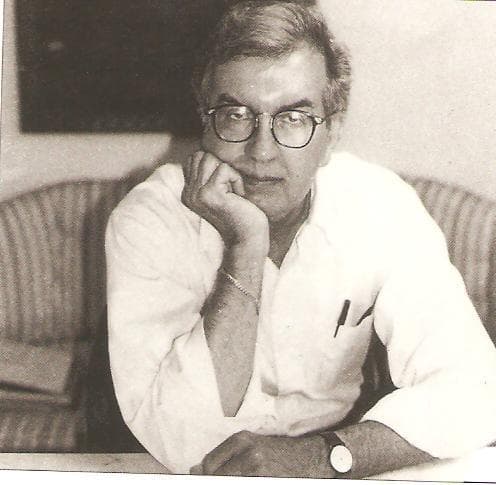
Larry Jeff McMurtry was an American novelist, essayist, prominent book collector, bookseller and screenwriter whose work was predominantly set in either the Old West or contemporary Texas. His novels included Horseman, Pass By (1962), The Last Picture Show (1966), and Terms of Endearment (1975), which were adapted into films. Films adapted from McMurtry's works earned 34 Oscar nominations.
Similar books
- Lonesome Dove
Larry McMurtry
4.5 (149k) average on GoodreadsHistorical FictionEpic scope, Western setting, memorable characters, and McMurtry's signature style.
- Terms of Endearment
Larry McMurtry
4.2 (24k) average on GoodreadsLiterary FictionFocus on complex female characters and relationships within a Texas setting.
- The Last Picture Show
Larry McMurtry
4.0 (14k) average on GoodreadsLiterary FictionExploration of small-town Texas life and coming-of-age themes.
- The Old Man and the Sea
Ernest Hemingway
3.8 (831k) average on GoodreadsLiterary FictionA Cuban fisherman's long struggle with a giant marlin becomes a story of endurance and dignity, now retold for young adults with illustrations, phonetic guides, and writing prompts in Traditional Chinese.
- One Hundred Years of Solitude
Gabriel García Márquez
4.1 (753k) average on GoodreadsLiterary FictionThrough the multi-generational story of the Buendía family, a mythical town deals with the repeating patterns of time, love, and solitude, as the extraordinary mixes with the ordinary.
- The Goldfinch
Donna Tartt
3.9 (720k) average on GoodreadsLiterary FictionHaunted by a tragic explosion and clutching a stolen Dutch masterpiece, a young orphan navigates the opulent drawing rooms of New York and the gritty underbelly of the art world, desperately seeking connection and redemption amidst a life spiraling into crime and obsession.




Enjoyed the summary?
A summary gives you the shape of the book. The book itself has the detail, the examples and the voice.
Find Moving On on AmazonAs an Amazon Associate, BookBrief earns from qualifying purchases. How we're funded