

Synopsis
Covers the whole plot, including the ending.
- Difficulty
- Hard
- Pacing
- Slow
- Mood
- Philosophical, melancholic, absurd, darkly humorous, contemplative
- Read it if
- you enjoy philosophical novels, dark humor, absurdism, and existentialist themes, or are a fan of Samuel Beckett's other works and want to explore his early prose.
- Skip it if
- you prefer fast-paced plots, straightforward narratives, optimistic stories, or find extensive internal monologues and philosophical digressions tedious.
Murphy Plot Summary
Covers the whole plot, including the ending.
The Armchair and the Asylum
The novel opens with Murphy, a young man in London who prefers the comfort of his rocking chair to the outside world. He is passive, finding peace in a near-cataleptic state, retreating into his mind. His only real connection is with Celia, a prostitute who loves him and supports him. Celia, however, is tired of his inaction and threatens to leave if he doesn't find a job. This ultimatum forces Murphy, unwillingly, to consider engaging with the world he largely despises. His struggle to balance his inner peace with Celia's demands creates the initial conflict.
The Search for Employment
Driven by Celia's ultimatum, Murphy half-heartedly looks for work. His attempts are, predictably, failures. He is unsuited for conventional jobs, his mind always drifting back to his inner world. He tries various odd jobs, each ending in dismissal due to his disinterest. Meanwhile, Celia, increasingly frustrated, consults her grandfather, a retired astrologer named Mr. Kelly, who offers vague advice and encourages her to stick with Murphy. Murphy's job search shows his inability to function in society and his resistance to its expectations, further highlighting his detachment.
The Pursuit of Murphy
Back in Dublin, a group of characters, including Miss Counihan, a former prostitute and love interest of Murphy's old mentor, Neary, and some of Murphy's old friends, begin searching for him. Neary, a self-proclaimed philosopher, is obsessed with finding Murphy, believing he holds some secret to life. Miss Counihan, a strong woman, leads the search, using various unusual methods. Their pursuit is driven by affection, curiosity, and a desire to reclaim part of their past. This subplot introduces more characters and expands the novel's setting, leading to a series of comical encounters.
The Magdalen Mental Mercyseat
Through a series of unlikely events, Murphy finds a job at the Magdalen Mental Mercyseat, a mental asylum. This institution, filled with people society calls insane, is the only place Murphy feels truly at home. He finds a strange connection with the patients, seeing in their detached states a reflection of his own inner world. He enjoys the quiet, the routine, and the chance to observe minds that, in their madness, seem to have moved beyond the ordinary. His work here, which involves little actual labor, allows him to retreat into his mind, making it the perfect, if unusual, job for him.
Celia's Despair and Mr. Kelly's Plans
While Murphy is content in the asylum, Celia remains in London, increasingly lonely. She misses Murphy deeply but is also frustrated by his continued absence and his odd choice of employment. Her grandfather, Mr. Kelly, sensing her distress, decides to act. He plans to track down Murphy, believing he can bring him back to Celia. Mr. Kelly's efforts, though well-meaning, are often mistaken and add to the narrative's comedic chaos. His involvement highlights the contrast between Murphy's self-contained world and the external desires of those who care for him.
The Dublin Contingent Arrives
The Dublin group, led by Miss Counihan and Neary, finally arrives in London. Their arrival causes new comedic misunderstandings and misadventures as they try to find Murphy. Their search is marked by their eccentric personalities and often-absurd methods. They meet various Londoners, each interaction adding to the novel's dark humor. The coming together of these characters in London creates a complex web of interconnected searches, all focused on the elusive Murphy, who remains unaware of the frantic efforts to find him.
Murphy's Solace and the Patients
Inside the Magdalen Mental Mercyseat, Murphy develops a special connection with several patients. He finds their lack of concern for the outside world and their immersion in their own minds very appealing. He engages in a strange, non-verbal communication with them, feeling a sense of belonging he has never experienced outside the asylum. One patient, a former professor named Mr. Endon, particularly fascinates Murphy. Endon's deep detachment and self-sufficiency reflect Murphy's own desire for mental isolation. This connection reinforces Murphy's preference for the 'mad' over the 'sane' world.
The Pursuit Intensifies
As the Dublin group and Mr. Kelly continue their separate searches, their paths occasionally cross, leading to more comedic problems. Through a series of clues and chance encounters, the various parties gradually narrow down Murphy's location. Miss Counihan, with her sharp deductions, comes closest to identifying the asylum as Murphy's workplace. The frantic pace of the searchers contrasts sharply with Murphy's calm life inside the asylum, creating tension between the outside world's demands and his inner peace. The story moves towards the inevitable confrontation between Murphy's inner world and the persistent intrusion of others.
The Confrontation and the Fire
Eventually, the searchers arrive at the Magdalen Mental Mercyseat. Murphy is found, but his reunion with Celia and the others is brief and anticlimactic. In a bizarre turn of events, Murphy's room in the asylum catches fire, possibly due to a faulty gas heater. Murphy, passive as always, makes no effort to escape, seeming to accept the end. He dies in the fire, still in his rocking chair, surrounded by his inner world. His death is both tragic and, in a strange way, a fulfillment of his desire to completely detach from the outside world, achieving ultimate inner peace through oblivion.
The Aftermath and the Ashes
After Murphy's death, his will states that his ashes should be flushed down the toilet of the Abbey Theatre in Dublin. However, due to a mix-up, his ashes are instead scattered on a pub floor, where they are swept up with the trash. The remaining characters are left to deal with Murphy's absence and the pointlessness of their search. Celia, heartbroken, eventually returns to Dublin. Neary and Miss Counihan continue their eccentric lives, forever changed by their encounter with Murphy. The ending highlights the novel's themes of futility, the absurdity of human effort, and the ultimate unknowability of the human mind, even after death.
Murphy Characters
Murphy
Protagonist
A man seeking absolute mental solitude
Murphy is a young Irishman living in London, characterized by his extreme passivity and his profound desire for mental solitude. He actively disengages from the external world, finding his greatest pleasure in retreating into his own mind, often while rocking in his chair. He views the physical world as a distraction and finds conventional society meaningless. His internal world is a complex, self-sufficient universe where he can escape the demands and absurdities of reality. He is detached, indifferent to material possessions, and deeply uncomfortable with human connection, except for his peculiar attachment to Celia and a strange kinship with the asylum patients.
Relationships: Celia (lover/provider); Neary (former mentor/pursuer); Mr. Endon (fellow 'madman'/ kindred spirit)
Celia
Supporting
Murphy's devoted but increasingly frustrated lover
Celia is a kind-hearted prostitute who deeply loves Murphy and supports him financially. She represents the external world's demands for engagement and stability, acting as a foil to Murphy's solipsism. She is practical, loyal, and longs for a conventional life with Murphy, but her patience is tested by his extreme passivity and his refusal to conform. Her love for Murphy is genuine, but it is also a source of her suffering as she struggles to reconcile her desires with his inherent nature. She is a sympathetic character, embodying the human need for connection and belonging in contrast to Murphy's detachment.
Neary
Supporting
Murphy's former philosophical mentor and relentless pursuer
Neary is a self-proclaimed philosopher and academic, once Murphy's mentor, who becomes obsessed with finding him. He is a man of grand, often absurd, pronouncements and dramatic gestures, prone to bouts of melancholia and fits of rage. Neary believes Murphy holds some profound secret to existence and feels a deep sense of betrayal or abandonment by his former protégé. His pursuit of Murphy is driven by a mix of intellectual curiosity, a desire for validation, and a peculiar form of affection. He represents the academic, intellectual world's often-futile attempts to grasp fundamental truths.
Relationships: Murphy (former mentor/pursuer); Miss Counihan (love interest/partner in pursuit)
Miss Counihan
Supporting
A formidable former prostitute and detective
Miss Counihan is a formidable and resourceful woman, formerly a prostitute, who becomes Neary's love interest and the driving force behind the search for Murphy. She is pragmatic, shrewd, and possesses a sharp wit, often cutting through Neary's philosophical ramblings. She takes charge of the pursuit, demonstrating unexpected detective skills and an unwavering determination. Miss Counihan provides much of the novel's comedic energy through her no-nonsense attitude and her interactions with the more eccentric characters. She represents a grounded, if unconventional, practicality in contrast to the abstract pursuits of others.
Relationships: Neary (love interest/partner in pursuit); Murphy (object of pursuit)
Mr. Kelly
Supporting
Celia's eccentric astrologer grandfather
Mr. Kelly is Celia's grandfather, a retired astrologer with a penchant for cryptic pronouncements and a deep affection for his granddaughter. He is an eccentric but well-meaning character who attempts to help Celia by tracking down Murphy through his own peculiar methods, which often involve astrological calculations and obscure deductions. His attempts to intervene in Murphy and Celia's lives are often clumsy and add to the comedic chaos. Mr. Kelly embodies a different kind of detachment from reality, one rooted in esoteric beliefs rather than Murphy's internal withdrawal, yet equally ineffective in the practical world.
Relationships: Celia (granddaughter); Murphy (granddaughter's lover)
Cooper
Supporting
A silent, devoted servant
Cooper is Neary's silent, unblinking, and utterly devoted servant. He is a man of few words, or rather, no words at all, communicating primarily through his unwavering presence and actions. Cooper is a bizarre and unsettling figure, seemingly devoid of personal will or emotion, existing solely to serve Neary. His mechanical obedience and lack of individuality contribute to the novel's absurdist humor and highlight the strange power dynamics between characters. He is a constant, unsettling presence, a silent observer of the unfolding chaos.
Relationships: Neary (master)
Wylie
Supporting
A cynical and intellectual friend of Murphy
Wylie is one of Murphy's former friends from Dublin, a cynical and intellectual character who joins Neary and Miss Counihan in their pursuit. He is often critical and sarcastic, providing a counterpoint to Neary's grandiosity and Miss Counihan's pragmatism. Wylie represents a more intellectual, yet equally detached, perspective on life, often offering witty but ultimately pessimistic observations. He is a keen observer of human folly, including his own, and contributes to the novel's dark humor through his dry commentary.
Relationships: Murphy (friend); Neary (acquaintance/fellow pursuer)
Ticklepenny
Supporting
A quirky and minor character
Ticklepenny is a minor character, a student of Neary's, who is briefly involved in the initial stages of the search for Murphy. He is somewhat naive and easily manipulated, serving primarily as a source of comedic relief through his awkwardness and his interactions with the more dominant personalities. His presence adds to the ensemble of eccentric characters surrounding Murphy, highlighting the various types of individuals drawn into the protagonist's orbit, even if peripherally. He quickly fades from the main narrative, his role primarily to initiate certain plot points.
Relationships: Neary (teacher/student); Murphy (acquaintance)
Mr. Endon
Supporting
A patient in the asylum who mirrors Murphy's internal state
Mr. Endon is a patient at the Magdalen Mental Mercyseat who particularly fascinates Murphy. He is described as being completely lost in his own internal world, utterly detached from external reality, to a degree that even Murphy admires. Endon represents the ultimate manifestation of Murphy's desired state of mental isolation. His profound 'madness' is perceived by Murphy not as an illness, but as a superior form of existence, a true freedom from the constraints of the world. Murphy feels a deep, unspoken connection with Endon, seeing him as a reflection of his own ideal self.
Relationships: Murphy (kindred spirit/object of fascination)
Murphy Themes
Solipsism vs. Engagement
The novel's central conflict is Murphy's deep solipsism – his belief that only his own mind is real and knowable – and the outside world's demands for his involvement. Murphy actively seeks to retreat into his 'mind-body' (his inner world), finding peace and meaning there, while disliking the 'big world' (external reality). This theme explores the tension between an individual's desire for internal peace and society's expectation of participation, questioning what reality is and the validity of different ways of living. The asylum, surprisingly, is the only place where Murphy can truly balance these opposing forces.
“Murphy's mind was his own, a closed system, an autonomous zone, where he could be free from the intolerable demands of the world.”
The Absurdity of Existence
Beckett's novel has a strong sense of the absurd, showing human efforts, especially the search for meaning or happiness, as ultimately pointless and illogical. The characters' actions, reasons, and the results of their efforts are often illogical, farcical, and without any grand importance. From Neary's philosophical talk to the chaotic search for Murphy, the story highlights life's inherent meaninglessness and irrationality, suggesting that people are often driven by random desires and that their struggles rarely lead to a satisfying end. Murphy's final fate, his ashes scattered in a pub, emphasizes this point.
“The greatest possible good in the greatest possible number of cases was not enough for Murphy, for the greatest possible good did not exist, and the greatest possible number of cases was not possible.”
Mind and Body Dualism
A significant philosophical theme is Cartesian mind-body dualism, explored through Murphy's unwavering preference for his mind over his body. He sees his body as merely a 'puppet' or 'ballast' that ties him to the unpleasant outside world. His greatest joy comes from separating his mind from his physical feelings, achieving a state of mental freedom. The novel looks at the implications of this separation, suggesting that true freedom, for Murphy, is the complete control of the mental over the physical. His death, still in his rocking chair, can be seen as the ultimate victory of his mind over his body.
“Murphy's mind was a roomy sphere, an antechamber to the Beyond, where the body was not welcome.”
Love and Attachment
The novel explores various forms of love and attachment, often with a cynical or sad undertone. Celia's devoted love for Murphy is contrasted with his inability to return it in a conventional way, showing the pain and frustration that can come from unequal emotional investment. Neary's obsessive attachment to Murphy, stemming from curiosity and a feeling of abandonment, is also unfulfilled. The characters' desires for connection are often blocked or lead to unhappiness, suggesting that true, mutual love is rare and difficult in a world of self-absorbed individuals. Even Murphy's 'love' for Mr. Endon is more an intellectual connection than an emotional bond.
“He was not cold, he was not even warm, he was simply without heat, a condition that Celia, in her warmth, found insufferable.”
Madness and Sanity
Beckett challenges common ideas of madness and sanity. Murphy finds his greatest comfort and sense of belonging among the 'mad' patients of the asylum, seeing their detachment as a superior state. Conversely, the 'sane' world, with its demands, expectations, and illogical pursuits, is presented as chaotic and absurd. The novel suggests that what society calls madness might, in fact, be a more authentic or peaceful way of living, while conventional sanity can be a form of self-deception or a prison of societal rules. The asylum becomes a refuge, a place where Murphy can truly be himself.
“He was a man who felt himself to be a part of the mad, rather than the sane, world.”
Plot Devices & Literary Techniques
Interior Monologue
Direct access to Murphy's intricate mental world
The novel extensively uses interior monologue, particularly for Murphy, allowing the reader direct access to his complex, philosophical, and often contradictory thoughts. This device is crucial for understanding Murphy's solipsistic worldview and his internal struggles. It reveals his elaborate mental constructs, his disdain for the external world, and his attempts to achieve mental freedom. The interior monologue often takes on a stream-of-consciousness quality, showcasing Beckett's distinctive prose style and providing insight into the protagonist's unique psychology, making his detachment understandable, if not entirely sympathetic.
Absurdist Humor
Comedic situations arising from illogical characters and events
Beckett employs absurdist humor throughout the novel, deriving comedy from the irrationality of the characters' actions, their outlandish dialogue, and the often-illogical situations they find themselves in. This humor is dark and ironic, highlighting the inherent meaninglessness of human existence. Examples include Neary's dramatic philosophical pronouncements, Miss Counihan's unconventional detective work, and the general chaos surrounding the search for Murphy. The humor serves to underscore the novel's thematic concerns with futility and the absurdity of the human condition, preventing the philosophical depth from becoming overly didactic.
Foil Characters
Contrasting characters to highlight Murphy's unique nature
Various characters serve as foils to Murphy, highlighting his extreme solipsism and detachment. Celia, with her desire for conventional love and stability, contrasts sharply with Murphy's emotional indifference. Neary, with his verbose philosophical pursuits, provides a different, but equally absurd, intellectual engagement with the world. The 'sane' world outside the asylum, with its demands and illogical behaviors, serves as a collective foil to Murphy's inner peace. These contrasting characters emphasize Murphy's unique position and the profound difference between his internal reality and the external world's expectations.
Symbolism of the Rocking Chair
A physical representation of Murphy's mental retreat
The rocking chair is a potent symbol of Murphy's desire for mental withdrawal and his escape from the external world. It is his sanctuary, the place where he can most effectively detach from his body and immerse himself in his mind. The act of rocking itself suggests a rhythmic, almost hypnotic, movement that aids his journey into his inner self. His ultimate death in the rocking chair, amidst the flames, signifies the culmination of his life's pursuit: a complete and final immersion in his own mind, free from the constraints of the physical world. It is his ultimate resting place and a symbol of his philosophical stance.
Murphy Quotes
“Enough sunshine to go blind.”
“He had been ill for a long time, and now he was dying.”
“The total absence of feeling was a fine thing.”
“He was not a man who could be said to have made his way in the world.”
“The world is a big place and there are many things in it.”
“It is a long way from the cradle to the grave.”
“He did not believe in God, but he believed in the Devil.”
“The only thing that matters is to be oneself.”
“He was a man of few words, and those he did utter were not always to the point.”
“The world is a torture chamber, and we are all its victims.”
“He found a certain comfort in the repetition of his own misery.”
“The mind is a prison, and the body is its jailer.”
“He sought not happiness, but a certain peace.”
“The great thing is to be in a state of flux.”
Quiz
10 questions on the plot and the characters. Each answer comes with a short explanation.
Question 1
In what language was Samuel Beckett's novel 'Murphy' originally written?
- French
- English
- Irish
- German
Show answer
B. English The novel was originally written in English.
Question 2
When was 'Murphy' first published in London?
- 1947
- 1938
- 1929
- 1950
Show answer
B. 1938 The novel was first published in London in 1938.
Question 3
Who is the main protagonist of the novel 'Murphy'?
- Belacqua
- Watt
- Murphy
- Molloy
Show answer
C. Murphy The novel recounts the life of Murphy.
Question 4
What is Murphy attempting to establish in London?
- A business empire
- A political movement
- A home
- A scientific laboratory
Show answer
C. A home Murphy attempts to establish a home in London.
Question 5
What is Murphy's ultimate financial goal mentioned in the text?
- To become a millionaire
- To amass sufficient fortune for his intended bride to join him
- To fund his artistic endeavors
- To buy a large estate
Show answer
B. To amass sufficient fortune for his intended bride to join him Murphy aims to amass enough fortune for his intended bride to join him.
Question 6
Beckett himself translated 'Murphy' into which language?
- English
- Irish
- German
- French
Show answer
D. French Beckett translated the novel into French.
Question 7
In what year was the French translation of 'Murphy' published?
- 1938
- 1947
- 1950
- 1929
Show answer
B. 1947 The French translation was published in 1947.
Question 8
The life of Murphy is described as both:
- Joyful and prosperous
- Hilarious and tragic
- Simple and uneventful
- Calm and peaceful
Show answer
B. Hilarious and tragic The novel recounts the 'hilarious but tragic life of Murphy'.
Question 9
Where was the original English publication of 'Murphy' released?
- Paris
- Dublin
- New York
- London
Show answer
D. London The novel was published in London.
Question 10
What is implied about Murphy's attempts to 'establish a home'?
- He is very successful and buys a mansion.
- His efforts are likely fraught with difficulty and perhaps failure, given the tragic aspect of his life.
- He succeeds easily and quickly.
- He gives up on the idea almost immediately.
Show answer
B. His efforts are likely fraught with difficulty and perhaps failure, given the tragic aspect of his life. The description of Murphy's life as 'hilarious but tragic' suggests that his attempts to establish a home would be challenging and unlikely to end in simple success.
Murphy FAQ
What is Samuel Beckett's novel 'Murphy' about?
Murphy' by Samuel Beckett is the story of the titular character, Murphy, navigating his life in London. It hilariously and tragically depicts his attempts to build a home and secure enough wealth for his fiancée to join him.
When was Samuel Beckett's 'Murphy' first published?
Samuel Beckett's first published novel, 'Murphy', was originally written in English and released in London in 1938. It was later translated into French by Beckett himself and published in France in 1947.
Is 'Murphy' by Samuel Beckett a philosophical novel?
Yes, 'Murphy' by Samuel Beckett is often considered a philosophical novel. It explores themes related to existentialism, the absurd, and the human condition through Murphy's often chaotic and detached existence.
What are the main themes in Samuel Beckett's 'Murphy'?
Key themes in 'Murphy' include the search for meaning and purpose in a seemingly meaningless world, the struggle between freedom and constraint, the nature of consciousness, and the absurdity of human endeavors.
How does Murphy's character represent Beckett's philosophical ideas?
Murphy's character, with his detachment from societal norms and his pursuit of unconventional experiences, embodies Beckett's exploration of existential freedom and the individual's struggle against imposed structures and expectations.
What is the tone of Samuel Beckett's 'Murphy'?
The tone of 'Murphy' is a unique blend of dark humor and tragedy. While the events can be absurd and even comical, they are underpinned by a profound sense of futility and the tragic aspects of life.
What is the significance of Murphy's pursuit of 'work'?
Murphy's pursuit of 'work,' particularly his job at the mental asylum, can be seen as a philosophical exploration of sanity and madness, order and chaos, and the arbitrary nature of societal definitions of normalcy.
Is 'Murphy' similar to other Samuel Beckett works?
While 'Murphy' shares thematic elements with Beckett's later, more famous works like 'Waiting for Godot,' it is more narrative-driven and features a more conventional (though still eccentric) protagonist, making it distinct in his oeuvre.
Where can I find a copy of Samuel Beckett's 'Murphy'?
Copies of 'Murphy' by Samuel Beckett are available through major online booksellers, independent bookstores, and often in university libraries. Both the original English version and the French translation are widely accessible.
What is the setting of Samuel Beckett's 'Murphy'?
The novel 'Murphy' is primarily set in London, England. The story follows Murphy's experiences as he tries to establish a life and find stability within the bustling, and for him, often overwhelming, urban environment.
About the author
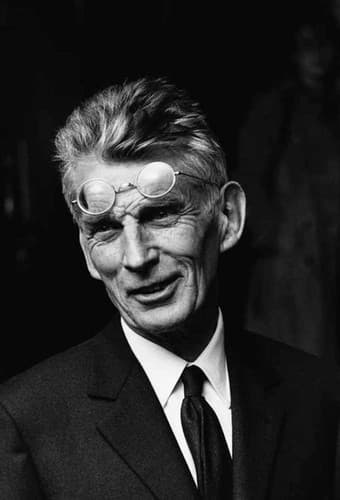
Samuel Barclay Beckett was an Irish novelist, dramatist, short story writer, theatre director, poet, and literary translator. His literary and theatrical work features bleak, impersonal and tragicomic experiences of life, often coupled with black comedy and nonsense. His work became increasingly minimalist as his career progressed, involving more aesthetic and linguistic experimentation, with techniques of repetition and self-reference. He is considered one of the last modernist writers, and one of the key figures in what Martin Esslin called the Theatre of the Absurd.
Similar books
- Malone Dies
Samuel Beckett
3.9 (4k) average on GoodreadsLiterary FictionShares Beckett's distinctive prose, philosophical depth, and themes of existential despair and the human condition.
- The Stranger
Albert Camus
4.1 (3k) average on GoodreadsFantasyExplores themes of absurdism, alienation, and the detached observation of life from an existential perspective.
- Nausea
Jean-Paul Sartre
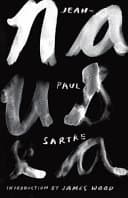
3.9 (86k) average on GoodreadsPhilosophyBoth "Murphy" and "Nausea" are foundational texts of existentialism, exploring the protagonist's profound sense of alienation and the arbitrary nature of existence. However, Sartre's Roquentin experiences a visceral, almost physical nausea from the sheer contingency of being, a direct confrontation with the 'thing-in-itself.' Murphy, conversely, seeks an internal escape from this very contingency, aiming for a state of pure mental inertia. While Sartre's prose is more direct and analytical, Beckett's is more playful and circuitous, using humor to underscore the absurd rather than solely confronting it with dread.
- Brave New World
Aldous Huxley
4.0 (1.4M) average on GoodreadsFantasyIn a future where happiness comes from chemicals and individuality is gone, one man's desire for real experience threatens the calm, controlled society.
- Life of Pi
Yann Martel
3.9 (1.3M) average on GoodreadsFantasyStranded in the vast Pacific, a young Indian boy forms an unlikely bond with a Bengal tiger, questioning belief and survival.
- The Picture of Dorian Gray
Oscar Wilde
4.1 (966k) average on GoodreadsFantasyA beautiful young man's soul decays within a cursed portrait, mirroring the grotesque cost of his hedonistic pursuit of eternal youth and illicit pleasure.





Enjoyed the summary?
A summary gives you the shape of the book. The book itself has the detail, the examples and the voice.
Find Murphy on AmazonAs an Amazon Associate, BookBrief earns from qualifying purchases. How we're funded