

Synopsis
Covers the whole plot, including the ending.
- Difficulty
- Medium
- Pacing
- Slow
- Mood
- Melancholy, Reflective, Somber, Patriotic
- Read it if
- You are interested in character-driven historical fiction exploring themes of disillusionment, the search for purpose, and the impact of war on the individual, set against the backdrop of early 20th-century America and WWI.
- Skip it if
- You prefer fast-paced plots, lighthearted themes, or stories with a strong sense of optimism.
One of Ours Plot Summary
Covers the whole plot, including the ending.
A Nebraska Boyhood
Claude Wheeler grows up on his father Nat Wheeler's prosperous, but emotionally barren, Nebraska farm. He feels alienated from his practical, materialistic father and his religious, distant mother. Unlike his older brother Bayliss, who embraces the farm's business, Claude is sensitive and idealistic, wanting something more than wealth. His attempts at intellectual pursuits and spiritual fulfillment often meet indifference or gentle ridicule from his family. He finds some comfort in his friendship with Ernest Havel, a Bohemian neighbor who shares his appreciation for music and literature, and in his visits to the Erlich family, German-American intellectuals who offer a glimpse into a more cultured life.
University and Disillusionment
Claude attends Temple College, a small denominational school, hoping for intellectual stimulation and purpose. However, he quickly becomes disillusioned by the narrow curriculum and the hypocrisy he sees among some faculty and students. He struggles with his faith, finding the church's rigid doctrines unsatisfying and conflicting with his own thoughts. His pious roommate further highlights Claude's growing detachment from conventional religious life. He finds little genuine intellectual companionship and ultimately leaves college feeling more adrift, returning to the farm with his questions unanswered.
A Loveless Marriage
Back on the farm, Claude feels pressured to settle down. He meets Enid Royce, a seemingly pious young woman, through his mother's church. Despite his reservations and lack of romantic passion, they marry. Enid, however, is deeply committed to missionary work and her religious duties, dedicating most of her time to these. Their marriage quickly becomes a source of loneliness for Claude. Enid is physically and emotionally distant, often ill, and shows little interest in domestic life or understanding Claude's inner world. Their home life is cold and unfulfilling, further isolating Claude.
Enid's Departure and Claude's Despair
Enid's missionary work leads to her decision to take an extended trip to China. This departure, while for a noble cause, devastates Claude. He feels abandoned, and his last hope for a meaningful personal connection is shattered. With Enid gone, his life on the farm becomes even more unbearable. He feels a sense of futility, his days filled with farm work and the emptiness of his personal life. He struggles with despair, questioning his existence and feeling trapped. He longs for an escape, a purpose, anything to pull him out of his spiritual stagnation.
The Call to War
News of World War I in Europe reaches the quiet Nebraska plains, initially seeming distant. However, as America's involvement grows, the war begins to affect Claude. The conflict, with its grand scale and clear moral imperative, contrasts sharply with his small, stifling world. He sees it not just as a political struggle but as a chance for redemption, a cause worthy of sacrifice, and an escape from his misery. The idea of serving his country and participating in a global event ignites a spark within him, offering a potential answer to his deep yearning for meaning and belonging.
Enlisting and Training
Driven by his newfound resolve, Claude enlists in the United States Army, much to his family's dismay, who see it as an unnecessary risk. He leaves the farm and begins training. Despite the hardships of military life, Claude finds a surprising sense of camaraderie and belonging among his fellow soldiers. The structured environment, clear objectives, and shared purpose give him a sense of direction he always lacked. He proves to be a dedicated and capable soldier, excelling in training and earning respect. The physical demands and mental focus of army life offer a welcome distraction from his past unhappiness.
The Journey to France
Claude and his company embark on the long journey across the Atlantic to France. The voyage itself is significant for Claude. He is awestruck by the vastness of the ocean and the scale of the undertaking. He feels a sense of historical importance, recognizing he is part of a monumental global event. During the journey, he forms stronger bonds with his fellow soldiers, sharing stories and fears. He feels a growing sense of purpose and a connection to something larger than himself. The anticipation of combat, while daunting, is also intertwined with a feeling of finally reaching his destiny.
Life in the Trenches
Upon arriving in France, Claude faces the realities of trench warfare. The mud, constant threat of death, psychological toll, and widespread destruction contrast sharply with his earlier romanticized notions of war. He witnesses immense suffering and loss. Yet, even amid the horror, Claude's idealism persists. He finds moments of connection with the French people, especially civilians, and develops an appreciation for French culture and history. He tries to maintain his humanity and compassion, often reflecting on the beauty of the European landscape and the resilience of its people, even as war rages around him.
Leadership and Respect
Despite the constant danger and psychological strain, Claude shows courage and leadership in the trenches. He is not a reckless hero, but a thoughtful and empathetic officer who cares for his men. His calm demeanor under fire, his willingness to share in their hardships, and his sense of justice earn him the respect and loyalty of his company. He is promoted and given greater responsibilities, proving himself a natural leader. This recognition and the bond with his men solidify his sense of purpose and belonging, fulfilling a deep need that had gone unmet for so long.
The Final Battle and Death
Claude participates in a particularly fierce offensive. Leading his men with courage, he is at the forefront of the fighting. During the intense combat, Claude is mortally wounded. His death, while tragic, is shown as the culmination of his journey. He dies in service of a cause he believes in, surrounded by the men he led, having found the meaning and purpose he sought throughout his life. His sacrifice, though individual, is presented as part of a larger collective heroism, cementing his place as 'one of ours' – an American soldier who found his true self in the crucible of war.
One of Ours Characters
Claude Wheeler
Protagonist
A sensitive, idealistic young man from Nebraska seeking meaning and purpose in a world that often disappoints him.
Claude is a complex character, introspective and deeply yearning for something beyond the material comforts of his family's farm. He is intelligent and cultured, but feels alienated by his pragmatic father, pious mother, and later, his emotionally distant wife. He struggles with his faith and a sense of belonging, often feeling like an outsider. His idealism is both his strength and his vulnerability, leading him to constant self-examination and a search for transcendent values. He is empathetic and kind, but also prone to melancholy and disillusionment.
Relationships: Nat Wheeler (distant and often disapproving father); Mrs. Wheeler (pious and emotionally distant mother); Bayliss Wheeler (practical, business-minded older brother, with whom Claude has little in common); Enid Royce (emotionally cold and religiously zealous wife); Ernest Havel (Bohemian neighbor and intellectual companion in his youth); The Erlich Family (cultured German-American family who offer intellectual stimulation); His fellow soldiers (comrades with whom he finds a deep sense of belonging and purpose)
Enid Royce
Supporting
Claude's religiously zealous wife, who prioritizes missionary work over her marriage.
Enid is a devoutly religious woman, deeply committed to her missionary work and church duties. While seemingly virtuous, she is emotionally cold, physically frail, and largely uninterested in the domestic aspects of marriage or in understanding Claude's inner life. Her piety often comes across as self-righteous and her dedication to her faith is all-consuming, leaving little room for a fulfilling relationship with her husband. She represents the restrictive and unfulfilling aspects of conventional religious life that Claude struggles against.
Relationships: Claude Wheeler (emotionally distant wife); Mrs. Wheeler (friend and fellow churchgoer)
Nat Wheeler
Supporting
Claude's pragmatic, materialistic father, focused solely on the prosperity of his farm.
Nat Wheeler is the embodiment of the successful, self-made American farmer. He is practical, hardworking, and focused almost entirely on business and financial success. He has little patience or understanding for Claude's intellectual and spiritual yearnings, viewing them as impractical or even frivolous. He loves his son in his own way but expresses it through providing material comforts rather than emotional support. His character represents the limitations of a purely materialistic existence and the generational divide between traditional American values and Claude's search for deeper meaning.
Relationships: Claude Wheeler (distant and often disapproving father); Mrs. Wheeler (wife, with whom he shares a practical, if not deeply emotional, partnership)
Mrs. Wheeler
Supporting
Claude's pious and emotionally reserved mother, who encourages his marriage to Enid.
Mrs. Wheeler is a devoutly religious woman, deeply involved in her church and concerned with moral propriety. She is emotionally reserved and struggles to connect with Claude on an emotional level, often steering him towards religious solutions for his unhappiness. She is well-intentioned but limited in her understanding of Claude's complex inner world. Her influence is largely through her religious convictions and her desire for Claude to settle into a conventional, respectable life, which leads her to encourage his marriage to Enid.
Relationships: Claude Wheeler (pious and emotionally distant mother); Nat Wheeler (husband); Enid Royce (friend and fellow churchgoer, whom she encourages as a wife for Claude)
Ernest Havel
Supporting
Claude's Bohemian neighbor and intellectual confidant in his youth.
Ernest Havel is a young Bohemian farmer who shares Claude's intellectual curiosity and love for music and literature. He represents a rare source of understanding and companionship for Claude during his isolated youth. Ernest's more worldly perspective and appreciation for art provide a stark contrast to the utilitarian mindset prevalent on the Wheeler farm. Their discussions offer Claude a glimpse into a broader cultural world and validate his own intellectual inclinations, making him feel less alone in his search for meaning.
Relationships: Claude Wheeler (close friend and intellectual companion)
Bayliss Wheeler
Supporting
Claude's older brother, who embodies the pragmatic, business-focused values of the family farm.
Bayliss is Claude's older brother, practical and conventional, deeply invested in the family farm's prosperity. He shares his father's business acumen and lacks Claude's sensitivity and intellectual inclinations. He is content with the material aspects of life and sees little value in Claude's artistic or philosophical pursuits. Their relationship highlights the profound difference in their temperaments and aspirations, further emphasizing Claude's feeling of being an outsider within his own family.
Relationships: Claude Wheeler (older brother, with whom he has little in common); Nat Wheeler (son, who follows in his father's footsteps)
The Erlich Family
Supporting
A cultured German-American family who offer Claude a taste of intellectual and artistic life.
The Erlich family, particularly the mother and daughters, provide Claude with a much-needed intellectual and cultural oasis during his youth. Their home is filled with books, music, and lively discussions, offering a stark contrast to the emotional aridity of the Wheeler farm. They represent a more refined and intellectually stimulating world that Claude deeply desires to be a part of. Their influence helps to shape Claude's appreciation for art, music, and intellectual pursuits, reinforcing his dissatisfaction with his own surroundings.
Relationships: Claude Wheeler (friends and intellectual mentors)
Private Frank Ellinger
Supporting
A fellow soldier in Claude's company who becomes a close comrade in France.
Frank Ellinger is one of the soldiers in Claude's company in France. He represents the common soldier, facing the horrors of war alongside Claude. Through their shared experiences in the trenches, Claude develops a strong bond of camaraderie with Ellinger and others. Ellinger's presence helps to ground Claude in the realities of military life and provides him with a tangible connection to his new purpose. His character embodies the collective spirit and shared suffering of the American forces abroad, highlighting the bonds forged in the crucible of war.
Relationships: Claude Wheeler (fellow soldier and comrade)
One of Ours Themes
The Search for Meaning and Purpose
This is the novel's central theme. Claude Wheeler spends his early life feeling alienated and unfulfilled, searching for something beyond his family's materialistic values and his church's dogma. His experiences at college, his loveless marriage to Enid, and his farm life all fail to give him purpose. Only when America enters World War I does he find a cause worthy of his idealism and sacrifice, believing he has found his true calling and a reason to live and die. This theme is clear from his early philosophical thoughts on the farm to his ultimate sacrifice in France.
“He was always trying to make a connection, to find a place for himself in the scheme of things. But the world seemed to have no place for him, no work for his hands, no outlet for his heart.”
Alienation and Disillusionment
Claude's life is marked by alienation from his family, community, and even his country's values. He feels misunderstood by his practical father and pious mother, and isolated by his distant wife, Enid. His college experiences further disillusion him with conventional institutions. This theme highlights the struggle of an idealistic individual to find authentic connection and belonging in a world that often seems indifferent to his deeper yearnings. The war, ironically, provides the sense of belonging and purpose that peace had denied him.
“He felt that he had been born to no purpose, had been bred to no end. He looked out over the fields and saw nothing but work, and behind it, nothing but more work.”
The Clash Between Idealism and Reality
Claude is an idealist, always striving for beauty, truth, and a higher purpose. However, he repeatedly faces a harsh and often disappointing reality. His dreams of intellectual fulfillment at college are dashed by its narrowness; his hopes for marital companionship are crushed by Enid's coldness; and even the war, while providing purpose, subjects him to brutality. This theme explores the struggle to maintain ideals when the world often falls short. Despite the grim realities of the trenches, Claude largely preserves his idealism, finding beauty and meaning even amid destruction.
“He knew, now, what it was to live; to be a man, to have a purpose, to be part of something great and terrible and beautiful.”
The Nature of American Identity and Patriotism
The novel explores what it means to be 'one of ours' – an American. For Claude, this identity is not found in wealth or quiet farm life, but in an act of national service and self-sacrifice. The war transforms him from a disaffected individual into a symbol of American courage and idealism. The book subtly critiques the materialistic aspects of American society while celebrating a certain strain of American heroism and the willingness to fight for larger ideals. His death, in service to his country, is presented as the ultimate affirmation of his American identity.
“He was a soldier now, and he had found his country. He was one of ours.”
Critique of Traditional Religion and Social Norms
Through Claude's experiences, Cather offers a subtle critique of restrictive and often hypocritical conventional religion and societal expectations. Claude finds little spiritual comfort in his mother's church or the denominational college. His marriage to Enid, driven by social pressure and religious piety, proves emotionally barren. The novel suggests that true spiritual fulfillment and purpose come not from adhering to strict social or religious norms, but from individual experience and a genuine connection to a larger, more meaningful cause, which for Claude, becomes the war.
“There was a God, he believed, but not the one preached in the country churches, not the one who demanded sacrifice of joy and beauty.”
Plot Devices & Literary Techniques
Bildungsroman
A novel focusing on the psychological and moral growth of the protagonist from youth to adulthood.
One of Ours is a classic example of a Bildungsroman. The narrative meticulously traces Claude Wheeler's journey from his disillusioned youth on a Nebraska farm through his unfulfilling marriage and college experience, culminating in his transformation into a purposeful soldier during World War I. The core of the story lies in Claude's internal struggles, his search for identity, meaning, and belonging, and how his experiences shape his character and worldview. His development is marked by a series of revelations and disillusions that eventually lead him to find his place in the world, albeit through sacrifice.
Irony
The use of language or events that signify the opposite of what is stated or expected.
Irony is employed throughout the novel, particularly in Claude's life before the war. He comes from a prosperous family, yet feels spiritually impoverished. He seeks fulfillment in marriage and religion, only to find further alienation. The most profound irony is that Claude, who struggles so deeply with finding purpose in peace, discovers his true self and a profound sense of belonging in the brutal chaos of war. His death, while tragic, is presented ironically as the moment of his greatest fulfillment, a 'good death' in contrast to his 'meaningless life' before the war.
Symbolism of the Frontier/Plains
The Nebraska plains symbolize both opportunity and isolation, freedom and confinement.
The vast, open landscape of the Nebraska plains serves as a powerful symbol in the novel. Initially, it represents the promise of the American frontier and the family's prosperity, but for Claude, it becomes a symbol of his isolation and the emotional barrenness of his life. The endless fields, while providing sustenance, also represent a monotonous existence and a lack of intellectual stimulation. It is a place he longs to escape, symbolizing the limitations of his early life. His departure from the plains for the war signifies his breaking free from these symbolic confines and venturing into a larger world.
Foil Characters
Characters who contrast with the protagonist to highlight particular qualities.
Several characters serve as foils to Claude. His brother, Bayliss, embodies the pragmatic, materialistic values that Claude rejects, highlighting Claude's idealism. Enid Royce, with her rigid piety and emotional coldness, serves as a foil to Claude's yearning for genuine connection and spiritual depth, emphasizing his disillusionment with conventional religion and marriage. These contrasting characters underscore Claude's unique sensitivities, his struggles, and his ultimate search for a different kind of fulfillment than those around him.
One of Ours Quotes
“He was always at the mercy of the next thing, whatever it might be.”
“The world was a terribly exciting place. You had to take it as it came.”
“It was as if he had been trying to read a great book, and had got only to the table of contents.”
“He felt a profound, inarticulate kinship with all that was wild and untamed.”
“She was one of those women who are always taking up new things, and never doing anything with them.”
“A man's life was like a river, always flowing, always changing, yet always the same river.”
“He had always been a little out of step, a little behind or ahead of the music.”
“War was a great rectifier, a great equalizer. It made men brothers.”
“He loved the feeling of being part of something vast and terrible and magnificent.”
“It was the first time in his life that he had known what he was doing, or why.”
“The things that made him happy were not the things that made other people happy.”
“He had found his reason for being, and that was enough.”
“That was the way life worked, always taking away something and giving something else.”
“There were dreams in the air, dreams that were going to be realized.”
Quiz
10 questions on the plot and the characters. Each answer comes with a short explanation.
Question 1
What is Claude Wheeler's primary motivation for seeking something beyond his family's farm life?
- To escape his demanding older brother, Bayliss.
- He feels alienated from his parents and dissatisfied with his prescribed future.
- He wants to marry a wealthy woman from the city.
- He dreams of becoming a successful businessman like his father.
Show answer
B. He feels alienated from his parents and dissatisfied with his prescribed future. Claude feels a deep sense of alienation from his practical, uncaring father and pious mother, leading him to seek a more meaningful existence beyond the farm.
Question 2
What is Enid Royce's primary focus and passion, which ultimately drives a wedge between her and Claude?
- Her career as a concert pianist.
- Her dedication to missionary work and religious duties.
- Her ambition to manage the family farm.
- Her desire to travel the world.
Show answer
B. Her dedication to missionary work and religious duties. Enid Royce is deeply committed to her missionary work and religious obligations, which she prioritizes over her marriage to Claude, leading to their emotional distance.
Question 3
Which historical event provides Claude with a sense of purpose and belonging he previously lacked?
- The American Civil War.
- The Spanish-American War.
- World War I.
- The Great Depression.
Show answer
C. World War I. The outbreak of World War I gives Claude a clear direction and a cause to believe in, transforming his previously aimless existence into one of purpose.
Question 4
What is the primary reason Claude's college experience at Temple College proves unsatisfying for him?
- He is expelled for disciplinary reasons.
- He finds the academic environment stifling and the social life unfulfilling.
- He is constantly homesick and misses the farm.
- He struggles financially and cannot afford his tuition.
Show answer
B. He finds the academic environment stifling and the social life unfulfilling. Despite his initial hopes, Claude finds Temple College's academic and social environment restrictive and uninspiring, failing to provide the intellectual or emotional stimulation he craves.
Question 5
How does Claude's relationship with his mother, Mrs. Wheeler, differ from his relationship with his father?
- His mother is more understanding and sympathetic to his artistic aspirations.
- His mother is deeply pious and often critical of his less religious views, while his father is more pragmatic and distant.
- His mother encourages his involvement in farm work, while his father pushes him towards education.
- He feels equally alienated from both parents.
Show answer
B. His mother is deeply pious and often critical of his less religious views, while his father is more pragmatic and distant. Mrs. Wheeler is a devoutly religious woman who often expresses disappointment in Claude's spiritual path, whereas his father, while distant, is primarily concerned with practical matters and the farm's prosperity.
Question 6
What significant change occurs in Claude's perception of life and his future after the United States declares war?
- He decides to pursue a career in politics.
- He finds a clear sense of purpose, duty, and belonging in serving his country.
- He becomes more cynical and withdraws from society.
- He reconciles with Enid and plans for a family.
Show answer
B. He finds a clear sense of purpose, duty, and belonging in serving his country. The war offers Claude a defined role and a collective identity, filling the void of purposelessness he felt in his civilian life. He embraces the idea of fighting for a greater cause.
Question 7
Before enlisting, Claude attempts to find fulfillment through various avenues. Which of the following is NOT one of his primary attempts?
- Attending college at Temple College.
- Marriage to Enid Royce.
- Becoming a successful real estate speculator.
- Working on his family's farm and trying to improve it.
Show answer
C. Becoming a successful real estate speculator. Claude tries college, marriage, and even attempts to find meaning in farm life. He does not, however, pursue a career in real estate speculation as a primary means of fulfillment.
Question 8
What is the symbolic significance of the 'prairie' in Claude's early life and his yearning for something more?
- It represents the boundless opportunities for wealth and expansion.
- It symbolizes the vastness of his unfulfilled desires and the limitations of his environment.
- It signifies a place of comfort and security he always wished to return to.
- It is a metaphor for the simplicity and purity of his childhood dreams.
Show answer
B. It symbolizes the vastness of his unfulfilled desires and the limitations of his environment. The vast, monotonous prairie often mirrors Claude's internal landscape—his sense of emptiness and the perceived lack of intellectual or spiritual stimulation in his rural life, driving his desire for something more expansive.
Question 9
Upon arriving in France, how does Claude's initial perception of the war and his role in it evolve?
- He becomes disillusioned by the chaos and immediately regrets enlisting.
- He finds a deep camaraderie and a sense of shared purpose that reinforces his belief in the war's righteousness, despite the harsh realities.
- He attempts to desert due to the overwhelming fear of combat.
- He is quickly promoted through the ranks due to his strategic brilliance.
Show answer
B. He finds a deep camaraderie and a sense of shared purpose that reinforces his belief in the war's righteousness, despite the harsh realities. Despite the grim realities of war, Claude experiences a profound sense of belonging and shared purpose with his fellow soldiers, a feeling he had longed for throughout his life. This camaraderie validates his decision to enlist.
Question 10
What is the ultimate irony of Claude Wheeler's journey and death in 'One of Ours'?
- He dies a rich man, despite his disdain for wealth.
- He finally finds meaning and purpose in war, only to die shortly after achieving it, leaving his family to remember him as a hero without truly understanding his internal struggles.
- He returns home to a hero's welcome but finds he is still unfulfilled.
- His death leads to his wife, Enid, abandoning her missionary work.
Show answer
B. He finally finds meaning and purpose in war, only to die shortly after achieving it, leaving his family to remember him as a hero without truly understanding his internal struggles. The profound irony lies in Claude finally discovering meaning and a sense of belonging in the war, a fulfillment he sought his entire life, only to have it tragically cut short by his death. His family remembers him as a hero, but the depth of his personal quest for meaning is largely unrecognized by them.
One of Ours FAQ
What is the central conflict driving Claude Wheeler's early life in Nebraska?
Claude's central conflict stems from his profound dissatisfaction with his rural Nebraska life and his family's values. He feels alienated from his pragmatic, materialistic father, Bayliss Wheeler, and his devoutly religious, emotionally distant mother, while also struggling with the intellectual and spiritual barrenness he perceives in his surroundings.
How does Claude's marriage to Enid Royce contribute to his sense of isolation?
Claude's marriage to Enid Royce is a significant source of his isolation because Enid is intellectually and emotionally unavailable to him. She is primarily devoted to her missionary work and her ailing brother, not to Claude, leading to an unconsummated and deeply unfulfilling union that leaves Claude feeling even more alone and misunderstood.
What prompts Claude to enlist in the military during World War I?
Claude enlists in the military during World War I as an escape from his suffocating life and a search for purpose. The war offers him a chance to find meaning, camaraderie, and a noble cause, something he desperately lacked in his domestic and professional life in Nebraska.
What kind of transformation does Claude undergo once he is in France?
In France, Claude undergoes a significant transformation, finding a sense of belonging, purpose, and camaraderie among his fellow soldiers. He sheds his earlier disillusionment and embraces his role as a soldier, experiencing moments of profound connection and even joy despite the horrors of war.
What is the ultimate fate of Claude Wheeler?
Claude Wheeler ultimately dies in battle in France, killed by machine-gun fire during an advance. His death, while tragic, is presented as the culmination of his journey, having found his true purpose and belonging in the war.
How do the characters of Mahailey and Gladys Farmer subtly foreshadow Claude's eventual desire for a different life?
Mahailey, the Wheeler's loyal hired hand, represents a simple, honest connection to the land but also a life Claude wants to escape. Gladys Farmer, Claude's brief intellectual companion, shows him glimpses of a more cultured, questioning world, hinting at the deeper intellectual and spiritual fulfillment he yearns for beyond his Nebraska farm.
What is the significance of the recurring motif of 'the beautiful thing' that Claude seeks?
The 'beautiful thing' represents Claude's elusive ideal, a profound sense of meaning, beauty, and purpose that he searches for throughout his life. It symbolizes his longing for spiritual and emotional fulfillment that he fails to find in his family, marriage, or pre-war American society, ultimately finding it, fleetingly, in the shared sacrifice of war.
How does the novel subtly critique the 'American dream' as it existed in early 20th-century Nebraska?
The novel subtly critiques the 'American dream' by portraying Claude's despair despite his family's material wealth and social standing. It suggests that a life focused solely on land acquisition and financial success, devoid of intellectual or spiritual depth, can be profoundly unfulfilling for sensitive individuals like Claude.
How does Claude's relationship with his mother, Mrs. Wheeler, contribute to his psychological development?
Mrs. Wheeler's devout piety and emotional reserve contribute significantly to Claude's psychological development by fostering a sense of spiritual yearning yet also alienation. Her inability to connect with his more secular, intellectual aspirations leaves him feeling misunderstood and constantly searching for a different kind of spiritual or moral anchor.
Analyze the psychological impact of Enid Royce's rejection on Claude's self-esteem and future choices.
Enid Royce's emotional and physical rejection deeply wounds Claude's self-esteem, reinforcing his feelings of inadequacy and unworthiness. This profound personal failure contributes to his desperate need for external validation and a sense of purpose, making the escape and camaraderie offered by the war even more appealing as a way to prove his worth.
How does Claude's idealism, despite his disillusionment, manifest in his interactions with others?
Despite his disillusionment, Claude's idealism manifests as a persistent desire for genuine connection and meaning in his interactions. He seeks out intellectual discussions with Gladys Farmer, yearns for intimacy with Enid, and later forms deep bonds of camaraderie with his fellow soldiers, always searching for a shared purpose or understanding.
What psychological need does the camaraderie of the army fulfill for Claude that his civilian life could not?
The camaraderie of the army fulfills Claude's deep psychological need for belonging, shared purpose, and unconditional acceptance. In civilian life, he felt isolated and misunderstood; among his fellow soldiers, he finds a common bond, mutual respect, and a clear, noble objective that provides him with a profound sense of identity and worth.
Is 'One of Ours' a pro-war novel, or does it offer a more nuanced perspective on conflict?
While the novel depicts Claude finding purpose and fulfillment in war, it is not simply pro-war. It offers a nuanced perspective by focusing on Claude's personal journey and the specific societal failures that led him to embrace war as an escape. It acknowledges the horrors but also emphasizes the camaraderie and nobility some individuals found, without glorifying the conflict itself.
How does Cather use the Nebraska landscape to reflect Claude's internal state and aspirations?
Cather uses the vast, often monotonous Nebraska landscape to reflect Claude's internal state of yearning and confinement. While beautiful, its endlessness can feel oppressive, mirroring his spiritual emptiness and his desire to break free from its perceived limitations. Later, the European landscapes offer a stark contrast, reflecting his newfound sense of purpose and adventure.
To what extent is Claude Wheeler a representative figure of a generation, or an individual anomaly?
Claude Wheeler can be interpreted as both a representative figure and an individual anomaly. He represents a segment of a generation disillusioned with post-frontier American materialism. However, his extreme sensitivity and specific personal circumstances, particularly his unfulfilling marriage and profound alienation, also mark him as a unique individual whose struggles are amplified by his particular temperament.
What is the significance of the title 'One of Ours' in relation to Claude's journey and ultimate fate?
The title 'One of Ours' holds multiple significances. It initially refers to Claude as 'one of ours' from Nebraska, a son of the land. Later, it shifts to him being 'one of ours' in the army, a soldier. His death solidifies this, as he becomes 'one of ours' who made the ultimate sacrifice, implying a collective ownership and memory of his contribution and transformation.
How does the ending, particularly Mrs. Wheeler's reflections, reshape our understanding of Claude's life and death?
Mrs. Wheeler's reflections at the end reshape our understanding by providing a retrospective, idealized view of Claude's life and death. She chooses to remember him as having found his true calling and purpose in the war, suggesting a comforting narrative that contrasts with his earlier struggles and implies a spiritual justification for his sacrifice, even if it overlooks his prior disillusionment.
Could Claude have found fulfillment without the war? Discuss alternative paths suggested or implied in the novel.
The novel strongly implies that Claude struggled to find fulfillment in civilian life, but it also suggests alternative paths he might have explored. His intellectual curiosity, evident in his discussions with Gladys and his interest in music, indicates he might have thrived in a more academic or artistic environment, had he been able to escape the confines of his family and local community.
About the author
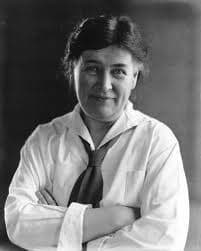
Willa Sibert Cather was an American writer known for her novels of life on the Great Plains, including O Pioneers!, The Song of the Lark, and My Ántonia. In 1923, she was awarded the Pulitzer Prize for One of Ours, a novel set during World War I.
Similar books
- A Farewell to Arms
Ernest Hemingway
3.8 (263k) average on GoodreadsHistorical FictionExplores the experience of an American soldier in WWI with a focus on disillusionment and loss.
- My Ántonia
Willa Cather
3.8 (120k) average on GoodreadsHistorical FictionShares Cather's distinctive prose, focus on Midwestern life, and character development, though with different themes.
- All Quiet on the Western Front
Erich Maria Remarque
4.0 (355k) average on GoodreadsHistorical FictionOffers a powerful and realistic portrayal of the horrors and psychological impact of trench warfare.
- The Old Man and the Sea
Ernest Hemingway
3.8 (831k) average on GoodreadsLiterary FictionA Cuban fisherman's long struggle with a giant marlin becomes a story of endurance and dignity, now retold for young adults with illustrations, phonetic guides, and writing prompts in Traditional Chinese.
- One Hundred Years of Solitude
Gabriel García Márquez
4.1 (753k) average on GoodreadsLiterary FictionThrough the multi-generational story of the Buendía family, a mythical town deals with the repeating patterns of time, love, and solitude, as the extraordinary mixes with the ordinary.
- The Goldfinch
Donna Tartt
3.9 (720k) average on GoodreadsLiterary FictionHaunted by a tragic explosion and clutching a stolen Dutch masterpiece, a young orphan navigates the opulent drawing rooms of New York and the gritty underbelly of the art world, desperately seeking connection and redemption amidst a life spiraling into crime and obsession.





Enjoyed the summary?
A summary gives you the shape of the book. The book itself has the detail, the examples and the voice.
Find One of Ours on AmazonAs an Amazon Associate, BookBrief earns from qualifying purchases. How we're funded