

Synopsis
Covers the whole plot, including the ending.
- Difficulty
- Medium
- Pacing
- Moderate
- Mood
- Melancholy, Reflective, Suspenseful, Atmospheric
- Read it if
- You enjoy coming-of-age stories set in mid-century America, appreciate literary mysteries with deep character development, and are prepared for a poignant exploration of grief, faith, and the complexities of human nature.
- Skip it if
- You prefer fast-paced thrillers, dislike narratives focused on tragedy and moral ambiguity, or are uncomfortable with themes of infidelity and violence within a small-town setting.
Ordinary Grace Plot Summary
Covers the whole plot, including the ending.
A Summer of Foreboding and First Loss
In the summer of 1961, Frank Drum, as an adult, remembers his thirteenth year in New Bremen, Minnesota. He lives with his Methodist minister father, Nathan; his artistic mother, Ariel; his musically talented older sister, Ariel Jr. (Ariel); and his younger, stuttering, and observant brother, Jake. The summer starts with a bad sign when the boys find a dead man, Bobby Cole, on the railroad tracks – it seems like suicide. This event affects the town and especially Nathan, who knew Bobby. Frank and his best friend Gus spend their days exploring and watching the adults, especially Ariel, who plans to go to Juilliard. This first death sets a sad tone for a summer full of loss.
Ariel's Tragic Drowning
The first major tragedy happens to the Drum family when Ariel, Frank's older sister, drowns in the Minnesota River. She had gone for a walk after arguing with her mother, Ariel Sr., about her future and her relationship with an older, married man named Karl Brand. The town is sad, and the Drums are deep in grief. Nathan, despite his own sorrow, tries to lead his family through their faith. Ariel Sr. is very upset and blames herself, pulling away from the family. Frank and Jake struggle to understand the loss. The police say it was an accident, but Frank has doubts about how she died, especially since Ariel was a strong swimmer.
The Search for Answers and Suspects
Frank and Jake are not satisfied with the official ruling of accidental drowning. Driven by grief and suspicion, they start investigating Ariel's death. They remember Ariel's secret relationship with Karl Brand, a local businessman, and his possessive nature. They also think about Tony, a young Native American man who worked for Karl and admired Ariel. The boys quietly follow clues, listen to adult talks, and put together pieces of information. They learn about Karl Brand's temper and his wife's knowledge of his affair. Their amateur detective work uncovers a hidden world of adult problems and moral compromises in their seemingly peaceful town, making them question everyone.
Emmett Cole's Return and Revelation
Emmett Cole, the older brother of Bobby Cole (the man found dead on the tracks at the start of summer), comes back to New Bremen. Emmett is a troubled war veteran with a history of violence and a strong dislike for the town. He tells Frank and Jake that he was in love with Ariel and that she was pregnant with his child. This shocking news makes the investigation more complicated, suggesting a reason for murder and making Emmett himself a suspect. Frank and Jake do not know whether to believe Emmett or fear him, as his unpredictable behavior and past make him a dangerous but possibly truthful source.
The Death of Mrs. Brand
The summer's death count rises again when Mrs. Brand, Karl Brand's wife, is found dead. While at first it is called a heart attack, the timing and her recent upset over Karl's affair make the townspeople and Frank suspicious. This death further links Karl Brand to the ongoing tragedies, as he will now inherit a lot of money and is free from his marriage. Frank and Jake watch Karl closely, noticing his lack of obvious grief. The boys realize that the deaths are connected and that someone in New Bremen is behind these events, or at least benefits from them, making their small town feel more dangerous and morally corrupt.
Nathan's Crisis of Faith and the Boys' Investigation
Nathan, weighed down by Ariel's death and the later tragedies, has a crisis of faith. He questions God's grace and his ability to minister to his grieving church while his own family is broken. Meanwhile, Frank and Jake become sure that Karl Brand is responsible for Ariel's death, possibly because she was pregnant with Emmett's child. They find Ariel's hidden diary, which confirms her relationship with Emmett and her pregnancy. The boys also discover that Karl was having financial problems and would gain a lot from his wife's death. They decide to confront Karl, believing they have enough evidence to expose him.
Confrontation and a Deadly Confession
With Ariel's diary and their suspicions, Frank and Jake confront Karl Brand at his house. The confrontation is tense, with Karl at first denying everything. However, under pressure, he admits to causing Ariel's death. He says he was angry about her pregnancy with Emmett's child, fearing it would expose his affair and ruin his reputation. He hit her, and she fell into the river and drowned. He also admits to killing his wife, Mrs. Brand, to hide his crimes and secure his money. The confession is terrible, and the boys realize how evil Karl is. The situation becomes a dangerous standoff.
Emmett's Vengeance and Karl's Demise
Just as Karl Brand is about to hurt Frank and Jake, Emmett Cole appears, having followed the boys. Emmett, seeking revenge for Ariel and his unborn child, confronts Karl. In a violent struggle, Emmett kills Karl Brand. The boys see Emmett's harsh, brutal justice, a man driven by grief and a desire for payback. The scene is chaotic and very upsetting for Frank and Jake, who must deal with the moral meaning of what they just saw. Emmett, after making sure Karl is dead, disappears, leaving Frank and Jake to handle what happened.
The Aftermath and a Conspiracy of Silence
Afterward, Nathan Drum, along with the town sheriff and a few other adults, arranges a cover-up. They make the scene look like Karl Brand committed suicide, protecting Emmett Cole from prosecution and shielding Frank and Jake from the trauma of testifying. The adults decide that some truths are too damaging for the community and that a different kind of justice has been served. Frank and Jake are sworn to secrecy, understanding how serious the situation is and the unspoken agreement among the adults. This act of collective mercy and protection shows the complex nature of grace and justice in their small town.
A New Bremen Forever Changed
The summer slowly ends, but New Bremen and the Drum family are changed forever. Ariel Sr. starts to recover from her grief, finding comfort in her art and her remaining family. Nathan, still struggling with his faith, finds a new sense of purpose and grace in protecting his community and his sons. Frank and Jake carry their secrets, but their bond is stronger than ever. Forty years later, Frank, as the narrator, reflects on the 'ordinary grace' that was present even in the darkest moments of that summer – the kindness of strangers, the protective love of family, and the quiet acts of compassion that helped them survive and heal. The summer of 1961 is the time that formed his understanding of life, death, and forgiveness.
Ordinary Grace Characters
Frank Drum
Protagonist
Thirteen-year-old narrator, grappling with loss and uncovering town secrets.
Frank is the thoughtful and observant narrator, recounting the summer of his thirteenth year from an adult perspective. He is intelligent, sensitive, and deeply affected by the tragedies that befall his family and town. Driven by a need for understanding and justice, he takes it upon himself, with his brother Jake, to investigate Ariel's death. His journey through that summer transforms him from an innocent boy into a young man burdened with profound knowledge of human darkness and the complexities of grace. He struggles with his father's faith and his mother's artistic temperament, often feeling like an outsider in his own family, yet he is fiercely loyal.
Relationships: Nathan Drum (Son, often seeks his father's guidance and approval); Ariel Drum Sr. (Son, feels a strong, complex bond with his artistic mother); Ariel Drum Jr. (Younger brother, deeply admires and mourns his older sister); Jake Drum (Older brother, close and protective bond, co-conspirator in investigation); Gus (Best friend and confidant)
Nathan Drum
Supporting
Methodist minister and father, struggling with faith and grief.
Nathan is Frank's father, a Methodist minister who preaches a gospel of 'ordinary grace.' He is a man of deep faith, compassion, and moral integrity, but Ariel's death shakes his convictions to their core. He is a loving father, though sometimes distant, and a respected figure in the community. Despite his personal anguish, he strives to provide spiritual guidance to his family and congregation. His arc involves a profound crisis of faith and eventual rediscovery of grace through unconventional means, ultimately making difficult choices to protect his family and community.
Relationships: Frank Drum (Father, tries to impart wisdom and faith); Ariel Drum Sr. (Husband, deeply devoted but sometimes struggles to understand his wife's artistic nature); Ariel Drum Jr. (Father, deeply mourns his daughter); Jake Drum (Father, protective and loving)
Ariel Drum Sr.
Supporting
Frank's artistic and passionate mother, consumed by grief and guilt.
Ariel Sr. is Frank's mother, a passionate, artistic woman with a love for music and a fiery spirit. Her relationship with her daughter, Ariel Jr., was complex, marked by both deep love and artistic rivalry. After Ariel Jr.'s death, Ariel Sr. is consumed by grief, guilt, and a profound depression, withdrawing from her family and her art. Her emotional intensity is a stark contrast to Nathan's stoicism, and her struggle to cope is a central element of the family's healing process. She eventually finds solace in her art once more, a sign of her slow recovery.
Relationships: Frank Drum (Mother, shares an artistic sensibility with him); Nathan Drum (Wife, her emotional nature contrasts with his more reserved demeanor); Ariel Drum Jr. (Mother, shares a deep, complex bond with her talented daughter); Jake Drum (Mother, protective and loving)
Ariel Drum Jr.
Supporting
Frank's beautiful, musically gifted older sister, whose death ignites the plot.
Ariel Jr. is Frank's older sister, a stunningly beautiful and prodigiously talented musician, bound for Juilliard. She is vibrant, spirited, and holds a strong influence over her younger brothers. Her secret life, including a passionate affair with Karl Brand and a relationship with Emmett Cole, is gradually revealed after her death, exposing the hidden complexities beneath her seemingly perfect exterior. Her drowning is the inciting incident of the novel, and her memory and the mystery surrounding her death drive Frank's investigation and the family's grief.
Relationships: Frank Drum (Older sister, admired and loved); Nathan Drum (Daughter, beloved); Ariel Drum Sr. (Daughter, shares a complex, artistic bond); Jake Drum (Older sister, adored and looked up to); Karl Brand (Secret lover); Emmett Cole (Lover, pregnant with his child)
Jake Drum
Supporting
Frank's younger brother, wise and perceptive despite his stutter.
Jake is Frank's younger brother, characterized by a significant stutter and a profound, almost preternatural perceptiveness. Despite his youth, he often sees and understands things that escape his older brother and even the adults. His stutter does not hinder his intelligence or his courage. He is Frank's constant companion and co-investigator in the search for Ariel's killer, providing crucial insights and unwavering loyalty. His quiet wisdom and unique way of processing the world offer a contrast to Frank's more direct approach.
Relationships: Frank Drum (Younger brother, extremely close bond, partner in investigation); Nathan Drum (Son, loved and protected); Ariel Drum Sr. (Son, loved and protected); Ariel Drum Jr. (Younger brother, deeply loves and misses his sister)
Karl Brand
Antagonist
Wealthy, married businessman with a secret affair, driven by greed and control.
Karl Brand is a prominent, wealthy, and seemingly respectable businessman in New Bremen. He is secretly having an affair with Ariel Drum Jr. and is possessive and volatile. His financial troubles and his desire to maintain his social standing drive his actions. He is ultimately revealed to be Ariel's killer, driven by rage over her pregnancy with another man's child and the potential exposure of his affair. He also murders his wife to secure his finances. Karl represents the hidden darkness and corruption beneath the surface of the seemingly idyllic small town.
Relationships: Ariel Drum Jr. (Secret lover, ultimately her killer); Mrs. Brand (Wife, whom he murders); Tony (Employee, who dislikes him)
Emmett Cole
Supporting
Troubled war veteran seeking vengeance for Ariel and his unborn child.
Emmett Cole is the older brother of Bobby Cole, the first death of the summer. A Korean War veteran, Emmett is a troubled, sometimes violent man with a deep-seated anger towards the town and a past that includes a stint in prison. He was secretly in love with Ariel and was the father of her unborn child. His return to New Bremen is fueled by grief and a desire for vengeance. He ultimately delivers his own form of justice to Karl Brand, acting as a catalyst for the final resolution of the mystery. He represents a raw, untamed force of justice outside the law.
Relationships: Ariel Drum Jr. (Lover, father of her unborn child); Bobby Cole (Younger brother, whose death is also a source of grief for Emmett)
Gus
Supporting
Frank's best friend, a loyal companion through the summer's events.
Gus is Frank's best friend, a constant presence throughout the summer. He is a typical teenage boy, interested in baseball and adventures, but also a loyal and supportive friend. While not as deeply involved in the mystery as Frank and Jake, he provides companionship and a sense of normalcy amidst the unfolding tragedies. His presence highlights the contrast between the ordinary childhood experiences and the extraordinary, dark events Frank is witnessing.
Relationships: Frank Drum (Best friend)
Bobby Cole
Mentioned
Emmett's younger brother, whose suicide marks the beginning of the summer's tragedies.
Bobby Cole is Emmett's younger brother, found dead on the railroad tracks in the novel's opening. His death is initially ruled a suicide, but his connection to Emmett and the subsequent events reveal a deeper layer of the town's hidden sorrows. His death sets a somber tone for the summer and introduces the theme of loss, foreshadowing the tragedies to come. He is a symbolic figure, representing the initial crack in the town's facade of peace.
Relationships: Emmett Cole (Older brother)
Ordinary Grace Themes
Ordinary Grace and Redemption
Grace is a central theme, shown through Nathan's sermons and Frank's thoughts. It is not always in big, amazing acts, but in quiet kindness, forgiveness, and human connection during suffering. Even in the darkest moments of violence and loss, characters find grace unexpectedly – in the protective lies adults tell, in the bond between brothers, in art, and in human resilience. The cover-up of Karl Brand's death, for instance, is an act of grace, protecting the innocent from more pain.
“That was it. That was all of it. A grace so ordinary there was no reason at all to remember it. Yet I have never across the forty years since it was spoken forgotten a single word.”
Loss of Innocence and the Nature of Evil
The summer of 1961 takes away Frank's childhood innocence, making him face the harsh facts of death, betrayal, and human evil. He sees murder, adultery, and painful secrets hidden beneath his quiet town. The deaths of Ariel, Mrs. Brand, and Karl Brand show that evil can exist even in respected people. Frank's journey is a painful growing up, as he learns that the world is more complex and dangerous than he imagined, and that evil can be found in unexpected places, challenging his ideas of right and wrong.
“That summer, the world as I'd known it up until then had disappeared. In its place was a world that was darker, more dangerous, and much more complicated.”
Family Bonds and Secrets
The Drum family's relationships are a main part of the story. Ariel's death reveals hidden tensions and unspoken secrets within the family – Ariel Sr.'s difficult relationship with her daughter, Nathan's struggle to keep his faith and his family together, and the deep, protective bond between Frank and Jake. The family deals with grief, blame, and the wish for justice, finding strength in their love for each other. The secrets they keep from the outside world, especially about Karl Brand's killer, strengthen their unique bond and their shared understanding of 'ordinary grace.'
“We were a family, after all, and even in the face of such a terrible loss, we still cleaved to one another.”
Justice vs. Law
The novel looks at the conflict between legal justice and a more personal, moral justice. Frank and Jake's amateur investigation and Emmett Cole's revenge happen outside the law. The town's later cover-up of Karl Brand's death, arranged by Nathan and the sheriff, shows this theme. It suggests that sometimes, true justice – protecting the innocent, allowing for some revenge for an unpunished crime – means bending or breaking the official law. This makes the reader consider what justice truly means in a complex moral situation.
“Sometimes the law is a poor instrument for justice. Sometimes, you have to find another way.”
Memory and Storytelling
The entire novel is an adult Frank telling the story, looking back forty years later. This structure highlights how memory is subjective and how it shapes understanding. Frank tells the story of the summer to make sense of the past, to find meaning in tragedy, and to explain the 'ordinary grace' he experienced. The story emphasizes how certain events become lasting parts of one's history and how telling a story can be a way to heal and preserve, allowing the past to inform the present.
“Memory is a treacherous thing. It can be a comfort, but it can also be a curse.”
Plot Devices & Literary Techniques
First-Person Retrospective Narration
An adult Frank recounts the events of his thirteenth summer.
The entire story is told from the perspective of an adult Frank Drum, looking back forty years later at the summer of 1961. This device allows for a mature, reflective tone, infusing the narrative with wisdom and emotional depth that a thirteen-year-old narrator could not possess. It enables foreshadowing, thematic commentary, and a nuanced exploration of memory. The adult Frank can reflect on the 'ordinary grace' that was present even in the midst of profound tragedy, providing a philosophical layer to the mystery and the coming-of-age story.
The Small Town Setting (New Bremen, Minnesota)
A seemingly idyllic backdrop for hidden darkness and moral complexity.
New Bremen, Minnesota, in 1961, functions as more than just a setting; it's a character in itself. Initially presented as a wholesome, innocent community, it gradually reveals its underbelly of secrets, infidelity, violence, and moral compromises. The confined nature of the small town intensifies the impact of each tragedy and allows for a tightly woven web of interconnected relationships and hidden histories. It highlights how even in seemingly peaceful places, human nature's darker aspects can thrive, and how the community can collectively choose to protect its own, even through unconventional means.
The Motif of Water (The Minnesota River)
Symbol of life, death, and the flow of inevitable change.
The Minnesota River is a recurring motif, particularly significant as the site of Ariel's drowning. Water, typically a symbol of life and cleansing, here becomes an instrument of death and a repository of secrets. It represents the unstoppable flow of life and the inevitability of change and loss. The river's murky depths mirror the hidden truths and moral ambiguities of the town. It is both a beautiful natural element and a dangerous, silent witness to tragedy, forever linking the landscape to the summer's sorrow.
The Minister's Crisis of Faith
Nathan Drum's struggle with belief in the face of tragedy.
Nathan Drum, a Methodist minister, experiences a profound crisis of faith after his daughter's death and the subsequent tragedies. This plot device explores how personal suffering can challenge deeply held religious convictions. His struggle makes him a more relatable and human character, moving beyond a stereotypical 'man of God.' His eventual re-evaluation of grace, finding it in human compassion and imperfect acts rather than divine intervention, is central to the novel's philosophical core and informs the ultimate resolution of the mystery.
Ordinary Grace Quotes
“That was it. That was all of it. A grace so ordinary there was no reason at all to remember it. Yet I have never across the forty years since it was spoken forgotten a single word.”
“The dead are never far from us. They're in our hearts and on our minds and in the end all that separates us from them is a single breath, one final puff of air.”
“The miracle is this: that you will rise in the morning and be able to see again the startling beauty of the day.”
“We are never so wise as when we live in this moment, this ordinary moment.”
“Sometimes the things we don't say are more important than the things we do.”
“The world doesn't stop for grief. It keeps turning, and you have to turn with it.”
“There is no such thing as a true story. There is only the story we tell ourselves.”
“Faith is a hard thing to come by, and once you have it, it's a hard thing to lose.”
“In the end, we are all just stories. Make yours a good one.”
“The heart has its own reasons, which reason does not know.”
“We are all broken, that's how the light gets in.”
“Sometimes the most ordinary things could be made extraordinary, simply by doing them with the right people.”
“The past is never dead. It's not even past.”
“To be alive is to be vulnerable. To love is to be vulnerable.”
“In the silence, we often hear the most.”
Quiz
10 questions on the plot and the characters. Each answer comes with a short explanation.
Question 1
What is the primary setting of 'Ordinary Grace'?
- Chicago, Illinois, 1965
- New Bremen, Minnesota, 1961
- St. Paul, Minnesota, 1959
- Milwaukee, Wisconsin, 1963
Show answer
B. New Bremen, Minnesota, 1961 The story is set in the fictional town of New Bremen, Minnesota, during the summer of 1961, as established in the book's opening description of the era with references to the Twins' debut season and other period details.
Question 2
Who is the narrator of 'Ordinary Grace'?
- Frank Drum's father, Nathan
- Frank Drum as a 13-year-old boy
- Frank Drum reflecting 40 years later
- Frank's younger brother, Jake
Show answer
C. Frank Drum reflecting 40 years later The novel is told from the perspective of Frank Drum, who narrates the events of the summer of 1961 from a vantage point 40 years later, as noted in the book's description that it is 'told from Frank’s perspective forty years after that fateful summer.'
Question 3
What is Frank Drum's father's occupation?
- Police officer
- Methodist minister
- Drugstore owner
- School teacher
Show answer
B. Methodist minister Frank's father, Nathan Drum, is a Methodist minister, as mentioned in the book's description of the family: 'his Methodist minister father.' This role influences the family's dynamics and the novel's themes of faith and grace.
Question 4
Which of the following forms of death does Frank encounter during the summer, as listed in the book description?
- Accident, Nature, Suicide, Murder
- War, Disease, Old Age, Accident
- Murder, Execution, Suicide, Accident
- Nature, Murder, Execution, Disease
Show answer
A. Accident, Nature, Suicide, Murder The book description explicitly states that death 'assumed many forms' during that summer for Frank, listing 'Accident. Nature. Suicide. Murder.' This highlights the novel's exploration of mortality and loss.
Question 5
What is a key theme highlighted in the book's description?
- The joy of childhood innocence
- The discovery of the terrible price of wisdom
- The excitement of historical events
- The simplicity of rural life
Show answer
B. The discovery of the terrible price of wisdom The book description concludes by noting it is 'an unforgettable novel about discovering the terrible price of wisdom and the enduring grace of God.' This underscores the central theme of how gaining understanding often comes with profound personal cost.
Question 6
How does the book describe Frank's mother?
- As a quiet, reserved homemaker
- As a passionate, artistic woman
- As a strict, religious figure
- As a career-oriented professional
Show answer
B. As a passionate, artistic woman In the description of Frank's family, his mother is characterized as 'his passionate, artistic mother,' suggesting a complex personality that contrasts with his minister father and adds depth to the family dynamics.
Question 7
What historical event is subtly referenced in the book's setting?
- The Vietnam War
- The presidency of John F. Kennedy
- The Civil Rights Movement
- The Great Depression
Show answer
B. The presidency of John F. Kennedy The book description mentions 'a new, young president' in 1961, which refers to John F. Kennedy, who took office in January 1961. This situates the novel in a specific historical context of hope and change in America.
Question 8
What does Frank's older sister aspire to do, according to the book description?
- Become a doctor
- Attend Juilliard
- Join the Peace Corps
- Study law
Show answer
B. Attend Juilliard The description notes that Frank's family includes his 'Juilliard-bound older sister,' indicating her ambition to attend the prestigious Juilliard School, likely for music or the arts, which adds to the family's aspirations and tensions.
Question 9
What is implied about Frank's summer in terms of his personal growth?
- He focuses on typical teenage concerns throughout
- He is forced into adulthood by confronting secrets and lies
- He enjoys a carefree vacation with friends
- He rebels against his family's expectations
Show answer
B. He is forced into adulthood by confronting secrets and lies The book description states that Frank starts the summer with teenage preoccupations but, after tragedy strikes, is 'thrust into an adult world full of secrets, lies, adultery, and betrayal,' requiring him to demonstrate maturity beyond his years, marking his transition toward manhood.
Question 10
What does the title 'Ordinary Grace' refer to in the context of the book?
- A specific religious ceremony in the story
- The grace found in everyday moments despite tragedy
- The name of a character in the novel
- A metaphor for the simplicity of 1960s life
Show answer
B. The grace found in everyday moments despite tragedy The opening quote in the description describes 'a grace so ordinary there was no reason at all to remember it,' yet it is unforgettable. This suggests the novel explores how grace—perhaps divine or human—manifests in mundane or tragic circumstances, tying to the theme of enduring grace mentioned in the description.
Ordinary Grace FAQ
What is 'Ordinary Grace' about?
Set in 1961 New Bremen, Minnesota, the novel follows thirteen-year-old Frank Drum as his seemingly idyllic summer is shattered by multiple deaths—accident, nature, suicide, and murder—that force him to confront adult secrets, lies, and betrayals within his family and community. Told from Frank's perspective forty years later, it explores his journey from innocence to wisdom through tragedy.
Why should I read 'Ordinary Grace'?
The book masterfully blends literary fiction, historical detail, and mystery with profound themes of grief, faith, and coming-of-age. Krueger's evocative prose and Frank's poignant narration offer a moving exploration of how ordinary moments hold grace, making it a deeply emotional and thought-provoking read.
What is the background/setting of 'Ordinary Grace'?
The story is set in 1961 in the small town of New Bremen, Minnesota, during a summer marked by cultural touchstones like the Twins' debut season and root beers at Halderson's Drugstore. This nostalgic, innocent backdrop contrasts sharply with the grim events that unfold, highlighting the era's tensions between hope and tragedy.
What are the most memorable quotes?
Key quotes include the opening line: 'That was it. That was all of it. A grace so ordinary there was no reason at all to remember it. Yet I have never across the forty years since it was spoken forgotten a single word,' and Frank's reflection: 'The dead are never far from us. They're in our hearts and on our minds and in the end all that separates us from them is a single breath, a final heartbeat.'
What writing style does the author use?
Krueger employs a reflective, first-person narrative from Frank's adult perspective, blending lyrical prose with stark realism. The style is introspective and atmospheric, using vivid sensory details of 1961 Minnesota to contrast innocence with darkness, while weaving mystery elements into a literary framework.
What minor details add significant meaning?
Details like the ice-cold root beers at Halderson's Drugstore and Hot Stuff comic books symbolize lost childhood innocence, while the repeated imagery of trains—such as the fatal accident involving Bobby Cole—represents uncontrollable fate and the passage from life to death.
What are some subtle foreshadowing moments?
Early mentions of the river where Frank and his brother Jake skip stones foreshadow the discovery of Ariel's body there. Similarly, Frank's father Nathan's sermons about grace and suffering hint at the family's impending tragedies, and the town's gossip about secrets subtly previews the revelations of adultery and betrayal.
What unexpected character connections exist?
Karl Brandt, a war veteran and outsider, is secretly involved with Frank's sister Ariel, and his troubled past ties into the community's hidden violence. Additionally, the seemingly benign druggist Mr. Halderson holds key information about the town's secrets, linking minor characters to the central mysteries.
What are unspoken character motivations?
Frank's mother Ruth is driven by unspoken grief and artistic frustration, leading to her emotional distance and affair. Nathan, the minister, is motivated by a deep but conflicted faith, pushing him to seek justice while grappling with doubt. Frank himself is subconsciously motivated by a desire to protect his brother Jake from the harsh truths he uncovers.
What psychological complexities do characters exhibit?
Frank exhibits the turmoil of adolescence forced into maturity, balancing curiosity with trauma. Jake, his younger brother, shows wisdom beyond his years through stuttering and sensitivity, reflecting the family's emotional burden. Karl Brandt embodies PTSD and guilt from war, complicating his actions and relationships.
What are the major emotional turning points?
The discovery of Ariel's murder shatters Frank's innocence, forcing him into the adult world. Nathan's confrontation with the killer tests his faith and paternal duty, while Ruth's breakdown and eventual reconciliation with Nathan mark a shift from despair to fragile hope. Frank's final understanding of 'ordinary grace' is a pivotal moment of acceptance.
How do relationship dynamics evolve?
Frank and Jake's bond deepens from typical sibling rivalry to a protective partnership amid trauma. Nathan and Ruth's marriage strains under grief and secrets but finds renewal through shared loss. Frank's relationship with his father evolves from childish resentment to respect as he witnesses Nathan's steadfast grace under pressure.
Which parts remain ambiguous or open-ended?
The exact motivations behind Ariel's murder are left somewhat ambiguous, focusing more on its impact than the killer's psyche. The nature of 'grace'—whether divine or human—is open to interpretation, as is whether the characters' healing is complete or ongoing, leaving readers to ponder the lasting effects of tragedy.
What are controversial scenes or decisions?
Nathan's decision to withhold certain truths to protect his family sparks debate about morality versus practicality. Ruth's affair is a controversial element that challenges traditional views of maternal roles. The portrayal of violence against children, such as Bobby Cole's death, raises ethical questions about innocence and justice.
'Ordinary Grace' ending explained: how it ends & what it means
The novel ends with Frank, forty years later, reflecting on that summer and realizing that grace is found in ordinary, enduring moments—like his father's quiet strength—rather than in dramatic miracles. It signifies that wisdom comes from accepting life's tragedies and finding peace in memory, with the family's scars symbolizing resilience and love.
About the author

William Kent Krueger is an American author known for his fiction, particularly in the mystery and literary genres. His notable works include "Ordinary Grace," which explores themes of family and loss, "This Tender Land," a coming-of-age story set during the Great Depression, and "Iron Lake," the first in a series featuring the character Cork O'Connor.
Similar books
- To Kill a Mockingbird
Harper Lee
4.3 (4.5M) average on GoodreadsHistorical FictionBoth are coming-of-age stories told from a child's perspective, set in a small town, dealing with prejudice and injustice.
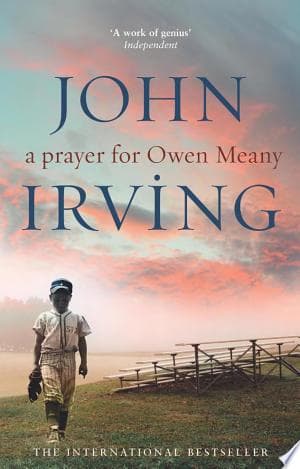
- A Prayer For Owen Meany
John Irving
4.2 (286k) average on GoodreadsLiterary FictionFeatures a reflective narrator looking back on a pivotal childhood summer, grappling with faith, destiny, and the impact of tragic events.
- Peace Like a River
Leif Enger
4.0 (79k) average on GoodreadsLiterary FictionShares themes of faith, family, and a journey through a midwestern landscape, narrated by a young protagonist in a literary style.
- The Old Man and the Sea
Ernest Hemingway
3.8 (831k) average on GoodreadsLiterary FictionA Cuban fisherman's long struggle with a giant marlin becomes a story of endurance and dignity, now retold for young adults with illustrations, phonetic guides, and writing prompts in Traditional Chinese.
- One Hundred Years of Solitude
Gabriel García Márquez
4.1 (753k) average on GoodreadsLiterary FictionThrough the multi-generational story of the Buendía family, a mythical town deals with the repeating patterns of time, love, and solitude, as the extraordinary mixes with the ordinary.
- The Goldfinch
Donna Tartt
3.9 (720k) average on GoodreadsLiterary FictionHaunted by a tragic explosion and clutching a stolen Dutch masterpiece, a young orphan navigates the opulent drawing rooms of New York and the gritty underbelly of the art world, desperately seeking connection and redemption amidst a life spiraling into crime and obsession.





Enjoyed the summary?
A summary gives you the shape of the book. The book itself has the detail, the examples and the voice.
Find Ordinary Grace on AmazonAs an Amazon Associate, BookBrief earns from qualifying purchases. How we're funded