
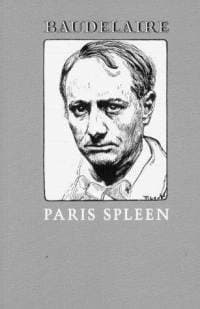
Core Idea
- Difficulty
- Medium
- Read it if
- You are interested in the origins of modernism, the philosophy of urban life, the flâneur archetype, or the development of prose poetry. You appreciate works that explore melancholy, beauty in decay, and the psychological impact of the modern city.
- Skip it if
- You prefer narrative-driven books, highly structured arguments, or optimistic themes. The fragmented, often dark, and introspective nature of prose poetry might not appeal to those looking for clear plot or character development.
Key Takeaways from Paris Spleen
The Flâneur's Gaze
Embracing the art of detached observation in the urban labyrinth.
Baudelaire introduces the flâneur, an urban wanderer who observes the city and its people with both involvement and distance. This figure is not just a viewer but an active interpreter of the modern city, finding meaning and beauty in its brief moments and diverse crowds. The flâneur resists the practical demands of modern life, valuing experience and aesthetic thought over productivity. This detached yet perceptive view allows for a critical understanding of society, the loneliness of the crowd, and the hidden poetry of daily life, turning the ordinary into a subject for art.
“To be away from home and yet to feel oneself everywhere at home; to see the world, to be at the centre of the world, and yet to remain hidden from the world.”
In the book: Many prose poems, such as 'The Crowd' or 'The Windows,' depict the flâneur's perspective, observing strangers and scenes with a mix of empathy and objective distance, creating narratives from brief encounters.
Try this: Practice 'flânerie' in your daily life: take intentional walks without a specific destination, observe the details of your surroundings and the people within them, and reflect on the hidden narratives and emotions you perceive. Use this observation to foster empathy and critical thinking about urban spaces.
Related ideas: flaneur, urban-observation, detachment
Spleen and Ideal
The perpetual oscillation between existential despair and the pursuit of beauty.
A core part of Baudelaire's philosophy is the contrast between 'Spleen' and 'Ideal.' Spleen means a deep sadness, existential boredom, and the heavy weight of modern life, time, and death. It is a spiritual and emotional paralysis that drains joy and meaning. The 'Ideal,' on the other hand, is the desire for beauty, transcendence, art, and the sublime, a desperate attempt to escape or ease the burden of spleen. Baudelaire's work constantly explores this tension, suggesting that modern life is defined by this back-and-forth, where moments of beauty are always threatened by despair. This struggle is central to human experience in the urban age.
“I am like the king of a rainy country, rich but impotent, young but old, who, bored with his tutors, lives by all his dogs and other animals.”
In the book: Poems like 'Spleen' (various iterations) or 'The Poor Child's Toy' vividly portray the suffocating grip of spleen, while 'An Hemi-sphere in a Head of Hair' or 'Get Drunk' offer glimpses of the ideal through sensory experience or artistic escape.
Try this: Recognize the interplay of high and low emotional states in your own life. Instead of resisting periods of melancholy, acknowledge them as part of the human experience, and actively seek out sources of beauty, art, or sensory pleasure to create moments of 'ideal' that provide respite.
Related ideas: melancholy, existentialism, ennui, beauty
The Poetry of the Everyday
Finding profound artistic inspiration in the mundane and overlooked.
Baudelaire changed poetry by shifting its focus from classical grandeur and natural beauty to the raw, often unglamorous reality of modern city life. He argued that the truly modern artist must find beauty and meaning not in perfect landscapes or myths, but in the dirty streets, the quick glances of strangers, the changing fashions, and the city's squalor. This acceptance of the everyday, the 'brief, the fleeting, the accidental,' as valid subjects for art, turned the seemingly trivial into important artistic material. It was a radical step that paved the way for literary modernism, showing that deep meaning could be found in the ordinary, and that the 'hero' of modern art was the observer of daily life.
“The hero of modern life is not the epic warrior, but the ordinary man, the man of the crowd, who lives and breathes the ephemeral.”
In the book: Poems like 'The Old Woman's Despair,' 'The Windows,' or 'The Dog and the Vial' exemplify this, focusing on the lives of common people, urban scenes, or seemingly insignificant objects to draw out deeper philosophical or emotional truths.
Try this: Cultivate an artist's eye for the ordinary. Look for patterns, textures, colors, and human stories in your daily commute, local park, or grocery store. Challenge yourself to describe a mundane object or event with poetic detail, revealing its inherent beauty or significance.
Related ideas: modernism, urban-poetry, mundane-beauty, everyday-art
The Artist as Alchemist
Transforming suffering and ugliness into aesthetic gold.
Baudelaire saw the poet as someone who could turn the common elements of modern life—squalor, vice, suffering, and boredom—into something beautiful and meaningful. This was not about cleaning up reality, but about facing its darkest parts head-on and, through art, raising them to a higher aesthetic level. He believed that true beauty could come from looking at evil and decay, and that the artist's job was to show this deep, often unsettling, beauty. This transformative power of art offers a kind of redemption, not by escaping reality, but by engaging with its hardest parts and making them sublime.
“You have given me your mud and I have turned it into gold.”
In the book: Many of the 'Flowers of Evil' poems, and prose poems like 'The Cake' or 'The Thyrsus,' illustrate this by finding disturbing beauty in poverty, addiction, or the grotesque, proving that art's transformative power can make even the most repulsive subjects compelling.
Try this: Engage with difficult or uncomfortable emotions and experiences creatively. Instead of avoiding them, try journaling, painting, composing music, or writing poetry about them. See if you can find a way to express the raw truth of these experiences, transforming them into a form of personal insight or artistic expression.
Related ideas: artistic-alchemy, sublime-ugliness, transformation, redemption-through-art
The Tyranny of Time
Modernity's relentless pace and its corrosive effect on the human spirit.
Baudelaire felt the heavy burden of time in the quickly industrializing modern city. Unlike older times where time might feel cyclical or tied to nature, urban modernity brings a linear, relentless, and faster pace that adds to spleen. This view of time is not just about aging and death, but about the constant pressure to keep up, the fleeting nature of experience, and the feeling that life is being consumed by an insatiable force. This control of time fuels anxiety and a deep sense of loss, making every moment both precious and tragically brief, further deepening the existential dread in his work.
“Time devours life, and the dark Enemy that gnaws our hearts feeds on our blood and grows stronger as we lose our grip.”
In the book: Poems like 'The Clock' explicitly address time as an antagonist, a 'dark god' that gnaws away at life. Other pieces subtly convey this through the rapid succession of urban scenes and the fleeting nature of human encounters.
Try this: Consciously resist the modern pressure to constantly 'optimize' and rush. Practice mindfulness and savor moments, even brief ones, to regain a sense of control over your perception of time. Engage in activities that allow for timeless immersion, like reading, creating, or deep conversation.
Related ideas: modernity, temporal-anxiety, mortality, ennui-of-time
The Liberation of Intoxication
Seeking escape and heightened perception through artificial paradises.
When faced with spleen and the harsh realities of city life, Baudelaire explores intoxication—whether through wine, opium, or poetry—as a temporary escape and a way to heightened perception. These 'artificial paradises' offer a brief break from the ordinary, dulling pain and increasing sensory experience to reveal new insights or creative states. However, he also acknowledges the danger and eventual pointlessness of such escapes, as returning to sobriety often brings an even deeper despair. This exploration highlights the human desire for transcendence and the desperate measures taken to achieve it, even if brief and ultimately harmful.
“One must always be drunk. That's all there is to it... But with what? With wine, with poetry, or with virtue, as you choose. But get drunk.”
In the book: The essay 'Get Drunk' directly advocates for constant intoxication, not just literally but metaphorically. Other poems hint at the use of stimulants to alter perception and escape reality, offering a temporary reprieve from suffering.
Try this: Explore 'intoxication' in a healthy, creative sense. Engage deeply with art, music, or nature to achieve states of flow and heightened awareness. Discover activities that transport you beyond your everyday concerns, providing a sense of expanded consciousness without relying on harmful substances.
Related ideas: escapism, artificial-paradise, altered-states, sensory-experience
Sympathy for the Marginalized
Finding dignity and shared humanity in the city's forgotten figures.
Baudelaire often looks at the city's marginalized figures—beggars, old women, street performers, the poor—giving them dignity and showing their shared humanity amid their suffering. He challenges the reader to look past appearances and see the inner lives, struggles, and quiet strength of those society often ignores. This empathetic observation is a mark of his modern sensibility, suggesting that understanding the human condition means confronting inequality and finding beauty and sadness in the lives of the downtrodden. His prose poems are especially good at these intimate portraits, capturing brief moments of connection or deep isolation.
“Who among us has not, in his ambitious moments, dreamed of the miracle of a poetic prose, musical without rhythm and without rhyme, supple enough and rugged enough to adapt itself to the lyrical stirrings of the soul, to the undulations of reverie, to the sudden sallies of consciousness?”
In the book: Poems like 'The Old Woman's Despair,' 'The Poor Child's Toy,' or 'The Old Mountebank' offer poignant, sympathetic portraits of individuals on the fringes of society, highlighting their inner worlds and struggles.
Try this: Actively seek to understand and empathize with people from different walks of life. Challenge your preconceptions about strangers and make an effort to see the 'human' in every interaction, particularly with those who might seem invisible or marginalized in society.
Related ideas: empathy, social-inequality, human-dignity, marginalized-voices
The City as a Living Organism
Perceiving the urban landscape as a complex entity with its own soul.
For Baudelaire, Paris is not just a setting but a character itself, a large, living, and often harmful entity that shapes the lives of its residents. He shows the city with a mix of fascination and disgust, recognizing its dual nature as a source of both great beauty and deep suffering. The city's buildings, crowds, sounds, and hidden spots all contribute to its unique 'spleen' and 'ideal.' This personification of the urban landscape turns it into a psychological space, reflecting and influencing the inner turmoil of the modern person. It is a place of endless possibility and crushing anonymity, a maze of both wonder and despair.
“The city is a soul, a spirit, a living organism, a monstrous and magnificent being.”
In the book: Throughout 'Paris Spleen,' the city itself is a constant presence. Descriptions of its streets, fog, crowds, and buildings often evoke a sense of its oppressive or inspiring 'mood,' as seen in 'The Fog' or 'The Desire to Paint.'
Try this: View your own city or town as a living entity. Pay attention to its rhythms, its moods, its 'personality.' Consider how its physical and social structures influence your own emotions and experiences, and how you, in turn, contribute to its character.
Related ideas: urban-landscape, city-as-character, modern-city, environmental-psychology
The Modernity of Prose Poetry
The prose poem as the ideal form for expressing the fragmented modern psyche.
Baudelaire deliberately chose the prose poem as the best way to capture the fluidity, fragmentation, and psychological depth of modern life. He argued that traditional verse, with its strict rhythms and rhymes, was too rigid to express the 'lyrical stirrings of the soul' and the 'undulations of reverie' typical of urban experience. The prose poem, free from formal rules, allowed for a more direct, intimate, and spontaneous expression of consciousness, mirroring the discontinuous and often chaotic nature of modern thought and feeling. This new form was a milestone in literary modernism, showing how form itself could reflect changing human experience.
“Who among us has not, in his ambitious moments, dreamed of the miracle of a poetic prose, musical without rhythm and without rhyme, supple enough and rugged enough to adapt itself to the lyrical stirrings of the soul, to the undulations of reverie, to the sudden sallies of consciousness?”
In the book: The very existence of 'Paris Spleen' as a collection of prose poems is the evidence. Baudelaire's preface explicitly states his rationale for choosing this form, citing its adaptability to the 'shocks of consciousness' and the 'undulations of reverie.'
Try this: Experiment with unconventional forms of expression in your own writing or creative endeavors. Don't be constrained by traditional structures if they don't serve your message. Allow your form to organically emerge from the nature of the experience you wish to convey.
Related ideas: prose-poetry, literary-modernism, formal-innovation, fragmentation
The Mask of Anonymity
The urban crowd as a source of both freedom and profound isolation.
The anonymity of the large urban crowd is a mixed blessing for Baudelaire. On one hand, it offers a freeing sense of liberty, letting the individual shed personal identity and merge with the group, becoming a 'universal being' or a 'sacred prostitute' of the soul. This allows for unrestricted observation and a feeling of endless possibility. On the other hand, this same anonymity can lead to deep isolation, a sense of being alone among many strangers. The city promises connection but often delivers a deeper loneliness, where individuals are constantly surrounded yet fundamentally alone. This paradox defines much of the modern urban experience, shaping identity and social interaction.
“The pleasure of being in crowds is a mysterious expression of the multiplication of being, a multiplication from which the artist, in particular, draws a singular joy: it is a kind of sacred prostitution of the soul.”
In the book: Poems like 'The Crowd' directly address this paradox, describing the flâneur's joy in merging with the multitude, but also the underlying sense of detachment. 'The Loss of a Halo' humorously explores the shedding of identity in the urban throng.
Try this: Reflect on your own relationship with anonymity in public spaces. How does it make you feel – liberated, isolated, or both? Practice being fully present in crowded places, observing without judgment, and notice how your perception of self shifts within the collective.
Related ideas: anonymity, urban-isolation, crowd-psychology, flaneur-experience
Paris Spleen Quotes
“It is not given to every man to take a bath of multitude; to make the crowd his own, as the air his garment, and to drink, as with an incomparable alacrity, of the universal fluid.”
“I have always thought that the only way to arrive at the knowledge of others is to begin by knowing oneself. In this, I am perhaps a little like a child.”
“Life, a hospital where each patient is possessed by the desire of changing his bed.”
“The poet is like the prince of the clouds, who frequents the storm and laughs at the archer.”
“How many times have I been obliged to confess that the most subtle of human perversities consists in being the source of one's own misfortune!”
“The beautiful is always strange.”
“Solitude is dangerous for a man of twenty; it is sweet for a man of forty.”
“To be a great man and a saint for oneself, that is the only important thing.”
“I can conceive of no more delightful occupation than to be always dreaming of a journey, without ever having to make it.”
“Melancholy is the most distinguished of our guests.”
“One must always be a poet, even in prose.”
“The study of the beautiful is a duel in which the artist, shrieking with terror, is vanquished before he has begun.”
“I am unable to understand how a man of genius can have a weak heart.”
“There are no beautiful subjects, or rather, the subject is not the point, but the artist.”
Quiz
10 questions on the main ideas. Each answer comes with a short explanation.
Question 1
Which of the following best describes Baudelaire's primary motivation for exploring prose poetry in 'Paris Spleen'?
- To reach a broader, less educated audience than his verse poetry.
- To mimic the spontaneous, fragmented nature of modern urban life.
- To adhere to classical poetic forms while avoiding the strictures of rhyme and meter.
- To provide a more detailed narrative structure for his philosophical ideas.
Show answer
B. To mimic the spontaneous, fragmented nature of modern urban life. Baudelaire saw prose poetry as uniquely suited for expressing the feelings of uncertainty, flux, and freedom of his age, reflecting the fragmented and spontaneous nature of modern urban experience.
Question 2
The themes explored in 'Paris Spleen' are described as a 'further exploration' of which previous work by Baudelaire?
- Les Paradis Artificiels
- Curiosités Esthétiques
- The Flowers of Evil
- Journaux Intimes
Show answer
C. The Flowers of Evil The introduction states that the prose pieces in 'Paris Spleen' constitute a further exploration of the terrain Baudelaire had covered in his verse masterpiece, 'The Flowers of Evil'.
Question 3
Which of the following is NOT listed as a 'sensual delight' providing liberation in 'Paris Spleen'?
- Intoxication
- Nature
- Art
- Women
Show answer
B. Nature The text explicitly mentions intoxication, art, and women as providing liberation, but not 'nature'.
Question 4
What specific aspect of the city of Paris does Baudelaire frequently portray in 'Paris Spleen'?
- Its idyllic parks and gardens.
- Its squalor and inequalities.
- Its historical monuments and architecture.
- Its vibrant social gatherings and balls.
Show answer
B. Its squalor and inequalities. The city and its squalor and inequalities are among the key themes explored in 'Paris Spleen', reflecting Baudelaire's focus on the darker, less romanticized aspects of urban life.
Question 5
'Paris Spleen' is identified as one of the founding texts of which literary movement?
- Romanticism
- Realism
- Literary Modernism
- Symbolism
Show answer
C. Literary Modernism The text explicitly states that 'Paris Spleen' was 'one of the founding texts of literary modernism'.
Question 6
Which set of feelings did Baudelaire believe the prose poetry format was particularly suited for expressing?
- Nostalgia, patriotism, and traditionalism.
- Certainty, stability, and constraint.
- Uncertainty, flux, and freedom.
- Joy, contentment, and spiritual enlightenment.
Show answer
C. Uncertainty, flux, and freedom. Baudelaire saw prose poetry as particularly suited for expressing the feelings of uncertainty, flux, and freedom of his age.
Question 7
Considering the philosophical nature of 'Paris Spleen', how does Baudelaire's exploration of 'the pressures of time and mortality' manifest in the prose poems?
- Through explicit philosophical treatises on existential dread.
- By contrasting the fleeting joys of urban life with an underlying sense of melancholy and transience.
- Via historical accounts of Parisian plagues and disasters.
- Through allegories of mythological figures confronting their own demise.
Show answer
B. By contrasting the fleeting joys of urban life with an underlying sense of melancholy and transience. While not explicitly detailed in the prompt, the 'pressures of time and mortality' are a core theme of Baudelaire's work. In the context of 'spleen' and the urban landscape, this typically manifests as a pervasive melancholy, a sense of loss, and the awareness of the ephemeral nature of life and pleasure amid the city's constant change.
Question 8
How did the posthumous publication of 'Paris Spleen' in 1869 impact its reception and its role in literary history?
- It allowed for a more critical and detached analysis of Baudelaire's controversial themes without the author's direct influence.
- It cemented Baudelaire's legacy as a pioneer of prose poetry and literary modernism, even though he couldn't witness its impact.
- The delay in publication meant its innovations were largely overshadowed by other contemporary works by the time it appeared.
- It led to a misunderstanding of his intentions, as the collection was not ordered or finalized by the author himself.
Show answer
B. It cemented Baudelaire's legacy as a pioneer of prose poetry and literary modernism, even though he couldn't witness its impact. The text states it was 'published posthumously in 1869' and was a 'landmark publication in the development of the genre of prose poetry... and one of the founding texts of literary modernism.' This indicates its significant, albeit delayed, impact on his legacy.
Question 9
Given Baudelaire's exploration of the 'squalor and inequalities' of Paris, what philosophical stance does this suggest about his view of urban progress and society?
- A belief in the inherent moral superiority of the urban poor.
- A critical perspective that highlights the dark underbelly and social costs of modernization.
- An endorsement of capitalist expansion as a means to alleviate poverty.
- A detached, observational stance without any underlying social critique.
Show answer
B. A critical perspective that highlights the dark underbelly and social costs of modernization. Baudelaire's focus on 'squalor and inequalities' in a 'modern, urban Paris' strongly suggests a critical, rather than celebratory, view of the social consequences of industrialization and urban development, aligning with a critique of modernization's darker aspects.
Question 10
How does the 'modern, urban Paris' setting contribute to the philosophical themes of 'uncertainty, flux, and freedom' in 'Paris Spleen'?
- The city's ancient, unchanging structures symbolize eternal truths, contrasting with human transience.
- The constant motion, anonymity, and rapid changes of the city embody these feelings, making it a fitting backdrop for the prose poetry form.
- The strict social hierarchies of Paris provide a sense of order that counters the individual's internal flux.
- The city's vibrant cultural scene offers definitive answers to existential uncertainties.
Show answer
B. The constant motion, anonymity, and rapid changes of the city embody these feelings, making it a fitting backdrop for the prose poetry form. The dynamic, ever-changing nature of a modern city like Paris, with its crowds, anonymity, and constant sensory input, perfectly mirrors the feelings of 'uncertainty, flux, and freedom' that Baudelaire aimed to capture through his innovative prose poetry.
Paris Spleen FAQ
What is 'spleen' in the context of Baudelaire's 'Paris Spleen'?
'Spleen' in Baudelaire's work refers to a profound melancholic state, a sense of ennui, despair, and existential boredom, often linked to the urban environment and the pressures of modern life. It's a feeling of being weighed down by the world's triviality and one's own mortality.
Does 'Paris Spleen' offer a cohesive narrative or plot?
No, 'Paris Spleen' is a collection of 50 short prose poems, each a distinct vignette or reflection. While sharing common themes and a setting, they do not form a continuous narrative but rather offer fragmented glimpses into urban life and the speaker's internal world.
What is prose poetry and why did Baudelaire choose this form for 'Paris Spleen'?
Prose poetry is a genre that combines poetic qualities like imagery, rhythm, and emotional intensity with the grammatical and typographical characteristics of prose. Baudelaire found this form particularly apt for capturing the fragmented, uncertain, and fluid experiences of modern urban life, believing it offered a freedom of expression that traditional verse could not.
How different is 'Paris Spleen' from Baudelaire's 'The Flowers of Evil'?
While both works explore similar themes of urban decay, sensuality, and mortality, 'Paris Spleen' is composed entirely of prose poems, whereas 'The Flowers of Evil' is a collection of verse poetry. The prose form allowed Baudelaire to experiment with a more fluid, less constrained expression, reflecting the disorienting nature of modernity.
Does 'Paris Spleen' offer a hopeful or pessimistic view of humanity?
'Paris Spleen' predominantly presents a pessimistic view, deeply steeped in melancholy, alienation, and a sense of entrapment within the urban landscape and one's own psyche. However, moments of liberation through art, intoxication, and sensual pleasure do offer fleeting respites from this pervasive gloom.
What are the main themes explored in 'Paris Spleen'?
Key themes include the alienating and enchanting aspects of the modern city, the pressures of time and mortality, the allure and degradation of sensual delights, the concept of 'spleen' or melancholy, and the search for beauty and meaning amidst squalor and inequality.
Who should read 'Paris Spleen'?
'Paris Spleen' is recommended for readers interested in literary modernism, French poetry, urban philosophy, and the exploration of existential themes. It appeals to those who appreciate experimental forms and intense psychological introspection.
Is 'Paris Spleen' difficult to read for a modern audience?
While the language is rich and the themes can be profound, the short, fragmented nature of the prose poems makes it accessible. Readers may find the melancholic tone and the specific cultural references of 19th-century Paris require some engagement, but the core human emotions remain highly relatable.
What is the significance of 'Paris Spleen' in literary history?
'Paris Spleen' is considered a landmark work for its pioneering use of prose poetry, establishing it as a legitimate and powerful genre. It is also one of the foundational texts of literary modernism, influencing countless writers in its portrayal of urban alienation and subjective experience.
About the author
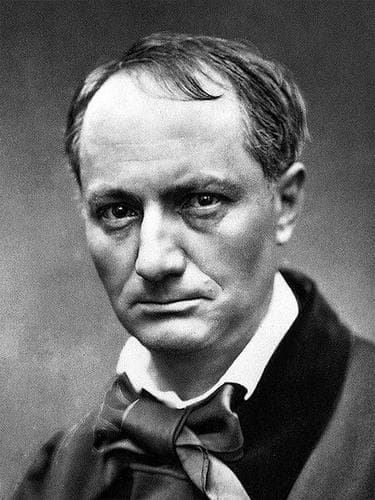
Charles Pierre Baudelaire was a French poet who also worked as an essayist, art critic and translator. His poems are described as exhibiting mastery of rhyme and rhythm, containing an exoticism inherited from Romantics, and are based on observations of real life.
Similar books
- Les Fleurs du Mal
Charles Baudelaire
4.3 (49k) average on GoodreadsFictionBaudelaire's foundational verse collection, sharing themes of spleen, modernity, and urban decay, offering a complementary perspective to his prose poems.
- The Arcades Project
Walter Benjamin
4.5 (3k) average on GoodreadsHistoryA monumental study of 19th-century Paris, heavily influenced by Baudelaire, dissecting the flâneur, the commodity, and the mythologies of modernity.
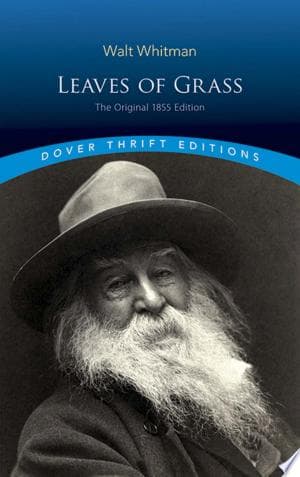
- Leaves of Grass
Walt Whitman
4.1 (90k) average on GoodreadsPhilosophyWhile both Baudelaire's Paris Spleen and Whitman's Leaves of Grass (published earlier, in 1855, with subsequent editions) break from traditional poetic forms and embrace the 'everyday,' their approaches and philosophies diverge significantly. Whitman, particularly in poems like 'Song of Myself,' celebrates the democratic individual, the vastness of America, and a more optimistic, expansive vision of self and society. His free verse is often catalogic and inclusive. Baudelaire, conversely, focuses on the alienated individual in the urban labyrinth, finding beauty in decay and expressing a profound sense of 'spleen' and disillusionment. While Whitman finds spiritual resonance in nature and the common man, Baudelaire finds it in artificiality, vice, and the fleeting moments of urban life. Both are revolutionary in form, but their thematic landscapes are almost diametrically opposed in their outlook on modernity and humanity.
- Brave New World
Aldous Huxley
4.0 (1.4M) average on GoodreadsFantasyIn a future where happiness comes from chemicals and individuality is gone, one man's desire for real experience threatens the calm, controlled society.
- Life of Pi
Yann Martel
3.9 (1.3M) average on GoodreadsFantasyStranded in the vast Pacific, a young Indian boy forms an unlikely bond with a Bengal tiger, questioning belief and survival.
- The Picture of Dorian Gray
Oscar Wilde
4.1 (966k) average on GoodreadsFantasyA beautiful young man's soul decays within a cursed portrait, mirroring the grotesque cost of his hedonistic pursuit of eternal youth and illicit pleasure.



Enjoyed the summary?
A summary gives you the shape of the book. The book itself has the detail, the examples and the voice.
Find Paris Spleen on AmazonAs an Amazon Associate, BookBrief earns from qualifying purchases. How we're funded