
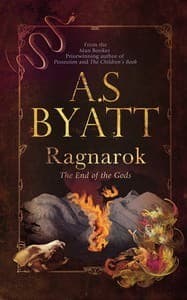
Synopsis
Covers the whole plot, including the ending.
- Difficulty
- Medium
- Pacing
- Slow
- Mood
- Atmospheric, Introspective, Mythic, Melancholy, Profound
- Read it if
- You enjoy literary retellings of mythology, poetic language, and introspective narratives about the power of stories.
- Skip it if
- You prefer fast-paced plots, straightforward fantasy, or dislike extensive internal monologue and metaphorical storytelling.
Ragnarok Plot Summary
Covers the whole plot, including the ending.
The Thin Child's Evacuation
The story introduces a 'thin child,' a young girl evacuated from bombed London to a rural English house during World War II. She is a quiet child, observant but often overwhelmed by her new surroundings and the constant fear of war. Her new home is cold and unwelcoming, with a strict, practical host family who do not understand her curiosity or her need for stories. She feels alone and longs for meaning or escape from the bleakness of her life, often retreating into her imagination to cope with wartime rationing and her parents' absence.
Discovery of the Green Book
Amidst her feelings of displacement, the thin child finds a green book of Norse myths in her new home's library. This book, with its illustrations and tales of gods, giants, and monsters, becomes her most prized possession and a source of comfort and wonder. The myths, with their stories of creation, conflict, and destruction, contrast sharply with the ordinary and fearful reality of her daily life. She reads the stories eagerly, drawn to the dramatic and often violent images, finding in them a structure and importance that her own world seems to lack.
Entering the Mythic Landscape
As the thin child reads, the Norse myths begin to shape how she sees reality. The characters and events of Asgard, Midgard, and Jotunheim become more than stories; they are a vivid mental world she can enter. She starts to see the English countryside through the myths: trees are Yggdrasil, the world-tree; the cold, grey skies are Fimbulwinter; and distant war sounds echo the coming Ragnarok. This immersion provides both an escape and a way to understand the chaos and destruction of the war, making the incomprehensible more manageable through the symbolic power of the old tales.
The Gods and Their Fates
The girl learns about the Norse gods. She understands Odin's wisdom and his sacrifice for knowledge, Thor's strength and his hammer Mjolnir, Freya's beauty and her tears of gold. Most importantly, she deals with the trickster Loki and his monstrous children—Fenrir, the wolf; Jörmungandr, the world serpent; and Hel, ruler of the underworld. She understands their individual stories, how they connect, and the path leading them to their fate. Their struggles and flaws connect with her own sense of vulnerability and life's unpredictable nature.
Fimbulwinter and the War
The idea of Fimbulwinter, the three-year winter before Ragnarok, makes a strong impression on the thin child. She sees the cold, grey, rationed life of wartime England as this mythical winter. The scarcity, the constant chill, the lack of joy, and the feeling of an ending all match the descriptions of Fimbulwinter in her book. This connection helps her process the war's hardships not just as random suffering, but as part of a grand, terrifying cosmic story. The bleakness of her outside world is mirrored and explained by the mythic prelude to destruction.
The Children of Loki
Loki's children, especially the wolf Fenrir and the world serpent Jörmungandr, hold a powerful, frightening grip on the girl's imagination. Fenrir, bound but destined to break free and eat Odin, represents unstoppable destruction. Jörmungandr, encircling the world, represents the unseen threat that holds existence. These monstrous figures symbolize the destructive forces of the war—the bombs, the fear, the hunger—that threaten to consume her world. She understands their roles in Ragnarok, foreshadowing the final cataclysm.
Ragnarok's Approach
As the thin child reads, Ragnarok, the Twilight of the Gods, seems inevitable. She internalizes the prophecies: the breaking of bonds, the release of monsters, the final battle on the plain of Vigrid where gods and giants will clash. This apocalyptic vision, while frightening, also offers a strange sense of closure. It mirrors the escalating tensions and destruction of the actual war, suggesting a climactic end to the current suffering. She understands that Ragnarok is not just an ending, but a necessary purification, a prelude to rebirth.
The Final Battle and Destruction
The girl vividly imagines Ragnarok unfolding: the sun and moon eaten by wolves, stars falling, giants attacking, gods meeting their fated deaths. Odin swallowed by Fenrir, Thor falling to Jörmungandr's venom, Loki battling Heimdall. Fire and flood consume the world, a complete annihilation. This imagery of total destruction connects with news of bombed cities and the constant threat of annihilation in her own world. It is a terrifying yet cathartic visualization of the ultimate results of conflict, both mythical and real.
The World Renewed
Crucially, the myths do not end with total destruction. After Ragnarok, a new, green world emerges from the waters. Balder returns from the dead, and new gods and humans populate the earth. This promise of renewal after disaster gives the thin child a sense of hope. It suggests that even after the most devastating losses and terrible wars, life continues and begins anew. This cyclical understanding of existence provides a vital contrast to the despair of her wartime experience, giving meaning to suffering.
The Enduring Power of Story
By the end, the Norse myths are more than stories for the thin child; they are a basic part of her inner world and her way of understanding. They have given her a language and a structure to grasp the horrors of war and the inevitability of change and loss. The myths provide both a refuge and a tool for survival, allowing her to face the realities of her evacuation and the ongoing conflict with perspective and a glimmer of hope for a future rebirth, mirroring the cyclical nature of Norse cosmology.
Principal Figures
The Thin Child (Narrator)
Protagonist
An unnamed, imaginative girl evacuated from London during WWII.
The thin child is a highly intelligent, introspective, and sensitive girl, perhaps around 8-10 years old. She is observant and prefers the world of books and imagination to the harsh realities of her wartime evacuation. Her physical 'thinness' can be seen as both literal due to rationing and metaphorical, representing her vulnerability and the way she can slip between worlds. She is driven by a profound need for understanding and meaning, which she finds lacking in her immediate environment. Her emotional landscape is shaped by fear, loneliness, and an intense curiosity.
Relationships: Host Family (Distant, uncomprehending caretakers); Norse Gods (Odin, Thor, Loki, etc.) (Imaginary companions and figures of profound inspiration and fear)
Odin
Supporting/Mentioned (mythical figure)
The All-Father, chief of the Norse gods, who sacrifices for wisdom.
Odin is presented as the wise, one-eyed leader of the Aesir, deeply concerned with knowledge and the fate of his realm. He is a complex figure, both a powerful warrior and a seeker of arcane wisdom, willing to pay high prices for insight (like sacrificing his eye or hanging himself on Yggdrasil). The child sees him as a figure of authority and a symbol of the pursuit of understanding, even in the face of inevitable doom. His eventual death at the jaws of Fenrir is a central tragedy of Ragnarok.
Relationships: Frigg (Wife); Thor (Son); Fenrir (His fated slayer)
Thor
Supporting/Mentioned (mythical figure)
The strong god of thunder, protector of Asgard.
Thor is depicted as the mighty god of thunder, wielding his hammer Mjolnir, a symbol of strength and defense. He is a straightforward, often impulsive character, less cunning than Odin but vital for his power. The child views Thor as a figure of raw, protective force, battling giants and monsters. His heroic but ultimately tragic battle with the World Serpent, Jörmungandr, is a powerful image of strength meeting its match, and a reflection of the overwhelming forces of war.
Relationships: Odin (Father); Jörmungandr (His fated killer and victim)
Loki
Antagonist/Supporting (mythical figure)
The cunning trickster god, source of much chaos and father of monsters.
Loki is the pivotal trickster god, a figure of immense complexity and ambiguity. He is both a companion to the gods and their ultimate betrayer, responsible for much of the sorrow and strife in Asgard, particularly the death of Balder. The child is fascinated and repelled by his chaotic energy and his monstrous offspring. Loki represents the unpredictable, destructive, and often malevolent forces that undermine order, mirroring the arbitrary nature of war and human cruelty. His role in precipitating Ragnarok is central.
Relationships: Odin (Blood-brother/complex relationship); Fenrir, Jörmungandr, Hel (His monstrous children); Heimdall (His fated slayer)
Fenrir
Antagonist/Supporting (mythical creature)
The monstrous wolf, destined to break his bonds and devour Odin.
Fenrir is one of Loki's terrible children, a colossal wolf whose growth threatens the gods. He is bound by a magical chain but is prophesied to break free and devour Odin at Ragnarok. For the thin child, Fenrir embodies an unstoppable, primordial force of destruction, a natural and terrifying end to all things. He represents the ultimate, uncontainable threat, echoing the overwhelming, dehumanizing power of the war and its capacity to consume all that is good and ordered.
Jörmungandr
Antagonist/Supporting (mythical creature)
The World Serpent, whose coils encircle Midgard and whose venom kills Thor.
Jörmungandr is another of Loki's monstrous offspring, a serpent so vast that it encircles the entire world, biting its own tail. Its movements cause earthquakes, and its venom is deadly. The thin child sees Jörmungandr as a symbol of pervasive, underlying threat and destruction, a constant pressure on existence. The serpent's poisonous breath and its fated battle with Thor represent the devastating, all-consuming nature of war, where even the mightiest can fall to overwhelming forces.
Relationships: Loki (Father); Thor (His fated killer and victim)
The Host Family
Supporting
The practical, uncommunicative family the thin child lives with.
The host family consists of adults who are largely unnamed and embody a pragmatic, unromantic approach to life. They are kind in a functional sense, providing food and shelter, but they lack understanding of the thin child's inner world, her intellectual curiosity, or her emotional needs. They represent the mundane, often bleak reality of wartime existence, contrasting sharply with the vibrant, imaginative world the child creates. Their inability to connect with her highlights her isolation and the power of her inner life.
Relationships: The Thin Child (Distant caretakers)
Themes & Insights
The Power of Myth and Storytelling
The main theme is the power of myth to transform and redeem. The Norse legends give the thin child a way to understand, interpret, and cope with the horrors of World War II. The stories offer a grand narrative where chaos and destruction (Ragnarok) are part of a larger, cyclical process that eventually leads to renewal. This allows her to move past the immediate, meaningless suffering of war and find order and hope. The myths become a vital psychological tool, a 'green book' that opens up a richer, more meaningful inner world, as seen when she describes the English countryside through Asgard or Fimbulwinter.
“She needed to know how it would all end. She needed to know what would come after the end.”
Coping with Trauma and Loss
The novel looks at how a young mind processes collective trauma (war) and personal loss (separation from family, displacement). The thin child's deep dive into Ragnarok is a metaphor for her own psychological struggle. The myths allow her to externalize and process her fears of destruction, death, and the unknown. By seeing the fated demise of gods and the world, she gains a sense of control and understanding over the unpredictable violence of her reality. The cyclical nature of the myths, promising rebirth after destruction, offers a crucial psychological comfort against despair, allowing her to face the 'end' with a glimmer of hope for a 'new beginning.'
“The stories were a kind of armour, a way of holding the world at bay and making sense of it.”
Nature and Destruction
The book shows the destructive forces of both nature and war, and how they connect. The brutal parts of the Norse myths—Fimbulwinter, the sun being swallowed, the world burning—find echoes in the bombed cities, rationing, and bleak landscapes of wartime England. Nature's forces, often personified by monsters like Fenrir and Jörmungandr, represent an ancient, primal destructive power that mirrors the man-made destruction of war. Yet, the theme also highlights nature's resilience, with the promise of a new, green world emerging from Ragnarok's ashes, suggesting that life will continue despite disasters.
“The grey light of the Fimbulwinter was the grey light of England at war.”
Childhood Imagination vs. Reality
The novel contrasts a child's imagination with the harsh realities of her outside world. The thin child's inner life, fueled by the Norse myths, is rich, complex, and full of meaning, contrasting with her ordinary, often cold existence with her host family and the grim backdrop of war. Her imagination is not just an escape; it is a tool for survival and understanding. She actively reshapes her perception of reality through myth, showing how children use fantasy to process difficult experiences and build an inner world that supports them.
“She lived inside the stories, and the stories lived inside her.”
Plot Devices & Literary Techniques
Framing Device (The Green Book)
The physical book of Norse myths that acts as a portal and lens for the protagonist.
The 'green book' of Norse myths serves as the central framing device. It is not just a prop but an active catalyst for the thin child's internal journey. The physical act of reading and the tangible presence of the book provide a concrete link between her mundane reality and the epic mythic world. Its discovery marks a turning point, and its contents dictate the structure and thematic development of her narrative. The book literally and metaphorically gives her a 'text' through which to read and interpret her own life and the larger world at war.
Allegory/Metaphor
The Norse myths function as an allegorical framework for understanding WWII and personal trauma.
The entire retelling of Ragnarok functions as an extended allegory for the experience of World War II and the thin child's personal trauma. Fimbulwinter represents the bleakness of wartime England, the monsters (Fenrir, Jörmungandr) symbolize the destructive forces of war, and Ragnarok itself is a metaphor for the war's apocalyptic scale and the promise of a new world post-conflict. This device allows the author to explore complex historical and psychological themes through the accessible and powerful narrative of ancient mythology, making the abstract horrors of war comprehensible on a symbolic level.
Unreliable/Subjective Narration
The story is filtered through the highly imaginative and myth-infused perspective of a child.
The narrative is presented through the subjective and highly imaginative lens of the thin child. Her interpretations of events and her blurring of the lines between myth and reality mean that the reader experiences her world as she does—infused with the symbolism and drama of the Norse myths. This device allows for a rich, poetic, and often surreal description of her experiences, emphasizing the power of her inner world. It highlights how children construct meaning from chaos, and how personal perception can reshape objective reality, making the narrative deeply personal and emotionally resonant.
Cyclical Structure
The narrative mirrors the cyclical nature of destruction and rebirth found in the Ragnarok myth.
The novel's structure implicitly follows the cyclical pattern of the Ragnarok myth: creation, a period of flourishing, inevitable destruction, and subsequent rebirth. This mirrors the trajectory of the war—a period of peace, the onset of conflict and devastation, and the eventual hope for a renewed world. This device provides a sense of cosmic order and meaning to seemingly random chaos, suggesting that even the most catastrophic endings are part of a larger, ongoing cycle of existence. It offers a profound sense of hope and continuity beyond immediate destruction.
Ragnarok Quotes
“The end of the world is not a single event, but a series of small, almost imperceptible changes.”
“She read because she was alive, and reading was a way of knowing more about being alive.”
“The gods were not perfect. They were just bigger, more powerful versions of humans, with all their flaws writ large.”
“There was a world inside the book, and a world outside, and sometimes they blurred.”
“Every story, however ancient, has a new life when it is told again.”
“The silence of the war was not empty, but full of unspoken fears and unacknowledged grief.”
“To be alone with a book was to be in the best company.”
“The world was always ending, in small ways, for small people, all the time.”
“She learned that magic was not about spells and wands, but about seeing the world differently, making connections others missed.”
“The fire was not just destruction; it was also cleansing, a preparation for what was to come.”
“Even the gods had their moments of doubt, their moments of despair, just like mortals.”
“The past was not dead; it was merely sleeping, waiting to be reawakened by a curious mind.”
“What was a myth, after all, but a way to make sense of things too vast and terrible to comprehend otherwise?”
“The world was full of signs, if only one knew how to read them.”
Quiz
10 questions on the plot and the characters. Each answer comes with a short explanation.
Question 1
What significant historical event is occurring in the 'outer world' of the young girl at the beginning of 'Ragnarok'?
- The Great Depression
- World War One
- World War Two
- The Cold War
Show answer
C. World War Two The book explicitly states that the young girl is evacuated to the British countryside with World War Two raging around her.
Question 2
What kind of book is given to the young girl that transforms her inner and outer worlds?
- A book of fairy tales
- A history textbook
- A book of ancient Norse legends
- A collection of British poetry
Show answer
C. A book of ancient Norse legends The synopsis clearly states she is given 'a book of ancient Norse legends' which profoundly impacts her.
Question 3
Which specific Norse myth serves as the 'underpinning' for A.S. Byatt's retelling in the novel?
- The creation myth of Ymir
- The adventures of Thor's hammer Mjolnir
- The Ragnarok myth (Twilight of the Gods)
- The tale of Loki's trickery
Show answer
C. The Ragnarok myth (Twilight of the Gods) The title of the book and the description both explicitly state that the Ragnarok myth is central to the narrative.
Question 4
How does the Ragnarok myth, as described in the synopsis, resolve after the immense destruction?
- The world remains in eternal darkness.
- A new world begins after the death and destruction.
- The gods are resurrected to rule forever.
- Humanity is completely wiped out without renewal.
Show answer
B. A new world begins after the death and destruction. The synopsis states, 'It is only after such monstrous death and destruction that the world can begin anew,' emphasizing the cyclical nature of destruction and renewal.
Question 5
Which of the following figures is NOT explicitly mentioned as dying in the Ragnarok myth according to the provided text?
- Odin
- Loki
- Freya
- Thor
Show answer
B. Loki The text lists Odin, Freya, and Thor as dying, but does not explicitly mention Loki in this context, although he is a key figure in the overall myth.
Question 6
What role do stories play for the young girl and potentially for the reader, according to the description of the book?
- They offer a means of escape from reality without deeper meaning.
- They provide courage to face one's own demise.
- They serve primarily as historical records of ancient cultures.
- They are a source of simple entertainment for children.
Show answer
B. They provide courage to face one's own demise. The text highlights the book's timeliness, stating it is 'a book about how stories can give us the courage to face our own demise.'
Question 7
What specific natural phenomena are described as occurring during Ragnarok, related to celestial bodies and the seas?
- The stars fall from the sky and rivers turn to ice.
- The sun and moon are swallowed by Fenrir, and the seas boil with poison.
- Volcanoes erupt globally, and the wind stops blowing.
- A perpetual solar eclipse occurs, and all fresh water evaporates.
Show answer
B. The sun and moon are swallowed by Fenrir, and the seas boil with poison. The synopsis explicitly states, 'the sun and moon are swallowed by the wolf Fenrir... and the seas boil with poison.'
Question 8
In what way is 'Ragnarok' described as being 'intensely autobiographical'?
- It features a direct biography of A.S. Byatt's life as a writer.
- The author appears as a character within the narrative.
- The young girl's experiences reflect Byatt's own wartime childhood and engagement with myths.
- It is a non-fiction memoir disguised as a novel.
Show answer
C. The young girl's experiences reflect Byatt's own wartime childhood and engagement with myths. The description states the book is 'Intensely autobiographical' and 'highly personal,' implying the young girl's experiences parallel Byatt's own life, particularly her wartime childhood and connection to stories.
Question 9
The synopsis mentions the serpent Jörmungandr. What specific action is attributed to it during Ragnarok?
- It coils around the sun, blocking its light.
- It battles Thor to the death, poisoning the world.
- It eats its own tail as it crushes the world.
- It creates a bridge between worlds, allowing chaos to enter.
Show answer
C. It eats its own tail as it crushes the world. The text states, 'the serpent Jörmungandr eats his own tail as he crushes the world.'
Question 10
Considering the context of World War Two and the Ragnarok myth, what is a primary thematic connection Byatt draws between the two?
- The glory of warfare and the heroism of ancient gods.
- The shared experience of immense destruction and the potential for rebirth.
- The importance of historical accuracy in mythological retellings.
- The escapist nature of fantasy literature during difficult times.
Show answer
B. The shared experience of immense destruction and the potential for rebirth. The description links the 'endgame of Norse mythology' and its 'monstrous death and destruction' leading to a new world with the young girl's wartime experience, implying a thematic resonance of cataclysm and renewal.
Ragnarok FAQ
What is the central premise of 'Ragnarok' by A.S. Byatt?
The novel centers on a young girl, evacuated to the British countryside during World War II, who finds solace and meaning in a book of Norse myths, particularly the Ragnarok myth. Her internal world, shaped by the war's devastation and her personal anxieties, begins to mirror and interpret the ancient legends, offering a framework for understanding chaos and renewal.
Who is the protagonist of the story, and what is her situation?
The protagonist is an unnamed young girl, a 'Thin Child,' who has been evacuated from her home to the safety of the countryside during World War II. She is sensitive, intellectual, and grappling with the profound anxieties and disruptions of wartime life, feeling displaced and struggling to comprehend the world around her.
How do the Norse myths become significant to the Thin Child?
The Norse myths, particularly the detailed account of Ragnarok, become a lens through which the Thin Child processes her experiences. The stories of gods, giants, and cosmic destruction provide a narrative structure for the chaos of the war and a means for her to confront her fears of death and annihilation, offering a form of control or understanding.
What specific elements of the Ragnarok myth are most prominent in the narrative?
The Thin Child deeply engages with the deaths of Odin, Thor, and Freya, the swallowing of the sun and moon by Fenrir, the world-serpent Jörmungandr's destructive embrace, and the fiery aftermath. These apocalyptic events resonate with her perception of the war's global destruction and personal losses, making the myth intensely personal.
How does the wartime setting influence the Thin Child's interpretation of the myths?
The constant threat of air raids, the rationing, the absence of loved ones, and the widespread destruction of World War II directly inform her understanding of Ragnarok. She sees the war as a contemporary 'Twilight of the Gods,' where human civilization and order are collapsing, mirroring the cosmic cataclysm described in the ancient legends.
Are there any subtle autobiographical elements of A.S. Byatt woven into the Thin Child's character or experiences?
Yes, the novel is intensely autobiographical. Byatt herself was evacuated during WWII and found solace in literature and myths. The Thin Child's intellectual curiosity, her intense engagement with stories, her sensitivity, and her vivid internal life are all reflections of Byatt's own childhood experiences and intellectual development.
Beyond the direct parallels, how else does the book connect the ancient myths to the modern world?
The book connects the myths to the modern world by showing how universal themes of creation, destruction, heroism, and rebirth persist across cultures and time. It suggests that even in a seemingly secular age, humanity continues to seek meaning and narrative frameworks, and that ancient stories can provide profound insight into contemporary crises.
Does the novel suggest a cyclical nature of destruction and rebirth, both personally and globally?
Absolutely. The Ragnarok myth itself is a story of destruction followed by a new world emerging from the ashes. The Thin Child's journey reflects this on a personal level, as she navigates the trauma of war and finds a path toward understanding and resilience, implying a broader cyclical pattern in human history and experience.
How does the Thin Child's imagination function as a coping mechanism in the novel?
Her imagination serves as a vital coping mechanism, allowing her to process overwhelming reality by transforming it into a narrative. By engaging with the Norse myths, she can externalize her fears, find order in chaos, and feel a sense of agency over her internal landscape, even when her external world is uncontrollable.
What psychological impact does the intense focus on death and destruction in the myths have on the Thin Child?
Initially, the myths deepen her anxieties about death and the end of the world. However, by confronting these fears through the structured narrative of Ragnarok, she gradually develops a sense of acceptance and courage. The myth provides a framework for understanding loss, allowing her to integrate these difficult emotions rather than be overwhelmed by them.
How does the book explore the concept of trauma through the Thin Child's perspective?
The book explores trauma by depicting the Thin Child's internal struggle with the terror and disruption of war. Her intense focus on the Ragnarok myth can be seen as a way of working through the traumatic experience, finding a symbolic language to articulate the unspeakable horrors and to begin the process of psychological recovery.
In what ways does the Thin Child's reading experience reflect the power of stories for human resilience?
The Thin Child's reading experience demonstrates that stories offer more than mere escape; they provide frameworks for meaning, emotional processing, and courage. By immersing herself in the Ragnarok myth, she gains a perspective that helps her face her own fears of demise, illustrating how narratives can foster resilience in times of crisis.
Is 'Ragnarok' ultimately a hopeful or a pessimistic book, given its focus on destruction?
Despite its focus on destruction, 'Ragnarok' leans towards hope. It emphasizes that even after the most cataclysmic events, new life and possibilities emerge. The Thin Child's journey through fear to a kind of understanding and resilience suggests that facing our demise can lead to renewal, both personally and symbolically for humanity.
How does Byatt use language and imagery to connect the child's inner world with the epic myths?
Byatt employs rich, evocative language that blurs the lines between the child's observations of the English countryside and the vivid, often violent, imagery of the Norse myths. Descriptions of storms, animals, and landscapes are imbued with mythic resonance, making the child's internal landscape feel as grand and significant as the legends themselves.
What is the significance of the 'Thin Child' remaining unnamed throughout the novel?
The choice to leave the Thin Child unnamed universalizes her experience, allowing readers to project themselves onto her journey. It also emphasizes her vulnerability and perhaps her feeling of being stripped of identity amidst the war's chaos, making her a representative figure for anyone grappling with existential fears.
Does the book critique or celebrate the power of myth and storytelling?
The book overwhelmingly celebrates the power of myth and storytelling. While it acknowledges the potential for myths to be overwhelming, it ultimately portrays them as essential tools for human understanding, coping, and finding meaning in a chaotic world. It champions stories as vital for psychological and cultural survival.
How does the ending of the novel resolve the Thin Child's journey or leave it open?
The ending doesn't offer a simple resolution but rather a sense of integration and continued emergence. The Thin Child has not 'cured' her anxieties, but she has found a way to live with them, understanding that destruction is part of a larger cycle. She emerges with a deeper, more nuanced relationship to the world and its stories.
What role does nature play in the Thin Child's experience and her understanding of the myths?
Nature is crucial, serving as both a refuge and a mirror for the myths. The English countryside, with its changing seasons, storms, and wildlife, provides tangible parallels to the cosmic events of Ragnarok. The Thin Child observes natural cycles of life and death, which reinforce her understanding of the myths' themes of destruction and renewal.
About the author
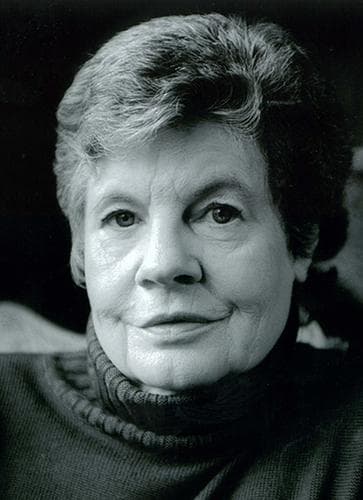
A.S. Byatt is a Booker Prize-winning author celebrated for her intricate and intellectually rich novels. Her most acclaimed works include 'Possession,' a complex exploration of literary history and romance, and 'Ragnarok,' a vivid retelling of Norse mythology. Byatt's writing is characterized by its deep engagement with literature, history, and the natural world, earning her a reputation as one of contemporary Britain's most significant novelists.
Similar books
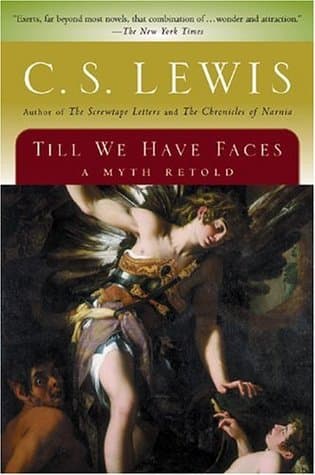
- Till We Have Faces
C.S. Lewis
4.2 (55k) average on GoodreadsFantasyLiterary retelling of a myth with deep psychological and philosophical themes.
- American Gods
Neil Gaiman
4.1 (758k) average on GoodreadsFantasyGods from old myths interacting with modern reality.
- The Old Man and the Sea
Ernest Hemingway
3.8 (831k) average on GoodreadsLiterary FictionA Cuban fisherman's long struggle with a giant marlin becomes a story of endurance and dignity, now retold for young adults with illustrations, phonetic guides, and writing prompts in Traditional Chinese.
- One Hundred Years of Solitude
Gabriel García Márquez
4.1 (753k) average on GoodreadsLiterary FictionThrough the multi-generational story of the Buendía family, a mythical town deals with the repeating patterns of time, love, and solitude, as the extraordinary mixes with the ordinary.
- The Goldfinch
Donna Tartt
3.9 (720k) average on GoodreadsLiterary FictionHaunted by a tragic explosion and clutching a stolen Dutch masterpiece, a young orphan navigates the opulent drawing rooms of New York and the gritty underbelly of the art world, desperately seeking connection and redemption amidst a life spiraling into crime and obsession.
- Little Fires Everywhere
Celeste Ng
4.1 (713k) average on GoodreadsLiterary FictionIn Shaker Heights, an artist and her daughter move in, and their free-spirited lives clash with a rule-bound matriarch, revealing hidden conflicts beneath a perfect surface.




Enjoyed the summary?
A summary gives you the shape of the book. The book itself has the detail, the examples and the voice.
Find Ragnarok on AmazonAs an Amazon Associate, BookBrief earns from qualifying purchases. How we're funded