
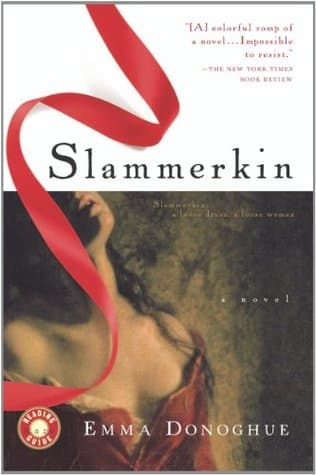
Synopsis
Covers the whole plot, including the ending.
- Difficulty
- Medium
- Pacing
- Moderate
- Mood
- Dark, Provocative, Gritty, Tragic
- Read it if
- You enjoy gritty, character-driven historical fiction that explores the harsh realities of female agency and class struggle in 18th-century England.
- Skip it if
- You are sensitive to graphic content, violence, and a bleak portrayal of a protagonist's fate.
Slammerkin Plot Summary
Covers the whole plot, including the ending.
A Desire for Lace
Mary Saunders, a sharp and ambitious girl in St. Giles, London, in the late 18th century, struggles with her family's poverty and the dull future of becoming a seamstress or maid. She is fascinated by the beautiful, expensive clothes she sees on wealthier women and wants such finery. This contrasts sharply with her own 'slammerkin' attire. Her mother, a practical woman, tries to teach her duty and caution, but Mary's imagination is sparked by the idea of a different life. Her friend Doll, who has already become a prostitute, shows Mary an alternative way to get the luxuries she wants, though Mary first avoids this direct route.
The Stolen Handkerchief
Driven by a strong desire for a silk handkerchief she sees on a woman, Mary steals it. The excitement of having it quickly turns to fear when the theft is discovered. Instead of facing severe consequences, like imprisonment or being sent away, Mary quickly decides to flee London. She runs away with a small amount of money and the stolen handkerchief, leaving her family and the familiar, though harsh, streets behind. This impulsive act marks the true start of her independent, dangerous journey. It cuts her ties to her past and forces her into an unknown future.
Arrival in Monmouth
After a difficult journey, Mary arrives in Monmouth, a small town on the Welsh border, far from London's busy anonymity. She uses the name 'Mary Jones' to hide her past and at first struggles to find work and a place to stay. Her striking looks and London accent make her an object of suspicion and curiosity. Eventually, she finds work as a maid in a respectable home, working for the kind but strict Mrs. Jones, a draper's wife. Here, Mary finds some stability and learns the routines of domestic service, though she remains watchful and guarded, always aware that her past could be found out.
The Soldier's Attention
While working in Monmouth, Mary's striking beauty is noticed. She catches the eye of a local soldier, Captain John Thorne, a charming but dangerous man. Thorne starts to pursue her, giving her gifts and attention that awaken a different kind of longing in Mary. Despite her initial caution and warnings from others, Mary is drawn to his flattery and the promise of a life beyond servitude, similar to her earlier desires for finery. This relationship, however, brings her into contact with the more morally questionable parts of Monmouth society, and she starts to walk a fine line between respectability and ruin.
Embracing Prostitution
As Mary's relationship with Captain Thorne deepens, she realizes his promises are empty. She wants more control over her own life and money. She sees other women around her who gain independence through prostitution. Drawing on her London experiences and desperate need for self-sufficiency, she decides to become a 'slammerkin' herself. She starts to earn money from various men, including Thorne, using her beauty and wit. This path allows her to get the fine clothes and a degree of freedom she wants, but it also solidifies her reputation and isolates her from respectable society in Monmouth.
The Friendship with Sally
Mary forms an unlikely and complicated friendship with Sally, another young woman in Monmouth who also works as a prostitute. Sally is more experienced and cynical, having been cast out by her family. Their relationship gives Mary a sense of camaraderie and shared understanding in a world that often judges and shuns them. They share secrets, support each other through difficult times, and offer a sense of belonging that neither finds elsewhere. However, their bond also has rivalry and the harsh realities of their profession, showing how unstable their lives are and how few options they have.
Pregnancy and Desperation
Mary discovers she is pregnant. This throws her life into further chaos and desperation. The pregnancy makes her even more vulnerable and shows how fragile her independence is. She is unsure who the father is and fears the social stigma and financial hardship of raising a child alone. This event forces her to face the very real, physical consequences of her chosen path and the limited support available to women in her situation. The thought of motherhood brings a new layer of anxiety and a desperate need to secure a future for herself and her unborn child.
The Murder of Captain Thorne
Feeling increasingly trapped and threatened, especially by Captain Thorne's possessive and abusive behavior, Mary makes a desperate choice. During a violent fight, she hits Thorne with a candlestick, killing him. This act is a turning point. It seals her fate and marks her as a murderer. The murder is not planned, but a desperate act of self-preservation, fueled by fear for her own life and the future of her unborn child. This event moves the story towards its tragic end, leaving Mary with no escape from the legal and social consequences of her actions.
Arrest and Trial
After Captain Thorne's murder, Mary is quickly caught. The local authorities investigate, and given her reputation as a 'slammerkin' and the circumstances of Thorne's death, she is immediately suspected. She is imprisoned and subjected to the harsh realities of the 18th-century justice system. Her trial is a public event, where her past and character are examined and judged. Despite her attempts to explain her actions as self-defense, the biases against women like her, especially those involved in prostitution, weigh heavily against her, making a fair hearing almost impossible.
Conviction and Sentence
Despite some sympathy from people who understand her situation, Mary is found guilty of murder. The legal system, rigid and unforgiving, offers little leniency for a woman of her standing. The judge announces the sentence of death by hanging, a common punishment for such crimes then. The verdict shatters any remaining hope Mary might have had, confirming the tragic path of her life. The realization that her quest for liberty has led her to this ultimate confinement is a cruel irony, highlighting the severe limits placed upon women in her society.
The Last Days
In the days leading up to her execution, Mary is held in prison, awaiting her fate. During this time, she thinks deeply about her life, her choices, and the circumstances that led her to this point. She receives visits from a chaplain, who tries to offer spiritual guidance, and perhaps a final visit from Sally, strengthening the complex bonds she formed. Mary faces the certainty of her death with a mix of fear, defiance, and quiet acceptance. Her final thoughts are a poignant summary of her struggles for freedom and self-rule against the crushing weight of societal expectations and limits.
Execution
Mary Saunders is led to the gallows, a public event watched by a crowd. Her execution is a stark and brutal culmination of her journey. Even in her final moments, there is a sense of her lasting spirit, despite the injustice of her situation. Her death is a powerful comment on the harsh realities for women in 18th-century England, especially those who dared to defy social norms and seek independence outside of traditional roles. Her story ends not with triumph, but with a tragic, yet defiant, assertion of her individual will, even when facing absolute power.
Slammerkin Characters
Mary Saunders (Mary Jones)
Protagonist
A spirited young woman who defies societal expectations in 18th-century England.
Mary is sharp-witted, ambitious, and possesses an inherent longing for beauty and independence, contrasting sharply with her impoverished origins in London. She is not conventionally beautiful but has a striking presence. Her initial desire for finery evolves into a desperate need for autonomy and self-determination. She is fiercely independent, often impulsive, and willing to take extreme risks to escape the confines of her class and gender. Despite her difficult choices, she retains a core of resilience and a desire for a life on her own terms.
Relationships: Mrs. Saunders (Mary's practical, worried mother); Doll (Childhood friend who introduces Mary to prostitution); Captain John Thorne (Mary's lover and eventual victim); Sally (Fellow prostitute and friend in Monmouth)
Captain John Thorne
Antagonist/Supporting
A charming but abusive soldier who becomes entangled with Mary.
Captain John Thorne is a local military officer in Monmouth, known for his charismatic yet manipulative nature. He is attracted to Mary's beauty and spirit, seeing her as an object of desire rather than an equal. Thorne embodies the patriarchal power structures of the era, believing he has a right to control women and their bodies. He is possessive, prone to jealousy, and ultimately violent, representing a significant obstacle to Mary's quest for freedom. His actions directly contribute to Mary's desperate situation and ultimate downfall.
Relationships: Mary Saunders (Mary's lover and the man she murders)
Sally
Supporting
A fellow prostitute in Monmouth who becomes Mary's confidante and friend.
Sally is a young woman who, like Mary, has turned to prostitution to survive after being cast out by her family. She is more experienced and cynical than Mary, having learned the harsh realities of their profession. Sally provides Mary with a crucial sense of camaraderie and understanding in a world that shuns them. She is pragmatic and resilient, offering Mary advice and a shared sense of belonging. Their friendship, though sometimes strained by their difficult circumstances, is one of the few genuine connections Mary forms in Monmouth, highlighting the solidarity among marginalized women.
Relationships: Mary Saunders (Friend and fellow prostitute)
Mrs. Saunders
Supporting
Mary's practical and worried mother in London.
Mary's mother represents the traditional, working-class values and expectations of the time. She is a practical woman who tries to instill caution and a sense of duty in Mary, wanting her to pursue an honest, if humble, trade. She is deeply concerned about Mary's ambitious nature and her fascination with finery, fearing it will lead her astray. Though she loves Mary, she is unable to understand or support Mary's deeper yearning for a different life, ultimately failing to prevent her daughter's flight and subsequent tragic path.
Relationships: Mary Saunders (Mary's mother)
Doll
Mentioned/Supporting
Mary's childhood friend who introduces her to the world of prostitution.
Doll is Mary's friend from the streets of London, who has already embraced a life of prostitution to survive and acquire small luxuries. She serves as an early influence and a stark example for Mary, showing her an alternative, albeit dangerous, path to escaping poverty. Doll's presence in Mary's early life plants the seed of an idea that will later come to fruition in Monmouth, highlighting the limited options available to young, impoverished women in 18th-century London.
Relationships: Mary Saunders (Childhood friend)
Mrs. Jones
Supporting
A kind but strict draper's wife who employs Mary in Monmouth.
Mrs. Jones is the respectable draper's wife who gives Mary her first job as a maid in Monmouth. She is a seemingly kind and pious woman who offers Mary a chance at a 'respectable' life. However, she also embodies the strict moral codes and social judgments of the time, becoming increasingly suspicious of Mary's behavior and past. Her household represents the conventional path Mary initially tries to follow, but ultimately rejects, due to its restrictive nature and her unyielding desire for greater freedom.
Relationships: Mary Saunders (Mary's employer in Monmouth)
The Chaplain
Mentioned/Supporting
A religious figure who visits Mary in prison.
The Chaplain represents the religious and moral authority of the time, offering spiritual guidance to Mary in her final days. While he attempts to guide her towards repentance, his understanding of her complex circumstances is limited by his own worldview and the societal prejudices of the era. He symbolizes the societal attempt to impose moral order, even on those who have been marginalized and condemned, but ultimately struggles to truly connect with Mary's unique journey and motivations.
Relationships: Mary Saunders (Spiritual advisor during her imprisonment)
Slammerkin Themes
Liberty vs. Constraint
The novel explores the tension between an individual's desire for freedom and the severe limits placed by society, class, and gender in 18th-century England. Mary's entire journey is a quest for liberty—freedom from poverty, from expected roles, from male control. Her flight from London, her choice to become a prostitute, and even her final, desperate act are all attempts at self-rule. However, each attempt at freedom meets new limits, ending in her physical imprisonment and execution. This shows how nearly impossible true liberty was for a woman of her status. The quote 'Never give up your liberty' is an ironic and tragic refrain.
“Never give up your liberty.”
Social Class and Mobility
Slammerkin clearly shows the rigid class structure of 18th-century England and how nearly impossible it was for those born into poverty to move up socially. Mary's desire for lace and finery is not just vanity; it symbolizes her wish to rise above her 'slammerkin' status and the limited chances of her class. Her attempts to climb the social ladder, first through respectable service and then through illegal ways to get wealth, constantly clash with a society made to keep her in her place. The novel highlights how systemic barriers, rather than individual failures, often decide one's fate, no matter their ambition or intelligence.
“She wanted lace. Not just any lace, but the fine, delicate kind that spoke of a life far removed from St. Giles.”
Female Agency and Survival
The novel examines the limited ways women could act in a patriarchal society and the extreme measures women like Mary had to take to survive and control their lives. With few 'respectable' options beyond marriage or domestic service, Mary chooses prostitution as a way to gain financial independence and self-determination. She sees it as a way to 'own' herself rather than be owned by a husband or master. Her choices, though morally questionable by social standards, are fierce acts of self-rule in a world that denies women power. The novel does not make her path seem glamorous but emphasizes the desperation and resilience needed for survival.
“She would not be kept. She would keep herself.”
Appearance vs. Reality
The theme of appearance versus reality is central, especially regarding clothing and reputation. Mary's obsession with fine clothes symbolizes her desire to present a different reality than her poor beginnings. The 'slammerkin' label itself refers to both her torn clothes and her perceived moral looseness. In Monmouth, she tries to appear respectable as Mary Jones, but her past and true desires constantly threaten to expose her. The novel shows how outward appearances dictate social standing and judgment, often hiding the complex realities and motivations of people like Mary.
“A fine gown could hide a multitude of sins, but a tattered one exposed them all.”
Justice and Injustice
The novel critically portrays the 18th-century justice system, showing its biases against the poor, women, and those who defy social norms. Mary's trial and conviction are less about finding truth and more about upholding social order and punishing a woman who broke its rules. Her plea of self-defense is dismissed, and her character is condemned due to her reputation as a 'slammerkin.' The story powerfully illustrates how the legal system, far from being fair, creates injustice when applied to those already marginalized by society, making her execution a tragic symbol of systemic failure.
“Justice, she learned, was a fine lady who rarely visited the likes of her.”
Plot Devices & Literary Techniques
Symbolism of Clothing
Clothing represents Mary's desires, social status, and moral journey.
Throughout the novel, clothing serves as a powerful symbol. Mary's initial yearning for 'lace' and 'finery' represents her desire for a life beyond her impoverished 'slammerkin' existence. The stolen silk handkerchief is her first tangible act of rebellion and a step towards acquiring what she cannot legitimately possess. As she embraces prostitution, the expensive gowns and accessories she acquires symbolize her newfound, albeit precarious, independence and control over her image. Conversely, her tattered clothes symbolize her low social status and vulnerability, highlighting the stark contrast between her internal desires and external reality.
Dramatic Irony
The reader is aware of the historical context and tragic foreshadowing, which the characters are not.
Dramatic irony is employed through the reader's awareness of the historical limitations and the likely tragic outcome for a character like Mary in 18th-century England. Her early aspirations for liberty and self-determination are understood by the reader to be almost impossible within her societal confines. The novel's subtitle, 'Never give up your liberty,' becomes profoundly ironic as Mary's quest for freedom ultimately leads to her ultimate loss of liberty through imprisonment and execution. This device heightens the tragic impact of Mary's choices and the systemic injustices she faces.
Foreshadowing
Early events and character interactions subtly hint at Mary's ultimate fate.
Foreshadowing is used to build a sense of impending doom for Mary. Her early encounters with Doll and the casual discussions about prostitution hint at the path she will eventually take. The severe consequences for petty theft in London, which prompt her flight, foreshadow the harshness of the justice system she will later face. Captain Thorne's possessive nature and quick temper hint at the violent confrontation that will lead to his death. These subtle clues create a growing tension and prepare the reader for the tragic, yet almost inevitable, conclusion of Mary's journey.
Setting as Character
London and Monmouth act as distinct forces shaping Mary's experiences and fate.
The settings of London and Monmouth function almost as characters in themselves, each profoundly influencing Mary's journey. St. Giles, London, represents the brutal anonymity, poverty, and vice that Mary seeks to escape, yet also the raw survival instincts she develops. Monmouth, initially a haven, represents a more provincial, judgmental society where her actions are scrutinized, and her past is harder to hide. The contrast between the two settings highlights the different challenges Mary faces in her quest for self-determination, from the overwhelming scale of the city to the stifling scrutiny of a small town.
Slammerkin Quotes
“There were other girls in the world, girls who didn’t want to be boys, girls who wanted to be girls so badly they were prepared to bleed for it.”
“A woman’s beauty was her only fortune, and a dangerous one at that.”
“The law was a web, and they were the flies, caught and buzzing.”
“She had always known that words could be weapons, but now she saw they could also be shields.”
“Poverty was a kind of prison, no matter how wide the sky above.”
“You couldn't escape your past, not really. It followed you like a shadow, sometimes long, sometimes short, but always there.”
“Hope was a dangerous thing in their world, a flicker that could easily be snuffed out.”
“Every woman had her price, if you only knew how to find it.”
“The city swallowed you whole, and if you weren’t careful, it would spit you out in pieces.”
“To be a woman was to be constantly judged, constantly weighed, constantly found wanting.”
“She had run from one cage only to find herself in another, albeit one with a prettier view.”
“The truth was a luxury few could afford, and even fewer dared to speak.”
“Sometimes, the only way to survive was to become someone else entirely.”
“She learned that the greatest disguise was often simply to be overlooked.”
Quiz
10 questions on the plot and the characters. Each answer comes with a short explanation.
Question 1
What is Mary Saunders' initial social standing and what does she desire?
- Upper-class, desiring more political influence.
- Lower-class, desiring wealth and a higher social station.
- Middle-class, desiring a quiet domestic life.
- Working-class, desiring to become a renowned artist.
Show answer
B. Lower-class, desiring wealth and a higher social station. Mary Saunders is born into a lower-class family but yearns for 'lace and the trappings of a higher station,' indicating her desire for a better social standing.
Question 2
What common trades are initially planned for Mary Saunders by her family, which she resists?
- Baker or weaver
- Seamstress or maid
- Shopkeeper or teacher
- Laundress or scullery maid
Show answer
B. Seamstress or maid The text states that Mary 'despairs of the plans made for her to carve out a trade as a seamstress or a maid,' showing her resistance to these common female occupations.
Question 3
What is the primary theme explored by Emma Donoghue in 'Slammerkin' regarding a young girl's life in 18th-century England?
- The importance of familial duty over personal ambition.
- The conflict between a quest for freedom and societal shackles.
- The decline of traditional crafts in a changing economy.
- The rise of literacy among the lower classes.
Show answer
B. The conflict between a quest for freedom and societal shackles. The author Emma Donoghue 'probes the gap between a young girl's quest for freedom and a better life and the shackles that society imposes on her,' directly addressing this central theme.
Question 4
The novel is described as 'inspired by the obscure historical figure Mary Saunders.' What does this suggest about the historical accuracy of every detail in the book?
- Every event and character is precisely documented historical fact.
- The novel uses a real figure as a starting point but fictionalizes much of her life.
- The story is entirely fictional, with only the name being historical.
- It is a biography with minor embellishments for narrative flow.
Show answer
B. The novel uses a real figure as a starting point but fictionalizes much of her life. Being 'inspired by' an 'obscure historical figure' implies that while a real person provides the foundation, much of the narrative is a creative interpretation and fictionalized expansion due to limited historical records.
Question 5
What does the phrase 'born into rough cloth but hungered for lace' metaphorically represent about Mary Saunders?
- Her preference for comfortable clothing over fashionable attire.
- Her desire to escape her humble origins and attain a life of luxury and higher status.
- Her talent for sewing and textile work despite her poverty.
- Her rebellious nature against traditional female crafts.
Show answer
B. Her desire to escape her humble origins and attain a life of luxury and higher status. 'Rough cloth' symbolizes her lower-class birth and 'lace' represents the finer things, wealth, and status she craves, highlighting her ambition to transcend her origins.
Question 6
The novel is set in 18th-century England. What specific characteristic of this historical period is highlighted as a constraint on Mary?
- The rigid class structure and limited opportunities for lower-class women.
- The widespread famine and economic depression.
- The lack of educational institutions for women.
- The constant threat of war with neighboring countries.
Show answer
A. The rigid class structure and limited opportunities for lower-class women. The context of '18th-century England' and Mary's 'despair' over her predetermined trades as a 'seamstress or a maid' clearly points to the rigid social hierarchy and limited avenues for advancement for women of her class as a primary constraint.
Question 7
What is the significance of the phrase 'Never give up your liberty' within the context of Mary Saunders' journey?
- It is a literal instruction for her to avoid imprisonment.
- It reflects her core motivation to maintain independence and control over her own life, even at great cost.
- It refers to her desire to participate in political revolutions.
- It is a warning against marrying for convenience.
Show answer
B. It reflects her core motivation to maintain independence and control over her own life, even at great cost. The phrase 'Never give up your liberty' directly aligns with Mary's defiance of her prescribed destiny and her 'quest for freedom,' indicating her deep-seated desire for autonomy and self-determination.
Question 8
Considering the description 'provocative, graphic tale,' what can be inferred about the nature of Mary's 'painful, fateful journey'?
- It involves a series of mundane and uneventful domestic tasks.
- It will likely involve difficult, morally ambiguous, and potentially violent or sexually explicit experiences.
- It is a spiritual quest for enlightenment and peace.
- It will be a romantic adventure filled with chivalry.
Show answer
B. It will likely involve difficult, morally ambiguous, and potentially violent or sexually explicit experiences. The terms 'provocative' and 'graphic' in conjunction with 'painful, fateful journey' strongly suggest that Mary's experiences will be intense, challenging, and likely involve harsh realities of 18th-century life, possibly including violence, sexual encounters, or other difficult situations.
Question 9
How does Mary's 'shrewd instincts' contrast with the societal expectations placed upon her in 18th-century London?
- Her instincts lead her to embrace the traditional roles society expects, ensuring her safety.
- Her instincts represent an internal drive for self-advancement and agency, which clashes with society's attempts to confine her to a predetermined, subservient path.
- Her instincts make her a target for the upper classes who wish to exploit her talents.
- Her instincts are primarily focused on helping others, which is unusual for the period.
Show answer
B. Her instincts represent an internal drive for self-advancement and agency, which clashes with society's attempts to confine her to a predetermined, subservient path. Mary's 'shrewd instincts' are presented as a tool that 'will get her only so far,' implying they are a means to navigate or escape her predetermined 'destiny' as a seamstress or maid, which are the societal expectations. This sets up a conflict between her internal drive and external constraints.
Question 10
What does the title 'Slammerkin' likely imply about the main character or the novel's tone, given its historical fiction context?
- It refers to a type of fashionable garment worn by upper-class women.
- It is an archaic term for a loose gown, often associated with a slovenly or disreputable woman, suggesting Mary's unconventional and possibly scandalous path.
- It is a nickname for a skilled seamstress or textile worker.
- It signifies a type of historical dance popular in London.
Show answer
B. It is an archaic term for a loose gown, often associated with a slovenly or disreputable woman, suggesting Mary's unconventional and possibly scandalous path. A 'slammerkin' is an 18th-century term for a loose gown or a slovenly woman. Given Mary's defiance of societal norms and her 'provocative, graphic tale,' the title likely alludes to her breaking away from conventional respectability and embarking on a path that society would deem 'disreputable' or 'slovenly.'
Slammerkin FAQ
What is the central conflict Mary Saunders faces in 'Slammerkin'?
Mary Saunders, a young woman in 18th-century London, grapples with the stark contrast between her desire for a life of comfort and independence, symbolized by 'lace,' and the grim reality of her lower-class origins, which destine her for arduous labor as a seamstress or maid. Her central conflict is the struggle against societal constraints and the limited choices available to women of her station.
How does Mary's early life in London influence her later decisions?
Mary's early life in London, marked by poverty and exposure to the harsh realities of urban existence, including witnessing prostitution and petty crime, fuels her ambition to escape. Her initial experience with theft and the subsequent shame she feels, combined with a longing for material possessions, sets her on a path of seeking quick, albeit dangerous, routes to financial independence.
What significant event prompts Mary to leave London and seek a new life?
Mary's decision to leave London is precipitated by her public shaming and punishment for prostitution, a consequence of her desperate attempts to earn money and acquire fashionable clothing. The traumatic experience of being paraded through the streets and then sent to a Magdalen House, combined with the loss of her reputation, forces her to flee to Monmouth to reinvent herself.
Who is Doll Higgins and what is her role in Mary's story?
Doll Higgins is a significant figure in Mary's journey, initially befriending her and introducing her to the world of prostitution in London as a means of survival and acquiring finery. Doll represents a path Mary considers, and her eventual fate serves as a cautionary tale, highlighting the dangers and ultimate lack of freedom inherent in that lifestyle.
How does Monmouth offer Mary a different kind of life compared to London?
Monmouth initially offers Mary a chance at respectability and a seemingly stable life through her marriage to Jem, a butcher. Unlike the anonymity and overt desperation of London, Monmouth presents a smaller, more judgmental community where reputation is paramount, forcing Mary to adopt a veneer of domesticity and conformity she never truly embraces.
What is the significance of the term 'Slammerkin' in the novel's title?
The term 'Slammerkin' is an 18th-century derogatory slang term for a loose, untidy woman, often implying promiscuity or a lack of moral standing. In the novel, it directly reflects how society views and labels Mary, particularly after her past in London comes to light, encapsulating the judgment and social ostracization she faces despite her efforts to reform.
Are there any subtle foreshadowing elements regarding Mary's eventual fate?
Yes, several elements foreshadow Mary's tragic end. Her recurring obsession with expensive fabrics and finery, her inability to fully shed her past identity, and the pervasive societal judgment against women like her, all hint at a destiny where her desires and the rigid social structure ultimately collide, leading to her downfall.
What role do the various male characters, like Jem and the tailor, play in Mary's understanding of her 'liberty'?
The male characters, such as Jem and the tailor, primarily serve to highlight the limitations placed on Mary's liberty. Jem offers a form of domestic security but demands conformity, while the tailor represents a fleeting, transactional form of freedom through financial gain. Neither truly understands or respects Mary's deeper yearning for self-determination beyond their control or expectations.
How does Mary's desire for beautiful clothing symbolize her deeper aspirations?
Mary's obsession with beautiful clothing, particularly lace and silk, symbolizes her longing for a life of status, comfort, and respectability that is denied to her by her birth. It's not just about vanity; it's a visual manifestation of her aspiration to transcend her station and assert her individuality in a society where appearance dictates worth.
Analyze Mary's internal conflict between her ambition and her conscience.
Mary constantly battles between her fierce ambition for a better life and the occasional pangs of conscience, particularly regarding her deceptive practices and the harm it might cause. While she often rationalizes her actions as necessary for survival, there are moments of guilt and a yearning for genuine affection, showcasing a complex internal landscape rather than pure amorality.
How does Mary's attachment to her own child differ from her feelings towards her parents?
Mary's attachment to her own child, though complicated by her circumstances, reveals a deeper, protective maternal instinct, contrasting with her more detached and somewhat resentful relationship with her own parents. Her parents represented the life she desperately wanted to escape, whereas her child represents a new generation she wishes to protect from similar hardships, even if imperfectly.
In what ways does Mary exhibit resilience and agency despite her constrained circumstances?
Despite facing numerous setbacks and societal condemnation, Mary consistently exhibits resilience by adapting to new environments, devising new schemes for survival, and refusing to fully succumb to despair. Her agency is demonstrated through her repeated choices to defy expectations, whether by leaving home, engaging in prostitution, or attempting to forge a new identity, even when these choices lead to further hardship.
Does the novel ultimately portray Mary as a victim of her circumstances or a perpetrator of her own downfall?
The novel offers a nuanced perspective, suggesting Mary is both a victim of rigid 18th-century class and gender structures and a perpetrator of her own downfall through her choices. While her initial options were severely limited, her ambition and refusal to compromise, coupled with a certain naiveté and poor judgment, contribute significantly to her tragic end, making her a complex figure rather than solely a victim.
How does 'Slammerkin' comment on the concept of 'liberty' for women in the 18th century?
'Slammerkin' profoundly critiques the illusion of 'liberty' for women in the 18th century, especially those of lower classes. Mary's relentless pursuit of freedom often leads her into different forms of bondage – economic, social, and physical. The novel suggests that true liberty was virtually unattainable for women, as their choices were always circumscribed by male authority, economic necessity, and societal judgment.
What is the significance of the novel's graphic portrayal of poverty and prostitution?
The novel's graphic portrayal of poverty and prostitution is significant in grounding the narrative in the harsh realities of 18th-century life for marginalized women. It serves to demystify and de-romanticize these experiences, emphasizing the desperation, danger, and lack of viable alternatives that pushed women like Mary into such lives, making her choices understandable within context.
How does Emma Donoghue use historical detail to enhance the novel's themes?
Emma Donoghue meticulously integrates historical details, from the specific slang ('Slammerkin') and fashion of the era to the legal punishments and social institutions like Magdalen Houses, to immerse the reader in Mary's world. These details are not merely decorative; they underscore the oppressive social structures, economic disparities, and moral codes that directly shape Mary's limited options and tragic trajectory, reinforcing the novel's themes of class, gender, and liberty.
Is there a moral to Mary Saunders' story, or is it merely a cautionary tale?
While Mary's story functions as a cautionary tale about the dangers of unchecked ambition and defying societal norms, it is more profoundly a commentary on the systemic injustices faced by women in the 18th century. It challenges readers to consider the societal forces that limit individual agency, rather than simply blaming Mary for her fate, suggesting that 'morality' itself was a luxury for those in power.
About the author

Emma Donoghue is an Irish author known for her fiction, often exploring complex themes of identity and human relationships. Her notable works include "Room," which was shortlisted for the Man Booker Prize, "The Wonder," "Frog Music," "The Pull of the Stars," "Slammerkin," and "The Sealed Letter." Donoghue's writing often blends historical and contemporary elements, showcasing her versatility as a storyteller.
Similar books
- Alias Grace
Margaret Atwood
4.0 (111k) average on GoodreadsLiterary FictionExplores a historical female criminal's story with psychological depth and social commentary.
- The Old Man and the Sea
Ernest Hemingway
3.8 (831k) average on GoodreadsLiterary FictionA Cuban fisherman's long struggle with a giant marlin becomes a story of endurance and dignity, now retold for young adults with illustrations, phonetic guides, and writing prompts in Traditional Chinese.
- One Hundred Years of Solitude
Gabriel García Márquez
4.1 (753k) average on GoodreadsLiterary FictionThrough the multi-generational story of the Buendía family, a mythical town deals with the repeating patterns of time, love, and solitude, as the extraordinary mixes with the ordinary.
- The Goldfinch
Donna Tartt
3.9 (720k) average on GoodreadsLiterary FictionHaunted by a tragic explosion and clutching a stolen Dutch masterpiece, a young orphan navigates the opulent drawing rooms of New York and the gritty underbelly of the art world, desperately seeking connection and redemption amidst a life spiraling into crime and obsession.
- Little Fires Everywhere
Celeste Ng
4.1 (713k) average on GoodreadsLiterary FictionIn Shaker Heights, an artist and her daughter move in, and their free-spirited lives clash with a rule-bound matriarch, revealing hidden conflicts beneath a perfect surface.
- Eleanor Oliphant Is Completely Fine
Gail Honeyman
4.3 (708k) average on GoodreadsLiterary FictionA lonely woman's structured life changes when an IT guy and an elderly man help her learn to open her heart.





Enjoyed the summary?
A summary gives you the shape of the book. The book itself has the detail, the examples and the voice.
Find Slammerkin on AmazonAs an Amazon Associate, BookBrief earns from qualifying purchases. How we're funded