
Synopsis
Covers the whole plot, including the ending.
- Difficulty
- Medium
- Pacing
- Moderate
- Mood
- Atmospheric, Suspenseful, Dark, Melancholic
- Read it if
- You enjoy richly detailed historical fiction with a strong sense of place and time, combined with a gripping mystery and complex characters driven by revenge and hidden pasts.
- Skip it if
- You prefer lighthearted or fast-paced narratives, as this book deals with heavy themes of famine, injustice, and violence, and features a deliberate, atmospheric build-up.
Star of the Sea Plot Summary
Covers the whole plot, including the ending.
The Star of the Sea Sets Sail
In the winter of 1847, the famine ship 'Star of the Sea' leaves Queenstown (Cobh), Ireland, for New York. The ship is full of steerage passengers fleeing the Great Famine and a few wealthy cabin passengers. Among them are Lord Merridith and his family, bankrupt and disgraced. They seek to escape their ruined estate, Kilveagh. Mary Duane, a young maid with a dark past, is also on board, as is Pius Mulvey, a journalist disguised as a steerage passenger with a deadly mission. The ship's passengers include Irish, English, and American individuals, each with secrets, hopes, and resentments. All are on this dangerous transatlantic journey.
A Killer's Shadow Emerges
As the voyage continues, Pius Mulvey appears as a mysterious and menacing figure. His thoughts and observations show that Mulvey is not just a journalist. He is an assassin hired to kill a passenger. His target is unclear at first, but he often watches Lord Merridith and his family. This hints at a connection to their past. Mulvey plans his moves. He thinks about the injustices and suffering he has seen, especially those from the Anglo-Irish landlord class. This suggests his revenge comes from the despair of famine-stricken Ireland.
Lord Merridith's Downfall and Mary's Past
Flashbacks begin to show why Lord Merridith is emigrating. His estate, Kilveagh, is destroyed by the famine. His tenants are evicted, and his finances are ruined, forcing him to flee Ireland in disgrace. At the same time, Mary Duane's past is explored. She had an impoverished childhood on the Kilveagh estate. She was an orphan taken in by the Merridiths as a maid, where she had a complicated relationship with David Merridith, Lord Merridith's son. These histories connect the cabin passengers and some steerage passengers, showing the social divisions and resentments on the ship.
The Ghost and the Journalist
Pius Mulvey's identity becomes clear. He is a former tenant from the Merridith estate. He wants revenge for the injustices to his family and community during the famine. He knows the Merridiths' history and their role in their tenants' suffering. The story also shows a spectral figure, 'the ghost,' who appears to various characters, especially Mary. This ghost seems to show the past's lingering hold and the unresolved traumas of the passengers.
Aboard the Ship: Tensions and Relationships
Life on the 'Star of the Sea' is shown in detail. The cramped, disease-ridden steerage contrasts with the first-class cabins. Tensions rise as supplies decrease and illness spreads. Mary Duane is drawn to David Merridith. They share a history of childhood affection and a passionate relationship. The dynamics between passengers, rich and poor, reveal class prejudices, developing romances, and the journey's anxiety. Mulvey continues his watch, his resolve strengthening each day at sea.
The Unveiling of Pius Mulvey's Past
Pius Mulvey's full backstory is revealed through flashbacks. He was Liam Mulvey, a gifted child from a tenant family on the Kilveagh estate. His family suffered under the Merridiths' harsh rule. This led to the eviction and death of his loved ones during the famine. Liam saw the despair and injustice. He decided to seek revenge, becoming the formidable Pius Mulvey. His mission on the 'Star of the Sea' is not just for himself. It is for all who suffered under the Merridith family's neglect and cruelty. His assassination is a symbolic act of justice.
Mary's Secret and David's Fate
Mary Duane's deepest secret is revealed: she had a child with David Merridith, and she had to give it away. This adds tragedy to her character and explains her conflicted feelings about the Merridith family. David is a troubled young man, haunted by his own problems and his family's decline. As the ship nears its destination, the tension between Mary and David grows. Their shared past creates an emotional entanglement on the ship, complicated by Mulvey's presence.
The Assassin Strikes
Pius Mulvey carries out his planned assassination. His target is Lord Merridith, whom he blames for the ruin of his family and many others. The act is quick and brutal. It shocks the cabin passengers and creates fear and suspicion. Investigations begin by the ship's captain and officers. Mulvey, having achieved his goal, feels a mix of satisfaction and emptiness. He grapples with the moral weight of his actions, even as he believes he has brought justice.
Aftermath and Confession
After Lord Merridith's murder, the 'Star of the Sea' becomes paranoid. The crew and remaining cabin passengers want to find the killer. Mary Duane, burdened by her past, confesses to Father Corrigan. She reveals her affair with David and the child they had. This confession is a moment of vulnerability. It seeks absolution but also involves her further in the web of relationships and secrets that led to the tragedy. The ghost continues to appear, symbolizing the inescapable past.
The Revelation of the True Killer
In a twist, David Merridith, not Pius Mulvey, killed his father, Lord Merridith. Mulvey had intended to kill David, but David, driven by his own despair and hatred for his father, acted first. Mulvey saw David's act. He then took credit for the murder, allowing himself to be captured and accepting the role of the avenger. This changes the entire story. It shows the depths of family problems and the intertwined fates of the characters. Mary's confession, though true, was only part of the story.
Arrival in New York and New Beginnings
The 'Star of the Sea' reaches New York. The surviving passengers leave the ship, each marked by the voyage and their pasts. Mary Duane finds a path to a new life, seeking to reconcile with her past and find her child. Pius Mulvey (Liam), having confessed to a murder he did not fully commit, faces an uncertain future. His act of self-sacrifice and commitment to justice leave a lasting impression. The Merridith family, shattered, disappears into the new world. The journey ends, but the famine's echoes and the ship's tragedies stay with them in their new lives.
Principal Figures
Pius Mulvey (Liam Mulvey)
Antagonist/Vengeful Protagonist
A former tenant turned assassin, seeking justice for the famine's victims.
Pius Mulvey, whose real name is Liam Mulvey, is a complex and central character. Originally a bright, sensitive boy from a tenant family on the Merridith estate, he witnessed his family's and community's devastation during the Great Famine due to Lord Merridith's evictions and neglect. This trauma transforms him into a hardened, vengeful man, meticulously planning to assassinate a Merridith on the 'Star of the Sea'. He disguises himself as a journalist to gain passage. His actions are driven by a deep sense of injustice and a desire for retribution, making him a symbol of the famine's wrath. He is highly intelligent, observant, and capable of both extreme violence and profound empathy.
Relationships: Lord Merridith (Target of his vengeance); Mary Duane (Shared past on the Kilveagh estate; observant of her); David Merridith (Initial target; ultimately takes the blame for David's crime)
Mary Duane
Protagonist/Supporting
A young maid with a tragic past and a devastating secret.
Mary Duane is a resilient and intelligent young woman, once a maid in the Merridith household. She grew up on the Kilveagh estate, experiencing the harsh realities of poverty and the famine. Her past is intertwined with the Merridiths, particularly David, with whom she had a secret, passionate affair that resulted in a child she was forced to give away. Mary carries immense guilt and sorrow, which she tries to conceal behind a facade of quiet competence. Her journey on the 'Star of the Sea' is one of seeking both escape and redemption, haunted by her past and the choices she made.
Relationships: David Merridith (Former lover and father of her child); Lord Merridith (Her former master, object of her resentment); Pius Mulvey (Fellow former tenant, observed by him)
Lord Merridith (Hugh Merridith)
Antagonist/Victim
Bankrupt Anglo-Irish landlord fleeing Ireland, responsible for tenant evictions.
Lord Merridith is a proud, albeit deeply flawed, Anglo-Irish landlord. His family's estate, Kilveagh, has been ruined by the famine, and his attempts to manage it through evictions and strict policies have led to widespread suffering among his tenants. He embodies the declining landlord class, clinging to a sense of entitlement even as his world crumbles. He is portrayed as arrogant and self-serving, largely oblivious to the human cost of his decisions, though he faces his own form of ruin. His flight to America is an act of desperation, not redemption.
Relationships: Lady Merridith (His long-suffering wife); David Merridith (His estranged and resentful son); Pius Mulvey (His former tenant, who seeks vengeance against him)
Lady Merridith (Octavia Merridith)
Supporting
Lord Merridith's wife, a woman trapped by circumstance and social standing.
Lady Merridith is Lord Merridith's wife, a woman of refined sensibilities who struggles to adapt to their family's sudden downfall and the harsh realities of the voyage. She is often portrayed as fragile and somewhat detached from the suffering around her, though she experiences her own quiet despair. She tries to maintain appearances and uphold her family's dignity despite their circumstances. Her character highlights the rigidity of class structures and the personal cost of societal collapse, as she loses her status and comforts.
Relationships: Lord Merridith (Her husband); David Merridith (Her son); Mary Duane (Her former maid, whom she barely acknowledges)
David Merridith
Supporting/Antagonist
The troubled and dissolute son of Lord and Lady Merridith.
David Merridith is the son of Lord and Lady Merridith, a young man haunted by his family's decline and his own moral failings. He is intelligent but dissolute, struggling with a sense of purposelessness and resentment towards his father. He shares a complex and passionate history with Mary Duane, which weighs heavily on both of them. David's character embodies the internal decay within the Anglo-Irish aristocracy, capable of both charm and cruelty. His actions are driven by a mix of despair, anger, and a desperate search for meaning.
Relationships: Lord Merridith (His hated father, whom he eventually murders); Mary Duane (His former lover and mother of his child); Pius Mulvey (His intended victim, who takes the blame for his crime)
Father Corrigan
Supporting
A compassionate priest on board, offering solace and hearing confessions.
Father Corrigan is a Catholic priest traveling in steerage, serving as a moral compass and confessor for many of the passengers. He is deeply empathetic to the suffering of the Irish famine refugees, offering spiritual comfort and practical aid where he can. He hears Mary Duane's confession and struggles with the moral dilemmas presented by the ship's events. He represents faith and humanity amidst the despair and chaos, often questioning the nature of divine justice in the face of such widespread suffering.
Relationships: Mary Duane (Her confessor); Various steerage passengers (Their spiritual guide)
Captain Davies
Supporting
The pragmatic and authoritative captain of the Star of the Sea.
Captain Davies is the stoic and experienced captain of the 'Star of the Sea'. He is a man of duty, focused on navigating the treacherous Atlantic and maintaining order on his overcrowded ship. While he is aware of the suffering of his passengers, particularly those in steerage, his primary concern is the safe passage of the vessel. He is challenged by the murder aboard his ship and the subsequent investigation, forced to grapple with the human drama unfolding under his command. He represents the authority and structure trying to hold chaos at bay.
Relationships: All passengers and crew (Their commander)
Nicholas Sparrow
Supporting/Mentioned
An American journalist chronicling the voyage, adding a meta-narrative layer.
Nicholas Sparrow is an American journalist on board the 'Star of the Sea', tasked with documenting the voyage and the plight of the famine refugees. His presence adds a meta-narrative layer to the novel, as he is presented as the fictional author/compiler of the various accounts that make up the book. He is observant and tries to capture the truth of the experience, though he, too, is limited by his perspective. His role is to provide a framework for the multiple voices and perspectives that contribute to the novel's intricate structure.
Relationships: Pius Mulvey (Initially observes Mulvey, unaware of his true nature)
Themes & Insights
Justice and Vengeance
The novel explores justice and vengeance, especially through Pius Mulvey. He is driven by the wrongs Lord Merridith committed against his family and community. Mulvey believes his assassination is a just act for famine victims. However, the revelation that David Merridith committed the murder complicates this. It suggests that 'justice' can be found in unexpected, morally unclear ways. The theme asks if true justice comes from violence and if personal revenge can heal societal wounds. It shows the lasting impact of historical injustices.
“The past is a foreign country. They do things differently there. But it is also a present country, for it lives within us, shaping our every breath.”
Identity and Self-Discovery
Characters like Mary Duane and Pius Mulvey (Liam) deal with their identities. These identities are shaped by their past traumas and the roles they must play. Mary's identity is defined by her secret motherhood and her struggle for control in a restrictive society. Liam changes from a sensitive boy to the vengeful Pius Mulvey. He sheds his old self to complete his mission. The journey across the Atlantic helps characters discover themselves. It forces them to confront who they are, who they were, and who they might become in the new world. This shows how circumstances affect self-formation.
“How many selves do we have? How many lives do we live? How many names do we take on, only to shed them like old skin?”
Class and Social Inequality
The contrast between wealthy cabin passengers and poor steerage passengers shows the class divisions of 19th-century society, especially in famine-era Ireland. Lord Merridith's evictions and his tenants' suffering, like Liam Mulvey's, show the harshness of social inequality. On the ship, these divisions continue, with different access to food, space, and medical care. The novel argues that these class differences are not just economic. They are connected to power, justice, and the value placed on human life. This ultimately leads to violence and tragedy.
“There are two kinds of passengers on this ship, son. The ones who pay and the ones who pray.”
The Weight of the Past
The novel shows how the past, especially the trauma of the Great Famine and Anglo-Irish relations, affects the characters. Flashbacks reveal their motivations and secrets. 'The ghost' symbolizes the inescapable nature of memory and unresolved grievances. No matter how far the 'Star of the Sea' travels, the characters are tied to their histories. They cannot escape the consequences and emotional scars of what came before. The past is always part of the present.
“The sea remembers. The wind remembers. And the living remember, too, though they try to forget.”
Love and Loss
Amidst the tragedy, the novel explores different kinds of love and the impact of loss. Mary Duane's love for David Merridith and her lost child is a central emotional thread. It drives her actions and internal conflict. Liam Mulvey's lost love for his family fuels his vengeance. Even the strained love between Lord and Lady Merridith, though broken, speaks to a shared history. The journey itself shows the great loss suffered by the Irish people. It also shows the human capacity for affection, compassion, and the hope for connection in despair.
“Love is a voyage, and the heart a ship, and sometimes it sails into a storm from which there is no return.”
Plot Devices & Literary Techniques
Multiple Perspectives and Narrators
The story is told through various character viewpoints, letters, and a journalist's notes.
The novel employs a mosaic narrative structure, presenting events from the viewpoints of several characters, including Pius Mulvey, Mary Duane, and members of the Merridith family. This is augmented by excerpts from historical documents, newspaper articles, and the 'notes' of American journalist Nicholas Sparrow, who is depicted as the fictional compiler of the narrative. This technique creates a rich, multi-layered understanding of the complex events and motivations, allowing the reader to piece together the truth from conflicting and biased accounts, mirroring the challenge of understanding historical events.
Flashbacks and Interweaving Timelines
Past events are continuously revealed, directly impacting the present journey.
The narrative constantly shifts between the present-day voyage of the 'Star of the Sea' in 1847 and extensive flashbacks to the characters' pasts in famine-stricken Ireland. These flashbacks are crucial for revealing the backstories of Pius Mulvey, Mary Duane, and the Merridith family, explaining their motivations, secrets, and the deep-seated grievances that culminate in tragedy aboard the ship. This interweaving of timelines emphasizes the idea that the past is not merely prologue but an active, inescapable force shaping the present.
The Ghost / Spectral Presence
A recurring supernatural element symbolizing guilt, memory, and the weight of the past.
Throughout the novel, a spectral figure or 'ghost' appears to various characters, particularly Mary Duane and sometimes Pius Mulvey. This entity is not explicitly defined but serves as a powerful symbol of the inescapable past, unresolved guilt, and the lingering presence of those lost to the famine and other tragedies. It functions as a psychological manifestation of the characters' internal struggles and the collective trauma carried aboard the ship, blurring the lines between reality and the spectral impact of memory.
The 'Star of the Sea' as a Microcosm
The ship functions as a contained world reflecting broader societal divisions and conflicts.
The 'Star of the Sea' itself acts as a powerful plot device, serving as a microcosm of Irish society during the famine and the broader class structures of the 19th century. The confined space of the ship forces characters from vastly different social strata to interact, highlighting the stark inequalities, prejudices, and simmering resentments between the wealthy cabin passengers and the destitute steerage. The ship becomes a stage where personal dramas and historical injustices play out, intensifying conflicts and revealing profound truths about human nature under duress.
Star of the Sea Quotes
“The past is a foreign country; they do things differently there.”
“There are some things you can't outrun, no matter how fast you go.”
“A man’s heart is a dark forest.”
“Hope is a thing with feathers – but sometimes those feathers are soaked in blood.”
“The sea takes what it wants, and gives back nothing.”
“Every man has his price, and every woman her secret.”
“Memory is a cruel master, and a treacherous friend.”
“The truth is a thing that changes, depending on who is telling it.”
“We are all ghosts, sailing on a ghost ship.”
“There is no justice, only consequences.”
“Sometimes, the only way to save yourself is to lose everything you have.”
“The silence of the Atlantic was a different kind of loud.”
“A lie is a small thing, until it grows roots and chokes the life out of everything around it.”
Quiz
10 questions on the plot and the characters. Each answer comes with a short explanation.
Question 1
In what year does the Star of the Sea set sail for New York?
- 1845
- 1847
- 1849
- 1851
Show answer
B. 1847 The book explicitly states that the Star of the Sea sets sail in the bitter winter of 1847, a key detail establishing the historical context of the Irish Famine.
Question 2
Which of these characters is NOT explicitly mentioned in the book's description as being aboard the Star of the Sea?
- A maid with a devastating secret
- Lord Merridith
- A killer stalking the decks
- A wealthy American merchant returning home
Show answer
D. A wealthy American merchant returning home The description specifically mentions a maid, Lord Merridith (bankrupt), his family, and a killer. A wealthy American merchant is not listed as a primary character in the provided synopsis.
Question 3
What is the primary motivation of the killer aboard the Star of the Sea?
- To rob the wealthy passengers
- To escape justice in Ireland
- To seek vengeance that will bring absolution
- To spread political unrest among the refugees
Show answer
C. To seek vengeance that will bring absolution The description clearly states the killer is 'hungry for the vengeance that will bring absolution,' highlighting their deep personal motivation.
Question 4
What is Lord Merridith's financial status at the beginning of the voyage?
- Prosperous and seeking new investments
- Bankrupt and fleeing his debts
- Comfortable but concerned about the future
- Heavily in debt but with hope of recovery in America
Show answer
B. Bankrupt and fleeing his debts The synopsis explicitly describes Lord Merridith as 'bankrupt,' indicating his dire financial situation and a key reason for his journey.
Question 5
Which of the following best describes the general mood or state of the passengers aboard the Star of the Sea?
- Overwhelmingly optimistic about a new life
- A mix of optimism and desperation
- Primarily focused on political resistance
- Indifferent to their past and future
Show answer
B. A mix of optimism and desperation The description states, 'On board are hundreds of refugees, some optimistic, many more desperate,' capturing the mixed emotions and circumstances of the passengers.
Question 6
Beyond the physical journey to New York, what metaphorical journey do the passengers also undertake?
- A journey to rediscover their national identity
- A journey into the future, completely severing ties with the past
- A journey where they remain 'moored to a past that will never let them go'
- A journey to establish a new form of governance
Show answer
C. A journey where they remain 'moored to a past that will never let them go' The synopsis highlights that 'the farther the ship sails toward the Promised Land, the more her passengers seem moored to a past that will never let them go,' emphasizing the persistent influence of their history.
Question 7
The novel's tone is described as building with the pace of what genre?
- A romance novel
- A historical documentary
- A thriller
- A philosophical treatise
Show answer
C. A thriller The description explicitly states, 'this exciting and compassionate novel builds with the pace of a thriller,' indicating its suspenseful and engaging narrative style.
Question 8
What significant personal aspects are explored among the characters during the voyage?
- Only their hopes for financial gain in America
- Passionate loves recalled, shirked responsibilities regretted, and profound relationships revealed
- Their plans for political revolution upon arrival
- The development of new scientific theories
Show answer
B. Passionate loves recalled, shirked responsibilities regretted, and profound relationships revealed The synopsis details that 'Passionate loves are tenderly recalled, shirked responsibilities regretted too late, and profound relationships shockingly revealed,' indicating a deep exploration of personal histories and connections.
Question 9
How does the book connect its historical setting to contemporary relevance?
- By explicitly comparing the 1847 famine to modern economic crises.
- By showcasing that it is 'as urgently contemporary as it is historical.'
- By featuring characters who travel through time.
- By having characters predict future events with accuracy.
Show answer
B. By showcasing that it is 'as urgently contemporary as it is historical.' The description directly states, 'As urgently contemporary as it is historical,' implying that its themes of tragedy, mercy, love, and healing resonate with modern issues, even without explicit comparisons.
Question 10
The narrative structure of the novel is implied to involve what kind of revelations?
- Only minor character developments.
- A series of predictable events leading to a calm conclusion.
- Shocking revelations of profound relationships and a stunning conclusion.
- Primarily humorous anecdotes from the voyage.
Show answer
C. Shocking revelations of profound relationships and a stunning conclusion. The synopsis mentions 'profound relationships shockingly revealed' and concludes by stating the novel builds to 'a stunning conclusion,' suggesting unexpected twists and significant disclosures.
Star of the Sea FAQ
What is "Star of the Sea" about?
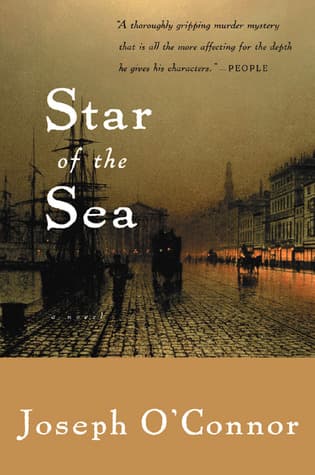
"Star of the Sea" is a historical fiction and mystery novel set in the harsh winter of 1847. It chronicles the transatlantic voyage of hundreds of Irish famine refugees aboard the ship 'Star of the Sea' bound for New York. The narrative weaves together the desperate journeys of characters like the maid Mary Duane, the bankrupt Lord Merridith and his family, and a mysterious killer seeking vengeance, all while exploring themes of survival, class, love, and the inescapable past.
Why should I read "Star of the Sea"?
You should read "Star of the Sea" for its rich historical detail of the Irish Famine and transatlantic migration, its intricate mystery that unfolds with thriller-like pacing, and its deeply human exploration of class, prejudice, and survival. The novel masterfully blends multiple perspectives and timelines to create a compelling and emotionally resonant narrative that feels both historical and urgently contemporary.
What is the background/setting of "Star of the Sea"?
The primary setting is the 'Star of the Sea' passenger ship during its transatlantic journey from famine-stricken Ireland to New York in 1847. The backdrop is the devastating Great Famine in Ireland, which drives many characters to flee. Flashbacks frequently transport the reader to various locations in Ireland, revealing the characters' pasts and the societal injustices that shaped their present circumstances.
What are the most memorable quotes?
While the book is rich with evocative language, one memorable sentiment revolves around the idea that 'the farther the ship sails toward the Promised Land, the more her passengers seem moored to a past that will never let them go,' encapsulating the novel's central theme of inescapable history and memory. Another is the stark descriptions of the famine's impact, highlighting the profound human cost.
What writing style does the author use?
Joseph O'Connor employs a multi-layered, intricate writing style, shifting between first-person accounts, third-person narration, newspaper clippings, and ship manifests. This mosaic approach builds suspense and provides diverse perspectives on the events and characters. His prose is often lyrical and vivid, yet also direct and unflinching in its depiction of hardship and violence, giving the novel the pace of a thriller.
What minor details add significant meaning?
The recurring motif of the 'Star of the Sea' itself, beyond just being the ship's name, subtly links to religious symbolism and the desperate hope for salvation, contrasting sharply with the harsh realities onboard. Also, the seemingly minor interactions between different classes early in the voyage foreshadow the deep-seated prejudices and tensions that escalate throughout the journey, revealing the societal microcosm of the ship.
What are some subtle foreshadowing moments?
Early mentions of Lord Merridith's financial ruin and his past dealings subtly foreshadow the desperation and moral compromises he will make, and the reasons behind his family's flight. The recurring, almost spectral presence of the journalist, Grantley Dixon, and his keen observations, hint at the deeper, darker story he is trying to uncover, suggesting a hidden crime long before it is explicitly revealed.
What unexpected character connections exist?
A major unexpected connection is the revelation that the maid, Mary Duane, and the mysterious assassin, Pius Mulvey, share a deeply intertwined past, having grown up together in the same impoverished circumstances. Furthermore, the connection between Lord Merridith and the target of Mulvey's vengeance is far more personal and devastating than initially presented, rooted in a shared history of injustice and exploitation in Ireland.
What are unspoken character motivations?
Pius Mulvey's unspoken motivation is not merely simple revenge, but a desperate quest for absolution and a sense of justice for a past trauma that has consumed his life, making his violence a warped form of self-redemption. Mary Duane's silences often mask her deep-seated guilt and the protective instincts she harbors for those she loves, even as she carries a devastating secret that could endanger them all.
What psychological complexities do characters exhibit?
Lord Merridith exhibits the psychological complexity of denial and moral decay, clinging to the vestiges of his aristocratic identity even as his actions have led to ruin and suffering. Mary Duane grapples with survivor's guilt and the psychological burden of a past crime, manifesting in her guarded demeanor and her internal struggle between self-preservation and compassion. Pius Mulvey is a study in trauma-induced obsession, his identity inextricably linked to his mission of vengeance.
What are the major emotional turning points?
A major emotional turning point is the revelation of the true identities and shared history between Mary Duane and Pius Mulvey, which shifts the narrative from a simple mystery to a profound tragedy of intertwined fates. Another is the moment Lord Merridith's complete moral bankruptcy is exposed, shattering any remaining illusions about his character and forcing his family to confront their dire reality.
How do relationship dynamics evolve?
The relationship between Lord and Lady Merridith deteriorates from a facade of propriety to open contempt and resentment as their shared past and secrets unravel under pressure. The initial distance and suspicion between Mary Duane and Pius Mulvey slowly transforms into a complex, tragic bond as their history is revealed, showing a deep connection warped by circumstance. Relationships between the classes on board also devolve from uneasy coexistence to outright conflict as resources dwindle and desperation mounts.
Which parts remain ambiguous or open-ended?
The ultimate fate of some minor characters remains somewhat ambiguous, leaving readers to ponder their chances of survival or success in the New World. While the central mystery is resolved, the lasting psychological impact on the survivors, especially Mary Duane, is left with a degree of open-endedness, suggesting that their journeys of healing and adaptation are just beginning upon arrival in America.
What are controversial scenes or decisions?
The controversial decisions often revolve around the moral compromises made by characters, particularly Lord Merridith's ruthless exploitation of his tenants during the famine, which directly leads to tragic consequences. Pius Mulvey's vengeful acts, while driven by profound injustice, present a controversial take on justice versus retribution, prompting readers to debate the morality of his methods.
"Star of the Sea" ending explained: how it ends & what it means
The novel culminates with the resolution of the murder mystery, revealing Pius Mulvey as the killer and his victim as Lord Merridith's overseer, driven by a past act of horrific injustice. The true identities and shared history of Mulvey and Mary Duane are fully exposed, tying their fates inextricably. The ship eventually reaches New York, but the ending signifies that while physical arrival offers a new beginning, the characters are forever marked by their past and the horrors they endured, suggesting that true absolution or escape from history is elusive, even in the 'Promised Land.'
About the author

Joseph O'Connor is an Irish author known for his fiction, particularly his novel "Star of the Sea," which explores themes of emigration and identity. His work often reflects historical contexts and human experiences, earning him recognition in contemporary literature. O'Connor's writing is characterized by its rich narrative style and deep character development.
Similar books
- The Grapes of Wrath
John Steinbeck
4.0 (750k) average on GoodreadsHistorical FictionExplores the struggles of impoverished families seeking a better life amidst societal injustice.
- Alias Grace
Margaret Atwood
4.0 (111k) average on GoodreadsLiterary FictionFeatures a historical mystery with a female protagonist harboring a dark secret and an unreliable narrative.
- The Terror
Dan Simmons
4.1 (43k) average on GoodreadsThrillerA historical novel set on a ship in extreme conditions, blending survival, mystery, and a sense of dread.
- To Kill a Mockingbird
Harper Lee
4.3 (4.5M) average on GoodreadsHistorical FictionIn the 1930s Jim Crow South, Harper Lee writes about racial injustice, moral growth, and the quiet courage of a lawyer father, Atticus Finch, as seen through his young daughter's eyes.
- The Great Gatsby
F. Scott Fitzgerald
3.9 (3.8M) average on GoodreadsHistorical FictionIn the opulent Roaring Twenties, a mysterious millionaire's lavish parties hide his desperate, tragic pursuit of a lost love, exposing the emptiness within the American Dream.
- Pride and Prejudice
Jane Austen
4.3 (3M) average on GoodreadsHistorical FictionIn a society focused on status and money, Elizabeth Bennet navigates love and pride, challenging Mr. Darcy and social expectations to find true affection.





Enjoyed the summary?
A summary gives you the shape of the book. The book itself has the detail, the examples and the voice.
Find Star of the Sea on AmazonAs an Amazon Associate, BookBrief earns from qualifying purchases. How we're funded