

Synopsis
Covers the whole plot, including the ending.
- Difficulty
- Hard
- Read it if
- You are interested in philosophical and psychological explorations of free will, consciousness, and the nature of repetition in human life, especially if you've ever felt stuck in a loop of personal habits or life events. Also recommended for those curious about Gurdjieffian ideas of self-observation and awakening.
- Skip it if
- You prefer straightforward narrative fiction or self-help books with clear, actionable steps. This book is dense with philosophical concepts and requires reflective engagement, not light reading.
Strange Life of Ivan Osokin Quotes
“One day, when I was quite a child, I remember feeling for the first time that strange sensation of being alive, of being conscious, of being myself.”
“Life is a dream, and we are the dreamers. But there are different kinds of dreams, and different degrees of awakening.”
“We are always repeating ourselves. We live in a circle, and we do not see it. We think we are moving forward, but we are only going round and round.”
“The past is not dead, it is not even past. It is always present, shaping our future, determining our present.”
“If only I could remember, if only I could foresee! Then I would be able to change something.”
“Every moment is a choice, even if we do not perceive it as such. And every choice creates a new path, or reinforces an old one.”
“The greatest prison is the one we build for ourselves, out of our own habits and illusions.”
“To truly remember means to understand why it happened, and how it is connected to everything else.”
“People live in a state of constant sleep, a sleep of consciousness. They only wake up for brief moments, and then fall asleep again.”
“There is no escape from oneself. The only way out is through.”
“The world is exactly what we make of it, no more, no less. Our perception creates our reality.”
“What is important is not what happens to us, but how we react to what happens.”
“Life is a school, and we are here to learn. But we keep repeating the same lessons until we truly understand them.”
“The future is only a continuation of the present, unless we consciously intervene and change the direction.”
Quiz
10 questions on the plot and the characters. Each answer comes with a short explanation.
Question 1
At the beginning of 'Strange Life of Ivan Osokin', what is Ivan's primary emotional state and what does he seek?
- He is content with his life and seeks new adventures.
- He is deeply unhappy and seeks a way to change his past.
- He is indifferent to his circumstances and seeks entertainment.
- He is ambitious and seeks greater societal status.
Show answer
B. He is deeply unhappy and seeks a way to change his past. Ivan Osokin is presented as a man deeply dissatisfied with his life, plagued by failures and regrets. He desperately wishes for an opportunity to relive his past to correct his mistakes.
Question 2
Who is the 'Magician' character in the novel, and what is his role in Ivan's journey?
- A stage performer who provides Ivan with a temporary escape from reality.
- A mystical figure who offers Ivan the chance to return to his past.
- A psychologist who helps Ivan come to terms with his past failures.
- A wealthy benefactor who finances Ivan's new life in Paris.
Show answer
B. A mystical figure who offers Ivan the chance to return to his past. The Magician is a central figure who, after Ivan's persistent pleas, grants him the extraordinary ability to go back in time to a specific point in his youth, providing the core premise for the exploration of 'eternal recurrence'.
Question 3
What is the fundamental 'trap' or limitation Ivan discovers about reliving his past, despite knowing what will happen?
- He finds he cannot remember the future events clearly enough to change them.
- He discovers that his will and inner state are unchanged, leading him to repeat the same mistakes.
- External circumstances always conspire against him, regardless of his choices.
- He is constantly distracted by new opportunities that derail his intentions.
Show answer
B. He discovers that his will and inner state are unchanged, leading him to repeat the same mistakes. The core psychological insight of the novel is that knowing the future is not enough; without a fundamental change in one's inner being, will, and habits, individuals are condemned to repeat their past actions and reactions.
Question 4
The concept of 'eternal recurrence' in the novel, as developed by Ouspensky, primarily suggests that:
- Time is linear, but events repeat in different historical cycles.
- Every moment and every event in a person's life is destined to repeat exactly as it occurred, unless a fundamental change in consciousness is achieved.
- Individuals have infinite possibilities to alter their future with each new day.
- The universe is constantly expanding and contracting, leading to cyclical repetitions of existence.
Show answer
B. Every moment and every event in a person's life is destined to repeat exactly as it occurred, unless a fundamental change in consciousness is achieved. Ouspensky's interpretation of 'eternal recurrence' is deeply psychological and spiritual: it's not just that events repeat, but that we repeat them because our 'I's' (our inner states, habits, and reactions) remain unchanged, thus dictating the same outcomes.
Question 5
Which of the following is NOT a significant relationship Ivan attempts to 'fix' or improve during his repeated life cycle?
- His relationship with Zinaida, his first love.
- His financial dealings and business ventures.
- His relationship with his parents.
- His relationship with his friend, Grisha.
Show answer
C. His relationship with his parents. While Ivan's relationships with Zinaida and Grisha, and his financial misfortunes, are central to his regrets and attempts to change, the novel does not focus on his relationship with his parents as a primary area of attempted 'correction' during his repeated life.
Question 6
What does the 'Magician' ultimately tell Ivan is the only way to truly escape the cycle of recurrence and change his future?
- To forget the past entirely and focus only on the present.
- To acquire profound self-knowledge and change his inner state, his 'I'.
- To accumulate enough wealth and power to dictate his circumstances.
- To seek spiritual enlightenment through ascetic practices.
Show answer
B. To acquire profound self-knowledge and change his inner state, his 'I'. The Magician's final advice emphasizes that external knowledge or attempts to manipulate events are futile. True change comes only from an internal transformation of one's consciousness and being, a core tenet of Ouspensky's philosophy.
Question 7
Ivan's journey through his repeated life cycles can be seen as an allegory for what psychological or spiritual state in everyday human experience?
- The feeling of being stuck in repetitive patterns or habits without conscious awareness of how to break them.
- The excitement of discovering new opportunities and paths in life.
- The process of rational decision-making and logical problem-solving.
- The inevitable decline of memory and mental faculties with age.
Show answer
A. The feeling of being stuck in repetitive patterns or habits without conscious awareness of how to break them. The novel uses Ivan's literal repetition of life as a powerful metaphor for the unconscious repetition of mistakes and patterns in ordinary human life, driven by unchanging inner states and lack of self-awareness.
Question 8
What distinguishes Ouspensky's concept of 'eternal recurrence' in 'Strange Life of Ivan Osokin' from a purely deterministic view of fate?
- Ouspensky suggests that external forces constantly intervene to alter the cycle.
- He posits that while recurrence is the default, conscious self-transformation can break the cycle.
- He argues that only physical events recur, not psychological states.
- Ouspensky believes that each recurrence offers entirely new choices and outcomes.
Show answer
B. He posits that while recurrence is the default, conscious self-transformation can break the cycle. Unlike a rigid, inescapable fate, Ouspensky's 'eternal recurrence' includes the crucial possibility of conscious intervention. The cycle is maintained by an unchanging 'I', but can be broken by genuine inner work and transformation.
Question 9
The novel suggests that even with perfect foreknowledge, Ivan's attempts to change his past fail primarily because:
- He consistently underestimates the intelligence of others.
- His emotional reactions and ingrained habits override his rational intentions at critical moments.
- He is constantly sabotaged by the Magician's hidden rules.
- The external environment itself actively resists his changes.
Show answer
B. His emotional reactions and ingrained habits override his rational intentions at critical moments. Ivan's failures highlight the power of unconscious habits and emotional conditioning. Despite knowing the 'plot', his internal 'play' remains the same because he acts from the same impulses and reactions, demonstrating the difficulty of changing one's inner world.
Question 10
How does the setting, particularly the contrast between Moscow and Paris, contribute to the novel's themes?
- The shift in setting signifies Ivan's successful escape from his past.
- It highlights that geographical change alone is insufficient to alter one's fundamental character or fate.
- Paris represents a place of spiritual awakening, while Moscow represents material struggle.
- The different cities introduce new sets of characters who influence Ivan's choices differently.
Show answer
B. It highlights that geographical change alone is insufficient to alter one's fundamental character or fate. Ivan's experiences in both Moscow and Paris demonstrate that merely changing one's external environment (be it city, job, or relationships) does not lead to genuine change if the inner self remains the same, reinforcing the theme of internal transformation.
Strange Life of Ivan Osokin FAQ
What is the central theme of 'Strange Life of Ivan Osokin'?
The novel primarily explores the philosophical concept of 'eternal recurrence,' where the protagonist, Ivan Osokin, relives his life multiple times, hoping to change his fate and overcome past mistakes. It delves into the nature of time, free will, and the possibility of genuine self-transformation.
Does Ivan Osokin successfully change his life in the book?
Ivan Osokin is given multiple opportunities to alter the course of his life, but he repeatedly finds himself making the same choices and experiencing similar outcomes. The book critically examines the challenges and inherent difficulties in breaking established patterns and habits, even with foreknowledge.
How is 'eternal recurrence' presented in this novel compared to other philosophical works?
Ouspensky's portrayal of 'eternal recurrence' in 'Ivan Osokin' is more experiential and psychological than purely theoretical. Unlike some philosophical treatments, it's not merely a concept but a lived, often frustrating, reality for the protagonist, highlighting the human struggle within such a cyclical existence.
What role does memory play in Ivan Osokin's repeated lives?
Memory is crucial, as Ivan retains fragmented recollections of his previous lives, which serve as both a guide and a torment. These memories allow him to anticipate events but also contribute to his despair when he realizes he is repeating the same errors, despite his knowledge.
Is 'Strange Life of Ivan Osokin' a psychological novel or a spiritual one?
It is a blend of both. While deeply psychological in its exploration of human behavior, motivation, and the subconscious, it also touches on spiritual themes concerning the nature of reality, self-awareness, and the quest for true liberation from repetitive patterns of existence.
How different is 'Strange Life of Ivan Osokin' from Ouspensky's non-fiction works like 'A New Model of the Universe'?
'Ivan Osokin' serves as a fictionalized exploration and practical application of the theories of time and consciousness detailed in Ouspensky's non-fiction, particularly 'A New Model of the Universe.' The novel allows readers to experience these abstract concepts through a narrative, making them more accessible.
What is the significance of the Moscow and Paris settings in the book?
The settings of Moscow and Paris provide a backdrop for Ivan's different phases of life and his attempts at self-reinvention. These geographical shifts often symbolize his internal changes and the various social and personal contexts in which he tries, and often fails, to break free from his recurring patterns.
Does the book offer a solution or path to escape the cycle of recurrence?
While the book doesn't offer a simple 'solution,' it implicitly suggests that genuine self-observation, understanding one's true motivations, and a profound shift in consciousness are necessary to break free from habitual patterns. It emphasizes the difficulty of this transformation.
What is the 'eternal recurrence' as explored by Ouspensky?
In Ouspensky's view, 'eternal recurrence' is not merely a philosophical idea but a fundamental aspect of reality where individuals are destined to repeat their lives unless they achieve a higher state of consciousness. It implies that true change requires a deeper understanding of self and time.
About the author

P.D. Ouspensky was a Russian philosopher and writer known for his exploration of metaphysical concepts and the nature of reality. His notable work, "Strange Life of Ivan Osokin," delves into themes of time and personal transformation through a fictional narrative. Ouspensky's writings often reflect his interest in esoteric knowledge and the human experience.
Similar books
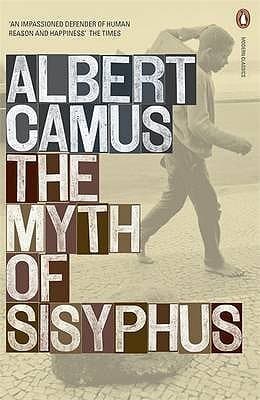
- The Myth of Sisyphus
Albert Camus
4.2 (25k) average on GoodreadsPhilosophyExplores the philosophical problem of repetition and the search for meaning in a seemingly absurd and cyclical existence.
- Being and Nothingness
Jean-Paul Sartre
4.0 (26k) average on GoodreadsPsychologyDelves into the nature of consciousness, freedom, and the ways humans create their own reality, touching on themes of self-deception and authenticity.
- Siddhartha
Hermann Hesse
4.0 (583k) average on GoodreadsHistorical FictionHesse's novel also depicts a spiritual awakening and journey through life's cycles, but Siddhartha's path is linear and progressive, marked by active learning and transformation. Osokin's experience is cyclical and initially frustratingly static, highlighting the difficulty of applying knowledge without fundamental internal change. Hesse emphasizes discovery through diverse external experiences, while Ouspensky focuses on the internal struggle against ingrained patterns.
- The Perks of Being a Wallflower
Stephen Chbosky
4.2 (1.3M) average on GoodreadsPsychologyThrough letters, a shy high school freshman learns to navigate first love, trauma, and self-discovery, stepping off the sidelines and into life.
- Eleanor Oliphant Is Completely Fine
Gail Honeyman
4.3 (708k) average on GoodreadsLiterary FictionA lonely woman's structured life changes when an IT guy and an elderly man help her learn to open her heart.
- One Flew Over the Cuckoo's Nest
Ken Kesey
4.2 (631k) average on GoodreadsPsychologyIn a mind-bending asylum, the boisterous Randle McMurphy wages a defiant war against the tyrannical Nurse Ratched, inspiring his fellow inmates, including the seemingly catatonic Chief Bromden, to reclaim their lost humanity.




Enjoyed the summary?
A summary gives you the shape of the book. The book itself has the detail, the examples and the voice.
Find Strange Life of Ivan Osokin on AmazonAs an Amazon Associate, BookBrief earns from qualifying purchases. How we're funded